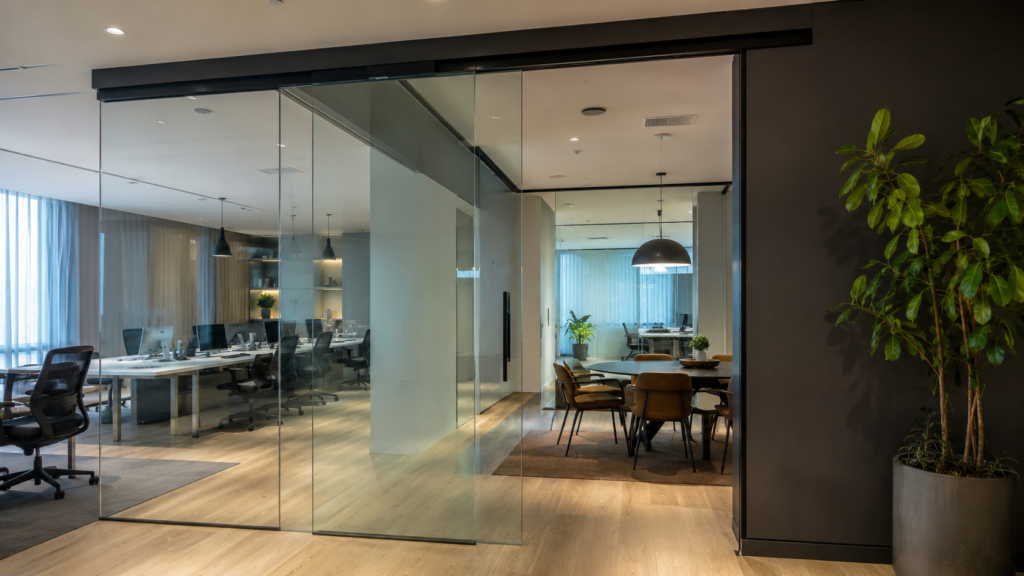
In modern office buildings, interior glass partitions do more than divide a floor plan. They help balance visual transparency with acoustic privacy.
For meeting rooms, executive offices, coworking spaces, and focus rooms, the hardware requirements are very different from exterior lobby doors. Interior office hardware does not need to fight wind load or street dust. Instead, it must handle raised access floors, hidden cables, acoustic sealing, quiet operation, and consistent interior design.
A hardware system that works well for a commercial entrance may be too heavy, too loud, or too destructive for an office partition project.
Metech provides commercial interior glass partition hardware solutions for modern corporate workspaces, meeting rooms, executive suites, coworking offices, and frameless office partitions.
Engineering Criteria for Office Glass Partitions
Before approving hardware for an interior office fit-out, project managers and interior architects should check the workspace conditions first: floor structure, glass thickness, door type, acoustic requirement, and finish schedule.
1. Raised Access Floors and No-Dig Installation
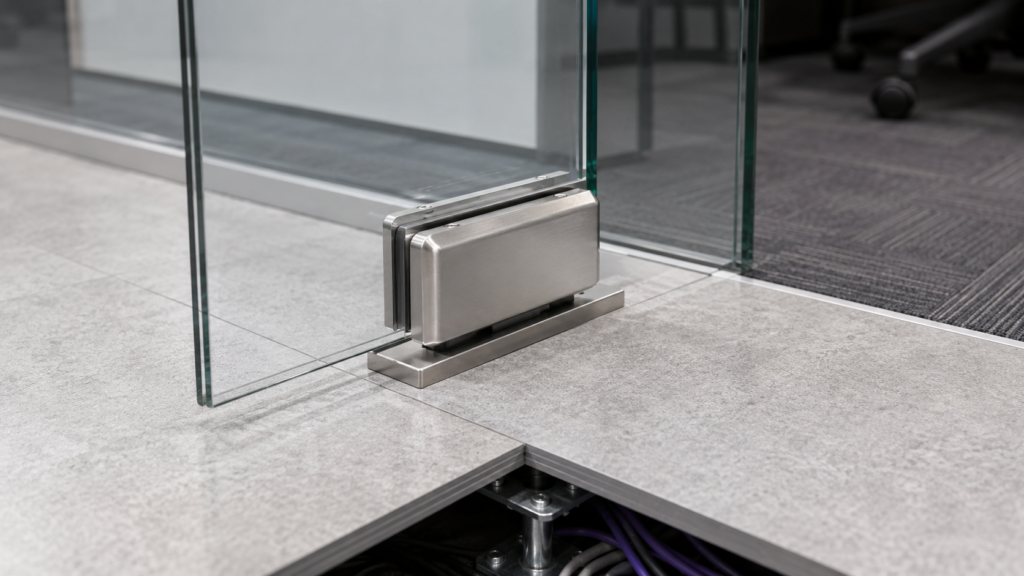
Modern office buildings often use raised access floors or network floors to manage IT cabling, electrical wiring, and data systems.
This makes traditional floor springs difficult. Cutting a 50mm to 70mm pocket into a raised floor may damage the floor structure, interfere with cable routes, or create approval problems with building management.
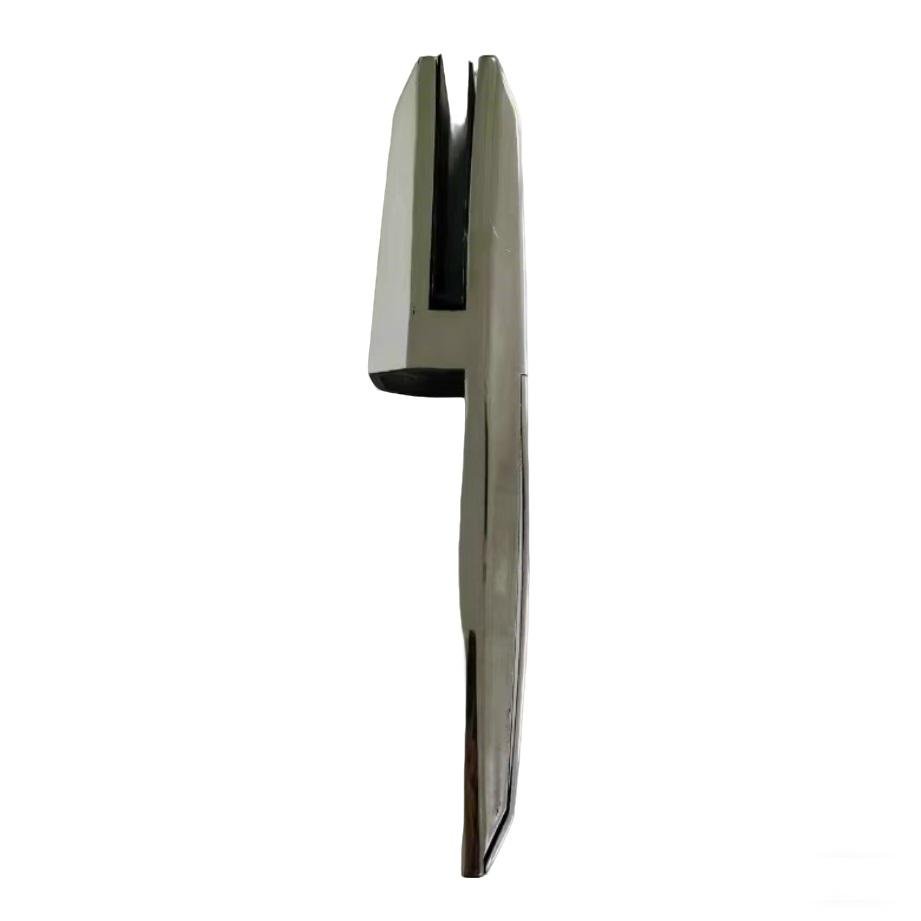
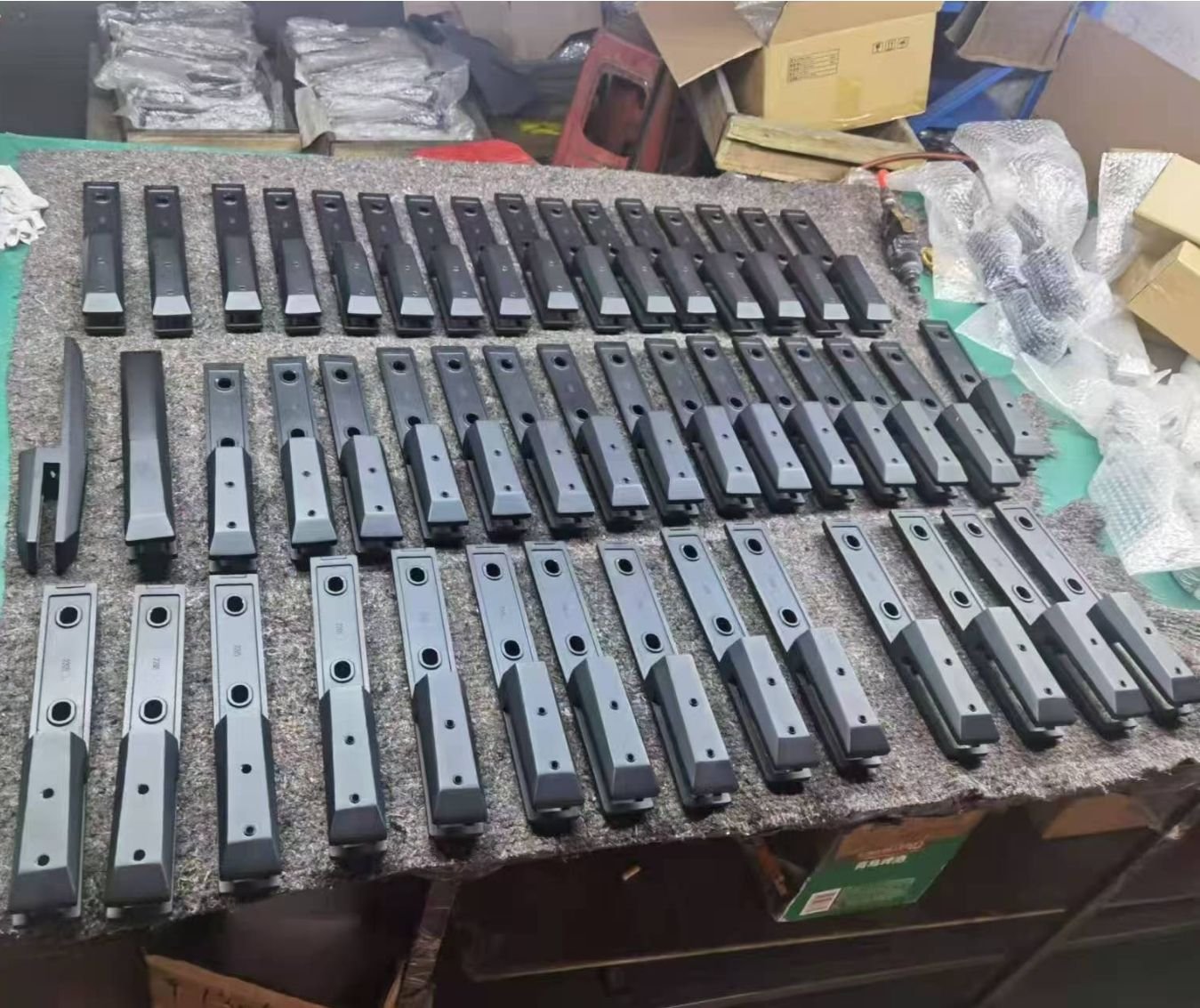
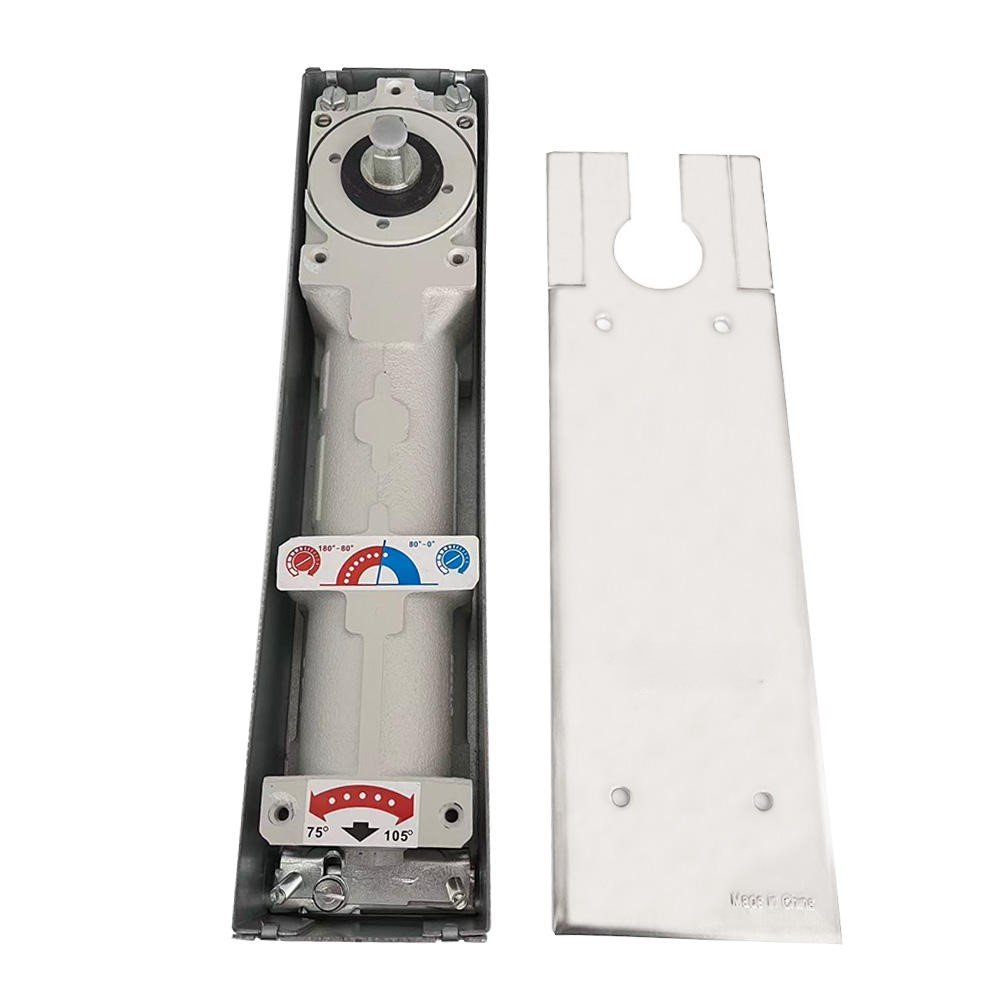
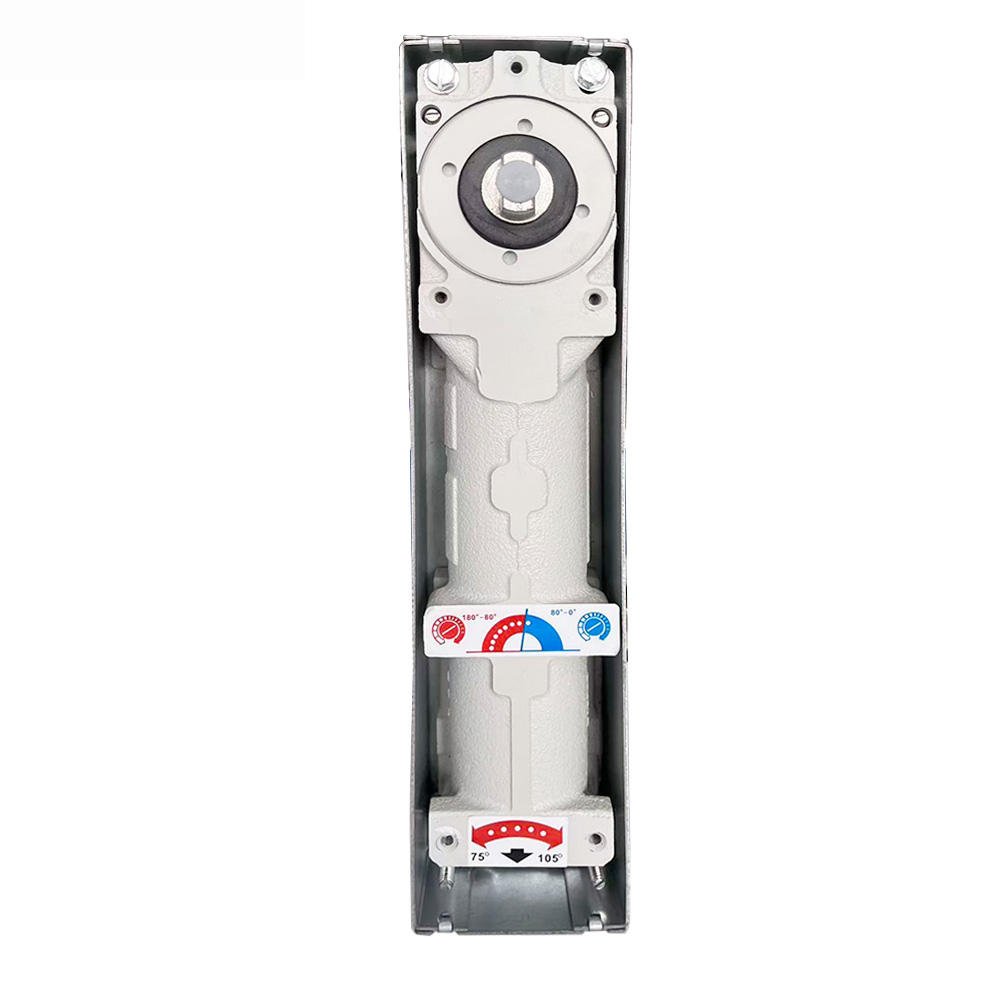
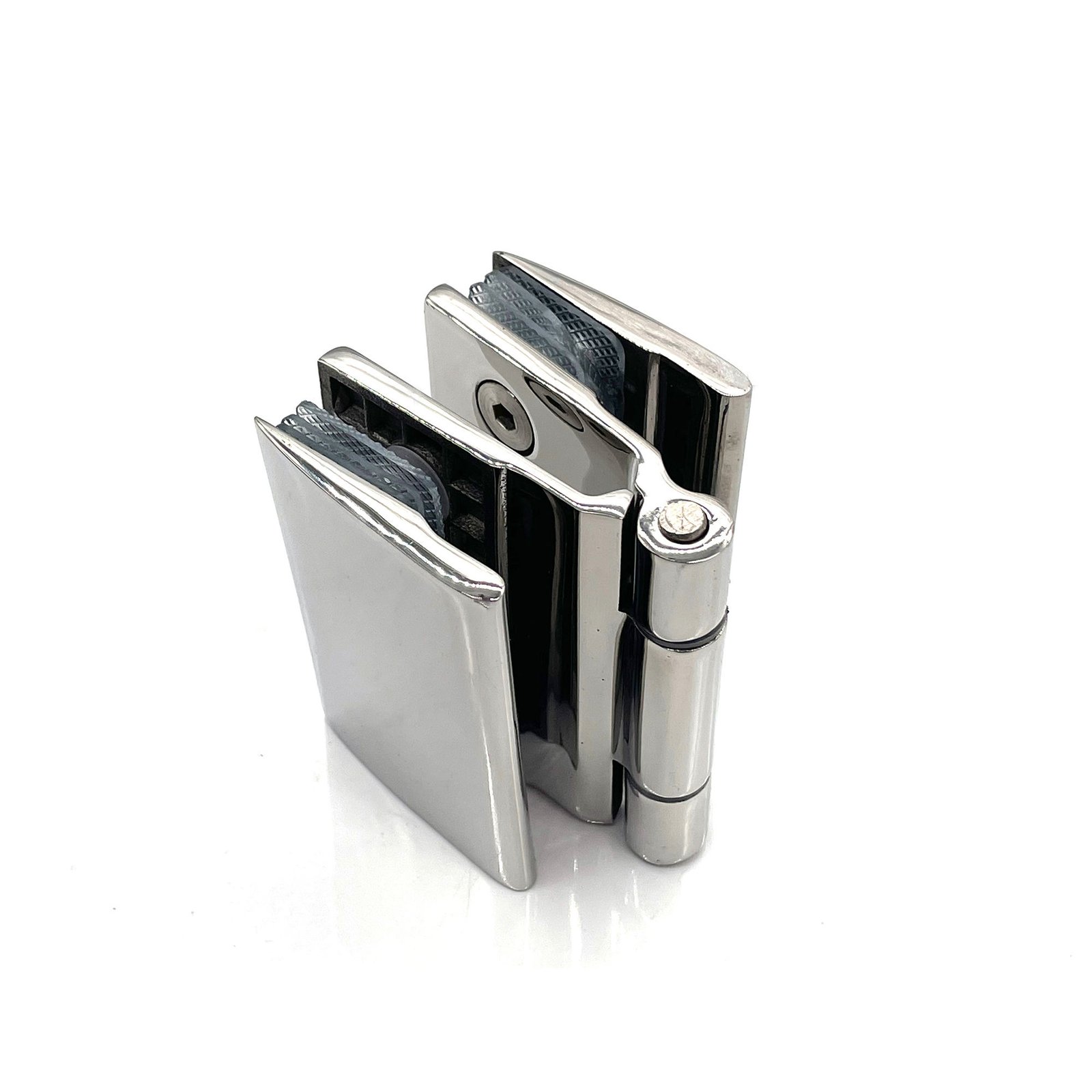
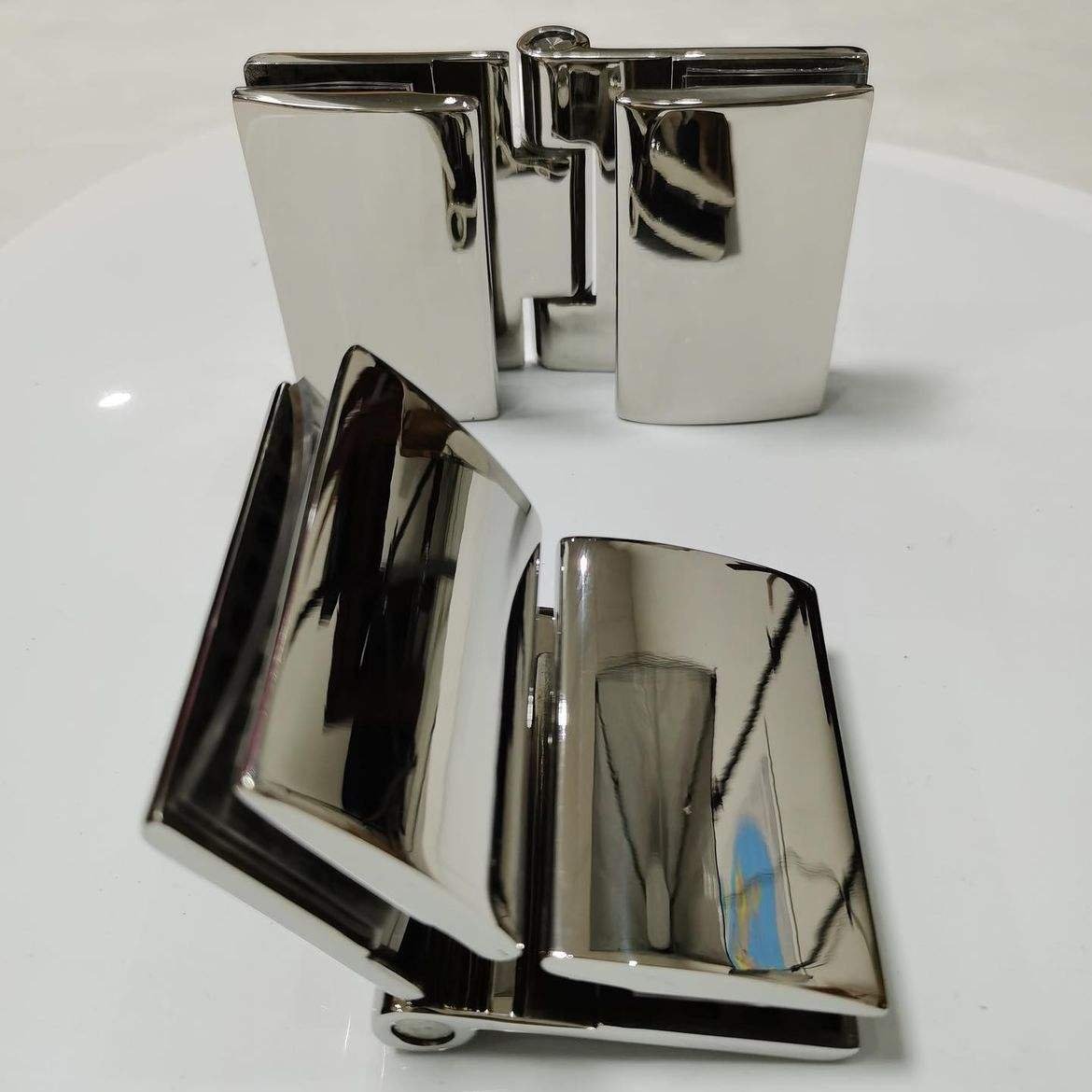
For frameless office swing doors, we recommend surface-mounted hydraulic patch fittings.
This system integrates the hydraulic closing mechanism into the bottom patch fitting. It can be fixed with surface screws, reducing the need for deep floor excavation and helping protect concealed cable infrastructure beneath the office floor.
| Requirement | Engineering Value |
|---|---|
| Raised access floor | Reduces the need for deep floor cutting |
| Surface-mounted hydraulic patch | Helps protect hidden cable routes |
| Built-in hydraulic control | Provides controlled closing without a floor spring box |
| Four-screw fixing structure | Supports faster and cleaner installation |
| Office fit-out projects | Reduces site coordination and rework risk |
For commercial interiors, the best hardware is not always the heaviest hardware. It is the system that solves door control without creating unnecessary site work.
2. Acoustic Privacy and ±0.5° Centering Accuracy
A meeting room built with expensive acoustic glass can still perform poorly if the door does not close accurately.
Even a small 2mm gap at the closing edge can weaken acoustic privacy and allow meeting room sound to leak into the corridor.
For office glass partition doors, precise alignment is essential. Hardware with ±0.5° centering accuracy helps the door return to the correct closed position, allowing magnetic strips, acoustic seals, and edge gaskets to maintain consistent contact.
| Hardware Detail | Why It Matters |
|---|---|
| ±0.5° centering accuracy | Helps the door return to the seal position |
| Magnetic seal contact | Improves edge closure |
| Drop seal or bottom seal | Helps reduce sound leakage at the floor gap |
| Perimeter gasket | Supports better acoustic sealing |
| Stable lock alignment | Keeps the door closed in the correct position |
| Controlled closing speed | Reduces slamming and rebound |
Hardware alone does not decide the final acoustic rating of a room. But poor alignment can quickly reduce the performance of the entire glass partition system.
3. High-Frequency Quiet Operation
Office doors are opened and closed many times each day. A stiff floor spring can make a meeting room door uncomfortable to use. A low-quality sliding system can create rolling noise that disturbs the workplace.
For office sliding glass door hardware, we recommend dual-way soft-close sliding systems.
The track can be equipped with concealed dampers that engage when the door is around 80mm to 100mm from the closing point. This slows the glass panel before final contact, reducing impact noise and improving daily office comfort.
For premium sliding systems, the carriage rollers should use high-density POM wheels with precision bearings. Compared with ordinary plastic rollers, POM offers better wear resistance, smoother movement, and improved dimensional stability.
A 100,000-cycle quiet wear test is a practical benchmark for commercial interior sliding systems.
For office spaces, the goal is simple: the door should move smoothly, stop softly, and avoid disturbing meetings or focused work.
4. Glass-to-Glass Connectivity and Minimalist Design
Interior designers want glass walls to look clean and continuous. Bulky metal plates, exposed fasteners, and mismatched finishes can interrupt the visual flow of the space.
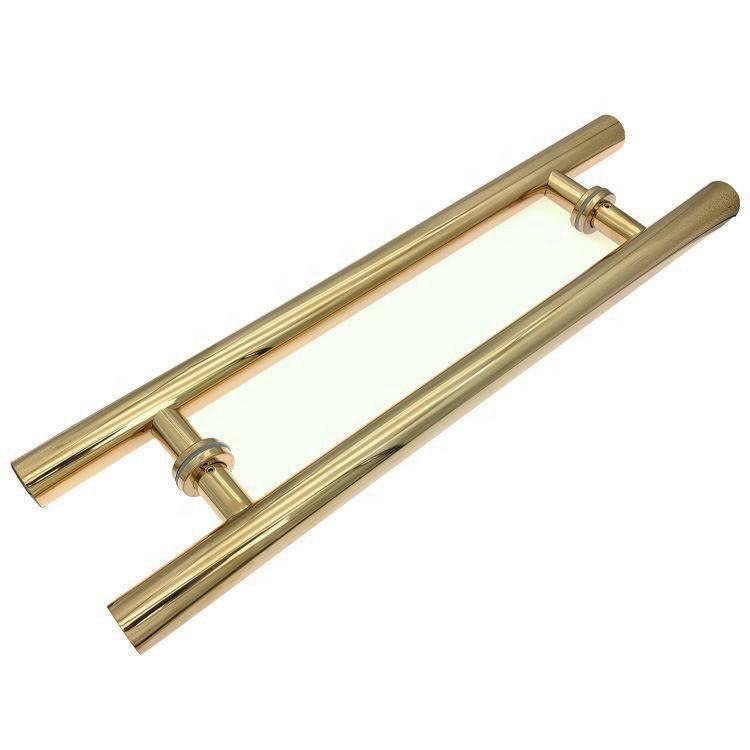
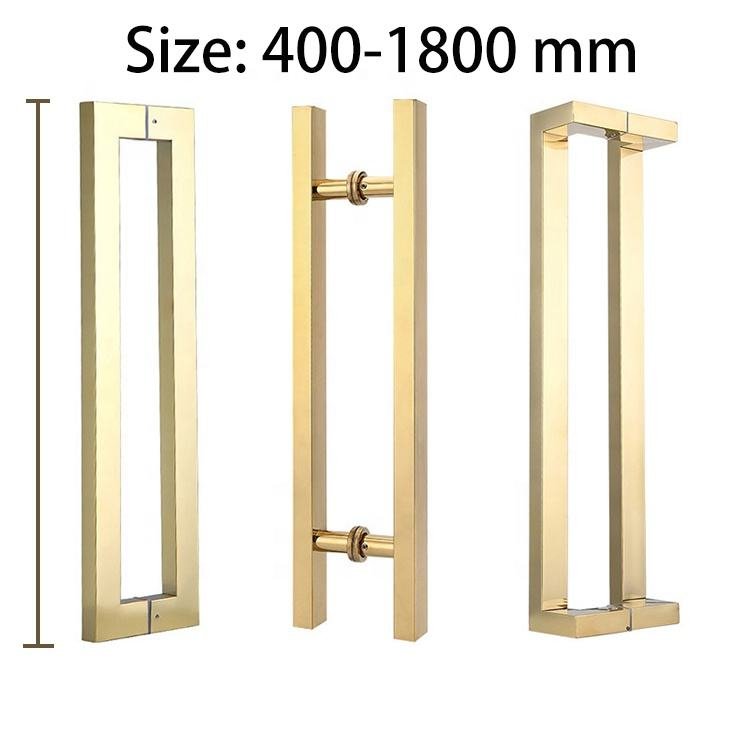
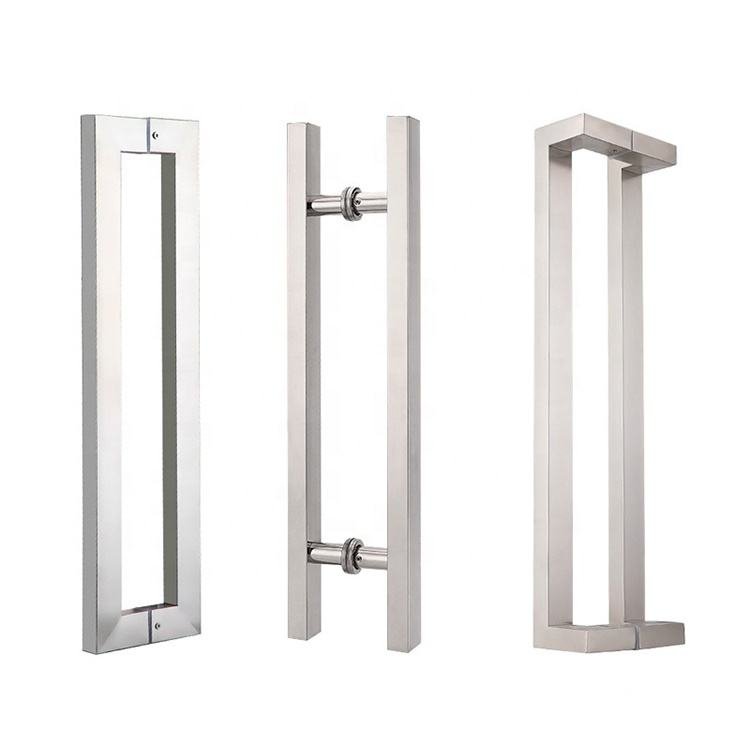
For frameless office partitions, we recommend using slim patch fittings, discreet glass-to-glass connectors, compact wall clamps, and clean handle profiles.
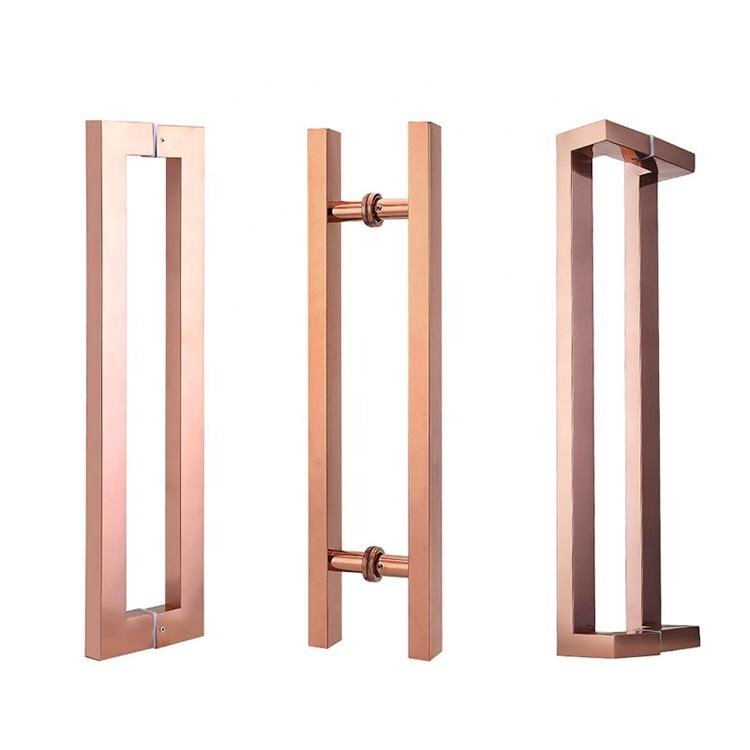
Finish consistency is also important. Matte black, brushed stainless steel, champagne, or custom PVD finishes should remain consistent across hinges, locks, handles, connectors, and sliding tracks.
For a full-floor office project, hardware should look like one interior system, not mixed replacement parts.
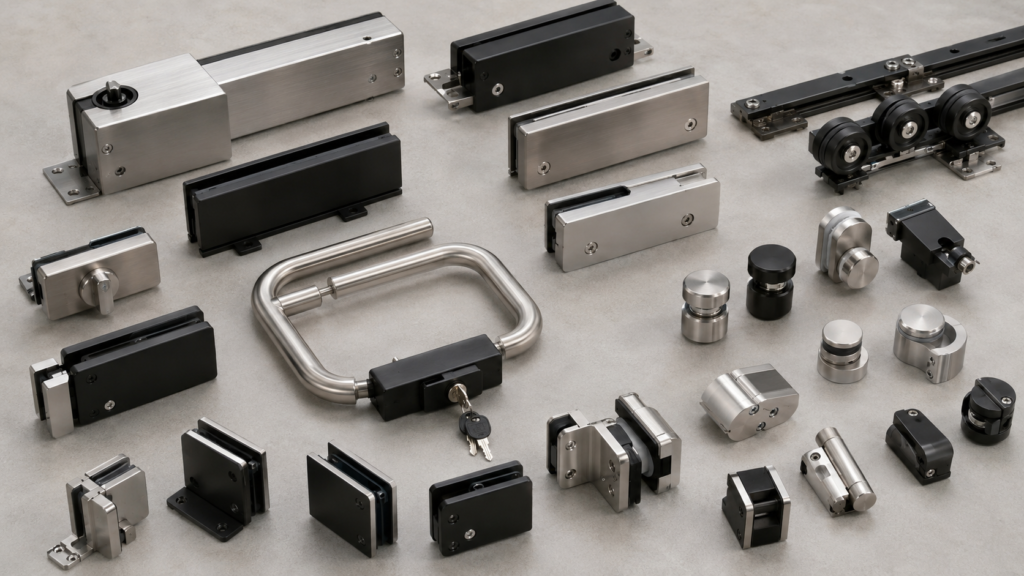
The Interior Partition Hardware Schedule
Different office areas require different hardware solutions. Using one generic hardware set for every door often creates installation or acoustic problems later.
| Office Area | Hardware Specification Standard |
|---|---|
| Boardrooms & executive offices | Surface-mounted hydraulic patch fitting, concealed top pivot, privacy lock, ±0.5° centering |
| Meeting room swing doors | Hydraulic patch fitting, pull handle, magnetic or acoustic seals |
| Coworking spaces & hallways | Top-hung sliding track, soft-close activation at 80mm–100mm, POM rollers |
| Fixed glass partitions | Slim glass-to-glass clamps, wall connectors, or U-channel profiles |
| Phone booths & focus rooms | Acoustic seals, privacy lock, controlled closing hardware |
| Hardware accessories | Slimline pull handles, flush pulls, magnetic locks, matching cover plates |
This schedule should be adjusted according to glass thickness, door size, acoustic requirement, office layout, and installation condition.
Early Warning Signs of Poor Partition Hardware
In office environments, hardware problems quickly affect daily use.
Doors may drift off-center and break acoustic sealing. Sliding doors may rattle or bounce back. Handles may loosen after repeated use. Raised floor tiles may be damaged by incorrect floor spring installation. Finish differences between handles, locks, and clamps may weaken the overall interior design.
These issues usually come from treating office partition hardware like generic commercial door hardware, instead of specifying it as an integrated acoustic and structural system.
Suitable Applications
This commercial interior glass partition hardware solution is suitable for office meeting rooms, executive offices, coworking spaces, phone booths, focus rooms, training rooms, showroom partitions, reception areas, and full-floor commercial fit-out projects.
Why Work with Metech
Metech manufactures and supplies complete frameless glass partition hardware systems, including hydraulic patch fittings, glass hinges, locks, handles, sliding systems, soft-close dampers, glass-to-glass clamps, wall connectors, U-channels, seals, and gaskets.
For interior contractors, architectural glass companies, distributors, and office fit-out specialists, Metech can support:
| Capability | Project Value |
|---|---|
| No-dig hydraulic patch fittings | Suitable for raised access floors |
| Soft-close sliding systems | Quiet movement and reduced impact |
| Precision connectors | Clean frameless glass partition appearance |
| Finish consistency | Important for full-floor office projects |
| OEM / ODM support | Private label, packaging, and custom requirements |
| Export packaging | Reduces damage during international shipment |
Our goal is to help customers build office glass partition systems that look clean, close accurately, reduce sound leakage, and remain stable after daily use.
FAQ
What hardware is needed for commercial glass partitions?
Commercial glass partitions may require hydraulic patch fittings, glass hinges, privacy locks, pull handles, sliding door systems, soft-close dampers, U-channels, glass-to-glass clamps, wall connectors, seals, and gaskets.
Why are no-dig hydraulic patch fittings suitable for office interiors?
Many offices use raised access floors with electrical and data cables underneath. No-dig hydraulic patch fittings reduce deep floor cutting and help protect concealed cable routes.
How can glass partition hardware improve acoustic privacy?
Hardware improves acoustic privacy by helping the door return accurately, keeping seals in contact, reducing door gaps, and maintaining lock alignment. ±0.5° centering accuracy, magnetic seals, perimeter seals, and bottom seals can all support better real-use performance.
Need a Hardware Schedule for Your Office Fit-Out?
Send us your office floor plans, glass thickness, door weights, swing or sliding requirements, raised floor condition, acoustic requirements, finish schedule, quantity, and OEM packaging needs.
Metech will help recommend a quiet, minimalist, and installation-friendly commercial interior glass partition hardware solution for your project.