Door closer power size is often treated as a small note on the specification sheet — a number that gets matched loosely to “the door looks about that heavy.”
That is exactly how the wrong closer ends up on the wrong door.
A closer that is too weak may not fully close or latch the door, especially against wind, air pressure, door seals or a slightly misaligned frame. A closer that is too strong may make the door difficult to open and create a harsh closing feel, especially when closing speed and latching speed are not adjusted correctly.
Both mistakes are common. Both come from the same root problem: selecting the closer by door appearance or approximate weight, instead of checking door weight, door width and real use condition together.
The right question is not:
“What size sounds about right for this door?”
The right question is:
“What power size can close this door reliably, control its movement safely and still remain comfortable for daily users?”
A commercial door closer is not only a closing device. It controls movement, protects the door system, helps the latch engage and keeps the entrance working consistently over time.
What Does Door Closer Power Size Mean?
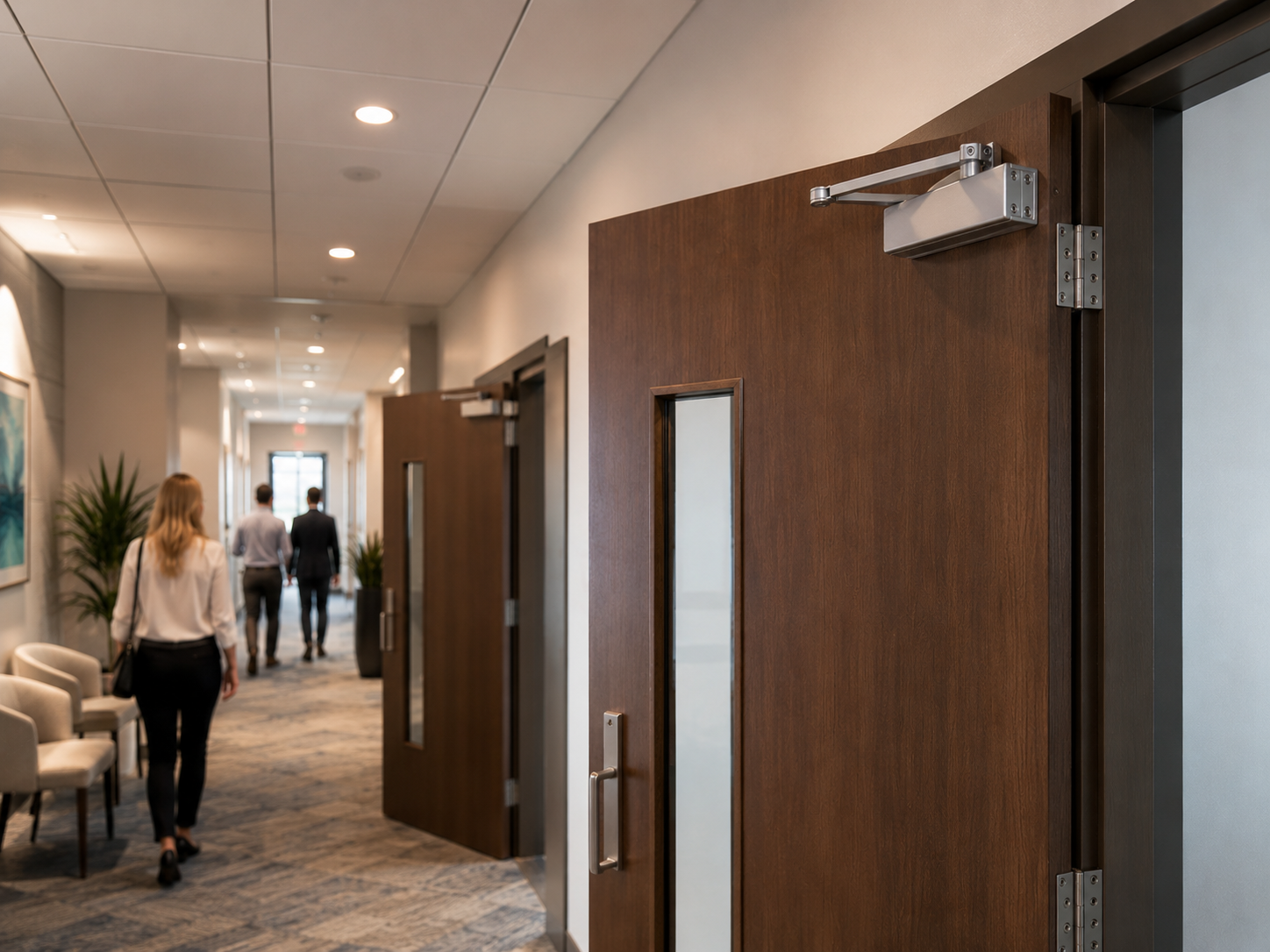
Door closer power size refers to the closing force of the door closer. In many product specifications, this is shown as EN size or power size, such as EN2, EN3, EN4, EN5 or EN6.
The higher the power size, the stronger the closing force.
A smaller interior door may only need a lower power size. A wider and heavier commercial door usually needs a stronger closer. Exterior doors, doors with seals, doors exposed to wind and doors under high traffic may also need higher closing force.
But stronger does not always mean better.
A closer must provide enough force to close the door reliably, but it should not make the door unnecessarily hard to open. The best closer is the one that balances closing force, opening comfort and the real site condition.
Common EN 1154 Door Closer Size Reference
EN 1154 is commonly used as a reference standard for controlled door closing devices. Door closer sizes are often linked with maximum door width and test door mass.
A practical reference table is:
| EN power size | Common maximum door width | Common test door mass |
|---|---|---|
| EN1 | Up to 750mm | 20kg |
| EN2 | Up to 850mm | 40kg |
| EN3 | Up to 950mm | 60kg |
| EN4 | Up to 1100mm | 80kg |
| EN5 | Up to 1250mm | 100kg |
| EN6 | Up to 1400mm | 120kg |
| EN7 | Up to 1600mm | 160kg |
This table is a starting point, not a final answer.
Real projects may need adjustment because door height, door thickness, wind pressure, air pressure, seals, latch resistance, hinge quality and mounting method all affect closing performance.
For example, an interior office door that is 950mm wide may work with an EN3 closer. But a 950mm exterior door with wind pressure and tight seals may need a stronger adjustable closer. The door width is the same, but the site condition is different.
Door Weight Is the Starting Number, Not the Whole Answer
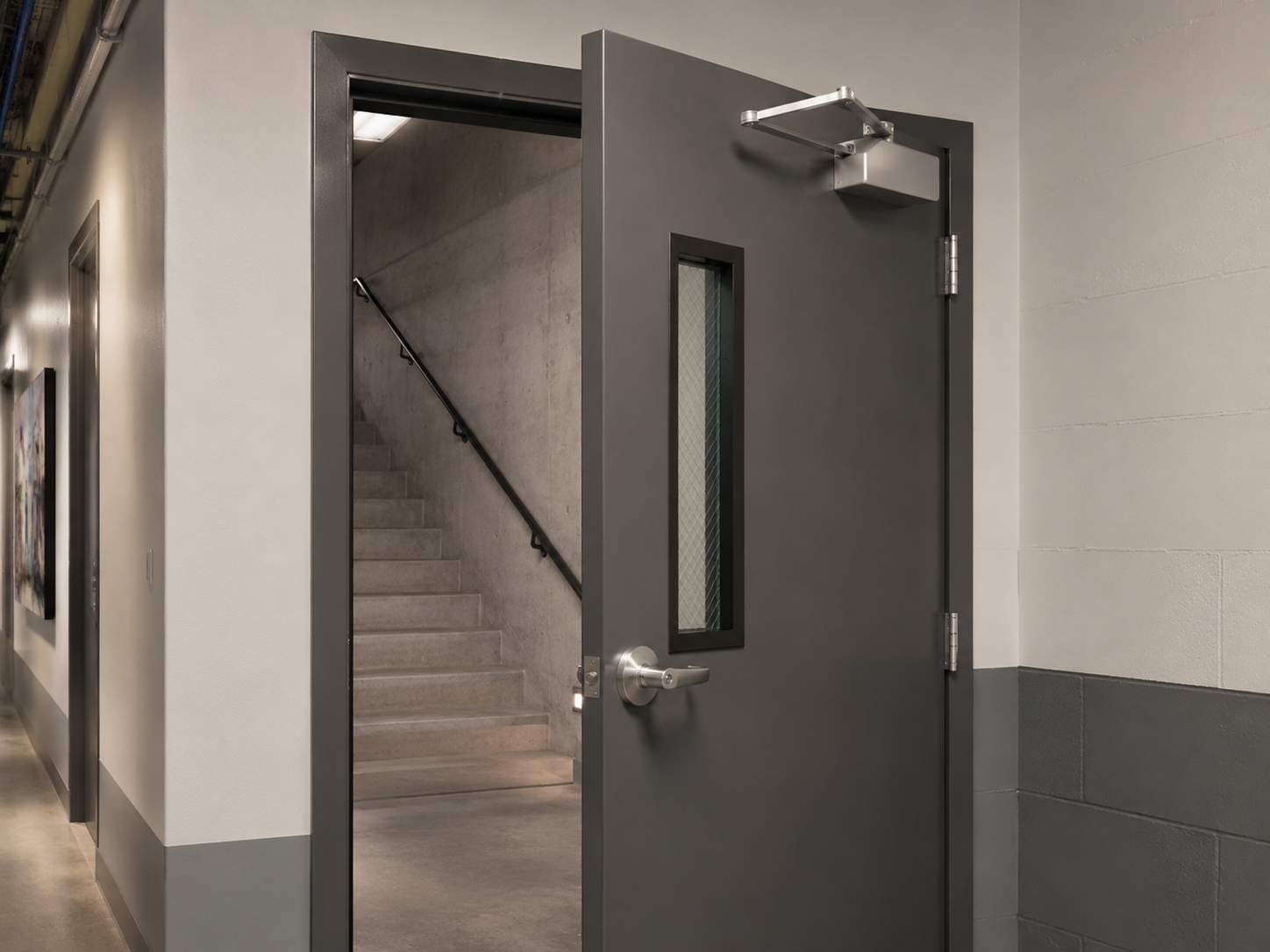
Door weight is usually the first figure buyers check, and it should be. A lightweight hollow-core door and a solid commercial entrance door do not need the same door closer.
Common door types may include:
- Wooden interior doors
- Solid timber doors
- Aluminum-framed glass doors
- Steel fire-rated doors
- Frameless glass swing doors
- Commercial entrance doors
- Acoustic or sealed doors
As a rough orientation, door closers are often grouped like this:
- Light-duty: around 20–40kg doors
- Standard-duty: around 30–65kg doors
- Heavy-duty: around 45–85kg doors
- Extra heavy-duty: around 90–150kg doors, depending on the closer model
These ranges help buyers understand the market, but they should not replace the manufacturer’s rated door width and weight combination.
A closer that works on a 60kg interior timber door may not work well on a 60kg exterior aluminum door with seals and wind pressure. Door weight matters, but it does not act alone.
Door Width and Leverage: Why Wide Doors Need More Power
Door width is often the detail that gets underestimated.
A wider door creates more leverage on the closer and on the hinges than a narrower door of the same weight. The same door weight positioned farther from the hinge line requires more force to control.
This is why power size tables are built around both width and weight.
A 50kg door at 900mm wide and a 50kg door at 1100mm wide are not the same sizing problem. The wider door needs more control because the closer has to manage a larger turning moment.
Skipping this check is one reason a “correctly weight-matched” closer still struggles to fully close a wide door.
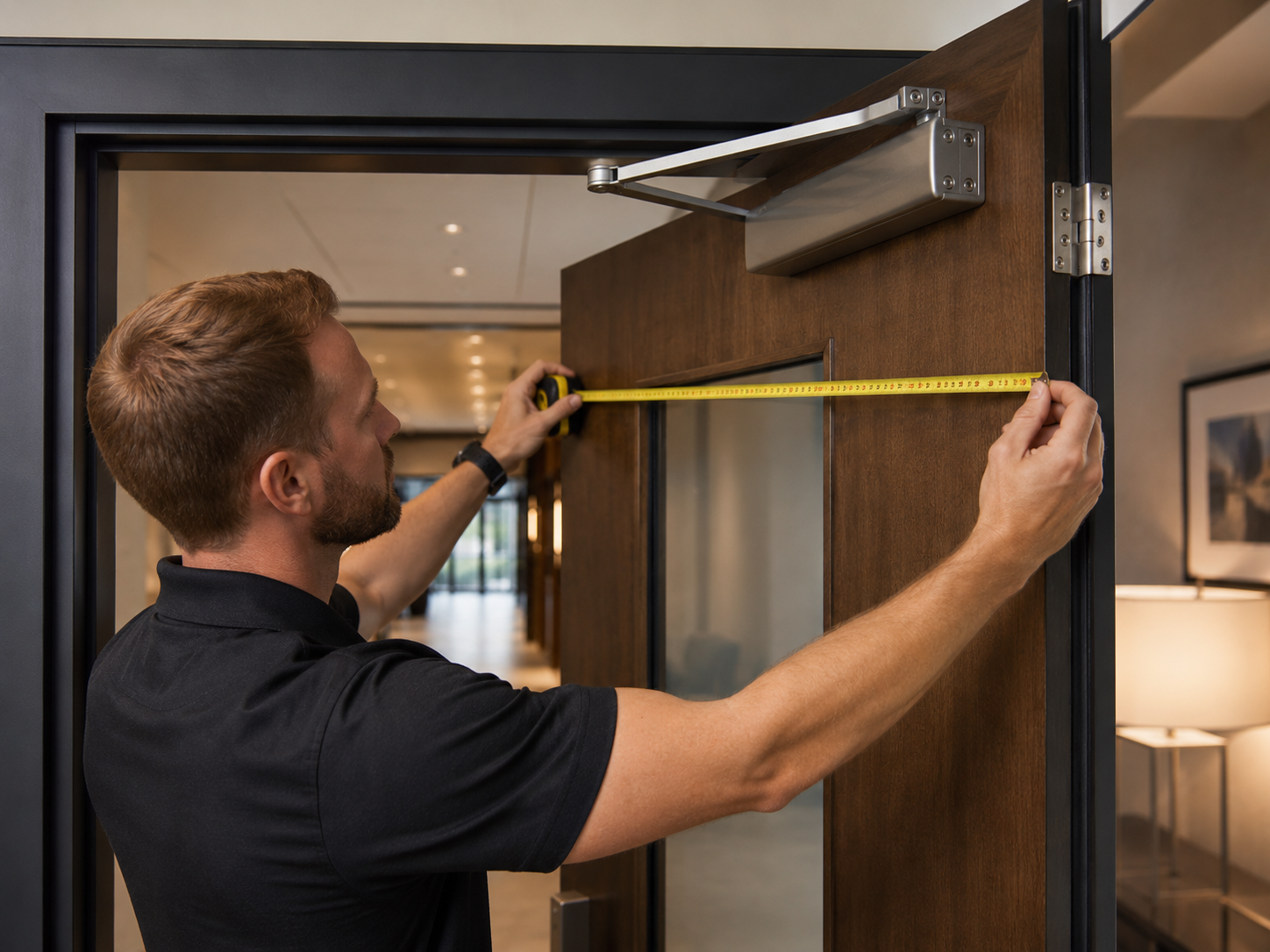
When sending an inquiry, always provide door width together with estimated door weight. Without both details, the supplier can only make a rough guess.
Interior Door or Exterior Door?
A door closer on an interior door works under relatively stable conditions.
A door closer on an exterior door faces more variables:
- Wind pressure
- Rain exposure
- Air-conditioning pressure
- Temperature change
- Dust and moisture
- Door seal friction
- Frequent public use
- Uneven user behavior
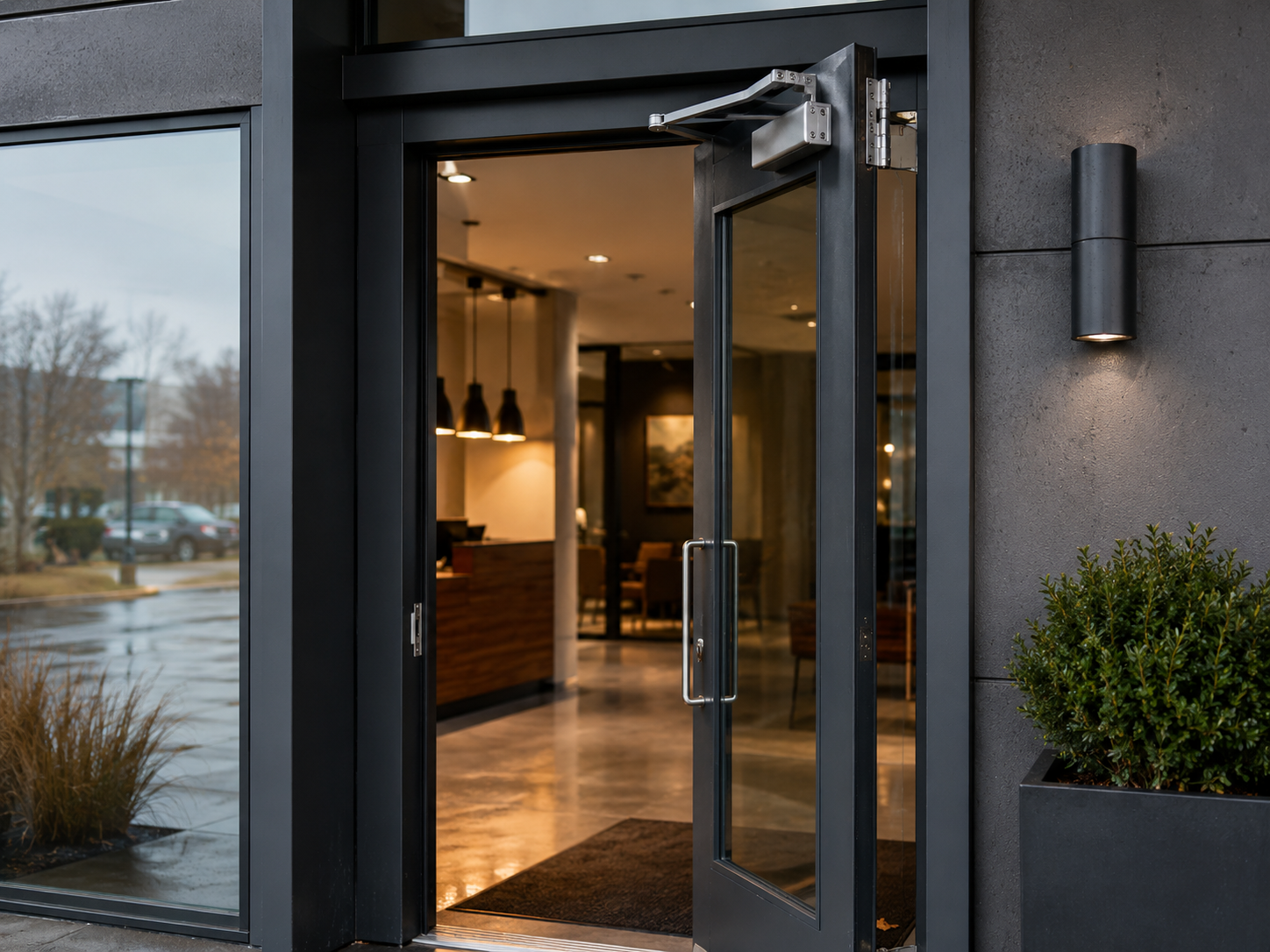
Exterior commercial doors often need stronger or adjustable closers because the site condition is less predictable. A door may close properly on a calm day but fail to latch on a windy day. A door may also be affected by pressure difference between indoor and outdoor spaces.
For exterior doors, backcheck also becomes more important. Backcheck helps slow the door when it is opened too forcefully, reducing impact on the wall, frame, hinge area or closer arm. This is useful where wind or strong user force may push the door open suddenly.
For exterior commercial entrances, do not select the closer only by door width and weight. Check wind exposure, seals, traffic level and whether the door is part of a climate-controlled entrance.
Oversizing vs Undersizing: Why Both Are Mistakes
Many people think oversizing is the safe choice. If in doubt, choose a stronger closer.
In practice, this can create new problems.
A closer that is too weak may fail visibly. The door does not close fully. The latch does not engage. The door may remain slightly open, especially under wind pressure, stack pressure, air-conditioning pressure or seal resistance.
A closer that is too strong may pass an initial closing test, but create daily usability problems. The door may feel heavy to open, uncomfortable for children or elderly users, and too aggressive in public spaces. In some public projects, opening force and user comfort may also relate to accessibility requirements.
The correct approach is not to choose the largest closer available. It is to select the closer according to the door’s actual width, weight and use condition, with a reasonable margin — not an excessive one.
Adjustable Power vs Fixed Power Door Closers
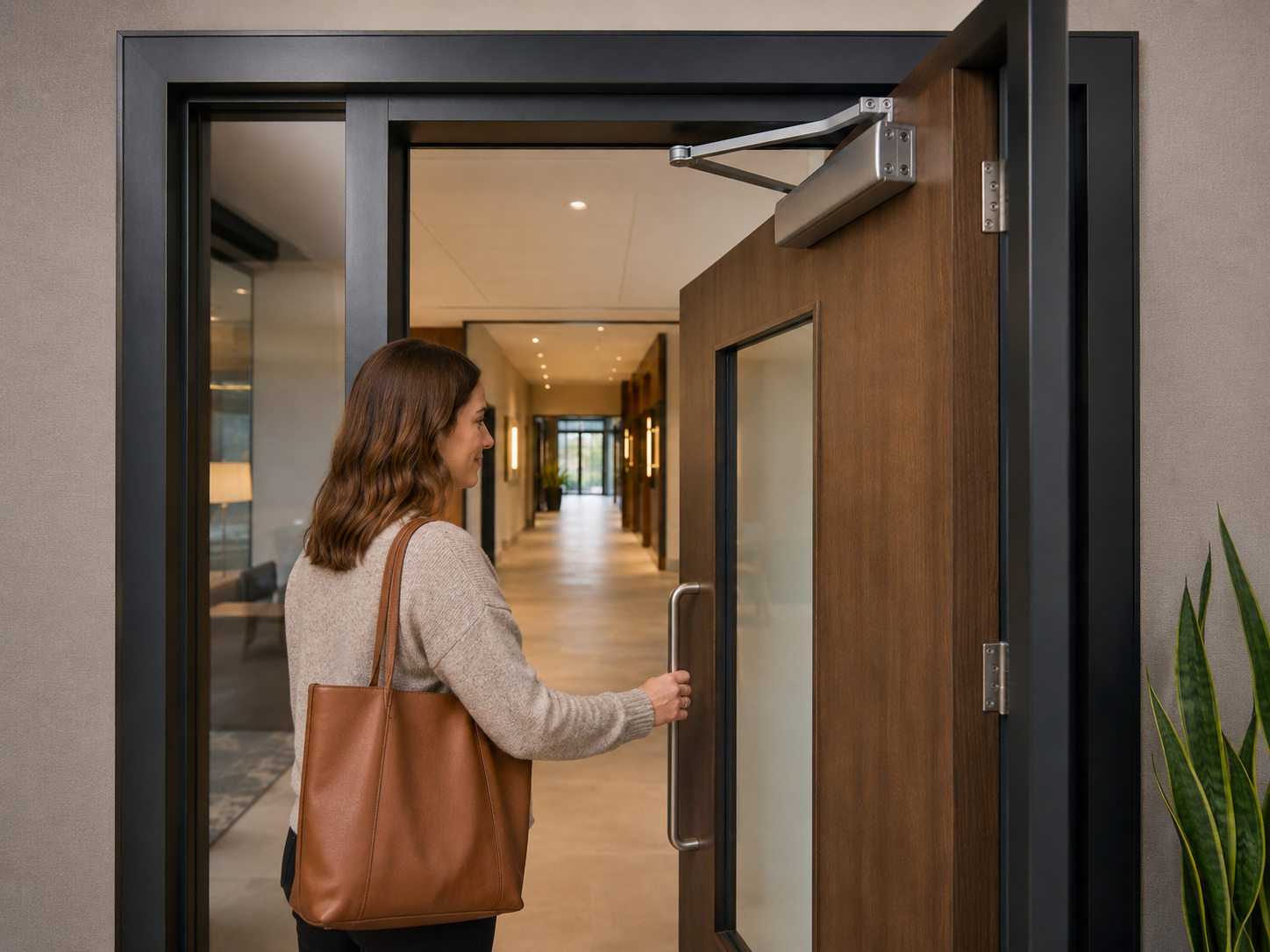
Some door closers have fixed power size. Others have adjustable power size, such as EN2–4, EN3–6 or similar ranges.
A fixed-power closer can work well when the door size and site condition are clear.
An adjustable power closer is more flexible. It allows the closing force to be increased or reduced within a rated range. This is useful when:
- The door size is near the boundary between two sizes.
- The project has several similar but not identical doors.
- Site wind pressure is uncertain.
- The door has seals or latch resistance.
- One closer model is used across multiple project areas.
However, adjustable does not mean automatic success.
An adjustable closer only performs correctly if it is set properly during installation and commissioning. If the closer is left at a factory default setting, it may perform no better than a fixed closer of the wrong size.
Adjustable also does not mean unlimited. An EN2–4 closer cannot replace an EN6 closer for a very wide or heavy door. Always check the rated range before ordering.
Surface-Mounted, Concealed and Floor-Controlled Options
Door closer power size also depends on the closer type and mounting position.
Surface-mounted door closers
Surface-mounted door closers are the most common option for wooden doors, aluminum doors and many commercial doors. They are easy to install, inspect and adjust.
They may be used with standard arms, parallel arms or slide arms depending on the door and frame condition.
Concealed door closers
Concealed door closers are hidden inside the door leaf, frame or transom area. They create a cleaner appearance but require more accurate preparation.
Because space is limited, concealed closers must be matched carefully with door weight, door width and opening angle. They are common in high-end interiors, aluminum-framed doors and projects where appearance is important.
Floor springs and floor-controlled doors
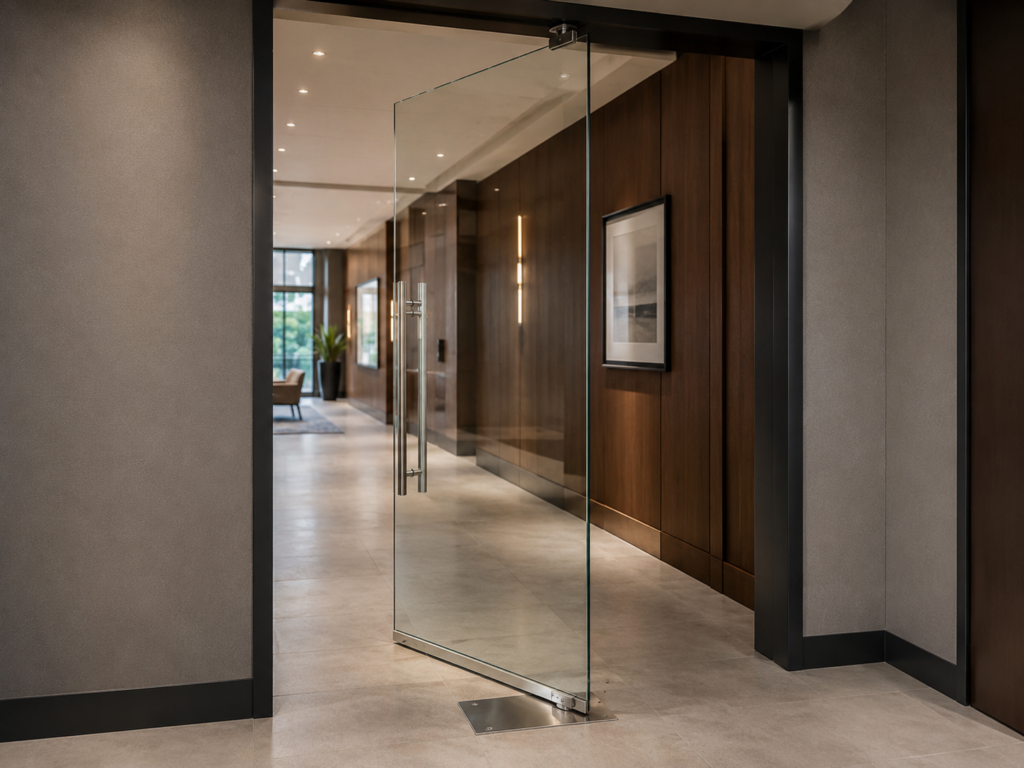
For heavy frameless glass swing doors, floor springs are often used instead of ordinary overhead closers. The floor spring carries and controls the glass door from below and is common in commercial glass entrances.
A floor spring is usually not selected by the same logic as a small overhead closer. Door weight, door width, pivot position, glass thickness and traffic level all matter.
This is why a commercial glass door may need a floor spring, while a wooden office door may only need a surface-mounted hydraulic door closer.
Closing Speed, Latching Speed and Backcheck
Power size is important, but it is not the only performance setting.
A good commercial door closer should also control the way the door moves through different parts of the closing cycle.
Closing speed controls how fast the door moves from the open position toward the near-closed position.
Latching speed controls the final part of closing, helping the latch engage into the strike plate.
Backcheck helps slow down the door when it is opened too forcefully, reducing impact on the wall, frame or closer arm.
Delayed action allows the door to stay open longer before closing, useful in selected areas where users need more time to pass through.
These functions do not replace correct power size. They work together with power size.
If the closer is too weak, speed adjustment alone may not solve incomplete latching. If the closer is too strong, reducing speed may not make the door comfortable to open. The base power must be right first.
Fire Doors and Smoke Control Doors
Fire doors and smoke control doors need special care. The closer must close the door reliably, and the final selection should follow local fire regulations and project requirements.
In many specifications, fire doors require reliable self-closing performance, but the exact closer requirement may vary by country, door type, certification, project consultant and installation condition.
Do not use an ordinary closer on a fire-rated door unless the closer is approved or suitable for that application.
For fire door projects, confirm:
- Door rating and certification requirement
- Minimum closer power size
- Door width and weight
- Whether hold-open is allowed
- Whether the hold-open device must connect to a fire alarm system
- Local code and consultant approval
Metech can help match door closer options, but final fire-door compliance should always be confirmed with the project consultant or local authority.
Common Door Closer Selection Mistakes
Sizing by weight alone, without checking door width
This is one of the most common power-size mistakes. A correctly weight-matched closer can still underperform on a wide door.
Treating “bigger is safer” as a sizing strategy
Oversizing can make the door harder to open and create a harsh user experience. More power is not always better.
Leaving an adjustable closer at its factory default setting
Adjustable closers only deliver correct performance if they are set properly on site.
Underestimating wind load on exterior doors
A closer sized for a sheltered interior condition may struggle on an exterior door exposed to regular wind pressure.
Using one closer model for every door
A project may include office doors, washroom doors, fire doors, aluminum doors and entrance doors. They may need different closer sizes or adjustment ranges.
Ignoring latching speed
Many doors close most of the way but fail to latch. The final latching zone needs proper adjustment and enough closing force.
Ignoring door seals
Smoke seals, acoustic seals, weather seals and brush seals can increase resistance. The closer must close the door against that resistance.
Using hold-open arms on doors that should stay closed
Hold-open function may not be suitable for fire doors or smoke-control doors unless approved and connected correctly. Confirm local requirements before ordering.
Practical Door Closer Selection Guide
When choosing a door closer, check these details first:
- Door width
- Door height
- Door weight
- Door material
- Interior or exterior location
- Traffic level
- Fire-rated or non-fire-rated door
- Door seal condition
- Wind or air-pressure exposure
- Mounting position
- Required functions: backcheck, delayed action, hold-open, slide arm or parallel arm
- Finish requirement
- Quantity and project consistency
For many standard commercial interior doors, an adjustable EN2–4 or EN3–6 closer may be suitable depending on width and weight. For wider, heavier or exterior doors, a stronger model may be required.
For frameless glass swing doors, consider whether a floor spring or hydraulic patch fitting is more suitable than a surface-mounted closer.
The safest approach is to select by door data, not by habit.
How Metech Supports Door Closer Projects
Metech Hardware supports commercial door closer selection for wooden doors, aluminum doors, glass doors and selected commercial entrance projects.
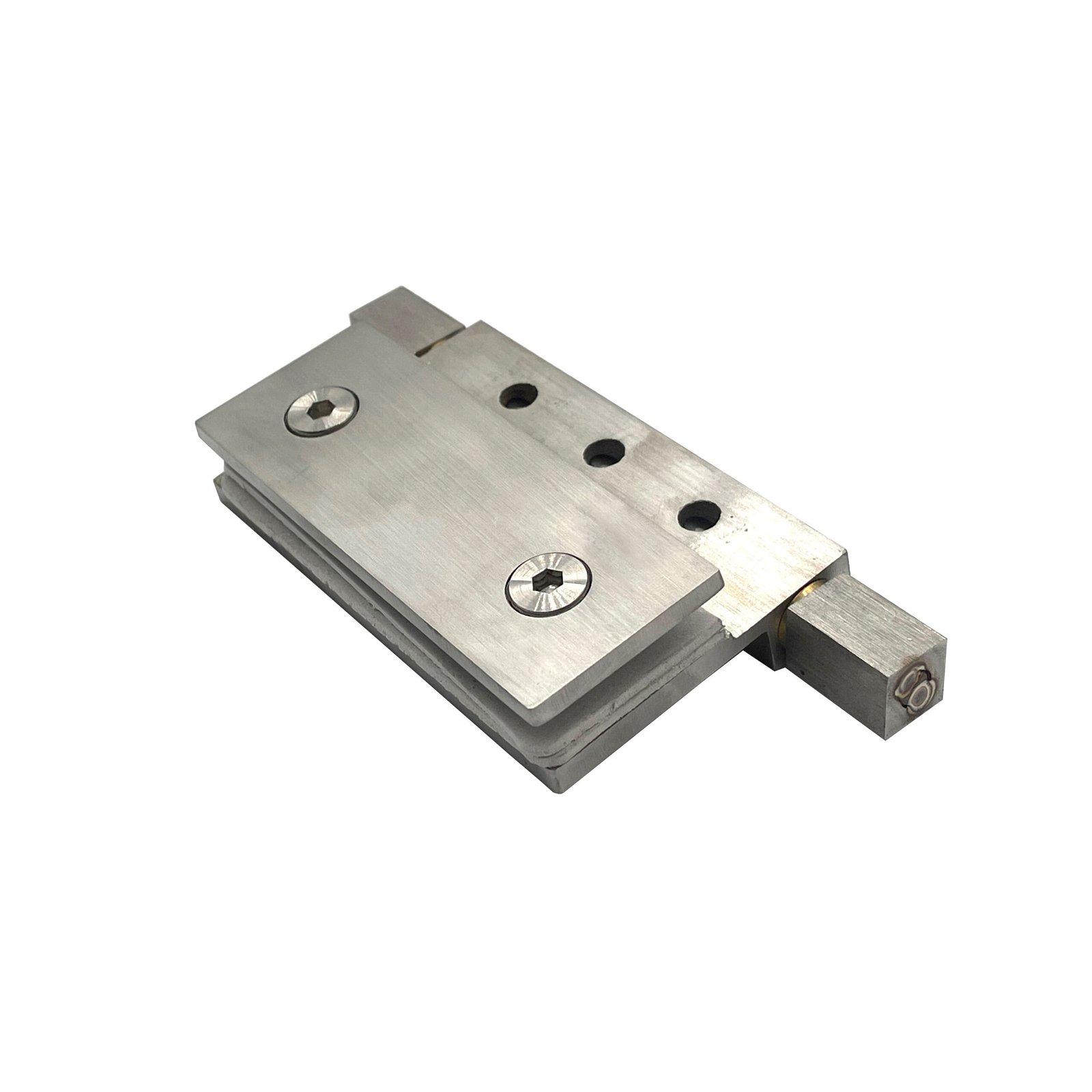
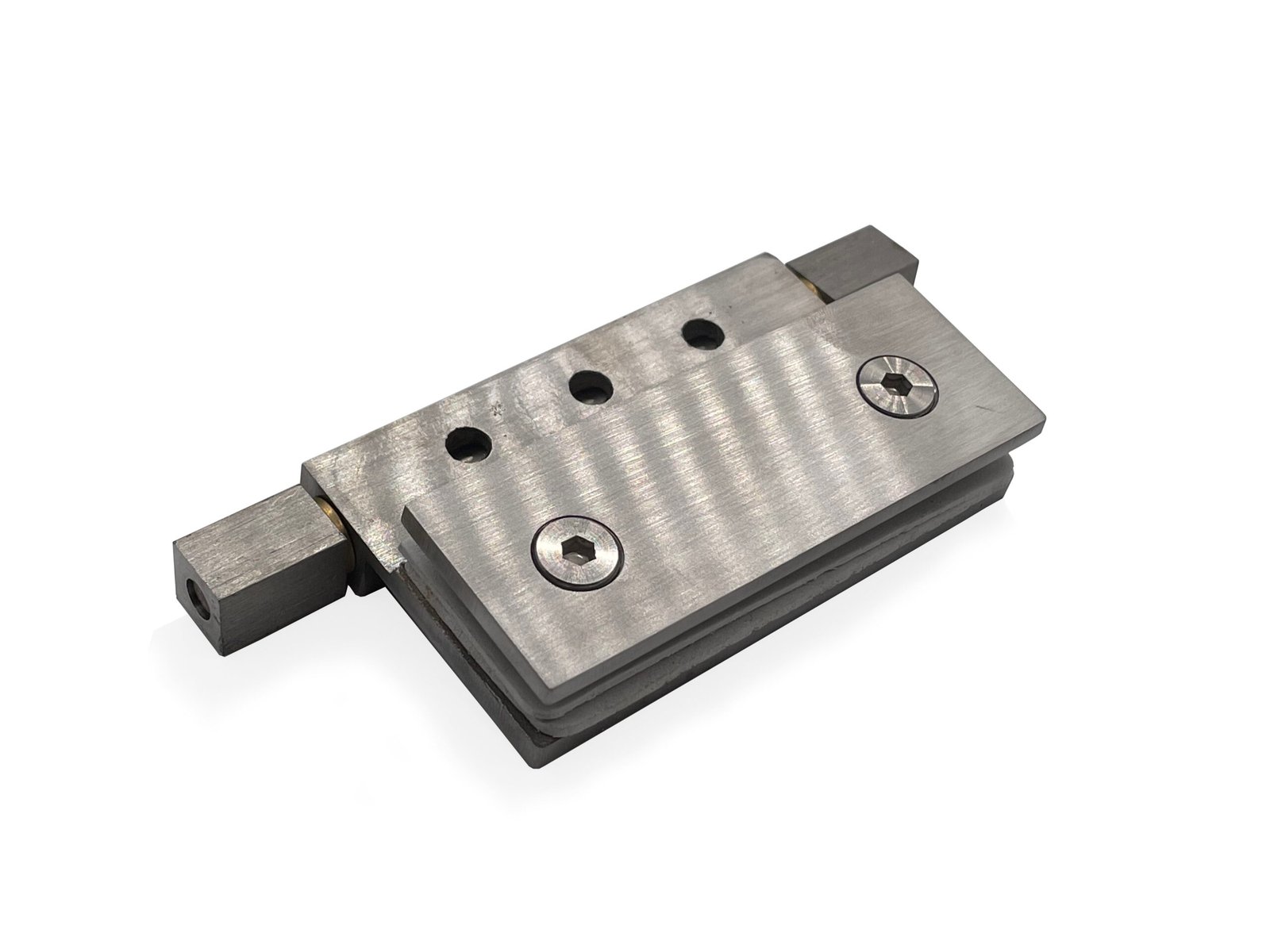
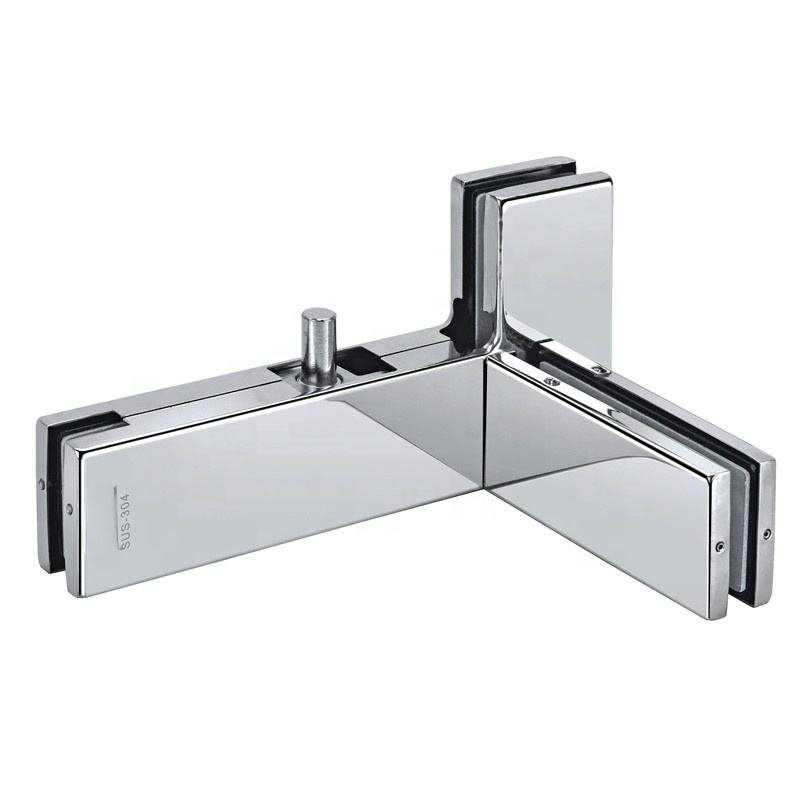
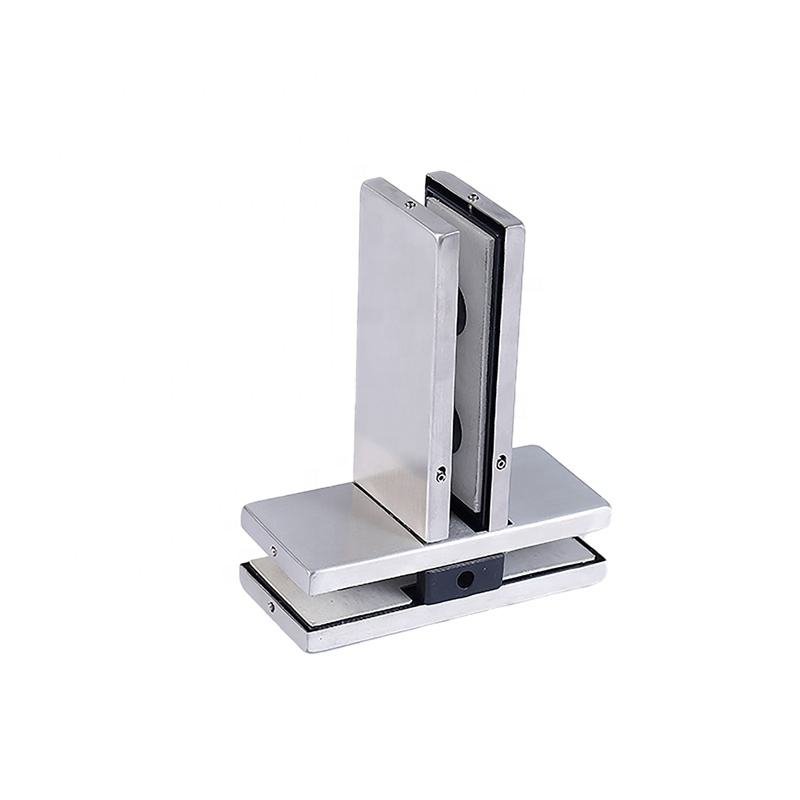
Our door control product range may include surface-mounted door closers, concealed door closers, floor springs, hydraulic patch fittings, door closer arms, cover plates and related glass door control hardware.
Before recommending a closer, we prefer to check door width, door height, door weight, material, installation location, traffic level, fire-door requirement, seal condition, mounting method and finish preference.
For overseas buyers, contractors and distributors, Metech can help match suitable door closer options for office buildings, hotels, clinics, schools, storefronts, residential interiors and commercial glass door systems.
For fire-rated doors, smoke-control doors or code-regulated entrances, final compliance should be confirmed with the project consultant or local authority.
FAQ
What door closer size do I need?
The door closer size depends mainly on door width, door weight, installation location and site condition. A standard interior door may only need a lower EN size, while a wide, heavy or exterior door may need a stronger adjustable closer.
Is EN3 enough for a commercial door closer?
EN3 may be suitable for many standard interior doors up to around 950mm wide, but it may not be enough for wider, heavier or exterior doors. Always check door weight, wind exposure, seals and traffic level.
What is the difference between EN2, EN3 and EN4 door closers?
The difference is closing force. EN2 is used for smaller and lighter doors, EN3 for standard doors, and EN4 for wider or heavier doors. Higher EN sizes provide stronger closing force.
Should I choose adjustable or fixed-power door closers?
Adjustable power closers are usually more flexible for commercial projects because installers can fine-tune the closing force on site. Fixed-power closers can work when the door size and condition are already clear.
Can one door closer model be used for all doors in a project?
Not always. A project may include different door widths, weights, traffic levels and fire requirements. It is better to group doors by type and select closer sizes accordingly.
Can a door closer be too strong?
Yes. A closer that is too strong may make the door difficult to open and uncomfortable for daily users. The closer should balance reliable closing with user comfort.
Can Metech help recommend the right door closer?
Yes. Send us your door width, height, estimated weight, door material, interior or exterior location, traffic level, fire-door requirement and mounting condition. Metech Hardware can help recommend suitable door closer options for your project.
Need Help Choosing the Right Door Closer?
Send us your door width, door height, estimated weight, door material, installation location, traffic level, fire-door requirement, mounting method and finish preference. Metech Hardware can help match suitable commercial door closer hardware for wooden doors, aluminum doors, glass doors and building entrance projects.