In commercial office fit-outs, retail storefronts and interior glass partitions, frameless glass doors help create open, bright and modern spaces. But securing these doors requires a different approach from wooden or aluminum doors.
A frameless glass door has no timber or aluminum door leaf to hide a traditional mortise lock. The lock must work directly with the glass panel, door gap, floor spring, patch fitting, keeper, floor socket and handle position.
In renovation or retrofit projects, the challenge is even stricter. Existing glass panels are usually already tempered. They cannot be safely drilled, shaved, enlarged or cut on site. In these cases, the locking hardware must adapt to the existing glass condition, not the other way around.
Electronic locks and access control systems are useful in many projects, but heavy-duty mechanical glass door locks remain a practical baseline for many offices, shops and interior partitions. They provide direct physical locking without relying on wiring, batteries, controllers or software.
For contractors, facility managers and hardware distributors, the key is not only choosing a lock. The lock must match the door movement type, glass thickness, cutout geometry, gap clearance, cylinder plan and daily use requirement.
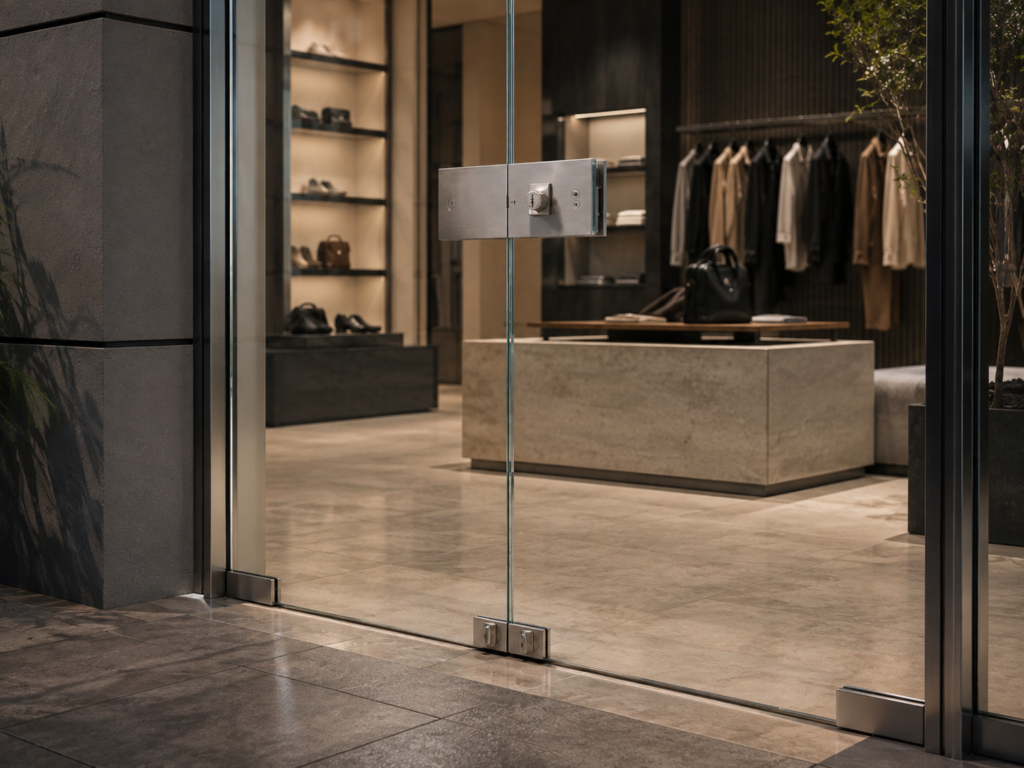
1. Why Mechanical Locks Still Matter in Commercial Glass Doors
Mechanical glass door locks are still widely used because they are simple, visible and easy to maintain.
For a private office, meeting room, retail stock room or interior glass partition, the project may not need a full smart lock or access control system. A mechanical patch lock, bottom lock or sliding hook lock may be enough to provide daily security and privacy.
Mechanical locks also reduce installation complexity. They do not require cable routing, power supply, card readers or software setup. This makes them suitable for small offices, retail shops, boutique interiors, commercial renovation projects and multi-room fit-outs.
They are commonly used for:
- office glass partition doors;
- meeting rooms and manager offices;
- retail shop entrances;
- display rooms and fitting areas;
- stock rooms and back offices;
- double frameless glass doors;
- sliding glass partitions;
- interior commercial glass doors.
However, mechanical locks still require accurate coordination. If the lock is selected after glass tempering, the available options may be limited. If the door gap is wrong, the lock bolt may not engage. If the floor spring does not return to center, even a good lock may feel difficult to operate.
A mechanical lock is simple only when the glass door system is planned correctly.
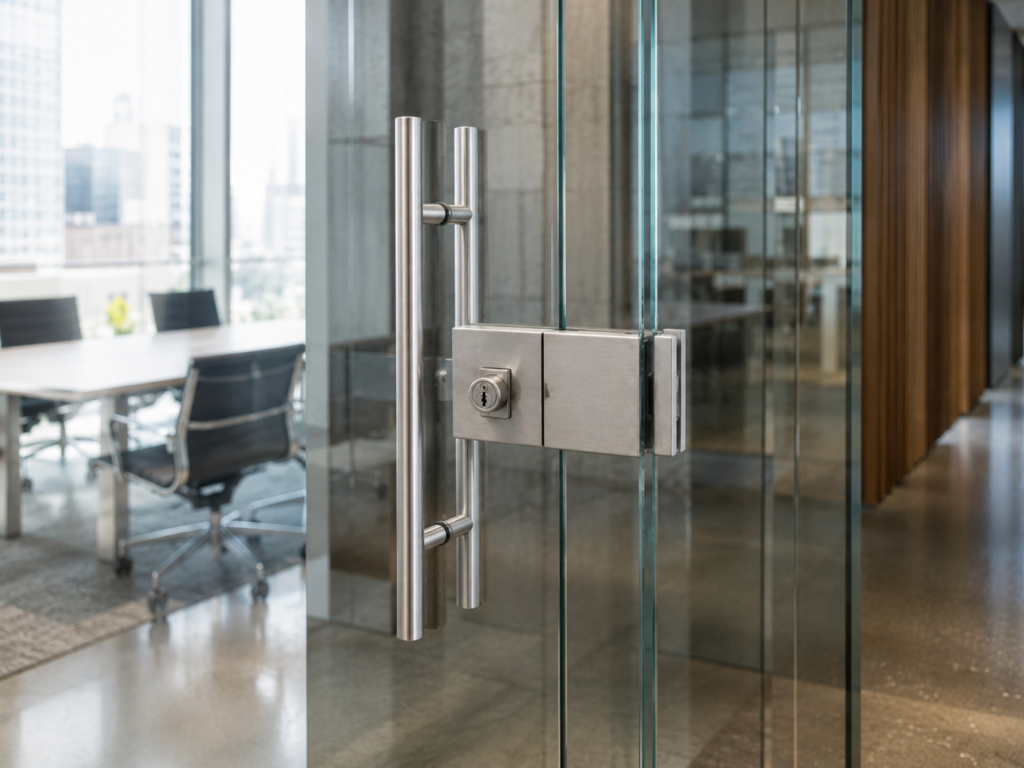
2. Bottom Patch Locks and Dust-Proof Floor Strikes for Retail Doors
A bottom patch lock is one of the most common locking methods for frameless swing glass doors in commercial interiors.
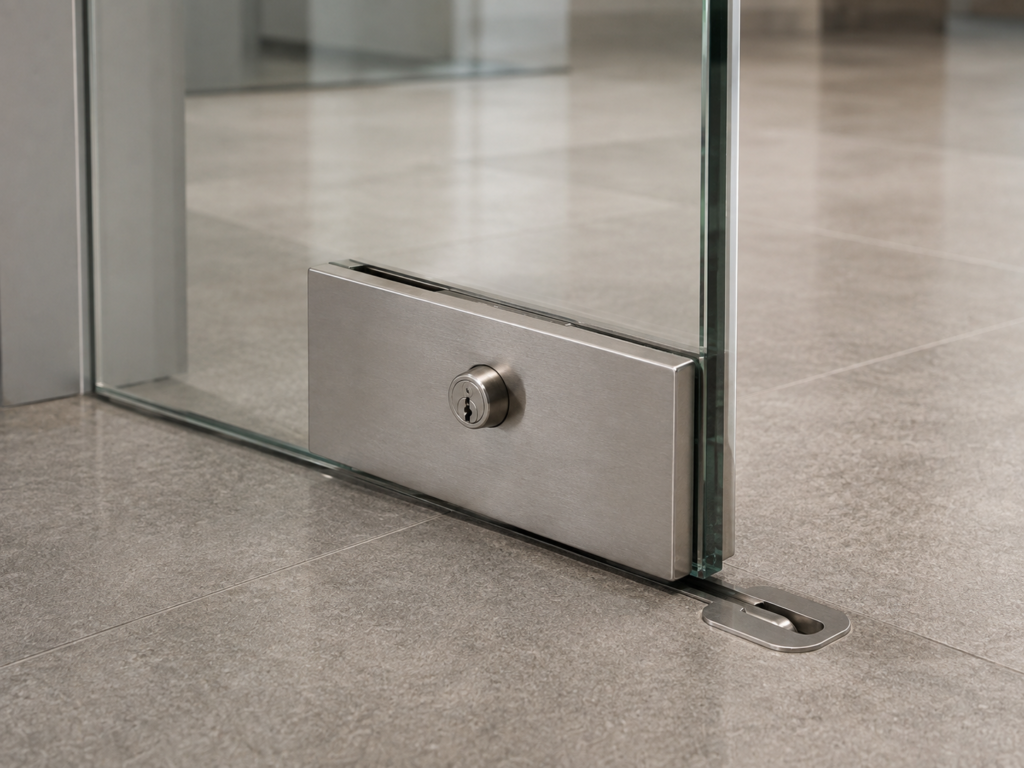
The lock is installed near the bottom corner of the moving glass panel. When locked, the bolt moves downward into a floor socket. This keeps the center area of the glass visually cleaner and provides a direct floor-locking point.
Bottom patch locks are often used for:
- retail shop glass doors;
- office swing glass doors;
- shopping mall interior doors;
- double glass entrance doors;
- commercial glass partitions.
The floor socket is just as important as the lock itself. In busy retail shops, dust, sand and mopping water may enter an ordinary floor socket. If debris builds up inside the socket, the lock bolt may not enter fully, making it difficult for staff to lock the door at closing time.
For commercial floors, a dust-proof floor strike is often a better choice. It usually includes a spring-loaded cap that stays flush with the finished floor when the door is unlocked. When the lock bolt moves downward, it pushes the cap open and enters the socket.
This detail improves daily use and helps keep the floor cleaner.
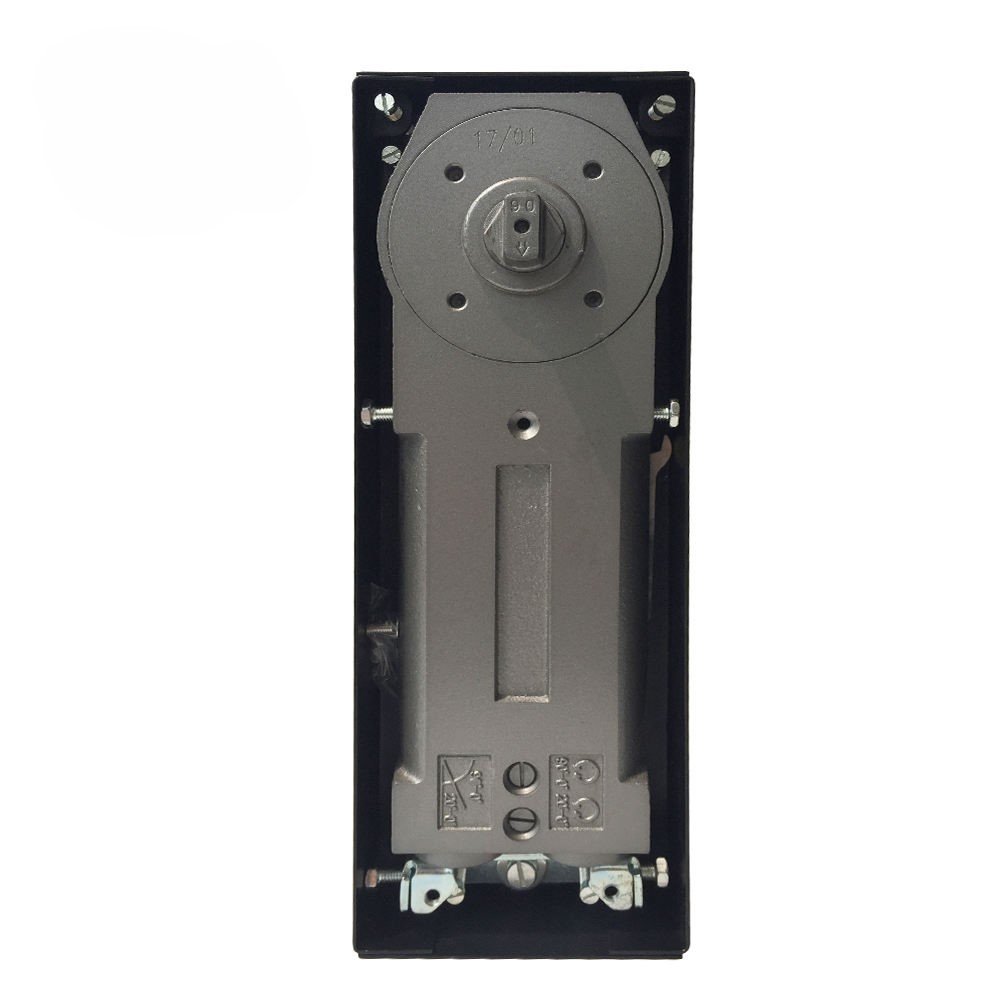
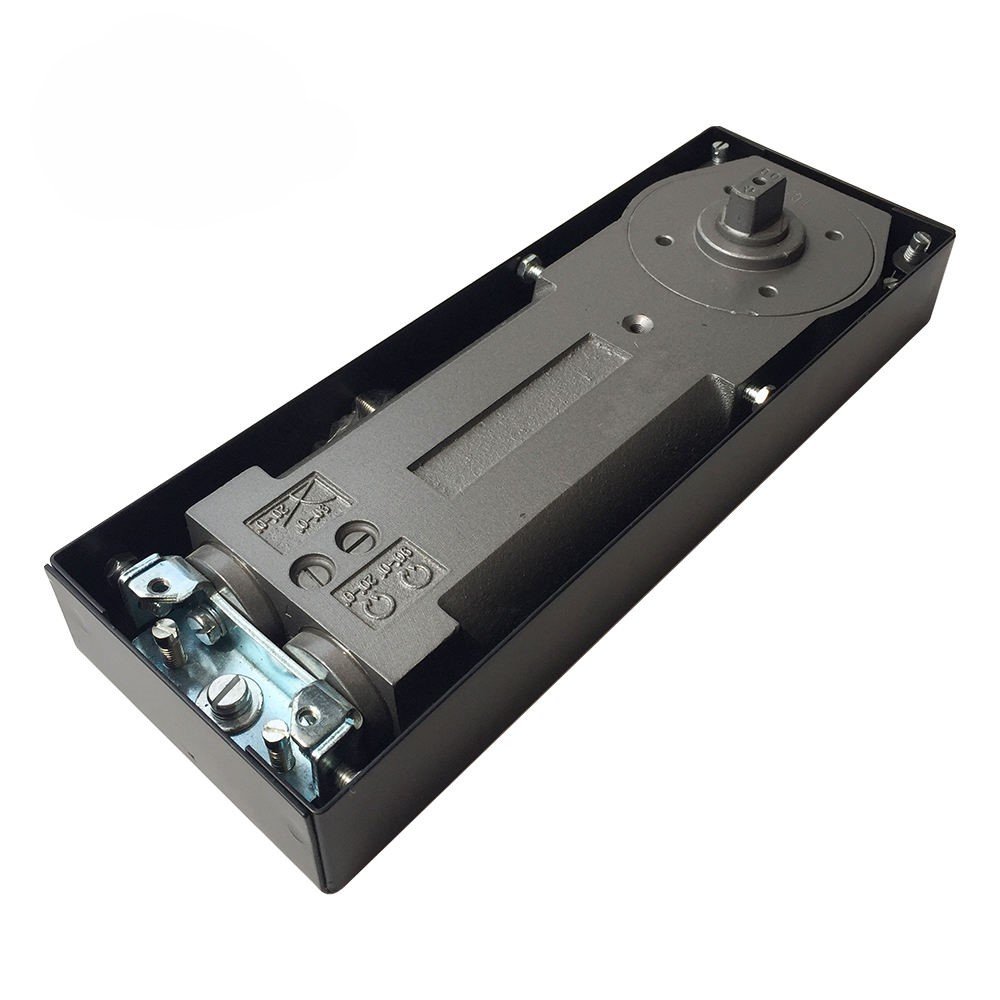
But bottom patch locks must be coordinated with the floor spring. The door should return accurately to the 0° closed position. If the door stops 3° to 4° off center, the bolt may hit the edge of the floor socket instead of entering smoothly.
For bottom locks, the lock, floor socket, floor spring and finished floor must be treated as one system.
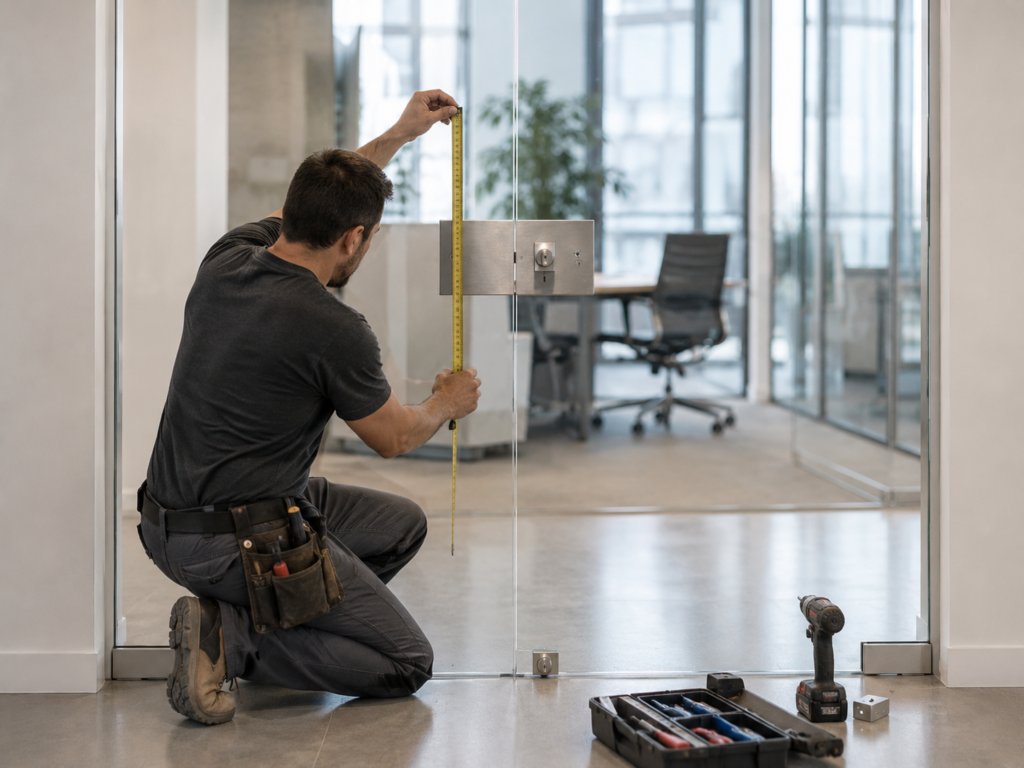
3. Central Patch Locks for Office Partitions and Double Glass Doors
For interior office partitions, meeting rooms and conference rooms, a central patch lock is often more convenient than a bottom lock.
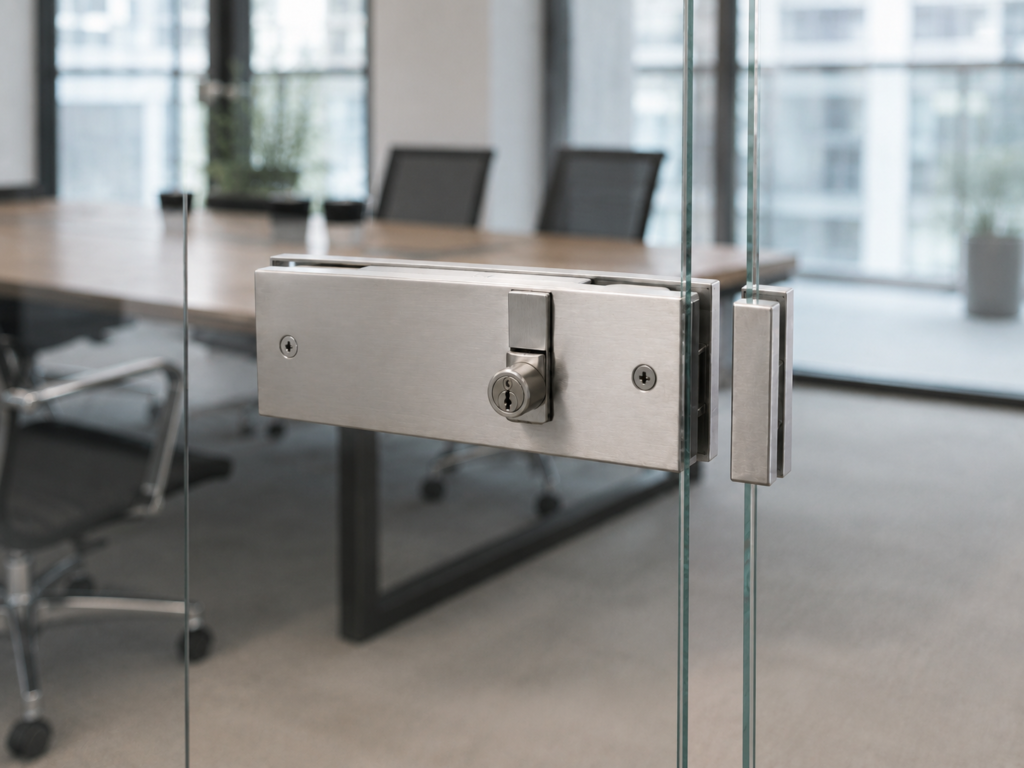
A central lock is installed around waist height, making it easier for users to lock and unlock the door. It is commonly used on single glass doors, double glass doors and office partition doors.
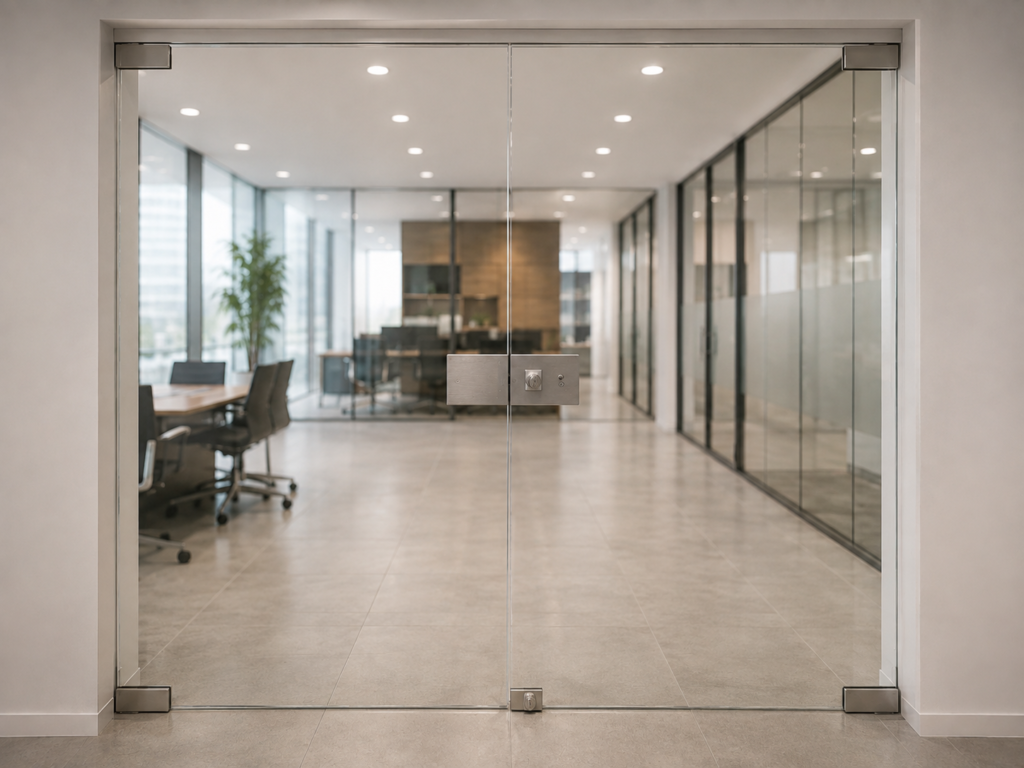
For double glass doors, the meeting gap must be planned carefully. For many central glass-to-glass lock applications, the meeting gap is often around 3mm to 5mm, depending on the lock model.
If the gap is too small, the lock covers or glass edges may interfere when the doors move. If the gap is too large, the bolt may not engage the keeper deeply enough.
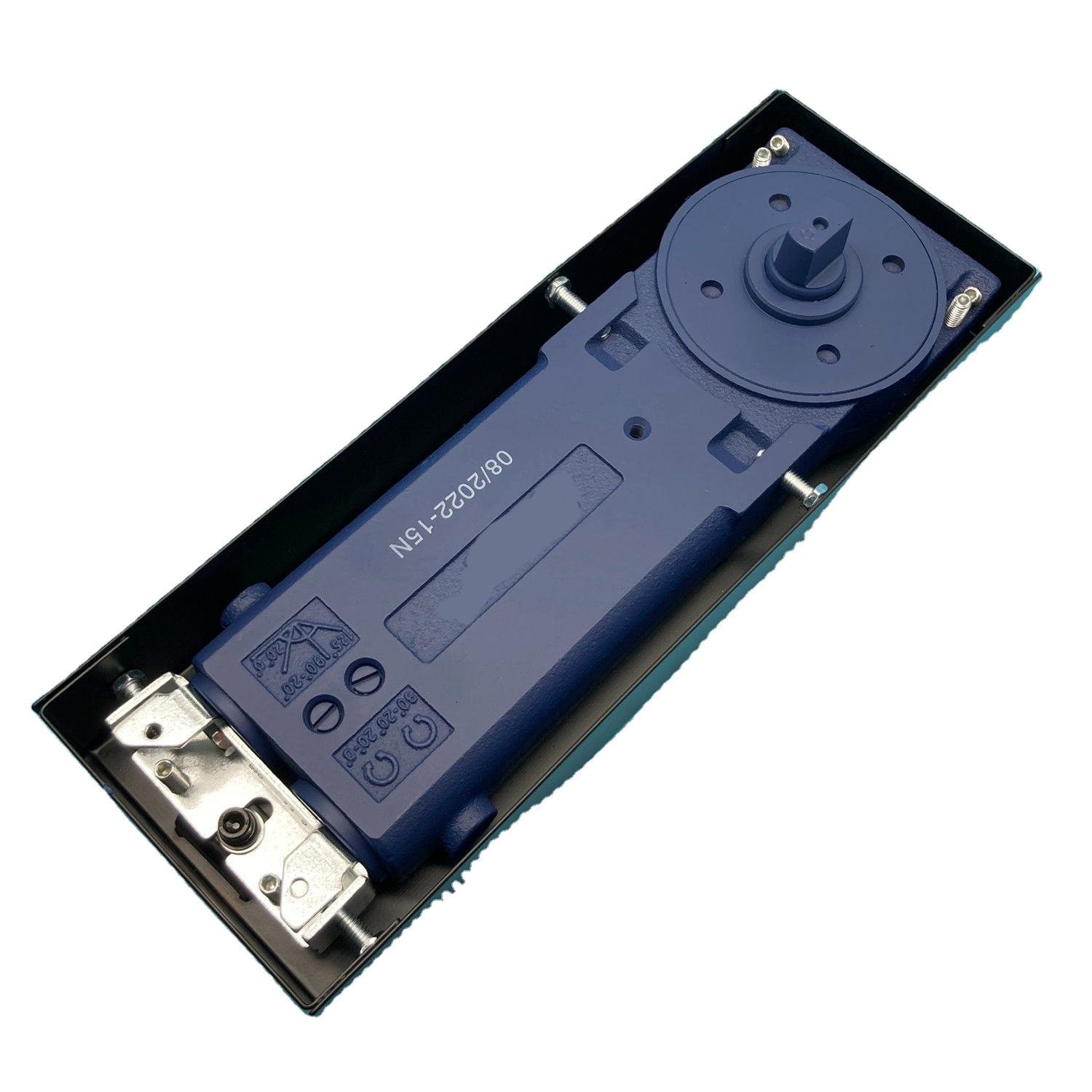
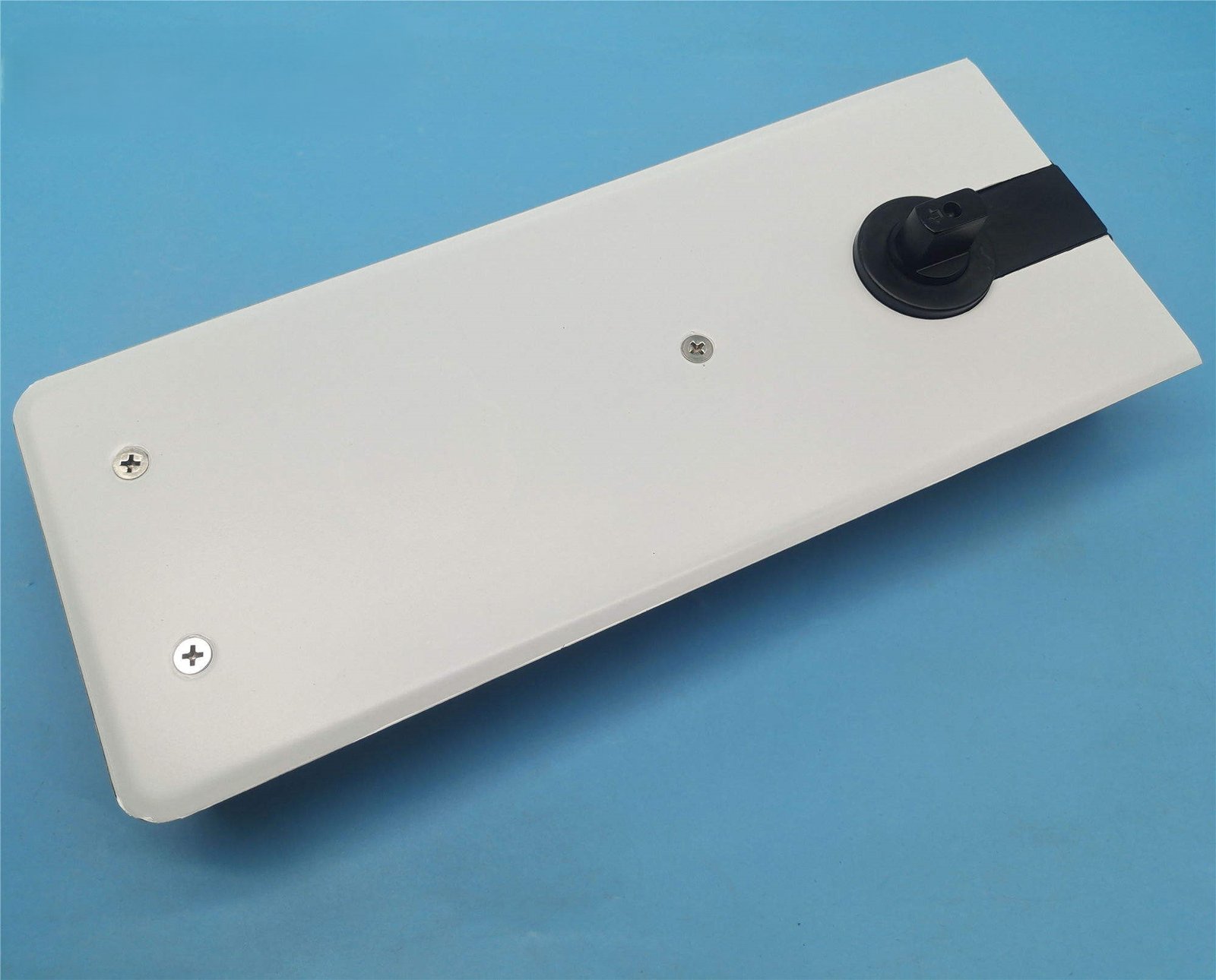
Floor spring centering also matters. A central lock depends on the door returning to the correct closed position. If the floor spring is worn, undersized or poorly adjusted, the door may stop slightly open and the lock bolt may not align with the strike plate.
For double doors, the inactive leaf should also be secured. If the active door locks into an inactive glass leaf that can still move, the lock may not engage reliably. In this case, the inactive leaf usually needs a flush bolt, floor bolt or other fixing method to create a stable receiving side.
A central patch lock is not only a lock body. It depends on door gap, floor spring return, inactive leaf control, keeper position and glass cutout.
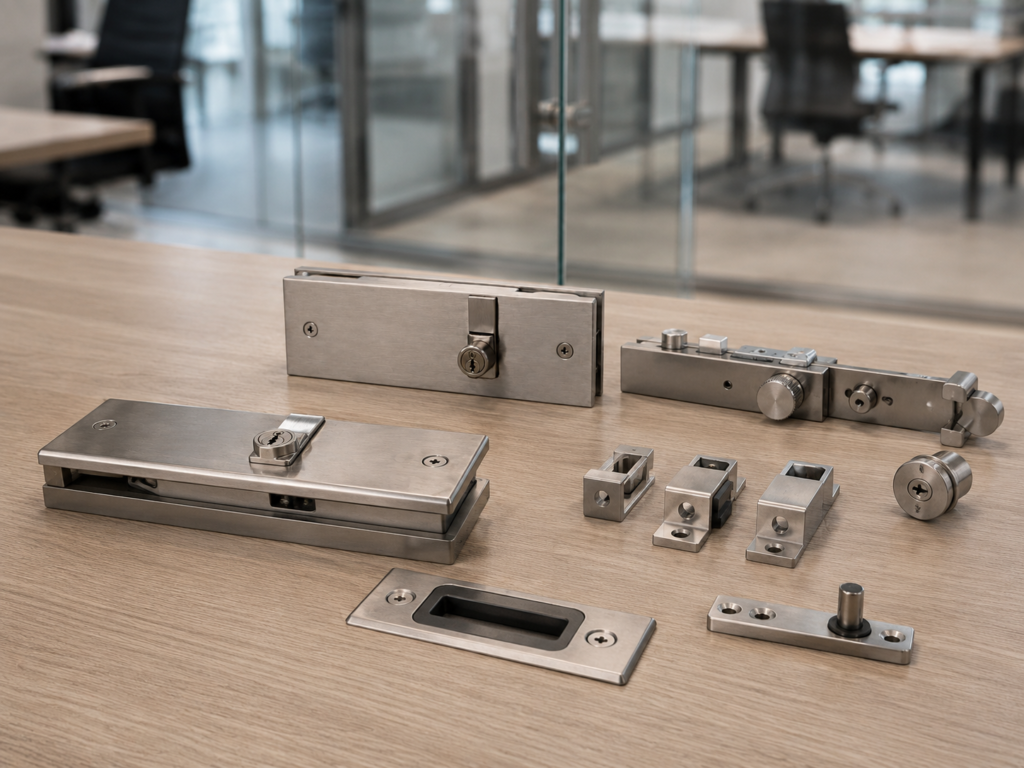
4. Sliding Glass Door Locks: Why Hook Bolts Are Different
Sliding glass doors require a different locking method from swing glass doors.
A swing door rotates around a hinge or pivot. A sliding door moves horizontally. Because of this movement, a simple straight bolt is often not suitable for sliding glass partitions.
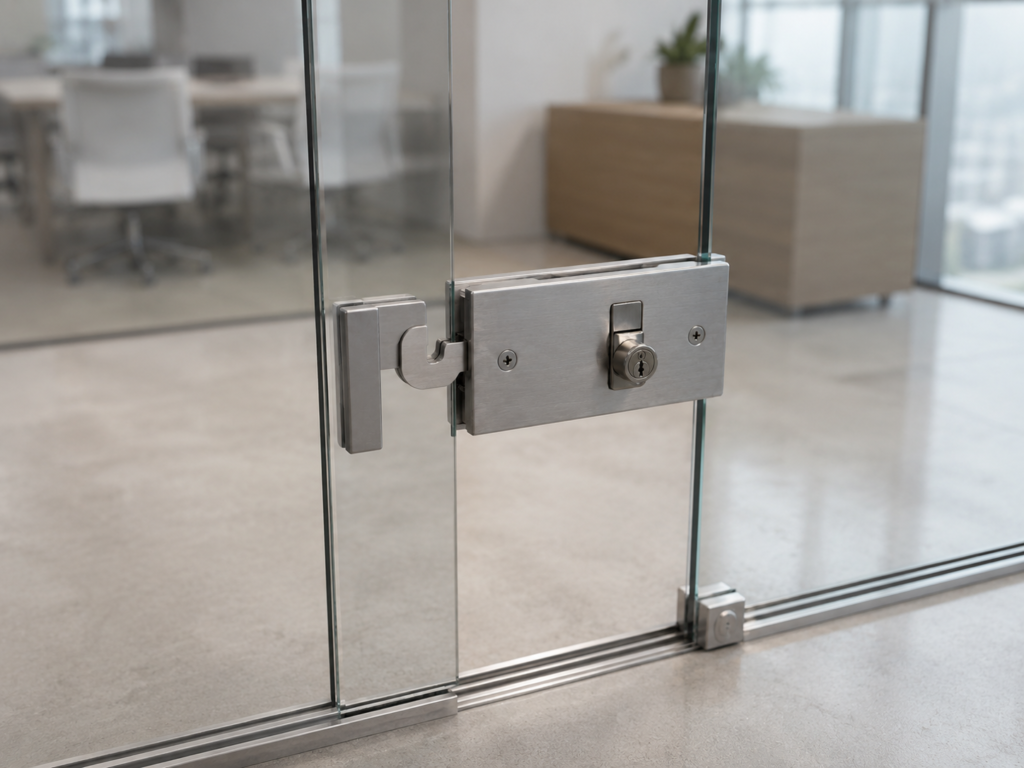
For sliding glass doors, the lock usually uses a hook bolt or claw bolt. When the key turns, the hook extends and catches behind the keeper or strike plate. This mechanical interlock helps prevent the sliding panel from being pulled away horizontally.
Sliding hook locks are commonly used for:
- office sliding glass partitions;
- meeting room sliding doors;
- retail display rooms;
- interior showroom partitions;
- top-hung sliding glass doors;
- bottom-rolling sliding glass doors.
The keeper may be fixed to a wall, frame, fixed glass panel or another sliding panel, depending on the layout.
The guide system also affects locking. If the sliding panel swings, rattles or shifts because the roller, track or bottom guide is loose, the hook bolt may not enter the keeper smoothly.
A sliding glass door lock must control horizontal movement, not only simple closing.
5. Retrofitting Locks on Existing Glass Without Drilling
Retrofit projects often have one major limitation: the glass already exists.
A tenant may take over an office space and want to add locks to private meeting rooms. A shop owner may want to improve security on existing glass doors. A contractor may need to replace old locks without replacing the glass panels.
If the existing 10mm or 12mm tempered glass has no factory-made lock cutout, a traditional patch lock may not fit. Since tempered glass cannot be safely drilled or reshaped on site, the contractor may need another solution.
This is where no-drill clamp-on locks can be useful.
A clamp-on lock usually uses a U-channel body with internal rubber pads or gaskets. It fits over the glass edge and is tightened with internal screws. This allows the lock to be installed without new holes in the glass.
No-drill locks are useful for:
- interior office privacy;
- meeting room doors;
- director offices;
- light commercial partitions;
- retrofit projects where glass cannot be replaced.
However, clamp-on locks should be selected according to the project requirement. For exterior entrances, high-traffic storefronts or higher-security doors, factory-prepared lock cutouts are usually preferred when possible.
No-drill does not mean no coordination. Glass thickness, door gap, keeper position and clamping strength still need to be confirmed.
6. Glass Thickness, Cutout and Handle Position Coordination
Mechanical glass door locks must match the glass thickness and preparation.
Common frameless glass door thicknesses include 10mm, 12mm and 15mm. Many locks use different gasket packages or spacer parts for different glass thicknesses. If the wrong gasket is supplied, the lock may not clamp properly or may feel loose after installation.
For factory-drilled locks, cutout geometry is critical. Similar-looking lock bodies may use different internal holes, notches or fixing positions. When replacing an old lock, the contractor should remove the cover plate and check the bare glass holes before ordering.
Handle position is another practical detail.
In narrow glass partitions, a large central patch lock installed too close to an oversized pull handle can create poor user experience. The user’s hand may hit the lock body when gripping the handle. For commercial projects, lock height, handle height and clearance between hardware should be coordinated before glass drilling.
The same applies to finish coordination. Locks, pull handles, patch fittings and floor spring cover plates should visually match. Brushed stainless steel, polished chrome, matte black and PVD finishes may vary between suppliers, so finish samples or photos should be confirmed before bulk ordering.
7. Common Mistakes in Glass Lock Specification
The first mistake is choosing the lock after glass tempering. If the required holes or cutouts are missing, the project may be limited to clamp-on options or may need new glass.
The second mistake is selecting a lock by appearance only. Similar exterior shapes may hide different hole patterns, bolt positions or keeper designs.
The third mistake is ignoring floor spring return-to-center accuracy. A bottom lock or central lock may not align if the door does not return to the correct closed position.
The fourth mistake is using a straight bolt on a sliding glass door. Sliding doors normally need a hook or claw bolt to control horizontal movement.
The fifth mistake is forgetting the inactive leaf in double doors. If the inactive door is not fixed, the active door may not lock securely.
The sixth mistake is not checking glass thickness. A lock prepared for 12mm glass may not fit 10mm glass correctly without the right gasket package.
The seventh mistake is failing to plan the keying system. For multi-door office or retail projects, keyed alike or master key requirements should be confirmed before bulk purchase.
These mistakes are avoidable when the lock is coordinated with the glass, floor spring, keeper, handle and project use case before ordering.
8. How Metech Supports Commercial Fit-Out Contractors
Metech Hardware supplies mechanical glass door locking hardware for offices, retail shops, commercial interiors and frameless glass partition projects.
Our range can support bottom patch locks, central glass locks, sliding glass locks, floor sockets, keepers, flush bolts, pull handles, patch fittings, floor springs and related architectural glass hardware.
For contractors, distributors and project buyers, Metech can help review the door type, glass thickness, lock position, floor socket requirement, cylinder option, keying plan, finish and quantity before quotation. We can also help coordinate locking hardware with floor springs, patch fittings, top pivots, handles and existing glass preparation.
For retrofit projects, buyers can send photos of the existing door, old lock, glass holes, door gap and floor condition. For new projects, drawings and hardware schedules help confirm lock position and glass preparation before tempering.
To request a quotation, send the door type, glass thickness, door size, lock type, cylinder requirement, keying plan, finish, quantity and available drawings or photos.
FAQ
Can I add a lock to an existing tempered glass door?
Yes, but the lock must match the existing glass condition. If the glass has no lock holes, a no-drill clamp-on lock may be considered for some interior applications. Tempered glass cannot be safely drilled on site.
What is the difference between a bottom patch lock and a central patch lock?
A bottom patch lock is installed near the bottom of the glass door and locks downward into a floor socket. A central patch lock is installed around waist height and usually locks into a keeper, fixed panel or another glass door leaf.
Why do sliding glass doors need hook bolts?
Sliding doors move horizontally. A hook bolt or claw bolt catches behind the keeper and helps prevent the panel from being pulled apart from the locked position.
Why is it hard to turn the key in my glass door lock?
This is often caused by misalignment. The floor spring may not return to center, the door may have sagged, the keeper may be off position, or the floor socket may be blocked by debris.
Are no-drill clamp-on locks suitable for offices?
They can be suitable for many interior office partitions, meeting rooms and private rooms. For exterior entrances or higher-security doors, factory-prepared lock cutouts are usually preferred when possible.
What should I send before ordering glass door locks?
Send the glass thickness, door type, lock type, existing hole pattern, door width and height, floor spring or hinge type, cylinder requirement, keying plan, finish, quantity and drawings or photos.