In high-traffic commercial buildings such as schools, hospitals, clinics, universities and office towers, a door closer is easy to ignore when it works correctly. The door opens, slows down, closes quietly and latches without attention.
But when the closer fails, the problem becomes visible very quickly.
A classroom door starts slamming every time students enter. A hospital corridor door becomes too hard for patients or staff to open comfortably. An office stairwell door no longer latches. A hydraulic closer leaks oil onto the door surface and loses speed control.
For facility managers and maintenance contractors, the first reaction is often to order the same model again.
But like-for-like replacement is not always the best solution.
If the old closer leaked oil after a short service period, slammed repeatedly or failed on a high-traffic door, the original model may have been under-specified for the real traffic volume, wind pressure, door size or user behavior.
In commercial buildings, door closer replacement is not only a maintenance task. It affects safety, access comfort, noise control, energy efficiency and daily traffic flow.
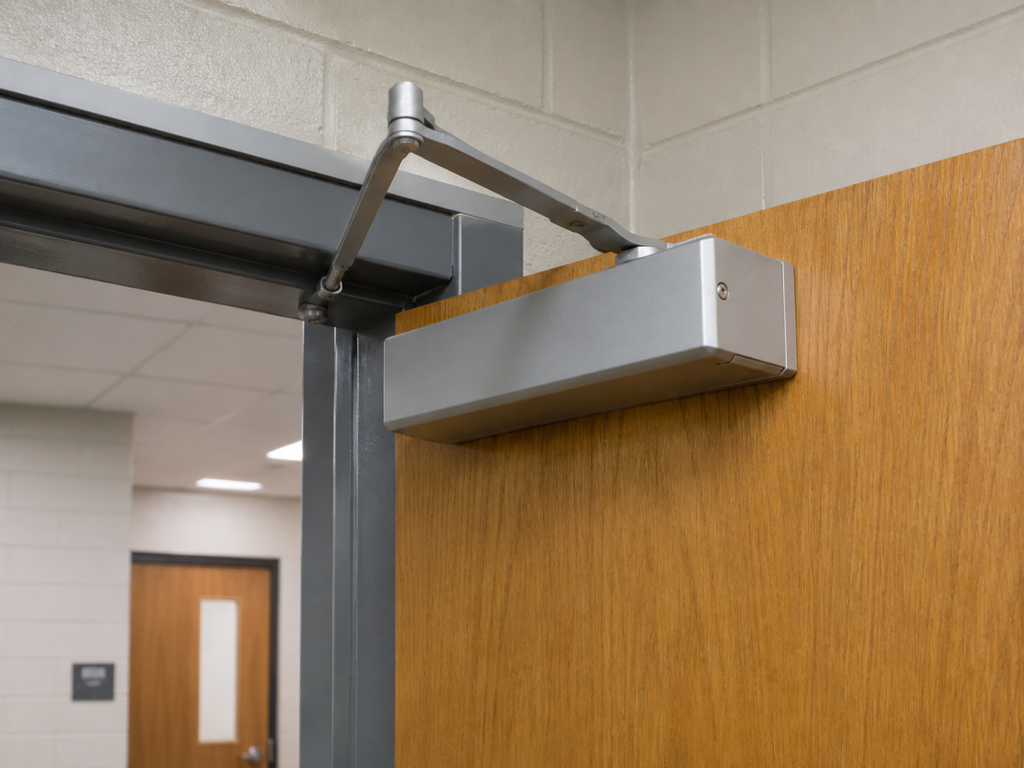
1. Why Like-for-Like Replacement Is Not Always Enough
Replacing a damaged door closer with the same model may be convenient, especially when the old holes already match. But before bulk replacement, the maintenance team should understand why the old closer failed.
A door closer may fail because of:
- hydraulic oil leakage;
- seal aging;
- high-frequency daily use;
- forced closing by users;
- wind shock;
- undersized spring power;
- wrong arm configuration;
- incorrect installation;
- damaged hinges or latch resistance;
- poor adjustment by previous maintenance work.
If the old closer was used on a low-traffic interior door, a similar replacement may be acceptable. But for classroom doors, hospital corridors, stairwell doors, public washroom doors and windy entrances, the new closer may need a higher cycle rating, better hydraulic control, Backcheck, Delayed Action or adjustable EN power.
For high-frequency commercial doors, project-grade closers may be rated for 500,000 cycles, 1,000,000 cycles or higher depending on model specification. The correct rating should match the real use condition, not only the door size.
A failed closer should be treated as useful information. It tells the contractor whether the original specification was strong enough for the building.
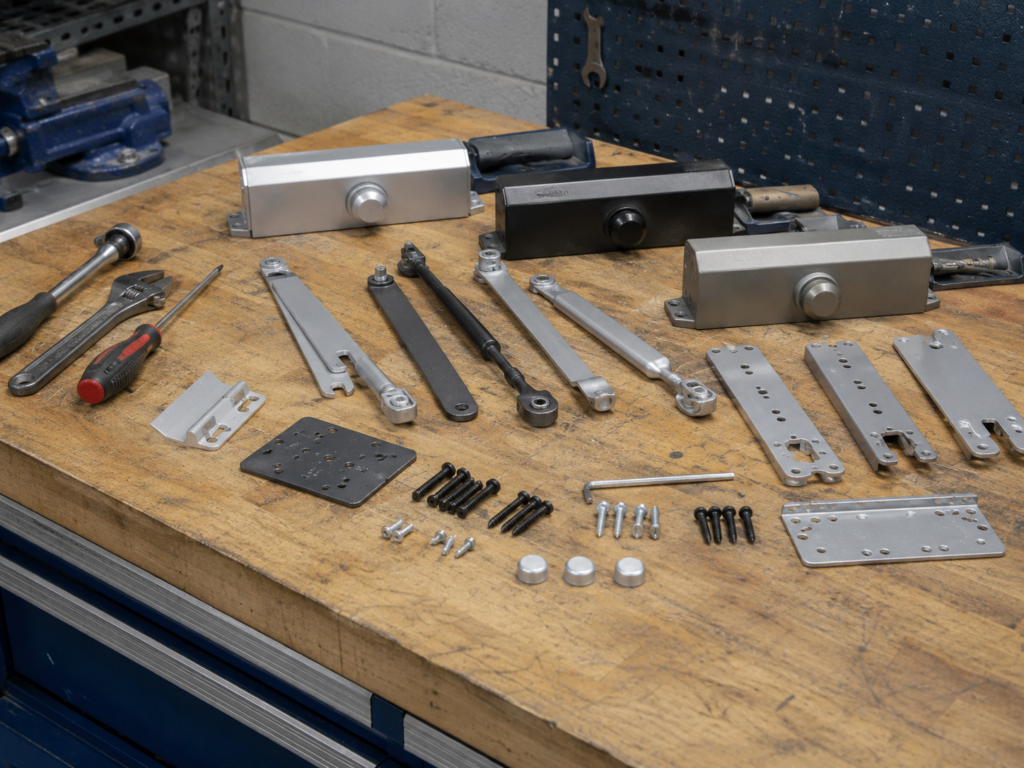
2. Retrofit Installation: Existing Holes, Adapter Plates and Fire Doors
In replacement projects, the most restrictive condition is often the existing door and frame.
Facility managers usually want to replace the closer without drilling many new holes. Extra holes can damage the appearance of painted timber doors, hollow metal doors, aluminum doors or framed glass doors. In batch projects, mismatched hole patterns can also slow down installation.
For fire-rated doors or doors with special project requirements, drilling new holes should be checked carefully because it may affect the approved door assembly or project compliance. The responsible project team should confirm the acceptable installation method before modification.
This is why old hole matching is important.
A replacement closer should be selected not only by EN power size, but also by mounting footprint.
Useful retrofit options may include:
- multi-hole mounting plates;
- adapter plates;
- universal mounting templates;
- closer bodies with common screw spacing;
- tri-pack arms for different installation methods;
- reinforcement plates for damaged old holes.
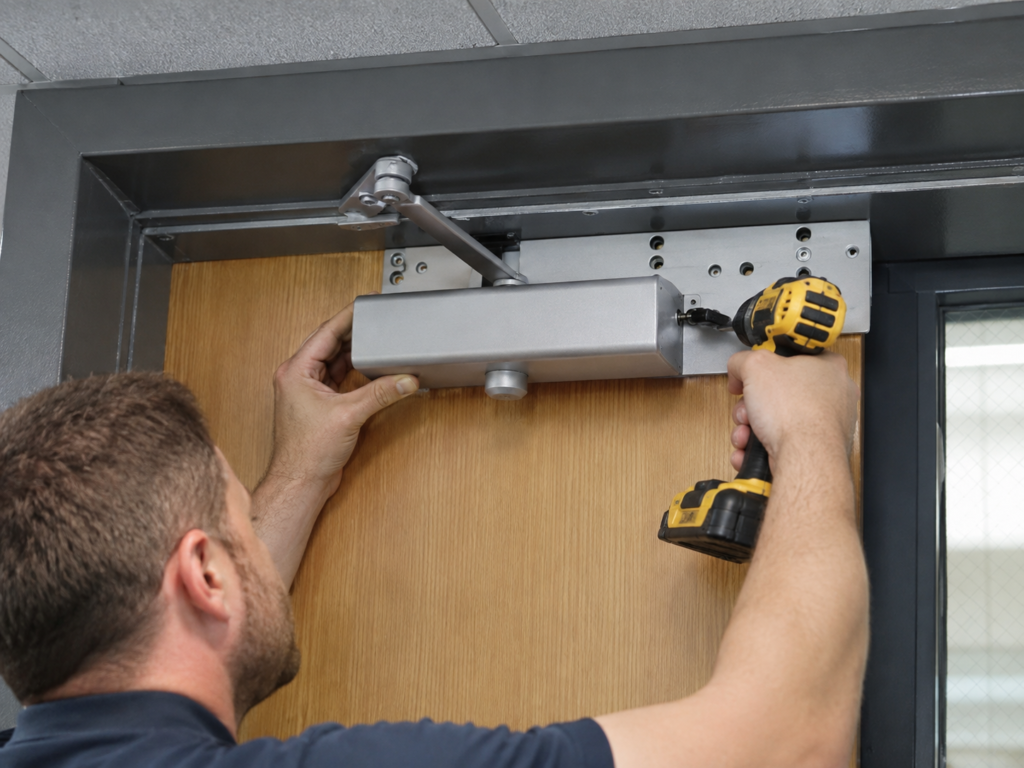
A multi-hole mounting plate may help reuse existing screw holes and reduce new drilling, depending on the old closer footprint. It also allows a new closer body to be installed more cleanly on doors where old holes are already present.
For facility replacement projects, it is often useful to test one or two sample doors before ordering the full quantity.
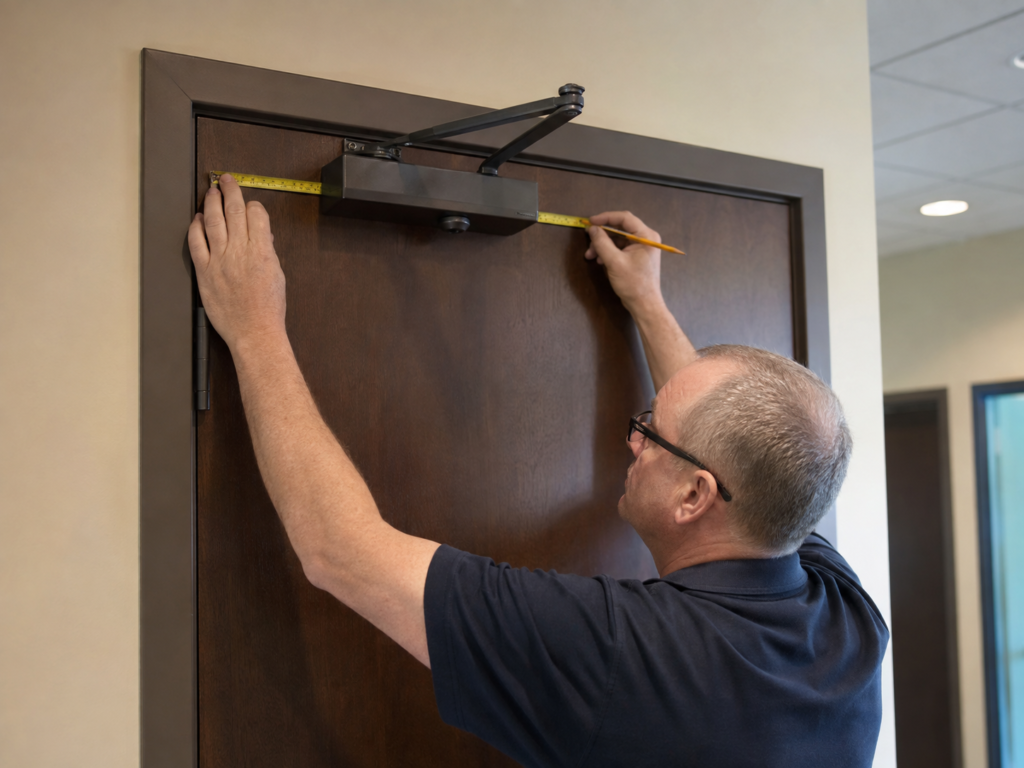
3. Schools: High Traffic, Wind Shock and Backcheck
Schools and university campuses create tough conditions for door closers.
Classroom doors, corridor doors, public restroom doors and exterior doors may be used hundreds or even thousands of times per day. Students may push doors open quickly. Wind between buildings may catch outward-opening doors. A weak or low-grade closer may start leaking, slamming or failing to latch after repeated abuse.
For these conditions, Backcheck is often worth considering.
Backcheck is a hydraulic cushioning function that slows the door during the opening movement, usually near the wider opening angle. In many models, it begins around 70° to 85°, depending on design and adjustment. It helps reduce the impact when the door is thrown open or caught by wind.
Backcheck does not replace a door stop, but it can reduce stress on the closer arm, hinges, frame and wall.
Schools may also benefit from adjustable EN power closers. An adjustable EN2–EN6 model allows maintenance teams to adjust spring power according to door width, latch resistance and local wind condition. This can simplify inventory because one closer series can cover different door sizes in the same facility.
The goal is not to make every door heavy to open. The goal is to provide enough closing power while still controlling speed and user comfort.
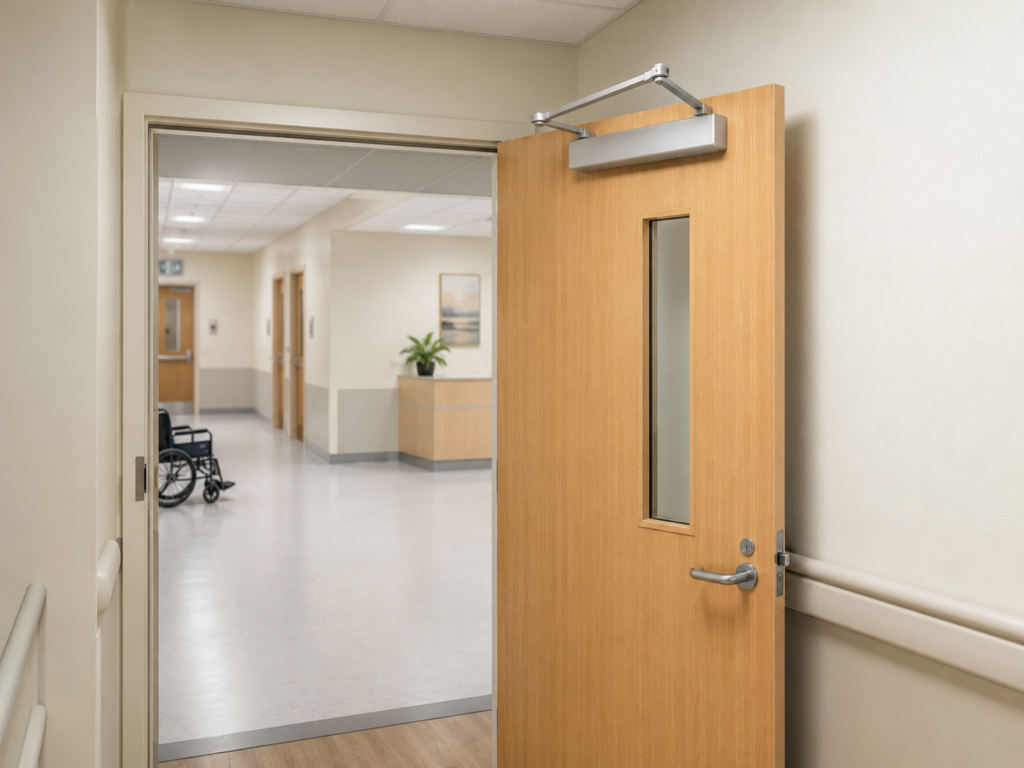
4. Hospitals and Clinics: Delayed Action and Opening Comfort
Hospitals, clinics, nursing homes and healthcare buildings have different priorities.
Doors must close reliably, but they should also allow patients, visitors, staff, wheelchairs, stretchers and medical carts to pass through comfortably. A closer that is too strong can make the door difficult to open. A closer that closes too quickly can become uncomfortable or unsafe in daily use.
For healthcare and accessibility-focused projects, Delayed Action may be considered.
Delayed Action slows the closing movement after the door has been opened beyond a certain angle. In some door closer models, the delay begins when the door is opened beyond around 70°, and the delay period may be adjusted around 10 to 20 seconds, depending on model design.
This gives slow-moving traffic more time to pass before the normal closing sweep begins.
Delayed Action can be useful for:
- hospital corridors;
- clinic consultation rooms;
- nursing homes;
- accessible routes;
- doors used by patients or staff with carts.
However, Delayed Action should be selected according to project requirement. For fire-rated or smoke-control doors, the final closer function should follow local code and project specification.
Opening comfort is just as important as closing force in healthcare projects.
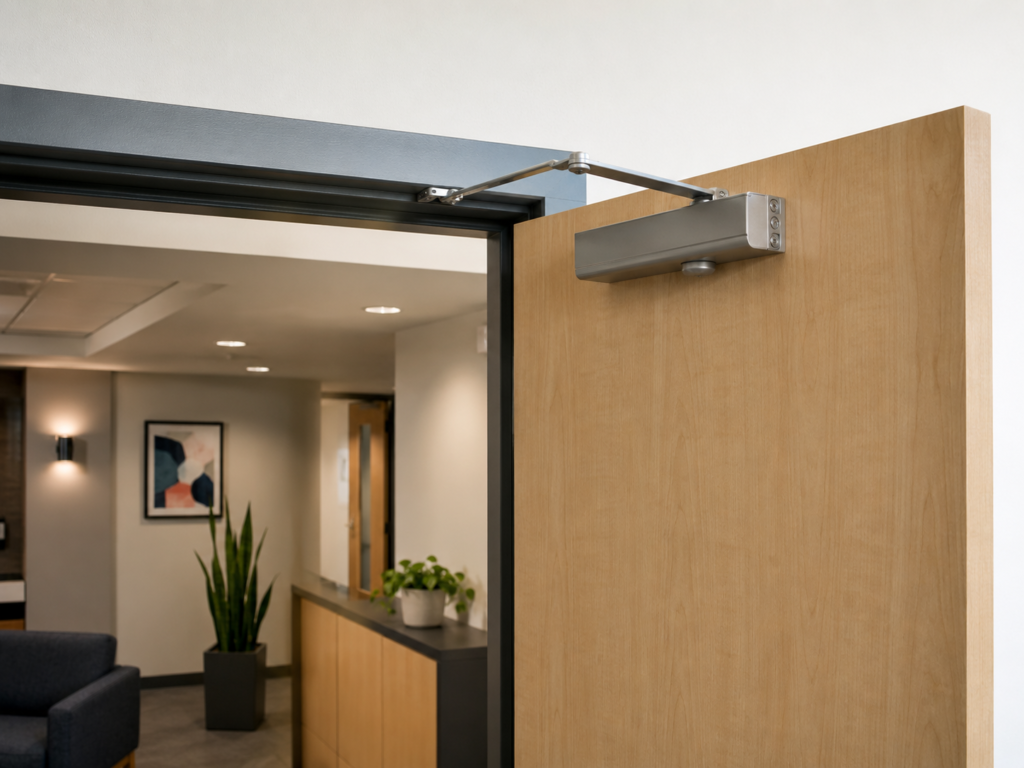
5. Office Buildings: Standardized Batch Replacement
Office buildings often need door closer replacement across many different areas.
Meeting rooms, tenant offices, stairwell doors, pantry doors, service rooms, washrooms and corridor doors may all use closers, but not all doors have the same requirements.
A building may include:
- wooden doors;
- aluminum doors;
- steel doors;
- framed glass doors;
- fire-rated doors;
- high-use corridor doors;
- low-use office doors.
Replacing closers one by one without a plan can create inconsistent models, finishes and maintenance parts. For property management companies and facility contractors, a batch replacement schedule is more practical.
A door closer schedule may include:
- door location;
- door material;
- door width and height;
- old closer photo;
- old closer model if visible;
- arm type;
- mounting side;
- old hole pattern;
- current problem;
- hold-open or non-hold-open requirement;
- finish;
- quantity.
A standardized replacement plan can reduce future maintenance complexity. It also helps contractors decide where to use heavy-duty closers, where adjustable EN power is needed, and where a lower-use closer is enough.
6. EN Power Size, Arm Type and Cycle Rating
Door closer selection should not be based on appearance only.
The closer must match the door width, door weight, latch resistance, traffic frequency and opening condition. EN power size is commonly used as a practical reference. Actual selection should follow product data and project requirements, but common references include:
| EN Size | Practical Door Reference |
|---|---|
| EN2 | Up to about 850mm / 40kg |
| EN3 | Up to about 950mm / 60kg |
| EN4 | Up to about 1100mm / 80kg |
| EN5 | Up to about 1250mm / 100kg |
| EN6 | Up to about 1400mm / 120kg |
A closer that is too weak may fail to latch. A closer that is too strong may make the door difficult to open.
Arm type also affects replacement.
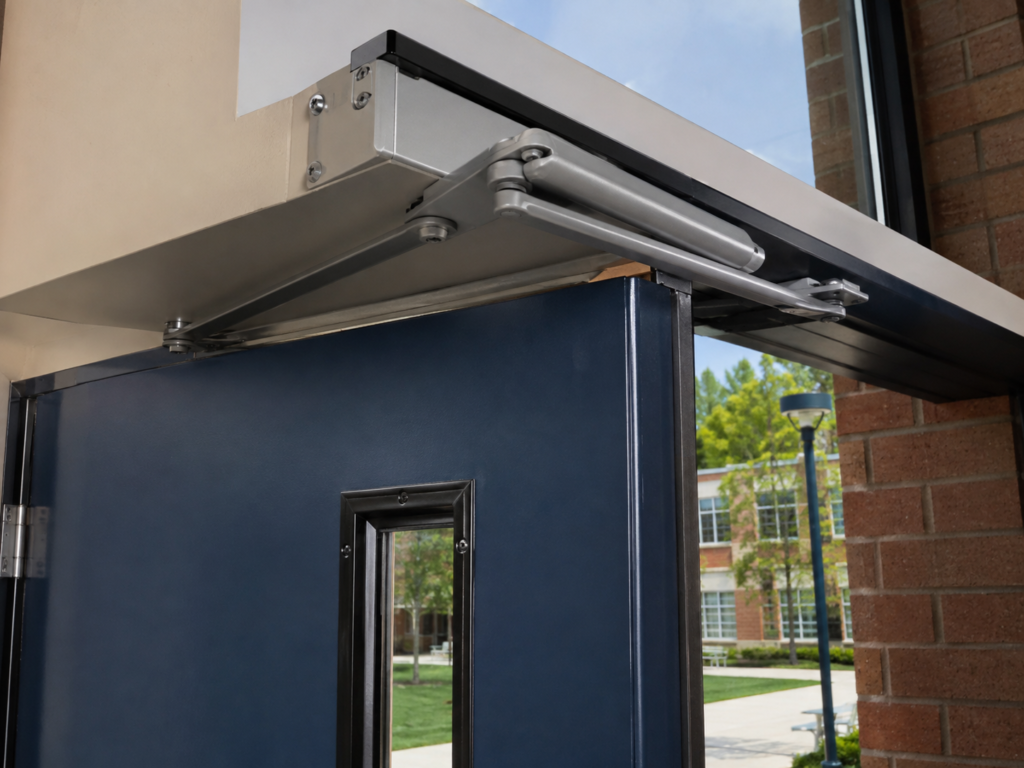
A standard arm is common and mechanically efficient. A parallel arm is often used on corridor, public-use or outward-opening doors where a lower-profile arm is preferred. A slide track arm gives a cleaner appearance for offices, clinics and interiors, but power and mechanical efficiency should be reviewed.
For retrofit work, tri-pack arm options can be useful because they support standard, top jamb and parallel arm installation from one package, depending on site condition.
Cycle rating should also match the building. A light-duty closer may work for a low-use interior door, but high-traffic school and hospital doors often require heavier-duty models.
7. Common Mistakes in Door Closer Replacement
The first mistake is replacing like-for-like without diagnosing the cause of failure. If the old closer failed because it was under-specified, the same model may fail again.
The second mistake is ignoring the old hole pattern. A replacement closer may meet the power requirement but still create installation problems if the screw spacing and arm shoe position do not match.
The third mistake is using light-duty closers on high-traffic doors. Schools, hospitals and public corridors usually require stronger hardware than low-use office doors.
The fourth mistake is selecting a closer without Backcheck for doors exposed to impact, misuse or wind. Backcheck may help protect the door system in many high-abuse locations.
The fifth mistake is forgetting Delayed Action in healthcare or accessibility-focused areas where slower traffic needs more time to pass.
The sixth mistake is stripping adjustment valves during maintenance. Speed valves should be adjusted manually in small increments, often quarter-turn adjustments. Forcing the valve beyond its limit can damage the hydraulic control.
The seventh mistake is failing to pre-load the arm during installation. Without correct arm pre-load, the closer may not have enough final leverage to latch the door reliably.
The eighth mistake is choosing hold-open closers for doors that must close automatically. This should be checked carefully for fire-rated, stairwell or safety-related doors.
These problems can be avoided when the replacement closer is selected according to the door condition, not only the old closer appearance.
8. What to Confirm Before Ordering
Before ordering replacement door closers, buyers should prepare the basic door and site information.
Useful details include:
- door type;
- door material;
- door width and height;
- approximate door weight;
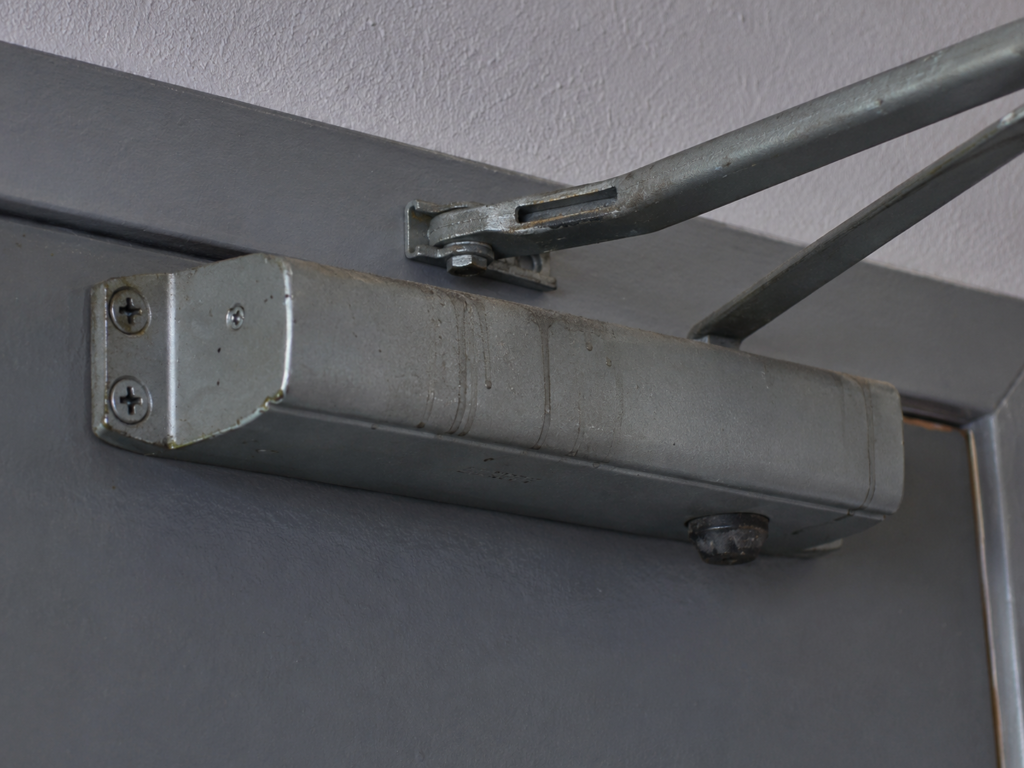
- existing closer photo;
- old closer model if visible;
- current problem;
- oil leakage or no leakage;
- arm type;
- mounting position;
- old hole spacing if known;
- hold-open or non-hold-open requirement;
- Backcheck requirement;
- Delayed Action requirement;
- fire door or normal door;
- indoor or outdoor location;
- traffic frequency;
- finish;
- quantity;
- project drawings or site photos.
For batch replacement, send several representative door photos, including close-up photos of the closer body, arm, door frame and mounting holes.
A good replacement quotation should consider door size, door weight, arm type, old hole pattern, traffic frequency and project requirement.
9. How Metech Supports Facility Maintenance Upgrades
Metech Hardware supplies commercial door closers for schools, hospitals, office buildings, retail interiors and other commercial door projects.
Our door closer options can support wooden doors, aluminum doors, steel doors and framed glass doors. Depending on project requirement, options may include adjustable EN power models, heavy-duty closers, standard arms, parallel arms, slide track arms, hold-open and non-hold-open versions.
For facility maintenance buyers, distributors and contractors, Metech can help review door width, door material, use frequency, arm type, old closer photos, mounting condition, Backcheck requirement, Delayed Action requirement, finish and quantity before quotation.
For mixed commercial projects, buyers can combine door closers with floor springs, patch fittings, pull handles, glass locks, shower hardware, railing hardware and other architectural glass fittings to simplify procurement.
To request a quotation, send the door size, door material, old closer photos, arm type, current problem, old hole pattern, hold-open requirement, Backcheck or Delayed Action requirement, finish, quantity and project photos or drawings.
FAQ
Can I replace a door closer without drilling new holes?
It may be possible, but it depends on the old hole spacing, mounting template and new closer model. Adapter plates or multi-hole mounting plates may help reduce new drilling in some retrofit projects.
When should I upgrade instead of replacing like-for-like?
Upgrade should be considered when the old closer failed early, leaked oil, slammed after adjustment, could not latch the door, or was used on a high-traffic, windy or heavy door.
What is Backcheck on a door closer?
Backcheck is a hydraulic cushioning function that slows the door during the opening movement, usually near a wider opening angle. It helps reduce impact when the door is pushed open forcefully or affected by wind.
What is Delayed Action on a door closer?
Delayed Action slows the closing movement for a short period after the door has been opened. It can help patients, wheelchair users, staff with carts or slow-moving traffic pass through more comfortably.
Why does the new closer feel hard to open?
Possible reasons include excessive EN power, unsuitable arm type, incorrect installation angle, tight hinges, frame friction, latch resistance or Backcheck adjusted too strongly.
Is a hold-open door closer suitable for fire doors?
Not always. Fire-rated or safety-related doors may need to close automatically. Hold-open use should follow project specification and local code.
What should I send before ordering?
Send door width, door height, door material, old closer photos, arm type, current problem, old hole pattern, hold-open requirement, Backcheck or Delayed Action requirement, finish, quantity and project photos or drawings.