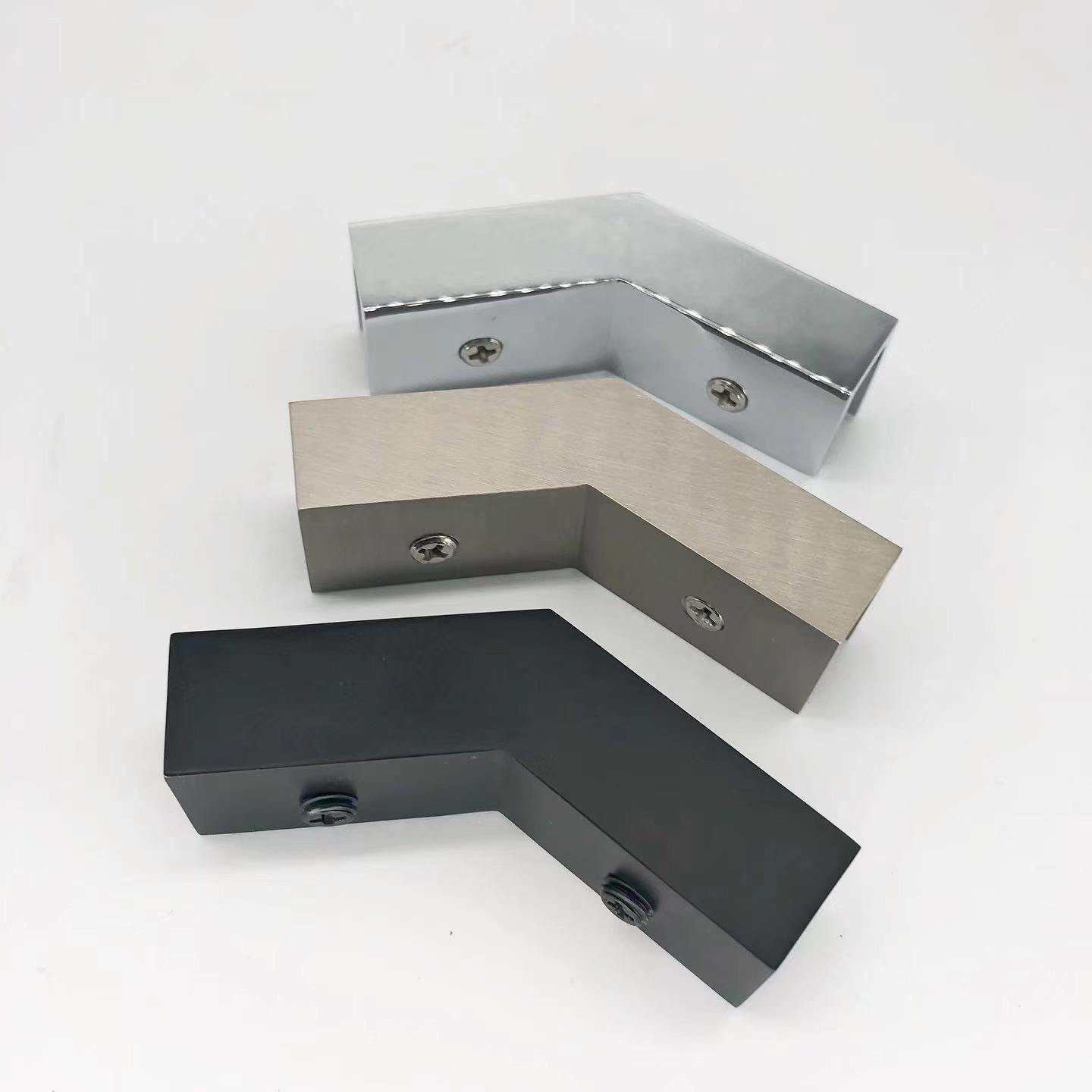
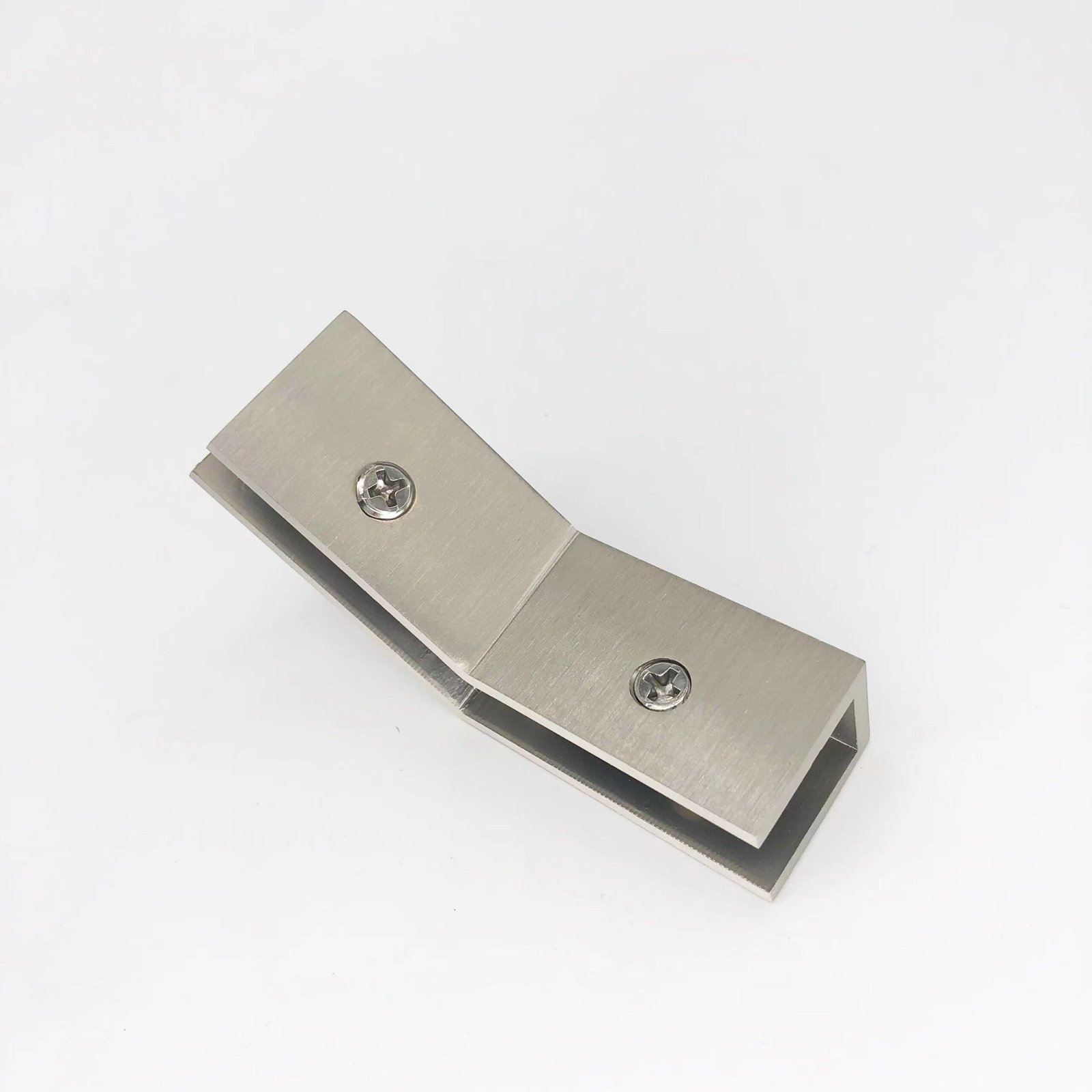
For glass fabricators and shower door companies, the hardware decision starts long before installation.
Once shower glass has been cut, drilled and tempered, changing the hinge, pull handle or clamp can become much more difficult. A different hinge may require another cutout. A new pull handle may use different hole spacing. A seal selected too late may not match the final door gap.
These problems become more serious when the fabricator is supplying complete shower enclosure kits rather than bare glass.
Many contractors and project buyers now expect a coordinated package that combines processed glass with compatible hinges, clamps, handles, support hardware and seals. This creates an opportunity for glass fabricators, but it also requires tighter control over hardware specifications.
For repeat production, the goal is simple:
The glass preparation and the hardware specification should be coordinated before tempering and before bulk production begins.

Why Hardware Coordination Must Happen Before Tempering
Frameless shower hardware is closely connected to glass geometry.
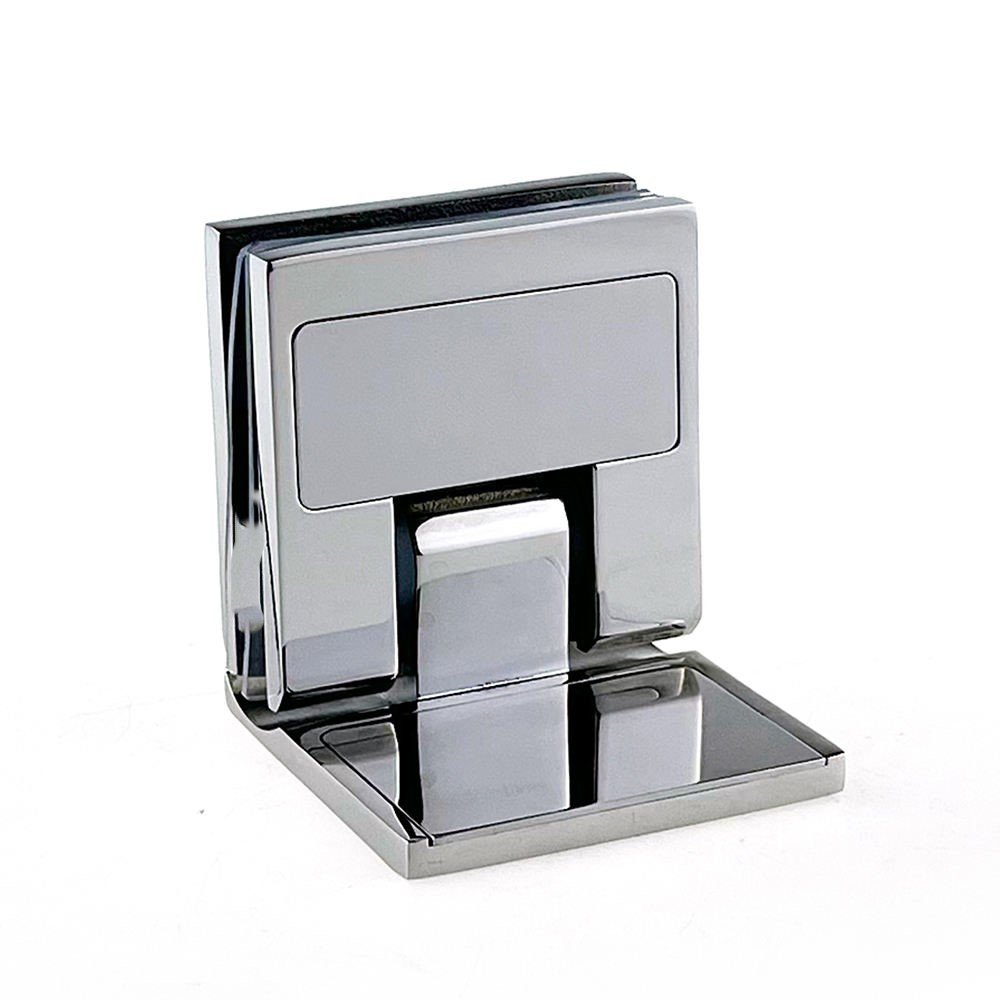
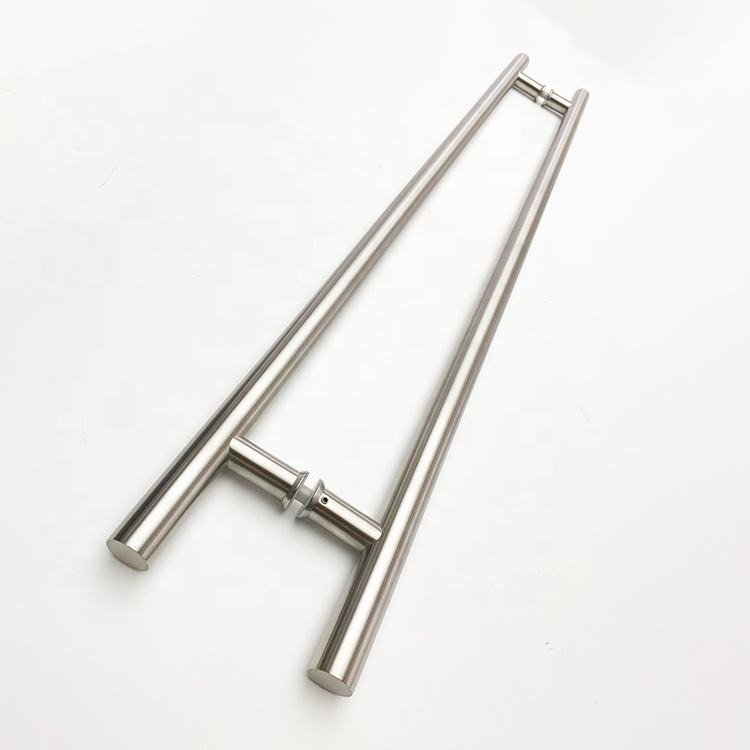
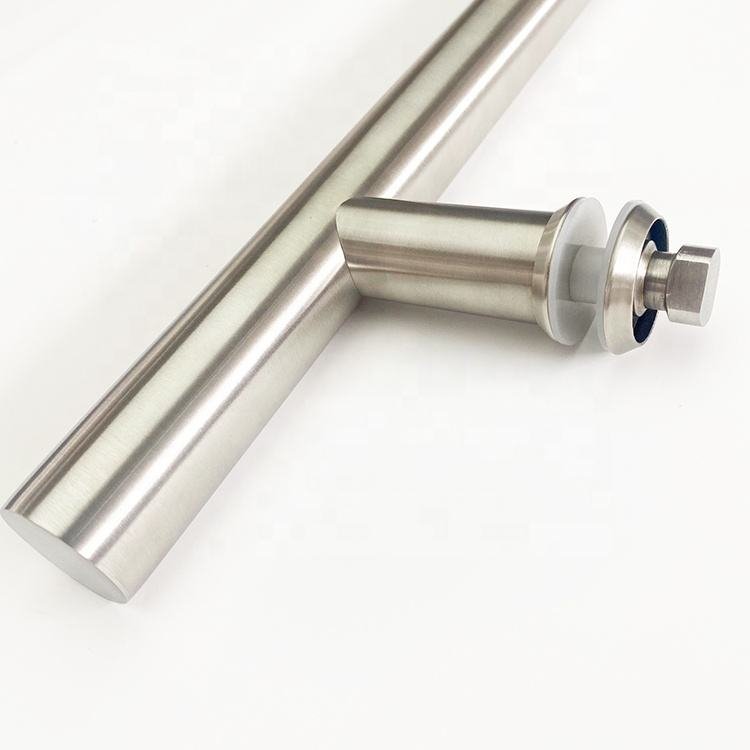
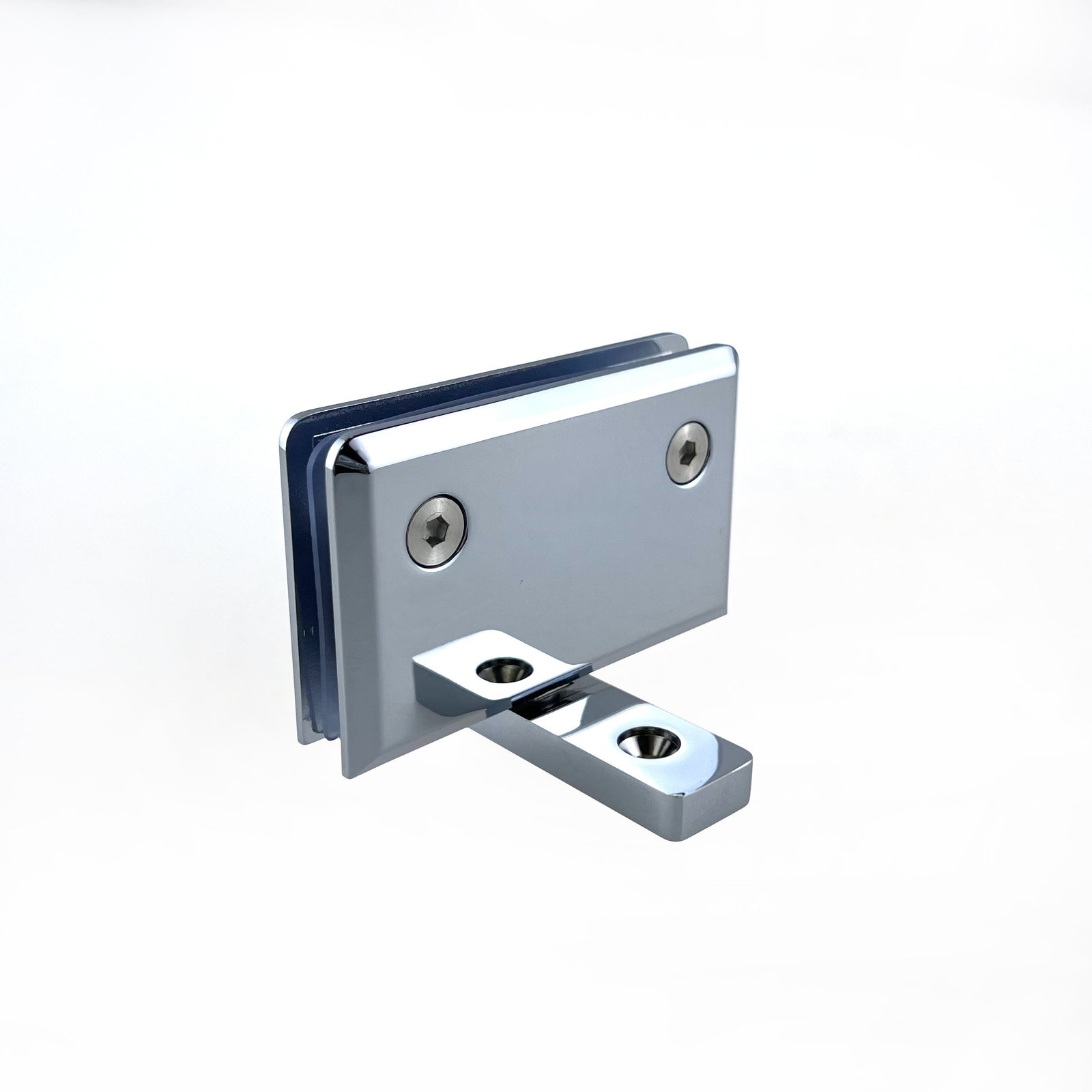
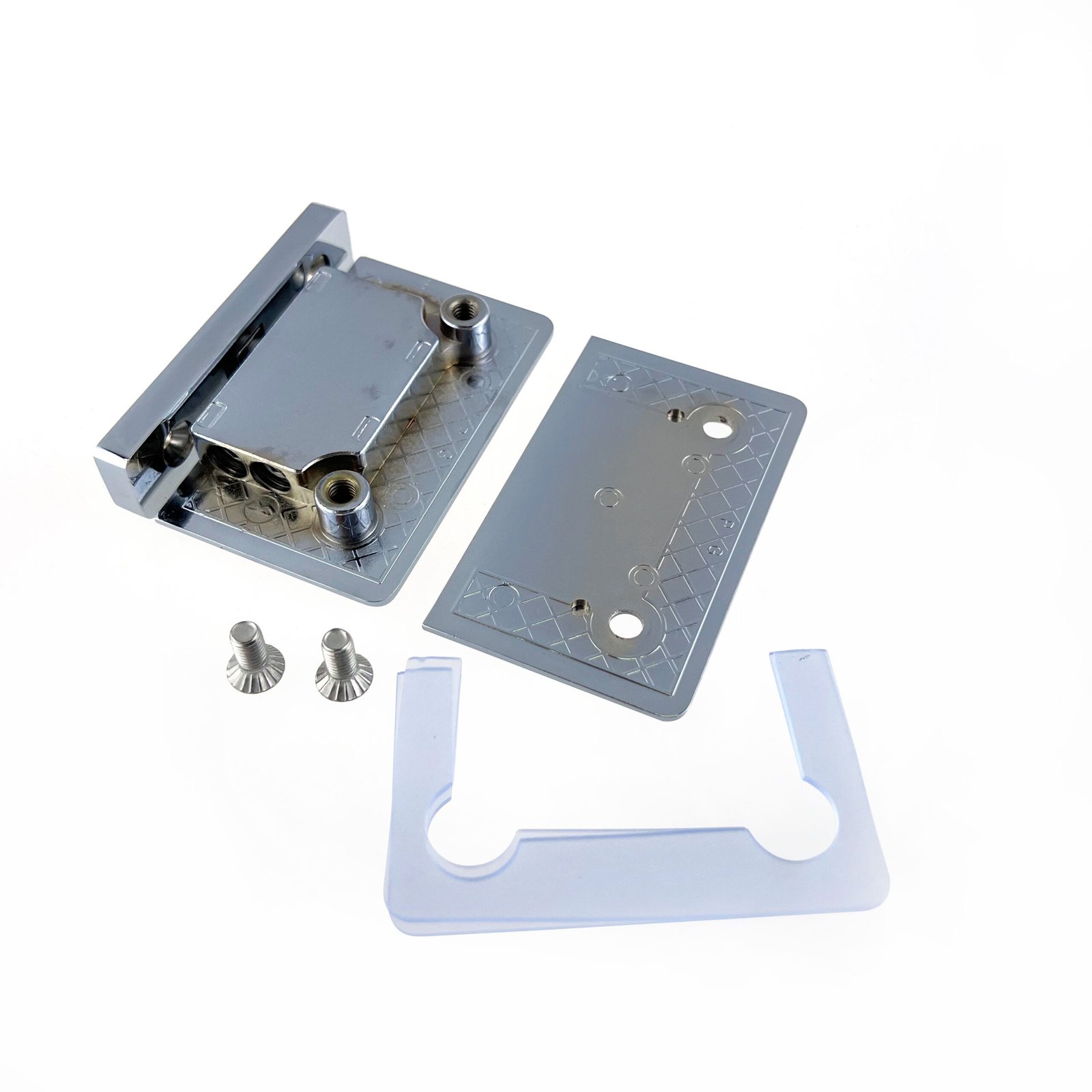
A shower hinge may require a model-specific notch or hole arrangement. A pull handle depends on a defined center-to-center drilling distance. Glass clamps and support fittings need suitable edge positions, while sliding systems depend on door width, overlap and guide conditions.
This means hardware cannot always be treated as an accessory that can be changed freely after the glass is finished.
For repeated shower models, one incorrect drawing can also be repeated across an entire batch.
The safest workflow is:
layout → hardware approval → glass preparation → sample assembly → bulk production.
This reduces the risk of discovering a hardware mismatch after the glass has already been tempered.
What Needs to Be Coordinated Between Glass and Hardware?
Every major shower component requires information from both the glass side and the hardware side.
| Item | Glass / Fabrication Information | Hardware Information |
|---|---|---|
| Shower hinge | Glass thickness, door size, cutout location | Exact hinge model, mounting type, compatible thickness, cutout drawing |
| Glass clamp | Panel thickness and fixing position | Clamp type, connection method and dimensions |
| Pull handle | Hole diameter, spacing and position | Handle design and center-to-center dimension |
| Support bar | Fixed-panel size and mounting point | Bar length, connector type and fixing method |
| Seal strip | Glass thickness and designed gap | Seal profile and application |
| Sliding system | Door size, overlap and glass preparation | Track, roller, guide and stopper compatibility |
The fabricator needs accurate preparation information.
The hardware supplier needs to understand the actual enclosure layout.
Neither side should work from a product photo or a general description such as “90° hinge” or “standard shower handle.”
Start With the Enclosure Layout
Hardware selection should begin with the actual shower design.
Common layouts may include:
- wall-to-glass hinged doors;
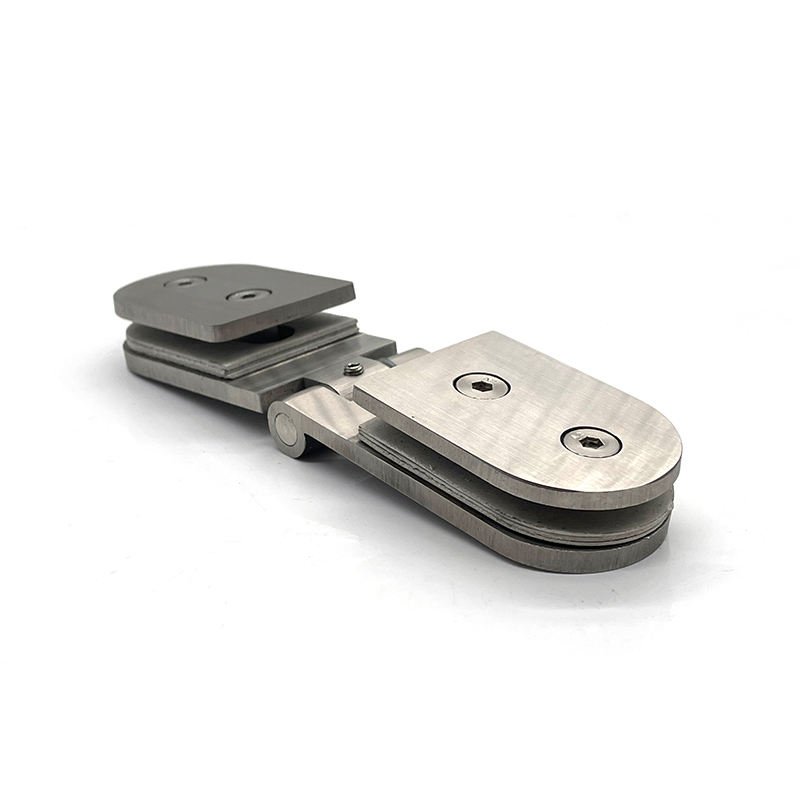
- glass-to-glass hinged doors;
- corner enclosures;
- 135° enclosures;
- fixed panels with support bars;
- sliding shower doors.
Each layout creates different hardware and glass requirements.
Confirm the Door Configuration
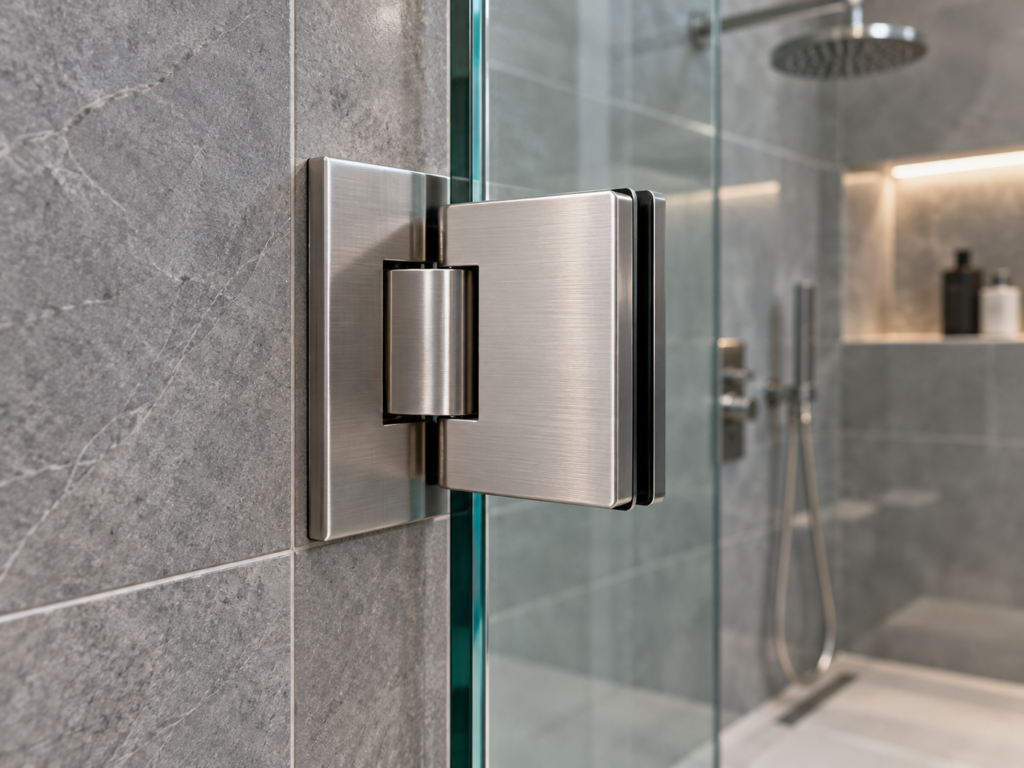
Before selecting the hinge, confirm how the moving panel connects to the enclosure.
A wall-to-glass door and a glass-to-glass door may use different hinge families even if the finished shower looks similar.
Door swing should also be checked against nearby walls, vanities, toilets, towel rails and fixed panels.
Check Fixed-Panel Conditions
Fixed glass needs its own hardware planning.
Panel width, height and fixing conditions affect whether the project uses clamps, U-channels, support bars or a combination of these methods.
The moving door and fixed glass should therefore be planned as one enclosure rather than as separate products.
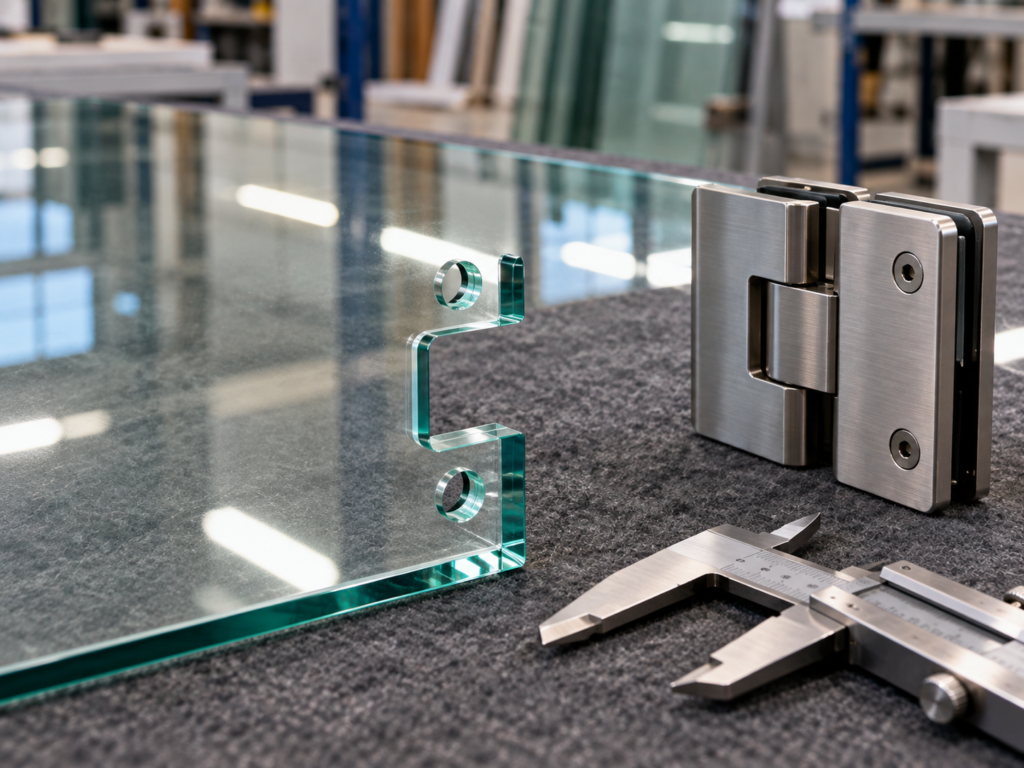
Coordinate Cutout Drawings Before CNC Glass Processing
This is one of the most important steps for glass fabricators.
There is no reason to assume that two visually similar shower hinges use identical glass preparation.
Different models may require different:
- cutout geometry;
- hole positions;
- edge distances;
- plate dimensions;
- mounting orientations.
Before CNC processing begins, the exact hinge model should therefore be linked to an approved cutout drawing.
Where CAD files or model-specific drawings are available, the glass-processing team should work from the correct revision rather than an older reference or a drawing from a similar model.
The objective is not “zero tolerance.” Real manufacturing always works within controlled tolerances.
The objective is consistent dimensional compatibility between the processed glass and the approved hardware.
Avoid Late Hardware Substitution
A common problem occurs when a similar hinge is substituted after the glass has already been tempered.
The replacement may have the same general size but a different cutout or hole position.
For this reason, substitute hardware should be checked against the existing glass preparation before approval.
Appearance alone is not enough.

Coordinate Glass Thickness, Hinge Capacity and Gasket Configuration
Glass thickness is another area where assumptions can create problems.
Some shower hinge series are designed for one narrow glass-thickness range. Others can support more than one thickness using the manufacturer-specified gasket or clamping configuration.
The correct combination depends on the actual hinge model.
Gaskets are important because they isolate the metal hardware from the glass and help the hinge clamp the panel correctly.
An unsuitable gasket arrangement can contribute to:
- insufficient clamping;
- uneven pressure;
- hardware movement;
- door sag;
- or surface damage around the fixing area.
For repeat production, the fabricator should therefore confirm:
glass thickness + hinge model + correct gasket configuration
as one approved combination.
Do not assume that every hinge can be adapted from 8 mm to 10 mm or 12 mm simply by changing a pad.
That is model-specific.
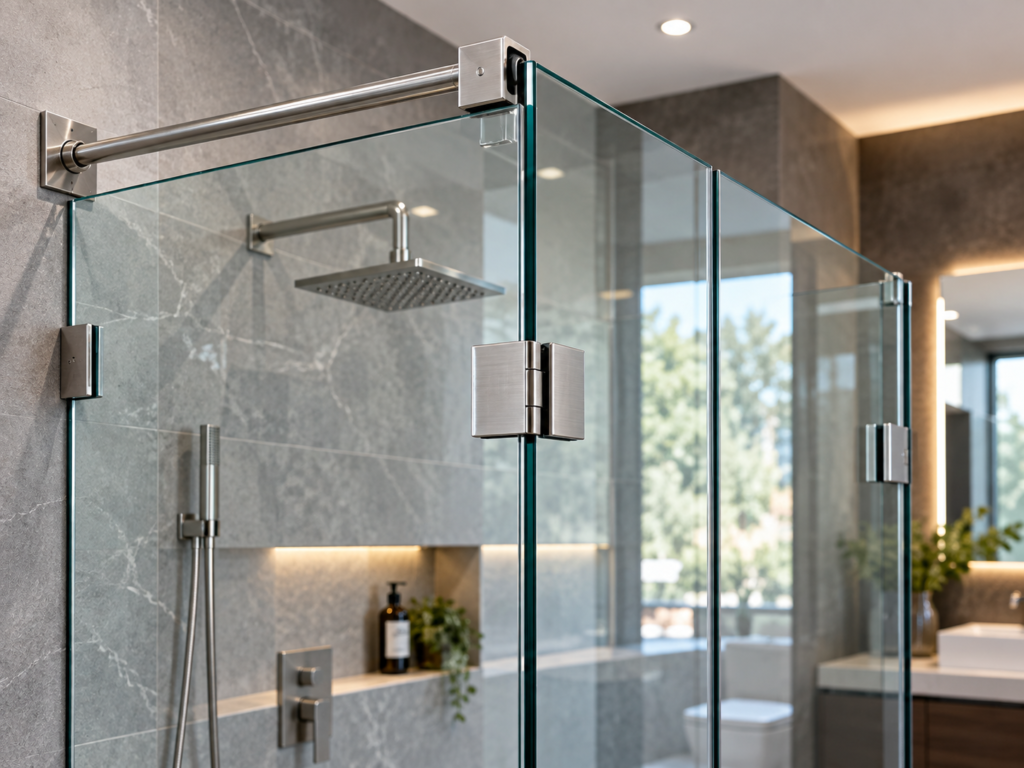
Coordinate Handles, Clamps and Support Hardware at the Same Time
The hinge is only one part of the fabrication process.
Pull Handles
Before drilling, confirm:
- center-to-center hole spacing;
- hole diameter;
- handle position;
- installation orientation.
Changing the pull handle after drilling may require a different glass panel.
Glass Clamps
Clamps should match both the glass thickness and the actual connection condition.
This may include:
- wall-to-glass;
- glass-to-glass;
- corner connections;
- fixed-panel mounting.
Support Bars
A large fixed panel may require additional stabilization.
Support-bar length, mounting point and connector type should therefore be reviewed together with the glass dimensions and site condition.
A shower door can use the correct hinge and still become a poor enclosure if the fixed-glass hardware has not been coordinated properly.
Include Seal Profiles in the Shower Enclosure Kit
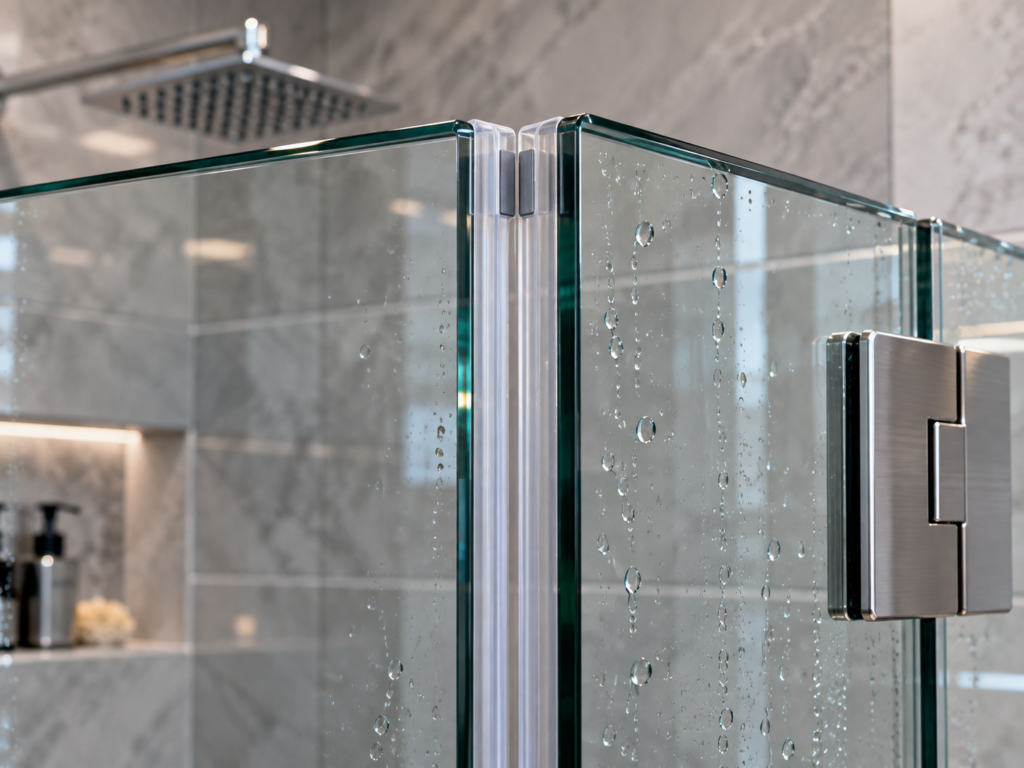
Seal strips are often treated as a final accessory, but they depend directly on the enclosure geometry.
A seal needs to match:
- glass thickness;
- designed gap;
- opening direction;
- panel overlap;
- bottom clearance.
If the gap has already been fixed incorrectly, changing the seal may not solve the problem.
For glass fabricators supplying complete shower kits, the seal profile should therefore be included in the hardware BOM rather than selected only after installation.
This is especially useful for repeat shower models because the same approved glass gap and seal reference can be used consistently across production.
Coordinate Finishes Across the Complete Enclosure
A shower enclosure is viewed as one finished product.
The customer does not evaluate the hinge, handle and clamp separately. They see the whole system.
This is why finish coordination matters.
Two products described as “matte black” may still differ in:
- gloss level;
- surface texture;
- colour tone;
- brushing direction.
Similar differences can occur with brushed stainless, polished chrome, gold or bronze finishes.
For complete shower kits, visible hardware should be reviewed together where possible.
A physical finish sample is more reliable than relying only on a colour name.
When different base materials or production processes are involved, perfect visual identity should not be promised. The practical goal is to achieve a coordinated appearance that follows the approved project reference.
Build a Hardware BOM for Each Shower Model
If a shower door company produces several standard enclosure designs, each model should have its own controlled hardware schedule.
| Shower Model | Layout | Hinge / System | Handle | Fixed-Glass Hardware | Seal |
|---|---|---|---|---|---|
| Model A | Wall-to-glass hinged | Approved hinge family A | Handle A | Clamp A | Seal A |
| Model B | Corner enclosure | Approved hinge family B | Handle A | Clamp B | Seal B |
| Model C | Sliding enclosure | Approved sliding system A | Handle B | Fixed clamp A | Seal C |
These are illustrative model names, but the principle is useful.
A controlled BOM helps with:
- quotation;
- purchasing;
- CNC preparation;
- assembly;
- packing;
- installation;
- future replacement.
It also prevents different employees from choosing different hardware for the same enclosure model.
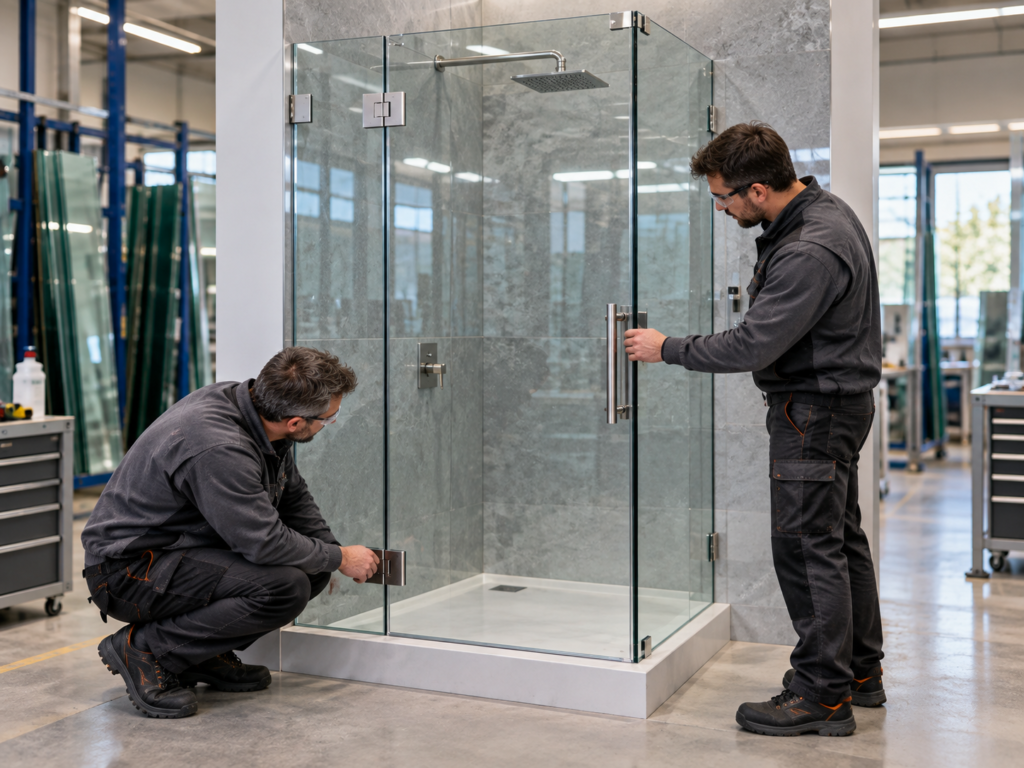
Approve a Complete Sample Enclosure Before Bulk Production
CAD drawings are important, but they cannot reveal every installation issue.
Before large production runs, a complete sample enclosure can be used to check:
- glass cutouts;
- hinge alignment;
- door movement;
- handle drilling;
- fixed-panel position;
- seal contact;
- door gaps;
- finish coordination.
The key principle is:
Do not approve the glass, hinge and handle only as separate components. Approve the complete enclosure as a working system.
A correct hinge cannot compensate for an incorrect door gap.
A correct seal cannot correct inaccurate glass dimensions.
A well-designed handle still fails if the drilling position is wrong.
The sample enclosure becomes the reference for repeat production.
Packaging by Shower Model Can Reduce Installation Errors
Coordination should continue after manufacturing.
If several shower models are included in one project, completely mixed bulk packing can create unnecessary mistakes on site.
Where practical, hardware can be grouped by enclosure type or hardware set.
A set may include:
- hinges;
- clamps;
- handle fittings;
- gaskets;
- screws;
- seal components.
The objective is not elaborate packaging. It is to make it easier for the installer to identify which components belong to which shower model.
For repeat projects, packaging is part of production control, not only logistics.

Common Shower Hardware Coordination Mistakes
1. Cutting the Glass Before the Exact Hardware Is Approved
A late hinge or handle change can create a cutout or drilling mismatch.
2. Assuming Similar Hinges Use the Same Cutout
Visual similarity does not guarantee dimensional compatibility.
3. Using the Wrong Gasket Configuration
Glass thickness and gasket arrangement should follow the specific hinge design.
4. Changing Handles After Glass Drilling
Different handle models may use different center-to-center dimensions.
5. Selecting Seals After the Final Gap Has Already Been Fixed
The seal may not match the actual geometry.
6. Approving Finishes From Separate Samples
The complete enclosure can look inconsistent even when each part is acceptable individually.
7. Mixing Hardware for Different Shower Models During Packing
The correct products can still reach the wrong enclosure.
What Glass Fabricators Should Send Before Requesting a Quotation
For a more accurate recommendation, provide:
- shower enclosure drawing;
- glass thickness;
- door width and height;
- fixed-panel dimensions;
- wall-to-glass or glass-to-glass configuration;
- hinged or sliding operation;
- existing cutout drawing if already defined;
- handle hole spacing if fixed;
- required finish;
- quantity by shower model;
- reference photos where useful.
A message such as:
“Need 500 shower hinges”
provides very little information.
A drawing plus the basic glass specification can make product matching much faster and more accurate.
How Metech Supports Glass Fabricators and Shower Door Companies
Metech Hardware works with selected production partners to support glass fabricators, shower enclosure companies, contractors and overseas distributors.
Our supply range can include shower hinges, glass clamps, pull handles, support bars, seal strips, sliding shower hardware and related fittings.
For repeat models and project orders, we can help coordinate hardware according to the enclosure layout, glass thickness, cutout requirements, finish and quantity.
Depending on the product and project, support can include:
- model-specific cutout drawings and technical references;
- product matching;
- gasket and glass-thickness coordination;
- sample confirmation;
- finish coordination;
- mixed hardware sourcing;
- hardware-set packing where practical;
- OEM packaging;
- pre-shipment inspection;
- export order support.
The objective is not simply to supply loose fittings. It is to reduce compatibility problems between the hardware, glass fabrication and final shower enclosure.
FAQ
Should Shower Hardware Be Selected Before Glass Tempering?
For hardware that requires holes, notches or cutouts, the exact model and glass-preparation drawing should normally be confirmed before tempering.
Can Similar Shower Hinges Use the Same Glass Cutout?
Not necessarily. Similar outside dimensions do not guarantee identical cutouts or fixing positions. Always check the model-specific drawing.
Can One Shower Hinge Work With 8 mm, 10 mm and 12 mm Glass?
Some hinge series support several thicknesses using specified gasket configurations, while others are designed for a narrower range. Always confirm the actual model specification.
What Information Should a Hardware Supplier Provide to a Glass Fabricator?
Useful information can include the exact model, compatible glass thickness, cutout or drilling drawing, mounting orientation and applicable gasket requirements.
Can Shower Hardware Be Packed as Complete Kits?
Depending on order quantity and packaging requirements, hardware can be grouped by shower model or enclosure set to simplify assembly and installation.
Need Shower Hardware Coordinated With Your Glass Production?
Send us your shower enclosure drawings, glass thickness, door dimensions, hardware layout and project quantities.
Metech Hardware can help review hinge, clamp, handle, seal and related hardware compatibility before sample approval and bulk production.