Home » Insights » How to Compare Floor Spring Suppliers Before a Bulk Order
How to Compare Floor Spring Suppliers Before a Bulk Order
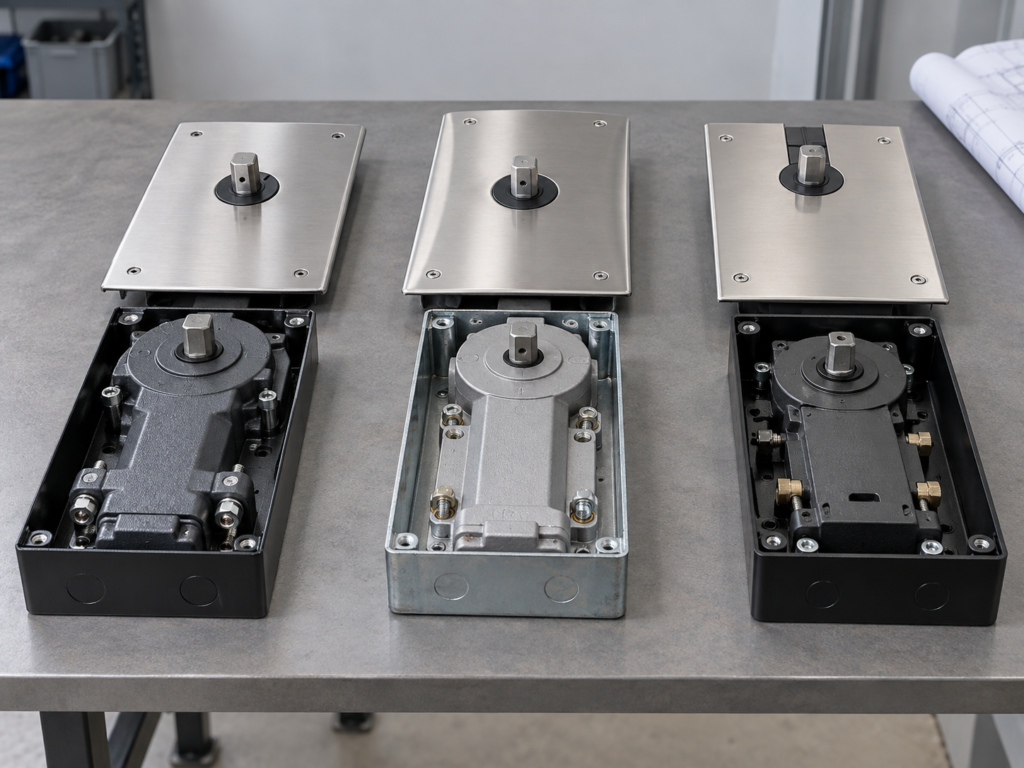
Two floor springs can look almost identical and still be very different purchasing products.
A buyer may receive quotations from several suppliers for what appears to be the same commercial glass-door floor spring. The body dimensions are similar, the stainless-steel cover plates look almost identical, and every catalog describes the product as “heavy duty.”
Yet the prices can differ significantly.
The difference may come from much more than supplier margin.
One model may be hold-open while another is non-hold-open. One may use a different spindle profile, cement-box footprint or hydraulic control system. Cycle-test evidence, accessories, functional QC and repeat-order consistency may also be different.
Before comparing prices, therefore, ask:
Are all suppliers quoting the same floor spring specification and function?
Only after the technical basis is aligned can the commercial comparison become meaningful.
1. Build One RFQ Specification First
The safest way to compare suppliers is to send each company the same RFQ specification.
RFQ Item
What Should Be Confirmed
Door application
Glass / timber / aluminum where relevant
Door size / weight
Target operating range
Closing power
Fixed / adjustable requirement
Action
Single / double action where applicable
Function
Hold-open / non-hold-open
Hold-open position
Where applicable
Hydraulic control
Required closing functions
Backcheck
Required / not required
Spindle
Profile and height
Cement box
Required dimensions
Cover plate
Size and finish
Quantity
Same quotation quantity
A description such as Heavy Duty Floor Spring is not a purchasing specification.
The buyer should compare actual model functions rather than marketing names.
Same external dimensions do not mean the same quotation basis.
2. Compare Functional Specifications, Not Catalog Labels
Supplier catalogs frequently use terms such as:
commercial grade;
heavy duty;
premium hydraulic;
high cycle;
adjustable power.
These descriptions alone do not tell the buyer enough.
Compare the actual technical configuration:
intended door size and weight range;
fixed or adjustable closing power;
single or double action;
hold-open or non-hold-open;
hold-open position where applicable;
closing-speed control;
final closing or latching control;
backcheck where provided;
spindle configuration.
The goal is not to decide that one feature is always better.
The goal is to make sure Supplier A and Supplier B are actually quoting products designed for the same entrance requirement.
3. Evaluate Hydraulic Performance Through Samples
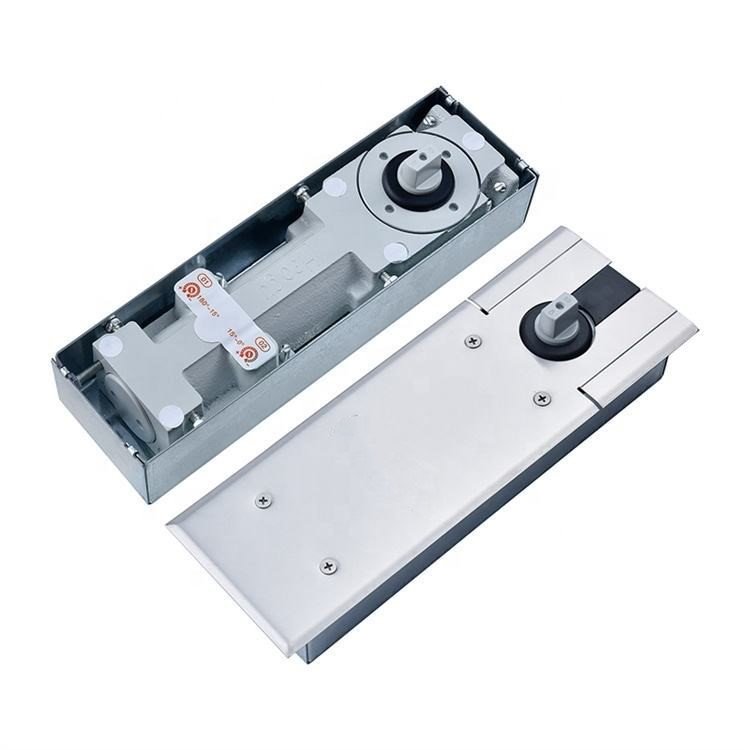
A floor spring is not simply a machined metal fitting.
Its core value is hydraulic and mechanical control.
For a new supplier or model, sample testing is therefore much more useful than judging the cover plate or product weight alone.
Where practical, compare samples on the same suitable test door or controlled fixture.
Check:
opening movement;
closing smoothness;
adjustment-valve response;
final closing behaviour;
return-to-center;
hold-open operation where specified;
abnormal noise;
visible leakage after repeated movement.
A high-quality brushed stainless cover plate cannot show whether the internal hydraulic control is stable.
The sample should be operated, not simply photographed.
For a meaningful comparison, test different suppliers under similar conditions.
4. Compare Closing and Centering Consistency
One successful closing cycle is not enough to evaluate a floor spring.
Operate the sample repeatedly and observe whether the behaviour remains consistent.
Compare:
closing-speed stability;
final closing behaviour;
center position;
mechanical free play;
response after repeated operation.
Return-to-center performance is especially important for frameless glass entrances.
Inconsistent centering may affect:
double-door alignment;
patch locks;
electric locking systems;
glass gaps;
visual alignment.
The useful supplier-comparison question is therefore not simply:
“Does the floor spring close?”
It is:
“Does it control the door consistently?”
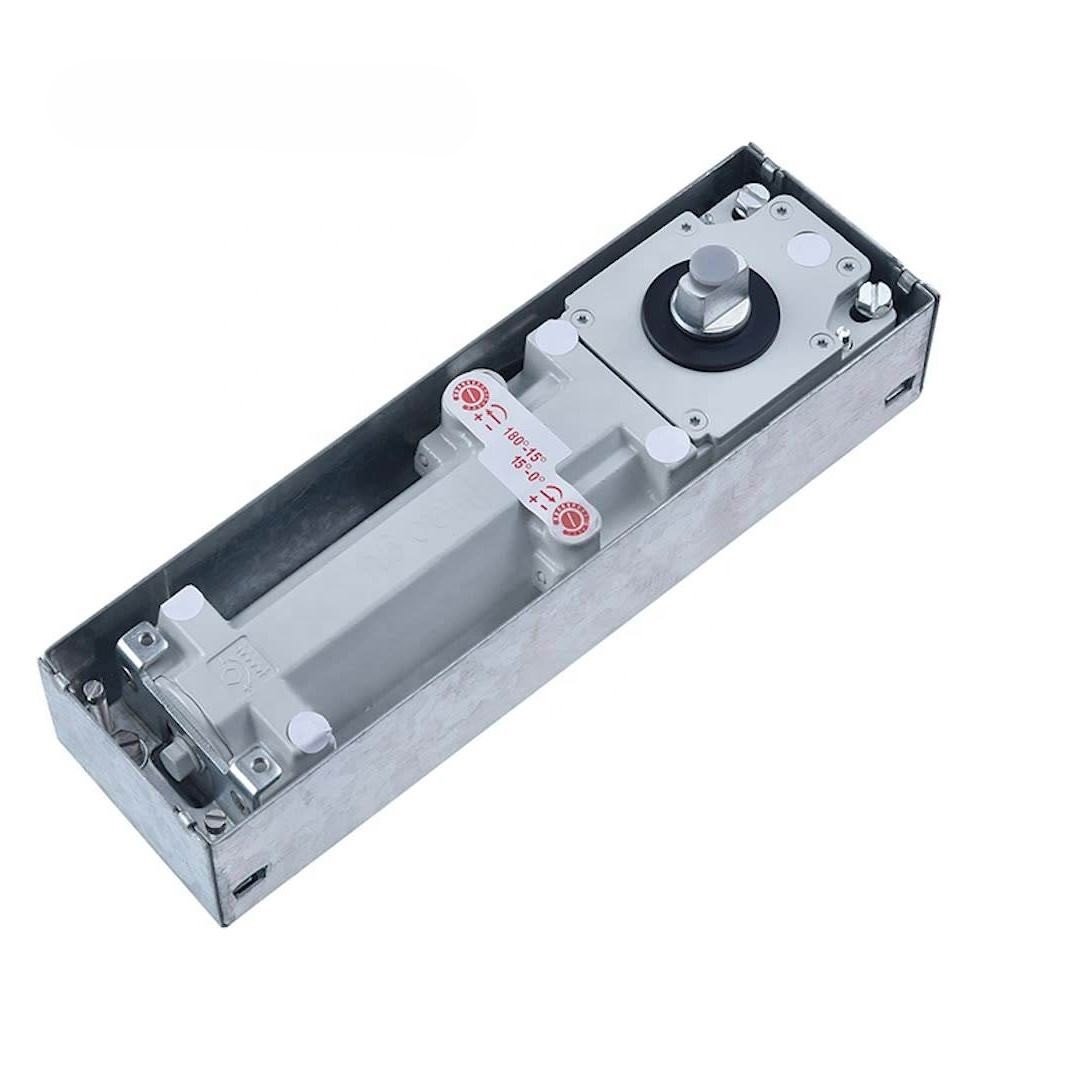
5. Compare the Spindle and Cement-Box System
A floor spring works as part of a complete pivot system.
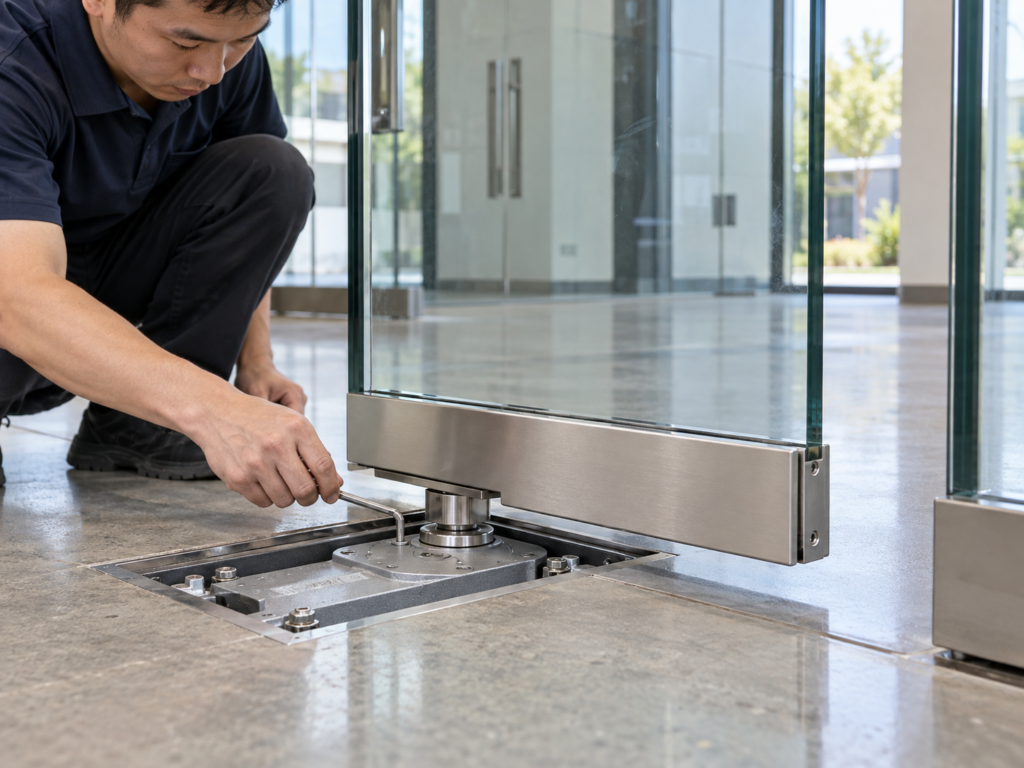
For glass doors, the spindle must connect correctly with the bottom patch fitting.
Compare:
Interface
Why It Matters
Spindle Profile
Must suit the bottom patch insert
Spindle Height
Affects connection and pivot geometry
Spindle Position
Influences final alignment
Cement Box
Affects installation and replacement
In-Box Adjustment
Helps alignment where provided
Cover Plate
Must match the box and visible finish
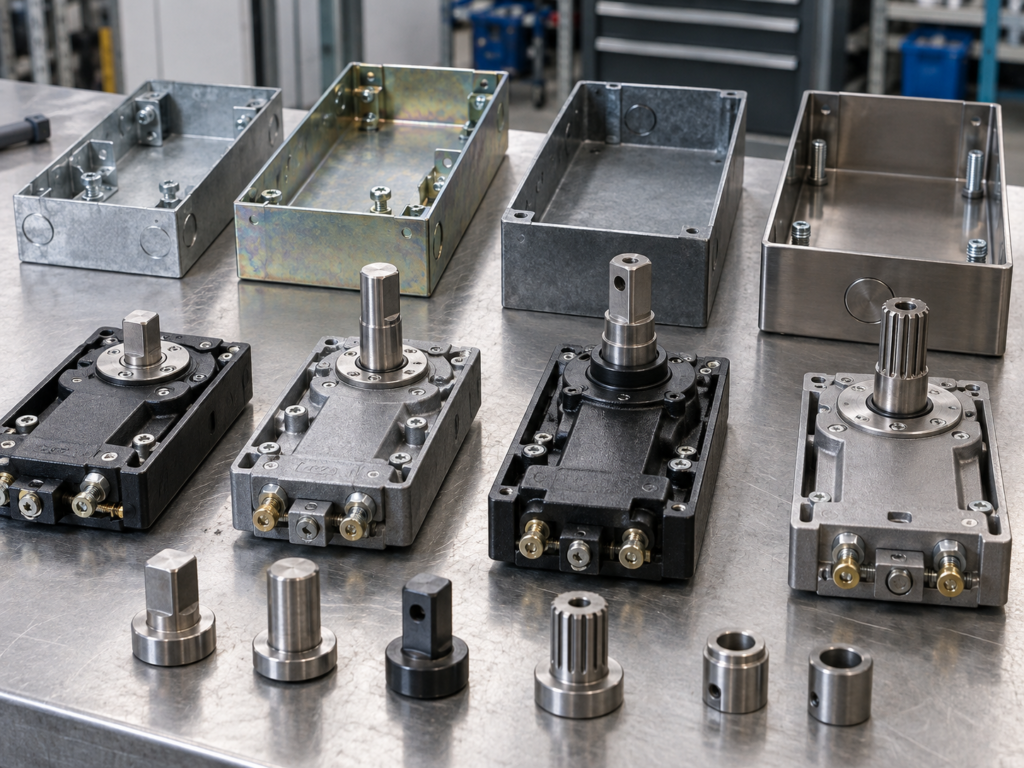
Two models can look very similar from above while using different spindle systems underneath.
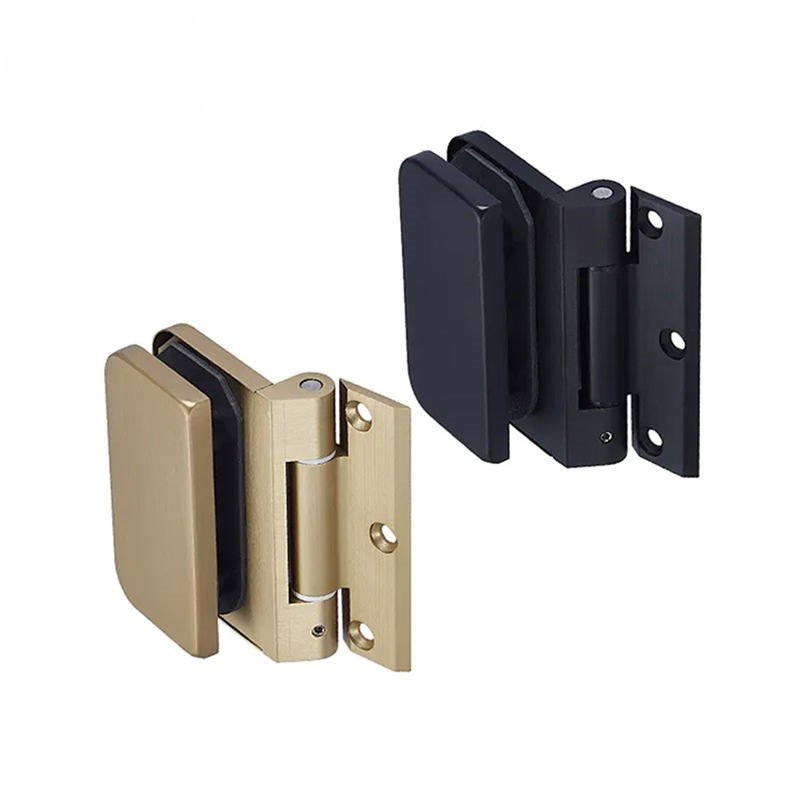
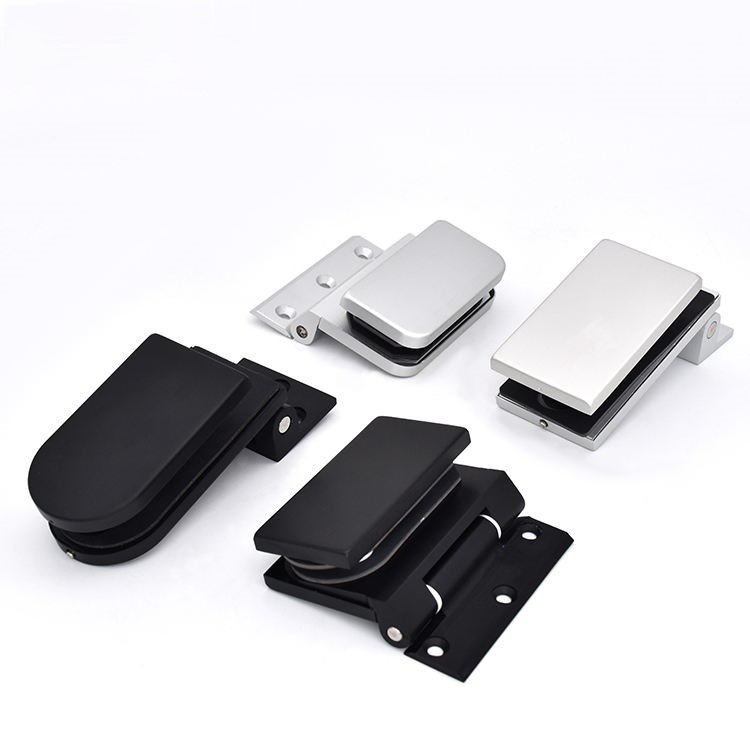
This becomes particularly important for distributors already carrying patch fittings or replacement stock.
Cement-box dimensions also deserve attention.
A new-build project may have more installation flexibility, while a distributor serving the replacement market may value compatibility with an established footprint.
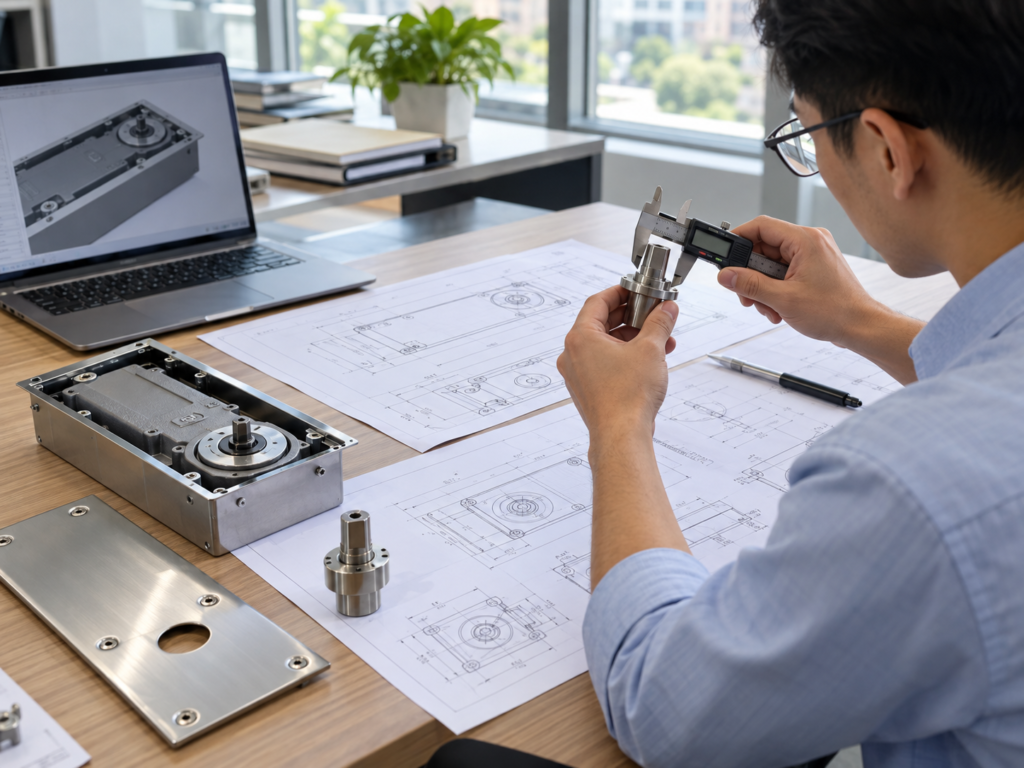
Ask for technical drawings or dimensional references rather than relying only on catalog photos.
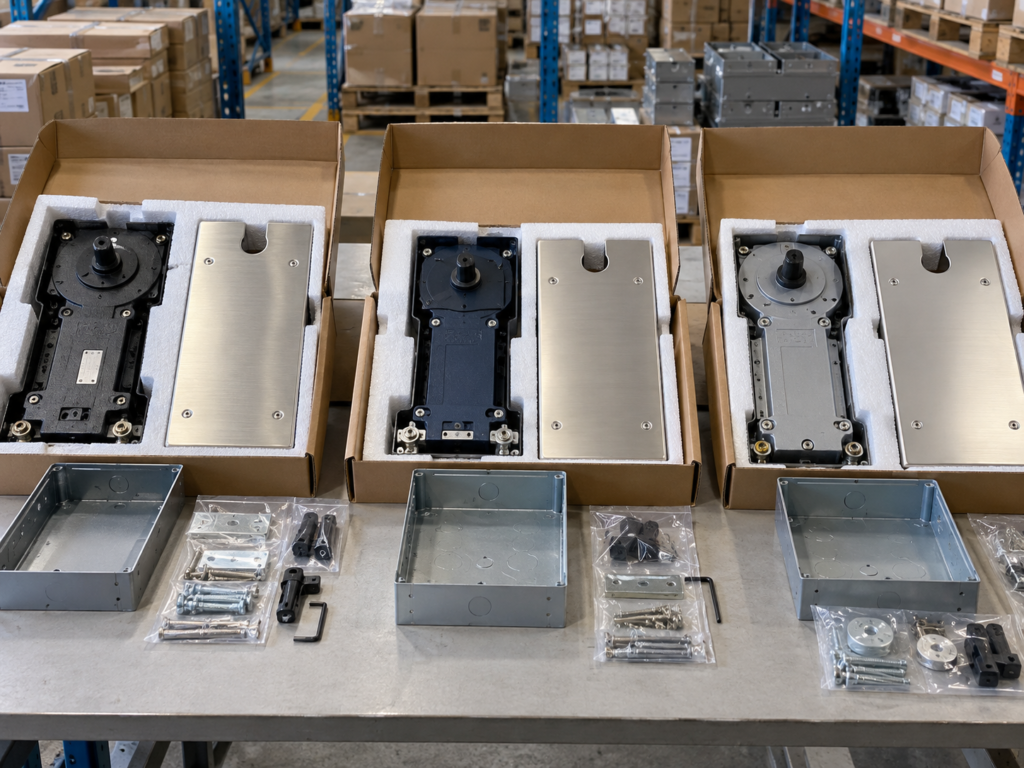
6. Compare the Complete Floor Spring Package
Before comparing unit prices, confirm the complete supply scope.
Depending on the model, the package may include:
hydraulic body;
cement box;
stainless-steel cover plate;
spindle or spindle accessories;
fixing screws;
adjustment parts;
installation accessories.
Supplier A may quote only the main mechanism.
Supplier B may quote a complete ready-to-install set.
The second price can appear higher even though the purchasing scope is larger.
Ask clearly:
Is the cement box included?
Is the cover plate included?
What spindle is supplied?
Which mounting components are included?
Are any accessories charged separately?
Compare the complete supply package before comparing the unit price.
7. Review Cycle-Test Claims With Context
Cycle-test numbers are frequently used to promote commercial floor springs.
One supplier may advertise:
500,000 cycles
while another claims:
1,000,000 cycles.
The larger number may appear automatically better, but the buyer needs the test context.
Ask:
Which exact model was tested?
What standard or test procedure was used?
Which power size or configuration was tested?
What was the test setup?
Does the document relate to the product being quoted?
Is it a manufacturer test, certification record or independent test report?
A cycle number without the underlying test basis is not enough for meaningful supplier comparison.
Test documents should support the actual quoted model.
They also should not replace current-batch inspection after production.
8. Consider Temperature Performance for the Target Market
Hydraulic behaviour can change with temperature.
For buyers supplying markets with significant seasonal variation, temperature performance may deserve more attention.
Useful questions include:
What operating-temperature information is declared?
Is temperature-related closing performance documented?
Is technical test information available where required?
Will significant seasonal adjustment be expected?
This factor may be less important for controlled indoor applications and more important for exposed commercial entrances or markets with large temperature swings.
Do not assume every floor spring uses the same hydraulic fluid or performs identically across the same conditions.
The relevant question is:
Does the model provide suitable operating performance for the intended market?
9. Evaluate Production Transparency and Functional QC
Buyers often ask whether a supplier is a factory or trading company.
For floor springs, a more useful question is:
Who controls the final specification and functional performance?
Ask how the supplier handles:
model identification;
component sourcing;
assembly;
hydraulic filling;
functional testing;
leakage checking;
HO / NHO identification;
final inspection;
approved-sample control.
For important purchases, buyers may also request production photos, video or factory access where appropriate.
A specialized manufacturer may be very suitable for a stable high-volume product.
A capable supply partner may offer more value when the buyer needs several door-hardware categories, production-option comparison, consolidated shipments and QC coordination.
Transparency and control matter more than the company label alone.
10. Keep the Approved Sample as a Bulk-Production Reference
A sample should not lose its purpose after the purchase order is placed.
Once approved, record:
model;
main dimensions;
hydraulic functions;
HO / NHO configuration;
valve response;
spindle;
cement box;
cover finish;
accessory set.
The approved sample should then be retained together with:
drawing + specification + purchase order
as the reference for bulk production.
This becomes especially useful during pre-shipment inspection.
The sample should become the production reference—not simply a sales demonstration piece.
11. Compare Repeat-Order Stability
For a distributor, the first shipment is only the beginning.
A product may be reordered six months or two years later.
Problems arise when the supplier changes:
spindle profile;
cement-box dimensions;
valve arrangement;
cover-plate hole positions;
hold-open configuration;
patch-fitting interface.
The revised floor spring may still work, but it may no longer match existing inventory or installed doors.
Ask how the supplier manages:
drawing revisions;
model changes;
discontinued products;
replacement models;
compatibility with previous versions;
approved repeat-order references.
A reliable supplier should be able to explain whether tomorrow’s order will still match today’s product.
When a change is necessary, it should be communicated before bulk production is approved.
12. Compare MOQ, OEM and Mixed-Hardware Flexibility
Distributors rarely purchase only one floor spring model.
Their broader program may also include:
patch fittings;
door closers;
glass locks;
pull handles;
other commercial glass-door hardware.
Supplier comparison should therefore include:
MOQ per model;
MOQ per power size;
MOQ per finish;
OEM-logo requirements;
custom packaging MOQ;
mixed-model flexibility;
mixed-hardware consolidation;
repeat-order MOQ.
A specialized manufacturer may offer excellent pricing for one high-volume model.
A broader supply partner may be more practical when several hardware categories need to be combined in one purchasing program.
The best supplier structure depends on the buyer’s inventory and sales model.
13. Compare Warranty and Replacement Support
A long warranty period sounds attractive, but the number of years does not explain how a claim will actually be handled.
Ask:
What does the warranty cover?
What evidence is required for a claim?
Is replacement hardware supplied or is credit issued?
Who handles replacement freight?
What happens if the original model is discontinued?
Can the batch or model be traced?
For hydraulic floor hardware, this matters because a failure can occur after the entrance and finished floor are already complete.
A useful warranty is one with a clear claim and replacement process.
14. Compare Packaging and Model Identification
Floor spring models often look very similar once packed.
One distributor may stock:
several power sizes;
HO and NHO versions;
different spindle heights;
multiple finishes.
Weak labeling can therefore create warehouse mistakes even when the hardware itself is correct.
Compare:
model code;
power specification;
HO / NHO identification;
finish identification;
accessory description;
inner-box protection;
carton quantity;
mixed-model separation.
Packaging does not need to be luxurious.
It needs to protect the hardware and clearly identify what is inside.
Compare Price Only After the Specification Is Aligned
Price remains important.
But compare it after reviewing:
technical functions;
hydraulic performance;
spindle;
cement box;
complete accessories;
test evidence;
QC;
MOQ;
warranty;
packaging;
repeat-order stability.
A cheaper unit can create higher total purchasing costs through:
patch-fitting incompatibility;
excessive inventory;
inconsistent performance;
additional inspection;
missing accessories;
replacement problems.
Two floor springs with the same external size are not necessarily the same purchasing product.
Floor Spring Supplier Comparison Scorecard
Supplier Factor
What to Compare
Specification Match
Same application and function basis
Hydraulic Performance
Smooth and controllable
Return-to-Center
Consistent
HO / NHO
Correct configuration
Spindle
Correct profile and height
Cement Box
Dimensions and adjustment
Complete Package
Body, box, cover and accessories
Test Evidence
Relevant to quoted model
QC Process
Functional + visual controls
Sample Control
Retained for bulk reference
Repeat-Order Stability
Revision control
MOQ / OEM
Fits purchasing model
Hardware Range
Patch / closer / lock coordination
Warranty
Clear claim process
Packaging
Protected and identifiable
Price
Compared on the same basis
Different buyers may prioritize these factors differently.
A project contractor and a long-term distributor do not necessarily need the same supplier structure.
Common Floor Spring Supplier Comparison Mistakes
Comparing Only Maximum Door Weight
A similar weight rating does not mean two models have the same hydraulic functions or interface.
Choosing by Cover Plate Appearance
External finish says little about internal hydraulic performance.
Believing Cycle Numbers Without Checking the Test Basis
The model and test conditions matter.
Ignoring Spindle and Cement Box
Compatibility problems often appear during installation or replacement.
Approving a Sample but Not Keeping It as a Reference
The bulk order then loses an important comparison benchmark.
Choosing the Lowest Price Before Comparing Functions
Similar catalog photos may hide different specifications.
How Metech Supports Floor Spring Sourcing
Metech Hardware works with selected production partners to support distributors, commercial glass contractors, importers and project buyers.
Depending on the purchasing requirement, we can help coordinate:
floor spring model comparison;
door application and specification review;
sample coordination;
hydraulic-function comparison;
spindle and cement-box review;
floor spring and bottom patch compatibility;
test-document coordination;
OEM logo and packaging requirements;
mixed commercial hardware sourcing;
pre-shipment inspection;
repeat-order reference control.
The objective is not to compare catalog prices alone.
It is to help buyers compare suitable floor spring options according to actual door conditions, market requirements, inventory strategy and purchasing model.
FAQ
Is the Lowest-Priced Floor Spring Supplier Usually the Best Choice?
No. First make sure the quoted models use the same function, spindle, cement box, accessory package and testing basis.
Should Floor Springs Be Compared Only by Maximum Door Weight?
No. Door width, hydraulic control, function, spindle configuration and application conditions also matter.
Should I Order Samples From Multiple Suppliers?
For a new supplier or model, this can be useful. Test the samples under similar conditions so the comparison is meaningful.
Does a 500,000-Cycle Claim Mean Two Floor Springs Have the Same Quality?
No. The tested model, standard or procedure, power size and test configuration should also be reviewed.
Is a Factory Always Better Than a Supply Partner?
Not necessarily. A specialized factory may suit a stable high-volume model, while a capable supply partner can provide value through multi-category sourcing, comparison, consolidation and QC coordination.
Should Floor Springs and Patch Fittings Be Purchased From the Same Supplier?
Not necessarily. However, spindle profile, spindle height and bottom patch compatibility must be confirmed before bulk ordering.
Comparing Floor Spring Suppliers for a Bulk Order?
Send us your target door size, approximate door weight, required function, spindle configuration, quantity, finish and market requirements.
Metech Hardware can help compare suitable floor spring options, coordinate samples and review specifications before bulk ordering.