Home » Insights » How to Compare Pool Fence Spigot Suppliers Before a Bulk Order
How to Compare Pool Fence Spigot Suppliers Before a Bulk Order
Three pool fence spigots can look almost identical in a catalog and still represent very different purchasing offers.
A buyer may request quotations for the same deck-mount spigot from several suppliers and receive noticeably different prices.
The difference is not always simply profit margin.
One quotation may use a different stainless-steel grade. Another may exclude wedges, gaskets or fixing accessories. Surface finish, machining, packaging, inspection and minimum order quantity may also differ.
This is why supplier comparison should not begin with unit price.
It should begin with one question:
Are all suppliers quoting against the same specification?
Once the technical and commercial basis is aligned, buyers can compare suppliers much more fairly.
1. Align the RFQ Specification First
Before requesting prices, create one RFQ specification and send the same information to every supplier.
RFQ Item
What Should Be Confirmed
Spigot type
Deck-mount / core-drill / side-mount
Material
Required stainless-steel grade
Glass thickness
Target application
Finish
Approved finish or reference
Dimensions
Drawing or target dimensions
Gasket system
Required configuration
Fasteners
Required accessory scope
Quantity
Same quotation quantity
Packaging
Same packing requirement
Without this step, two prices may refer to two different products.
For example, one supplier may quote the main metal body with basic packaging, while another includes the complete clamping system, individual protection and upgraded accessory packing.
The second quotation appears more expensive, but the comparison is not equal.
Same appearance does not mean the same quotation basis.
2. Evaluate Production Transparency, Not Just Company Type
Buyers often ask whether a supplier is a factory or a trading company.
That question alone does not tell you enough.
A specialized manufacturer can be ideal for a stable, high-volume product. A capable supply partner can be more useful when the buyer needs several hardware categories, different production options, consolidated shipping or cross-factory quality coordination.
The more useful questions are:
Where is the main body produced?
Where is machining completed?
Who controls polishing or decorative finishing?
Who assembles and packs the product?
Can the supplier trace the approved product back to the production source?
Can factory photos, video or access be arranged where appropriate?
For important orders, production transparency is more meaningful than the company label alone.
A supplier should understand where each critical process takes place and how the final specification is controlled.
3. Compare Material Claims With Verification Capability
Material is one of the most important variables in stainless-steel pool hardware.
Different projects may specify SS316, Duplex 2205 or another agreed grade.
When comparing suppliers, do not ask only:
“Is this 2205?”
Ask:
Is the material grade written clearly in the quotation?
Is supporting material documentation available?
Can additional material verification be arranged if required?
Are fasteners and related accessories specified separately where relevant?
For higher-risk or specification-sensitive orders, buyers may request PMI or suitable third-party material verification on selected samples.
The objective is not to require expensive testing for every RFQ.
The real question is:
Can the supplier support its material claim when verification is required?
This is more useful than relying on phrases such as “marine-grade stainless steel” or “high-quality stainless.”
4. Compare Drawings, Machining and Glass-Fit Design
A pool fence spigot is more than a rough metal casting.
Critical dimensions affect how easily the installer can align and secure the glass.
Compare details such as:
body dimensions;
base dimensions;
anchor-hole positions;
glass-channel width;
gasket and wedge geometry;
thread quality;
adjustment features;
mounting alignment.
Where available, request dimensional drawings or cross-sectional information.
For typical friction-fit pool spigots, the buyer should be particularly interested in:
compatible glass thickness;
clamping system;
gasket / wedge design;
base or core-drill dimensions;
installation reference information.
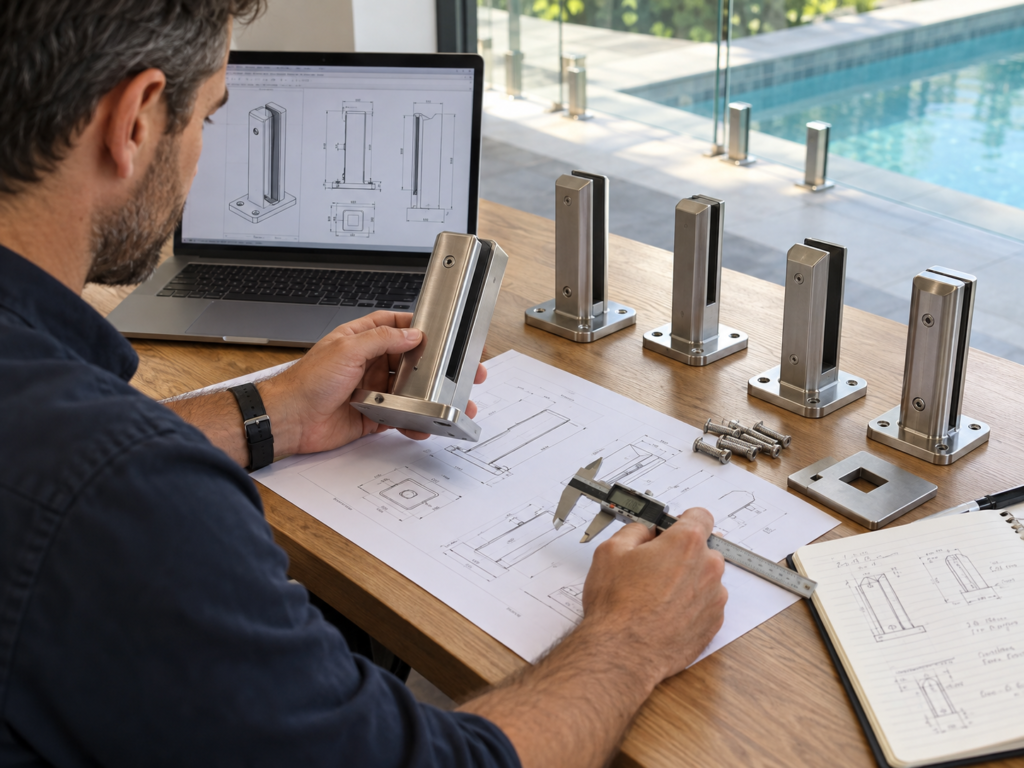
The drawing tells you what the product is intended to be.
The physical sample shows how the supplier actually manufactures it.
Both are important before bulk ordering.
5. Compare the Complete Spigot Package
A low quotation may not include the same supply scope.
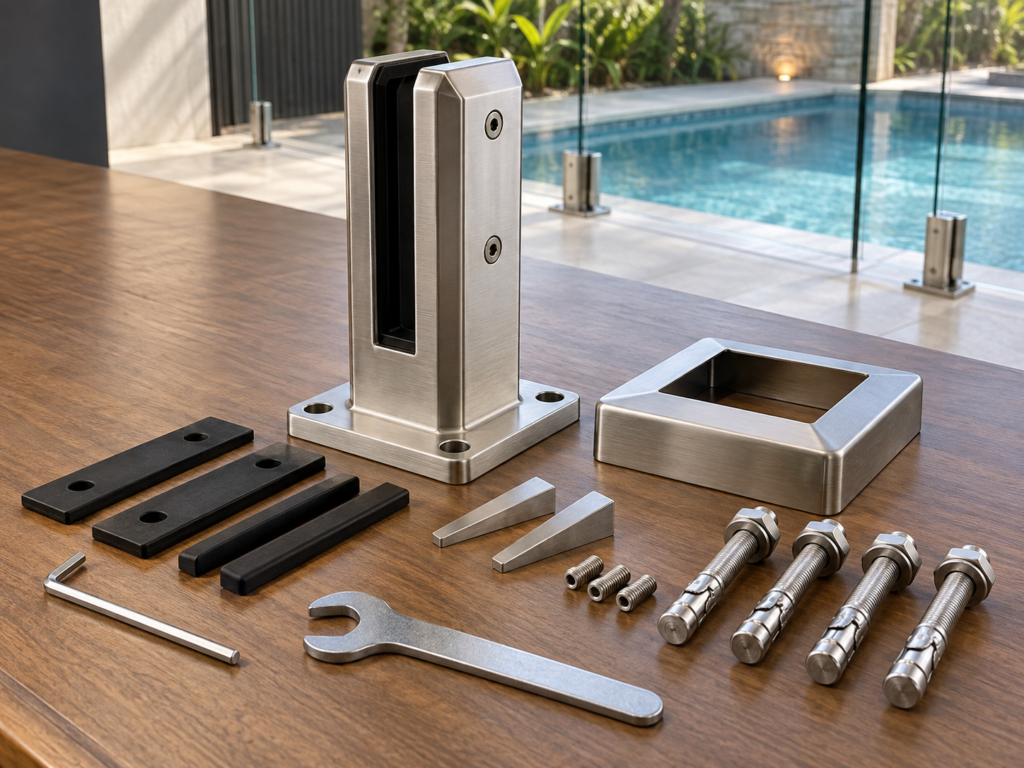
Depending on the design, a complete spigot package may contain:
Component
Why It Matters
Spigot body
Main structural hardware
Gasket / liner
Glass compatibility
Wedge / pressure part
Clamping system
Grub screws
Adjustment and installation
Base cover
Finished appearance where applicable
Fixing accessories
Installation completeness
When reviewing quotations, confirm exactly what is included.
A supplier quoting only the main body can appear cheaper than another supplier quoting the complete installation package.
A cheaper spigot may simply be an incomplete spigot package.
This becomes particularly important for distributors, because missing accessories are often discovered only after the shipment reaches the warehouse.
6. Treat Samples as Future Bulk References
A sample should not be approved only because it looks attractive.
Use the sample to check:
dimensions;
glass fit;
gasket system;
screw operation;
machining;
finish;
assembly;
accessories;
packaging.
If the sample is approved, record the model and keep the sample as a physical reference.
Together with the approved drawing and finish standard, it can become the reference for bulk production and later repeat orders.
The objective is to prevent the production batch from gradually becoming “similar to” rather than “consistent with” the product originally approved.
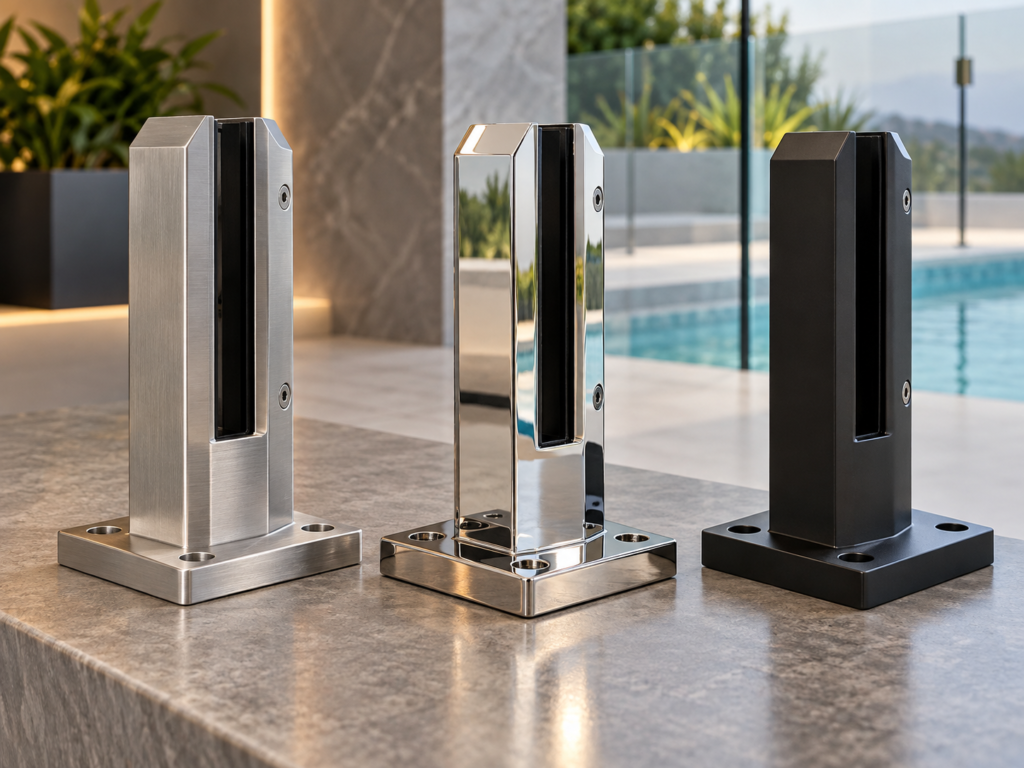
7. Compare Finish Samples, Not Finish Names
Finish names can be surprisingly vague.
Two suppliers may both quote:
Brushed Stainless
but use different grain direction, roughness or gloss.
The same applies to:
Matte Black Brushed Gold Polished Stainless
For appearance-sensitive projects, compare:
physical finish samples;
approved reference photos where useful;
finishing process where relevant;
several samples side by side;
expected batch consistency.
The safest principle is:
Compare finish samples, not finish names.
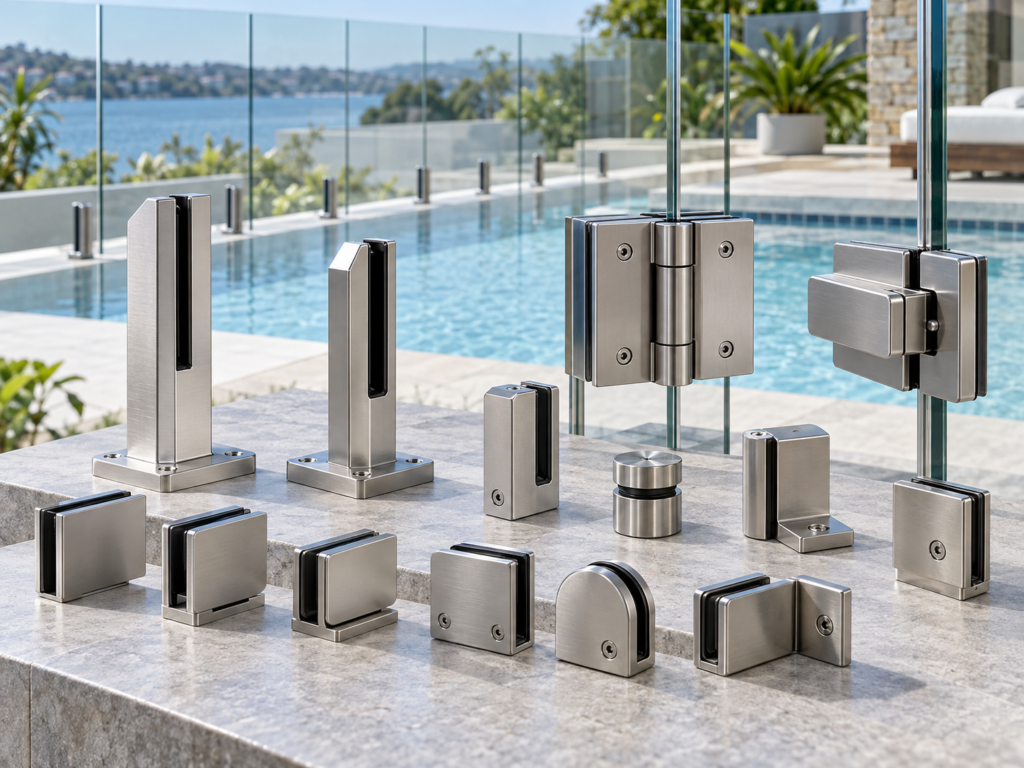
This becomes even more important when the buyer also requires gate hinges, latches or glass clamps that should visually coordinate with the spigots.
8. Evaluate How the Supplier Controls Bulk Production
Almost every supplier will answer “yes” when asked whether they have quality control.
That is too general.
Instead, ask how the approved sample is transferred into production.
Useful questions include:
Is the approved drawing controlled?
Is the sample retained as a reference?
Are critical dimensions checked?
Are finish samples compared during production?
Are accessory sets checked before packing?
Can pre-shipment inspection be arranged?
Can photos or inspection records be provided where agreed?
The supplier does not need the same QC system as every other company.
What matters is whether there is a clear process for reproducing the approved product consistently.
For detailed bulk inspection, the final shipment can then be checked against the agreed specification and approved reference.
9. Compare MOQ and Mixed-Order Flexibility
For distributors, MOQ can affect profitability more than a small difference in unit price.
A buyer may need:
deck-mount spigots;
core-drill spigots;
brushed and black finishes;
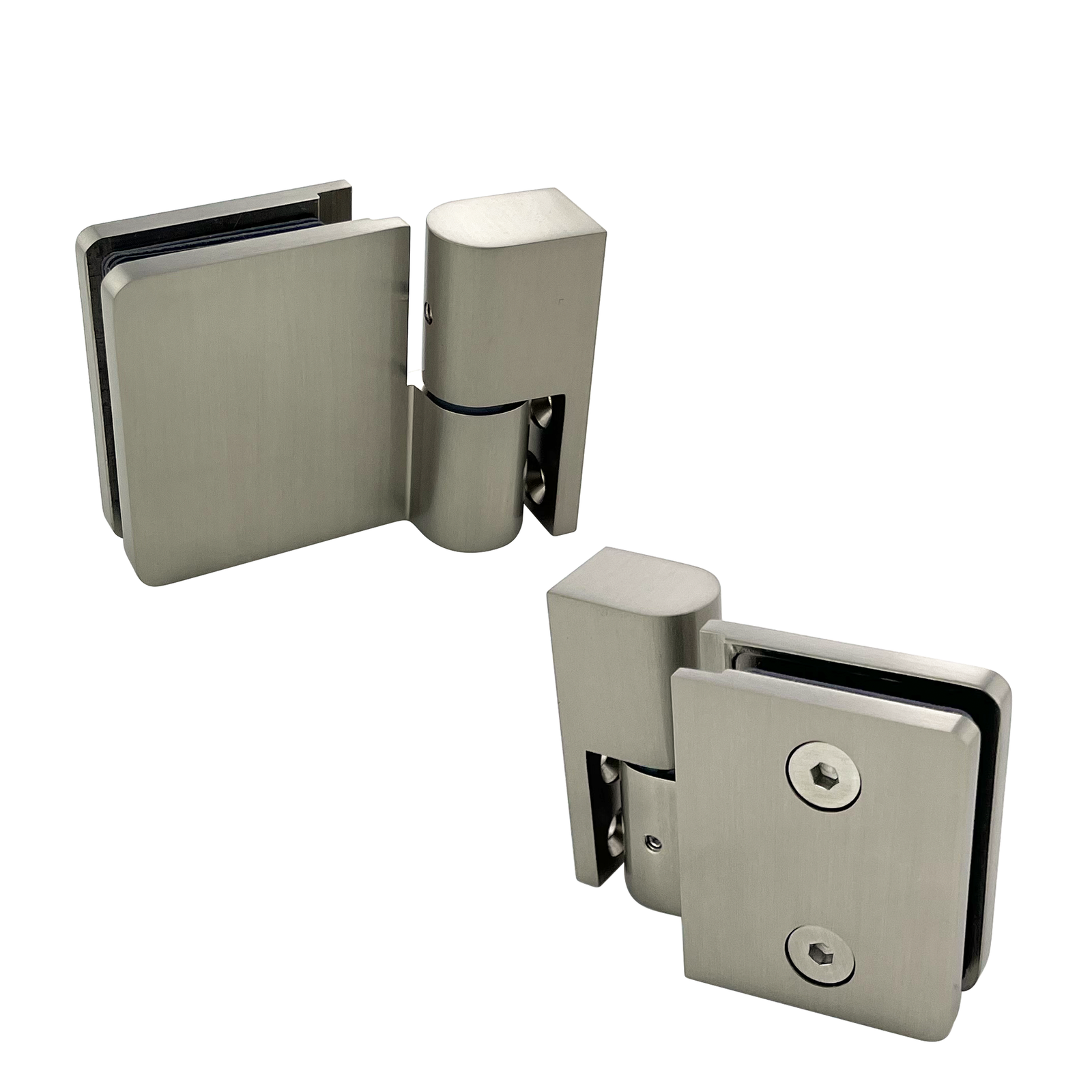
pool gate hinges;
magnetic latches;
glass clamps.
If every model and finish has a high independent MOQ, inventory grows quickly.
When comparing suppliers, check:
MOQ by model;
MOQ by finish;
sample quantity;
mixed-model flexibility;
repeat-order MOQ;
mixed hardware consolidation.
A specialized manufacturer may be ideal for one large-volume SKU.
A broader supply partner may be more useful when the buyer needs several product groups in smaller quantities.
The best supplier structure depends on how you sell, not only how they manufacture.
10. Check Complete Pool Fence System Support
Many pool-fence businesses need more than spigots.
A complete supply program may include:
gate hinges;
magnetic latches;
glass clamps;
stiffener fittings;
fasteners;
related railing hardware.
This does not mean one manufacturer must produce every component.
Some buyers prefer specialized production sources for each category.
Others prefer a supply partner that can coordinate compatible products from several selected manufacturers.
The correct structure depends on:
purchasing volume;
product range;
technical requirements;
inventory strategy;
freight planning.
Supplier comparison should therefore include not only what one factory can make, but how the complete product requirement will be managed.
11. Compare Packaging Together With Freight
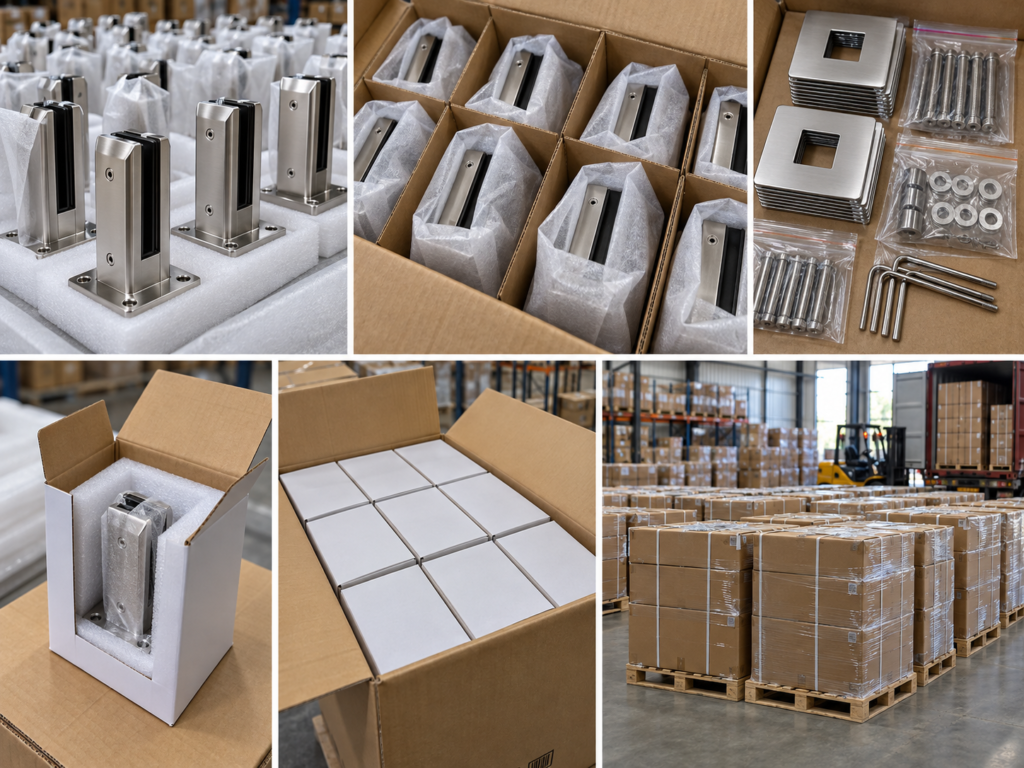
Packaging affects both freight cost and delivered product quality.
A compact carton can save space, but poor separation may allow finished metal parts to scratch one another during transportation.
Review:
individual surface protection;
separation between metal parts;
accessory bags;
carton strength;
model identification;
finish identification;
quantity per carton;
mixed-model separation;
pallet protection where required.
Decorative finishes deserve particular attention.
The cheapest packaging is not always the lowest-cost option if it creates surface damage, warehouse sorting problems or customer complaints.
12. Repeat-Order Stability Matters
For a distributor, the first order is only the beginning.
Six months later, the buyer may need the same product again.
Problems occur when the new batch suddenly uses:
a different body dimension;
another gasket;
a new screw;
a changed finish;
a replacement model that was not communicated.
Ask suppliers how they manage:
model revisions;
drawing changes;
discontinued products;
replacement models;
repeat-order references.
A good supplier should be able to explain not only what they can ship today, but whether tomorrow’s order will still match today’s product.
If a product changes, the buyer should know before the new batch is approved.
13. Compare Price Only After Everything Else Is Aligned
Unit price still matters.
But it should come after the comparison of:
material;
dimensions;
complete accessories;
finish;
QC;
MOQ;
packaging;
product range;
repeat-order stability;
logistics.
Only then can the buyer evaluate real purchasing value.
A slightly cheaper product may become more expensive if it creates:
excess inventory;
missing accessories;
damaged finishes;
rework;
additional inspection;
fragmented shipments;
future replacement problems.
Lowest unit price and lowest purchasing cost are not always the same thing.
Pool Fence Spigot Supplier Comparison Scorecard
Supplier Factor
What to Compare
Specification Match
Same material, model and application
Production Transparency
Clear production source and process
Technical Drawings
Available and controlled
Sample Quality
Meets approved requirement
Material Support
Documentation / verification options
Accessories
Complete clamping package
Finish
Matches approved reference
QC Process
Defined before shipment
MOQ
Fits purchasing model
Product Range
Supports required system
Packaging
Suitable for export / distribution
Repeat-Order Control
Product consistency
Communication
Technical questions answered clearly
Price
Compared on the same basis
Different buyers may prioritize these factors differently.
That is normal.
Common Supplier Comparison Mistakes
Comparing Price Before Aligning Specifications
The quotations may represent different products.
Choosing Only by Company Type
A factory is not automatically suitable, and a supply partner is not automatically unsuitable. Transparency and control matter more.
Approving a Sample Only by Appearance
A good-looking sample still needs dimensional, assembly and accessory review.
Ignoring the Complete Accessory Set
A lower quotation may exclude important installation components.
Treating Every Material or Finish Claim as Equivalent
Use agreed references and verification where required.
Ignoring Repeat-Order Compatibility
This is especially risky for distributors maintaining stock over several years.
How Metech Supports Pool Fence Spigot Sourcing
Metech Hardware works with selected production partners to support importers, distributors, fencing contractors and project buyers.
Depending on your market and purchasing requirements, we can help coordinate:
product and production-option comparison;
material alternatives;
technical drawing review;
sample coordination;
finish comparison;
complete accessory confirmation;
factory access where applicable;
material verification where required;
pre-shipment inspection;
mixed hardware sourcing;
OEM and packaging requirements;
repeat-order references.
Our role is not to force every buyer into one factory or one product level.
The objective is to help buyers compare suitable supply options based on specification, market positioning, project requirements, purchasing volume and budget.
FAQ
Should I Choose the Lowest-Priced Pool Spigot Supplier?
Not before confirming that all quotations use the same material, dimensions, accessories, finish and packaging requirements.
Is a Factory Always Better Than a Trading or Supply Partner?
No. A specialized factory may be ideal for one stable high-volume product. A capable supply partner may be more useful when the buyer needs multiple product categories, supplier comparison, consolidated shipping, QC coordination or alternative production options.
Should I Order Samples Before Bulk Production?
For a new supplier or product, sample approval is strongly recommended. The samples should cover the important model, finish and accessory configurations you intend to purchase.
How Can I Compare Two Duplex 2205 Spigot Suppliers?
Give both suppliers the same drawing, material requirement, glass application, accessory scope, finish and inspection criteria. Then compare samples, verification capability, QC and commercial terms.
What Lead-Time Information Should I Compare?
Confirm whether the quoted lead time includes material preparation, machining, finishing, assembly, inspection and packaging. Lead time should be reconfirmed when the purchase order is placed.
How Should I Review a Corrosion-Test Report?
Check whether the stated test method, exposure duration, tested material or finish and acceptance criteria actually correspond to the product being purchased.
Comparing Pool Fence Spigot Suppliers in China?
Send us your target spigot type, material, glass thickness, finish, quantity and market requirements.
Metech Hardware can help compare suitable product options, coordinate samples and organize the specifications before bulk ordering.