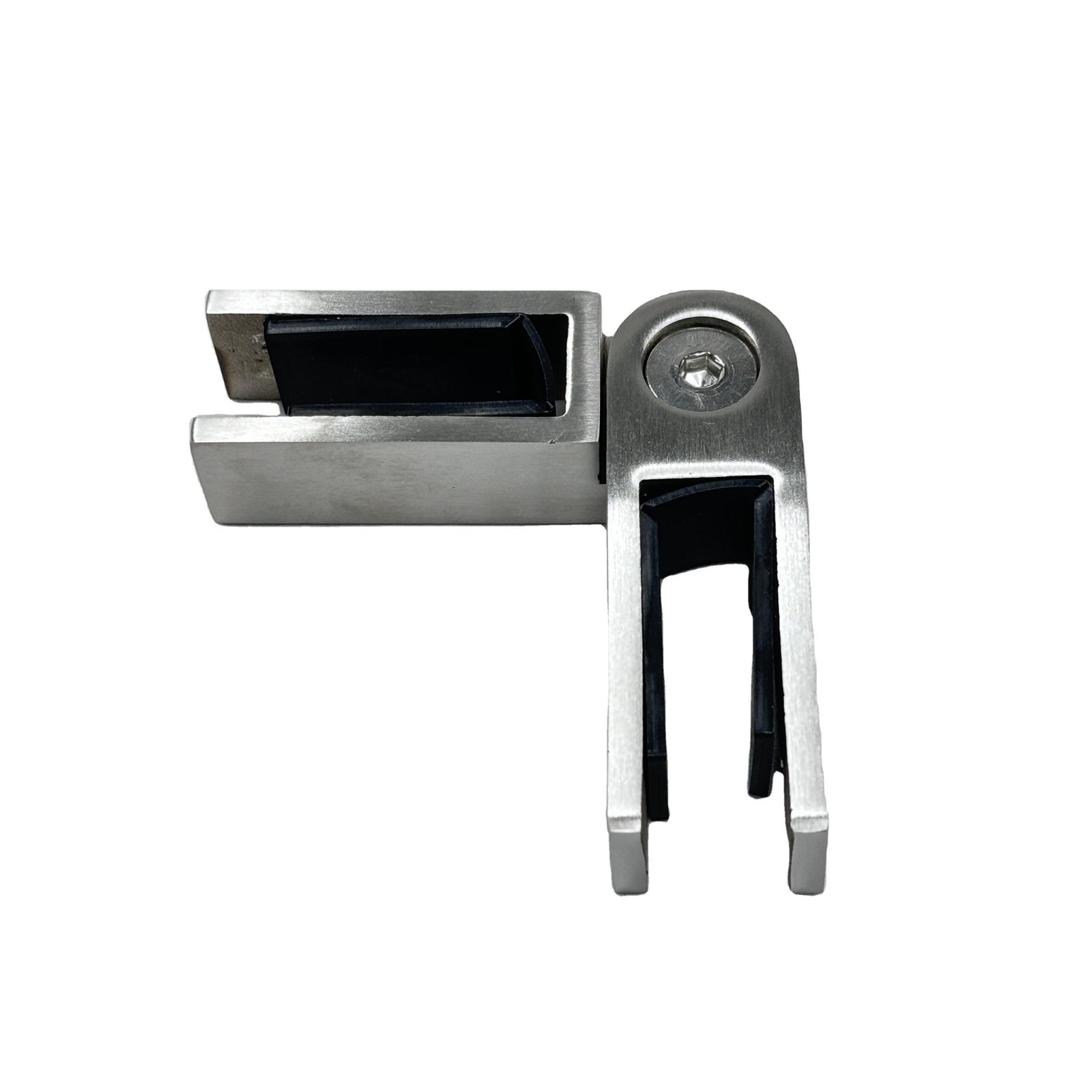
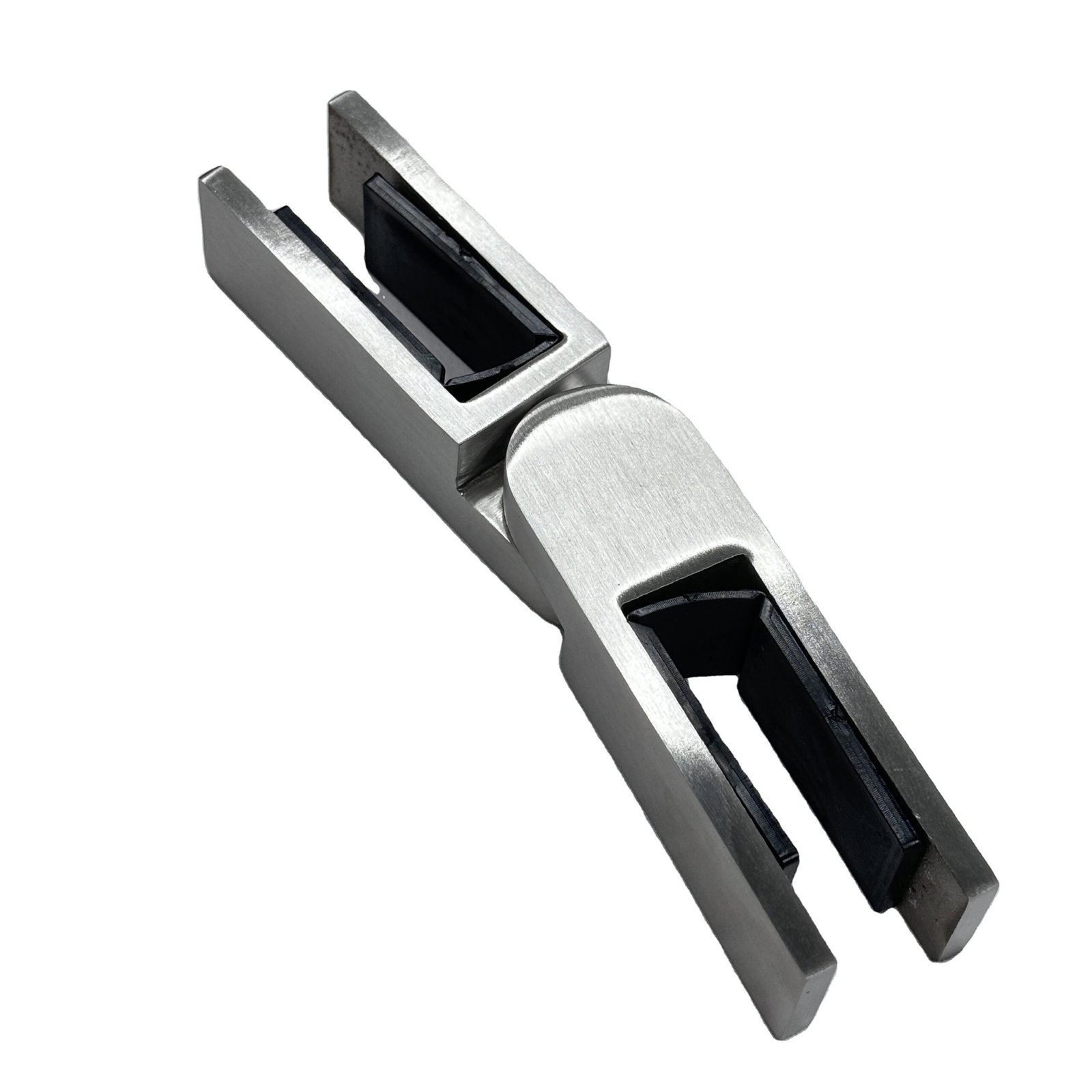
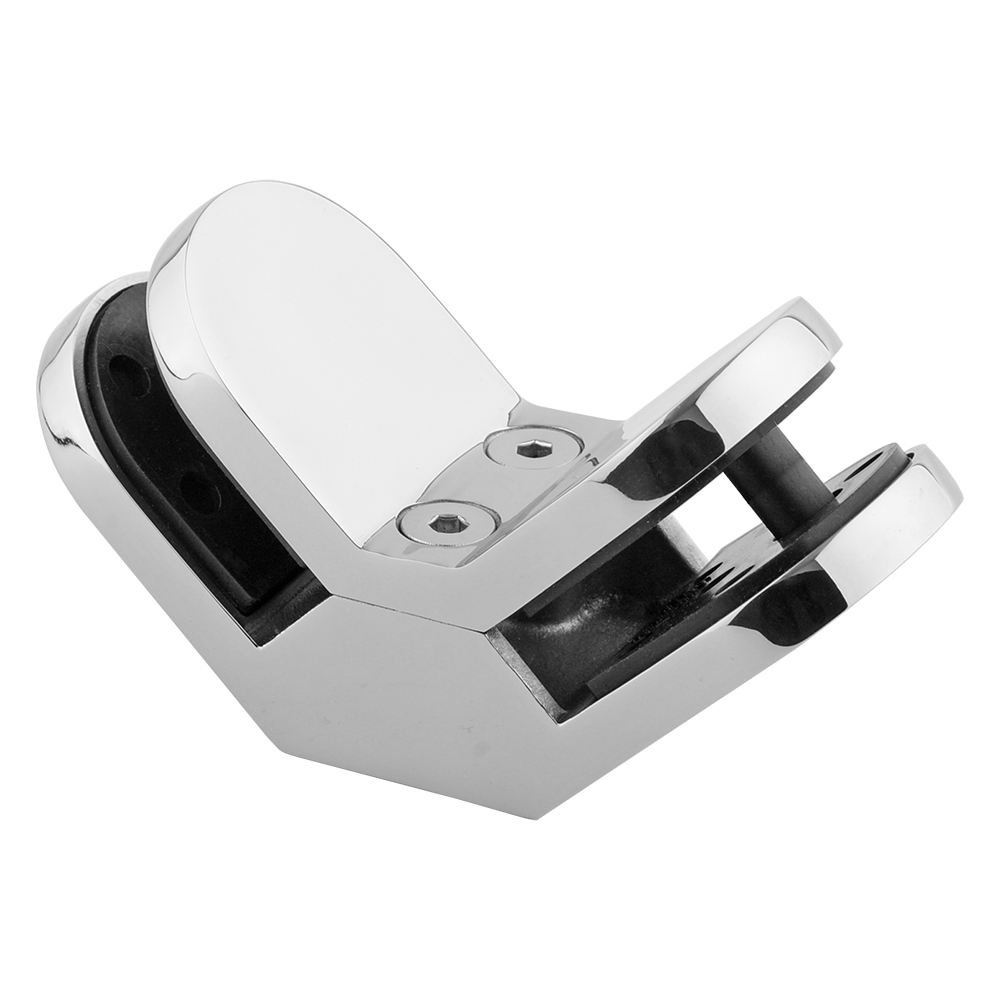
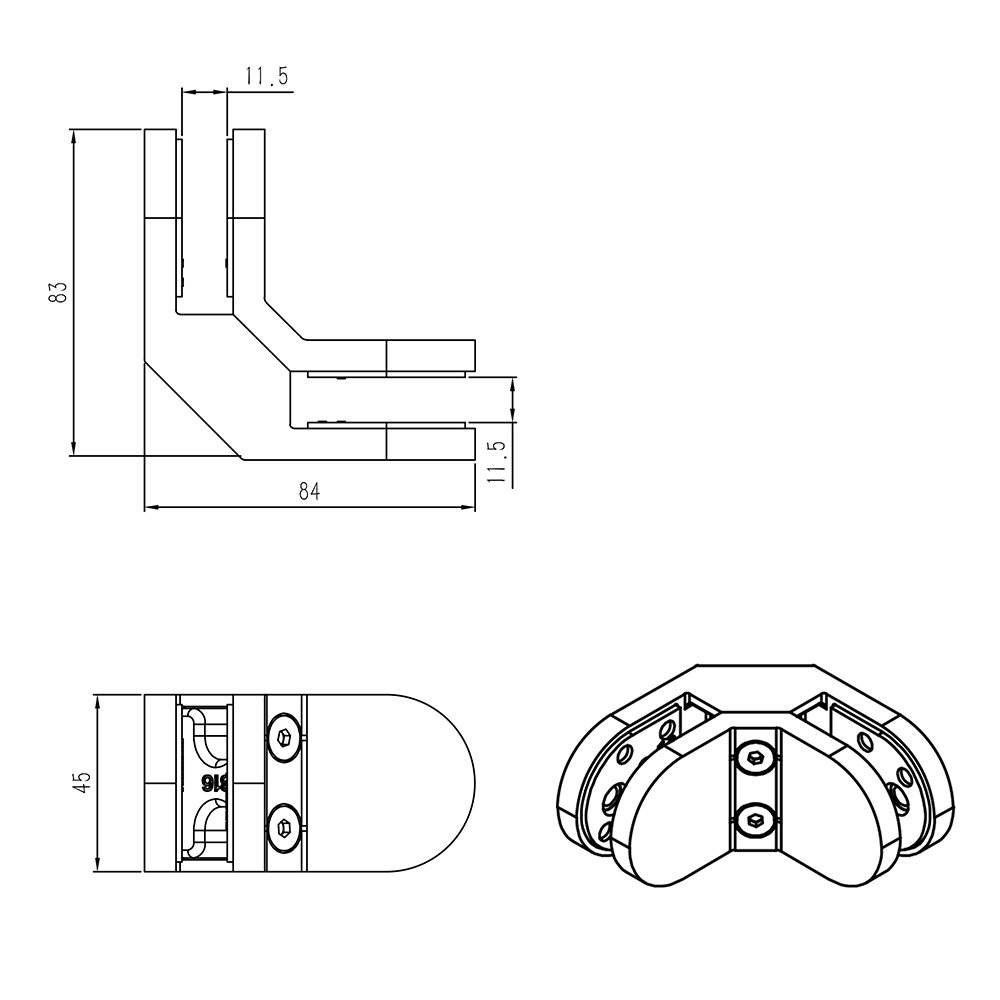
In frameless glass pool fences, balcony railings and low-level glass balustrades, the glass panels are often supported mainly from the bottom by stainless steel spigots.
This creates a clean architectural appearance, but it also creates a serious structural question.
The problem is usually not only the visible spigot body. In many installation failures, the weak point is the connection between the spigot, the anchor system and the substrate below or behind it.
A solid stainless steel spigot may look strong, but if it is fixed into weak concrete, thin tiles, decorative timber boards or an unprepared slab edge, the whole glass system can become unstable.
The real question is not only:
“Which spigot looks better?”
The better question is:
“What structure will this spigot transfer the glass load into?”
Core-drill, deck-mount and side-mount spigots are not simply different shapes. They are different installation methods for different site conditions.
The best choice depends on the substrate, glass height, panel width, wind exposure, drainage condition, waterproofing and local building requirements.
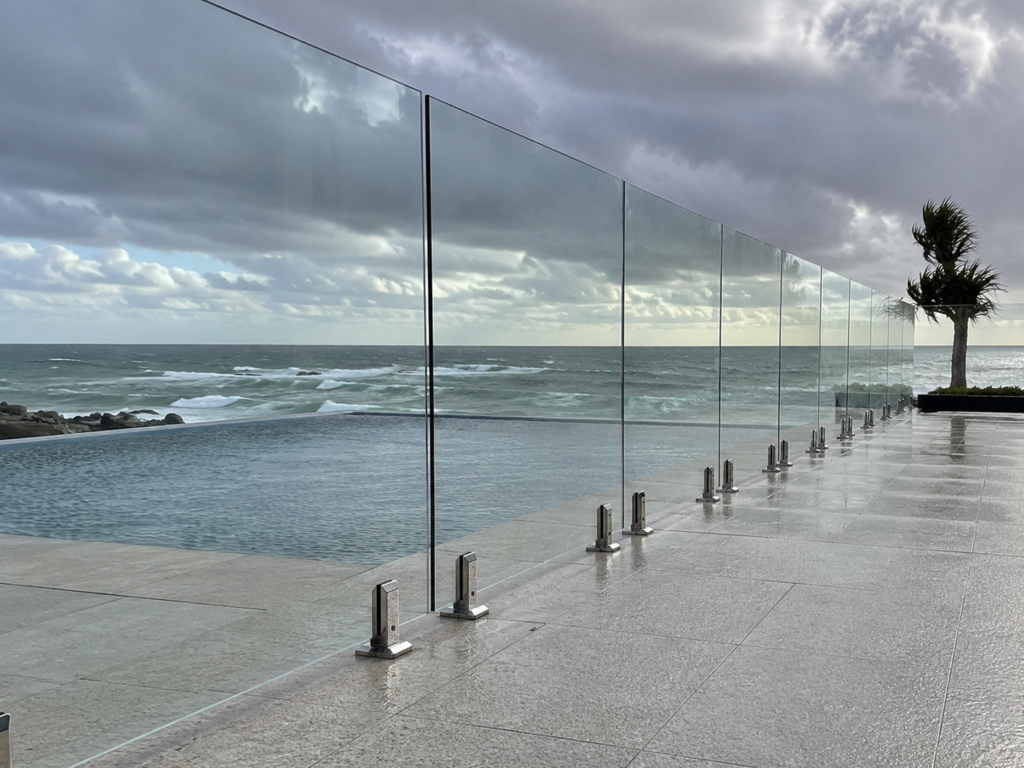
Quick Comparison: Core-Drill vs Deck-Mount vs Side-Mount Spigots
| Installation method | Main advantage | Common use | Key caution |
|---|---|---|---|
| Core-drill spigot | Clean appearance and embedded fixing | Concrete pool decks, high-end frameless pool fences | Needs enough concrete depth and accurate drilling |
| Deck-mount spigot | Easier surface installation and replacement | Concrete slabs, tiled floors, terraces and selected decks | Depends heavily on anchor strength and waterproofing |
| Side-mount / fascia-mount spigot | Saves top floor space and creates a clean edge | Balconies, staircases, roof terraces and slab edges | Requires strong side structure and precise alignment |
There is no single best installation method for every project.
A core-drill spigot may be excellent for a thick concrete pool deck, but unsuitable for a post-tension slab. A deck-mount spigot may be practical for renovation, but only if the anchors and substrate are strong enough. A side-mount spigot can create a clean balcony edge, but it depends heavily on the vertical structure.
Understanding Cantilever Load
Before comparing installation methods, buyers should understand how a glass spigot handles force.
A typical frameless pool fence may use 12mm tempered glass at around 1.2m high. The glass is clamped at the bottom, while the top and sides remain unsupported.
When wind pushes against the panel, or when a person leans on the top edge, the glass acts like a lever.
The spigot becomes the fixing point. The force at the top of the glass is transferred down into the spigot and then into the floor or side structure.
Even a moderate lateral force at the top edge can create much higher tension and compression forces at the fixing point.
This is why spigot selection cannot be based only on shape, finish or stainless steel grade.
The installation method must transfer the cantilever load into a structure that is strong enough to resist it.
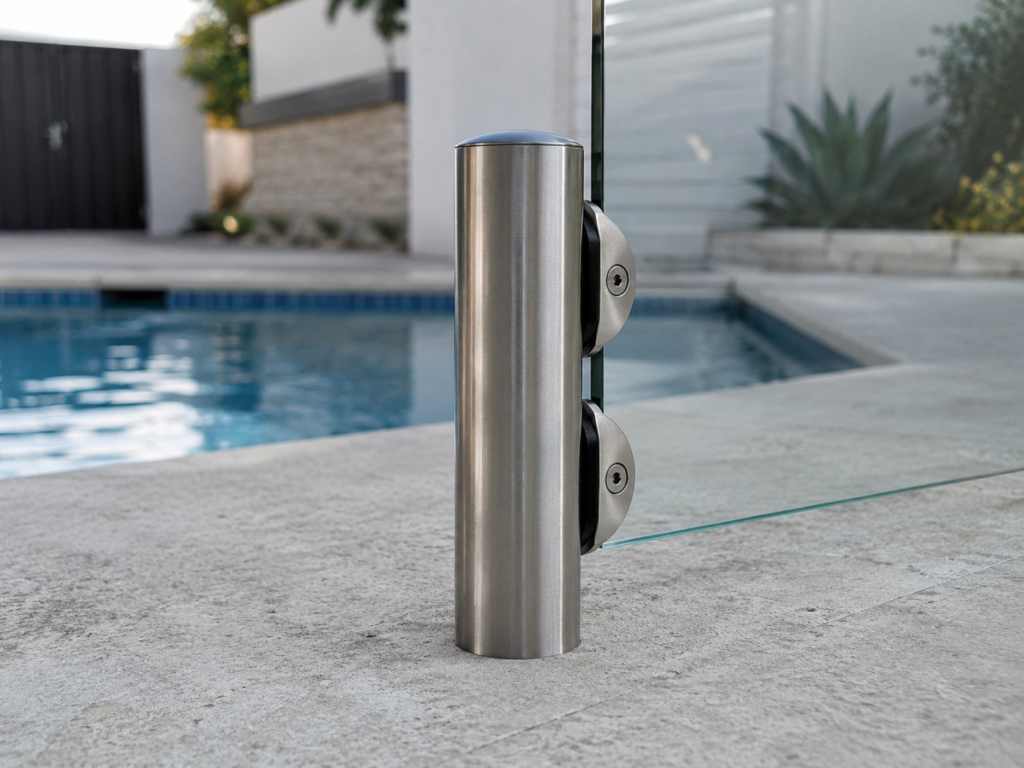
What Is a Core-Drill Glass Spigot?
A core-drill glass spigot is installed into a hole drilled into concrete.
The lower part of the spigot is embedded below the finished surface. Depending on the project design and spigot model, the hole may be filled with non-shrink grout, structural grout, cementitious material, chemical anchoring material or another suitable fixing method.
After installation, only the upper part of the spigot is visible.
Core-drill spigots are often used for:
- High-end residential pool fences
- Hotel swimming pool barriers
- Luxury villa glass fencing
- Minimalist frameless glass railings
- Projects requiring a clean floor appearance
The main advantage is appearance. There is no exposed base plate, so the glass fence looks lighter and cleaner.
The embedded fixing can also transfer the load deeper into the concrete structure, provided the concrete depth and installation are suitable.
Before choosing core-drill installation, the project should confirm:
- Concrete slab thickness
- Core hole diameter and depth
- Distance from slab edge
- Waterproofing layer
- Drainage condition
- Drilling accuracy
- Whether post-tension cables, pipes or heating systems are present
- Whether future replacement is possible
Core-drill spigots can provide a very clean and stable solution, but they require the right concrete structure and careful installation.
They are not suitable for every floor, especially where the slab is thin, hollow, waterproofing-sensitive or difficult to drill safely.
What Is a Deck-Mount Glass Spigot?
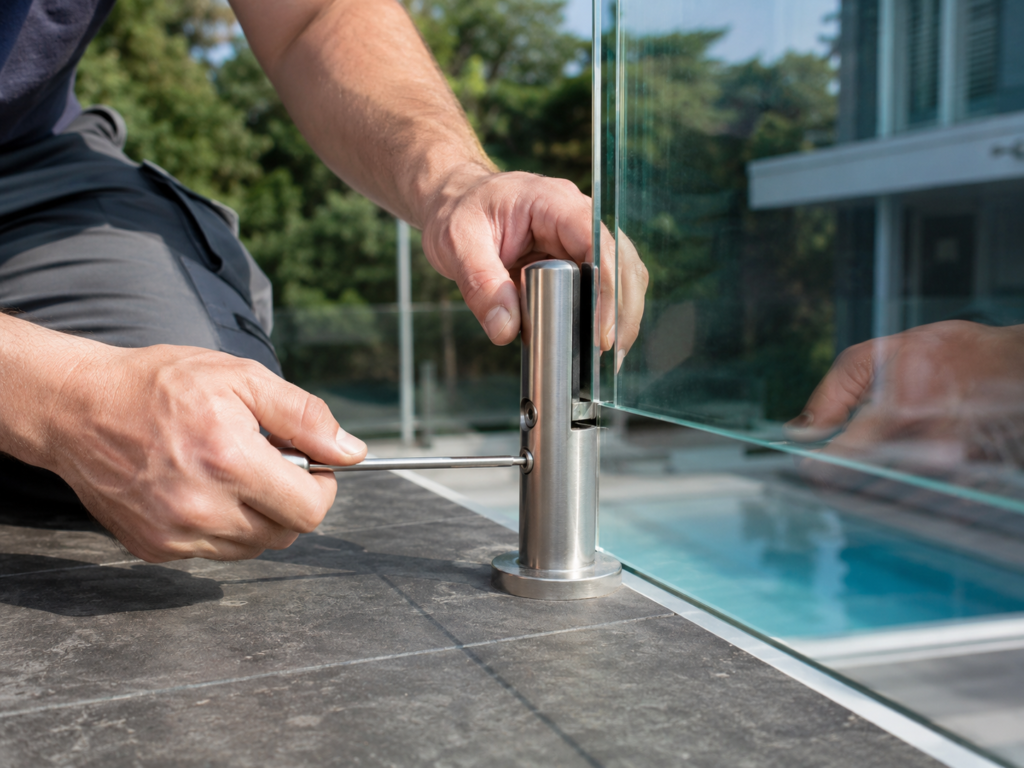
A deck-mount glass spigot, also called a surface-mounted or base-plated spigot, is fixed to the top surface of the floor.
It usually has a base plate with anchor holes. The installer fixes it to the concrete, tile, deck or structural base using suitable anchors, bolts or fasteners.
Deck-mount spigots are commonly used for:
- Concrete pool decks
- Tiled outdoor floors
- Residential pool fences
- Balcony or terrace glass railings
- Renovation projects
- Sites where deep core drilling is not possible
The main advantage is installation flexibility.
Compared with core-drill spigots, deck-mount spigots are usually easier to position, inspect and replace. They can also be useful in renovation projects where the finished floor already exists.
However, deck-mount spigots depend heavily on the anchor system and substrate strength.
The visible base plate may look strong, but the real load is carried by the anchors below it.
Deck-mount installation should check:
- Anchor type
- Anchor depth
- Concrete strength
- Distance from slab edge
- Tile or stone layer condition
- Waterproofing treatment
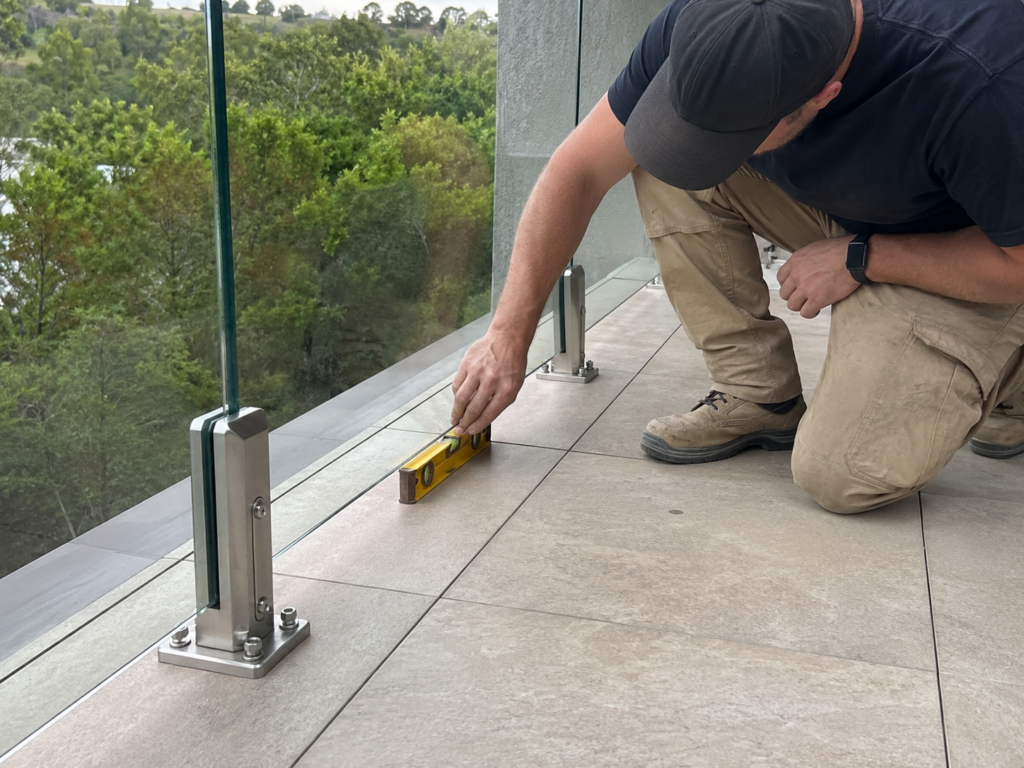
- Base plate leveling
- Drainage around the base
- Spigot spacing and glass panel size
For concrete edges, anchor type and edge distance should be reviewed carefully. In some situations, chemical anchors may be preferred over expansion anchors because they avoid expansion stress near the edge. Final anchor selection should follow local engineering and installation requirements.
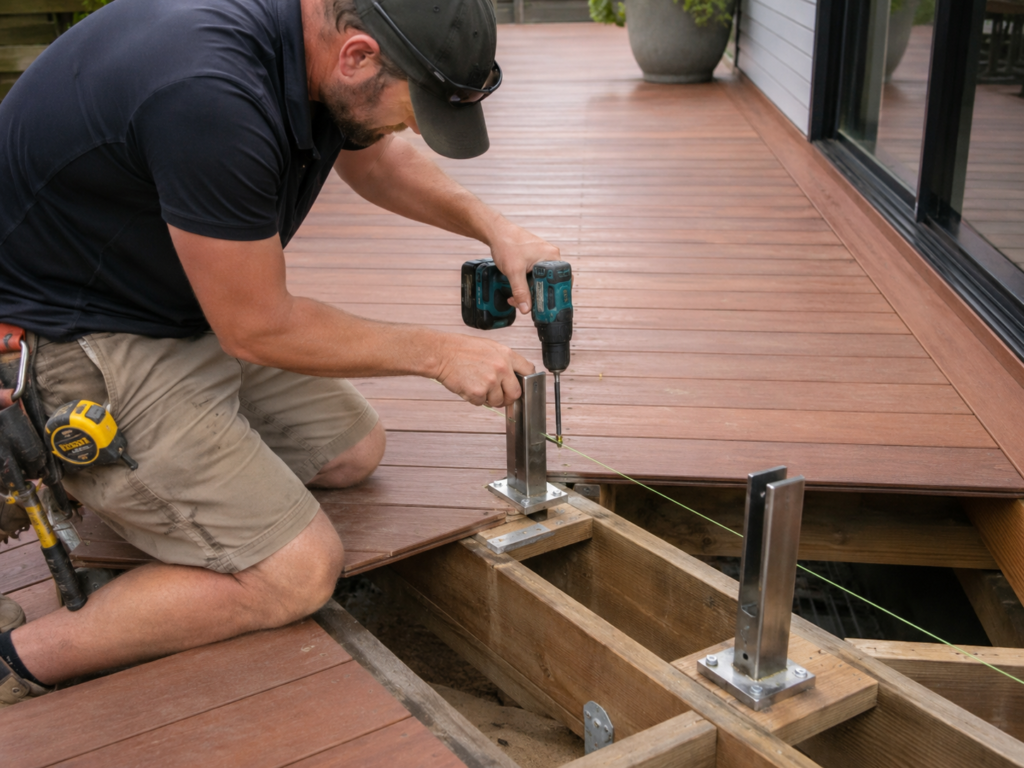
For timber decks, ordinary decorative decking boards are usually not enough. The load should transfer into structural joists, blocking, steel plates or reinforced support below the deck surface.
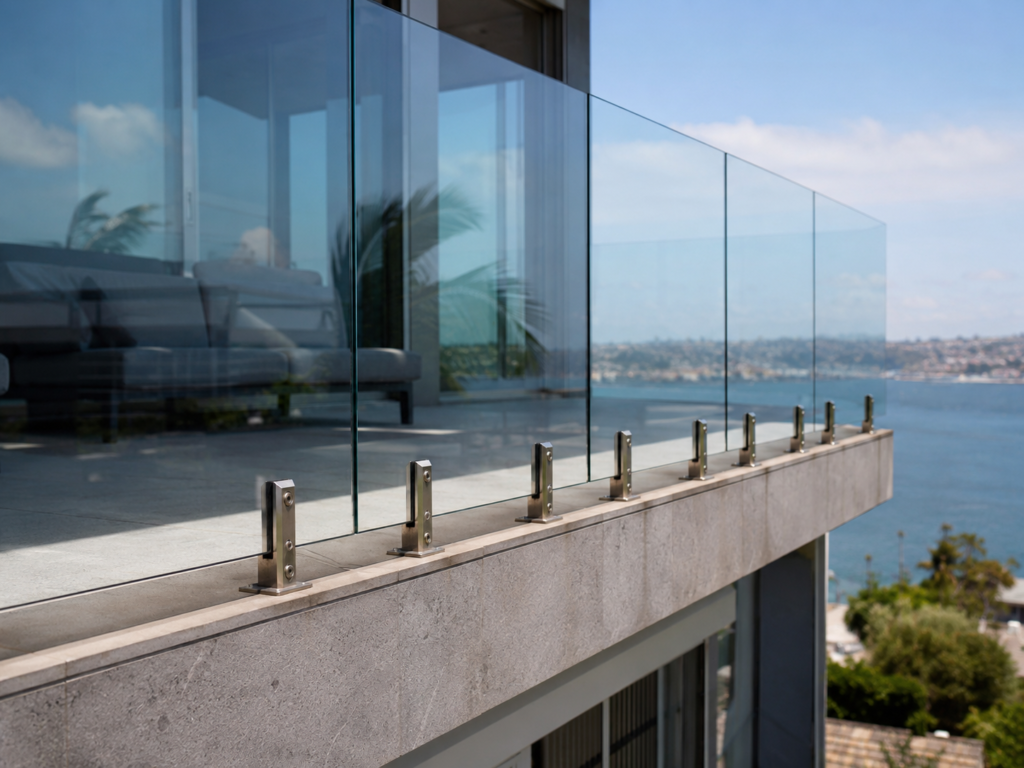
What Is a Side-Mount or Fascia-Mount Glass Spigot?
A side-mount spigot, also called a fascia-mount spigot, is fixed to the vertical side of a slab, beam, stair stringer or balcony edge.
Instead of occupying the top walking surface, the spigot holds the glass from the side. The glass panel rises from the edge, leaving the floor surface cleaner.
Side-mount spigots are often used for:
- Balconies
- Staircases
- Roof terraces
- Slab edges
- Waterfront decks
- Narrow walkways
- Modern glass railing details
The main advantage is space saving and visual cleanliness.
For balconies and terraces, side-mount installation can keep the top surface open. It can also make the glass appear to rise directly from the building edge.
However, side-mount installation has stricter structural and alignment requirements.
The side of the slab or beam must be strong enough to take the glass load and lateral force. Edge distance, anchor spacing, concrete quality and vertical alignment are all important.
If the fascia surface is uneven or not plumb, the spigots may sit at different angles. Installers may need shims or other adjustment methods to align the glass panels correctly.
Side-mount installation can also require more access equipment. On balconies, staircases or elevated decks, installing heavy spigots and lifting glass panels may require scaffolding, lifting equipment or additional labor planning.
Side-mount spigots can create a clean edge detail, but they depend heavily on the strength and accuracy of the vertical structure.
Selection Matrix by Substrate
The substrate often decides the installation method before the spigot appearance is even considered.
| Substrate condition | Spigot type often considered | Main reason |
|---|---|---|
| Thick reinforced concrete slab at ground level | Core-drill or deck-mount | Concrete depth may support embedded or surface fixing |
| Finished tiles over concrete | Deck-mount | Surface fixing may be easier, but anchor depth and waterproofing must be checked |
| Post-tension slab or floor with hidden services | Deck-mount or alternative system | Deep drilling may not be allowed |
| Timber decking | Deck-mount with structural blocking | Ordinary deck boards are not enough |
| Steel structure | Custom deck-mount or side-mount detail | May require bolts, plates or welding details |
| Narrow balcony edge | Side-mount / fascia-mount | Saves walkable floor area |
| Staircase side or slab edge | Side-mount | Keeps the top surface clean |
| Roof terrace | Depends on waterproofing | Drainage and waterproofing are critical |
The structure below or behind the visible surface is more important than the surface finish itself.
A spigot should not be fixed only to tile, pavers, thin screed or decorative boards unless the structural support below has been confirmed.
Wind Load, Glass Height and Panel Width
Glass pool fences and railings are exposed to lateral forces.
The taller the glass, the larger the surface area. The wider the panel, the more force may be transferred to each spigot.
Wind exposure is especially important in:
- Rooftop terraces
- Balconies
- Coastal sites
- Open pool decks
- Elevated platforms
- Resort and hotel projects
Important factors include:
- Glass height
- Glass thickness
- Panel width
- Spigot spacing
- Number of spigots per panel
- Wind exposure
- Site elevation
- Local building requirements
- Whether the glass is part of a pool barrier or balcony guard
A 12mm glass panel is common in many frameless pool fence projects, but final glass thickness and fixing method should still follow local regulations and project engineering requirements.
For high-wind areas, the solution may involve smaller panel widths, stronger spigots, more robust anchoring, higher-grade stainless steel or another glass railing system.
Spigot strength should always be evaluated together with glass height, panel width, wind exposure and local building requirements.
Drainage, Corrosion and Grounding
Swimming pool and outdoor railing environments are harsh.
Spigots may be exposed to:
- Chlorinated water
- Saltwater
- Cleaning chemicals
- UV exposure
- Standing water
- Wet-dry cycles
- Dust and outdoor pollution
Drainage matters because water can collect around the fixing area.
For core-drill spigots, water should not remain trapped inside the drilled hole for long periods. For deck-mount spigots, standing water around the base plate and anchors can increase maintenance problems. For side-mount spigots, water may enter bolt holes or side joints if sealing is poor.
Material selection and drainage design should be considered together.
For many outdoor pool fence projects, SS316 is commonly considered. For coastal sites, saltwater pools or aggressive environments, Duplex 2205 may be considered if the budget and project requirement justify it.
No stainless steel should be described as maintenance-free. Regular cleaning and inspection are still important, especially around pools and coastal sites.
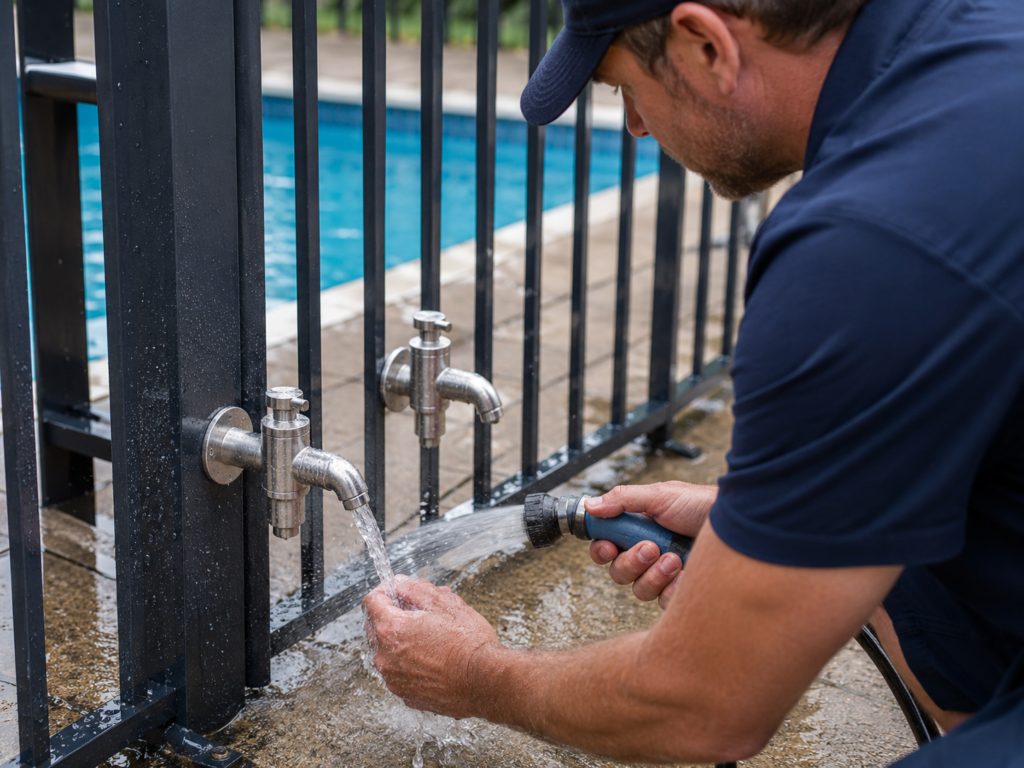
In some regions, metal hardware near swimming pools may need bonding or grounding according to local electrical codes. Contractors should confirm this requirement before installation.
Adjustable vs Non-Adjustable Spigots
Some glass spigots allow adjustment after installation.
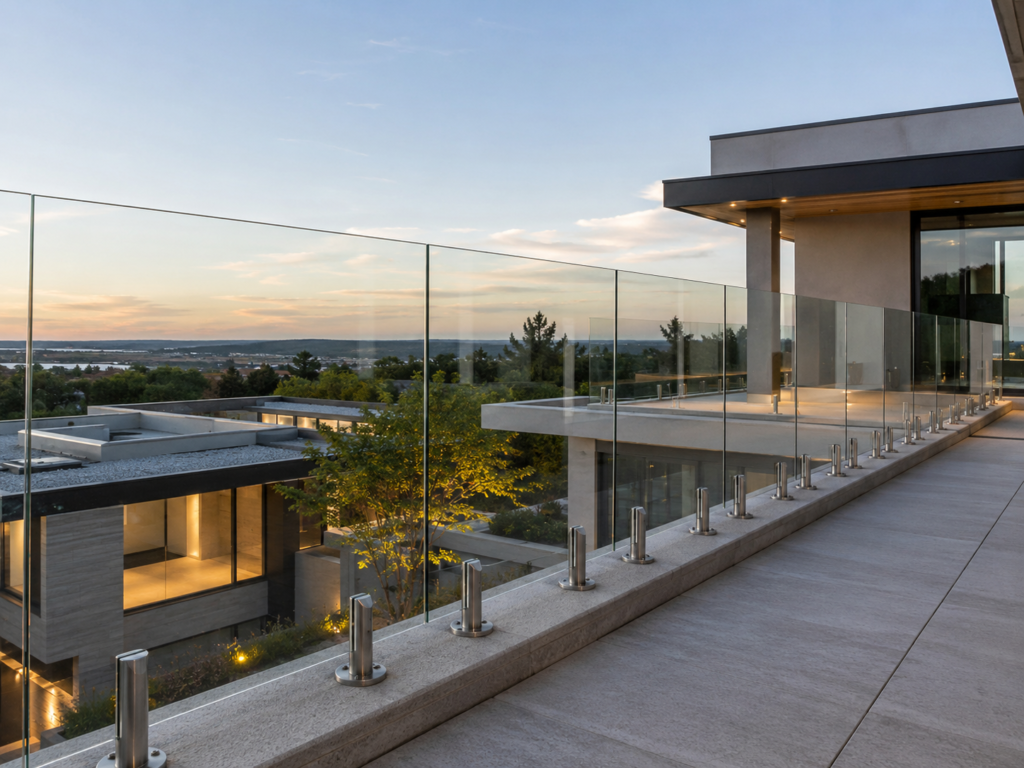
Adjustable spigots can help installers fine-tune glass alignment, especially when the floor is slightly uneven or when multiple glass panels need to line up visually.
They may be useful for:
- Long glass fence runs
- Pool fences with multiple panels
- Renovation projects
- Sites with minor floor variation
- Projects requiring very clean glass alignment
Non-adjustable spigots may be simpler and cost-effective when the substrate is accurate and installation conditions are well controlled.
Adjustment is useful, but it cannot compensate for weak anchoring, poor substrate or incorrect panel design.
Common Specification Mistakes
Choosing by Shape Only
Round or square is mainly an appearance decision. The substrate and installation method are more important.
Using Core-Drill Spigots Without Enough Concrete Depth
Core-drill installation needs suitable concrete depth and structure. Thin slabs, hollow areas or hidden services should be reviewed carefully.
Using Deck-Mount Spigots Without Checking Anchors
A thick base plate does not help if anchor depth, concrete strength, edge distance or waterproofing detail is wrong.
Fixing Spigots Directly to Decorative Timber Boards
Timber decking needs structural blocking or reinforcement below the surface. Decorative boards alone are usually not enough.
Ignoring Side-Mount Alignment
Side-mount installation looks clean, but uneven fascia surfaces can make the glass panels difficult to align.
Ignoring Waterproofing and Drainage
Pool decks, balconies and roof terraces need careful waterproofing and drainage planning before drilling.
Installing on Loose Pavers
Loose paving stones or pavers over sand are not suitable as direct structural fixing points. The spigot should connect to a concrete footing, slab or reinforced structure below.
Forgetting Local Building and Electrical Requirements
Pool barriers and balcony railings are safety-related systems. Glass height, gaps, load requirements, gate details and electrical bonding requirements should be checked locally.
Project Information Required Before Quotation
Before recommending glass spigots, please provide:
- Project type: pool fence, balcony, staircase, roof terrace or other
- Installation location: indoor, outdoor, coastal or poolside
- Glass height
- Glass thickness
- Single panel width
- Number of glass panels
- Preferred mounting method: core-drill, deck-mount or side-mount
- Substrate type: concrete, tile, timber, steel, paver or other
- Concrete thickness, if available
- Whether waterproofing layers are present
- Whether drilling is allowed
- Wind-load requirement, if available
- Local code requirement, if available
- Material requirement: SS304, SS316 or Duplex 2205
- Surface finish requirement
- Need for adjustable spigots
- Quantity
- Logo or packaging requirement
Photos, drawings, layout plans and substrate details can help confirm the correct spigot type.
How Metech Supports Glass Spigot Projects
Metech Hardware supplies different types of glass spigots for frameless pool fence and glass railing projects, including core-drill, deck-mount and side-mount options.
We offer stainless steel material choices such as SS304, SS316 and Duplex 2205 depending on project environment, corrosion exposure and budget.
We help buyers review glass height, glass thickness, panel width, installation surface, project location and preferred mounting method before recommending suitable spigot combinations.
For pool fences, balconies, staircases, roof terraces and resort projects, surface finish options, logo marking, packaging, mixed-product purchasing and bulk supply can also be discussed according to order needs.
FAQ
Which is stronger: core-drill or deck-mount spigot?
There is no universal answer. Core-drill spigots can provide a clean embedded fixing, while deck-mount spigots can also be reliable if the anchor system and substrate are correct.
Do glass panels need to be drilled to use spigots?
Many friction-fit spigots do not require holes in the glass. The glass is clamped with gaskets and pressure plates. However, some projects may require safety pins or special fixing details, depending on local code and design.
What is the maximum distance between two spigots?
Spacing depends on glass height, glass thickness, panel width, wind load and local requirements. Many panels use two spigots, but longer or more exposed panels may need additional support.
How deep must a core-drill hole be?
The required hole depth depends on the spigot model, glass height, substrate and project design. Buyers should follow the installation drawing and local engineering requirements.
Can I install glass spigots on timber decking?
Yes, but ordinary timber boards are usually not enough. The spigots should be fixed into structural backing such as joists, steel plates or reinforced support.
Can I use a deck-mount spigot on paving stones?
Usually not directly. Loose pavers over sand or gravel are not structural fixing points. The spigot should be anchored into a concrete footing, slab or reinforced structure below.
Are side-mount spigots suitable for pool fences?
In some projects, yes. But the side structure, waterproofing, glass height and local safety requirements must be checked before selection.
Should I choose SS316 or Duplex 2205?
SS316 is commonly considered for outdoor pool fences. Duplex 2205 may be considered for coastal sites, saltwater pools or high-corrosion environments. The final choice depends on budget and project requirements.
Need Help Choosing Glass Spigots for a Pool Fence or Railing Project?
Send us your glass height, glass thickness, panel width, installation surface, project environment and preferred mounting method.
Metech Hardware can help review whether core-drill, deck-mount or side-mount glass spigots are suitable for your project.