Home » Insights » Frameless Shower Door Hardware Set Guide: Hinges, Clamps, Handles, Support Bars & Seals
Frameless Shower Door Hardware Set Guide: Hinges, Clamps, Handles, Support Bars & Seals
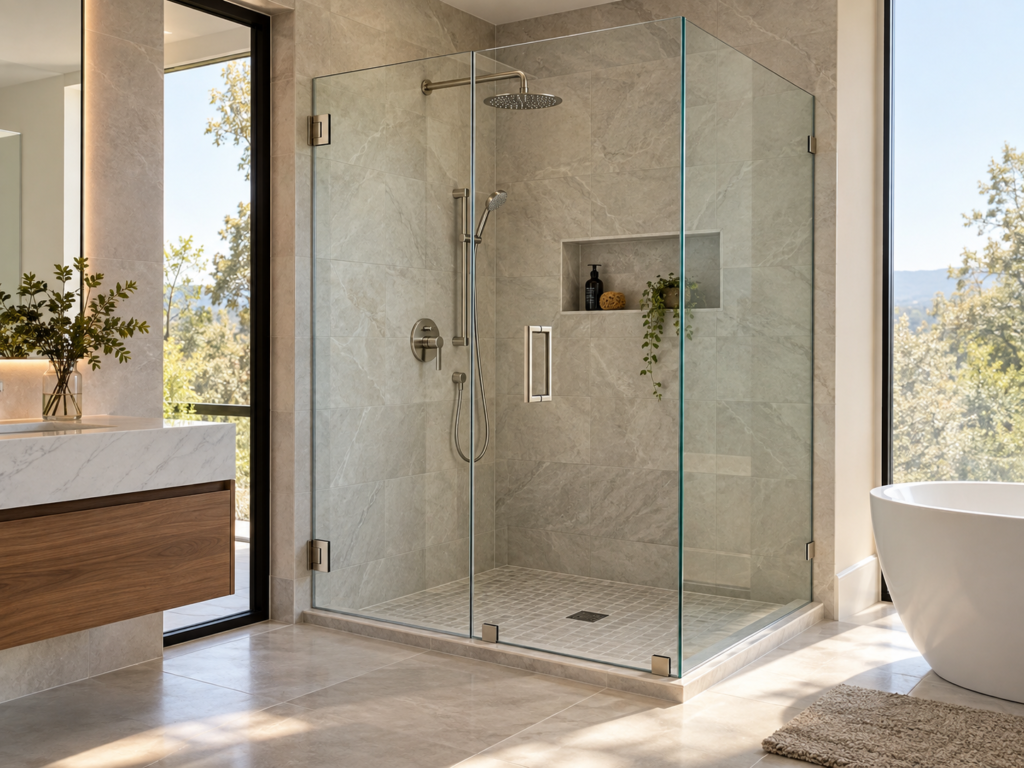
A frameless shower enclosure may look simple, but it is not built from isolated pieces of hardware.
The moving door depends on the hinges. Fixed panels need suitable support. Handles affect glass preparation and user operation. Stabilizer bars may be required for larger panels, while seals depend on the final glass gaps and enclosure geometry.
If these components are selected separately without checking how they interact, the result can become a “Frankenstein” hardware package: every individual part looks acceptable, but the complete enclosure does not work cleanly as one system.
For glass fabricators, shower enclosure companies, contractors and distributors, two principles are therefore important:
The enclosure layout defines the hardware set.
and
The components should be coordinated as one system rather than purchased as unrelated parts.
Start With the Shower Enclosure Layout
Before choosing hinges or clamps, identify how the glass panels relate to one another.
Enclosure Type
Typical Hardware Requirements
Door + Fixed Panel
Hinges, fixed-panel support, handle, seals
Inline Door + Panels
Hinges, clamps or channel, support hardware, handle, seals
90° Corner Enclosure
Angle-specific hinges/clamps, support hardware, handle, seals
Angled / Neo-Angle Enclosure
Suitable angled fittings, support and seals
Sliding Shower
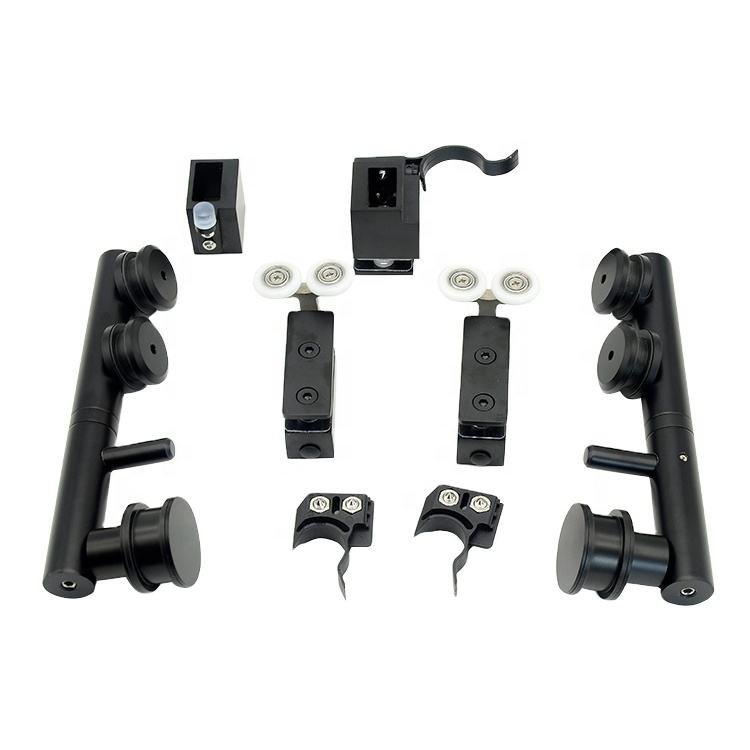
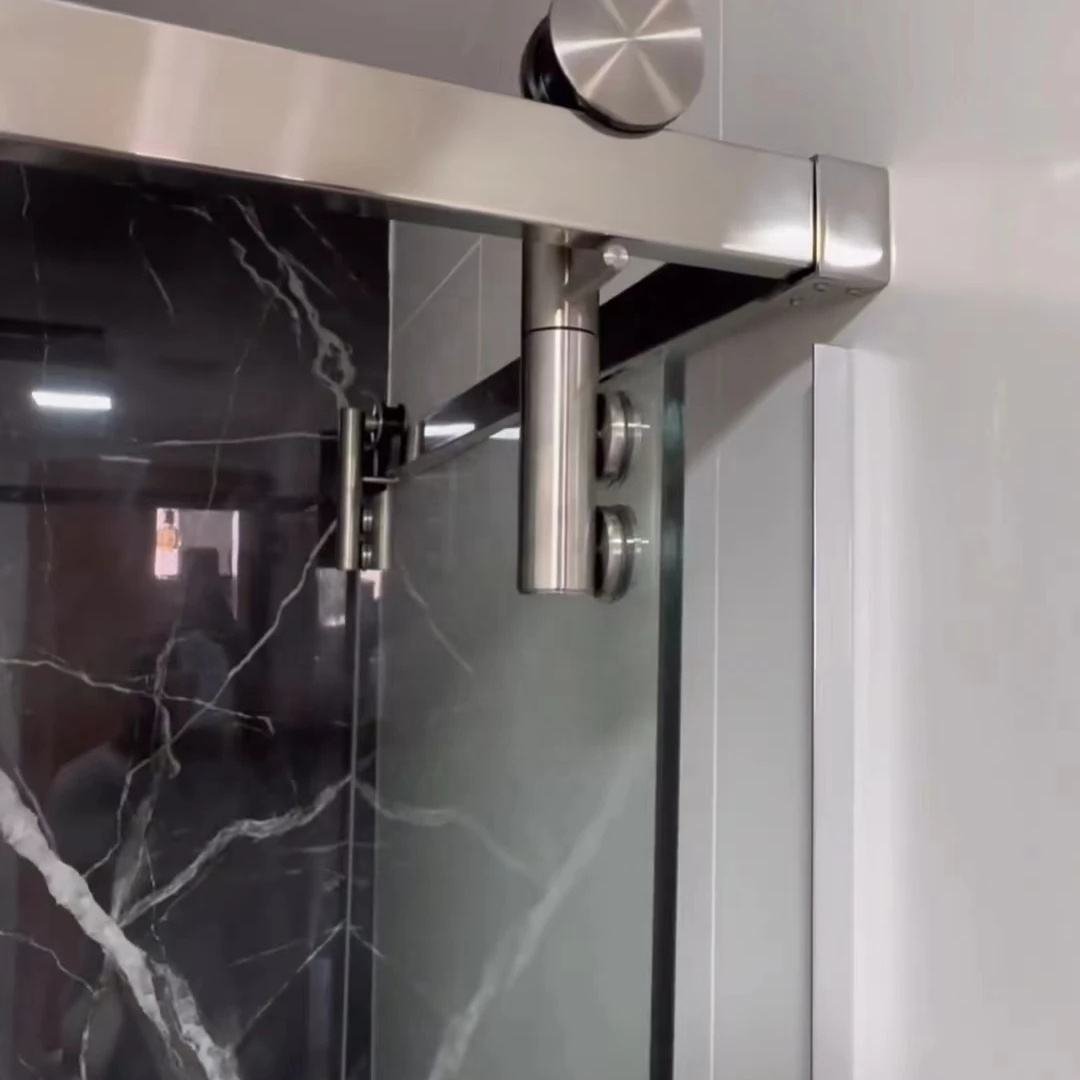
Track or rail, rollers, guides, handle and seals
A wall-mounted swing door and a 90° glass-to-glass enclosure may both be frameless, but the hardware geometry is different.
The layout should therefore come first.
A quotation based only on:
“Two hinges, four clamps and one handle”
is incomplete unless the supplier understands which glass panels are moving, which are fixed and how they connect.
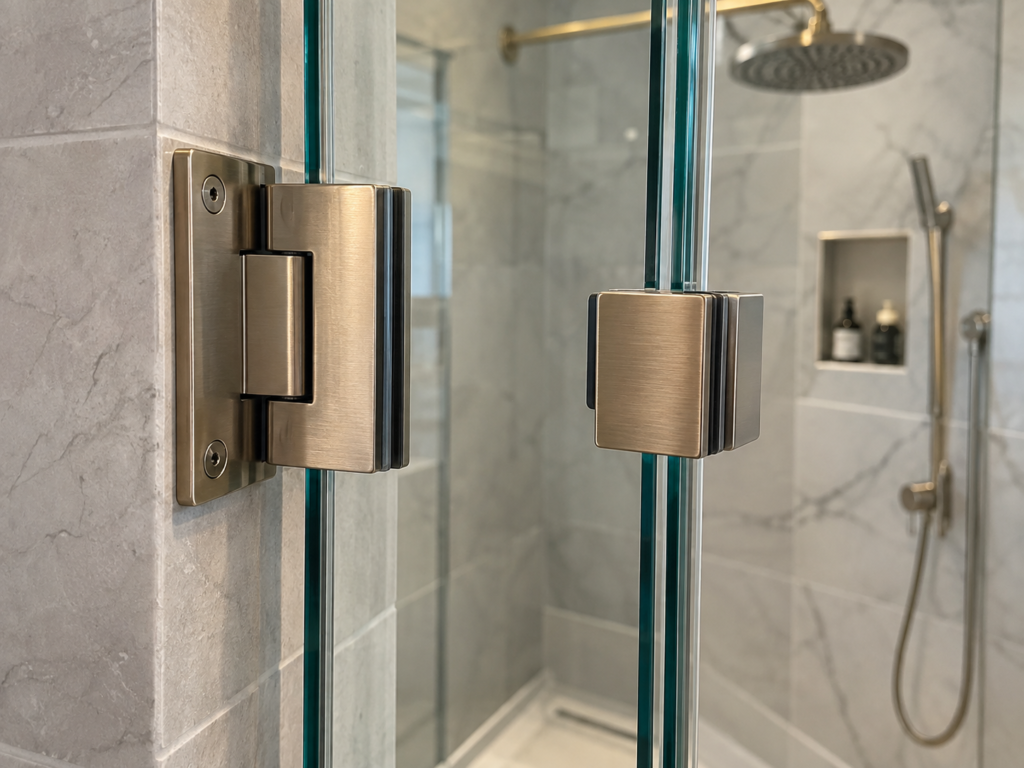
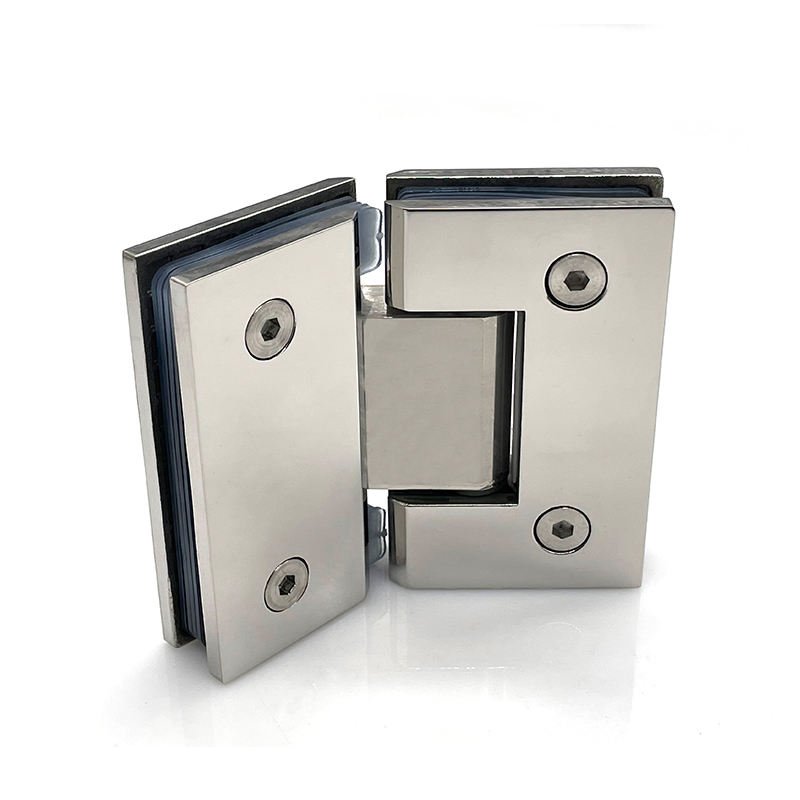
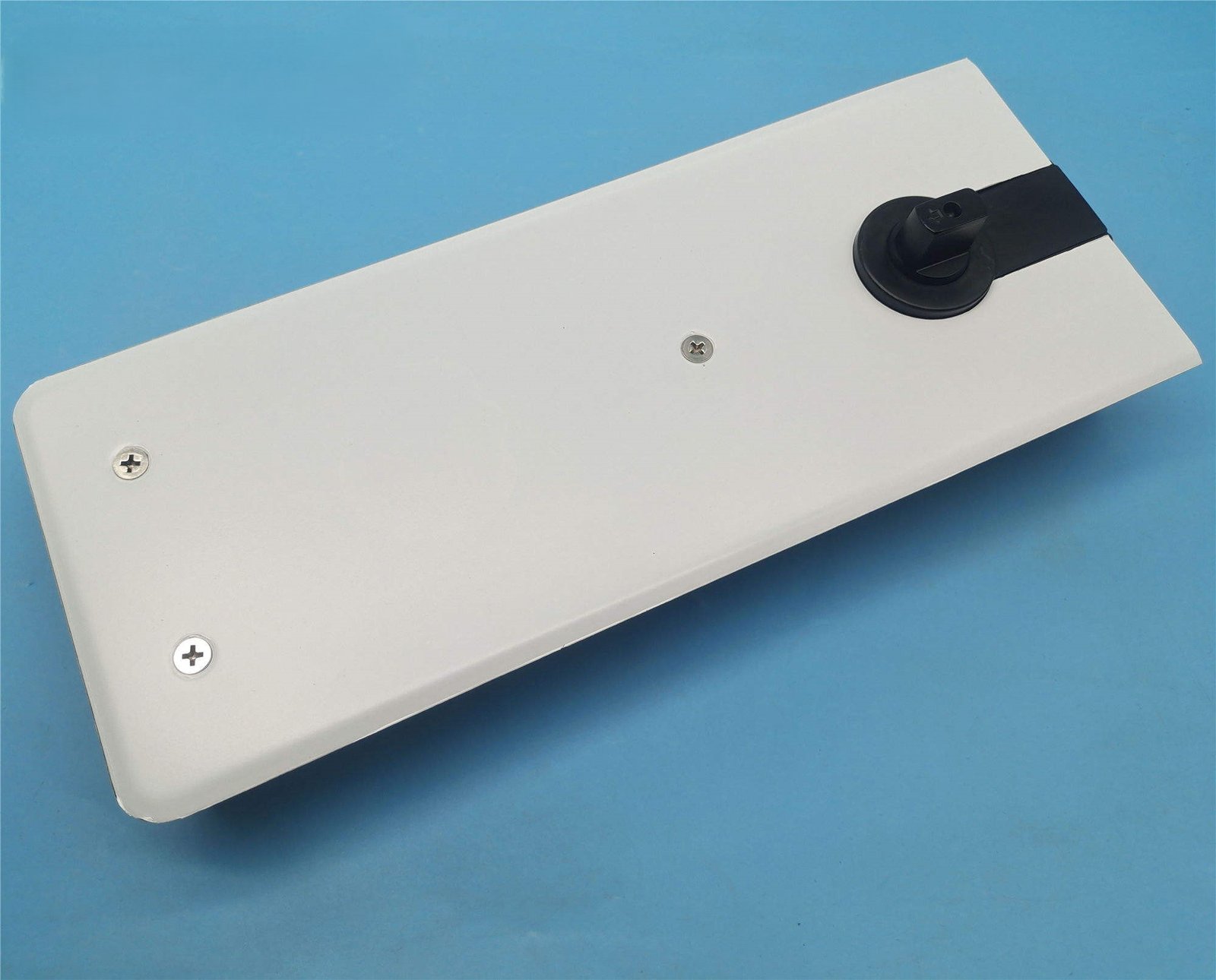
Shower Hinges Control the Moving Door
For swing-door enclosures, shower hinges are among the most important components in the hardware set.
Before selecting them, confirm:
wall-to-glass or glass-to-glass installation;
hinge angle where applicable;
glass thickness;
door dimensions and approximate weight;
hinge quantity;
opening direction;
required glass preparation.
The hinge load rating should be checked against the actual door and the manufacturer’s specification.
Material and surface finish should also suit the installation environment and cleaning conditions.
Depending on the hinge design, the mechanism may provide self-centering or return-to-close behaviour, but these functions should always be confirmed for the exact model.
Most importantly, the hinge must be selected before the glass cutout is finalized.
Similar-looking hinges may require different glass preparation.
Glass Clamps and U-Channels Support Fixed Panels
Hinges and glass clamps usually perform different jobs.
A hinge controls a moving door.
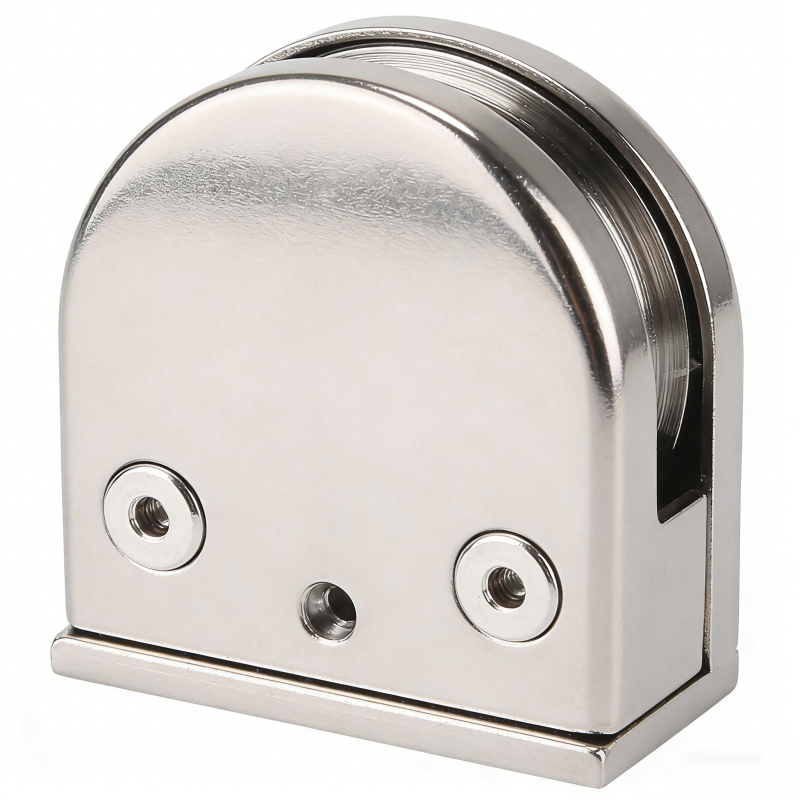
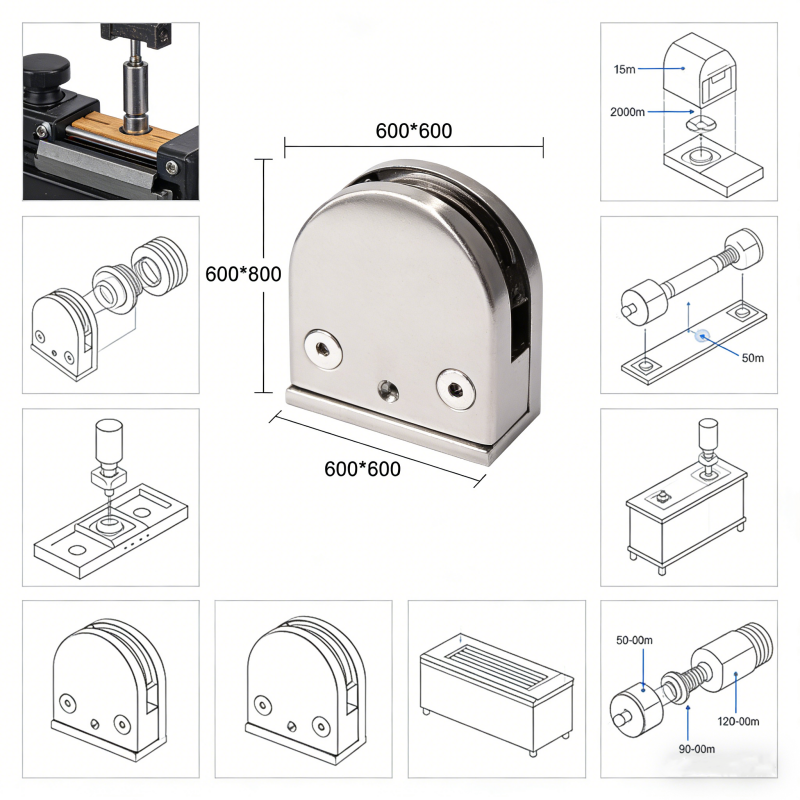
A clamp is commonly used to secure or connect fixed glass.
Depending on the shower layout, fixed-panel hardware may include:
wall-to-glass clamps;
glass-to-glass clamps;
corner clamps;
other panel-support fittings.
However, clamps are not the only option.
Some designs use continuous U-channel along one or more panel edges.
Fixed-Panel Method
Typical Characteristic
Glass Clamps
Minimal point-fixing appearance
U-Channel
Continuous support along the panel edge
Combined System
Different methods used within one enclosure
The correct fixing method depends on the glass layout, appearance requirements and support conditions.
Whether a clamp requires holes, notches or no glass preparation also depends on the exact product design.
This should be confirmed before tempering rather than assumed from a similar-looking clamp.
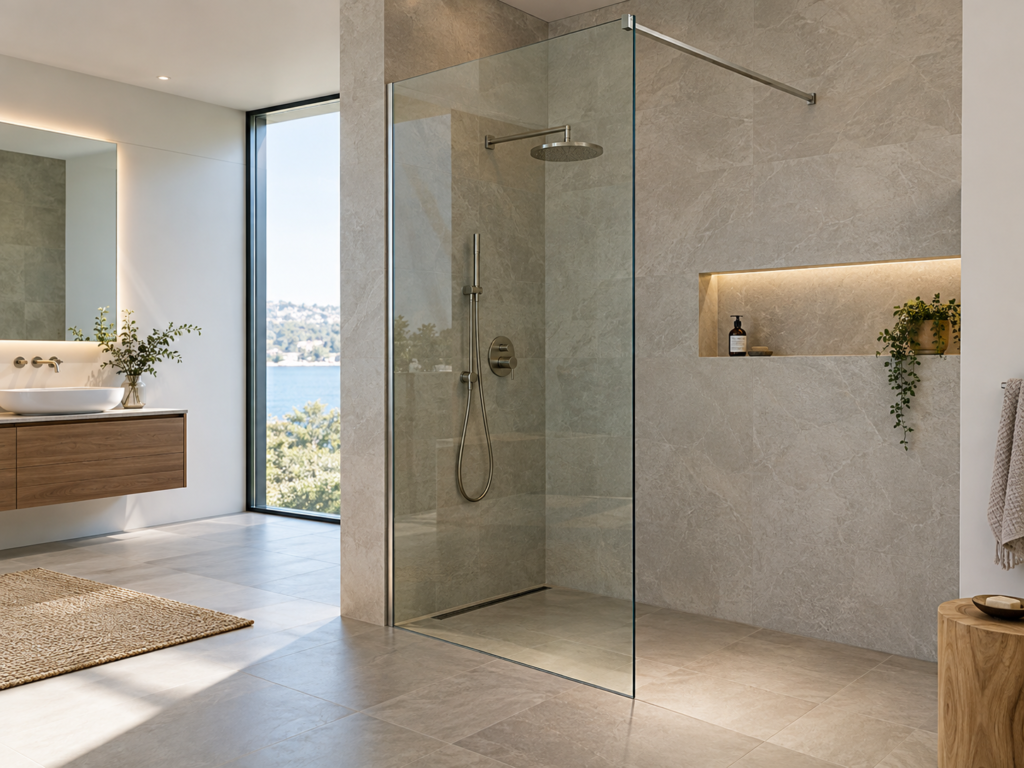
Support Bars Stabilize Fixed Glass Where Required
“Frameless” does not mean “unsupported.”
Depending on the panel dimensions and fixing method, larger fixed glass panels may require additional stabilization.
Possible solutions include:
stabilizer bars;
support bars;
header systems;
ceiling or wall-supported fittings.
The purpose is to reduce unwanted movement and help maintain the enclosure geometry.
A support bar is not automatically required for every frameless shower.
A small fixed panel supported securely along its edges may require a different solution from a large panel with limited fixing points.
For this reason, the decision should be based on the complete panel design rather than one universal size rule.
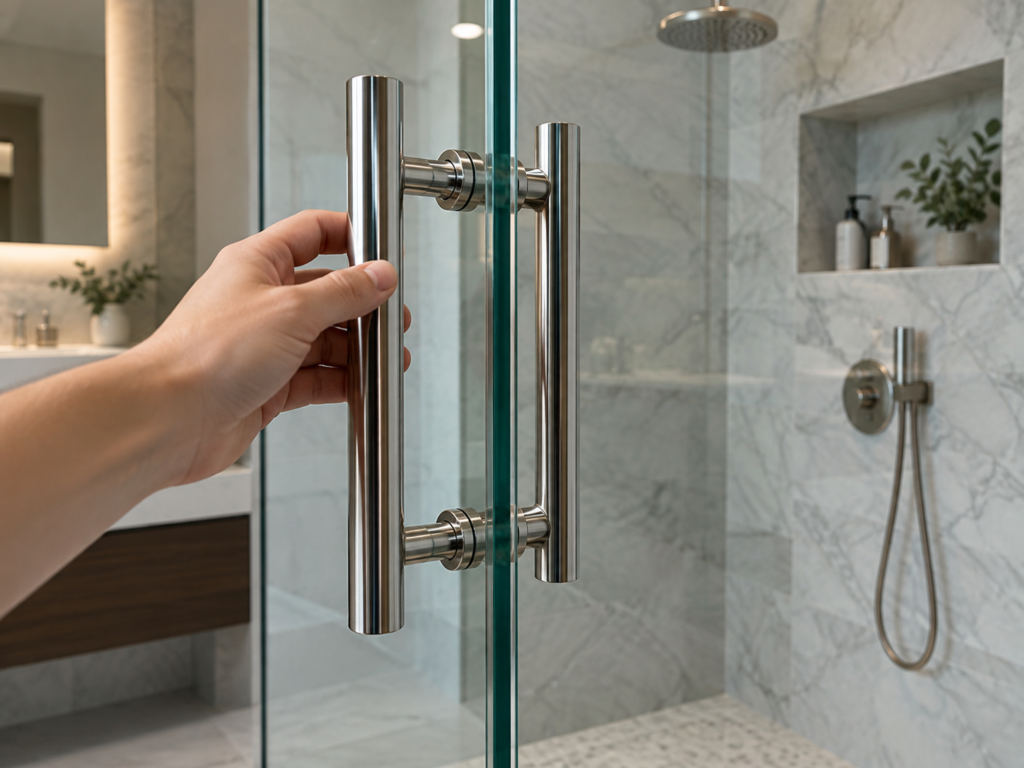
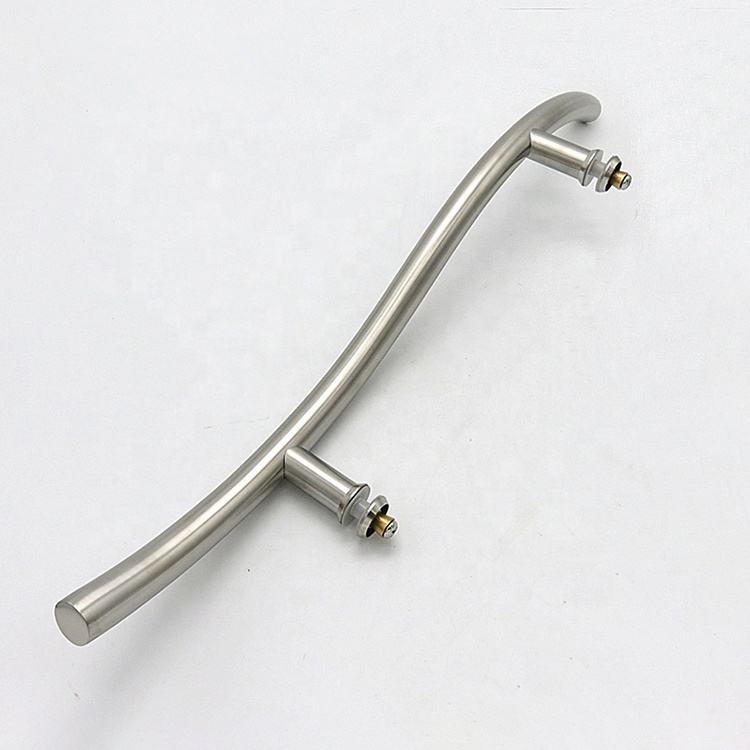
Handles Must Match the Door and Glass Preparation
The handle is often treated as a simple finishing item, but it affects the glass directly.
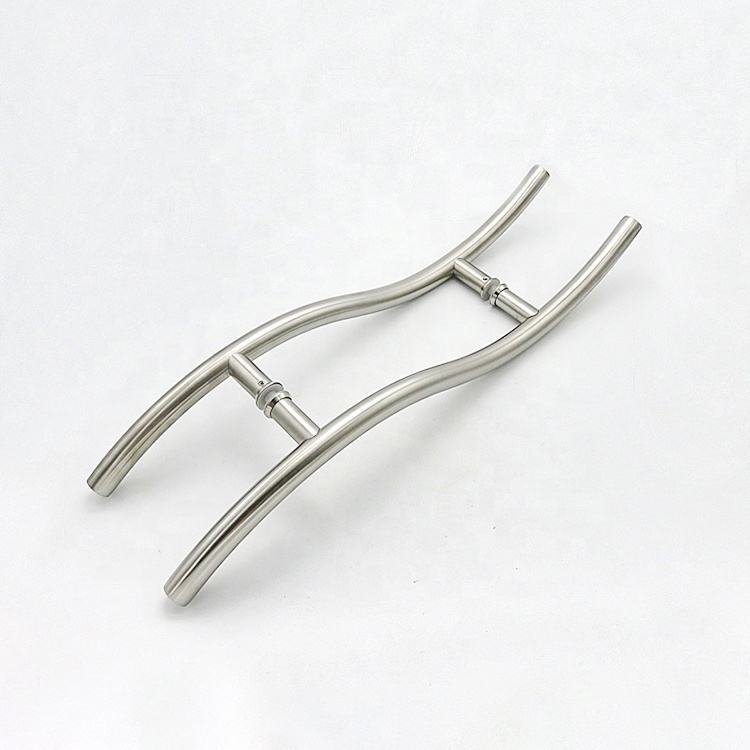
Back-to-back pull handles normally require drilled holes with a defined center-to-center spacing.
Other projects may use:
knobs;
compact handles;
longer architectural pull handles;
different fixing systems.
Before the glass is released for production, confirm:
handle type;
hole spacing;
position;
opening clearance;
finish.
Changing the handle after tempering can be difficult if the new hardware uses a different hole pattern.
For repeated hotel or apartment projects, keeping a consistent handle preparation can also simplify replacement later.
Shower Seals Control Water and Final Gaps
A frameless shower can use excellent hinges and clamps and still perform poorly if the seal system is not coordinated.
Common seal groups include:
Bottom Seals
Installed along the lower edge of the door to help control water at floor level.
Magnetic Closing Seals
Used where matching profiles meet at the closing edge of the door.
Side or Hinge-Side Seals
Used where a vertical gap requires additional water control or soft separation.
The required gap depends on:
seal profile;
hinge geometry;
panel layout;
glass thickness.
There is no single universal gap suitable for every shower enclosure.
This is why the seal system should be selected before final glass dimensions are released.
Glass Thickness Must Match the Complete Hardware Set
Glass thickness affects almost every part of the enclosure.
Component
Why Glass Thickness Matters
Shower Hinge
Clamping and gasket compatibility
Glass Clamp
Slot and gasket fit
Seal Strip
Profile must grip the glass correctly
Support Fitting
Connection size must match the panel
Sliding Guide
Guide or channel must suit the glass
A buyer may specify the correct hinge but accidentally order clamps or seals intended for another glass thickness.
Each product may appear correct individually, yet the complete set is incompatible.
The project glass thickness should therefore be treated as one of the first inputs in the hardware schedule.
Do not assume that changing one gasket automatically makes every product compatible with every glass thickness.
The actual product specification controls the usable range.
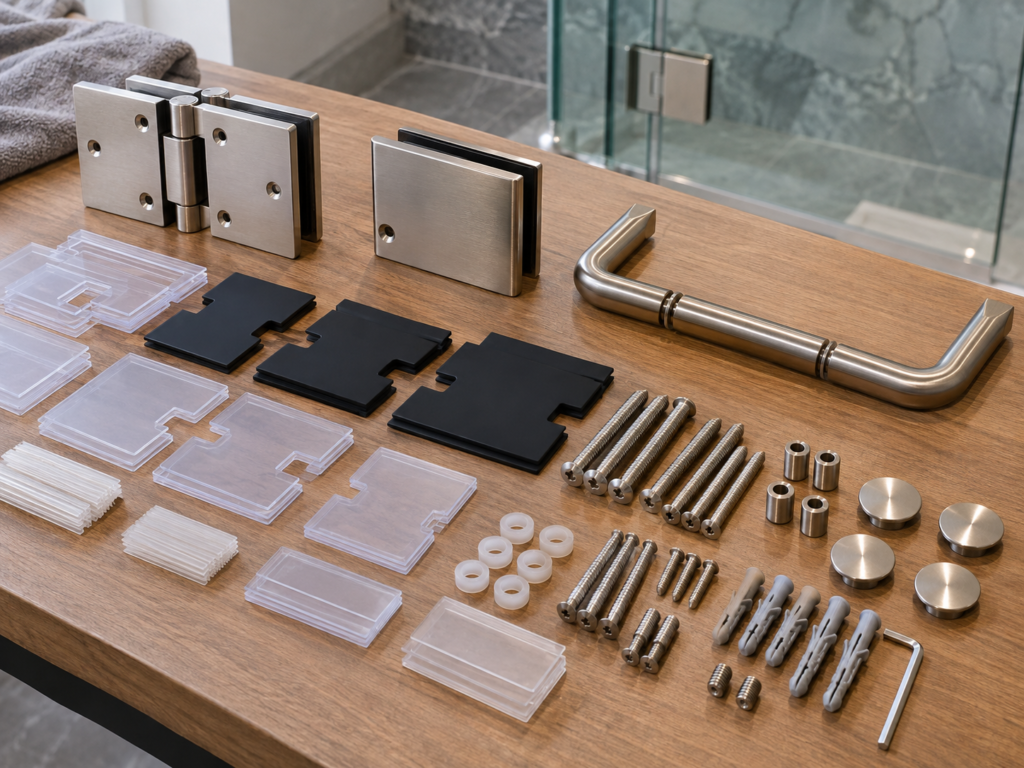
Small Accessories Complete the Hardware Set
The visible metal fittings are only part of the package.
Installation may also require:
hinge gaskets;
clamp gaskets;
bushings;
screws;
wall anchors;
spacers;
cover caps;
product-specific fixing components.
These items are inexpensive compared with the hinge or glass panel.
But one missing gasket or fixing component can stop installation completely.
For B2B buyers, a complete hardware set should therefore be checked for accessory completeness, not only for the main visible products.
Coordinate the Finish Across Visible Hardware
Hinges, clamps, support bars and handles are viewed together once the enclosure is complete.
If they come from different sources, products described with the same finish name may still look different.
“Matte black,” “brushed brass” or “polished chrome” does not always define an identical tone, texture or gloss level.
For projects where appearance matters:
establish an approved finish reference;
compare major visible components together;
control production batches where practical;
do not rely only on the written finish name.
Different base materials can still create some variation, so the objective should be a coordinated visual result rather than an unrealistic promise of perfect identity.
Freeze the Hardware Before Tempering the Glass
Several parts of the shower hardware set directly affect glass processing.
Temper the glass → find hardware that seems to fit
This is especially important for repetitive production where one preparation mistake can be multiplied across many panels.
Example Hardware Set for a Typical Swing-Door Shower
Consider a common enclosure with one wall-mounted swing door and one fixed glass panel.
A possible hardware package may include:
two suitable shower hinges;
fixed-panel clamps or U-channel;
one pull handle;
support bar if required;
bottom seal;
closing-edge or magnetic seal where required;
side or hinge-side seal where required;
gaskets;
fixing accessories.
This is not a universal BOM.
The actual set depends on:
door size;
fixed-panel dimensions;
glass thickness;
enclosure geometry;
chosen hardware system.
The purpose of a hardware-set approach is not to force every shower into the same package.
It is to ensure that every required function has been considered.
Common Shower Hardware Set Mistakes
1. Selecting Components Independently
A suitable hinge, clamp and seal can still be incompatible when combined.
2. Choosing the Hinges After Tempering
Hinge selection should be finalized before the glass cutout is processed.
3. Mixing Hardware for Different Glass Thicknesses
The complete set should follow one confirmed glass specification.
4. Forgetting Fixed-Panel Stabilization
A frameless appearance does not remove the need for adequate support.
5. Treating Seals as an Afterthought
Seal profile and door gap should be coordinated before final sizing.
6. Ordering Only by Finish Name
Visible components may still have different tones or textures.
Frameless Shower Hardware Set Checklist
Item
Confirm Before Ordering
Enclosure layout
Final
Glass thickness
Final
Door dimensions / weight
Confirmed
Hinge type
Confirmed
Hinge cutout
Approved
Fixed-panel fixing
Clamp / U-channel confirmed
Support hardware
Required / not required
Handle
Type + hole spacing confirmed
Seals
Profile + gap coordinated
Gaskets
Match hardware and glass
Other drilled hardware
Confirmed
Finish
Approved reference
Glass drawings
Coordinated with hardware
Accessories
Complete
For repeat fabrication, this checklist can also form part of the production-release process.
How Metech Supports Complete Shower Hardware Sets
Metech Hardware works with selected production partners to support shower enclosure companies, glass fabricators, contractors, distributors and project buyers.
Depending on the enclosure design, we can help coordinate:
shower hinges;
glass clamps;
pull handles;
support hardware;
shower seals;
sliding shower hardware;
glass-thickness compatibility;
finish coordination;
model-specific drawings where available;
sample sets;
OEM and packaging requirements;
mixed hardware orders.
The objective is not simply to put several products into one carton.
It is to help buyers organize the hardware around one enclosure layout and one confirmed glass specification before production begins.
FAQ
What Hardware Do I Need for a Frameless Shower Door?
There is no universal list. The hardware depends on the enclosure layout, glass thickness, door size, fixed-panel support and seal requirements.
Do All Frameless Showers Need a Support Bar?
No. The need for additional stabilization depends on panel dimensions, fixing method and enclosure design.
Can I Use Different Glass Thicknesses in the Same Shower Project?
Yes, if every hinge, clamp, support fitting and seal is specified for the actual glass used. Standardizing glass thickness can simplify procurement, but it is not mandatory for every design.
Why Does a Frameless Shower Door or Fixed Panel Vibrate?
Fixed-panel movement is one possible cause, but loose fittings, hinge adjustment, gaskets, support conditions and enclosure geometry should also be checked before adding or replacing hardware.
How Often Should Shower Door Seals Be Replaced?
There is no universal replacement interval. Inspect them for loss of flexibility, poor magnetic closure, visible wear, leakage or chemical damage and replace them when performance declines.
Should the Hardware Be Selected Before Ordering Tempered Glass?
Yes. Any hardware that affects holes, cutouts, panel dimensions or final gaps should be finalized before glass fabrication and tempering.
Need a Complete Frameless Shower Hardware Set?
Send us your shower layout, glass thickness, door dimensions, preferred finish and project quantity.
Metech Hardware can help coordinate suitable hinges, clamps, handles, support hardware and seals as one complete shower hardware package.