Fixed glass looks simple after installation. The glass is transparent, the edge is clean, and the hardware may only appear as a few small metal parts.
But the fixing method behind the glass is not a small detail.
Whether a project uses glass clamps, U-channels or standoffs affects how the glass load is transferred, how clean the installation looks, how much site tolerance the installer has, and how easy the system will be to maintain later.
Many buyers choose by appearance first. Glass clamps look flexible. U-channels look minimal. Standoffs create a floating effect. These impressions are useful, but they are not enough.
This decision is not only a styling preference. It is also a structural and mechanical choice.
The real question is not only:
“How do we hold the glass?”
The better question is:
“How does the glass load transfer into the wall, floor, frame or supporting structure?”
A glass clamp is a flexible edge or point-fixing method. A U-channel provides continuous edge support. A standoff creates a drilled, floating point-fixed appearance. Each method has its own strength, limitation and best application.
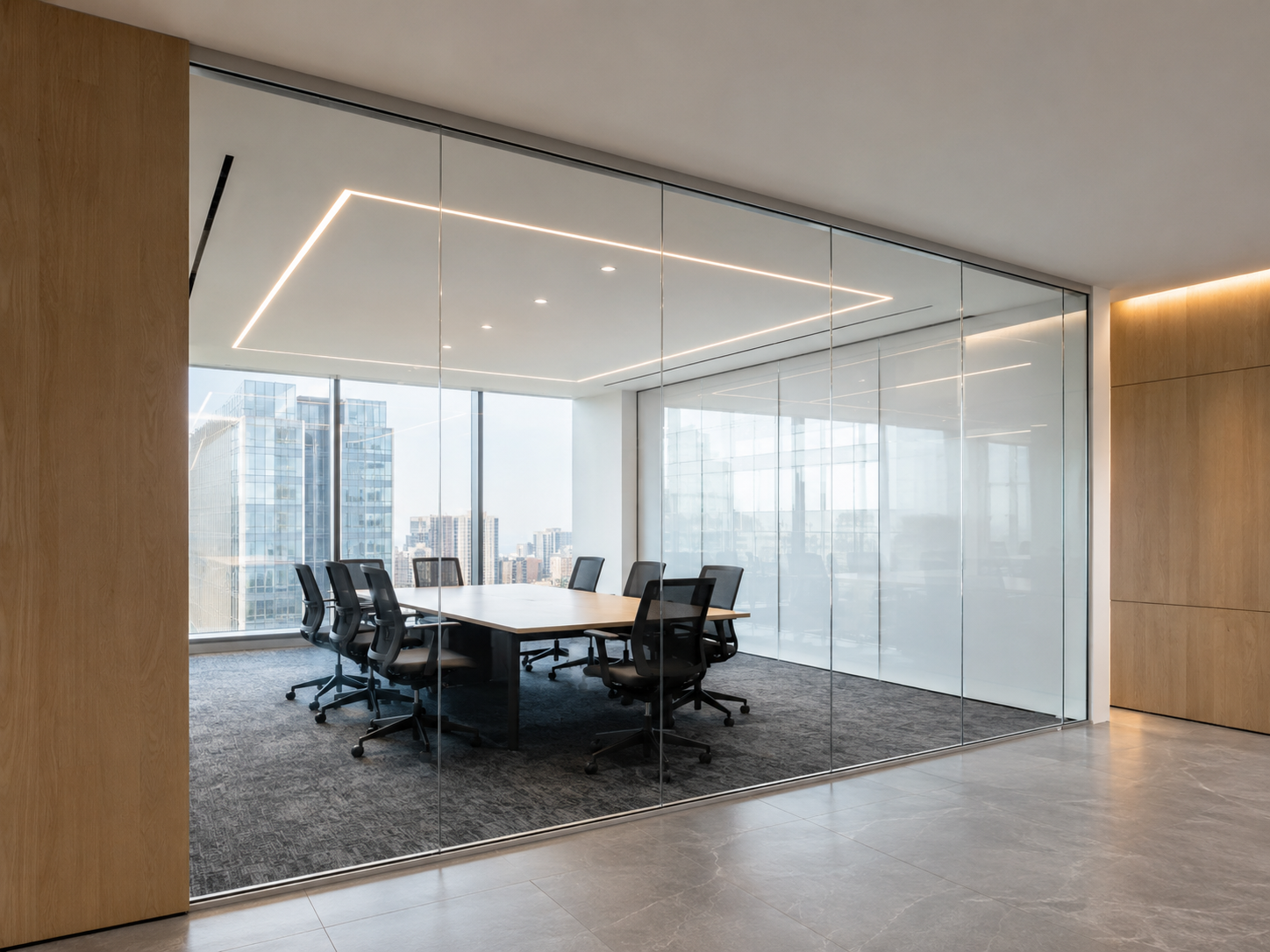
Quick Comparison: Glass Clamp vs U-Channel vs Standoff
| Factor | Glass Clamp | U-Channel / Base Shoe | Standoff |
|---|---|---|---|
| Main fixing style | Edge clamping or point fixing | Continuous linear support | Drilled point fixing |
| Appearance | Visible hardware, modular look | Clean and minimal line | Floating glass effect |
| Best use | Shower panels, partitions, small to medium fixed glass, modular installation | Office partitions, shopfront fixed glass, fixed glass walls; heavy-duty base shoes for railing systems | Feature glass, signage, stair side panels, wall-mounted glass |
| Load path | Through clamp points into wall, floor, post or frame | Along a continuous channel into floor, wall or base structure | Through glass holes and anchor points into wall or side structure |
| Glass drilling | Often not required; safety pin may require hole in some systems | Usually not required | Usually required |
| Installation tolerance | Relatively flexible | Requires straight and level substrate | Requires accurate glass holes and anchor positions |
| Maintenance | Easy to inspect and replace | Cleaner appearance but harder to access after sealing | Easy to inspect, but hole positions are fixed |
| Main risk | Too few clamps, weak substrate or loose fixing | Uneven floor, poor sealing, wrong channel size or trapped water | Weak wall anchors, wrong hole alignment or direct metal-to-glass stress |
This table gives a quick direction, but the correct choice still depends on glass size, substrate condition, installation environment, appearance requirement and whether the glass is used in an ordinary interior partition or a more load-sensitive application such as a railing, staircase or balcony.
What Is a Glass Clamp?
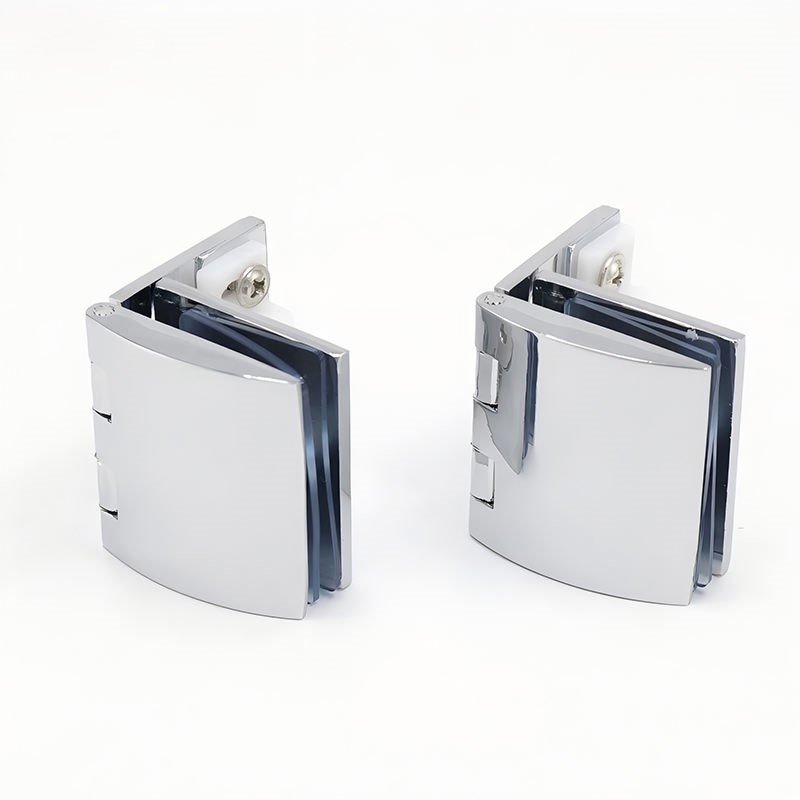
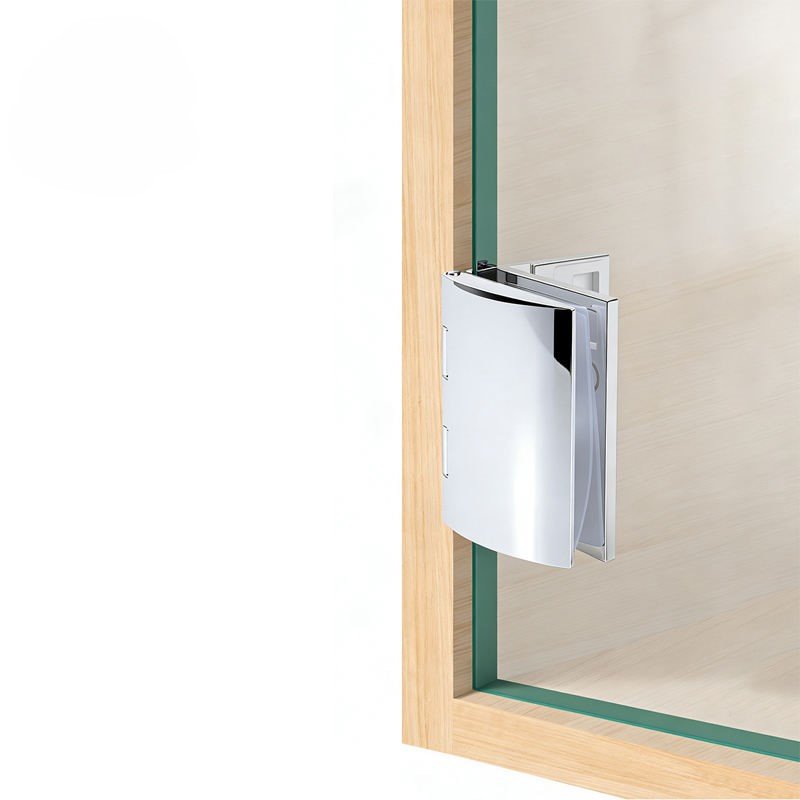
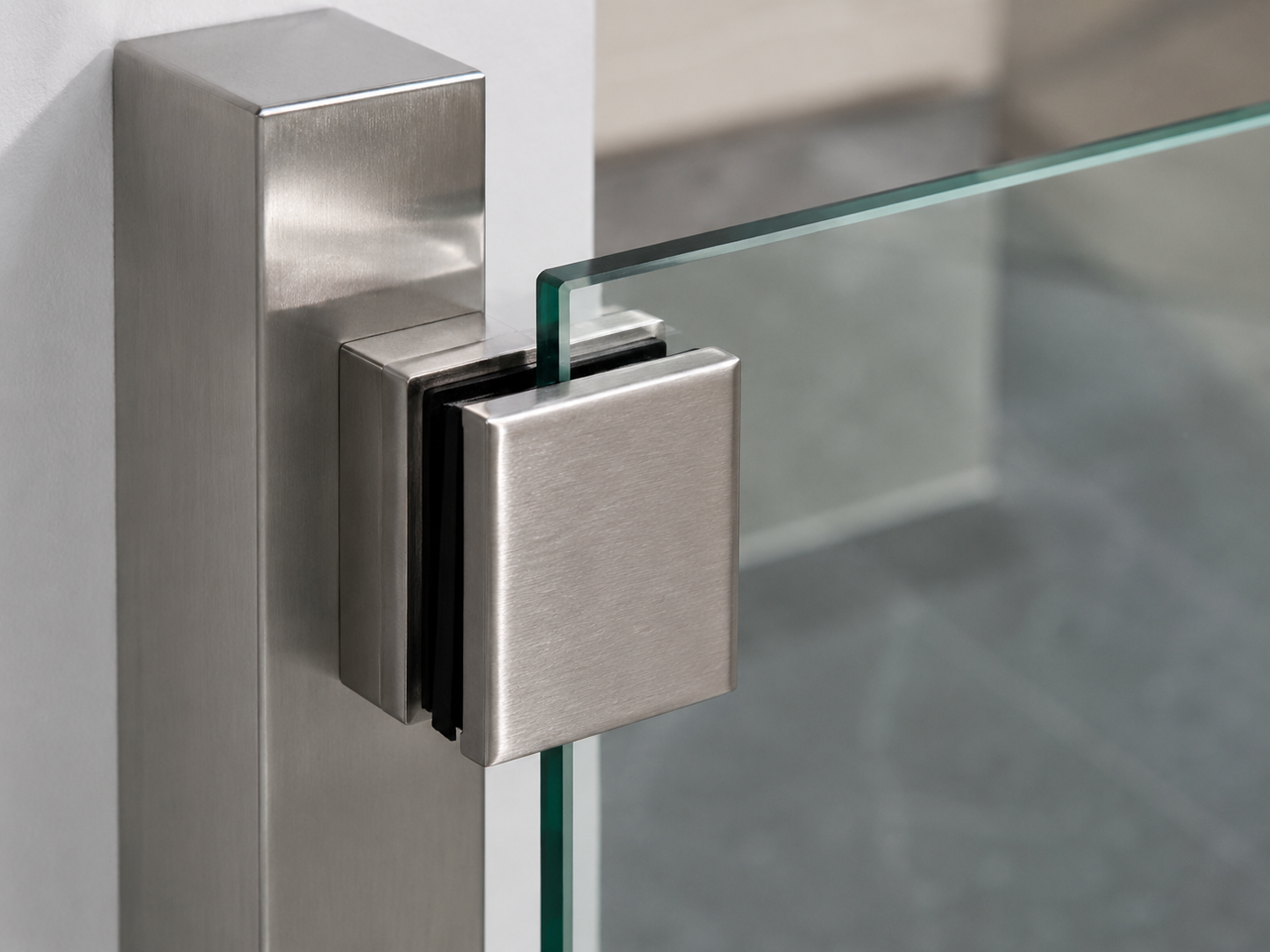
A glass clamp fixes a glass panel by gripping the edge of the glass at selected positions. It may be mounted to a wall, floor, square tube, round post, handrail structure or another supporting surface.
A typical glass clamp may include:
- Stainless steel, brass or zinc alloy clamp body
- Rubber gasket or plastic insert
- Fixing screw
- Wall, floor or post mounting base
- Round, square or D-shape design
- Brushed, polished, black, gold or PVD finish
Glass clamps are commonly used for shower fixed panels, office partitions, small glass dividers, modular glass installations, railing infill panels and selected commercial interiors.
The main advantage is flexibility. A glass clamp is easy to position, inspect and replace. In many applications, the glass does not need holes, which makes glass preparation simpler.
However, glass clamps create point or edge support. The load is transferred through selected clamp positions, not along the full glass edge. This means the number, size, spacing and fixing substrate of the clamps matter.
In some railing or high-position applications, clamps may use a safety pin or through-glass fixing depending on project requirement. This should be confirmed before glass production.
A glass clamp may look small, but it still needs a reliable wall, floor, post or frame behind it.
What Is a U-Channel or Base Shoe?
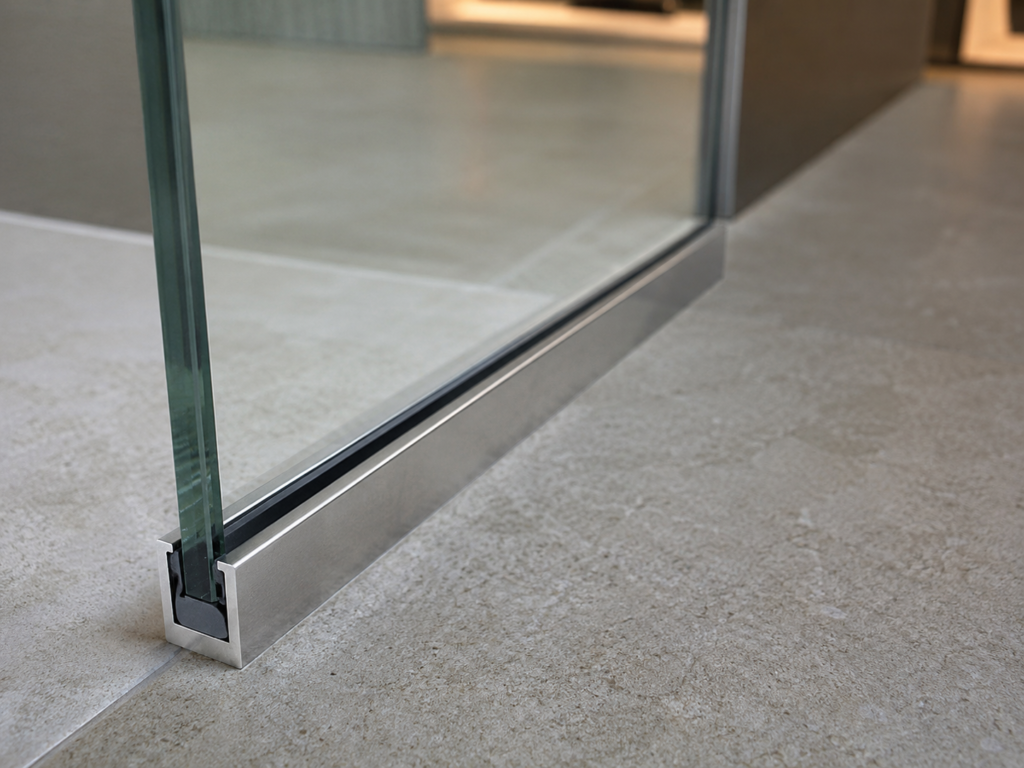
A U-channel is a continuous profile that receives and supports the edge of a glass panel. The glass is inserted into the channel and fixed with setting blocks, rubber gaskets, wedges, silicone sealant or other glazing accessories depending on the system.
For ordinary partitions and fixed panels, a U-channel may be a light or medium-duty aluminum or stainless steel receiving channel. For glass railing or balustrade projects, a heavier-duty base shoe system may be used. These two systems may look similar in concept, but their load requirements and project responsibilities are not the same.
A typical U-channel or base shoe installation may include:
- Aluminum or stainless steel channel
- Glass setting blocks
- Rubber gasket or wedge
- Pressure plate or adjustment wedge, depending on system
- Silicone sealant
- Floor, wall or side fixing anchors
- End cap or connector, if required
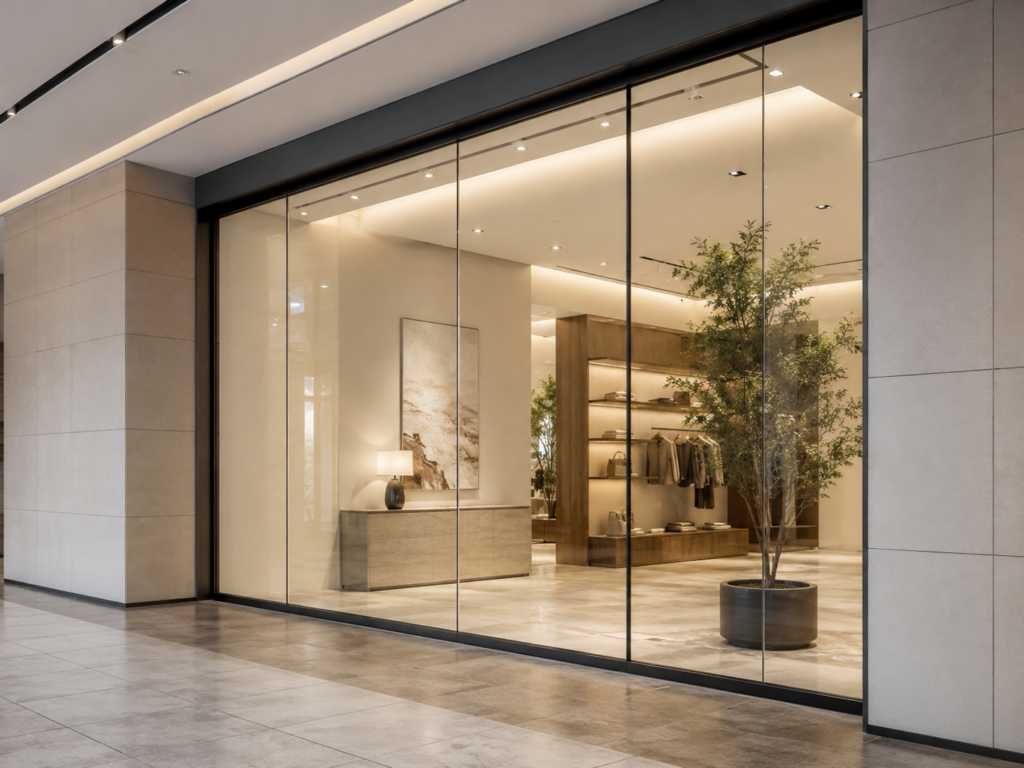
U-channels are commonly used for office glass partitions, shopfront fixed glass, shower screens, floor-to-ceiling fixed glass and clean commercial interior dividers.
The main advantage is a clean continuous line. The hardware is less visible than separate clamps, and the glass can appear to rise directly from the floor, wall or ceiling. This makes U-channel systems popular in minimalist interiors.
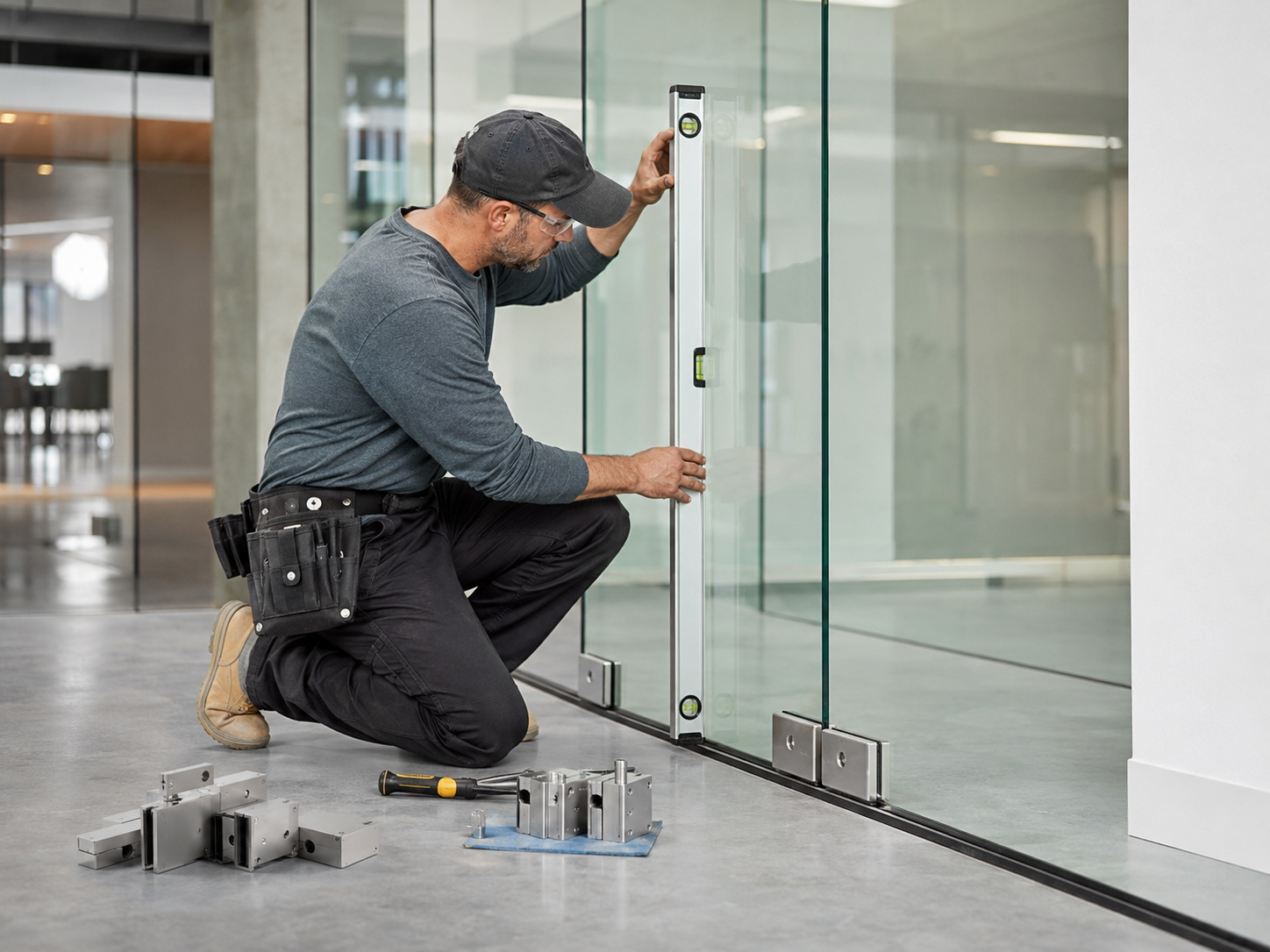
The limitation is installation accuracy. The floor or wall must be straight and level. If the channel is not aligned correctly, the glass may lean, twist or require excessive sealant to correct gaps.
In wet, outdoor or semi-outdoor areas, sealing and drainage must also be considered. If water remains inside or behind the channel, it may create dirt buildup, odor, sealant failure or corrosion risk over time.
What Is a Standoff?
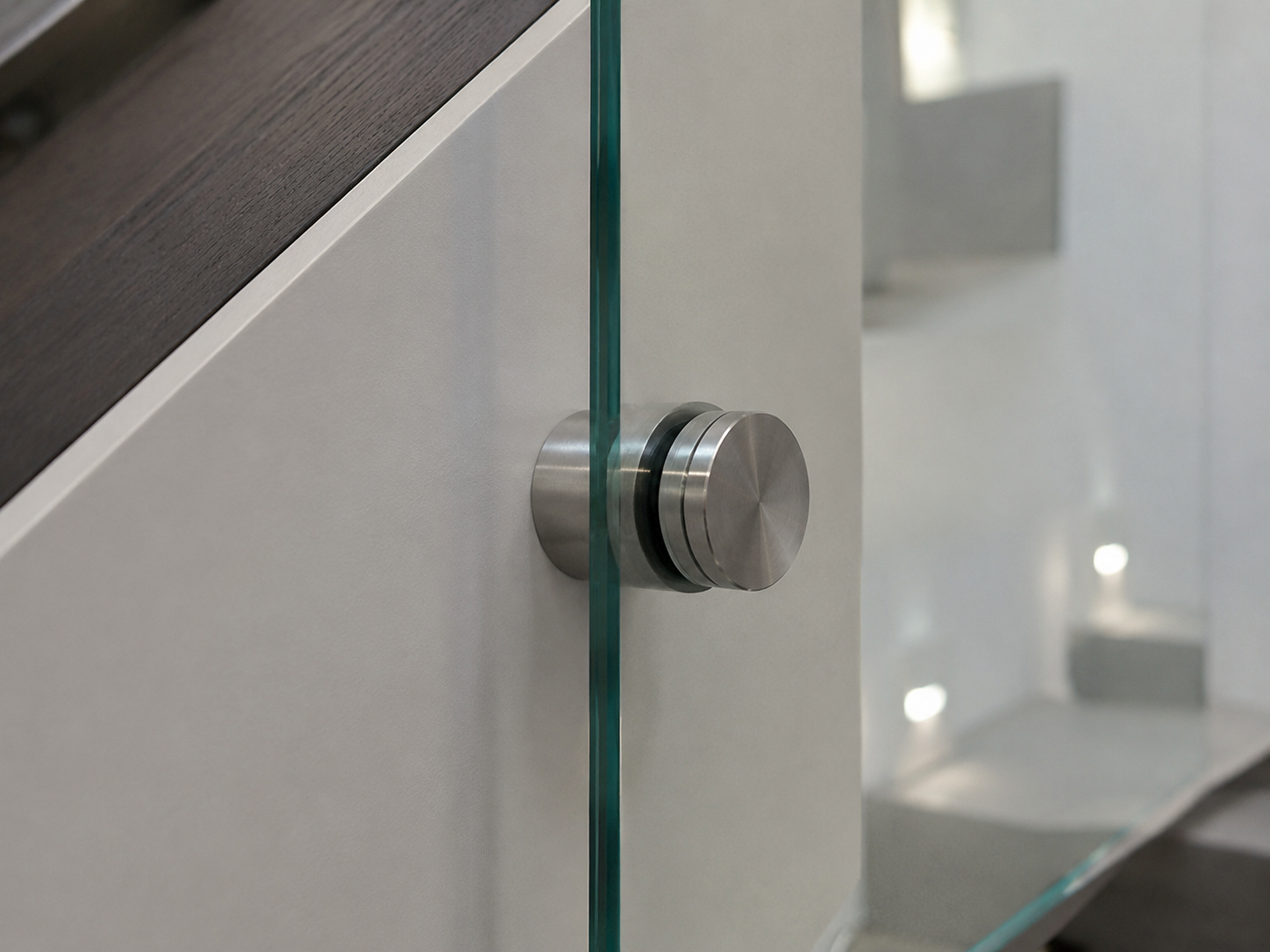
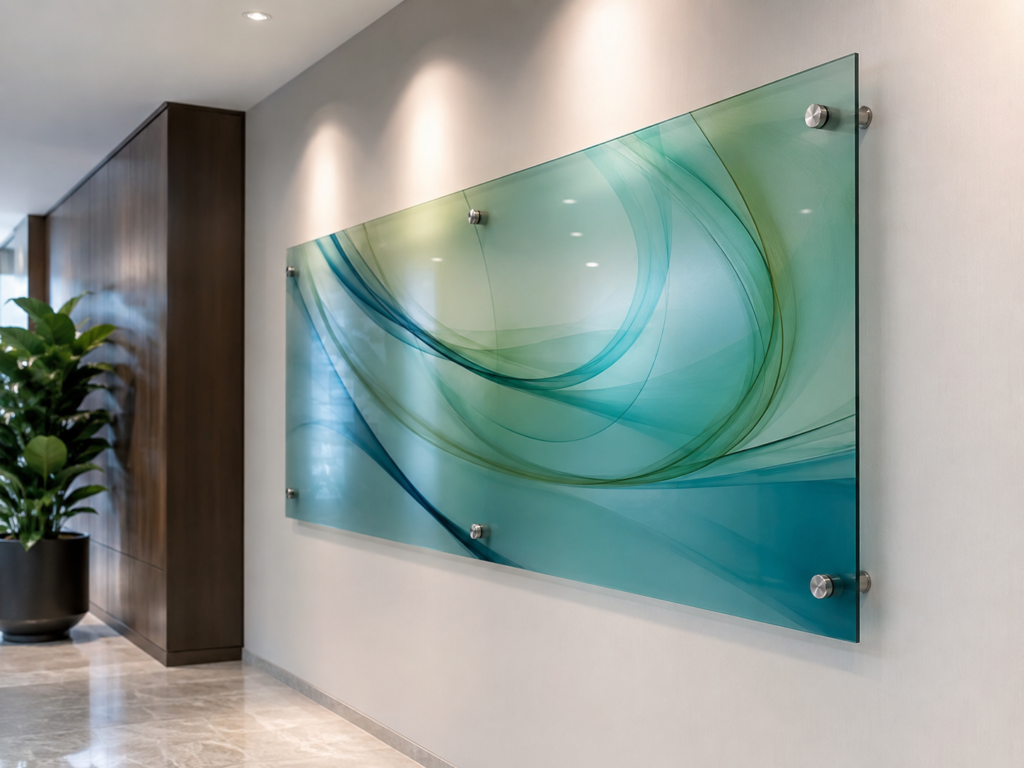
A standoff fixes glass through drilled holes. The glass panel is held away from the wall, stair stringer, concrete slab or supporting surface by metal spacers, anchors and caps. This creates a floating glass appearance.
A typical standoff fixing may include:
- Stainless steel standoff body
- Spacer
- Cap
- Threaded rod or bolt
- Wall anchor
- Rubber washer or bushing
- Glass hole
- Structural fixing point
Standoffs are often used for feature glass panels, glass signage, decorative wall glass, stair side panels, mezzanine glass, display panels and other projects where the fixing points are meant to be visible.
The main advantage is visual depth. A standoff can make glass appear to float in front of the wall or side structure. The hardware becomes part of the design rather than something to hide.
The limitation is precision. Standoffs usually require holes in the glass. These holes must be made before tempering. Tempered glass cannot be drilled or modified on site.
The hole positions must also match the anchor points accurately. Even a small mismatch can make installation difficult. Rubber washers or bushings should be used to avoid direct metal-to-glass contact, which can create stress concentration and increase the risk of glass breakage.
A standoff is a good choice when the project wants a floating effect and can control glass drilling, wall anchoring and installation accuracy.
Load Transfer: Point Fixing vs Continuous Support
The biggest technical difference between clamps, U-channels and standoffs is load transfer.
Glass clamps transfer load through clamp positions into posts, walls, floor brackets or frames. They are flexible and modular, but each fixing point matters.
U-channels transfer load along a continuous glass edge. This provides a clean line and can support long fixed glass edges, but the channel and substrate must be aligned correctly.
Base shoe systems are heavier continuous support systems used for glass railing or balustrade applications. They require proper anchoring and project-specific confirmation.
Standoffs transfer load through drilled glass holes and anchor points into the wall or side structure. This creates a floating look, but it concentrates load at specific points.
This is why hardware selection affects more than appearance. It decides where the load is concentrated and which part of the building must support it.
For ordinary interior fixed glass panels, this load path logic helps buyers choose the correct hardware direction. For railings, balconies, staircases, pool fences or other code-regulated applications, final fixing design should be confirmed by the project engineer, consultant or local authority.
Glass Thickness, Panel Size and Application Type
Before choosing glass clamps, U-channels or standoffs, the project should confirm the basic glass and site details.
Important details include:
- Glass thickness
- Glass width and height
- Single panel or continuous glass wall
- Fixed panel or movable panel
- Indoor, outdoor or semi-outdoor location
- Dry area or wet area
- Floor, wall, side or post fixing
- User contact or impact possibility
- Whether glass drilling is acceptable
- Required finish and material
- Whether locks or handles are needed
For small to medium fixed panels, glass clamps are often flexible and easy to install.
For long glass edges or continuous office partitions, U-channels often provide a cleaner and more consistent line.
For feature glass, signage or side-mounted glass, standoffs may be the better visual choice.
For glass railing, staircases, balconies and other load-sensitive installations, hardware should not be selected only by appearance. Glass thickness, panel size, substrate, anchor type and local project requirements must be reviewed carefully.
Substrate Condition: Wall, Floor and Frame Matter
The strength of glass fixing hardware does not depend only on the hardware itself. It also depends on what the hardware is fixed into.
Common substrates include:
- Concrete wall or slab
- Brick wall
- Steel frame
- Aluminum frame
- Timber backing
- Tile wall
- Gypsum board wall
- Lightweight partition
A strong clamp or standoff does not help if it is fixed into a weak wall.
For glass clamps, the screws and mounting base need a reliable substrate. If the clamp is fixed into a weak partition, it may loosen over time.
For U-channels, the floor or wall must be straight and stable. If the channel is installed on an uneven surface, the glass may lean, twist or require correction during installation.
For standoffs, the anchor point is critical. A decorative wall surface may look strong, but the real support comes from the material behind it. Hollow partitions, standard drywall and weak brickwork need special attention before using standoff fixings.
For tiled walls, the installer should not only look at the tile surface. The backing material behind the tile matters more.
Before ordering hardware, check not only the glass thickness but also the wall, floor or frame condition.
Appearance: Visible Hardware, Minimal Line or Floating Effect
The three fixing methods create different visual results.
Glass clamps are visible. They create a modular hardware look. This is useful when the project accepts visible metal details or wants hardware that is easy to inspect and replace.
U-channels are more minimal. The glass edge sits inside a continuous profile, and the hardware line is simpler. This is often preferred for office glass partitions, shopfront fixed panels and clean commercial interiors.
Standoffs are more expressive. The glass is separated from the wall or side structure and held by visible metal points. This creates a floating effect and can make the hardware part of the design.
The most hidden hardware is not always the best choice.
If the space needs flexible fixing, clamps may be better. If the space needs a clean continuous line, U-channel may be better. If the glass is meant to be a feature element, standoffs may be better.
Installation and Maintenance
Each fixing method has different installation and maintenance requirements.
Glass clamps are relatively flexible. They can be positioned at several fixing points, inspected easily and replaced if needed. Rubber gaskets or inserts can also be checked over time. However, clamp screws and fixing points should be inspected if the glass is exposed to vibration, frequent contact or outdoor conditions.
U-channel installation depends on leveling and sealing. The channel must be aligned before the glass is installed. Setting blocks, gaskets and sealant should support the glass properly. If the glass needs to be replaced later, removing it from a sealed channel may take more work.
For exterior or wet areas, drainage and cleaning should be planned so that water does not remain trapped in the channel.
Standoff installation requires accurate drilling and wall anchoring. The glass holes must match the anchor positions. Different manufacturers may use different thread sizes and hole diameters, so the hardware dimensions should be confirmed before glass fabrication.
The easiest hardware to install is not always the best. The right method should match both project appearance and installation control.
Wet Area, Outdoor and Coastal Considerations
Environment affects glass fixing hardware selection.
In bathrooms and shower areas, water, soap, humidity and cleaning chemicals can affect gaskets, screws, sealant and metal finish. Brass and stainless steel shower clamps are commonly used, but the exact material and finish should match the project requirement.
For U-channels in wet areas, water inside the channel should be considered. If the channel traps water for a long time, it may affect sealant, create dirt buildup or increase corrosion risk.
For standoffs in outdoor or semi-outdoor areas, anchor bolts, washers and wall substrate should be suitable for moisture exposure. The space behind the glass should also be accessible enough for cleaning and inspection.
For coastal environments, 316 stainless steel or higher corrosion-resistant material may be required depending on exposure. Surface finish also matters. A polished, black or PVD finish may look attractive, but base material, cleaning routine and salt exposure still affect long-term performance.
Do not choose glass fixing hardware only by color. Material, gasket, screw and installation environment all matter.
When Glass Clamps Are Better
Glass clamps are usually a good choice when:
- The panel is small to medium in size
- The project needs flexible point or edge fixing
- Visible hardware is acceptable
- Glass drilling is not preferred
- Future adjustment or replacement may be needed
- The fixing points can be installed into reliable substrate
- The project is a shower screen, interior partition, modular glass panel or post-mounted glass system
Glass clamps are practical when the project wants a clear fixing method that is easy to understand, install and inspect.
When U-Channel or Base Shoe Is Better
A U-channel is usually a good choice when:
- The project needs a clean continuous line
- The glass edge needs linear support
- The installation is an office partition, fixed glass wall, shopfront panel or shower screen
- The floor or wall is straight and prepared
- Minimal hardware appearance is important
- The glass is not expected to be removed frequently
- Good sealing and setting details can be controlled
A heavy-duty base shoe may be considered for glass railing or balustrade systems, but the final selection should follow project requirements, anchoring conditions and local standards.
U-channel and base shoe systems are preferred when the design wants the glass edge to be visually clean and continuously supported.
When Standoffs Are Better
Standoffs are usually a good choice when:
- The project wants a floating glass appearance
- The glass is a decorative or feature panel
- The wall or side substrate is strong
- Glass holes can be prepared accurately
- Visible point-fixing hardware is part of the design
- The panel should stand off from the wall surface
- The fixing points can be inspected visually
Standoffs work best when the project can control drilling, alignment and anchoring accurately.
Common Mistakes Before Ordering
Choosing by appearance only
A clean design is important, but appearance alone does not decide the fixing method. Load path, substrate and installation condition matter.
Using too few clamps
Glass clamps work through point fixing. Too few clamps, poor spacing or weak fixing points can make the glass unstable.
Installing standoffs into weak walls
A strong stainless steel standoff is not enough if the wall anchor is weak. The substrate behind the surface must be checked.
Forgetting glass hole positions for standoffs
Standoffs usually require pre-drilled glass holes. If the hole position is wrong, the glass may need to be remade.
Using U-channel without checking floor level
A U-channel needs straight and stable installation. Uneven floors or walls can cause alignment problems.
Ignoring water inside U-channel
In bathrooms, outdoor areas or wet spaces, trapped water inside the channel can create long-term maintenance problems.
Confusing light U-channel with heavy-duty base shoe
Interior U-channel and structural railing base shoe are not always the same product. The application and load requirement must be confirmed.
Drilling glass before confirming hardware dimensions
Different hardware suppliers may require different hole diameters, thread sizes or fixing positions. Confirm hardware drawings before glass production.
Planning locks or handles too late
If the fixed glass panel connects with a door, lock, handle or receiving point, these positions should be confirmed before glass production.
Practical Selection Guide
Choose glass clamps if:
- You need flexible point or edge fixing
- The panel is small to medium size
- Visible hardware is acceptable
- No glass drilling is preferred
- Future adjustment may be needed
- The fixing surface is reliable
Choose U-channel if:
- You want a clean continuous line
- The glass edge needs linear support
- The floor or wall is straight and prepared
- Minimal hardware appearance matters
- The panel is part of a fixed glass wall, shopfront or office partition
Choose standoffs if:
- Floating glass appearance is required
- The wall or side substrate is strong
- Glass hole positions can be prepared accurately
- Visible point-fixing hardware is part of the design
- The panel is decorative, signage-related, side-mounted or wall-mounted
The best glass fixing method is not the one with the least hardware. It is the one that matches the glass size, substrate condition, design intent and installation environment.
How Metech Supports Glass Fixing Hardware Selection
Metech Hardware supports glass fixing hardware selection for office partitions, shower rooms, shopfronts, interior glass panels, decorative glass, commercial spaces and selected semi-outdoor applications.
Our product range may include glass clamps, U-channels, standoffs, shower clamps, wall clamps, floor clamps, glass locks, pull handles, gaskets, screws and related glass installation accessories.
Available material and finish options may include 304 stainless steel, 316 stainless steel, brass, aluminum, brushed finish, polished finish, matte black, gold and PVD finishes depending on product type and project requirement.
Before recommending hardware, we prefer to check:
- Glass thickness
- Panel width and height
- Installation location
- Fixing surface
- Indoor, outdoor or wet-area condition
- Required finish
- Quantity
- Drawing or site photos
- Whether glass drilling is acceptable
- Whether locks or handles are needed
For overseas buyers, contractors and distributors, Metech can help match suitable glass clamps, U-channels, standoffs and related glass fixing hardware according to real project conditions.
Metech also supports mixed hardware orders and export packing, allowing buyers to combine glass fixing hardware with door handles, locks, shower fittings and other architectural hardware in one coordinated shipment.
FAQ
Is a U-channel stronger than glass clamps?
Not always. A U-channel provides continuous edge support, while glass clamps provide point or edge fixing. The better choice depends on panel size, substrate, installation method and project requirement.
What is the difference between U-channel and base shoe?
A U-channel is often used for fixed glass panels, partitions, shopfronts and shower screens. A base shoe is usually a heavier continuous support system used for glass railings or balustrades. The application and load requirement are different.
Do glass clamps require holes in the glass?
Many glass clamps do not require glass holes because they grip the glass edge with gaskets. However, some applications may require safety pins or through-glass fixing. Confirm this before glass production.
When should I use standoffs for glass panels?
Use standoffs when the project needs a floating glass effect, wall-mounted decorative glass, signage glass, feature panels or side-mounted glass. The wall substrate and glass hole positions must be accurate.
Can U-channel be used in wet areas?
Yes, but sealing, drainage and material selection must be considered. In shower rooms, outdoor areas or wet environments, trapped water inside the channel can create maintenance problems.
What glass thickness can glass clamps support?
It depends on the clamp model. Common glass clamps may support glass thicknesses such as 8mm, 10mm or 12mm, but the exact range must be checked with the product specification.
Are standoffs suitable for heavy glass panels?
They can be used for heavier panels only when the standoff size, glass hole design, anchor points and wall substrate are suitable. For large or load-sensitive panels, project confirmation is required.
What details should I confirm before ordering glass fixing hardware?
Confirm glass thickness, panel size, installation location, fixing substrate, indoor or outdoor condition, wet-area exposure, finish requirement, drilling requirement and whether locks or handles are needed.
Can Metech help recommend glass clamps, U-channels or standoffs?
Yes. Send us your glass thickness, panel size, installation location, fixing surface, indoor or outdoor condition and finish requirement. Metech Hardware can help recommend suitable glass fixing hardware for your project.
Need Glass Fixing Hardware for Your Project?
Send us your glass thickness, panel size, installation location, fixing surface, indoor or outdoor condition, drilling requirement and finish preference. Metech Hardware can help match suitable glass clamps, U-channels, standoffs and related glass fixing hardware for your project.