Commercial buildings change constantly. A new company may take over an office floor. A new retailer may move into a shopping mall unit. A hotel lobby may be refreshed after years of use. In many of these renovation projects, contractors do not replace all the glass.
To control cost and project time, the existing 10mm or 12mm tempered glass partitions, storefronts and entrance doors are often kept in place. Instead, the architectural hardware is replaced, upgraded or standardized.
At the same time, facility managers face normal mechanical wear. Floor springs leak oil. Door closers lose hydraulic control. Patch fittings loosen. Bottom patch inserts wear out. Pull handles become scratched or unstable. Locks stop aligning with keepers or floor sockets.
Commercial glass door hardware replacement is different from new installation. The existing glass, floor, door frame and cutouts already define the project limits.
The key is dimensional matching.
Replacement hardware must fit the existing glass holes, cement boxes, spindle profiles, old door closer hole patterns, pull handle spacing and project finish requirement. When these details are coordinated correctly, the project can restore door movement, locking and appearance without unnecessary replacement of expensive glass panels.
1. Why Renovation Projects Often Keep the Existing Glass
In commercial renovation projects, the glass is often one of the most expensive and disruptive items to replace.
Existing tempered glass panels may still be structurally usable and visually acceptable. They may already match the office partition layout, storefront opening or lobby design. Removing and remaking the glass may require new measurements, production time, transport, installation labor and possible downtime for the business.
For this reason, many contractors prefer to keep the existing glass and replace only the worn or mismatched hardware.
This is common in:
- tenant office fit-outs;
- shopping mall store renovations;
- hotel lobby refresh projects;
- commercial glass partition upgrades;
- retail storefront maintenance;
- school, clinic and office maintenance projects;
- mixed facility hardware standardization.
However, keeping the existing glass also creates strict limitations. Tempered glass cannot be safely drilled, cut, shaved or enlarged on site. If the old glass does not already have the required holes or cutouts, some hardware options may not be possible.
A successful renovation starts by asking:
What can the existing glass accept?
Only after that should the hardware be selected.

2. The Core Rule: Match Existing Glass Cutouts and Holes
The most important rule in glass door hardware replacement is simple:
Replacement hardware must match the existing glass preparation.
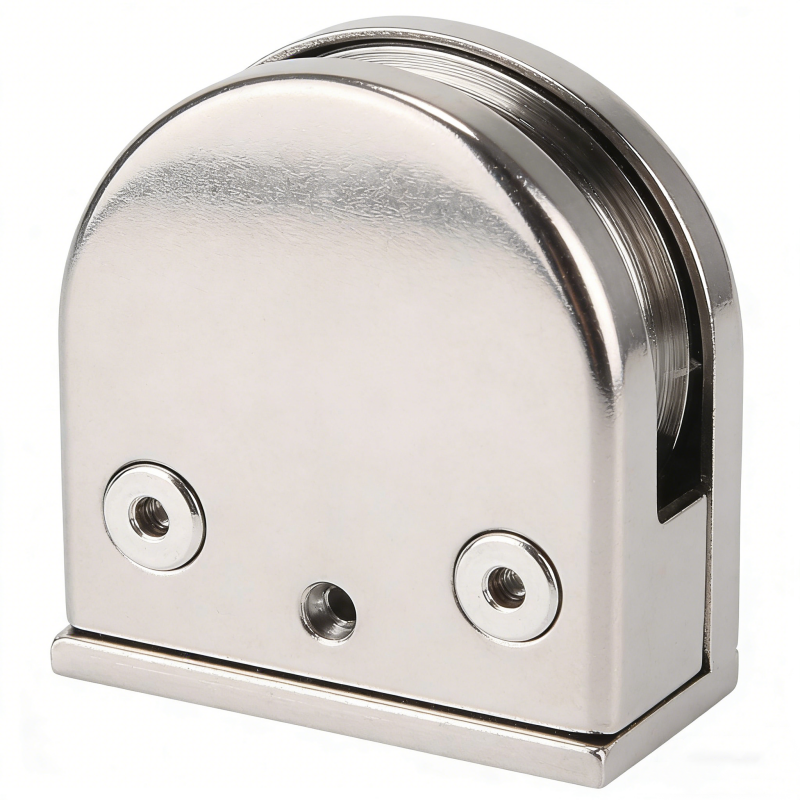
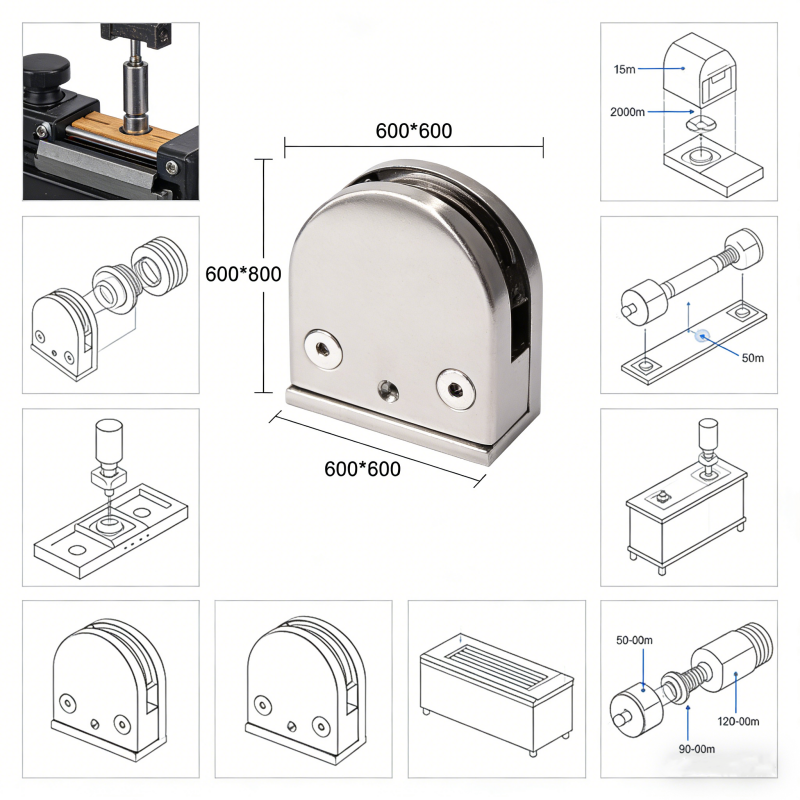
Patch fittings, central locks, bottom locks, hinges and pull handles may all require specific holes, notches or cutouts. These were prepared at the glass factory before tempering. Once the glass is tempered, those dimensions are fixed.
Before ordering replacement hardware, contractors should check:
- glass thickness;
- existing cutout shape;
- center-to-center hole distance;
- pivot offset;
- lock hole position;
- pull handle hole spacing;
- edge clearance;
- gasket thickness;
- old hardware model if visible.
A common mistake is choosing a patch fitting or lock by exterior cover size only. Two products may look similar from the outside but use different internal blocks, screw positions or hole patterns.
If a replacement fitting does not match the existing cutout, it may create poor clamping, installation stress, metal-to-glass contact or movement problems. This can increase the risk of glass damage or breakage during use.
For old glass doors without lock holes, no-drill or clamp-on locks may be considered for some interior applications. These locks use clamping pressure and isolation pads rather than factory-drilled holes. However, they should still be selected according to glass thickness, door gap, security requirement and project use case.
Replacement hardware should fit the existing glass, not force the glass to fit the hardware.
3. Replacing Floor Springs Without Damaging Finished Floors
For frameless swing glass doors, the floor spring is often the most critical replacement item.
In hotel lobbies, retail storefronts and office entrances, the floor may be finished with marble, granite, terrazzo, tile or polished concrete. Cutting a new floor cavity can be expensive, dusty and disruptive.
This is why many projects aim for a drop-in floor spring replacement.
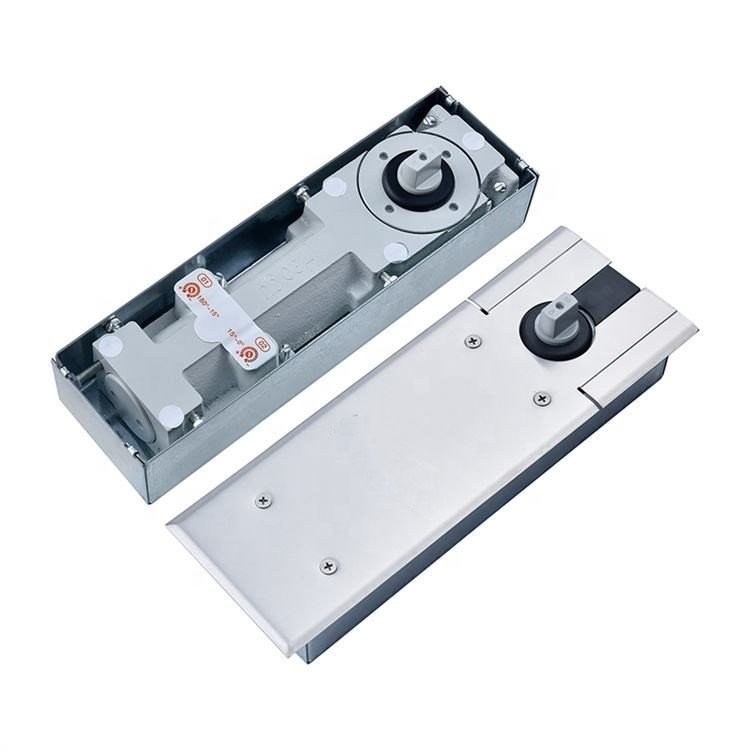
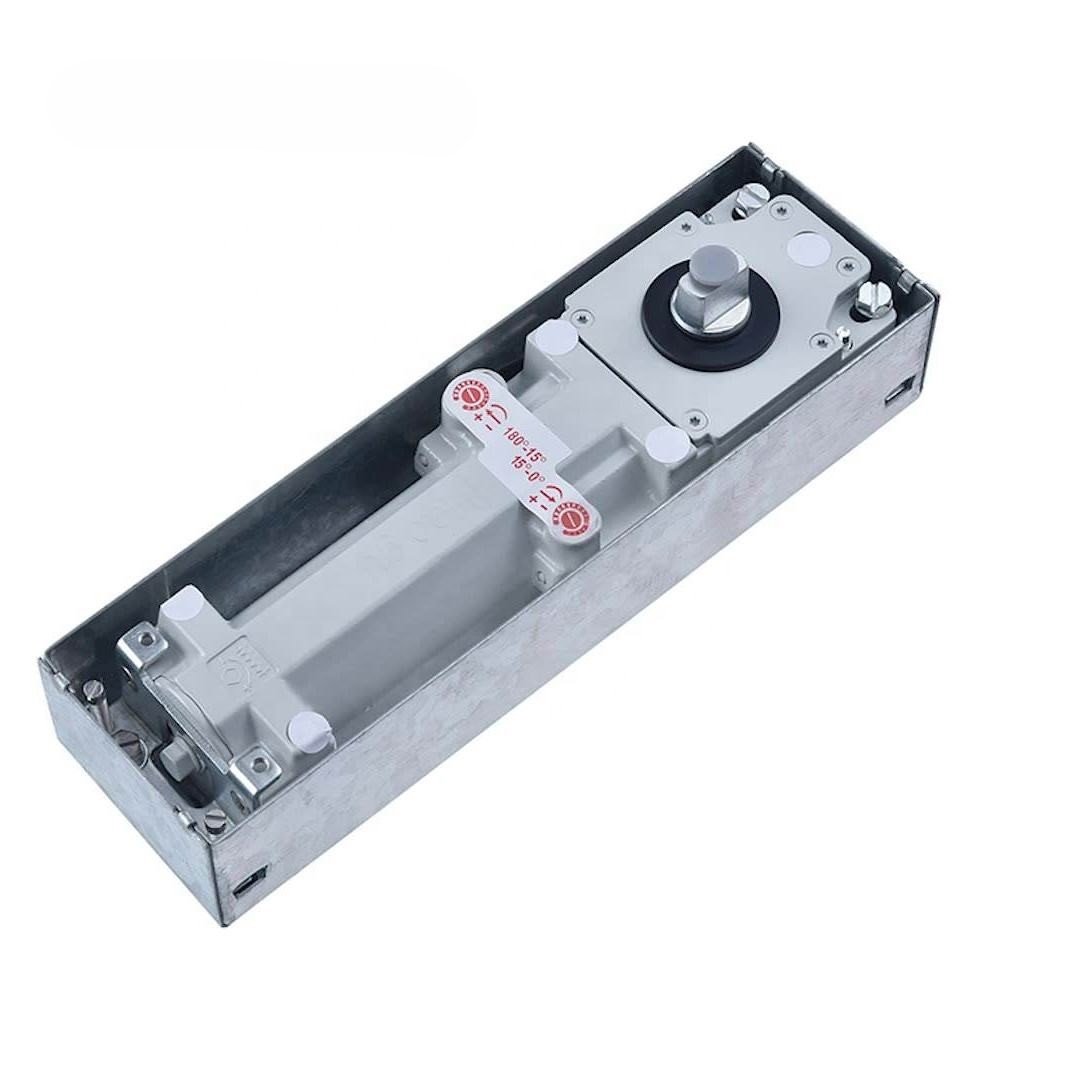
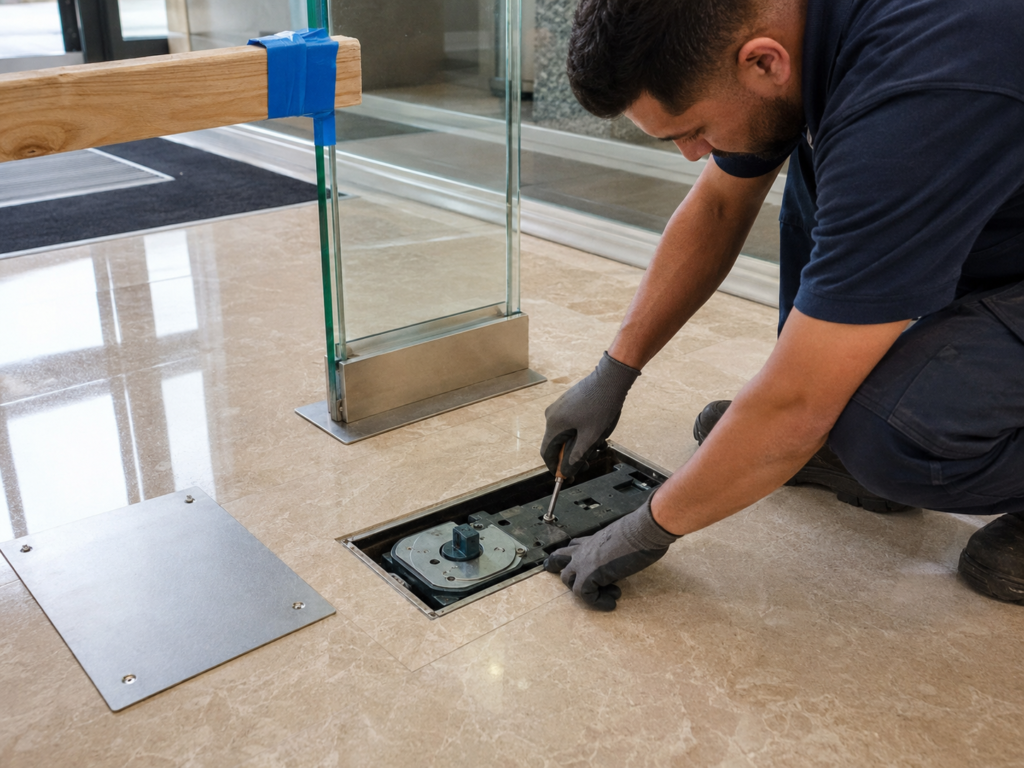
The old floor spring is installed inside a cement box set into the floor. If the existing cement box is still usable, the contractor may be able to remove the failed hydraulic unit and install a new floor spring into the same box.
To check this, the supplier needs:
- cement box length;
- cement box width;
- cement box depth;
- cover plate size;
- screw hole position;
- spindle position;
- existing box condition;
- finished floor thickness.
A new floor spring may fit the existing box and reduce the need for floor cutting, depending on the old box dimensions and condition. If the old box is too small, too shallow, badly corroded or incorrectly positioned, floor modification may still be required.
The spindle profile must also be checked. Common spindle types may include flat-tapered, square, splined or supplier-specific profiles. The floor spring spindle must match the bottom patch insert, otherwise the door may wobble, click, fail to return to center or feel loose.
In many replacement projects, the bottom patch insert should be inspected together with the floor spring. A new floor spring connected to a worn old insert may still perform poorly.
4. Restoring Pivot Alignment: Patch Fittings, Gaskets and Top Pivots
A glass door that drags on the floor is not always caused by the floor spring alone.
The bottom patch fitting may have lost clamping friction. The internal gaskets may have compressed after years of use. The glass may have slipped slightly downward. The top pivot may be misaligned. The door may no longer rotate on the correct vertical axis.
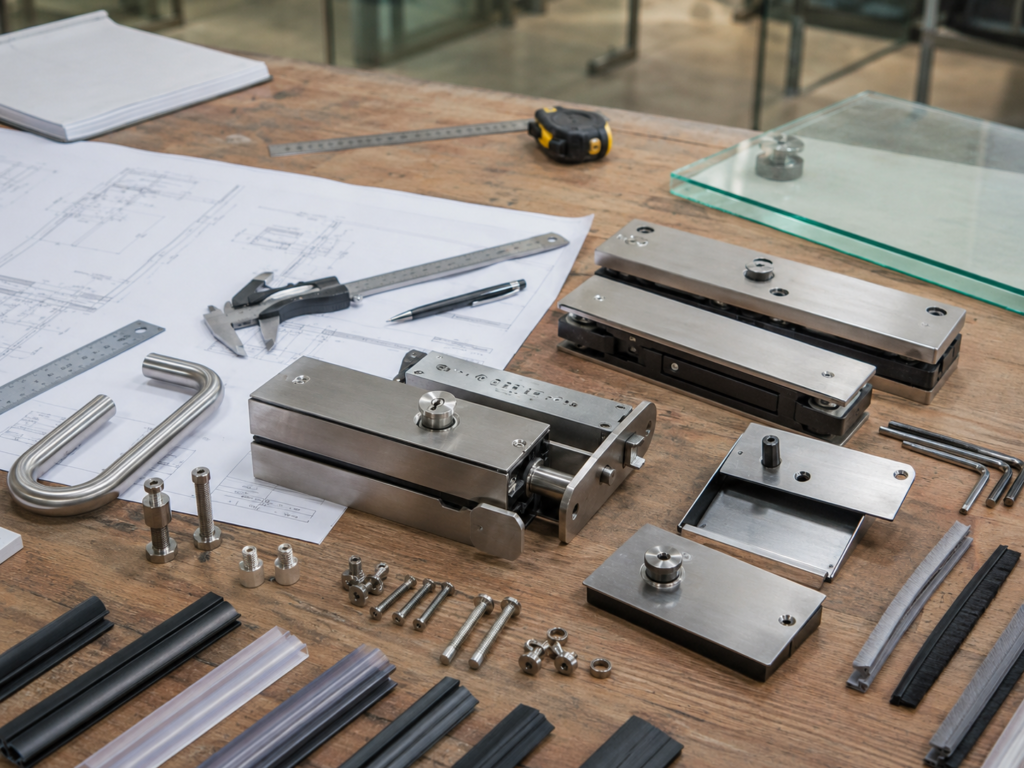
For existing frameless glass swing doors, the pivot system includes:
- floor spring;
- bottom patch fitting;
- bottom patch insert;
- top patch fitting;
- top pivot;
- fixed glass or frame support.
All these parts affect alignment.
When replacing patch fittings or correcting door sag, the gasket package must match the glass thickness. Common glass thicknesses include 10mm, 12mm and 15mm. If the gasket is too thin, the glass may slip. If it is too thick, the fitting may not close correctly.
Door alignment should also be checked after replacement. A door that stops 3° to 5° off center may still look almost closed, but the lock may not engage correctly. For double glass doors, even small pivot errors can affect the center meeting gap and lock position.
A hardware replacement project should restore the full pivot connection, not only replace the most visible metal cover.
5. Upgrading Door Closers for Framed Glass and Commercial Doors
Not all commercial glass doors are fully frameless.
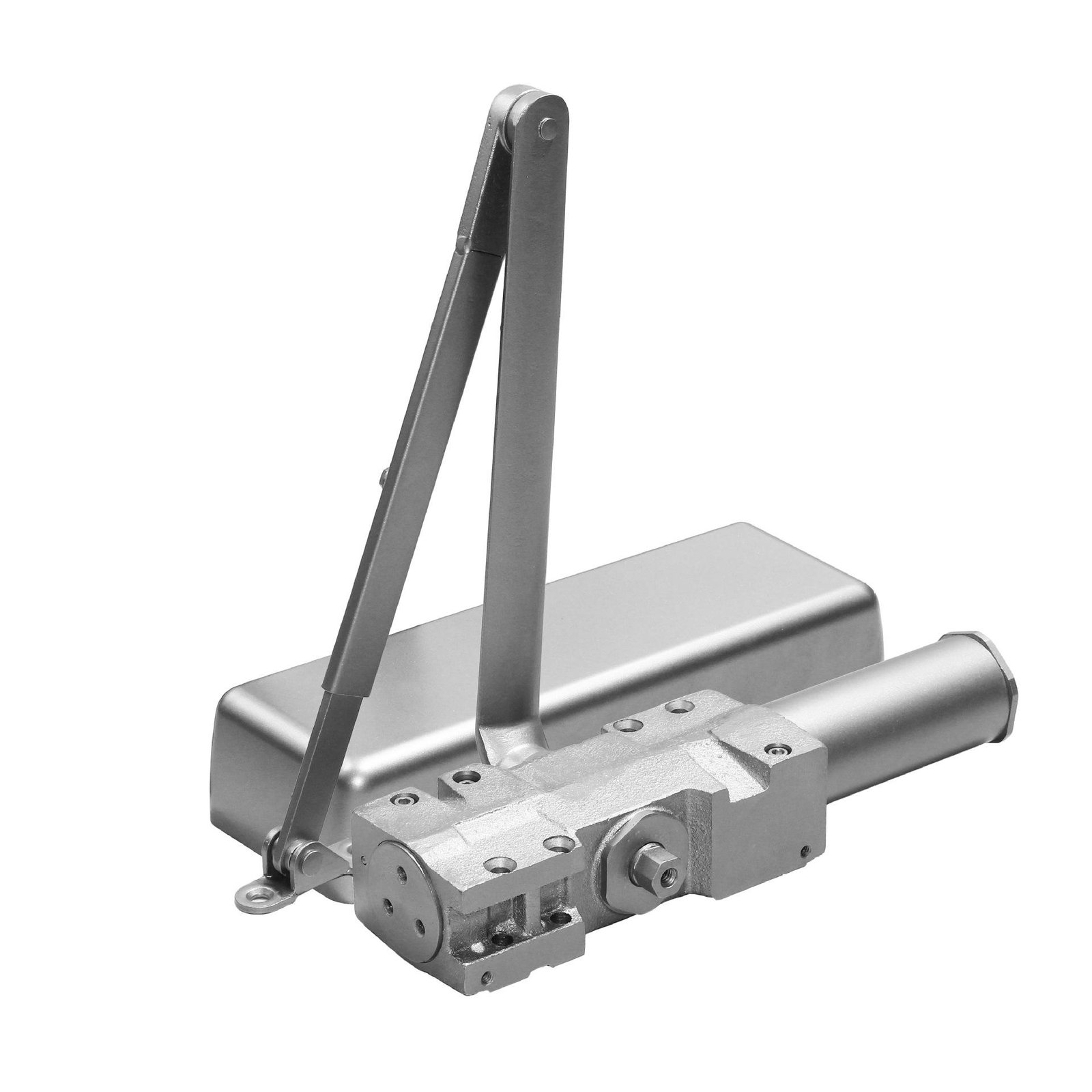
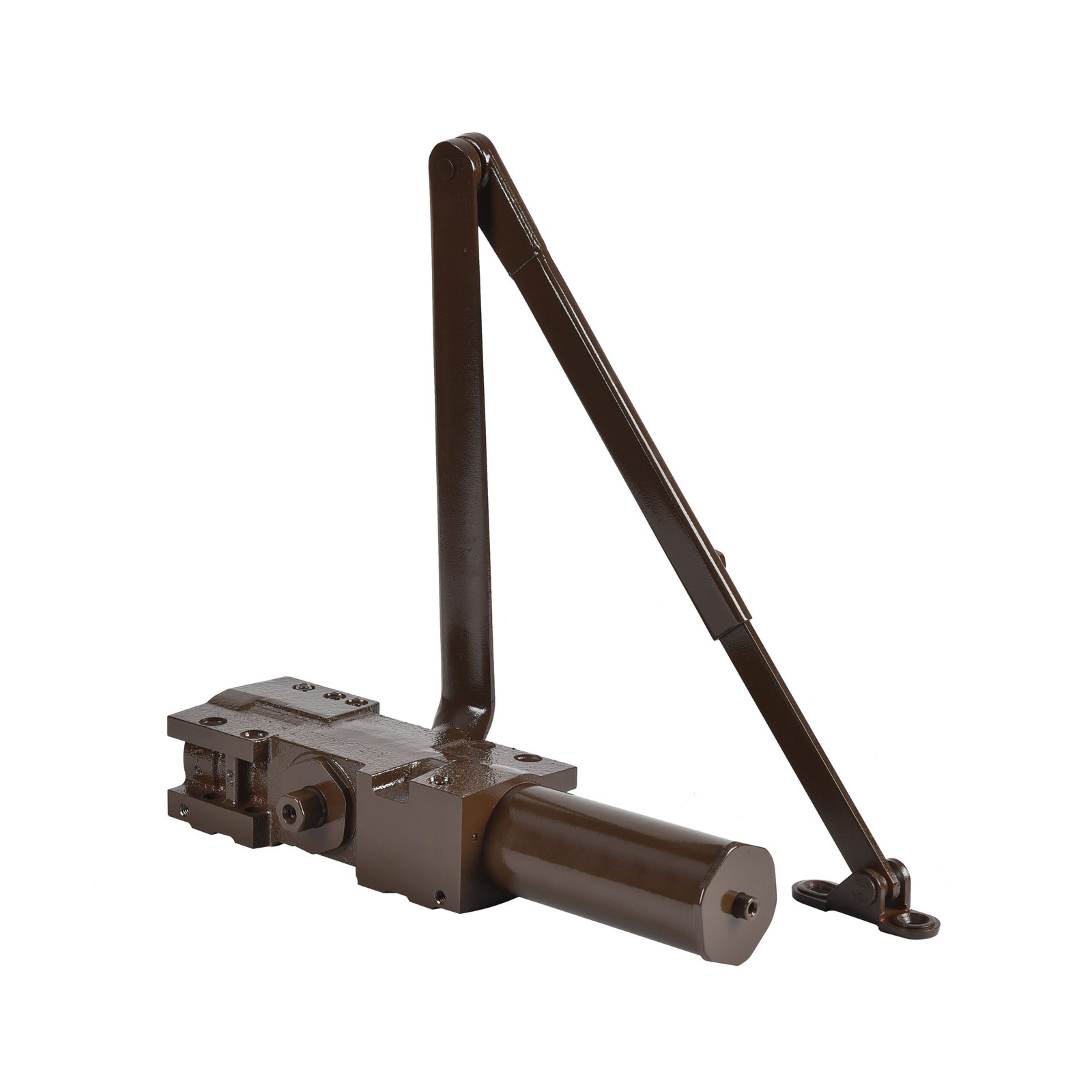
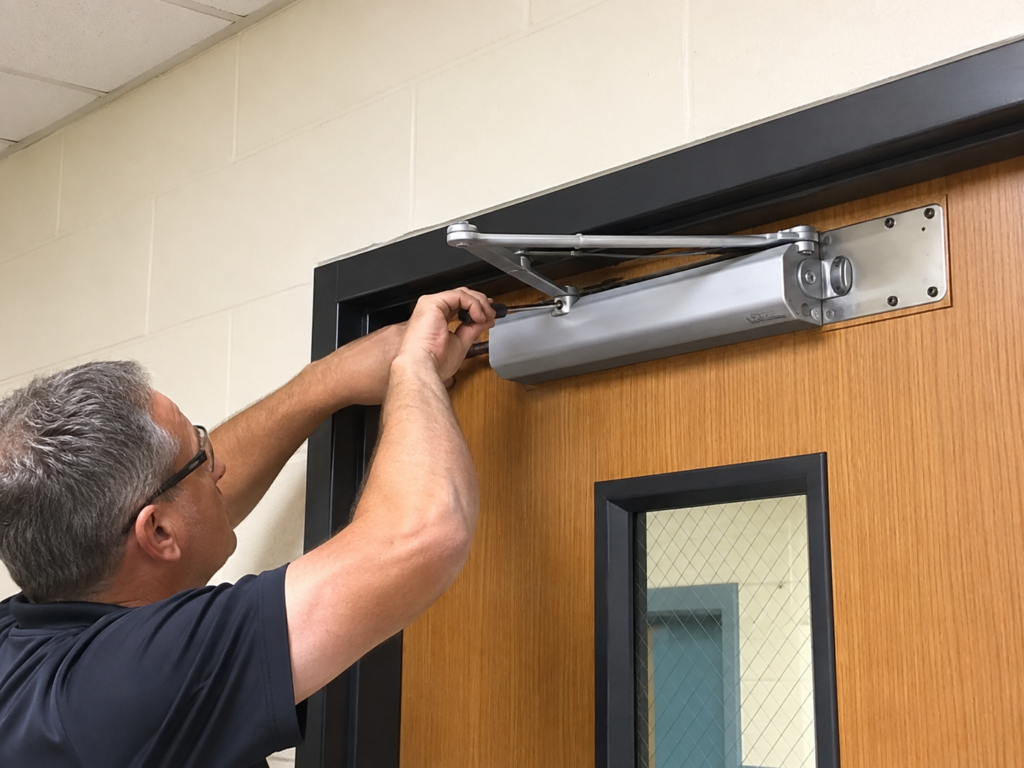
Many office buildings, schools, hospitals, clinics and commercial interiors use framed glass doors with overhead door closers. In renovation projects, these closers may need replacement when they leak oil, slam, fail to latch or become too hard to open.
For framed glass doors and commercial doors, replacement closers should match:
- door width;
- door weight;
- door material;
- old hole pattern;
- arm type;
- EN power size;
- traffic frequency;
- hold-open or non-hold-open requirement;
- Backcheck or Delayed Action requirement;
- finish.
If an old closer failed quickly, replacing it with the same light-duty model may not solve the problem. For high-traffic doors, contractors may consider heavier-duty bodies, higher cycle-rated models, adjustable EN power or improved hydraulic functions.
Project-grade closers may offer 500,000 cycles, 1,000,000 cycles or higher depending on model specification. The right choice should match real traffic conditions.
Old hole matching is also important. Adapter plates or multi-hole mounting plates may help reuse existing hole patterns and reduce new drilling in some retrofit projects. This is especially useful for painted doors, aluminum frames, steel doors and doors with special project requirements.
Backcheck may be considered for doors exposed to impact or wind. Delayed Action may be useful for healthcare or accessibility-focused spaces where users need more time to pass through.
6. Locks, Pull Handles and Seal Strips in Renovation Projects
Locks, handles and seals are often replaced during renovation because they directly affect daily user experience.
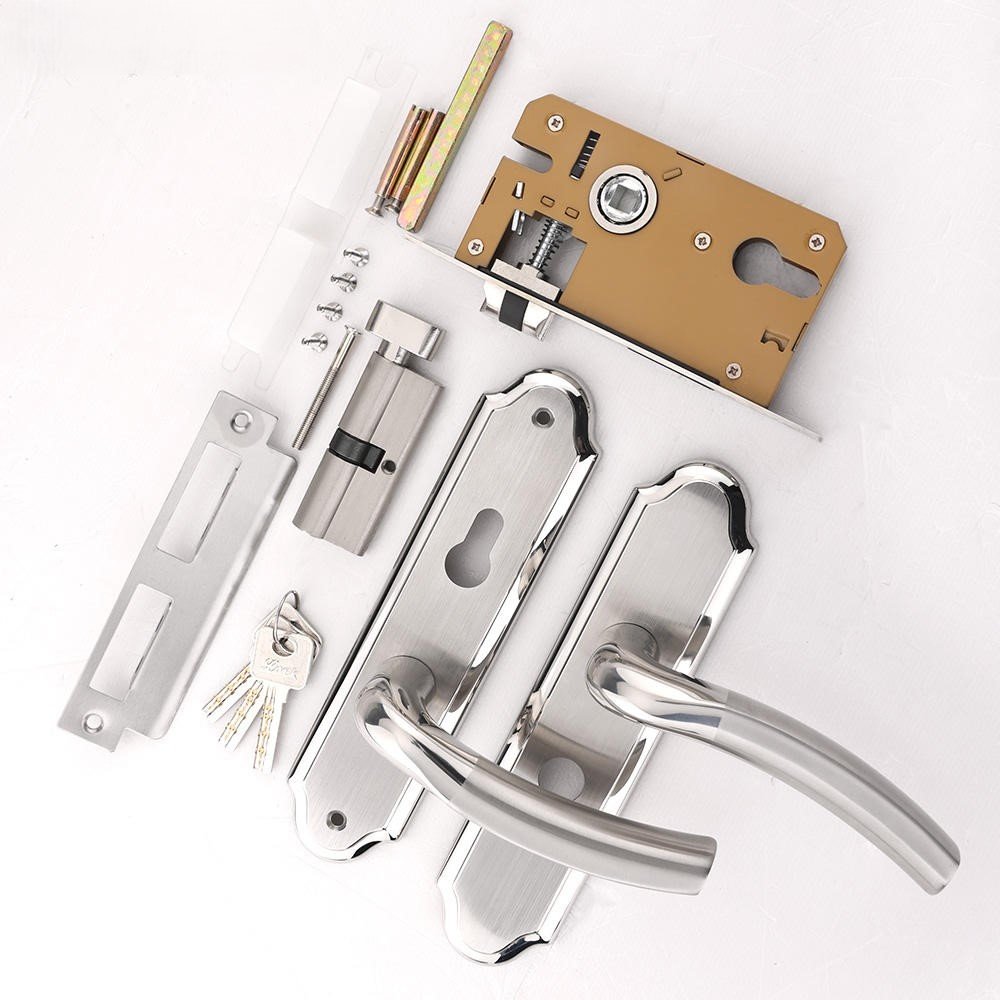
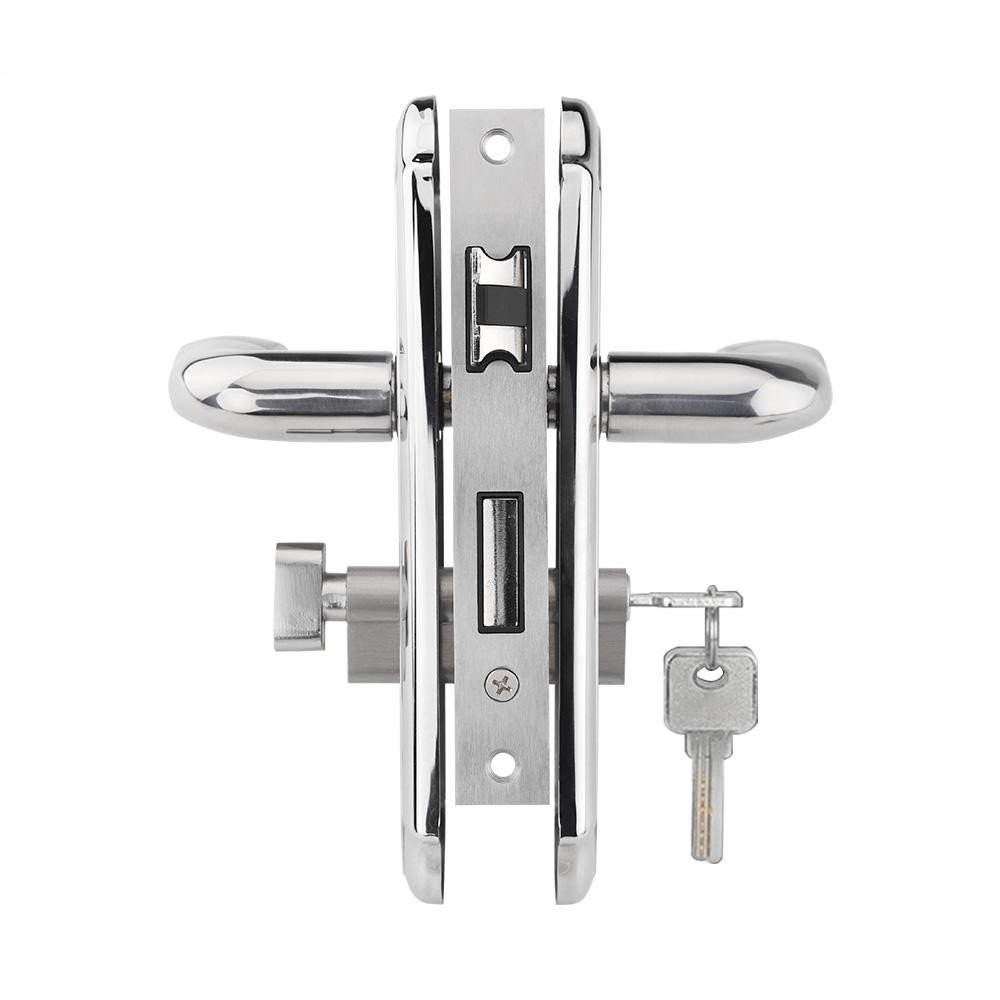
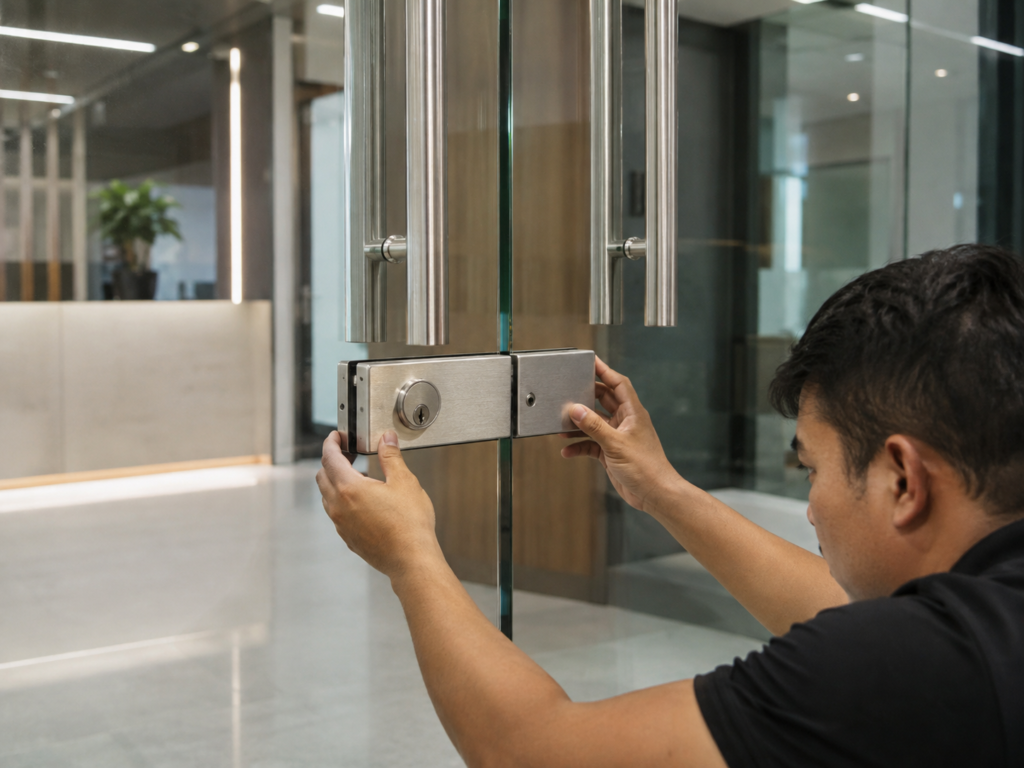
A mechanical glass lock must match the existing glass cutout, door gap and keeper position. A central patch lock may require a controlled meeting gap, often around 3mm to 5mm depending on the lock model. A bottom patch lock must align with the floor socket. A sliding glass lock may require a hook bolt and keeper to control horizontal movement.
If the door does not return to 0°, the lock may not work correctly even if the lock itself is new.
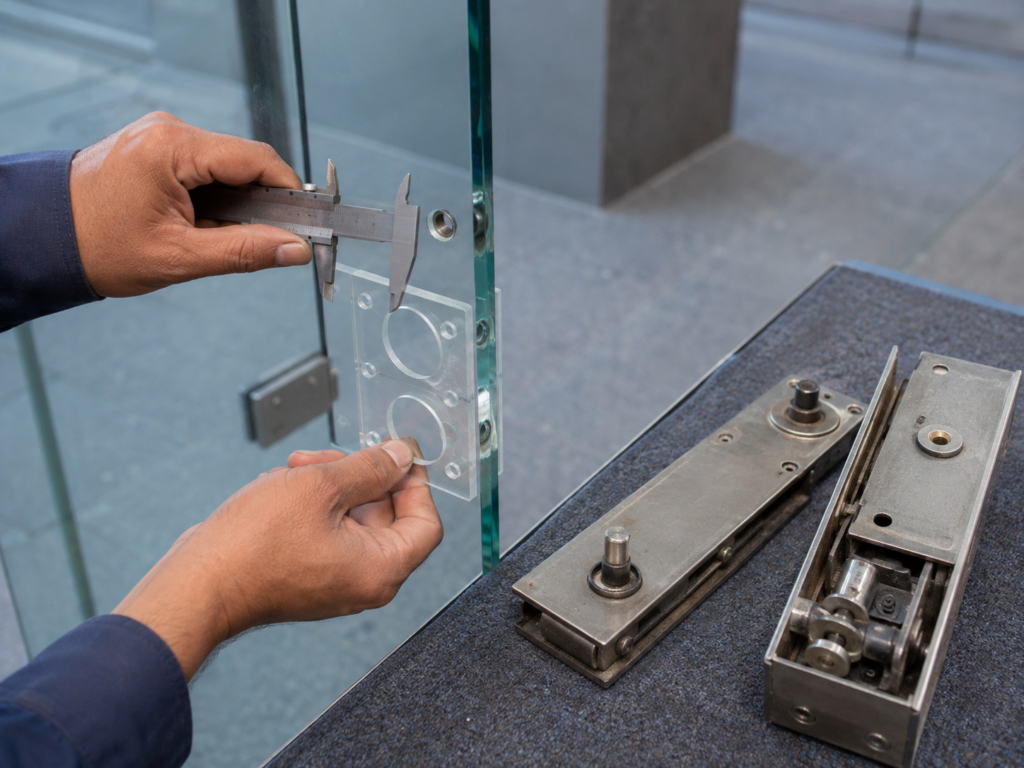
Pull handles also require careful matching. The most important dimension is the center-to-center hole distance. If the new handle does not match the existing glass holes, it cannot be installed without replacing the glass.
For high-use commercial entrances, buyers may consider thicker-wall tubes, stronger fixing bolts and anti-slip sleeves depending on the handle design and project requirement.
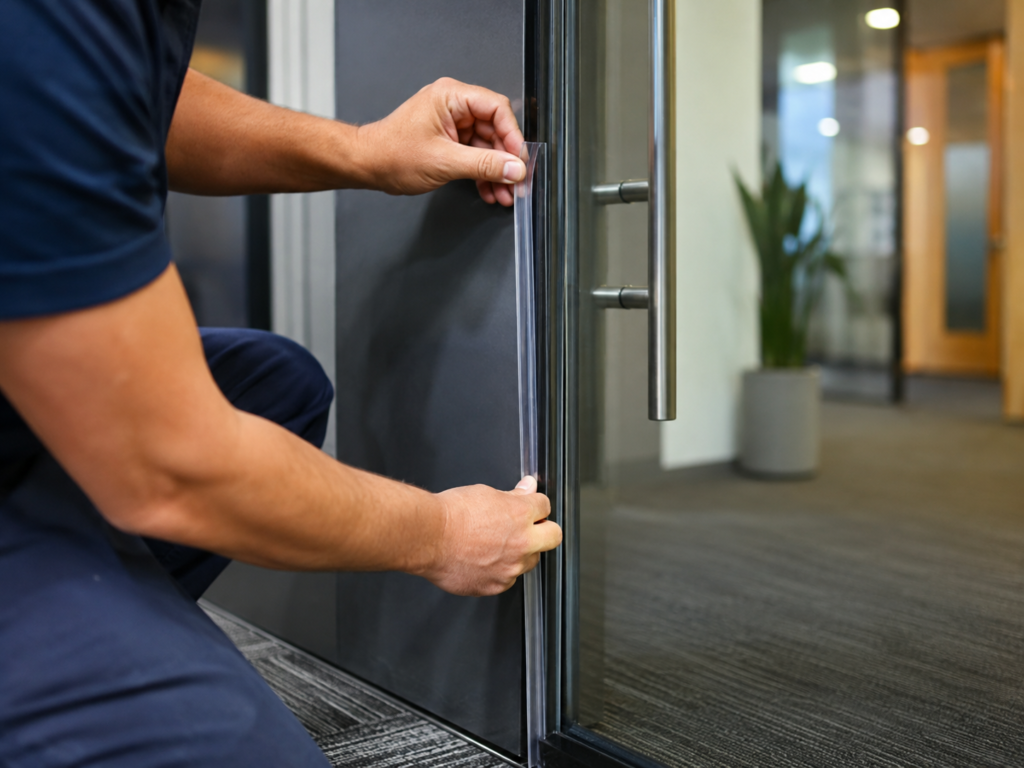
Seal strips are another commonly overlooked replacement item. PVC seals, magnetic seals, bypass seals or bottom sweeps may become yellow, brittle, noisy or loose after years of UV exposure, cleaning chemicals or daily use. Replacing old seals can help improve acoustic privacy, reduce air loss and remove scraping noise.
Finish consistency should also be checked. Patch fittings, locks, pull handles, floor spring cover plates and door closers should match as closely as possible. Brushed stainless steel, polished chrome, matte black and PVD finishes may vary between suppliers, so photos or samples should be confirmed before bulk purchase.
7. Common Mistakes in Commercial Glass Door Hardware Replacement
The first mistake is buying by appearance only. Similar-looking hardware may use different cutouts, hole spacing, spindle profiles or gasket systems.
The second mistake is ignoring existing glass holes. Tempered glass cannot be safely modified on site, so hole matching is critical.
The third mistake is replacing a floor spring without checking the cement box. If the new unit does not fit the old box, floor cutting may be required.
The fourth mistake is installing a new floor spring onto a worn bottom patch insert. The door may still click, wobble or fail to return to center.
The fifth mistake is replacing a patch fitting without checking glass thickness and gasket package. Incorrect gasket selection can cause looseness or installation difficulty.
The sixth mistake is not measuring pull handle C-to-C spacing. A handle that looks similar may not match the existing glass holes.
The seventh mistake is ignoring old door closer hole patterns. A closer with the correct power may still require unwanted new drilling if the template does not match.
The eighth mistake is mixing finishes from different suppliers without checking samples. This can make a renovated entrance look inconsistent.
The ninth mistake is treating a batch renovation as many separate small orders. Without a hardware schedule, future maintenance becomes more complicated.
Most replacement problems can be avoided when the full door system is reviewed before ordering.
8. What to Confirm Before Ordering
Before ordering replacement glass door hardware, buyers should prepare clear project information.
Useful details include:
- project type;
- door location;
- door type;
- glass thickness;
- glass width and height;
- single or double door layout;
- existing hardware photos;
- current problem;
- existing cutout or hole photos;
- patch fitting type;
- floor spring cement box size;
- spindle profile photo;
- bottom patch insert condition;
- top pivot condition;
- lock type;
- floor socket or keeper position;
- pull handle C-to-C hole distance;
- door closer arm type if applicable;
- old hole pattern;
- seal strip type if applicable;
- finish requirement;
- quantity;
- renovation schedule;
- site photos or drawings.
Photos are especially important. Clear images of the full door, hardware close-ups, floor spring cover plate, inside cement box, patch fitting, lock, handle holes, door closer arm and door gaps can help the supplier understand the existing condition before quotation.
A good replacement quotation should not be based only on one product photo. It should consider the full door system.
9. How Metech Supports Commercial Facility Upgrades
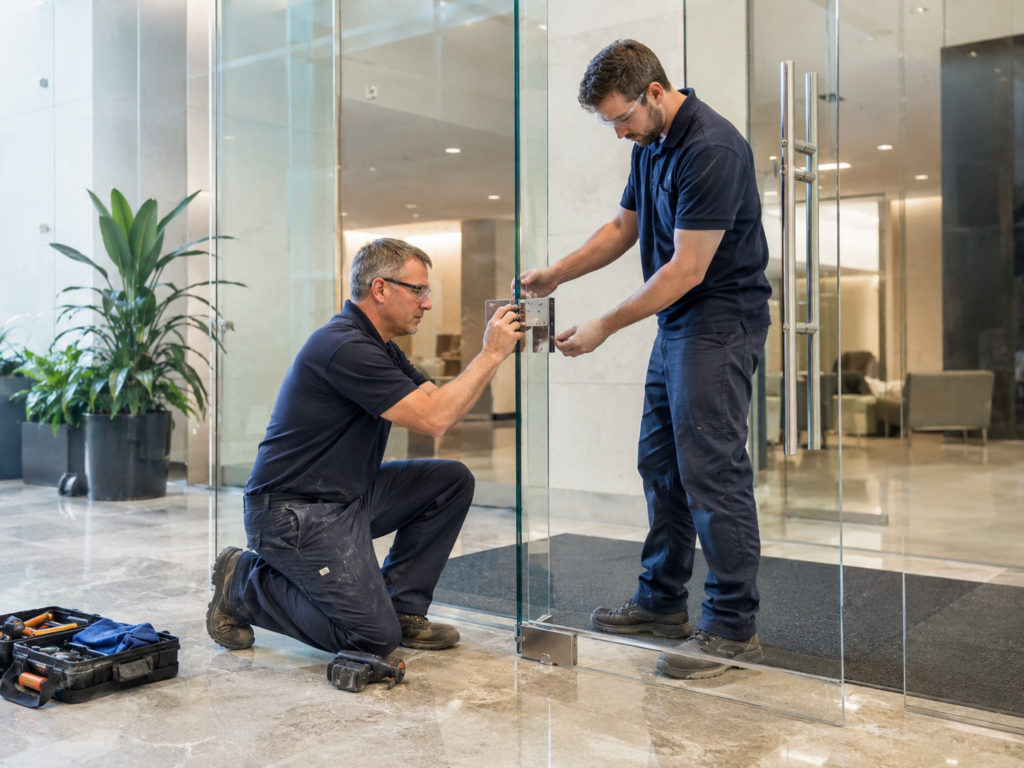
Metech Hardware supplies architectural glass door hardware for commercial renovation, facility maintenance and replacement projects.
Our product range can support floor springs, patch fittings, top pivots, bottom patch fittings, patch locks, bottom locks, floor sockets, pull handles, door closers, seal strips and related glass door accessories.
For replacement projects, Metech can help review existing hardware photos, glass thickness, cutouts, cement box size, spindle profile, lock position, handle hole spacing, door closer arm type, finish and quantity before quotation.
For contractors, distributors and facility maintenance buyers, Metech can support mixed hardware orders for frameless glass doors, framed glass doors, glass partitions, storefronts, shower enclosures and railing projects.
Instead of sourcing floor springs, locks, handles, patch fittings and seals from many different suppliers, project buyers can consolidate related hardware in one order to improve coordination, finish consistency and shipment efficiency.
To request a quotation, send the door size, glass thickness, existing hardware photos, current problem, required replacement parts, finish, quantity and available drawings or site photos.
FAQ
Can I replace glass door hardware without replacing the glass?
Often yes, if the new hardware matches the existing glass thickness, holes, cutouts and door layout. If the old glass preparation does not match the new hardware, glass replacement may be required.
Can existing tempered glass be drilled for new hardware?
No. Tempered glass cannot be safely drilled, enlarged, shaved or cut on site. Replacement hardware should match the existing glass preparation.
How do I match a replacement patch fitting or lock?
Check the glass thickness, cutout shape, hole spacing, pivot offset, cover size and existing hardware photos. Similar-looking patch fittings or locks may not use the same internal structure.
Can I replace a floor spring without cutting the finished floor?
Sometimes. If the new floor spring matches the existing cement box, cover plate area, spindle position and installation space, a drop-in replacement may be possible.
How do I find a pull handle that fits my existing glass holes?
Measure the center-to-center distance between the existing handle holes. The replacement pull handle must match this C-to-C spacing, glass thickness and fixing method.
What should I send before ordering replacement hardware?
Send photos of the full door and close-ups of each hardware part, glass size, glass thickness, existing holes or cutouts, current problem, finish requirement, quantity and site photos or drawings.