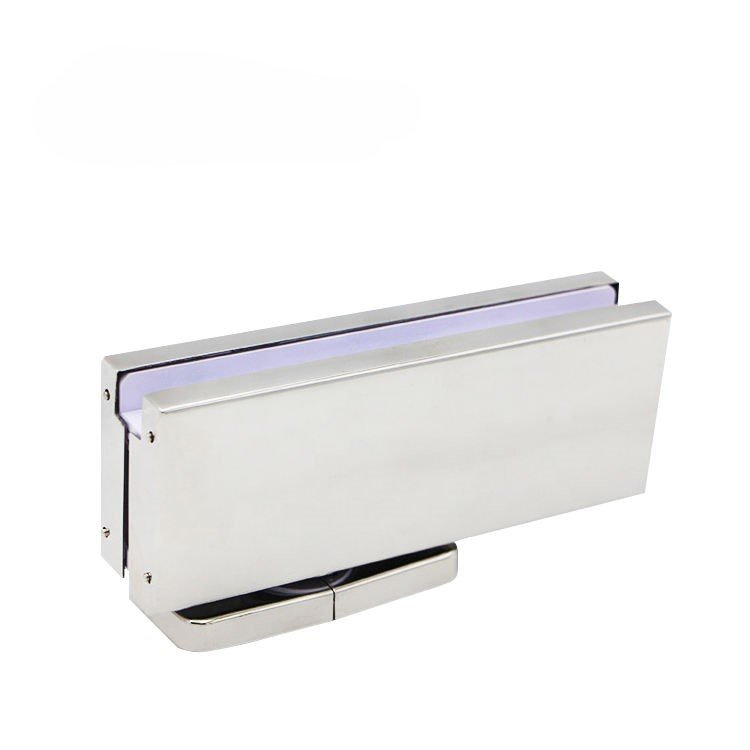
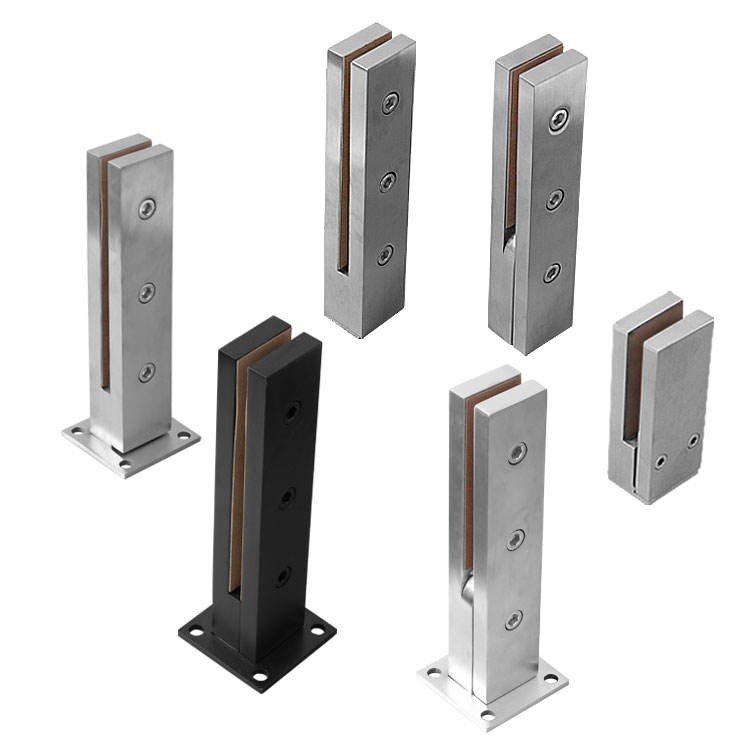
glass door patch lock, frameless glass door lock, glass door bottom lock, bottom patch lock for glass door, patch lock for glass door, glass door floor lock, glass door lock with cylinder, glass door lock keeper, glass door lock cylinder, frameless glass door locking hardware, floor socket for glass door lock, glass door lock buying guide
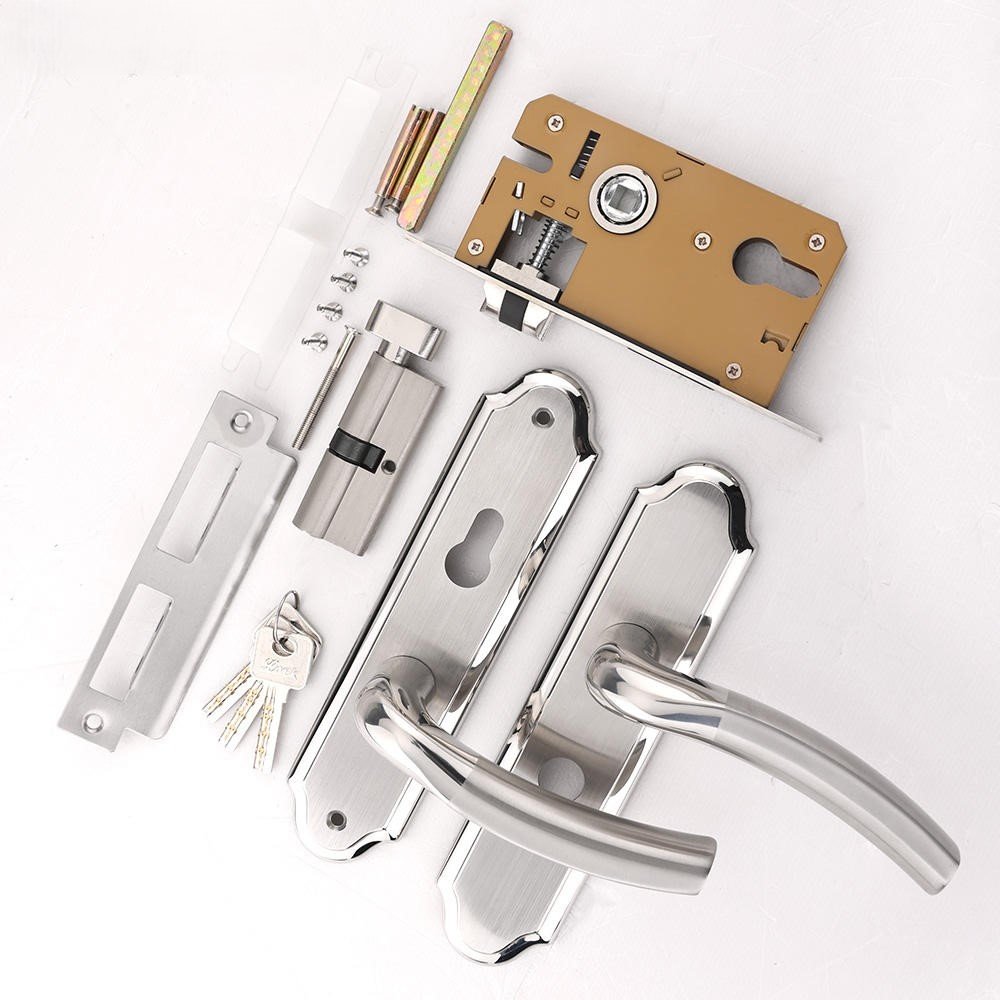
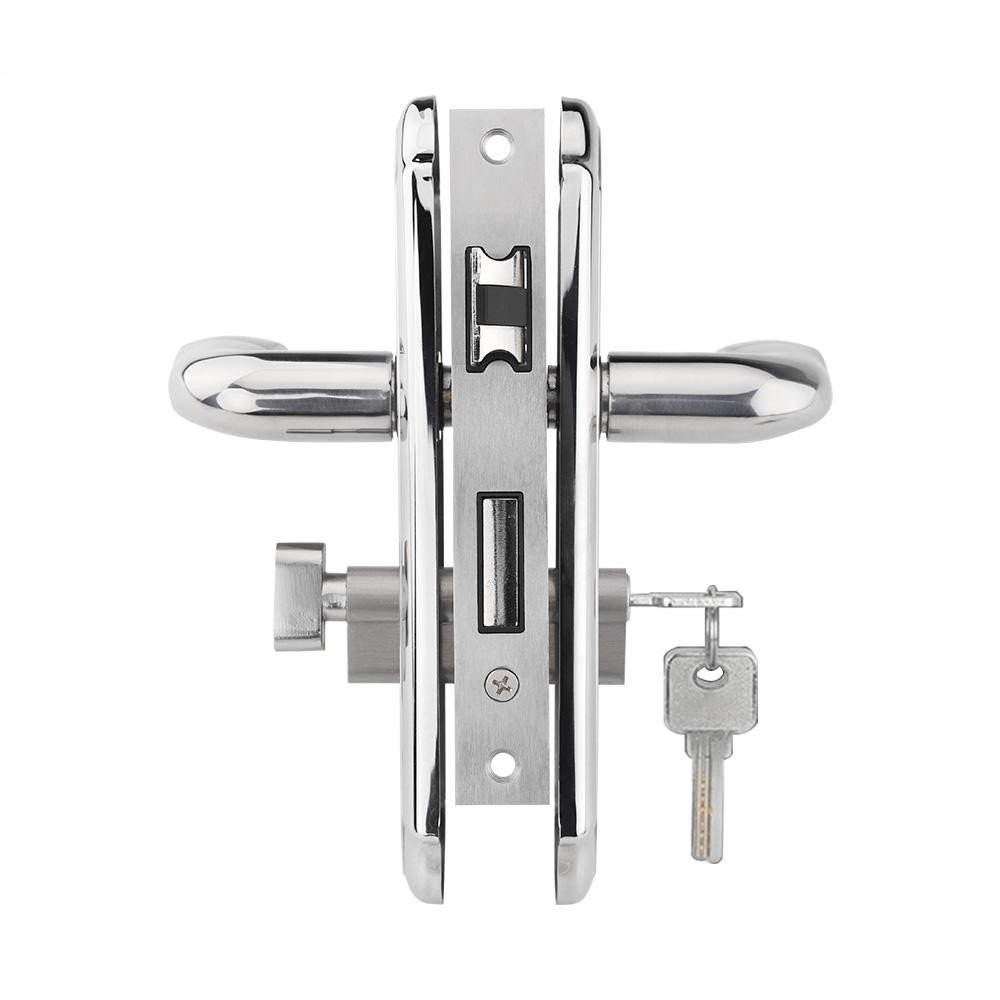
A frameless glass door lock looks simple from the outside. Many buyers see only a stainless steel lock body, a cylinder and a set of keys.
But in a real glass door project, the lock does not work alone.
Unlike timber or aluminum doors, frameless glass doors do not have a structural cavity where a mortise lock can be hidden. The glass is the door leaf itself. Because the glass is tempered, it cannot be drilled, hollowed out or modified on site after production. Every lock must either clamp onto the glass surface or fit factory-prepared cutouts made before tempering.
This means a glass door patch lock or bottom lock must match the glass thickness, door gap, lock cutout, keeper position, floor socket, patch fitting layout and door control hardware. If one part is wrong, the lock may still be installed, but it may not lock smoothly.
For offices, storefronts, hotels, apartments and commercial entrances, the better question is not only “Which lock looks secure?” but:
Does the complete locking system match the glass door structure, movement type and daily use requirement?
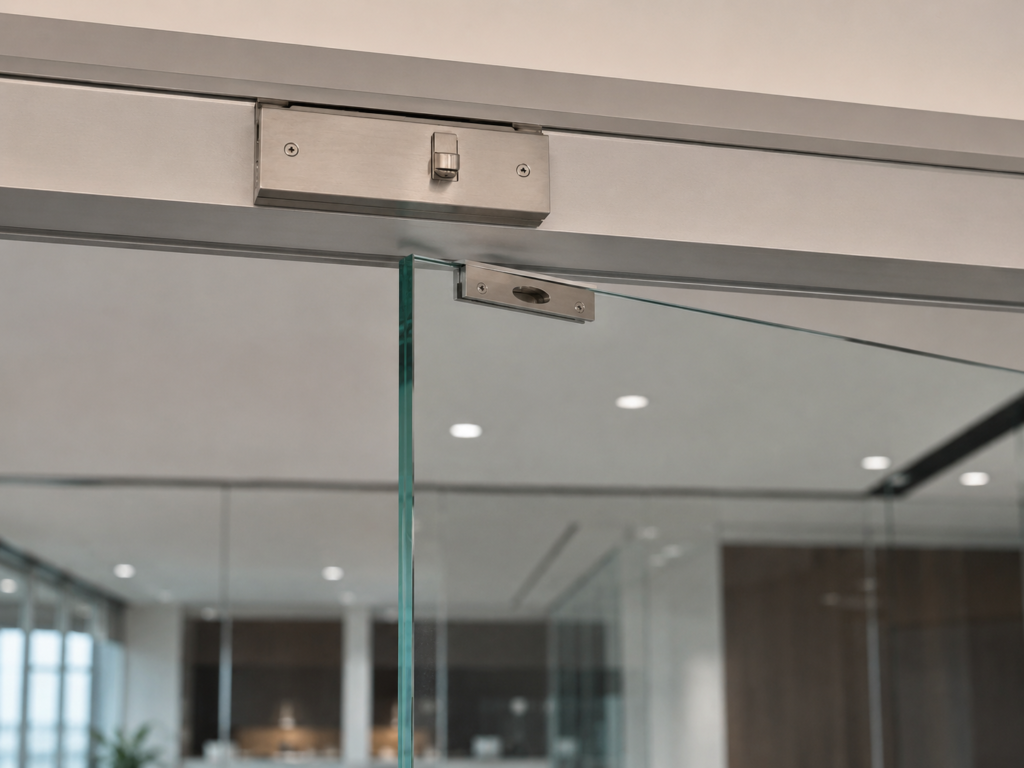
1. Why Frameless Glass Door Locks Must Be Selected as a System
A frameless glass door lock is part of a complete door system. It depends on more than the lock body itself.
The glass thickness must match the lock body, gasket and screw length. The door gap must allow the lock tongue to enter the keeper. The floor socket must align with the bottom lock. The floor spring must return the door to the correct center position. If the door is double leaf, the active and inactive leaves must also be planned together.
A glass door lock cannot correct poor door alignment. If the floor spring center is wrong, the patch fitting axis is shifted, or the glass door gap is uneven, the lock will also become difficult to use.
This is why lock selection should happen together with the door type, glass thickness, patch fitting and floor spring system.
A good lock body may still fail in daily use if the keeper is wrong, the floor socket is misaligned, or the glass cutout does not match the selected model.
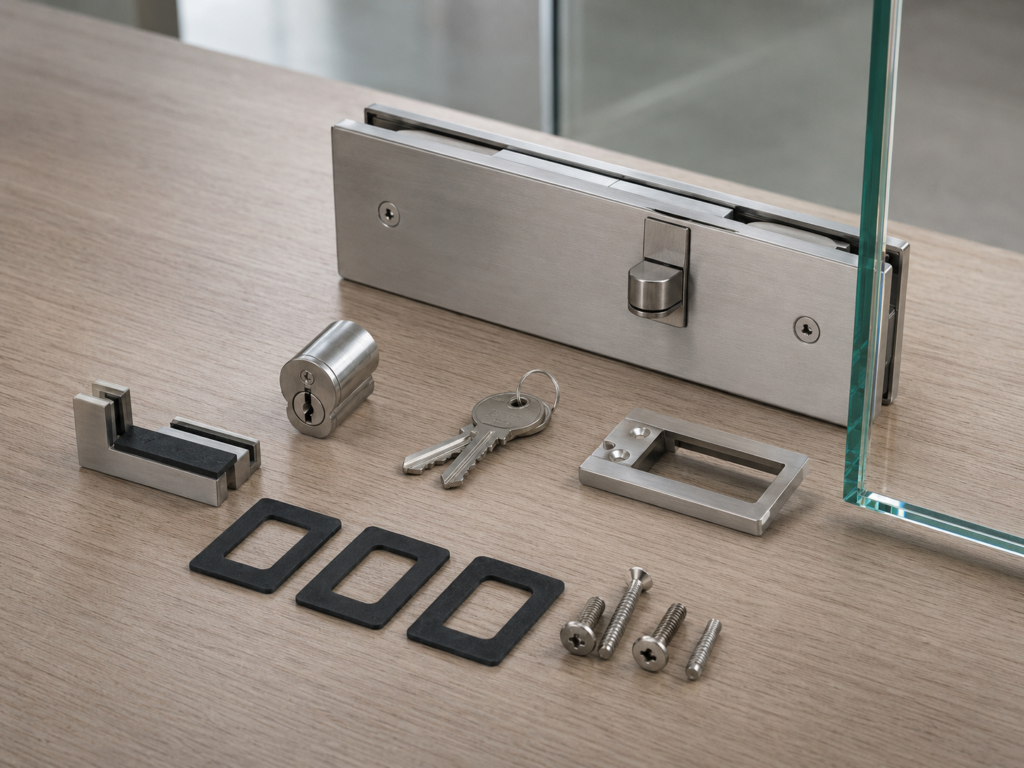
2. Main Types of Locks for Frameless Glass Doors
Different frameless glass doors need different locking methods. A storefront swing door, office glass room, sliding partition and access control door may all need locks, but the correct lock type may be different.
| Lock Type | Typical Position | Common Use | Key Point |
|---|---|---|---|
| Center patch lock | Middle area of glass door | Offices, shops, commercial entrances | Easy to operate and visible to users |
| Bottom patch lock | Bottom area of glass door | Frameless swing doors and storefronts | Cleaner appearance, floor socket alignment required |
| Floor lock | Lower part of door or inactive leaf | Secondary locking or double doors | Must align with floor socket |
| Glass-to-glass lock | Between two glass leaves | Double frameless doors | Active and inactive leaf must match |
| Sliding glass door lock | Edge of sliding panel | Sliding doors and partitions | Usually requires hook bolt engagement |
| Smart glass door lock | Glass or slim frame door | Offices, hotels, access control projects | Requires power, access method and door gap confirmation |
This guide focuses mainly on patch locks and bottom locks for frameless glass swing doors, while also explaining when sliding locks, smart locks or electric drop bolts may be more suitable.
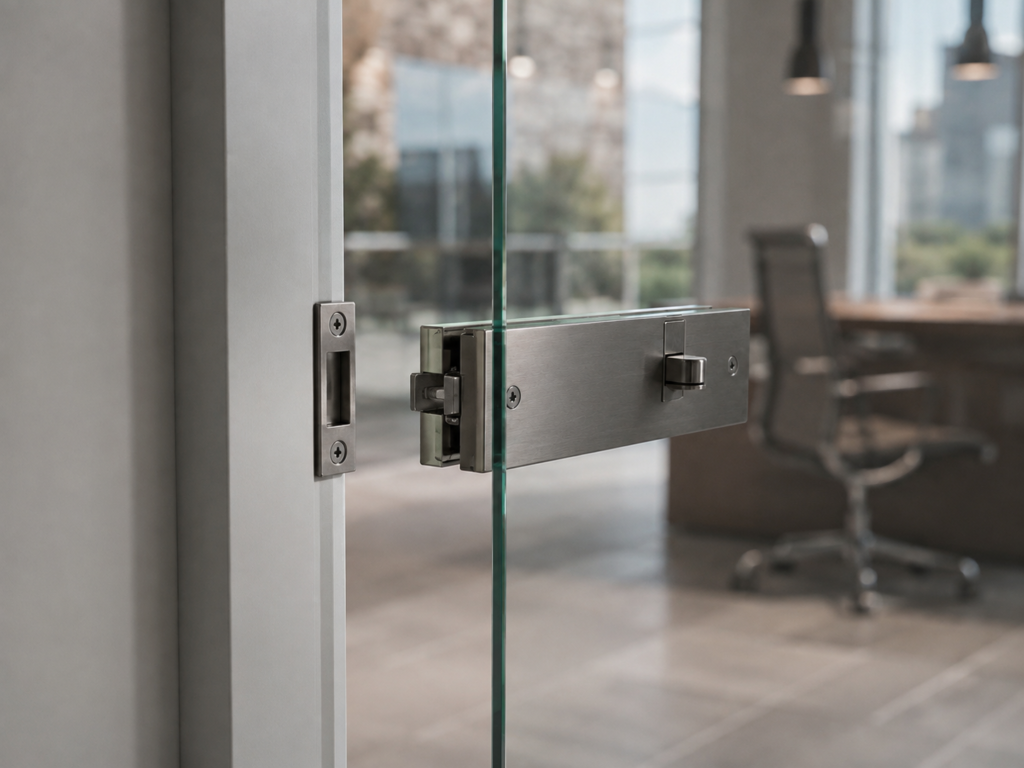
3. Patch Lock vs Bottom Patch Lock
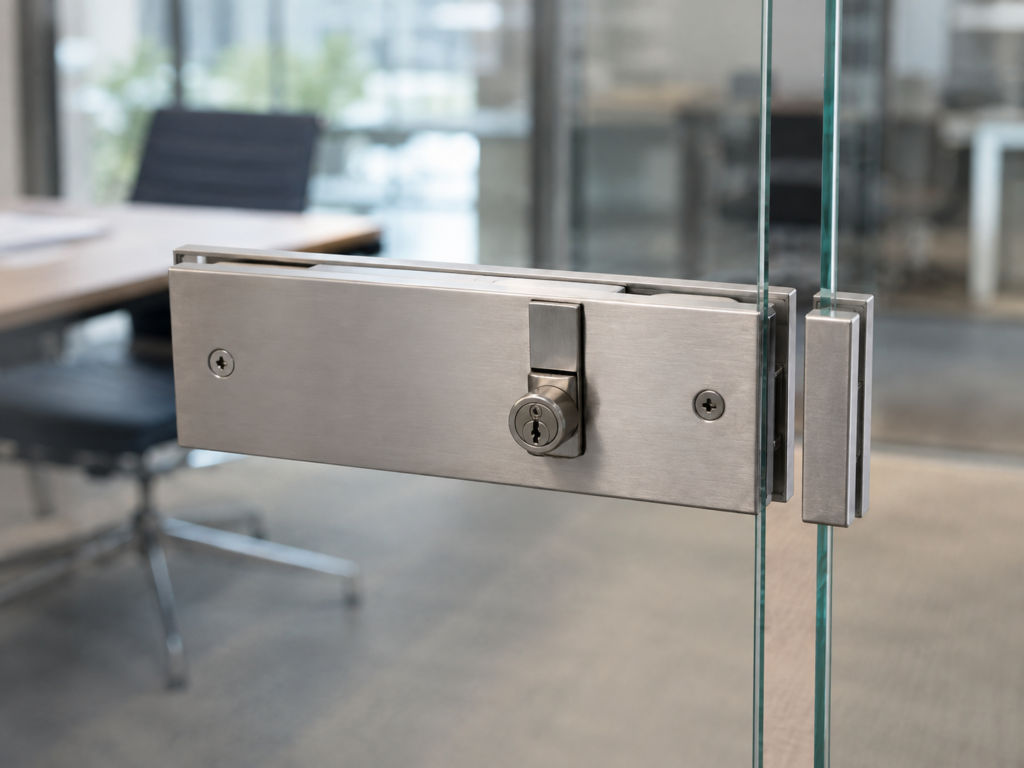
A center patch lock is installed around the middle area of the glass door. In many projects, the lock center is placed at approximately 1.0m from the finished floor, depending on the door design and user requirement. This position is easier for daily operation, so it is common in offices, shops and commercial rooms.
A bottom patch lock is installed near the bottom of the glass door. It creates a cleaner frameless appearance because the lock is less visible at eye level. It is often used for storefront glass doors, double swing doors and entrance systems where a minimal appearance is required.
The difference is not only appearance.
A center patch lock usually locks into a wall keeper, glass keeper, aluminum frame keeper or the inactive leaf of a double door. A bottom patch lock usually locks downward into a floor keeper or floor socket. This means a bottom lock depends more heavily on floor position and door centering.
If daily operation convenience is the priority, a center patch lock is often easier for users. If a cleaner glass appearance is required, a bottom patch lock may be preferred, but floor socket alignment and cleaning conditions must be checked carefully.
4. Bottom Patch Locks and Dust-Proof Floor Strikes
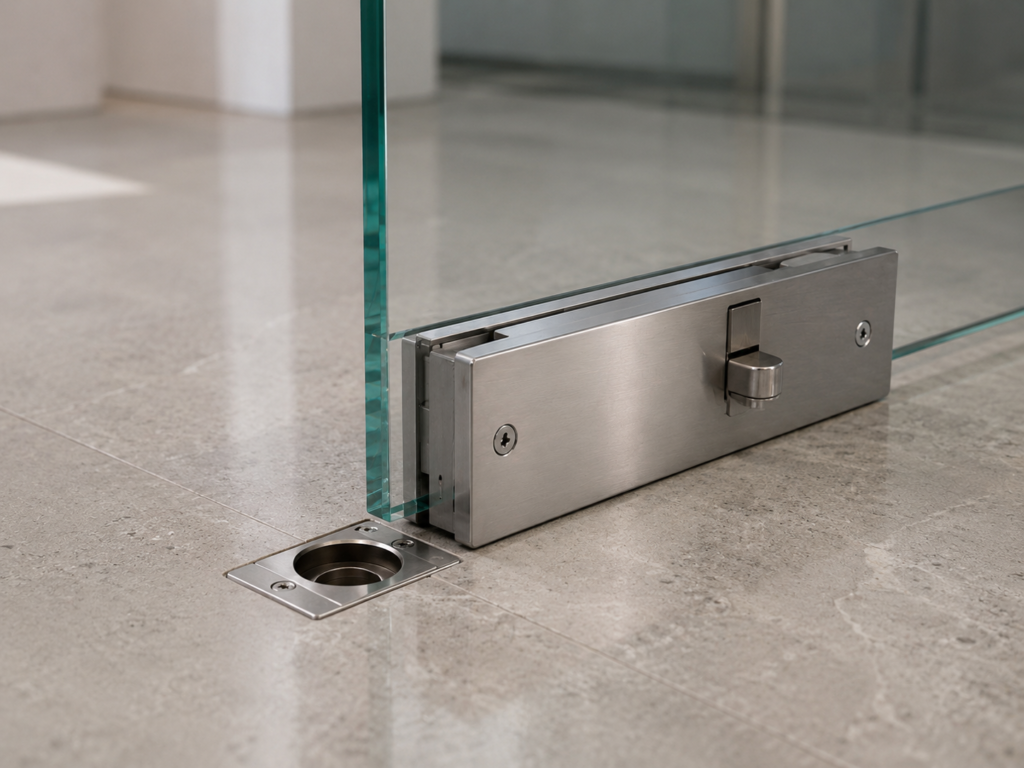
A bottom patch lock usually works by sending a steel bolt downward into a floor socket or floor strike. This creates a clean look because the lock body stays low on the door.
However, the floor socket is not a small accessory. It directly affects whether the lock can operate reliably after daily use.
In commercial environments, floor sockets can collect dust, sand, mop water and small debris. If the socket becomes blocked, the lock bolt may not fully enter the hole. The user may feel that the lock is defective, but the real problem is the receiving socket.
For this reason, dust-proof floor strikes are often used in higher-use projects. A dust-proof strike usually has a spring-loaded internal cap that stays near floor level when the lock is open. When the bolt moves down, it pushes the cap and enters the socket. This helps reduce dirt buildup and makes the bottom lock more reliable in shops, offices, hotels and public entrances.
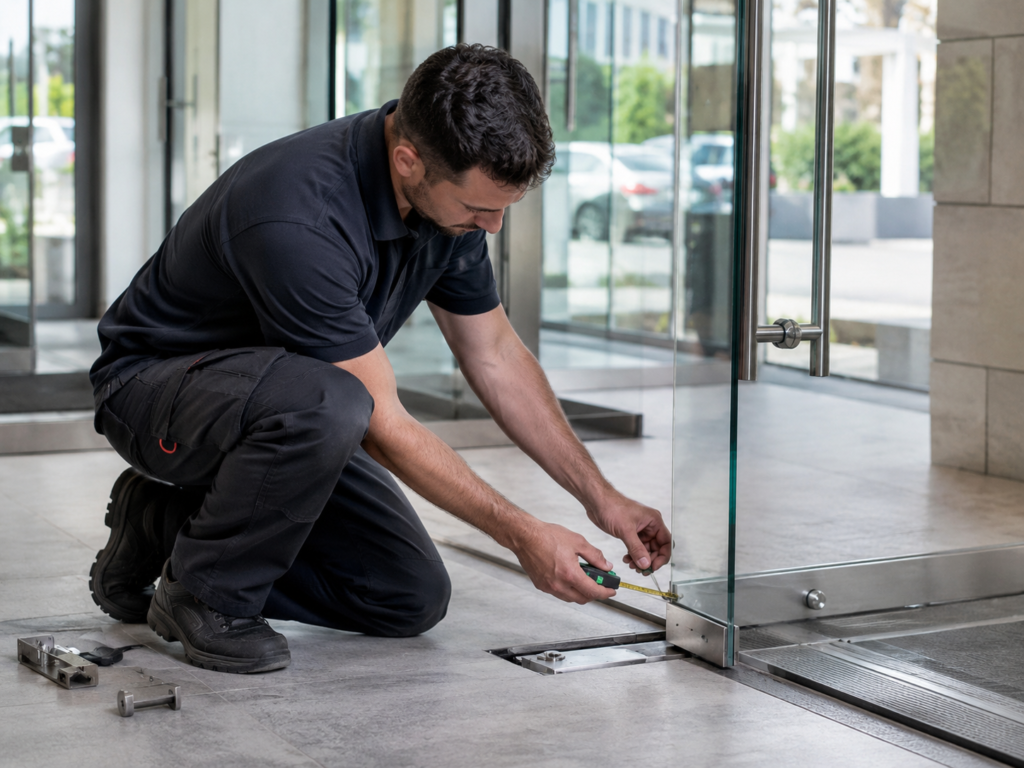
Bottom patch locks also require accurate floor positioning. The floor socket should be installed after checking the natural closed position of the door, not by forcing the door into place. If the floor spring does not return the door correctly, the bolt may miss the socket even when the lock body is good.
5. Central Patch Locks, Door Gap and Floor Spring Alignment
A central patch lock is easier to reach and operate, but it is very sensitive to door gap and alignment.
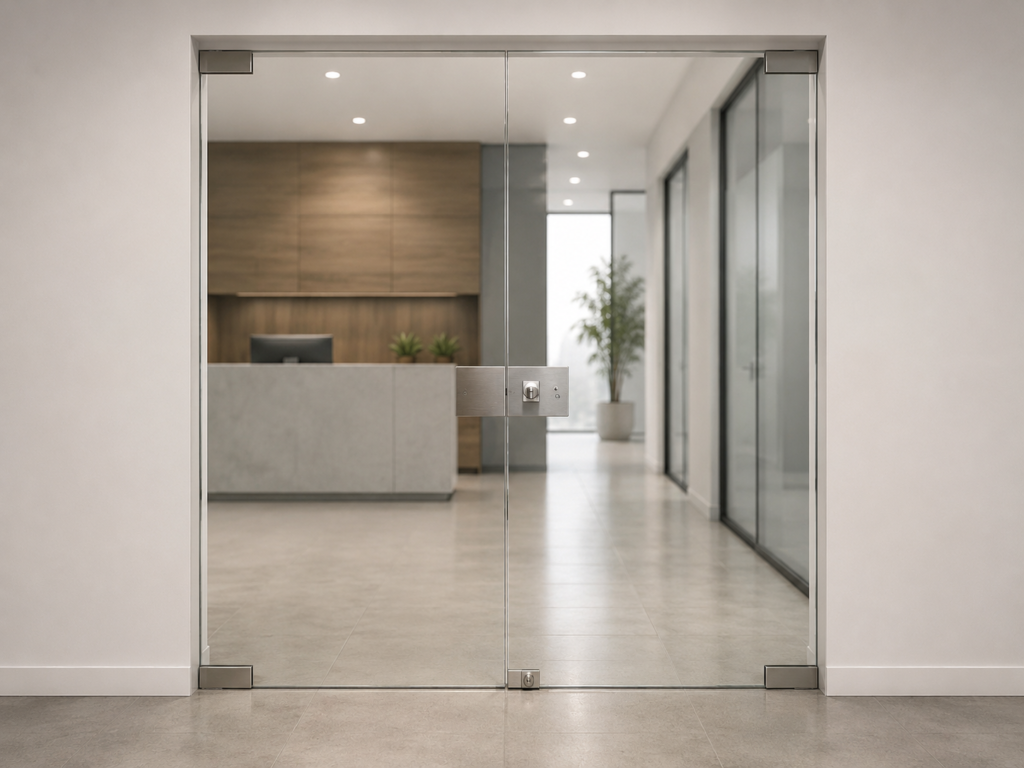
In double glass door systems, the central lock usually locks from the active leaf into a keeper on the inactive leaf. In single door systems, it may lock into a wall or frame keeper. In both cases, the lock tongue must enter the receiving point cleanly.
For many frameless glass doors, a door gap around 3mm to 5mm is a practical reference for lock clearance, depending on the lock design, glass thickness and door layout. If the gap is too small, the lock body or keeper may scrape. If the gap is too large, the lock may look loose or feel less secure.
Floor spring centering is equally important.
A patch lock cannot correct a poor floor spring. If the floor spring does not return the glass door to 0°, the lock and keeper will not stay aligned. If the door stops 3° to 4° off center, the lock bolt may hit the keeper edge instead of entering smoothly.
This is why lock problems are often connected to door control problems. When a customer says the key is hard to turn, the lock body may not be the real cause. The door may have sagged, the floor spring may have worn, or the pivot axis may have shifted.
A lock that requires force to close is usually not a good installation. It is often an alignment problem.
6. Glass Thickness, Cylinder and Keying Plan
Most commercial frameless glass door locks are designed for common glass thicknesses such as 10mm and 12mm. Some heavier or oversized doors may use 15mm glass, but the lock body, gasket and screw length must be confirmed before ordering.
The lock body must match the glass thickness. If the glass is thinner than expected, the gasket may not clamp correctly. If the glass is thicker than the lock design allows, the cover may not close properly or the fixing screws may not reach the correct depth.
The cylinder is another detail that should be confirmed early.
Many glass door patch locks use a Euro profile cylinder. Depending on the project, the buyer may require single cylinder, double cylinder, keyed-alike, keyed-different or master key arrangements. For hotels, offices, apartment buildings and multi-door commercial projects, the keying plan should be confirmed before shipment.
A small office may want each room to have a different key. A hotel or property project may require a master key system. A distributor may want locks with the same key for easier inventory management. These are not details to decide after the goods arrive.
Cylinder length should also match the lock body. If the cylinder is too short, operation may be poor. If it protrudes too much, the appearance is less clean and the cylinder may be more exposed to impact.
7. Sliding Locks, Smart Locks and Electric Drop Bolts
Patch locks and bottom locks are mainly used for swing glass doors. Sliding glass doors require a different locking principle.
A standard straight deadbolt is not ideal for many sliding glass doors because the door moves horizontally. If a straight bolt only enters a shallow keeper, the sliding panel may still be pulled sideways under force. For this reason, sliding glass door locks often use a hook bolt or claw bolt. When locked, the curved bolt hooks behind the strike plate and creates mechanical engagement against lateral movement.
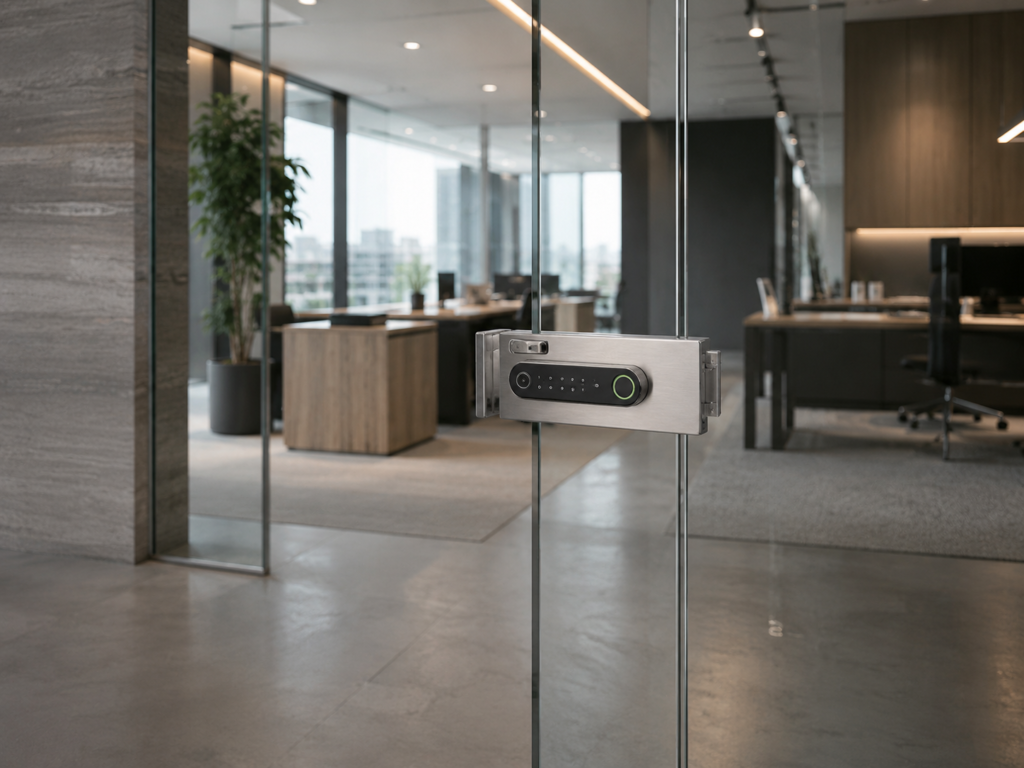
Smart locks are another option for office partitions, hotels and access control projects. Many frameless glass smart locks use battery power and surface clamping on 10mm or 12mm glass. These can be useful for interior doors where wiring through glass is not possible.
For higher-security access control systems, an electric drop bolt may be installed in the overhead transom, header or frame area. In this arrangement, the wiring stays in the ceiling or frame structure, while the bolt drops into a receiver aligned with the glass door. This keeps the glass visually clean and avoids routing wires through the glass.
The correct option depends on door movement type, access requirement, wiring condition and project security level.
8. Glass Cutout Requirements Before Tempering
Patch locks and bottom locks often require glass cutouts. These may include the lock body area, cylinder hole, screw holes or bottom lock clearance.
The cutout must be confirmed before glass tempering. Once tempered glass is finished, it cannot be safely drilled, enlarged or reshaped. If the lock cutout is wrong, the installer may not be able to correct the problem on site.
Different lock models may use different cutouts. A center patch lock cutout is not the same as a bottom patch lock cutout. A bottom lock for a single glass door may not match a double door lock set. Even when two locks look similar from the outside, the internal screw position, cylinder position and gasket design may be different.
For new projects, the lock model should be confirmed before glass production. For replacement projects, the existing cutout should be measured and compared with the new lock drawing before ordering.
Lock selection should happen before glass tempering, not after the glass is already finished.
9. Common Mistakes When Buying Glass Door Locks
The first mistake is buying the lock body without checking the keeper. A lock cannot work without a correct receiving point. The keeper, strike plate or floor socket is just as important as the lock itself.
The second mistake is using the same lock arrangement for single and double doors. A single glass door may lock into a wall or frame keeper, while a double glass door may require active and inactive leaf coordination.
The third mistake is forgetting the inactive leaf floor bolt. In a double glass door setup, the inactive leaf must be secured before the active leaf lock can work reliably. If the inactive leaf moves, the central lock has no stable structure to lock against.
The fourth mistake is ignoring floor spring centering. If the floor spring does not return the door to the correct position, the lock tongue may not align with the keeper even if the lock is good.
The fifth mistake is ordering locks after glass tempering. If the glass has already been produced and the cutout does not match the lock, the buyer may be forced to change the lock model or remake the glass.
The sixth mistake is not confirming the keying plan for project orders. For hotels, offices, apartments and commercial buildings, key management is part of the project specification. It should be confirmed before production or shipment.
10. What to Confirm Before Ordering Glass Door Locks
Before ordering a glass door patch lock or bottom lock, buyers should provide the basic door information.
The most important details include the door type, glass thickness, door width and height, lock position, lock type, cylinder type, keeper type, floor socket requirement, floor spring condition, finish, quantity and whether the project is a new installation or replacement.
If the lock is for an existing door, photos are very helpful. Send pictures of the old lock, glass cutout, cylinder area, keeper, floor socket, floor spring and door gap. A simple measurement of the glass thickness, door gap and cutout position can also reduce selection mistakes.
If the lock is part of a full door set, the patch fitting, floor spring, pull handle and lock should be checked together. This helps avoid a situation where each product is correct individually, but the complete door system does not work smoothly.
11. How Metech Supports Glass Door Lock Projects
Metech Hardware supplies architectural glass door hardware for commercial and residential projects, including glass door patch locks, bottom patch locks, floor locks, sliding glass door locks, smart glass door locks, electric drop bolts and related accessories.
For frameless glass door projects, we can help buyers review the glass thickness, door type, lock position, cylinder requirement, keeper arrangement, floor socket condition and floor spring alignment before quotation. For replacement projects, we can also check existing lock photos and glass cutout details to help match suitable models.
For distributors and project buyers, Metech can support mixed orders that combine glass door locks with floor springs, patch fittings, pull handles, door closers, shower hinges, glass clamps and other architectural glass hardware items.
To request a quotation, send the door size, glass thickness, lock position, hardware finish, quantity, keying requirement and available site photos or drawings. This helps us recommend a lock system that matches the glass door instead of selecting a lock only by appearance.
FAQ
What is the difference between a patch lock and a bottom lock?
A patch lock is usually installed around the middle area of the glass door and is easy for users to operate. A bottom lock is installed near the bottom of the glass door and usually locks into a floor keeper or floor socket. Bottom locks create a cleaner appearance, but floor alignment is more important.
Can I use one glass door lock for both 10mm and 12mm glass?
Some lock models can support both 10mm and 12mm glass by using different gaskets or internal parts. However, this must be confirmed with the supplier. The lock body, gasket and screw length must match the actual glass thickness.
Does a bottom patch lock need a floor socket?
In most cases, yes. A bottom patch lock usually locks downward into a floor keeper or floor socket. For commercial use, a dust-proof floor strike may help reduce dirt buildup and improve daily operation.
Why is it hard to turn the key in my glass door lock?
The problem is often alignment, not the lock body itself. The door may not return to center, the keeper may be shifted, the floor socket may be installed in the wrong position, or the door gap may be uneven.
Can I replace an old glass door lock without changing the glass?
Yes, but only if the new lock matches the existing glass cutout, glass thickness, door gap, cylinder position and keeper arrangement. Before ordering, send photos and measurements of the old lock and glass cutout.
Do sliding glass doors need a different lock?
Usually yes. Sliding glass doors often require hook bolt or claw bolt locks because the panel moves horizontally. A standard straight deadbolt may not provide the same mechanical engagement for sliding movement.
What should I send before ordering a glass door lock?
Send the glass thickness, door size, door type, lock position, lock type, cylinder requirement, keeper or floor socket details, finish, quantity and photos or drawings if available.