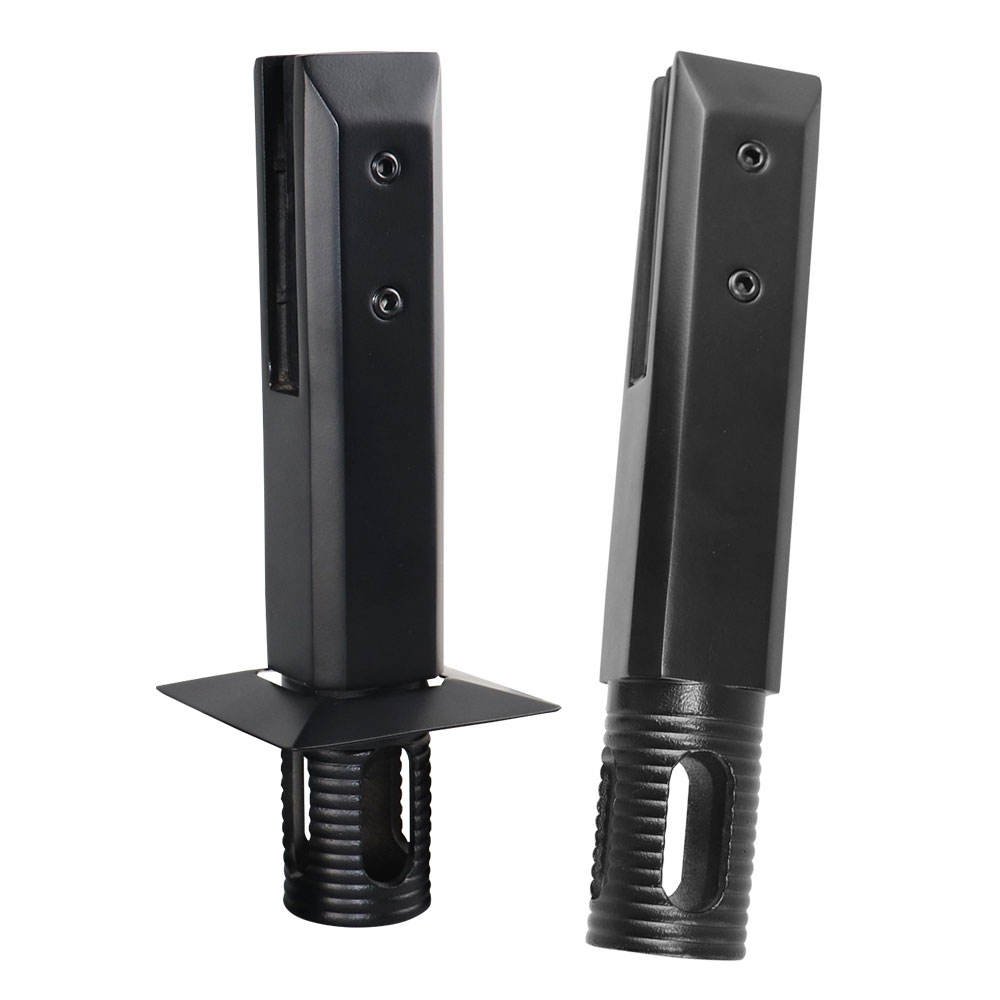
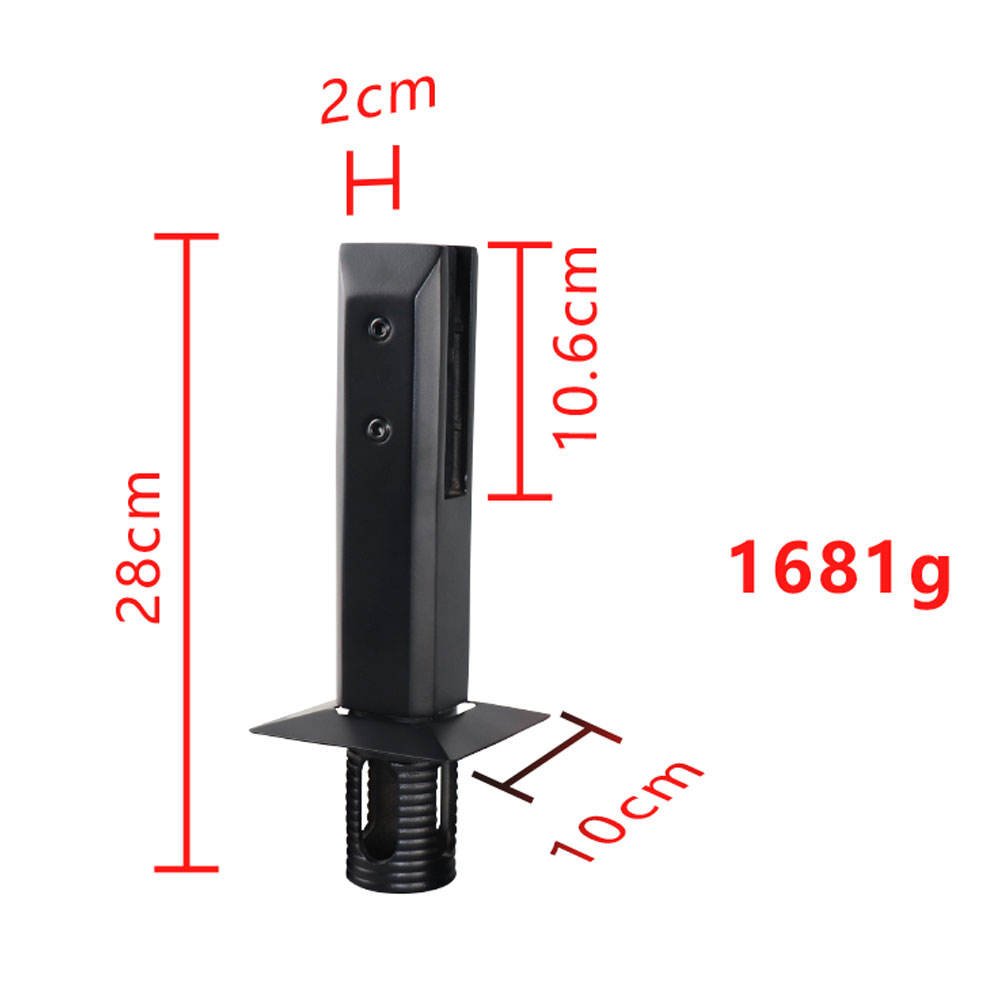
glass railing spigot, glass spigot, pool fence spigot, frameless glass spigot, glass balustrade spigot, stainless steel glass spigot, SS316 glass spigot, Duplex 2205 glass spigot, deck mount glass spigot, core drill glass spigot, side mount glass spigot, glass railing hardware, pool fence hardware, glass fence spigot, adjustable glass spigot, glass spigot buying guide, pool fence spigot buying guide, glass balustrade spigot spacing
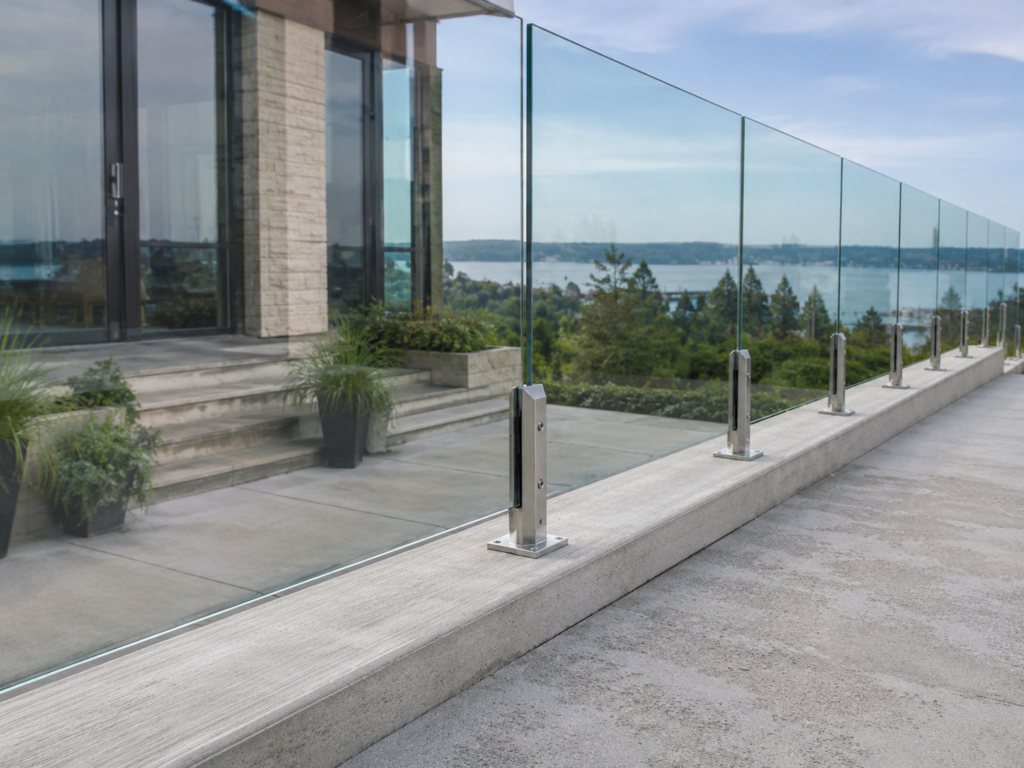
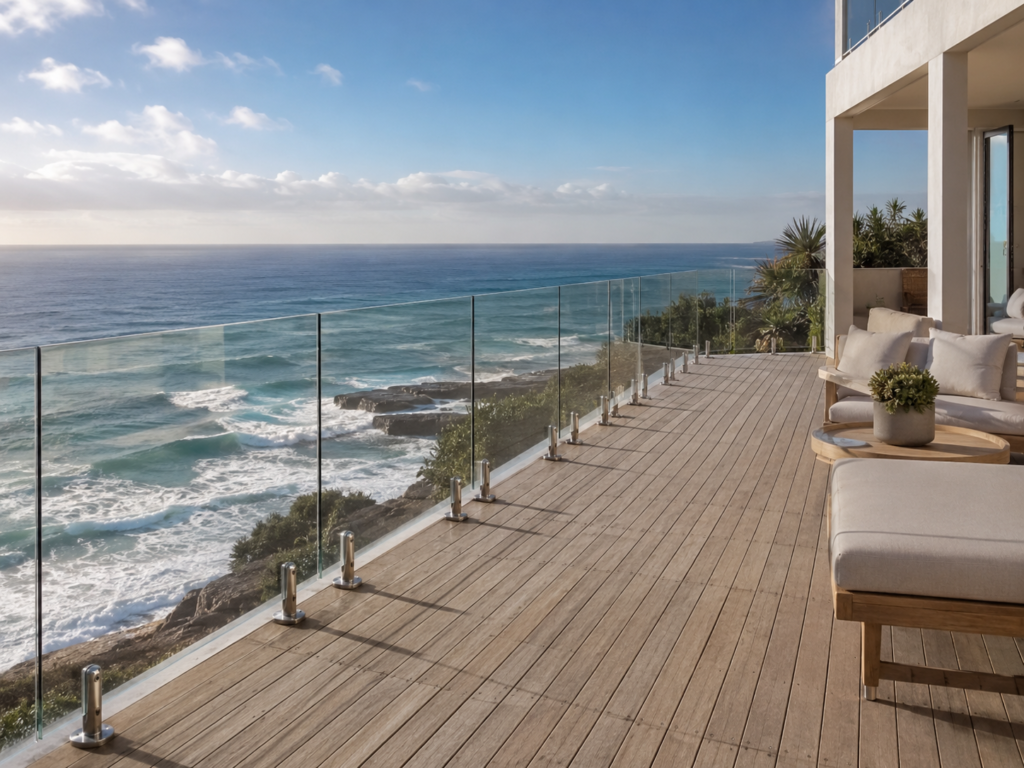
Frameless glass railings and pool fences are popular because they provide clear views, clean lines and a modern architectural appearance. In these systems, heavy tempered glass panels are often supported from the bottom by compact stainless steel fittings called spigots.
From the outside, a glass railing spigot may look like a simple metal clamp.
In reality, it is a structural fixing point.
The spigot connects the glass panel to the concrete slab, deck, balcony edge or side structure. It must resist glass weight, side pressure, wind load, user impact and long-term corrosion from rain, chlorine or salt air. For pool fences, balconies, stair railings and coastal hotel projects, choosing spigots only by shape and unit price is a risky procurement method.
A good buying decision starts with one question:
Can this spigot safely transfer the glass load into the real project structure and environment?
1. Why Glass Railing Spigots Are Structural Hardware
In a frameless glass railing system, there are no vertical posts between glass panels. The spigot becomes the connection between the glass and the structure below it.
A glass panel works like a cantilever. When wind, human pressure or accidental impact acts on the top edge of the glass, the force is transferred down to the base. The spigot, anchor bolts, grout, base plate and substrate must all resist this leverage.
This means the spigot is not only carrying dead weight. It also needs to resist lateral force.
At the base, the front side of the spigot may experience compression, while the rear anchors or embedded section may experience tension and pull-out force. If the spigot body is weak, the anchor method is poor, or the substrate is not strong enough, the system may loosen, tilt or lose alignment over time.
For project buyers, the correct question is not only “Is this spigot made of stainless steel?” but:
- Is the body strong enough?
- Is the material grade suitable for the environment?
- Is the mounting type correct for the substrate?
- Does the spigot match the glass thickness and panel size?
- Are drainage, anchors and corrosion details considered?
A stainless steel spigot that looks heavy in a photo may still perform poorly if it is matched with the wrong glass, weak floor or unsuitable environment.
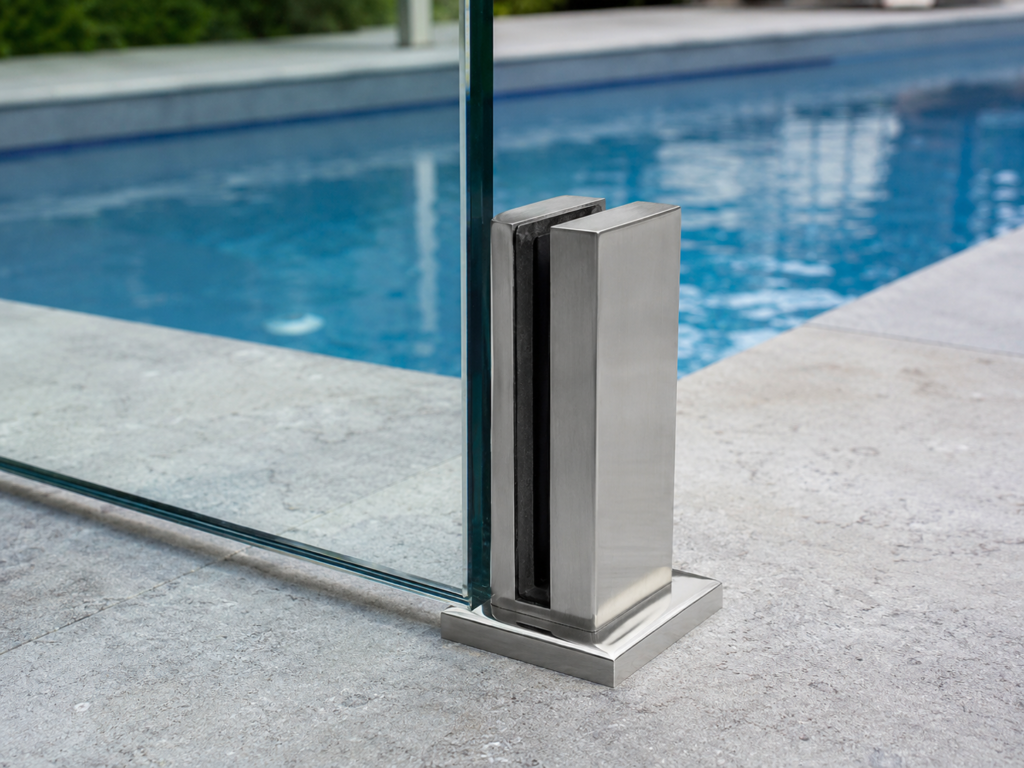
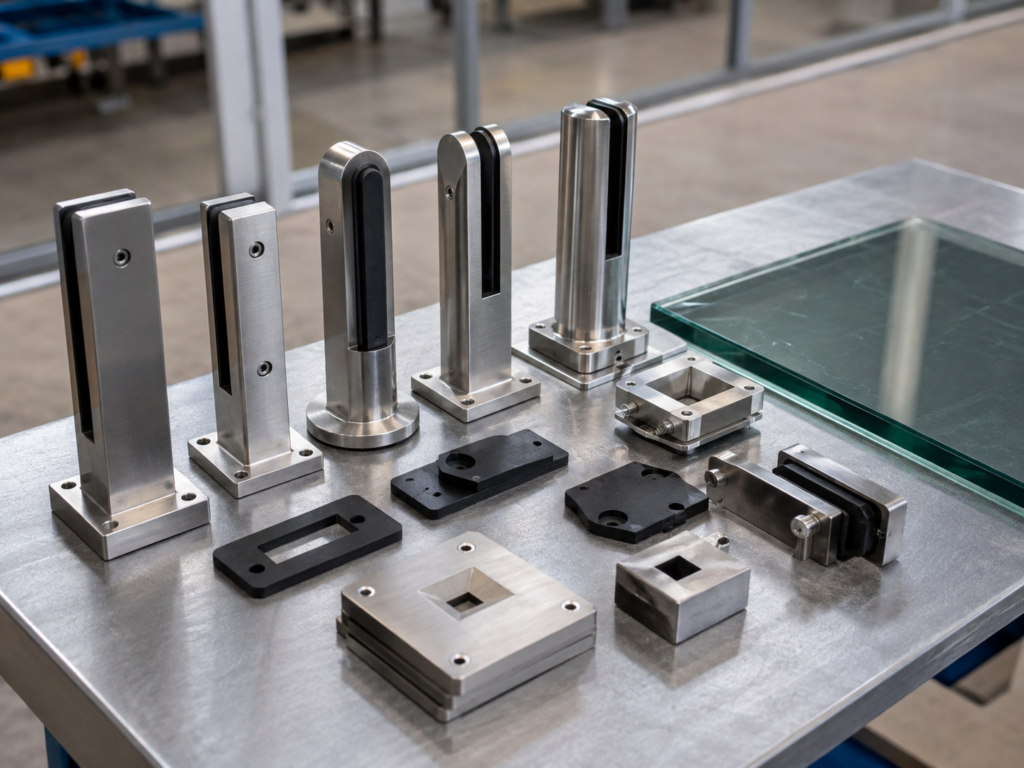
2. Main Types of Glass Spigots Buyers Should Know
Different project conditions require different spigot designs. The correct choice depends on how the spigot transfers load into the structure.
| Spigot Type | Typical Installation | Common Use | Buying Focus |
|---|---|---|---|
| Core-drill spigot | Embedded into concrete | Pool fences, high-end projects | Hole depth, grout, drainage and concrete strength |
| Deck-mount spigot | Bolted on finished surface | Concrete deck, balcony or terrace | Base plate, anchor bolts and waterproofing |
| Side-mount spigot | Fixed to vertical side face | Balcony edge, stair side, narrow deck | Side structure strength and alignment |
| Adjustable spigot | Allows glass position adjustment | Projects needing fine leveling | Adjustment range and locking method |
| Round or square spigot | Shape and design choice | Residential, hotel and commercial projects | Appearance, finish and cleaning |
A core-drill spigot gives a clean appearance because much of the fixing body is embedded into the concrete. A deck-mount spigot is easier to install on finished surfaces, but the anchor bolts and base plate must be suitable for the load. A side-mount spigot is useful when the walking surface needs to remain clear, but the vertical structure must be strong and straight enough.
Round and square spigots are mainly an architectural choice. Strength is determined more by material grade, body thickness, internal structure and mounting method than by external shape alone.
3. Material Selection: SS304, SS316 or Duplex 2205?
Material grade is one of the most important decisions when buying glass railing spigots.
SS304 stainless steel may be acceptable for indoor glass railing projects or dry interior areas where corrosion risk is low. However, SS304 is generally not recommended for exposed outdoor pool fences, wet terraces or coastal projects where rain, chlorine, pollution and salt air are present.
SS316 is usually the safer baseline for outdoor pool fence and balcony projects. Because SS316 contains molybdenum, it has better resistance to chloride corrosion than SS304. This makes it more suitable for wet areas, swimming pools, humid climates and general outdoor use.
For severe corrosion environments, Duplex 2205 may be considered. Duplex 2205 has higher chromium, molybdenum and nitrogen content, giving it stronger resistance to pitting corrosion. Its PREN value is significantly higher than SS316, and its yield strength is also much higher, which is useful for cantilevered glass systems exposed to strong wind or side load.
A practical material selection approach is:
- SS304: indoor or low-corrosion environments;
- SS316: outdoor pool fences, balconies, wet areas and general coastal exposure;
- Duplex 2205: severe coastal, saltwater pool, marine or high-chloride environments.
Stainless steel is corrosion-resistant, not corrosion-proof. Even SS316 may develop tea staining or surface marks if exposed to salt, chlorine, poor drainage or lack of cleaning for a long time. Material grade, polishing quality, passivation, drainage and maintenance all affect long-term performance.
For B2B orders, buyers should confirm the material grade before production. If the project requires SS316 or Duplex 2205, material confirmation or certificate requirements should be discussed before shipment.
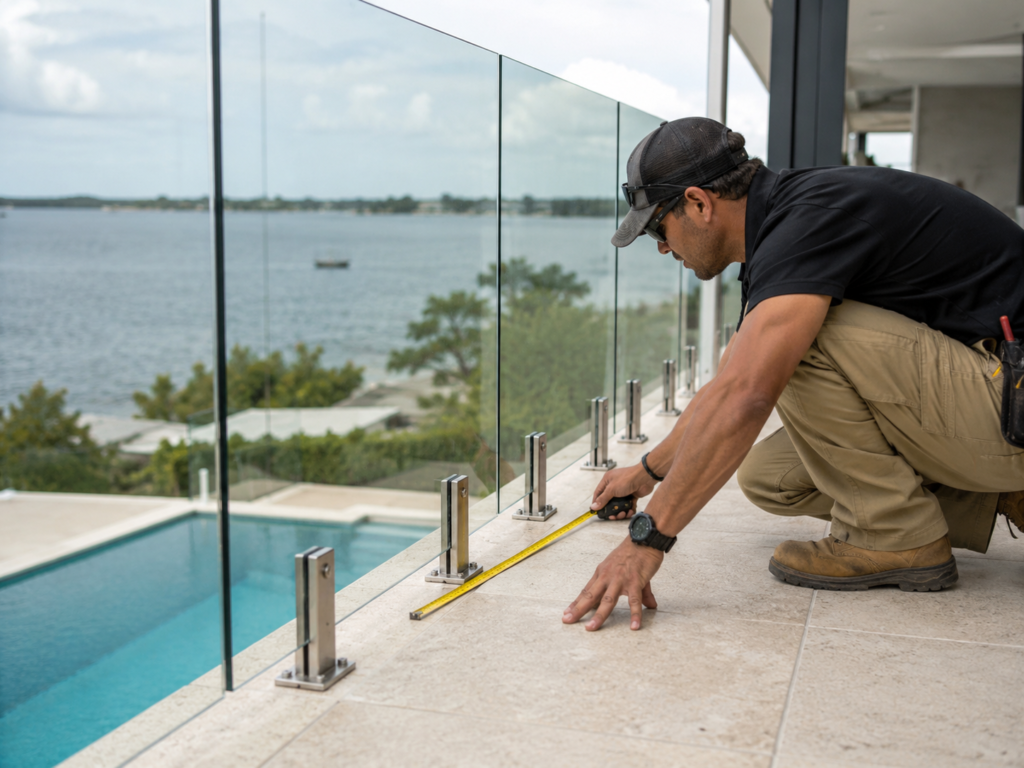
4. Glass Thickness, Friction Fit and Safety Pins
Glass thickness must match the spigot channel, gasket and clamping design.
Common glass thicknesses for railing and pool fence projects include 10mm, 12mm and 15mm. In many frameless pool fence and balcony railing projects, 12mm tempered glass is a common baseline. For larger panels, higher railings, high wind exposure or premium balcony projects, 15mm glass or 17.52mm laminated safety glass may be specified according to project requirements.
A practical glass weight calculation is:
Glass weight = 2.5kg per square meter per 1mm glass thickness
This means:
12mm glass weighs about 30kg/m².
For example, a 1.2m wide × 1.2m high panel in 12mm glass weighs approximately:
1.2 × 1.2 × 30 = 43.2kg
The spigot must hold this weight while also resisting side force. Taller glass panels create more leverage on the spigot when wind or human pressure acts at the top edge.
Most modern commercial spigots use a friction fit system. The glass panel sits inside a U-shaped channel, usually on a setting block. Internal gaskets, compression plates or nylon/rubber pads are tightened against the glass by grub screws or clamping bolts.
This design has an important advantage: the glass usually does not need pre-drilled holes. This reduces glass fabrication cost and allows small alignment adjustments on site.
However, friction fit does not mean unlimited holding power. The gasket material, clamping plate, screw quality, glass thickness and installation torque all matter. For high-rise balconies, extreme wind zones or special safety requirements, some projects may require safety pins or drilled glass holes to prevent upward glass movement. This should be confirmed according to the project requirement before glass production.
5. Spigot Spacing and Quantity Calculation
Many buyers ask, “How many spigots do I need?”
In many standard frameless glass railing layouts, one rigid glass panel is supported by two spigots. This is common because two points can support the panel without creating unnecessary stress from uneven floor levels.
Using three spigots under one rigid glass panel is not always better. If the finished floor is uneven, one spigot may sit slightly higher or lower than the others. Even a 1mm height difference can create a pressure point or alignment stress. For extra-wide spans, splitting the span into smaller glass panels is often safer than forcing three spigots under one panel.
For many standard 12mm glass panels at around 1.2m height, a common panel width reference may fall around 1.5m to 1.8m, depending on project load and local requirement. This is not a universal rule, but it is a useful reference for early discussion.
A common positioning method is to place each spigot about 25% inward from the glass panel edge. For example, on a 1.6m wide panel, each spigot may be positioned about 400mm from the left and right edges, leaving about 800mm between the two spigots.
Final spacing should always be checked according to glass size, glass thickness, mounting method, wind exposure, substrate condition and safety requirement.
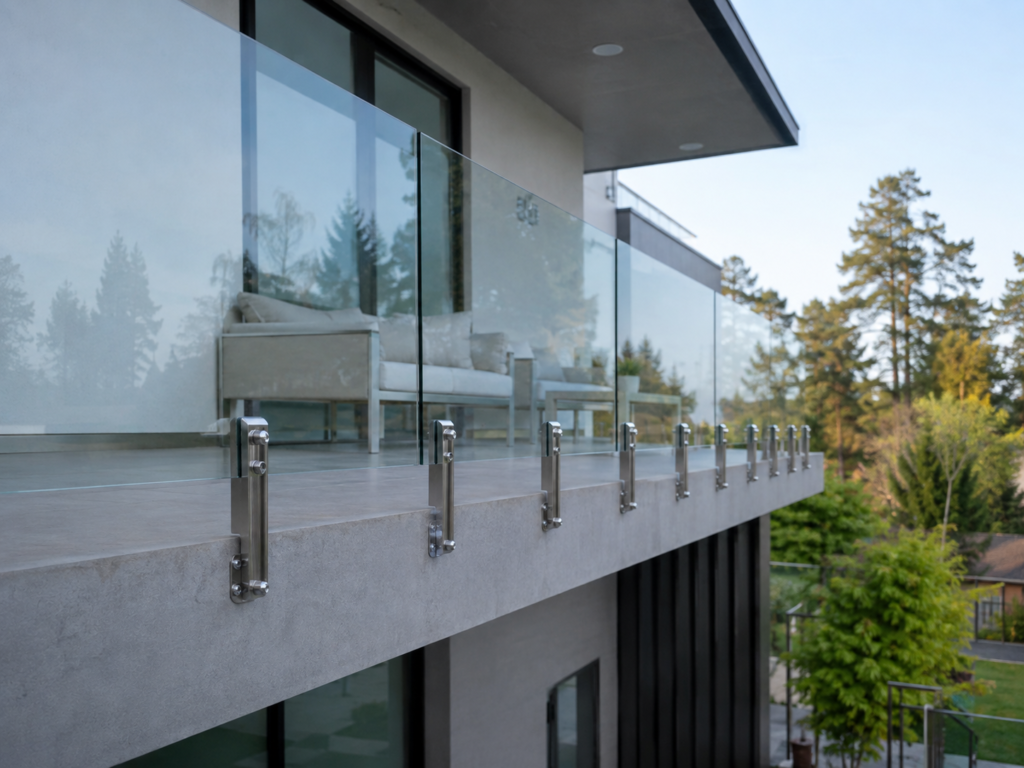
Spigot spacing is not only a purchasing quantity issue. It is a structural design issue.
6. Substrate and Mounting Base: Concrete, Timber or Steel
The spigot is only as strong as the substrate and anchors below it.
Concrete is one of the most common substrates for glass spigot installation. For core-drill spigots, the drilled hole depth, grout quality, concrete strength and drainage must be considered. Non-shrink grout is often used to set embedded spigots firmly inside the concrete.
For deck-mount spigots, the base plate is fixed to the surface using anchors. On concrete, chemical anchors or suitable mechanical anchors may be used depending on the project. Anchor depth, edge distance, hole quality and waterproofing all affect the final installation.
Tiles, stone finishes and pavers are not structural substrates by themselves. A deck-mount spigot should not be fixed only into tiles or loose pavers. The anchors must connect to the structural layer below the finish.
Timber decks require special attention. A spigot should not be fixed only to thin decking boards. The structure below should include proper blocking, beams or reinforced fixing points. Without this, the spigot may loosen under repeated side load.
Steel structures can also support spigots, but the plate thickness, bolt type, hole position and corrosion protection must be coordinated. For side-mount spigots, the vertical face must be strong enough and straight enough to keep all glass panels aligned.
A strong Duplex 2205 or SS316 spigot cannot compensate for a weak base structure.
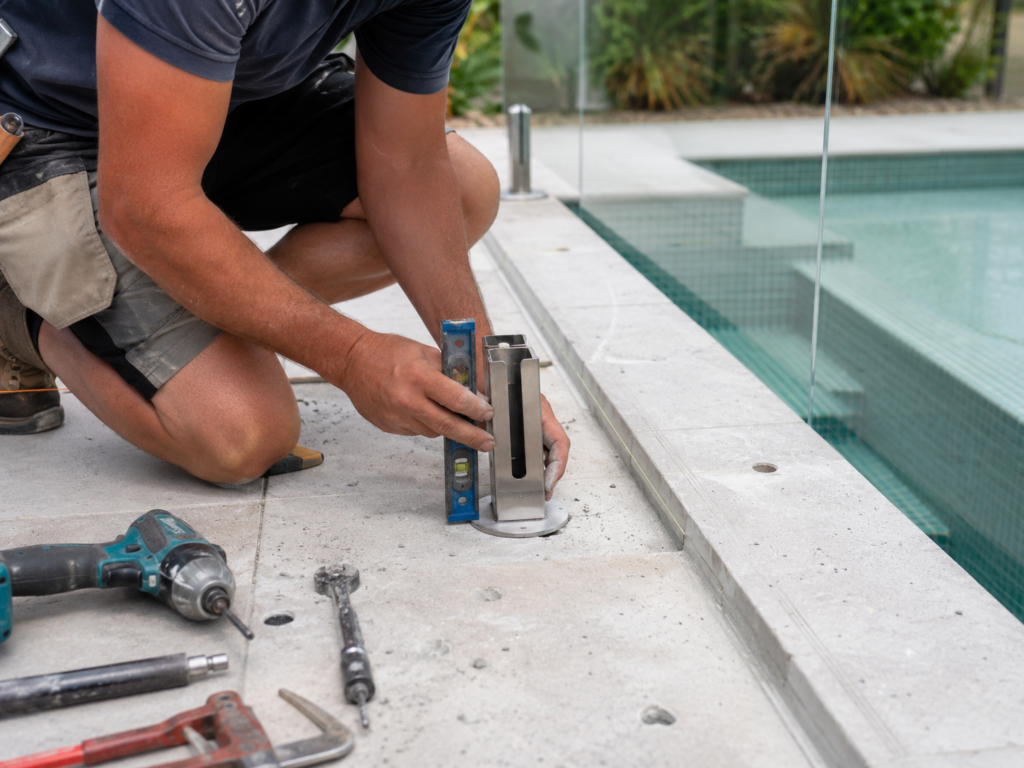
7. Drainage, Corrosion and Surface Finish
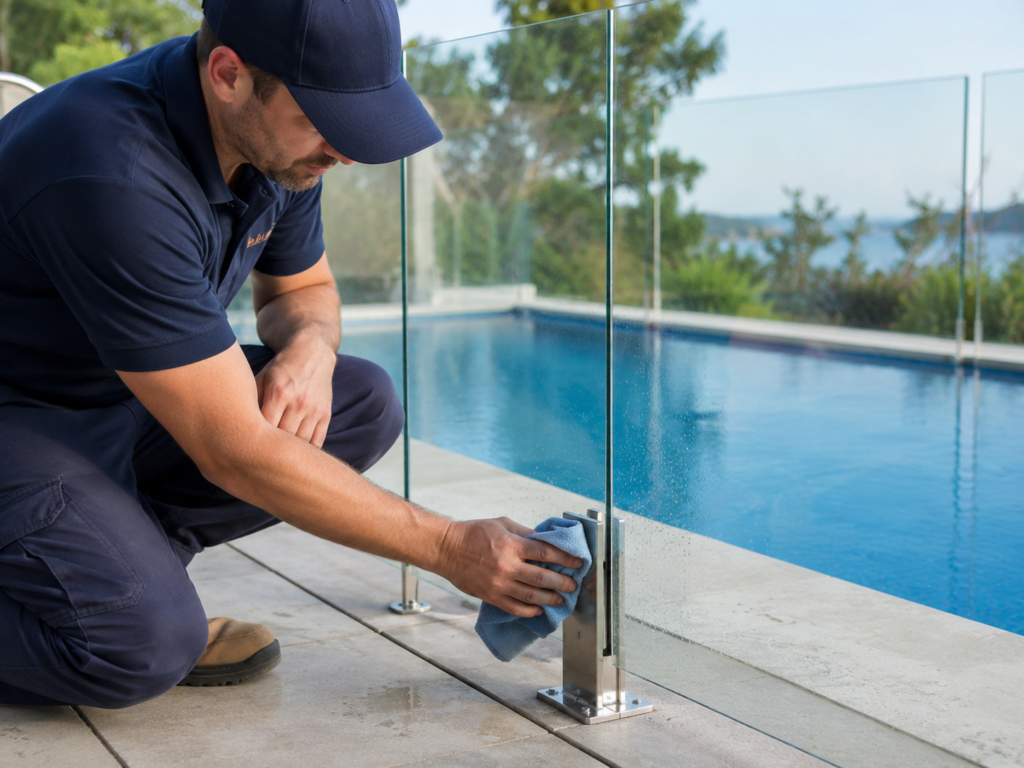
Drainage is often ignored when buying glass railing spigots, but it has a direct effect on long-term corrosion and maintenance.
In core-drill installations, water can collect inside the drilled hole if drainage is not considered. Standing water around the embedded part may increase corrosion risk and stain the surrounding floor finish.
In deck-mount installations, water may stay under the base plate if the surface is uneven or poorly sealed. In side-mount installations, water may enter bolt holes or side structures if waterproofing is not handled correctly.
Pool fence projects face chlorine exposure. Coastal projects face salt air. Outdoor balconies face rain, dust and cleaning chemicals. These are normal project conditions, not rare exceptions.
Surface finish also matters.
Brushed stainless steel is common because it hides small scratches better than mirror polish. Mirror polished stainless steel gives a brighter premium appearance, but water marks and fingerprints may be more visible. Matte black spigots are popular in modern architecture, but buyers should confirm the coating process, surface preparation and outdoor suitability.
Poor coating over low-grade metal may peel or chip faster in poolside or coastal environments. For project orders, finish consistency is important, especially for matte black, gold, bronze or custom finishes.
The finish should match both the design and the environment.
8. Common Mistakes When Buying Glass Spigots
The first mistake is choosing SS304 for outdoor pool fence projects without checking corrosion risk. SS304 may be acceptable indoors, but poolside chlorine, rain and coastal air usually require better corrosion resistance.
The second mistake is buying spigots without confirming glass thickness. A spigot designed for 10mm glass may not safely hold 12mm, 15mm or 17.52mm laminated glass without the correct channel and gasket.
The third mistake is assuming that more spigots always means more safety. Three spigots under one rigid panel may create alignment stress if the floor is uneven. Panel design and spigot spacing should be reviewed together.
The fourth mistake is fixing deck-mount spigots directly onto weak tiles or pavers. Finished surfaces may look strong, but they are not always structural.
The fifth mistake is forgetting drainage in core-drill installations. Water trapped around the embedded part can increase corrosion and staining.
The sixth mistake is mixing different finishes or suppliers in the same project. Small differences in brushed direction, polish level or black coating can become obvious after installation.
Most spigot problems come from mismatch: wrong material, wrong glass thickness, weak substrate, poor drainage or unclear project requirements.
9. What to Confirm Before Ordering Glass Railing Spigots
Before ordering glass railing spigots, buyers should provide project information instead of asking only for the lowest unit price.
The supplier should know whether the project is a pool fence, balcony railing, staircase, terrace, hotel resort, villa or commercial building. The installation environment should also be confirmed: indoor, outdoor, poolside, coastal, high-humidity or high-wind.
The key details include glass thickness, panel width and height, mounting method, substrate type, material grade, finish, quantity and whether the project is a new installation or replacement.
If drawings or site photos are available, they are very helpful. Photos of the floor, deck, balcony edge or side structure can help the supplier judge whether core-drill, deck-mount or side-mount spigots are more suitable.
For distributor orders, packaging, material grade, finish consistency and mixed hardware requirements should also be confirmed before production.
10. How Metech Supports Glass Spigot and Railing Hardware Projects
Metech Hardware supplies glass railing spigots and related architectural glass hardware for pool fences, balconies, stair railings, terraces and commercial projects.
We can support different spigot types, including deck-mount, core-drill, side-mount and adjustable designs. Material options may include SS304, SS316 and Duplex 2205 according to the project environment and buyer requirements.
For project buyers, we can help review glass thickness, panel size, mounting method, material grade, finish and quantity before quotation. For distributors, we can support mixed orders that combine glass spigots with glass clamps, standoffs, base shoe systems, shower hinges, patch fittings, floor springs, pull handles and door locks.
To request a quotation, send the project type, glass thickness, panel size, installation method, substrate condition, material requirement, finish, quantity and destination market. This helps us recommend a suitable spigot option instead of selecting only by appearance.
FAQ
What is the best material for outdoor glass spigots?
For outdoor pool fence and balcony projects, SS316 is usually a safer baseline than SS304. For coastal, saltwater pool or high-chloride environments, Duplex 2205 may be considered because it has higher corrosion resistance and higher yield strength.
Can I use SS304 spigots for pool fences?
SS304 may be acceptable for indoor or low-corrosion environments, but outdoor pool fences are exposed to water, chlorine and cleaning chemicals. For most outdoor pool fence projects, SS316 is usually preferred.
How many spigots do I need per glass panel?
Many standard glass panels use two spigots. The final quantity depends on glass width, height, thickness, mounting type, substrate condition and project load. Extra-wide panels should be reviewed carefully instead of simply adding more spigots.
Can I use three spigots on one extra-wide glass panel?
It is not always recommended. If one spigot sits even 1mm higher or lower than the others, it may create alignment stress on a rigid glass panel. For extra-wide spans, splitting the glass into smaller panels is often a safer design approach.
What glass thickness is commonly used with spigots?
Common glass thicknesses include 10mm, 12mm, 15mm and 17.52mm laminated glass. For many pool fence and glass railing projects, 12mm tempered glass is common, but the final thickness should follow the project requirement.
Are square spigots stronger than round spigots?
Not necessarily. Strength depends on material grade, body thickness, internal structure, casting or machining quality and mounting method. Round and square spigots can both be strong when properly engineered.
Are deck-mount spigots suitable for tiles?
Deck-mount spigots should not be fixed only into tiles or loose pavers. The anchors must connect to the structural layer below the finish, such as concrete, reinforced timber or steel.
Do pool spigots need earthing or grounding?
In some jurisdictions, metal fixtures close to a swimming pool may need electrical bonding or grounding. Buyers should check local electrical safety requirements before installation.
Do stainless steel spigots need maintenance?
Yes. Stainless steel is corrosion-resistant, not corrosion-proof. Outdoor, poolside and coastal installations should be cleaned regularly to reduce salt, chlorine and dirt buildup.