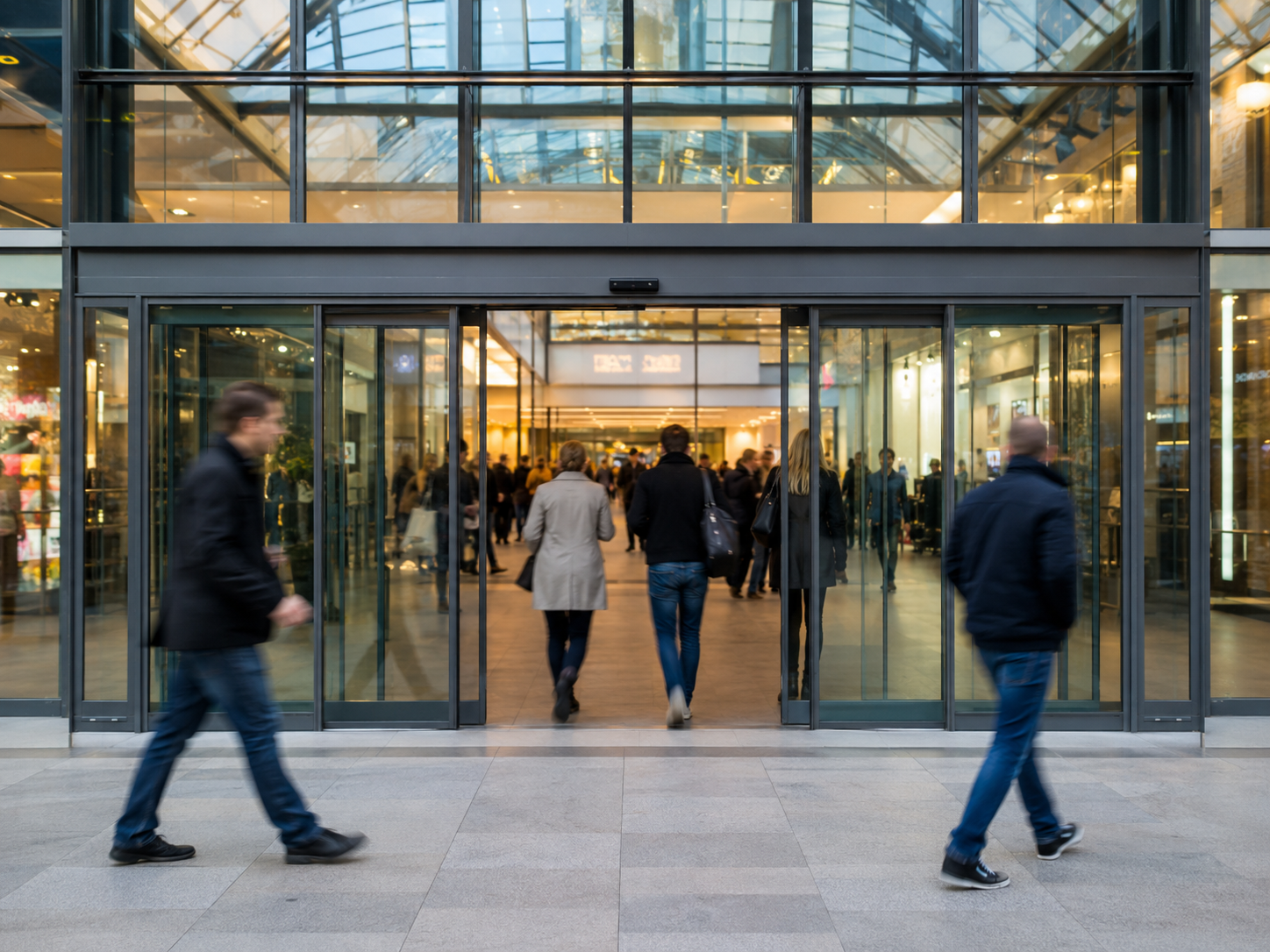
Automatic sliding doors are commonly used in retail storefronts, shopping malls, hotels, clinics and commercial entrances. For these projects, the reason is usually practical: the entrance needs to handle frequent traffic without asking every customer to push or pull a heavy glass door.
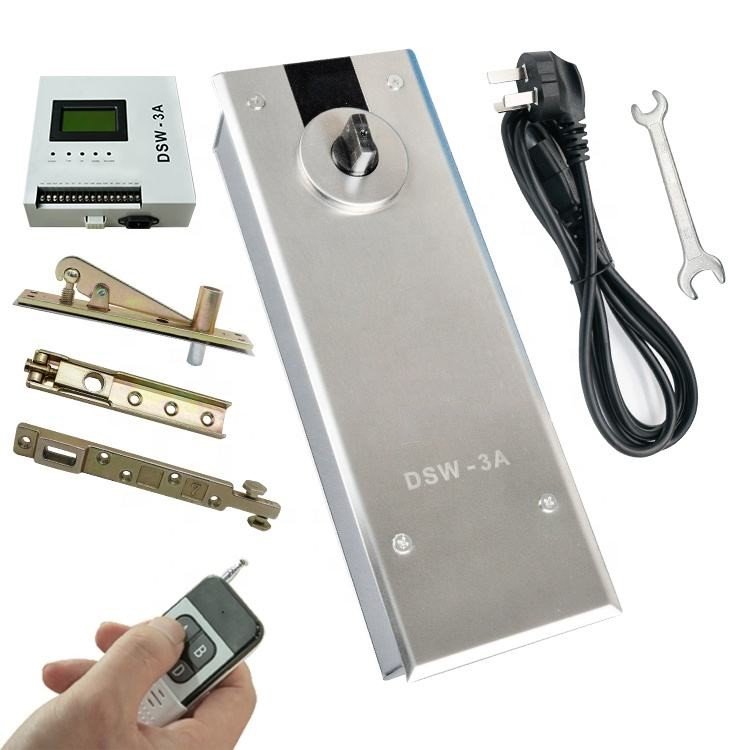
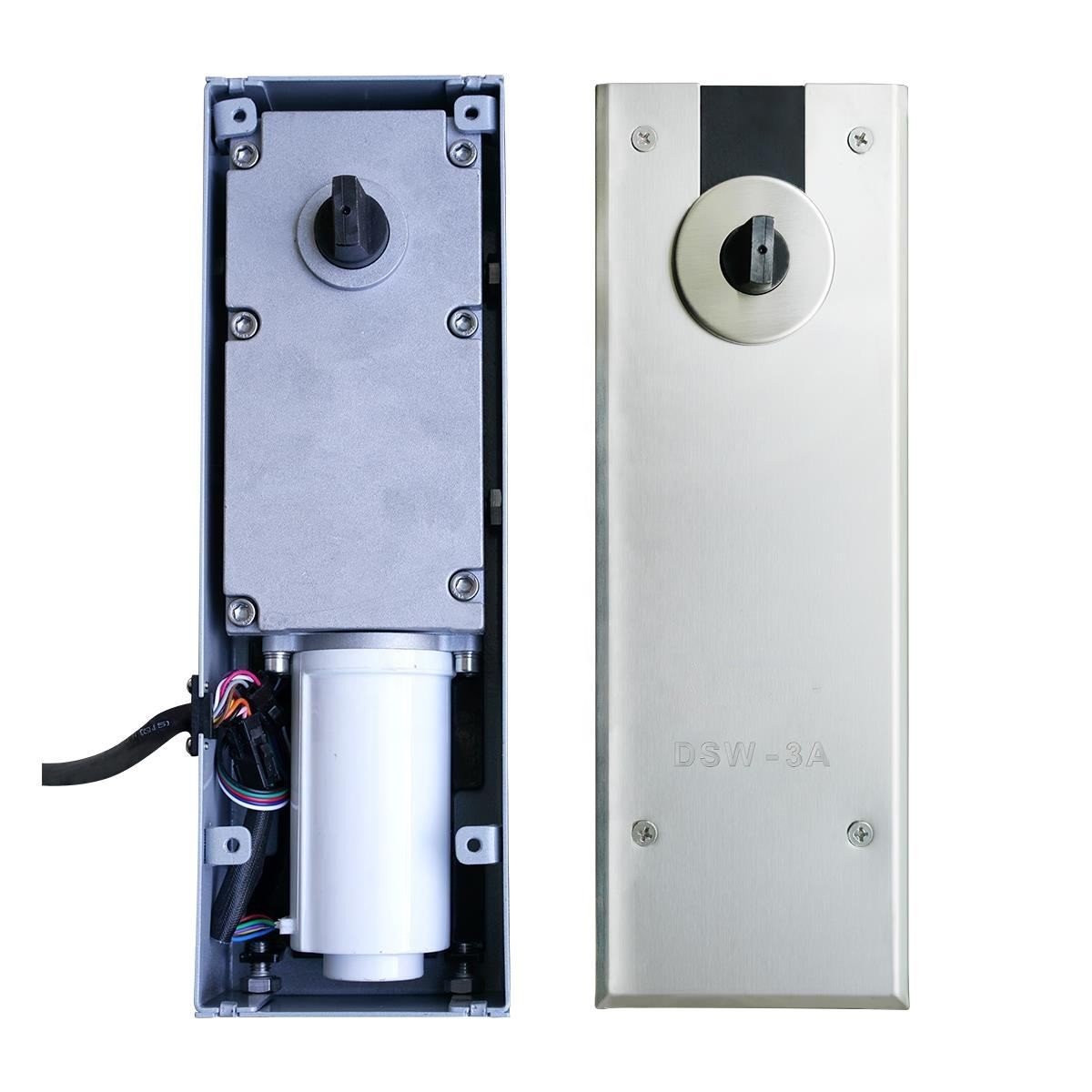
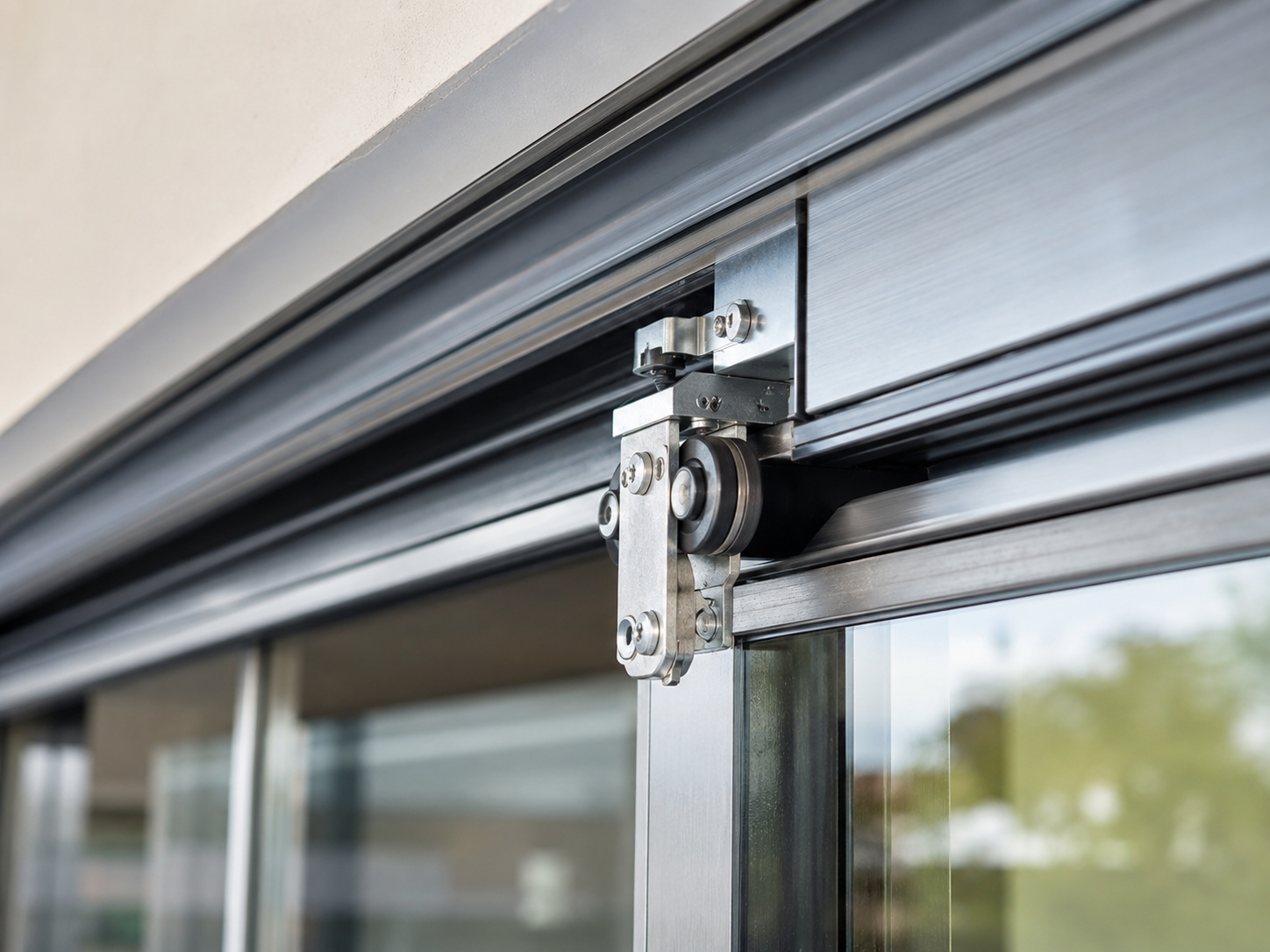
But an automatic sliding entrance is not just an operator box installed above the opening. For a glass storefront, long-term performance depends on the full hardware setup: glass panel weight, sliding track, roller system, bottom guide, lock position, fixed glass panels, handles and related fittings.
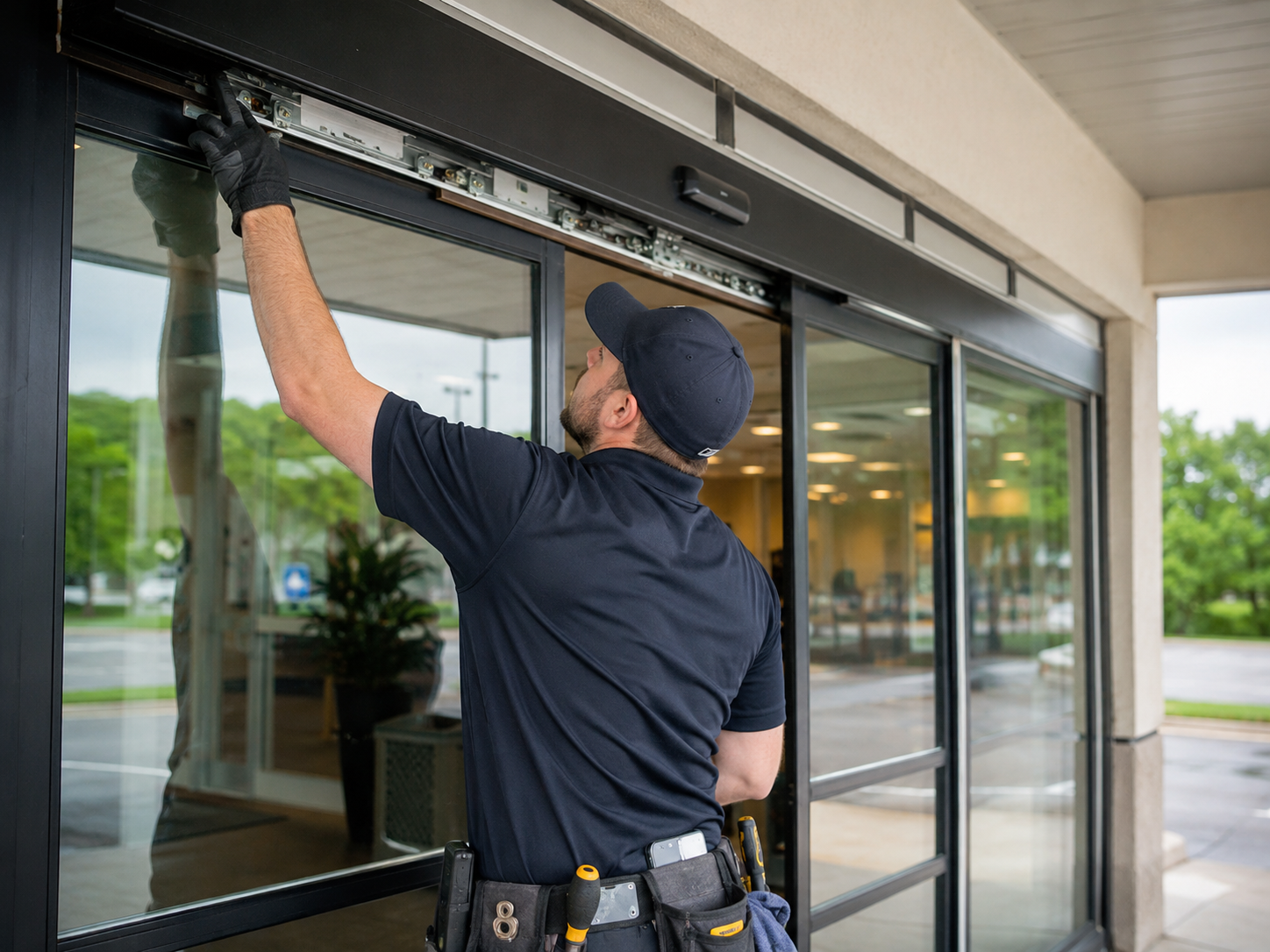
Most problems do not appear during the first installation test. They appear after months of daily use. The door starts making noise. The moving glass panel shakes slightly during travel. The lock no longer lines up cleanly. The bottom guide becomes loose. In many cases, the operator is blamed first, but the real cause is poor hardware matching around the glass door system.
For retail and commercial projects, the hardware should be selected based on door size, glass thickness, panel weight, traffic level and locking requirements. A door that opens and closes during testing is not enough. The real question is whether the entrance can stay stable under daily commercial use.
Where Automatic Sliding Doors Make Sense
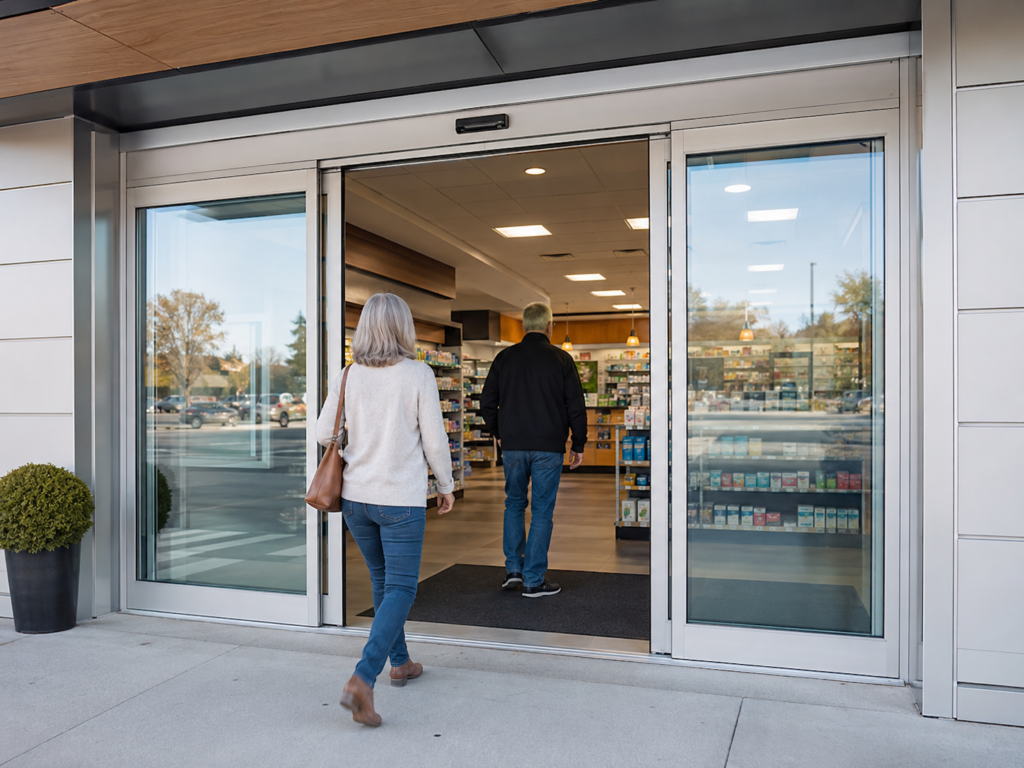
Automatic sliding doors are suitable for commercial entrances where traffic flow, access convenience and indoor comfort matter. Common applications include:
- Retail storefronts and shopfront entrances
- Shopping malls and commercial complexes
- Hotel and serviced apartment lobbies
- Clinics, pharmacies and healthcare facilities
- Office building entrances
- Showrooms and exhibition spaces
- Convenience stores and small supermarkets
For a small boutique shop with low daily traffic, a manual glass door with a suitable hydraulic door closer may still be more practical. It is easier to install, easier to maintain and often enough for the actual usage level.
Automatic sliding doors make more sense when the entrance is used many times per day, when customers often carry bags or carts, or when the building needs better air-conditioning control. This is common in Southeast Asia and the Middle East, where retail spaces, hotels and clinics often depend heavily on indoor cooling. If the door does not close accurately or stays open too long, the entrance can affect comfort and energy loss.
Do Not Select the Operator Alone
One common mistake is choosing the automatic door operator first and checking the glass hardware later. This can create problems on site.
The entrance should be checked as one working system, not as separate parts.
| Hardware / Component | What it affects |
|---|---|
| Automatic door operator | Opening and closing movement |
| Sliding track and rollers | Smooth movement and load support |
| Glass panel | Door weight, safety and stability |
| Bottom guide / floor guide | Panel alignment during movement |
| Door lock | After-hours security and closing accuracy |
| Pull handle or emergency handle | Manual operation when needed |
| Fixed glass panels | Entrance structure and side support |
| Sensors and safety accessories | User detection and operation safety |
| Finish and material | Appearance and corrosion resistance |
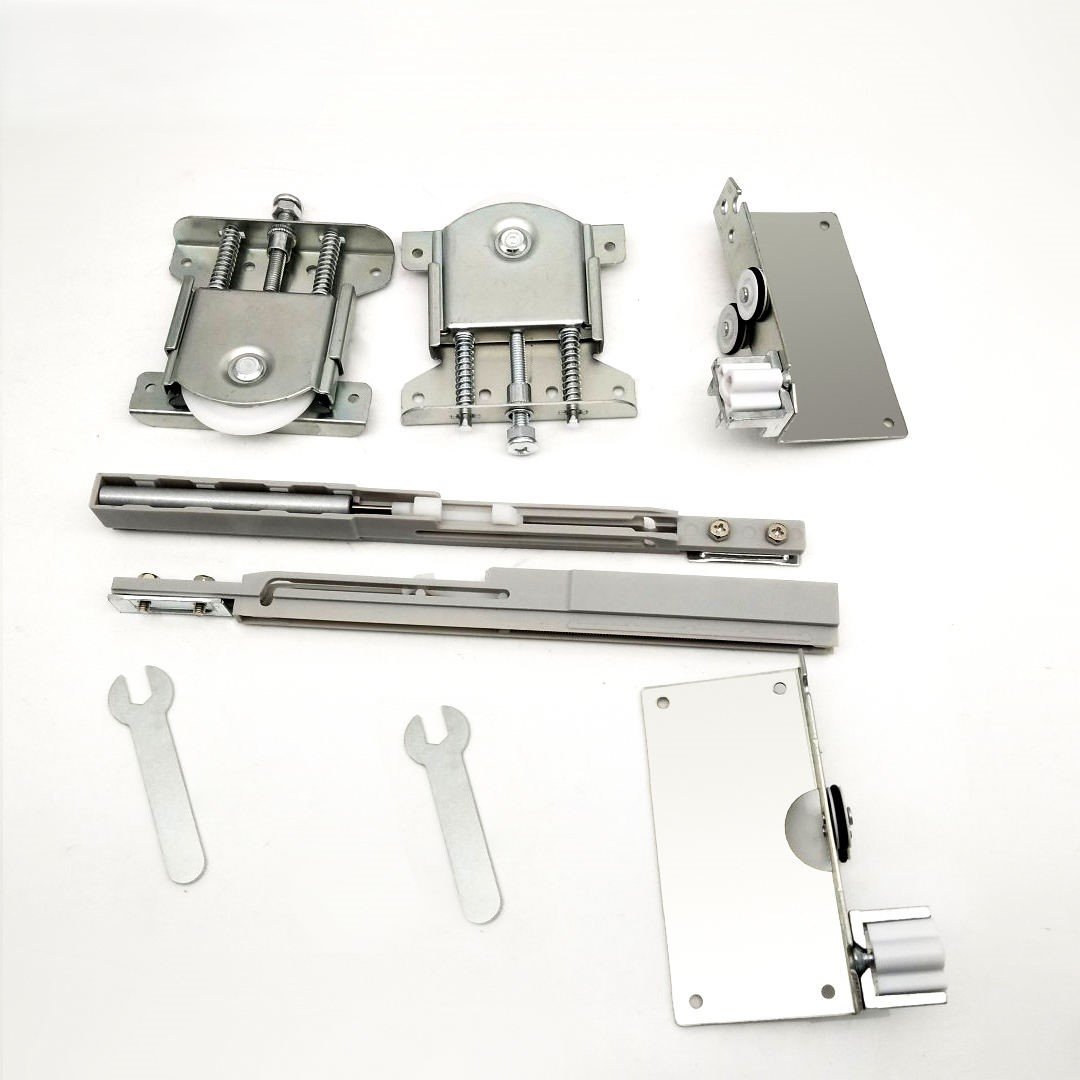
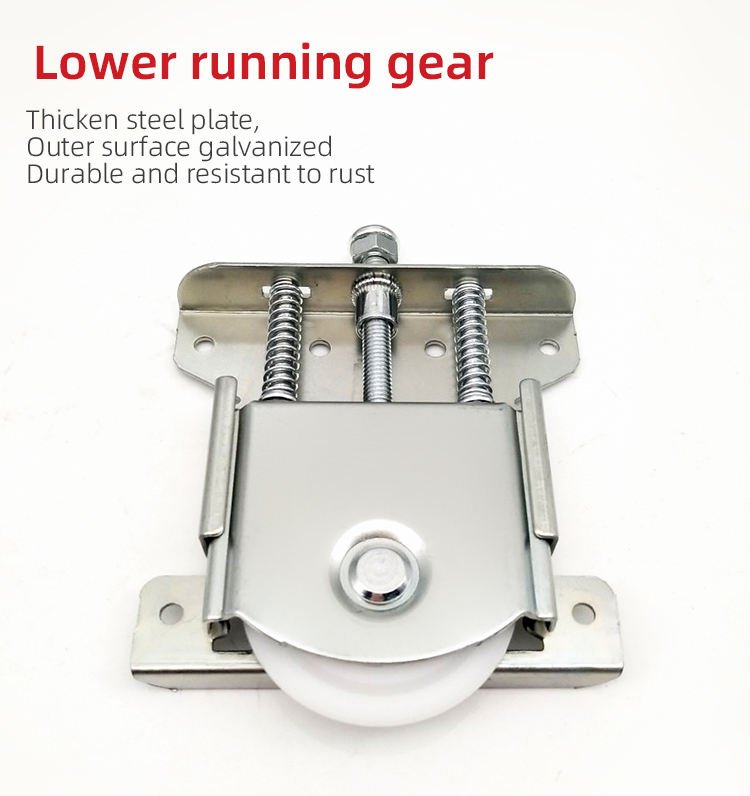
The operator controls the movement, but the track, rollers and guide carry the physical work. If the roller system is too weak, or if the bottom guide cannot keep the glass panel aligned, the door may still move, but it will not stay smooth for long.
For glass doors, weight is the first number to check. As a rough reference, 10mm tempered glass weighs about 25 kg per square meter, and 12mm tempered glass weighs about 30 kg per square meter.
For example, a 1.0m × 2.4m door panel made from 10mm tempered glass is already about 60kg before adding handles, locks or fittings. If the panel is wider, taller or laminated, the weight increases quickly.
For busy commercial entrances, it is not a good idea to select hardware exactly at its maximum rated load. Leaving about 20–30% load margin is safer for long-term use, especially where the door operates many times per day.
Key Details Buyers Should Confirm Before Ordering
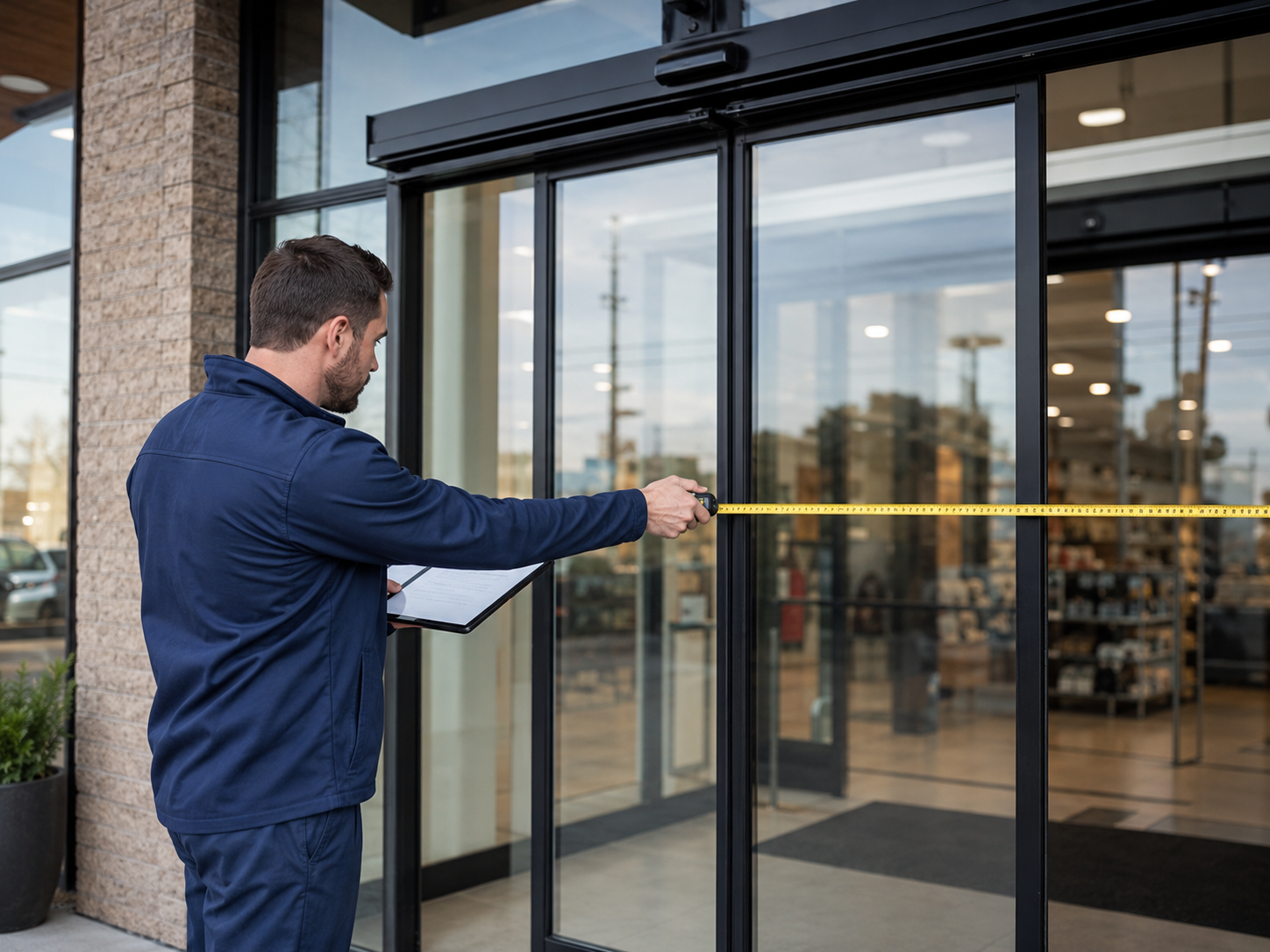
Before choosing automatic sliding door hardware, the buyer or contractor should confirm the basic project details. Without these details, a quotation is only a rough estimate.
Important information includes:
- Clear opening width
- Door height
- Glass thickness
- Estimated glass panel weight
- Single sliding or bi-parting sliding layout
- Indoor or exterior installation
- Daily traffic level
- Locking method
- Finish requirement
- Frame or frameless design
- Power and sensor requirements
A small retail entrance and a hotel lobby entrance may both use automatic sliding glass doors, but the hardware requirement is not the same. A hotel or mall entrance usually needs stronger sliding hardware, better alignment and easier maintenance access because the door works for long hours every day.
For exterior storefronts, the hardware also needs to handle dust, humidity and temperature changes. In coastal or humid locations, stainless steel grade and surface finish should be checked before ordering, especially for visible locks, handles and fittings.
Common Site Problems Caused by Poor Hardware Matching
A well-matched automatic sliding door should open smoothly, close accurately and stay stable during daily use. When the hardware is not matched correctly, several problems are common.
The door becomes noisy after use
Noise often comes from poor rollers, weak track support, loose fittings or panel vibration. It may not be obvious during installation, but it becomes clear after repeated opening cycles.
The glass panel does not stay aligned
If the bottom guide is too weak or has too much clearance, the moving glass panel may sway during operation. This can affect closing accuracy and may cause contact with nearby fixed panels.
The lock does not line up cleanly
Many storefronts need after-hours locking. If the sliding panel does not return to the correct position, the lock becomes difficult to use. This is often a tracking and alignment issue, not only a lock problem.
The entrance needs frequent adjustment
If the hardware has little load margin, rollers and guide parts may wear faster. For commercial doors, repeated adjustment means service cost, business interruption and customer complaints.
The finish does not suit the environment
In humid or coastal locations, low-grade finishes may discolor or corrode faster. Visible parts should be selected according to the actual site condition, not only the catalog photo.
Balancing Access and Security
A retail storefront has two different needs. During business hours, the entrance should allow easy movement. After closing, it must lock securely.
For this reason, the sliding hardware, lock and fixed glass layout should be checked together. The lock position must match the moving panel. The guide must keep the panel stable. The closing position must be accurate enough for daily locking.
For some projects, a mechanical lock is enough. For hotels, offices or higher-security entrances, the buyer may need access control or electric locking. These requirements should be discussed before ordering because the door layout, lock type and wiring plan may affect each other.
How Metech Supports Storefront Automatic Sliding Door Projects
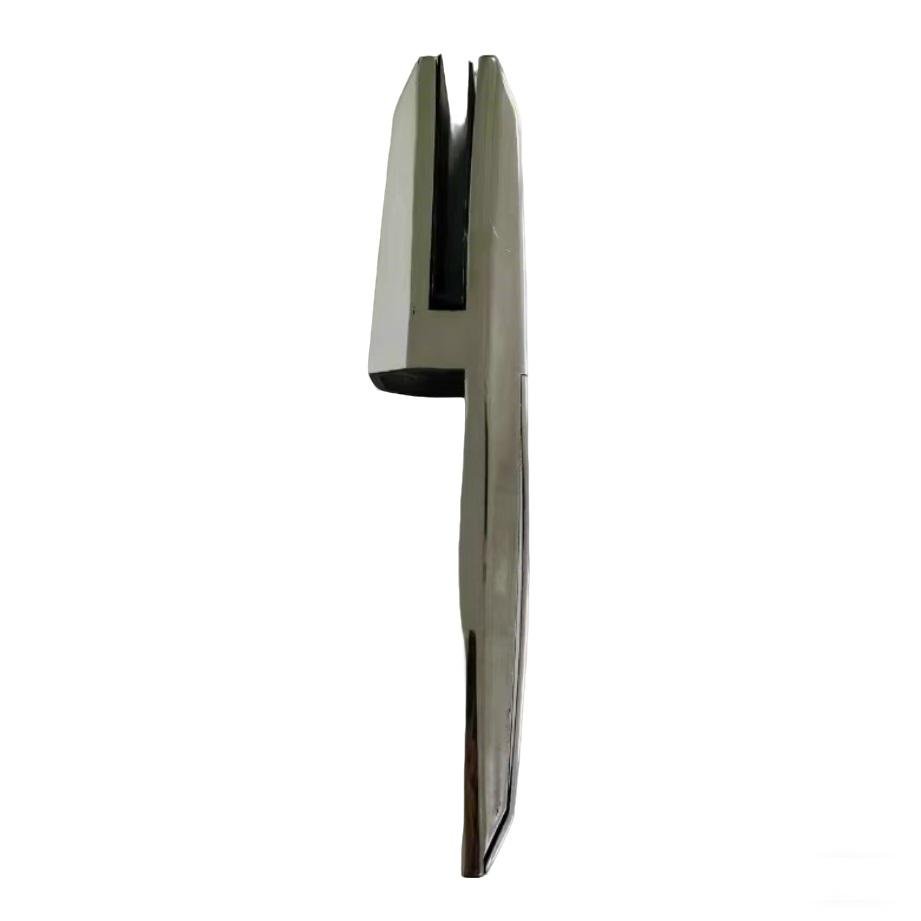
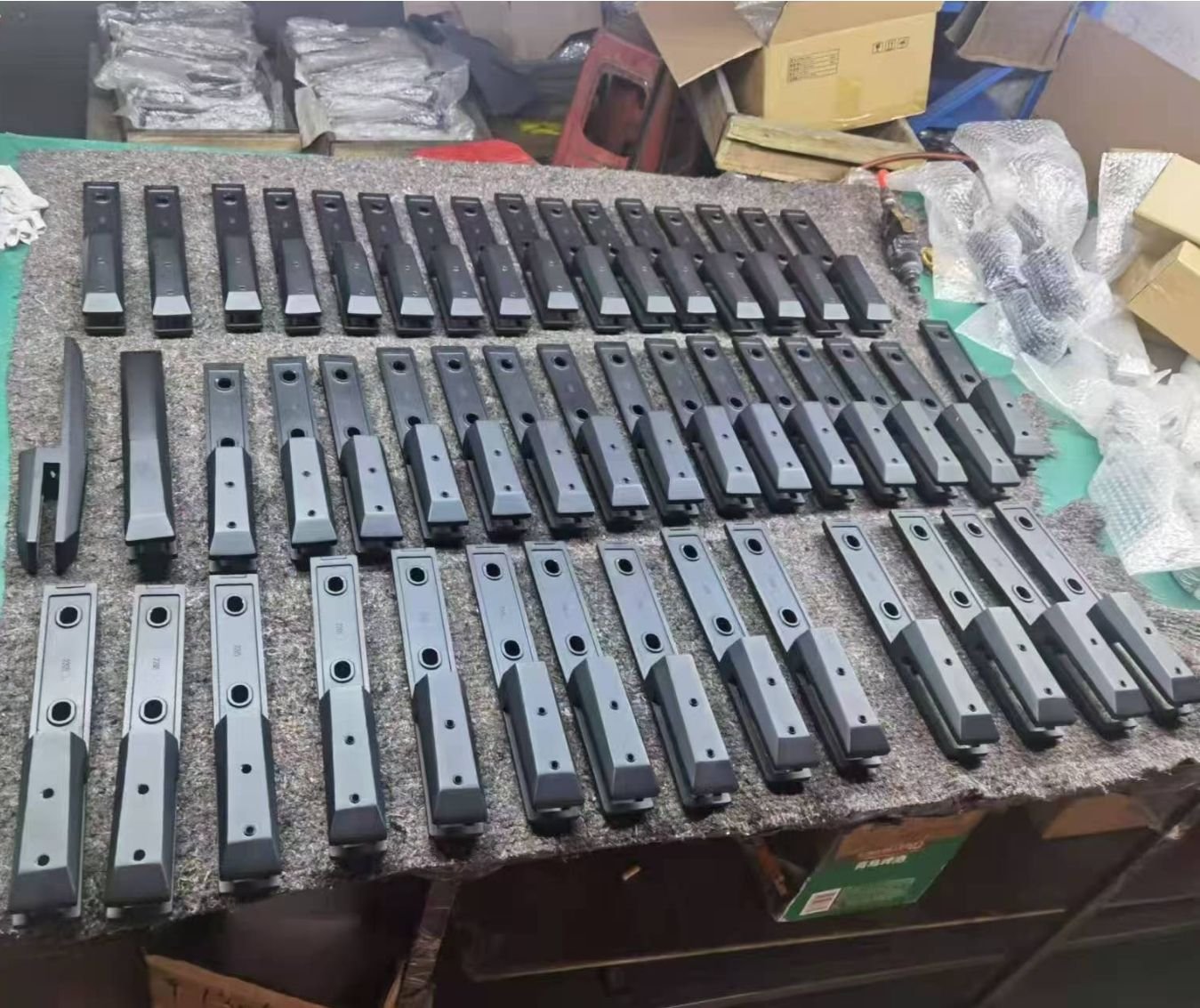
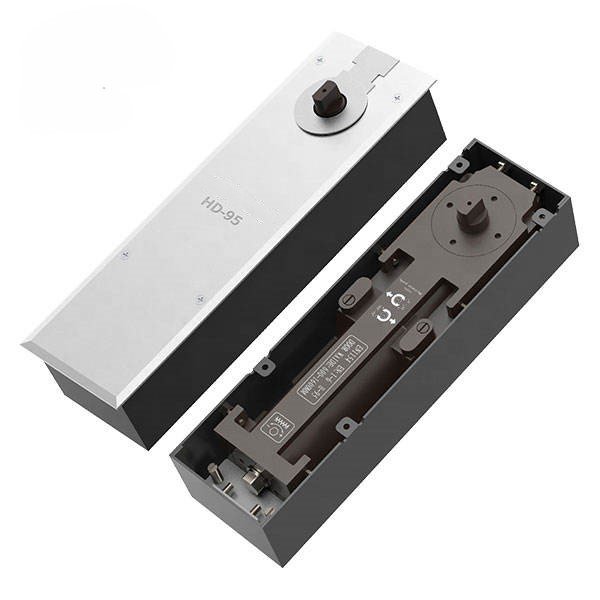
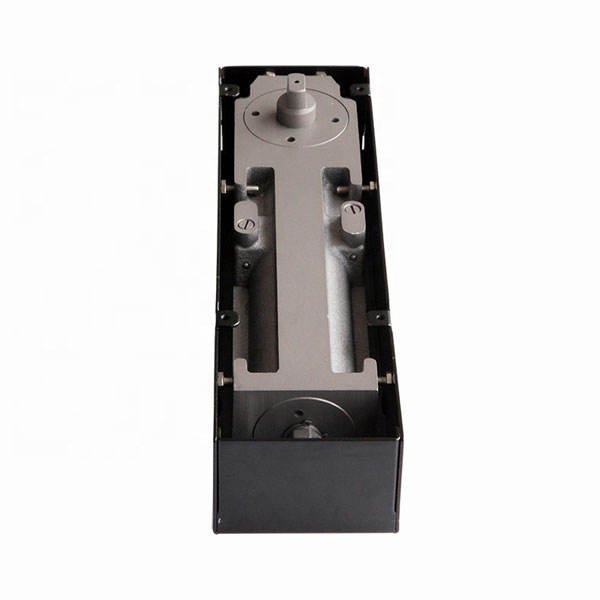
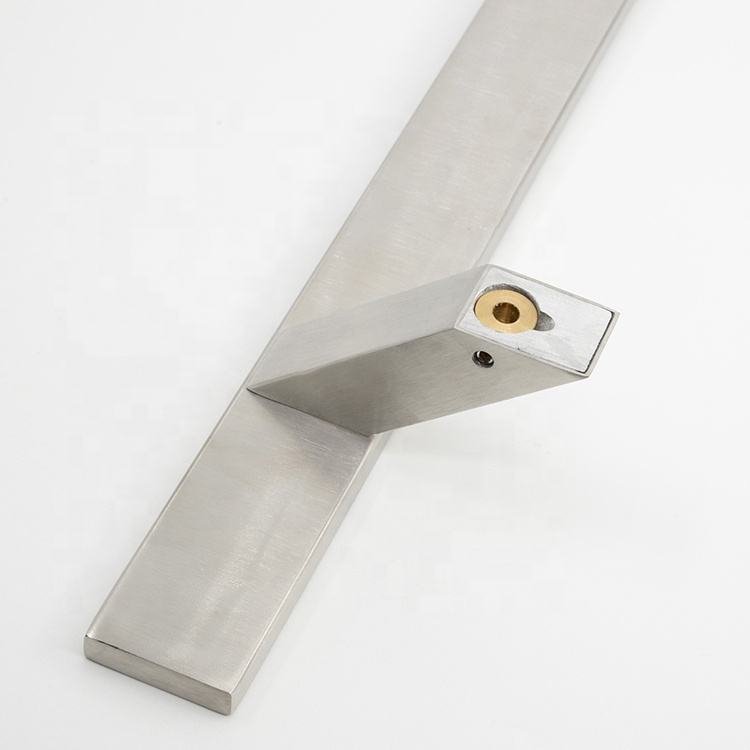
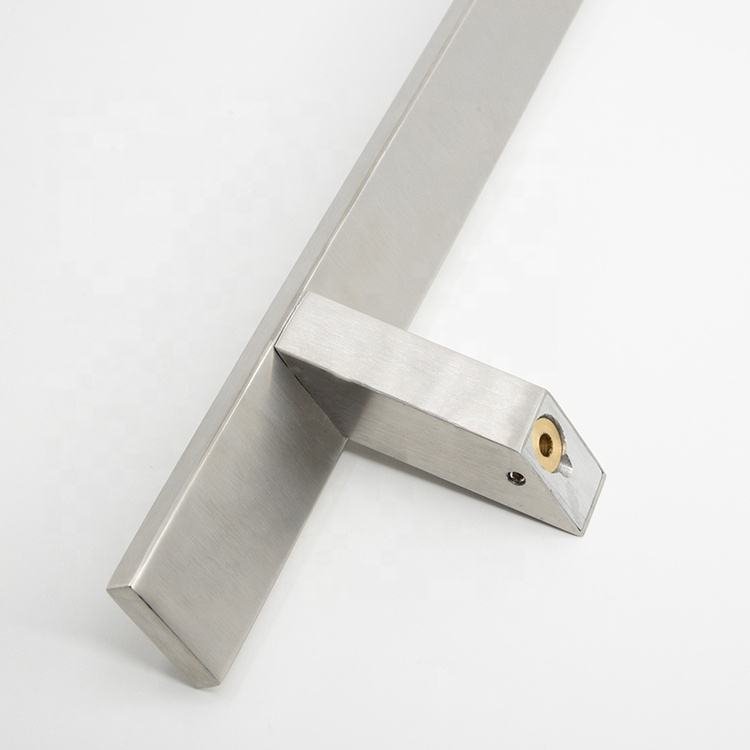
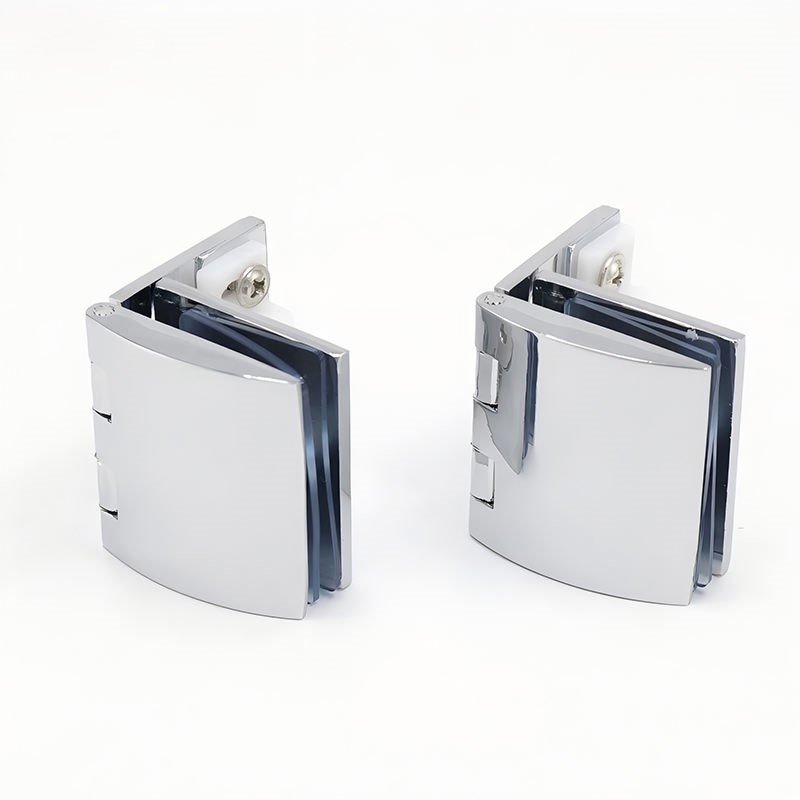
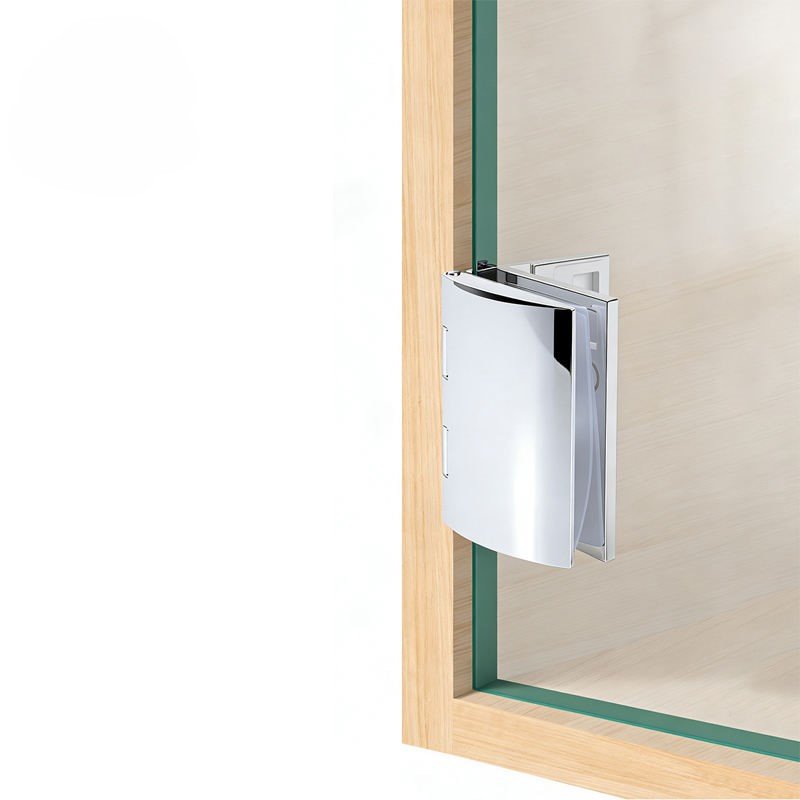
Metech Hardware supports automatic sliding door entrance projects with related glass door hardware and project matching support. Our product range includes sliding door components, glass door locks, pull handles, patch fittings, fixed glass fittings, glass clamps and other commercial entrance hardware.
We do not suggest treating every automatic entrance as the same product. A retail shop, a clinic entrance and a hotel lobby may require different hardware combinations.
Before recommending products, we prefer to check the opening size, glass thickness, estimated panel weight, usage frequency, locking requirement and finish preference. Based on these details, we can suggest suitable hardware combinations for quotation and order preparation.
For overseas customers, we can also support mixed hardware orders, OEM packaging, export packing and product matching for commercial glass entrance projects. This is useful when one project needs several product categories in the same shipment, such as sliding hardware, locks, handles and fixed glass fittings.
FAQ
What information is needed before choosing automatic sliding door hardware?
The most useful details are opening width, door height, glass thickness, estimated door weight, single or bi-parting layout, indoor or outdoor installation, traffic level, locking method and finish requirement.
Can glass door locks be used with automatic sliding doors?
Yes, but the lock must match the sliding layout and closing position. For storefront projects, the lock should be checked together with the guide system and panel alignment.
Is an automatic sliding door always better than a manual door?
No. For small, low-traffic shops, a manual glass door with a suitable hydraulic door closer may be easier to install and maintain. Automatic sliding doors are more suitable for high-traffic commercial entrances or projects that need better access convenience.
What hardware can Metech provide for automatic sliding door projects?
Metech can support related glass entrance hardware, including sliding door components, glass door locks, pull handles, patch fittings, fixed glass fittings, glass clamps and other architectural hardware for commercial projects.
Need Hardware for a Storefront Automatic Sliding Door Project?
Send us the opening width, door height, glass thickness, estimated panel weight, traffic level and locking requirement. Metech Hardware can help review your project details and recommend suitable glass door hardware for retail storefronts, hotels, offices and commercial entrances.