When specifying hardware for a frameless glass shower enclosure, the shower hinge is one of the most important structural components.
It supports the dead weight of the tempered glass door, controls repeated opening and closing, keeps the door aligned with seals, and operates in a wet environment exposed to hot water, steam, body oils and cleaning chemicals.
In a showroom, many shower hinges look similar. A low-cost zinc alloy hinge and a premium stainless steel or solid brass hinge may both be covered by polished chrome, matte black or brushed gold finish.
The real difference is hidden under the surface.
Base material, hinge body thickness, spring structure, gasket quality and load capacity decide whether the shower door stays aligned, closes smoothly and resists corrosion over time.
The real question is not only:
“Which finish looks better?”
The better question is:
“Which hinge material and load capacity are suitable for this glass thickness, door size and bathroom environment?”
For B2B buyers, hotel contractors and shower enclosure manufacturers, shower hinge selection should start with glass weight, base material and project environment before finish color is decided.
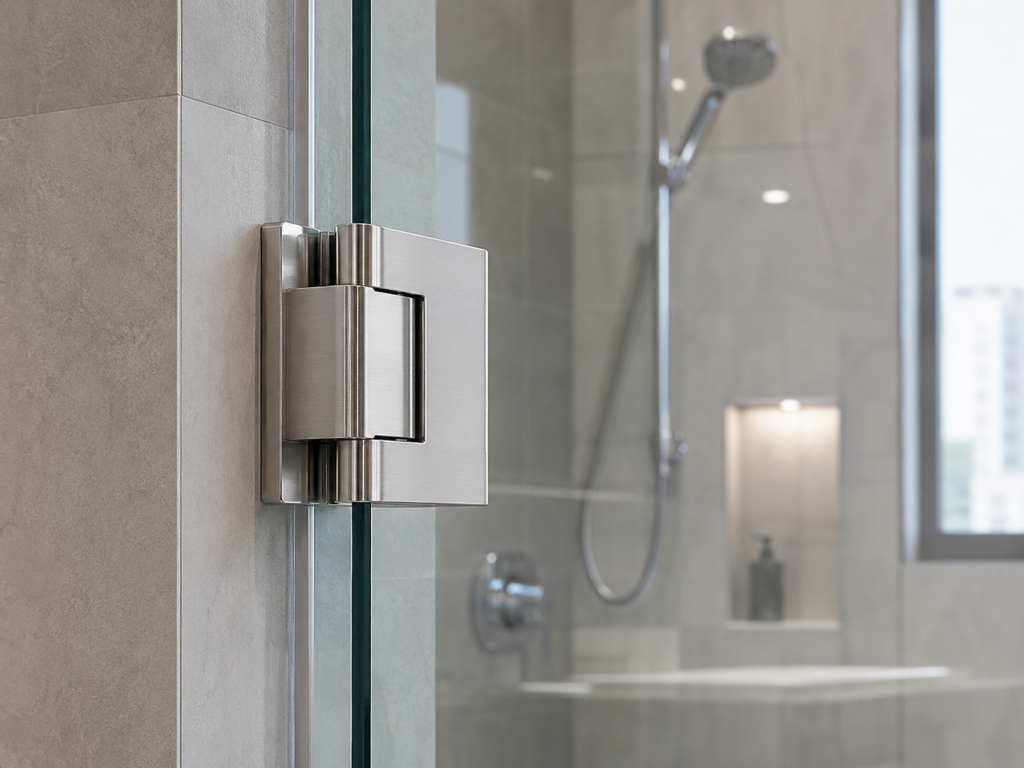
Quick Comparison: Shower Hinge Materials
| Material | Main advantage | Suitable use | Key caution |
|---|---|---|---|
| Zinc alloy | Low cost, easy casting and plating | Light-duty residential or budget products | Should be used carefully for heavy glass or commercial wet areas |
| Aluminum alloy | Lightweight, cost-sensitive, flexible surface treatment | Selected light-duty systems or economy projects | Load rating and hinge structure must be checked |
| Solid brass | Good machining, premium feel, stable finish options | Luxury residential, hotel bathrooms, premium shower rooms | Surface treatment and maintenance still matter |
| SS304 stainless steel | Strong, practical, widely used | Standard hotels, apartments, residential bathrooms, commercial bathrooms | Not ideal for harsh chloride or coastal environments |
| SS316 stainless steel | Better resistance to chloride and wet corrosion | Coastal hotels, spas, gyms, poolside showers, humid commercial wet areas | Higher cost than SS304 |
There is no single best material for every shower project. The correct choice depends on glass size, door weight, usage frequency, corrosion environment, budget and finish requirement.
Glass Weight and Door Sag Risk
The most common failure in frameless shower doors is door sag.
This happens when the glass door slowly drops or shifts downward, causing the bottom edge to rub against the threshold or floor tile. It may also cause the magnetic seal to misalign or the door to stop closing properly.
Door sag can come from several causes:
- Undersized hinge selection
- Glass door too heavy for the hinge model
- Weak clamping plates
- Compressed gaskets
- Loose screws
- Poor wall fixing
- Incorrect installation alignment
- Heavy use in commercial bathrooms
Before selecting a hinge, buyers should estimate the glass weight.
Tempered glass weighs approximately 2.5kg/m² for every 1mm of thickness.
| Glass thickness | Approximate weight |
|---|---|
| 8mm glass | 20kg/m² |
| 10mm glass | 25kg/m² |
| 12mm glass | 30kg/m² |
For example, a shower door measuring 0.9m wide × 2.1m high in 10mm tempered glass weighs approximately:
0.9 × 2.1 × 25 = 47.25kg
This estimate does not include handles, seals or other accessories.
For a door of this size, buyers should not assume that any standard hinge pair is suitable. The hinge model, rated load, clamping structure and installation method must be checked.
This is an approximate calculation for selection discussion. Final hinge load should always be confirmed with the actual product specification.
Why Base Material Matters
Shower hinges work under both mechanical and environmental stress.
The base material affects:
- Load capacity
- Machining accuracy
- Hinge body strength
- Clamping stability
- Pivot performance
- Surface finish stability
- Corrosion resistance
- Long-term maintenance cost
A hinge that looks good on day one may still perform poorly if the base material is not suitable for the glass weight or bathroom environment.
This is especially important for hotels, apartments, gyms, spas and other projects where the same hinge model may be used across many bathrooms.
If the wrong material or load level is selected, the same problem can repeat across the whole project.
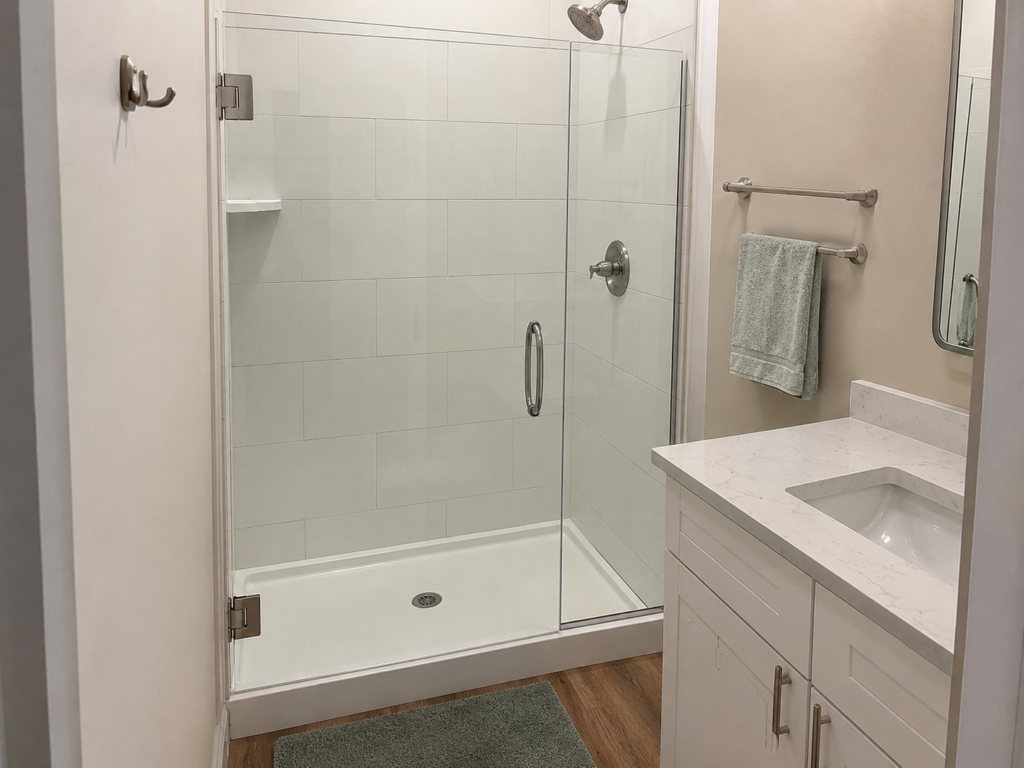
Zinc Alloy Shower Hinges: Budget Material to Review Carefully
Zinc alloy is commonly used in low-cost shower hardware because it is easy to cast and easy to electroplate.
It can look attractive when finished in polished chrome or matte black, but the base material and structure should be reviewed carefully before use.
Zinc alloy shower hinges are more suitable for light-duty, cost-sensitive residential applications where the glass door is smaller, lighter and used less frequently.
Key concerns include:
- Lower structural strength compared with brass or stainless steel
- Higher dependence on plating quality
- Possible surface blistering if the plating is damaged
- Limited suitability for heavy 10mm or 12mm frameless glass doors
- Higher risk in gyms, hotels, spas or commercial wet areas
This does not mean every zinc alloy hinge is unusable. It means buyers should avoid selecting it only by appearance or low price, especially for heavier glass doors.
Aluminum Shower Hinges: Lightweight and Cost-Sensitive Option
Aluminum alloy is different from zinc alloy and should not be treated exactly the same.
Aluminum is lightweight, corrosion-resistant in many indoor conditions and flexible for anodizing, powder coating or other surface treatments. It can be suitable for selected light-duty shower systems and economy projects.
Aluminum shower hinges may be considered for:
- Light residential shower doors
- Economy shower enclosures
- Selected apartment projects
- Cost-sensitive markets
- Systems where the hinge design is engineered for the glass size
However, aluminum generally does not provide the same premium weight, clamping feel or heavy-duty load capacity as solid brass or stainless steel.
For large 10mm or 12mm frameless glass doors, buyers should confirm the exact hinge structure, rated load and installation method before using aluminum hinges.
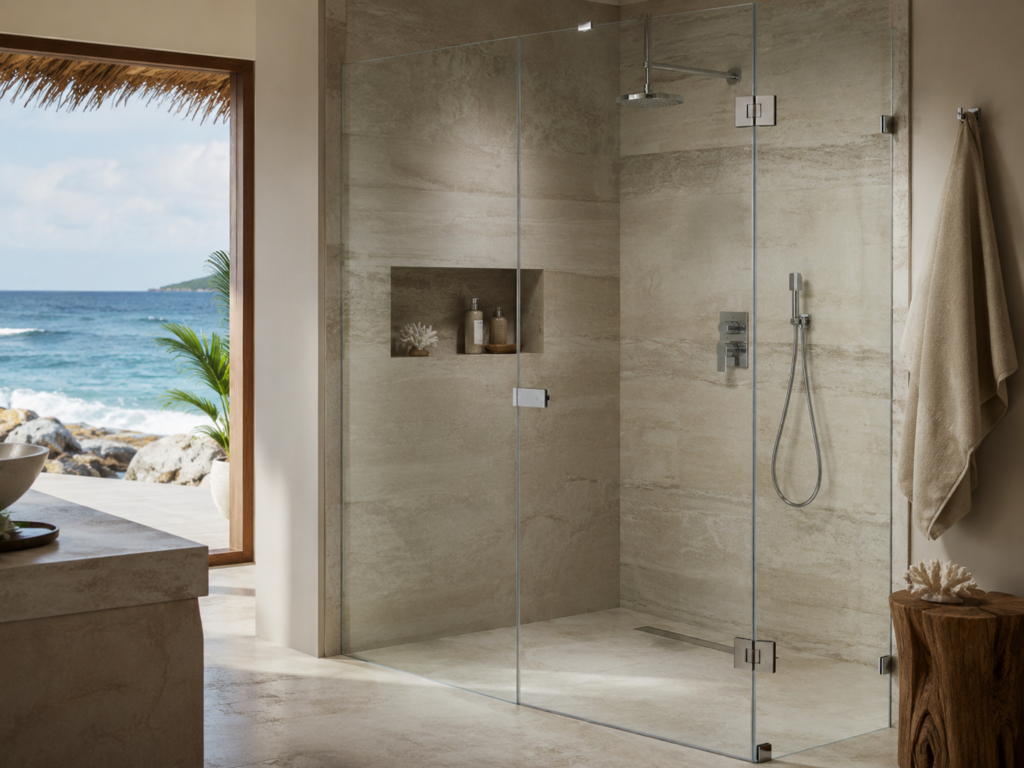
Solid Brass Shower Hinges: Premium Feel and Stable Machining
Solid brass shower hinges are widely used in mid-to-high-end frameless shower enclosures.
Brass is dense and easy to machine accurately, making it suitable for hinge bodies that require stable pivot movement, reliable clamping and high-quality decorative finishes.
Common finishes for brass shower hinges include:
- Polished chrome
- Brushed nickel
- Matte black
- Brushed gold
- PVD colors
Brass hinges are often used for:
- High-end residential bathrooms
- Hotel guest bathrooms
- Boutique apartments
- Premium frameless shower rooms
- Projects requiring a heavier and more solid feel
Brass does not rust like carbon steel, but it can tarnish if exposed and its finish still needs proper plating, coating and maintenance.
When selecting brass shower hinges, buyers should check hinge weight, body thickness, internal structure, gasket quality, finish process and rated load.
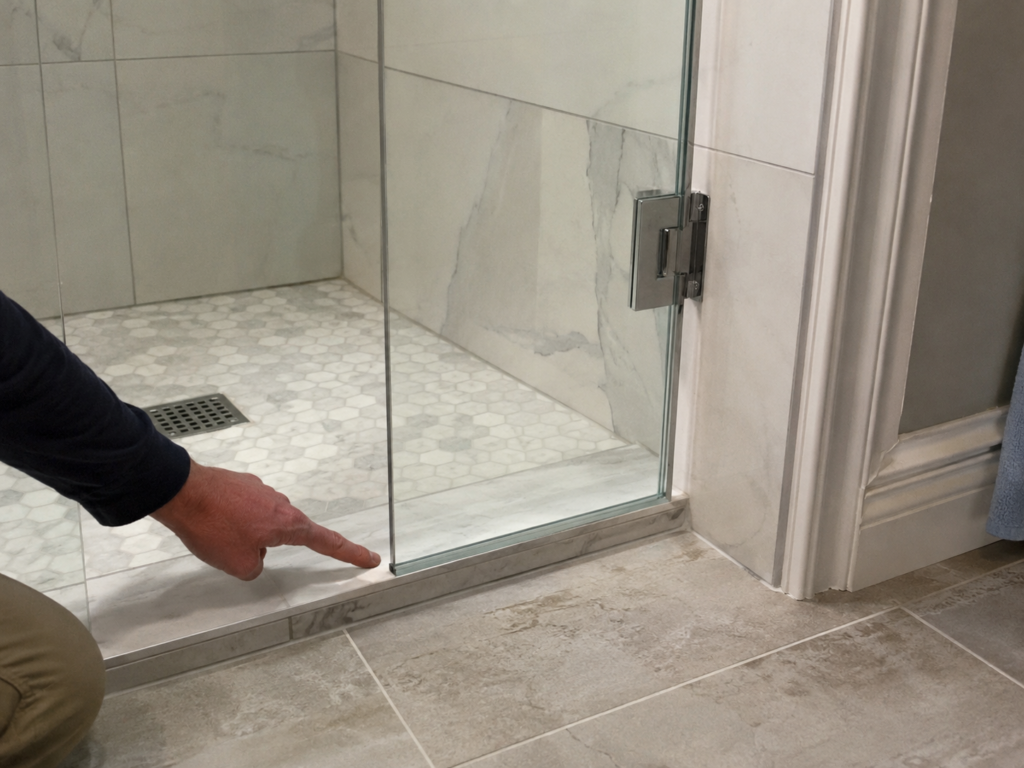
SS304 Shower Hinges: Practical Stainless Steel Choice
SS304 stainless steel is a practical and widely used material for shower hinges.
It offers good strength and general corrosion resistance for many indoor bathroom environments. It is commonly used in hotels, apartments, residential bathrooms and standard frameless shower enclosures.
SS304 shower hinges may be suitable for:
- Standard hotel bathrooms
- Residential shower rooms
- Apartment projects
- Indoor bathroom environments
- Medium-duty frameless shower doors
- Projects requiring stainless steel appearance
SS304 can be used with brushed, polished, matte black or selected PVD finishes depending on the manufacturer.
However, SS304 should not be treated as suitable for every wet environment. In coastal areas, strong chloride environments, poorly ventilated wet rooms or projects using aggressive cleaning chemicals, SS304 may require more careful maintenance or may need to be upgraded.
Buyers should also confirm the real material grade, because not all products labeled as stainless steel have the same quality.
SS316 Shower Hinges: Better for Harsh Wet Environments
SS316 stainless steel is often considered when corrosion resistance is more important.
Because SS316 contains molybdenum, it generally offers better resistance to chloride-related corrosion than SS304. This makes it useful for more demanding wet environments.
SS316 shower hinges may be considered for:
- Coastal hotels
- Seaside resorts
- Poolside shower areas
- Steam rooms
- Gyms and fitness centers
- Spas and wellness clubs
- High-humidity commercial bathrooms
- Wet areas cleaned frequently with stronger chemicals
SS316 is not maintenance-free. It still requires regular cleaning, suitable ventilation and proper care.
The main difference is that SS316 usually provides better corrosion resistance in aggressive environments where humidity, chloride exposure or cleaning chemicals are stronger than normal residential bathrooms.
For normal indoor bathrooms, brass or SS304 may already be suitable. For coastal hotels, gyms and commercial wet areas, SS316 may be worth considering.
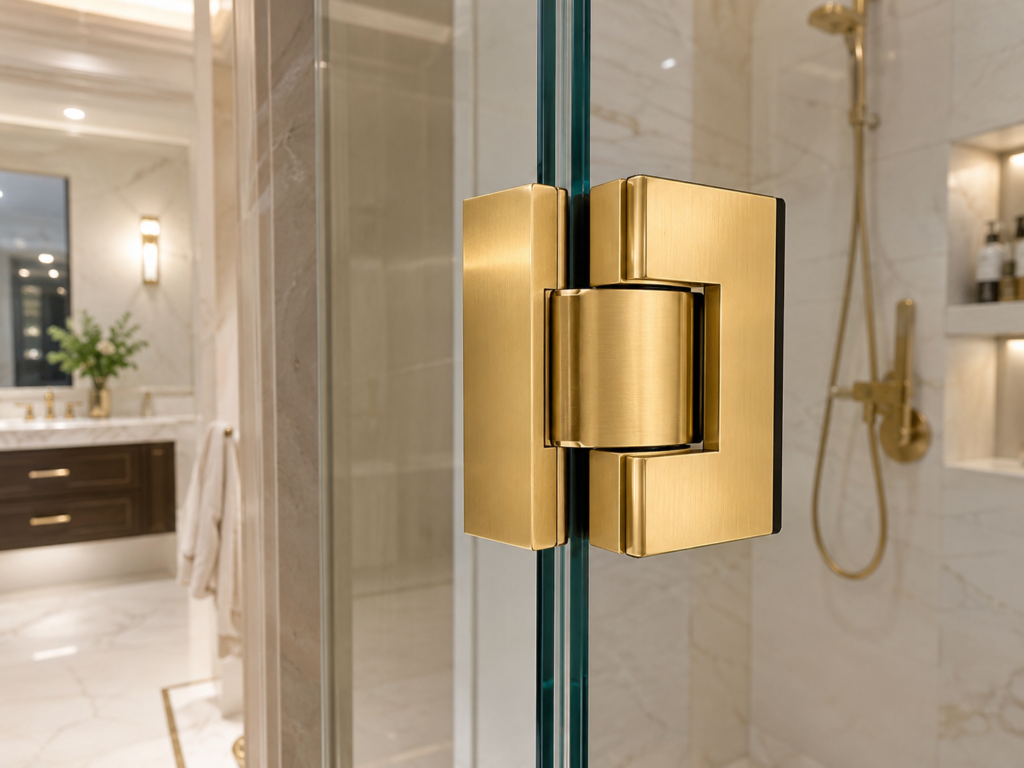
Internal Components: Springs, Gaskets and Clamping Plates
The external hinge body is only one part of the product.
Internal components also affect long-term performance.
Return Spring
Many shower hinges are self-closing. They use an internal spring or cam mechanism to help the door return toward the closed position.
If the spring quality is poor, the door may gradually lose closing force or fail to stay aligned at the center position.
For hotel and commercial wet-area projects, buyers should confirm whether the hinge is designed for repeated daily use and whether self-closing performance has been tested by model.
Gaskets
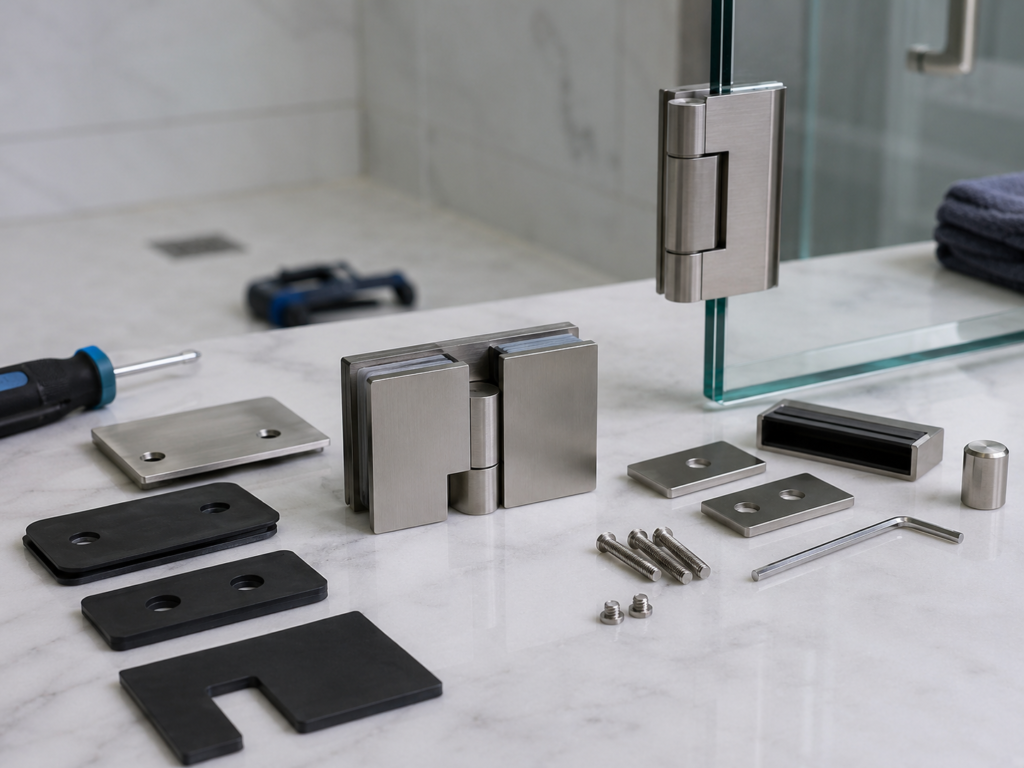
The hinge must clamp tempered glass without direct metal-to-glass contact.
A good gasket set helps protect the glass, maintain clamping friction and reduce the risk of slipping.
If the gasket is too hard, too soft or not matched to the glass thickness, the door may move, sag or become difficult to align.
Clamping Plates and Screws
The hinge body, clamping plates and screws must hold the glass securely over repeated use.
For heavy doors, the hinge should have sufficient contact area, suitable gaskets and a structure designed for the door weight.
Glass Thickness, Hinge Quantity and Fixed Glass Support
Common frameless shower door glass thicknesses include:
- 8mm
- 10mm
- 12mm
A thicker glass door is heavier, but glass thickness alone is not enough. Door width and height also matter.
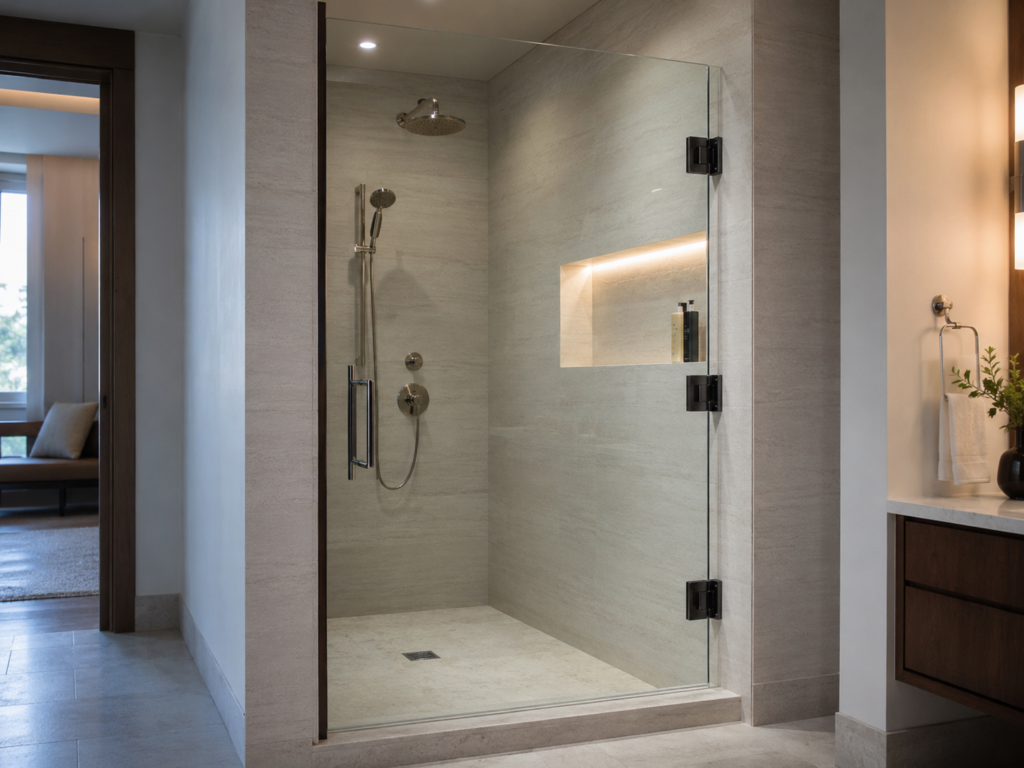
Most frameless shower doors use two hinges. However, taller, wider or heavier doors may require three hinges or a heavy-duty hinge model, depending on the product design and installation condition.
Adding a third hinge is not always the best solution. Three hinges require accurate vertical alignment. If the wall is not straight or the hinge axis is not aligned, the hinges may bind against each other and create uneven stress.
In some cases, two heavy-duty hinges may be more suitable than three standard hinges.
For glass-to-glass hinges, the fixed glass panel must also be strong and stable. A heavy moving door transfers force into the fixed panel. The fixed glass may need proper clamps, wall channels, ceiling support or a header bar depending on the layout.
Self-Closing, Free-Swing and Soft-Close Functions
Material and load capacity are important, but hinge function also matters.
Self-Closing Hinges
Self-closing shower hinges help the door return toward the closed position after use.
They are common in frameless shower rooms because they improve daily convenience and help the door align with seals or magnetic strips.
Self-closing performance depends on hinge structure, door weight, installation angle and adjustment quality.
Free-Swing Hinges
Free-swing hinges allow the door to move more freely.
They may be used for selected design requirements, but water control and door gap planning should be checked carefully because the door may not automatically return to the closing position.
Soft-Close or Hydraulic Hinges
Soft-close or hydraulic shower hinges may be considered for hotels, premium residential bathrooms, spas and higher-end projects where quiet movement and user experience are important.
These systems can reduce impact and make door movement more comfortable, depending on the hinge design.
However, no hinge function can solve all shower enclosure problems by itself. Seal strips, magnetic seals, door gaps and floor slope must also work together.
Common Selection Mistakes
Choosing by Finish Color Only
Chrome, matte black, brushed nickel and gold are surface finishes. The base material, internal structure and load rating are more important.
Upgrading Glass Thickness Without Upgrading Hinges
Changing from 8mm to 10mm or 12mm glass increases door weight. The hinge capacity should be checked again.
Using Light-Duty Hinges for Large Glass Doors
A wide or tall glass door needs hinges with suitable load capacity, gasket support and clamping strength.
Using Residential Hinges in Commercial Wet Areas
Gyms, spas and hotel public wet areas usually have higher usage frequency and more aggressive cleaning routines than private bathrooms.
Ignoring Corrosion Environment
Humidity, chloride, salt air and cleaning chemicals can affect both the base material and the surface finish.
Buying Hinges Without Matching Seals
The hinge controls door movement, but water control also depends on magnetic strips, side seals, bottom seals and floor slope.
Ignoring Batch Consistency
Hotels and apartment projects should use consistent hinge models, finishes, gaskets and spare parts for easier maintenance.
Project Information Required Before Quotation
Before recommending shower hinges, please provide:
- Project type, such as residential, hotel, gym, spa or apartment
- Number of bathrooms
- Door width and height
- Glass thickness
- Estimated glass door weight
- Hinge angle: 90°, 135° or 180°
- Wall-to-glass or glass-to-glass installation
- Self-closing requirement
- Free-swing or soft-close requirement
- Indoor, coastal or commercial wet environment
- Cleaning chemical exposure
- Preferred material: brass, SS304, SS316, aluminum or other
- Finish requirement
- Need for seals, handles or glass clamps
- Quantity
- Logo or packaging requirement
Photos, drawings and door schedules can help confirm the correct hinge model.
How Metech Supports Shower Hinge Projects
Metech Hardware supplies shower hinges for frameless glass shower door projects, including brass, stainless steel and selected aluminum options depending on project requirements.
We offer different hinge types such as 90°, 135° and 180° hinges, wall-to-glass hinges, glass-to-glass hinges, self-closing hinges, free-swing hinges and multiple surface finishes.
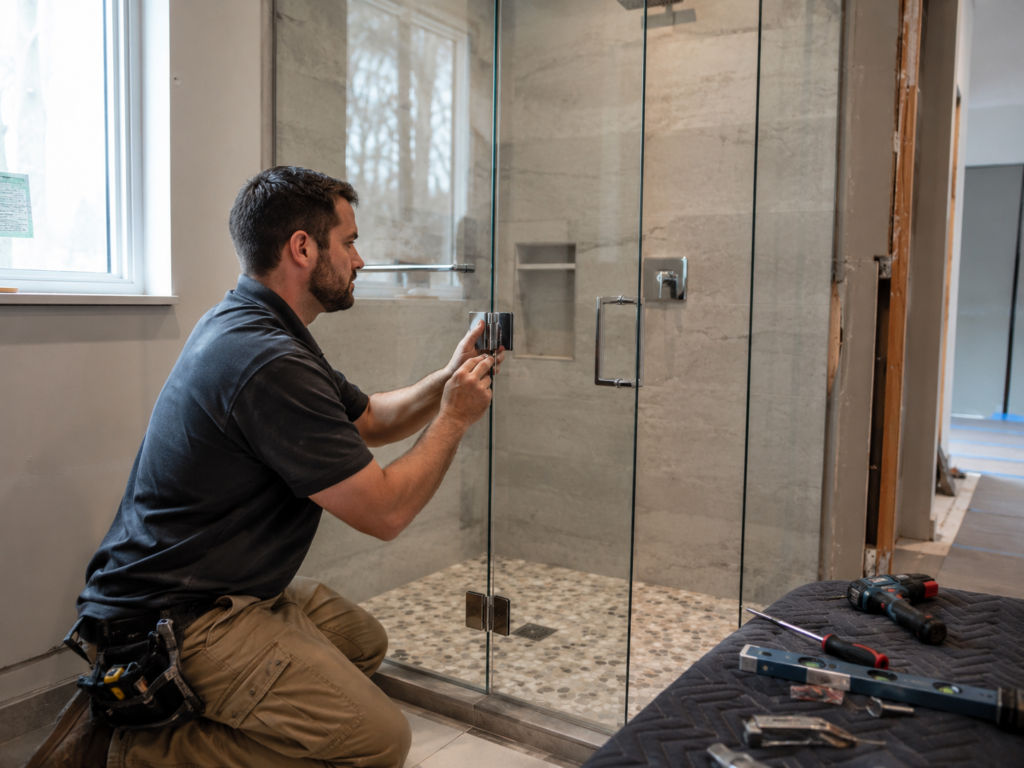
We help buyers review glass thickness, door size, estimated door weight, bathroom environment, usage frequency and finish requirements before recommending a suitable shower hinge combination.
For hotels, apartments, gyms, spas and distributors, matched seal strips, handles, glass clamps, logo marking, packaging and mixed-product purchasing can also be discussed according to project needs.
FAQ
Is brass better than stainless steel for shower hinges?
Not always. Brass offers good machining and a premium feel, while stainless steel offers strong structure and corrosion resistance. The better choice depends on project environment, budget and finish requirement.
Is SS316 necessary for every shower hinge?
No. SS316 is not necessary for every bathroom. It may be considered for coastal hotels, spas, gyms or harsh wet environments. For normal indoor bathrooms, brass or SS304 may be suitable.
What glass thickness can shower hinges support?
Many shower hinges are designed for 8mm, 10mm or 12mm glass, but the final selection depends on door width, height, weight and hinge model.
Do heavy shower doors need three hinges instead of two?
Sometimes, but not always. Taller or heavier doors may need three hinges or a heavy-duty hinge model. However, three hinges require accurate alignment. In some cases, two heavy-duty hinges may be better than three standard hinges.
Why does a shower door sag after installation?
Possible reasons include insufficient hinge capacity, loose screws, compressed gaskets, heavy glass, poor wall fixing, inaccurate installation or incorrect hinge selection.
Can I use a glass-to-glass hinge for a heavy door?
Yes, but the fixed glass panel must be stable enough to carry the force from the moving door. Additional clamps, channels or support bars may be required depending on the layout.
Is solid brass stronger than stainless steel?
Stainless steel generally has higher tensile strength, but solid brass is still strong enough for many shower hinge applications when correctly designed and rated. Brass is often chosen for premium feel and decorative finish quality.
Can finish color decide the hinge material?
No. Finish color should be decided after the base material, load capacity, bathroom environment and hinge function are confirmed.
Need Help Choosing Shower Hinges for Your Project?
Send us your glass thickness, door size, hinge angle, project environment, material preference and finish requirement.
Metech Hardware can help review whether brass, SS304, SS316, aluminum or other shower hinge options are suitable for your shower door project.