In commercial offices, high-end residential interiors, hotels, showrooms and retail spaces, sliding glass doors are often selected because they save space and keep the interior visually open.
Most buyers pay attention to the glass thickness, handle style and overall design effect. But in daily use, the reliability of a sliding glass door depends more on the track, rollers, guides and load path behind the system.
That is why one of the first hardware decisions is important:
Should the project use a top-hung sliding door kit or a bottom-rolling sliding door kit?
This is not only a styling choice. It is a structural and mechanical choice.
A top-hung sliding door carries most of the door weight from the upper track. A bottom-rolling sliding door carries most of the weight through rollers at the bottom. That difference affects installation, maintenance, floor appearance, door weight capacity and long-term smooth movement.
The first question is not whether the floor track looks clean.
The first question is: where will the door weight go?
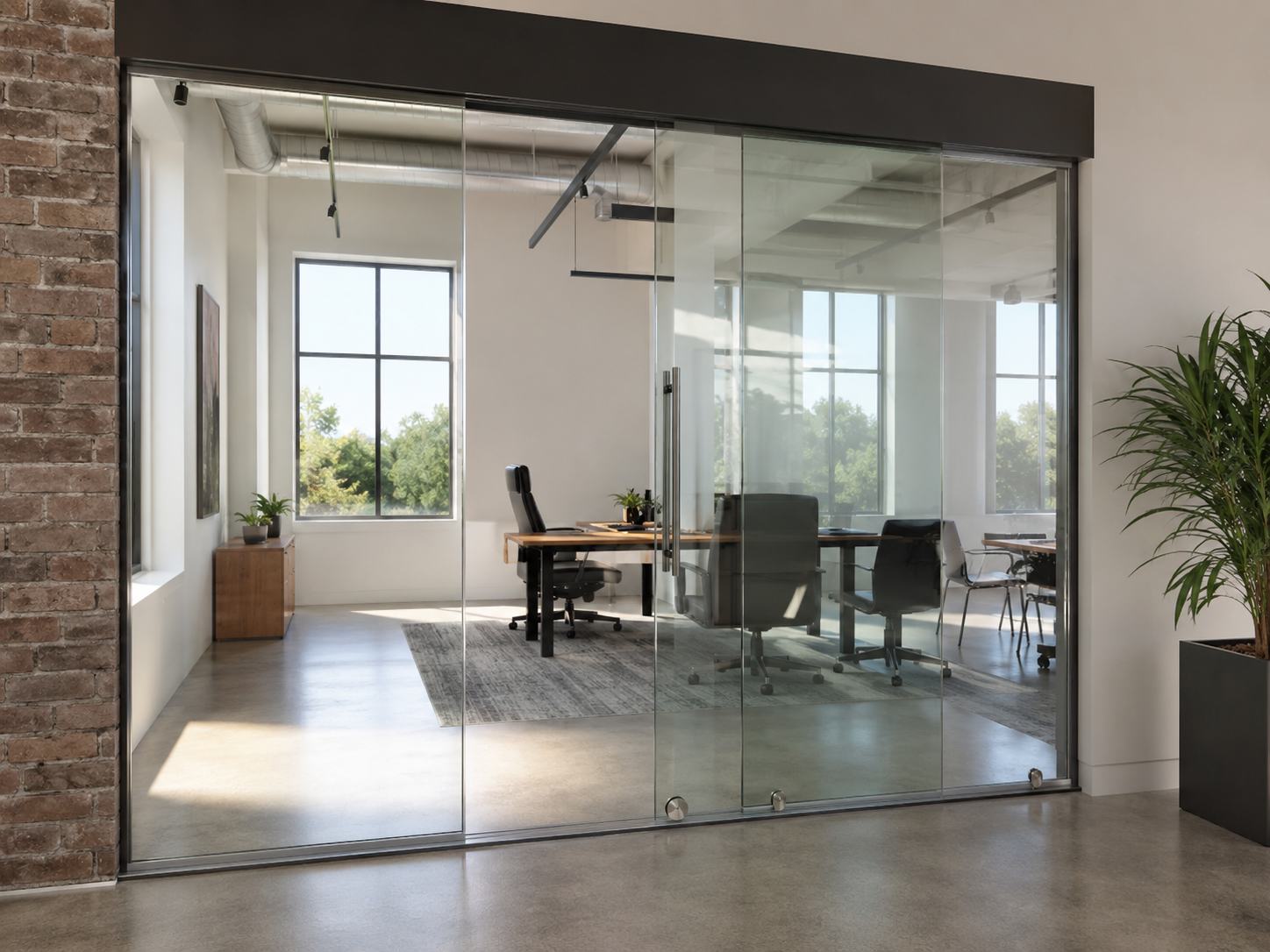
Quick Comparison: Top-Hung vs Bottom-Rolling Sliding Door Kits
| Factor | Top-hung sliding door kit | Bottom-rolling sliding door kit |
|---|---|---|
| Primary load path | Door weight is carried by upper track, header or lintel | Door weight is carried by bottom rollers and floor track |
| Floor track | Usually no continuous floor track, only a small floor guide | Continuous or recessed bottom track is usually required |
| Floor appearance | Cleaner and more minimal | More visible floor line or threshold |
| Structural requirement | Strong upper beam, wall or header support required | Stable, level floor required |
| Best use | Offices, showrooms, residential interiors, premium partitions | Heavier panels, renovation projects, practical commercial interiors |
| Maintenance focus | Upper track, hangers, roller alignment, floor guide | Bottom track cleaning, roller wear, debris control |
| Main risk if selected wrong | Header deflection, poor fixing, panel dragging or noisy movement | Dust, water, uneven floor or debris affecting roller travel |
This table gives a quick direction, but the final choice should be based on door weight, building structure and daily use.
What Is a Top-Hung Sliding Door Kit?
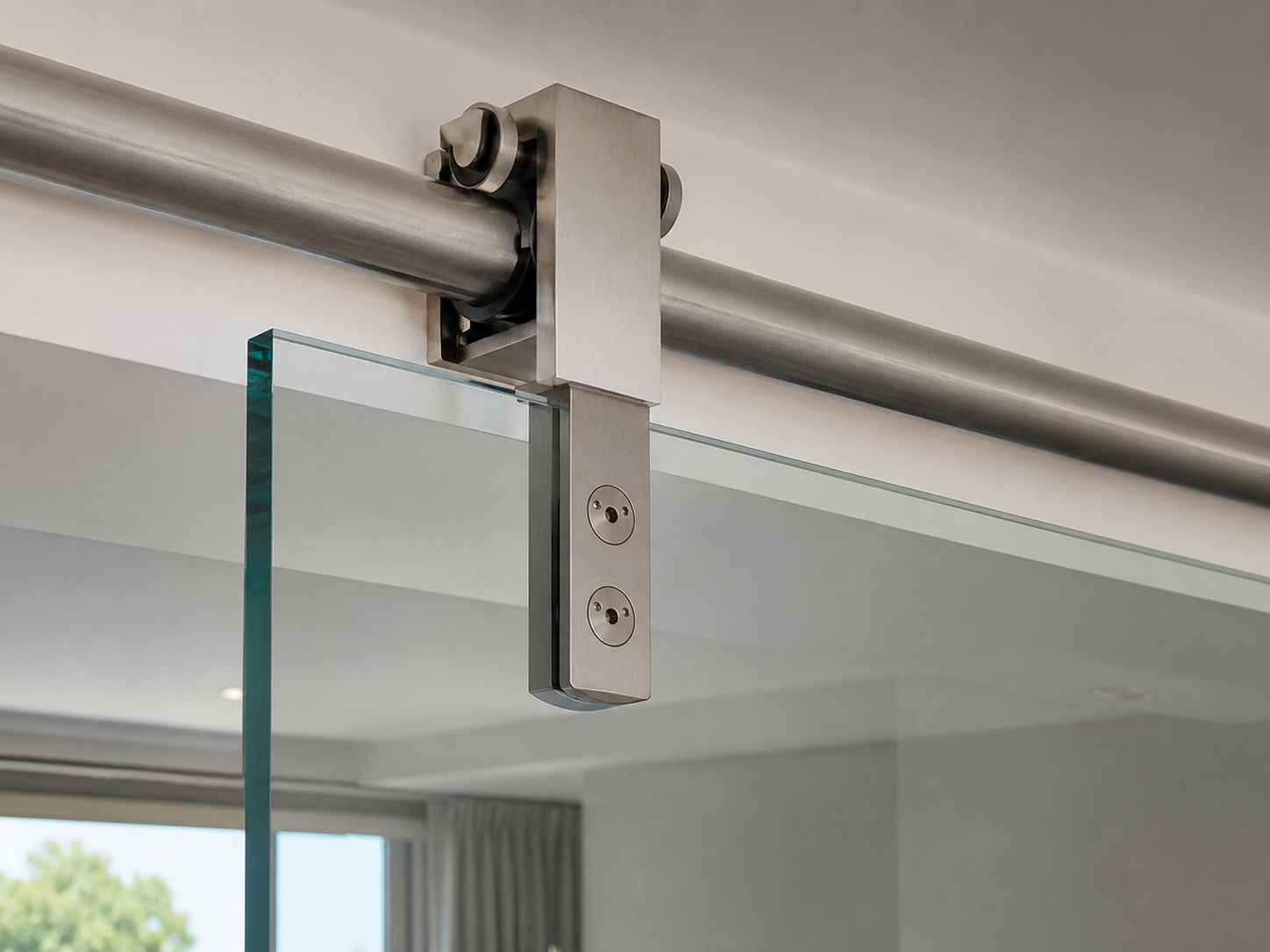
A top-hung sliding door kit carries the glass panel from above. The rollers or hangers run inside an upper track, and the door panel is suspended from the track through hangers, glass clamps or brackets. At the bottom, the system usually uses a small floor guide to keep the glass panel stable and prevent side-to-side movement.
A typical top-hung sliding glass door kit may include:
- Upper track
- Rollers or hanger wheels
- Glass clamps or hanger brackets
- End stoppers
- Anti-jump device
- Floor guide
- Soft-close damper
- Handle and lock, if required
The main advantage is the clean floor line. Since there is usually no continuous bottom track, the floor looks more open and easier to clean. This is why top-hung sliding doors are popular in office meeting rooms, showroom partitions, residential interiors, hotel room partitions and premium interior glass dividers.
But the clean floor does not mean the load disappears.
The weight is transferred upward to the track, fixing points and building structure. If the upper wall, beam, ceiling or header is not strong enough, the system may become unstable over time.
A top-hung system is elegant, but only when the upper support is suitable.
What Is a Bottom-Rolling Sliding Door Kit?
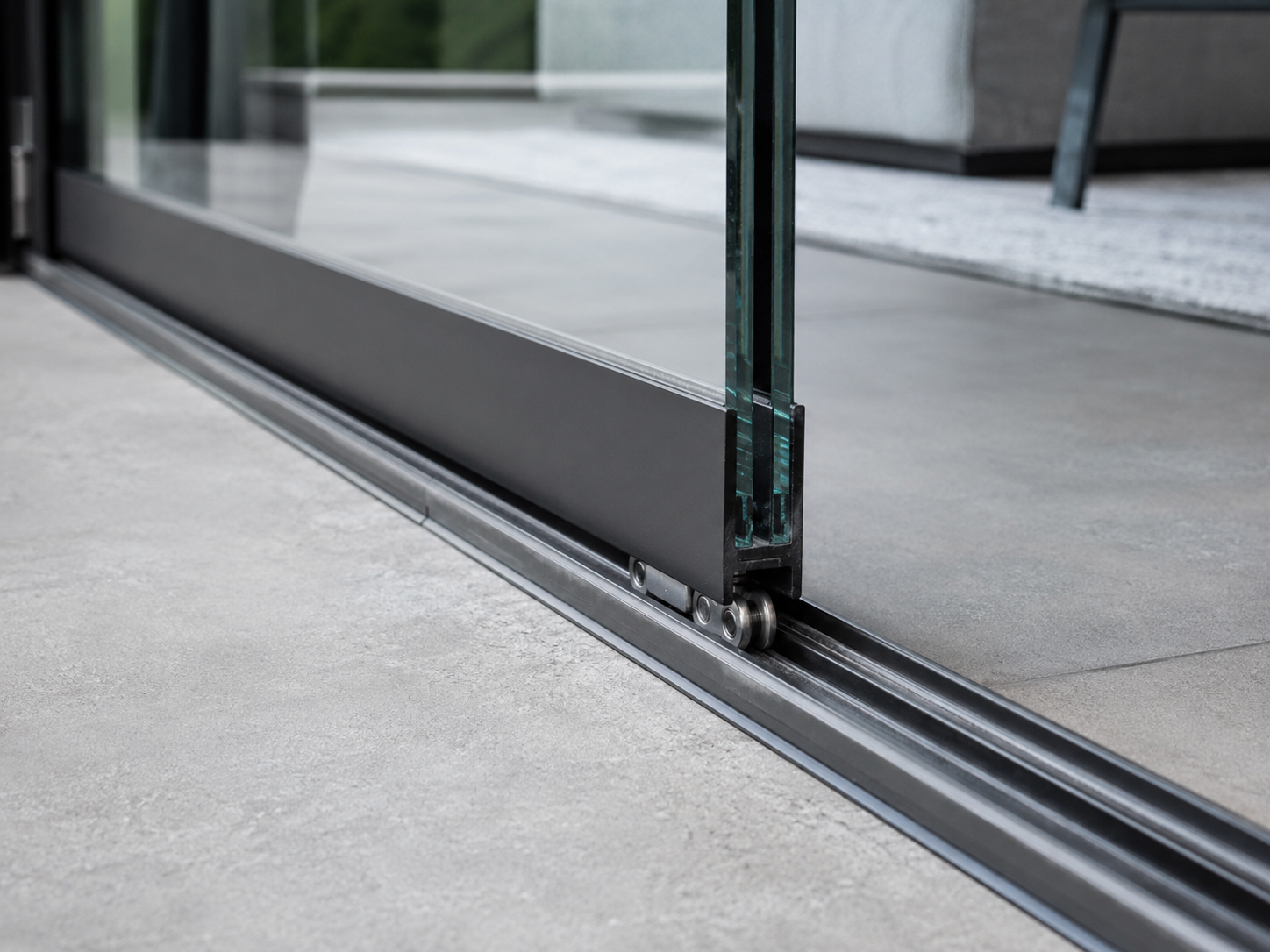
A bottom-rolling sliding door kit carries the glass panel from below. The bottom rollers run along a floor track or floor rail, while the upper guide mainly keeps the panel upright and aligned.
A typical bottom-rolling sliding door system may include:
- Bottom track or floor rail
- Bottom rollers
- Upper guide track
- Anti-lift or anti-jump device
- End stopper
- Handle and lock
- Soft-close option, depending on the system
The main advantage is that the door weight is supported by the floor. This can be useful when the upper structure is weak, uncertain or difficult to reinforce. For renovation projects, lightweight partitions or heavier sliding panels, a bottom-rolling system can be more practical.
The trade-off is the bottom track.
A floor track may collect dust, sand, water, cleaning residue or small debris. It can also create a visible threshold line. In some commercial projects this is acceptable. In premium interiors, buyers may prefer the cleaner appearance of a top-hung system.
Bottom-rolling is not a low-end solution. It is a different way to transfer load.
Load Transfer: The Real Difference
The most important difference between top-hung and bottom-rolling sliding door systems is load transfer.
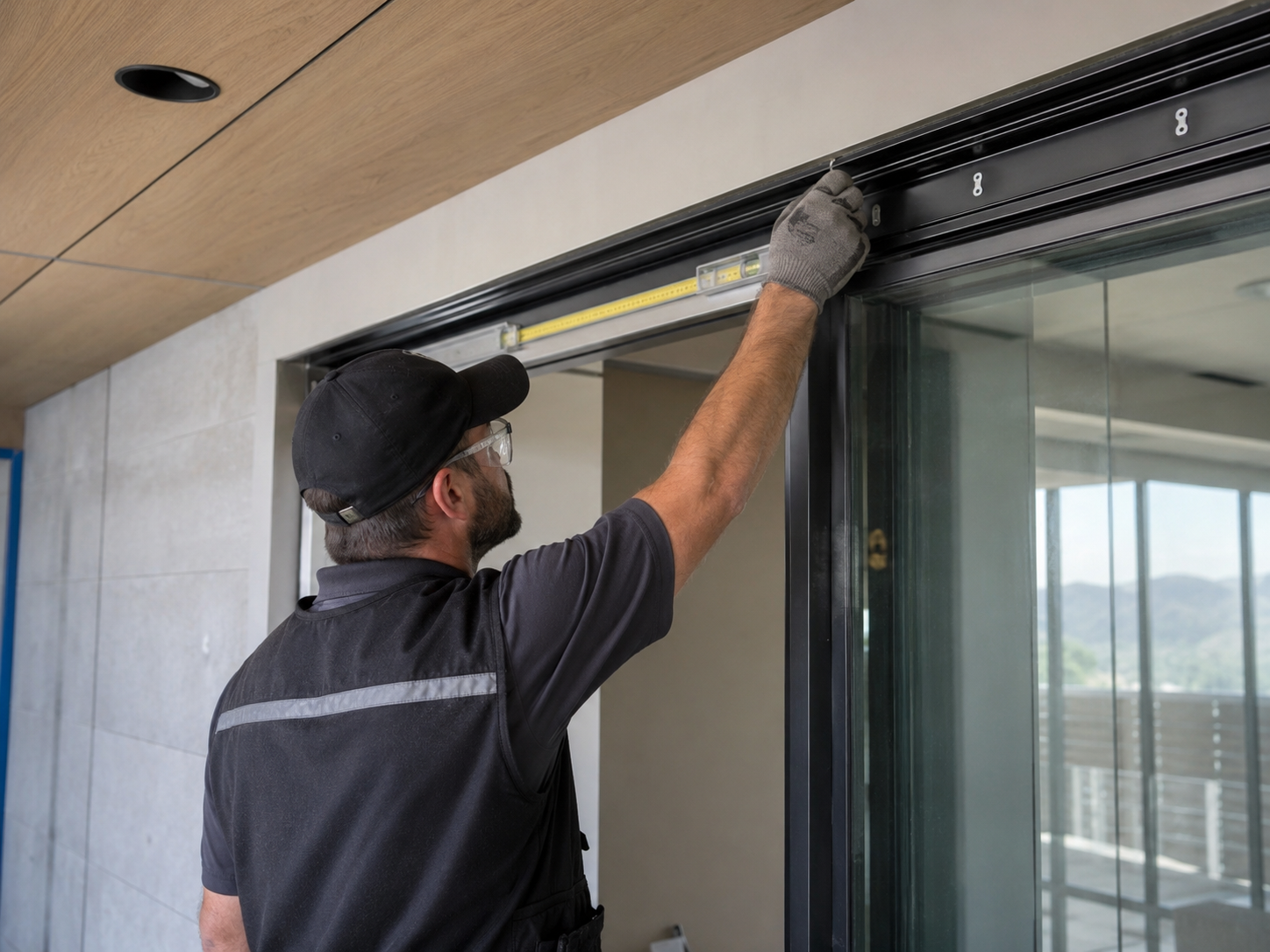
In a top-hung system, the load goes upward. The upper track, screws, brackets, wall, beam or header must carry the full door weight and repeated sliding movement.
In a bottom-rolling system, the load goes downward. The bottom rollers and floor track take the main vertical load, while the upper guide controls alignment.
This becomes important because glass doors are heavier than they look.
As a practical reference, 10mm tempered glass is often estimated at around 25kg per square meter. A 1.0m × 2.4m panel in 10mm glass is already around 60kg. A larger 1.2m × 2.4m panel in 12mm tempered glass can be around 86kg before adding handles, locks or fittings.
For a top-hung system, that weight is suspended from above. For a bottom-rolling system, that weight moves along the floor track.
Neither method is automatically better. The correct choice depends on which part of the building can carry the load more reliably.
Header Strength and Deflection Risk
Top-hung systems depend heavily on the upper structure.
Suitable fixing conditions may include:
- Concrete beam
- Steel structure
- Solid wall
- Reinforced header
- Strong timber or metal backing
Risky conditions may include:
- Standard drywall header without reinforcement
- Lightweight partition wall
- Thin aluminum partition
- Decorative ceiling panel
- Weak or unknown renovation substrate
One common mistake is installing a heavy top-hung sliding glass door onto a non-structural drywall header or weak partition. The hardware may be rated for the door weight, but the building substrate may not be.
Even minor header deflection can cause problems. If the upper track bends or sags, the glass panel may drag along the finished floor, increase rolling resistance, create noise or overload the roller bearings.
A strong roller does not solve a weak substrate.
For large or heavy panels, the header condition should be checked by the project engineer, contractor or installer before ordering the top-hung sliding door kit.
Floor Condition and Bottom Track Maintenance
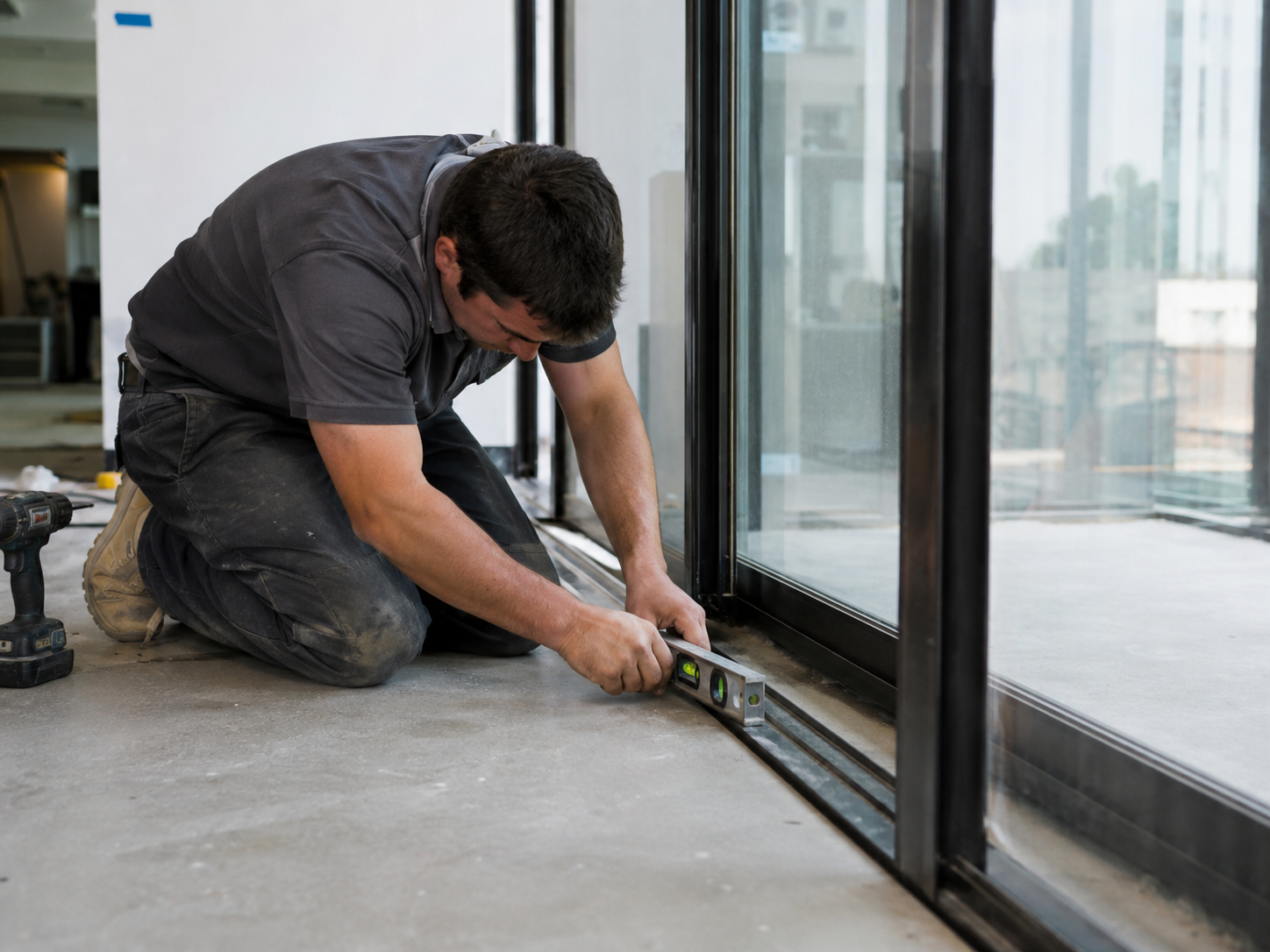
Bottom-rolling systems avoid heavy load on the upper structure, but they depend on the floor.
The floor should be:
- Level
- Stable
- Strong enough for rolling load
- Suitable for fixing the bottom track
- Easy to clean around the rail
- Not exposed to constant water or heavy debris
If the floor is uneven, the sliding door may feel heavy or unstable. If the bottom track collects sand, dust, cleaning water or debris, the rollers may wear faster and the door may develop rough movement or noise.
This is especially important in:
- Restaurants and cafés
- Retail spaces near outdoor entrances
- Coastal or humid environments
- High-traffic commercial corridors
- Renovation projects with uneven floors
- Areas cleaned frequently with water
A bottom track is not a problem if it is designed, installed and maintained properly. But it should be treated as a real maintenance point, not ignored after installation.
Roller and Track Quality
The track and roller design directly affects noise, smoothness and service life.
For top-hung systems, the upper track should be rigid enough to resist flexing under load. A thin or poorly supported track can deform, widen or create uneven roller travel.
For bottom-rolling systems, the bottom track must maintain a smooth and stable running surface. If the track is too soft, misaligned or poorly fixed, the door may become noisy or hard to move.
Roller material also matters.
Hard nylon rollers may be suitable for some light-duty sliding doors. For heavier or high-frequency commercial doors, polyurethane rollers with sealed bearings often provide quieter movement and better vibration absorption.
Important roller details include:
- Rated load capacity
- Bearing quality
- Roller diameter
- Wheel material
- Track compatibility
- Dust and moisture exposure
- Replacement accessibility
A smooth sliding door is not created by the glass panel alone. It is created by the correct track and roller system.
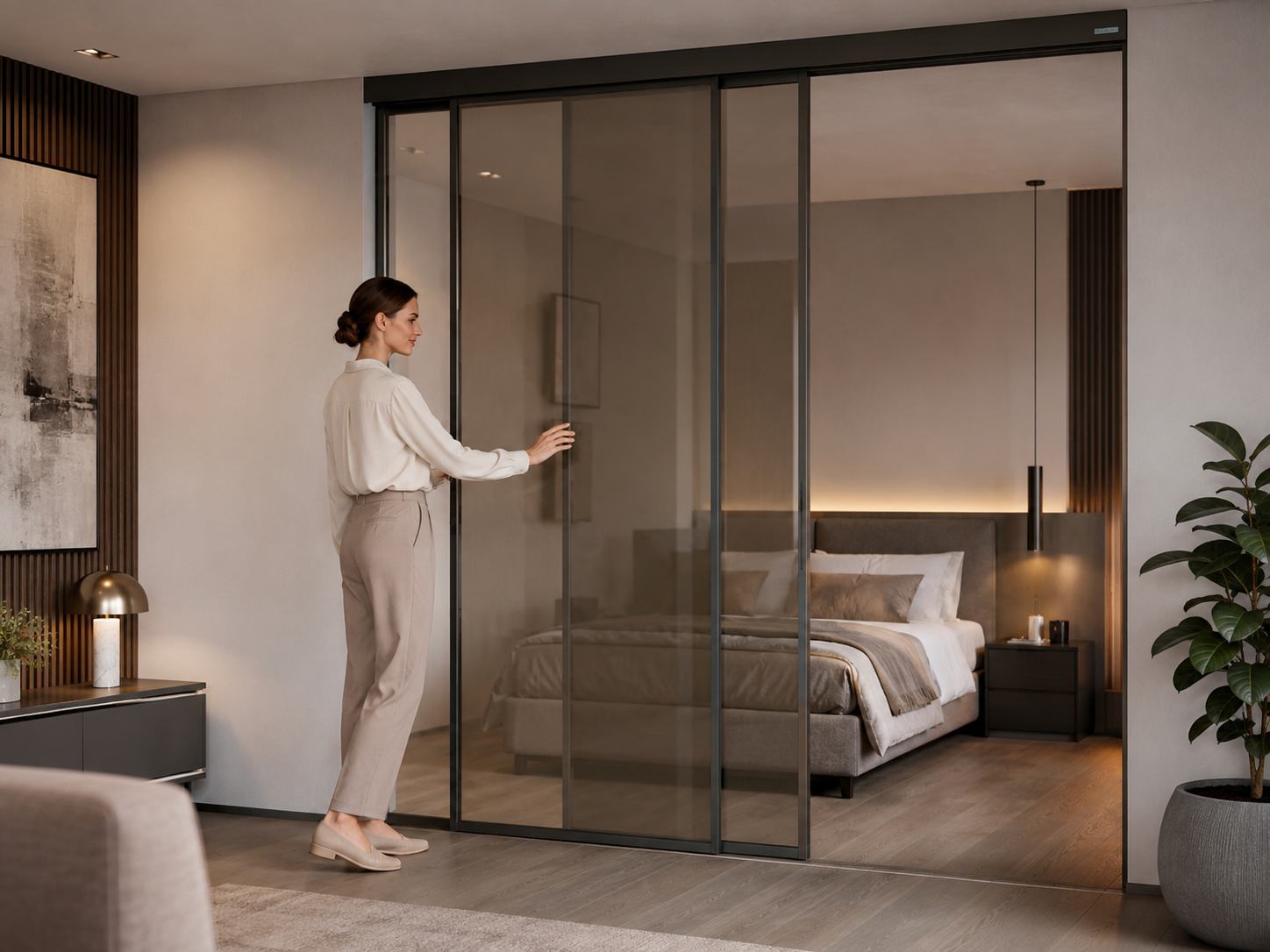
Door Weight, Glass Thickness and Safety Margin
Sliding door hardware should always be selected according to the actual panel size and estimated weight.
Before ordering, confirm:
- Glass thickness
- Panel width
- Panel height
- Estimated panel weight
- Number of sliding panels
- Single or double sliding layout
- Opening width
- Handle and lock requirement
- Soft-close requirement
A sliding kit rated for 80kg should not automatically be used for an 80kg panel in a high-frequency commercial project. Operating close to the rated limit can increase roller wear and reduce long-term reliability.
For commercial projects with frequent daily use, it is usually safer to leave a reasonable load margin instead of selecting hardware at the exact rated limit. In many cases, a 20–30% margin is a practical reference, but the final choice should follow the manufacturer’s rating and project condition.
This is especially important for hotels, offices, showrooms and retail interiors where the door may be used many times each day.
Floor Appearance and Passage Comfort
Top-hung sliding doors are often preferred because the floor looks cleaner.
This is a real advantage. A clean floor line can make the space feel more open and reduce threshold interruption. It can also improve passage comfort for pedestrians, cleaning equipment and small trolleys.
This is useful in:
- Office meeting rooms
- Showrooms
- Residential interiors
- Hotel rooms
- Premium retail interiors
- Interior glass partitions
Bottom-rolling systems usually have a visible bottom track or rail. Some designs can reduce the track height or recess it into the floor, but this requires better planning and installation accuracy.
For premium interiors, floor appearance may be an important reason to choose top-hung hardware. For practical commercial spaces, a visible bottom track may be acceptable if it provides a better load path.
The decision should balance design, structure and maintenance.
Soft-Close Dampers and Glass Protection
Soft-close sliding door hardware is often requested for offices, meeting rooms, showrooms, hotels and residential interiors.
A heavy glass panel carries momentum when it moves. If it is pushed too hard, the door can hit the end stopper with strong impact, creating noise, vibration and possible rebound.
A soft-close damper helps solve this problem.
In many systems, the damper catches the sliding carriage during the last 50mm to 100mm of travel. It slows the panel and pulls it gently into the open or closed position. This makes the door feel more controlled and helps protect the glass, rollers and stopper.
However, soft-close hardware must match the actual door weight.
A damper designed for a 40kg panel may not control a 90kg commercial glass door properly. A heavy-duty damper used on a very light door may make the door feel stiff or unnatural.
Soft-close improves user experience, but it does not replace correct track, roller and load rating.
Locking and Glass Preparation
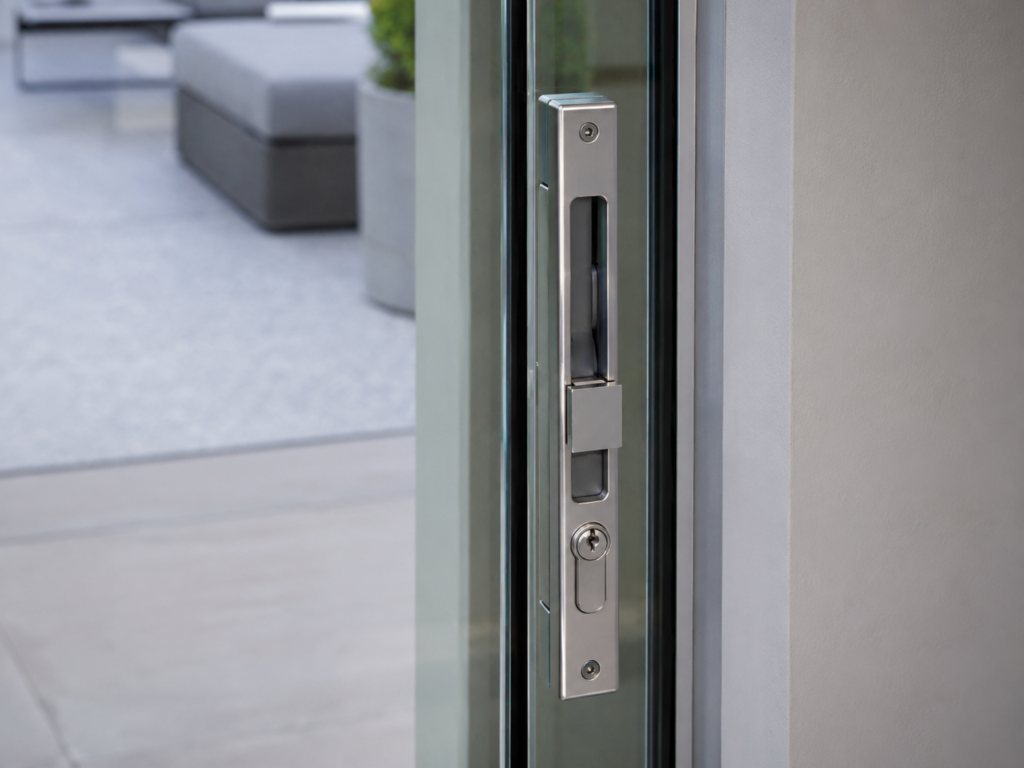
Sliding door hardware is not only about tracks and rollers. Locking should also be planned early.
Depending on the project, the door may need:
- Sliding lock
- Hook lock
- Glass lock
- Handle lock
- Wall receiving point
- Fixed glass receiving point
- Correct panel overlap
- Glass cut-outs
- Handle position
This is especially important for glass sliding doors. Once the glass is produced, changing lock position or handle position may require reprocessing or replacing the panel.
Before ordering the sliding door kit, confirm whether the door needs privacy locking, security locking or only a pull handle. Also confirm whether the door closes against a wall, a fixed glass panel or another sliding panel.
Locking should be part of the sliding door hardware selection from the beginning.
When Top-Hung Sliding Door Kits Are Better
A top-hung sliding door kit is usually better when:
- A clean floor line is important
- The project is an office, showroom or residential interior
- The upper structure is strong enough
- The glass panel is within the rated weight range
- The project wants a premium minimalist appearance
- Easy floor cleaning is important
- Soft-close function is required
- A visible bottom track is not preferred
Typical applications include office meeting rooms, showroom partitions, interior glass dividers, residential sliding doors, hotel room partitions and premium retail interiors.
Top-hung systems are often the better choice when the floor must remain clean and open, and the building structure can support the load from above.
When Bottom-Rolling Sliding Door Kits Are Better
A bottom-rolling sliding door kit is usually better when:
- The upper structure cannot carry the full door weight
- The door panel is heavier
- The floor is strong and level
- A bottom track is acceptable
- The project is a renovation with uncertain ceiling support
- The system needs practical load support from below
- Maintenance access to the floor track is manageable
Typical applications include heavier interior sliding doors, larger glass panels, renovation projects, utility areas and commercial interiors where a bottom track is acceptable.
Bottom-rolling systems can be a practical choice when the load should be supported by the floor rather than the upper structure.
Common Mistakes Before Ordering
Choosing top-hung hardware only because it looks cleaner
A top-hung system needs strong upper support. If the header or ceiling cannot carry the door weight, the clean appearance may create long-term problems.
Installing top-hung systems on weak headers
A heavy glass panel should not be suspended from non-structural drywall or decorative panels unless suitable reinforcement is provided.
Choosing bottom-rolling hardware only because the door is heavy
Bottom-rolling systems still need good rollers, a level floor and a stable track. Heavy load does not justify poor floor preparation.
Ignoring actual glass weight
Glass thickness and panel size decide the real weight. Always calculate or estimate the panel weight before choosing hardware.
Selecting hardware at the exact rated limit
For high-frequency commercial projects, leave a reasonable load margin instead of operating close to the hardware’s maximum rating.
Forgetting the floor guide
Even a top-hung sliding door needs a floor guide. Without it, the panel may swing, shake or feel unstable.
Ignoring track cleaning
Bottom tracks can collect dust, water or debris. This affects roller movement and long-term smoothness.
Using light-duty soft-close on heavy panels
Soft-close dampers must match the actual door weight. Otherwise, the closing effect may be weak or inconsistent.
Planning the lock too late
Locks, glass cut-outs, handle positions and panel overlap should be confirmed before glass production.
Practical Selection Guide
Choose a top-hung sliding door kit if the project needs:
- Clean floor appearance
- Premium interior design
- Easy floor cleaning
- Office or showroom partition
- Residential interior sliding door
- Strong upper support
- Smooth soft-close movement
Choose a bottom-rolling sliding door kit if the project needs:
- Support for heavier panels
- Less load on the upper structure
- Practical installation in renovation projects
- Strong and level floor support
- Acceptable bottom track
- Manageable track cleaning
The best sliding door system is not the one that looks more advanced. It is the one that matches the structure, door weight and daily use.
How Metech Supports Sliding Door Hardware Selection
Metech Hardware supports sliding glass door hardware selection for offices, showrooms, hotels, retail interiors, residential spaces and commercial partitions.
Our sliding door hardware range may include top-hung sliding door kits, bottom-rolling sliding door systems, glass sliding door tracks, rollers, hangers, clamps, floor guides, stoppers, soft-close options, handles and sliding locks.
For commercial sliding glass door packages, we can help match coordinated hardware components, including track, roller, guide, buffer, lock and handle options according to the project requirement.
Before recommending a sliding door kit, we prefer to check:
- Opening width
- Door panel width and height
- Glass thickness
- Estimated door weight
- Top support condition
- Floor condition
- Single or double sliding layout
- Soft-close requirement
- Locking requirement
- Interior or semi-outdoor location
- Quantity and finish preference
For overseas buyers, contractors and distributors, Metech can help recommend suitable sliding door hardware based on real project conditions, not only product appearance.
FAQ
Is a top-hung sliding door better than a bottom-rolling sliding door?
Not always. A top-hung sliding door gives a cleaner floor appearance, but it needs strong upper support. A bottom-rolling sliding door carries weight through the floor, but it usually needs a bottom track.
Which sliding door system is better for glass doors?
Both can be used for glass doors depending on glass size, weight and installation condition. Top-hung systems are common for premium interiors, while bottom-rolling systems may be better for heavier panels or weaker upper structures.
Does a top-hung sliding door need a floor guide?
Yes. Even when the door weight is carried from above, a floor guide is needed to keep the panel stable and prevent swinging.
Is bottom-rolling sliding door hardware easier to install?
It can be easier when the floor is level and strong, but the bottom track must be installed accurately. Uneven floors can create movement problems.
Can sliding doors use soft-close hardware?
Yes. Many sliding glass door systems can use soft-close hardware, but the damper must match the panel weight and system design.
How do I estimate the weight of a glass sliding door panel?
A practical estimate is: glass weight = width (m) × height (m) × thickness (mm) × 2.5kg. For example, a 1.0m × 2.4m panel in 10mm glass weighs about 60kg before adding handles or locks.
What details should be confirmed before ordering a sliding door kit?
Confirm opening width, panel size, glass thickness, estimated door weight, top support condition, floor condition, soft-close requirement and locking method.
Can Metech help recommend top-hung or bottom-rolling sliding door hardware?
Yes. Send us your opening size, glass thickness, estimated door weight, installation photos and usage requirements. Metech Hardware can help recommend suitable sliding door hardware for your project.
Need Sliding Door Hardware for Your Project?
Send us your opening width, glass thickness, panel size, estimated door weight, top support condition, floor condition, soft-close requirement and locking method. Metech Hardware can help match suitable top-hung or bottom-rolling sliding door hardware for offices, showrooms, hotels, retail interiors and residential spaces.