Office building entrances are used much harder than they look.
In a high-end office lobby, a frameless glass door may be opened hundreds of times a day during rush hours, deliveries, visitor check-ins, and tenant traffic. At the beginning, most doors look fine. The real difference appears after months of use: the door starts to close slowly, the glass panel is no longer aligned, the lock does not meet smoothly, or the whole entrance feels loose when people push the door.
From our experience, these problems rarely come from one single part. They usually come from choosing the floor spring, patch fittings, pivots, lock, and pull handle as separate items instead of as one complete hardware system.
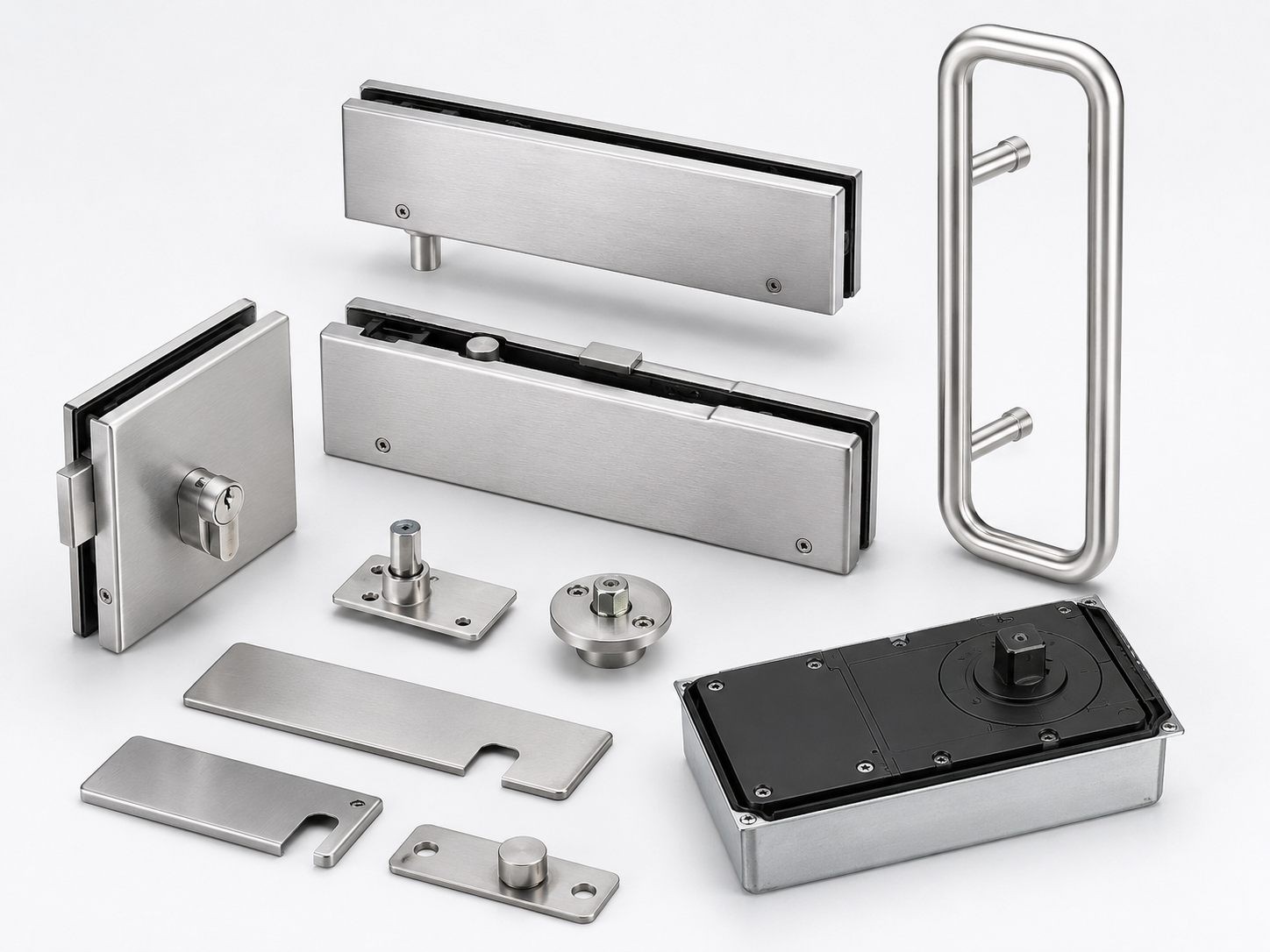
For office building glass entrances, the hardware must support heavy glass panels, high-frequency operation, smooth closing, long-term alignment, and a clean architectural appearance. Metech Hardware provides commercial glass door hardware solutions for office building projects, including heavy-duty floor springs, patch fittings, top pivots, glass door locks, pull handles, and matching stainless steel accessories for frameless glass door systems.
Why Office Glass Entrances Need a System-Based Hardware Selection
For a small interior glass door, many standard hardware combinations can work. But for office building entrances, especially lobby doors and high-traffic access doors, the selection logic is different.
Before recommending hardware, we usually check these basic details first:
| Selection Factor | Why It Matters |
|---|---|
| Door weight | Determines the floor spring load capacity |
| Door width and height | Affects leverage, closing force, and door stability |
| Glass thickness | Determines patch fitting, lock, and gasket compatibility |
| Daily traffic level | Affects durability and opening cycle requirements |
| Indoor or exterior location | Affects corrosion resistance, wind pressure, and closing control |
| Required finish | Affects the visual consistency of the whole entrance |
The key question is not only whether the hardware can be installed.
The better question is:
Will this hardware still keep the door stable, aligned, and controlled after long-term commercial use?
That is why a commercial glass door hardware solution should be selected as a complete system, not just a group of parts with similar finishes.
Key Challenges in Office Building Glass Entrances
1. High Daily Traffic
The main entrance of an office building may work continuously from morning to night. A floor spring used in this position should not be selected only by the maximum door weight on the catalogue.
For high-traffic glass door floor spring systems, we usually recommend checking whether the floor spring has been tested for at least 500,000 opening and closing cycles. For main entrances, this type of cycle testing is more meaningful than appearance or price alone.
A floor spring may support the door on the first day, but if the internal hydraulic structure, sealing system, and closing control are not stable enough, the door may start to lose speed control after repeated use.
For office projects, it is also safer to leave a load margin. If a glass door weighs around 100 kg, we do not suggest choosing a floor spring whose maximum capacity is exactly 100 kg. A higher rated model gives more tolerance for daily impact, door width, wind pressure, and long-term wear.
2. Heavy and Wide Frameless Glass Doors
Office lobby glass doors are often taller and wider than standard room doors. Many frameless commercial glass doors use 10mm or 12mm tempered glass, and some projects may use laminated or thicker glass depending on local design requirements.
As the door becomes wider, the force on the pivot system increases. Even if two doors have the same glass thickness, the wider one places more stress on the bottom patch fitting, top patch fitting, top pivot, and floor spring spindle.
This is why frameless glass door hardware for commercial buildings must be checked as a load-bearing system. The floor spring controls door movement, but the patch fittings and pivot hardware keep the glass panel fixed on the rotation axis.
If the floor spring is strong but the patch fitting is weak, the door can still become loose. If the patch fitting is strong but the pivot axis is not accurate, the door may not close properly.
In office entrance projects, alignment is just as important as load capacity.
3. Exterior Entrances and Wind Pressure
Some office building entrances are exposed to outdoor wind pressure, especially street-facing lobbies and commercial towers without a strong buffer zone.
For exterior glass doors, the floor spring must control the door under changing pressure. A large glass panel can act like a sail. If the closing force is too weak, the door may not return fully. If the closing speed is too aggressive, the door may slam or create impact.
A wind-resistant floor spring for exterior glass doors should not be understood as one product solving every wind problem. The correct approach is to check:
- door width
- door height
- door weight
- local wind exposure
- single-leaf or double-leaf design
- whether the entrance has a vestibule or windbreak area
- required closing speed and latching speed
For wide exterior doors, we often suggest using a stronger floor spring model, stable patch fittings, and a properly designed entrance layout. In some projects, reducing single-door width or using double-leaf doors is more reliable than forcing one oversized glass door to work with standard hardware.
4. Smooth Closing and User Safety
For office buildings, closing performance affects both safety and user experience.
A good commercial glass door floor closer should allow adjustment in two stages:
| Closing Stage | Purpose |
|---|---|
| Main closing speed | Controls how the door returns from the open position |
| Final latching speed | Helps the door close firmly without slamming |
If the door closes too fast, it may hit users or create impact noise. If it closes too slowly, the entrance may stay open for too long, affecting air conditioning, access control, and building management.
In high-end office lobbies, the door should not feel loose, heavy, or aggressive. It should return smoothly and close with control. This “door feeling” is often what separates a well-selected hardware system from a low-cost installation.
Recommended Hardware System for Office Building Entrances
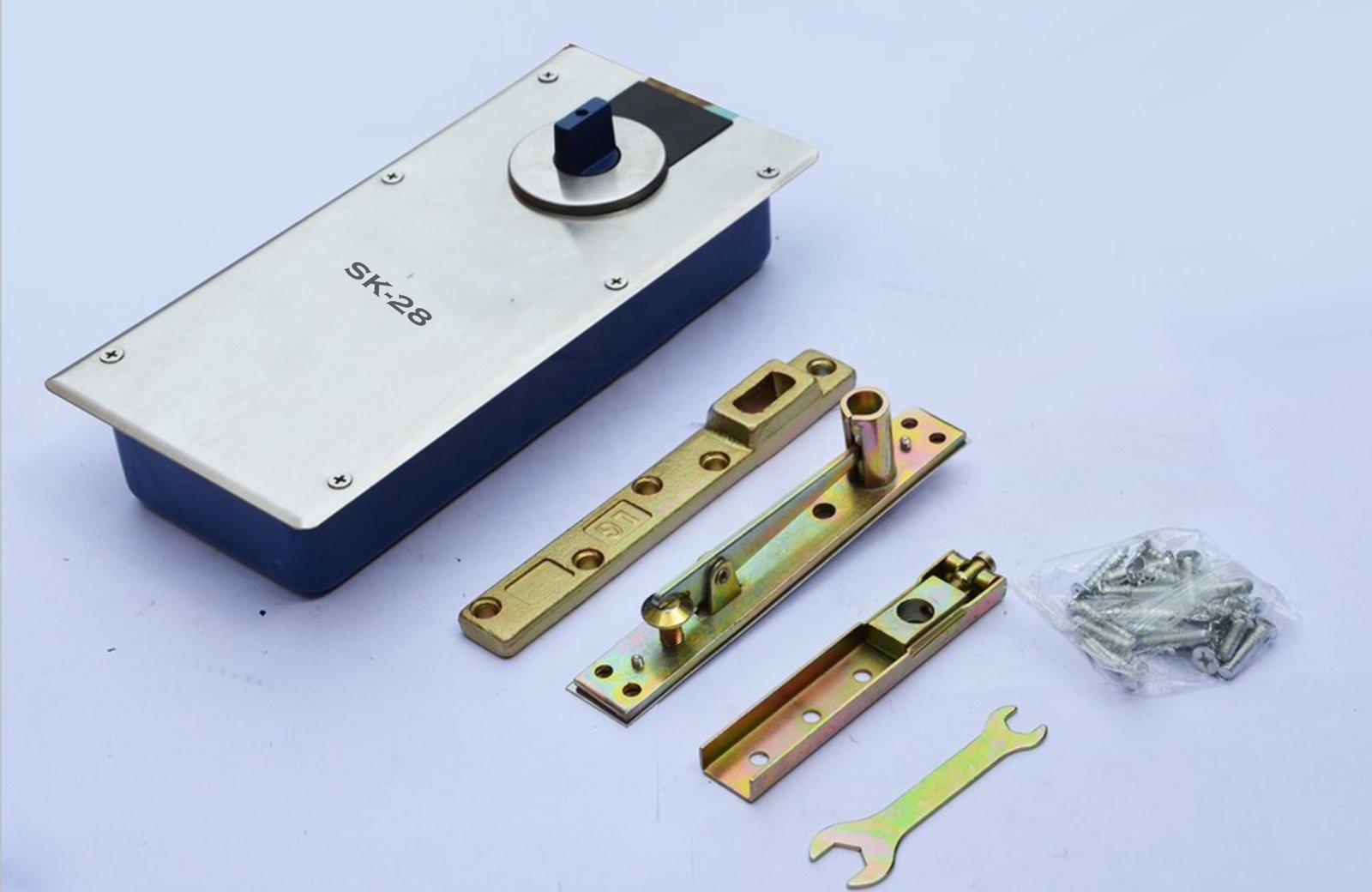
For a typical frameless glass entrance in an office building, we usually recommend checking the following hardware as one complete set.
| Door Position | Recommended Hardware | Function |
|---|---|---|
| Door bottom | Heavy-duty floor spring | Controls opening, closing, and return movement |
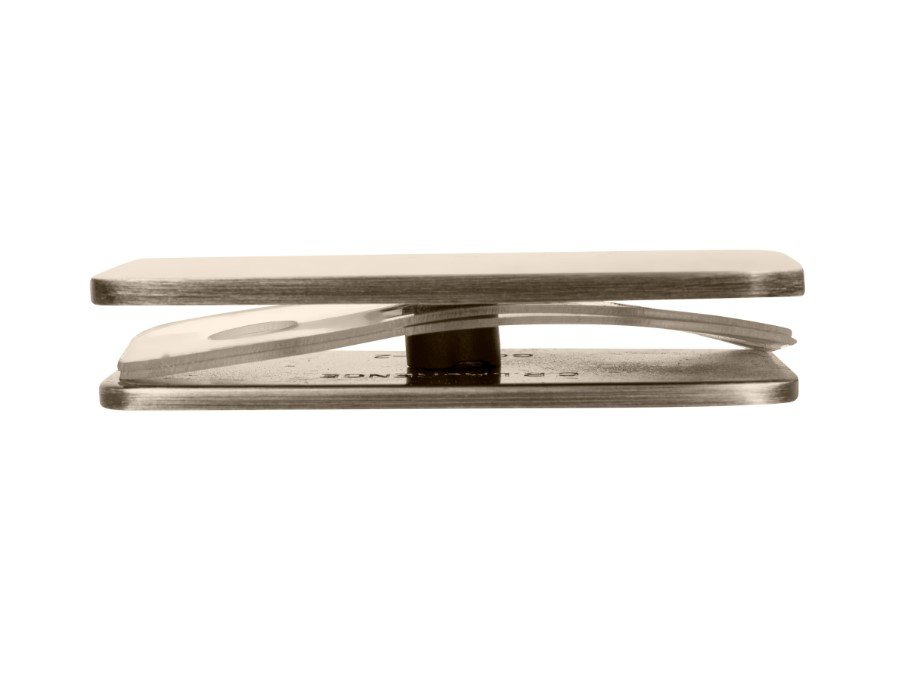
| Bottom glass corner | Bottom patch fitting | Connects the glass door to the floor spring spindle |
| Top glass corner | Top patch fitting | Connects the glass door to the top pivot |
| Transom or frame area | Top pivot | Keeps the rotation axis stable |
| Locking area | Glass door lock or patch lock | Provides security and access control |
| Door surface | Stainless steel pull handle | Supports daily operation and improves entrance appearance |
| Visible hardware area | Matching cover plates | Keeps the full entrance system visually consistent |
For office projects, these parts should match in spindle position, glass thickness range, installation method, finish, and structural strength.
A complete floor spring and patch fitting system for frameless glass doors can reduce many common problems, such as poor closing, panel misalignment, loose fittings, and inconsistent appearance between parts.
Floor Spring Selection: What We Check First
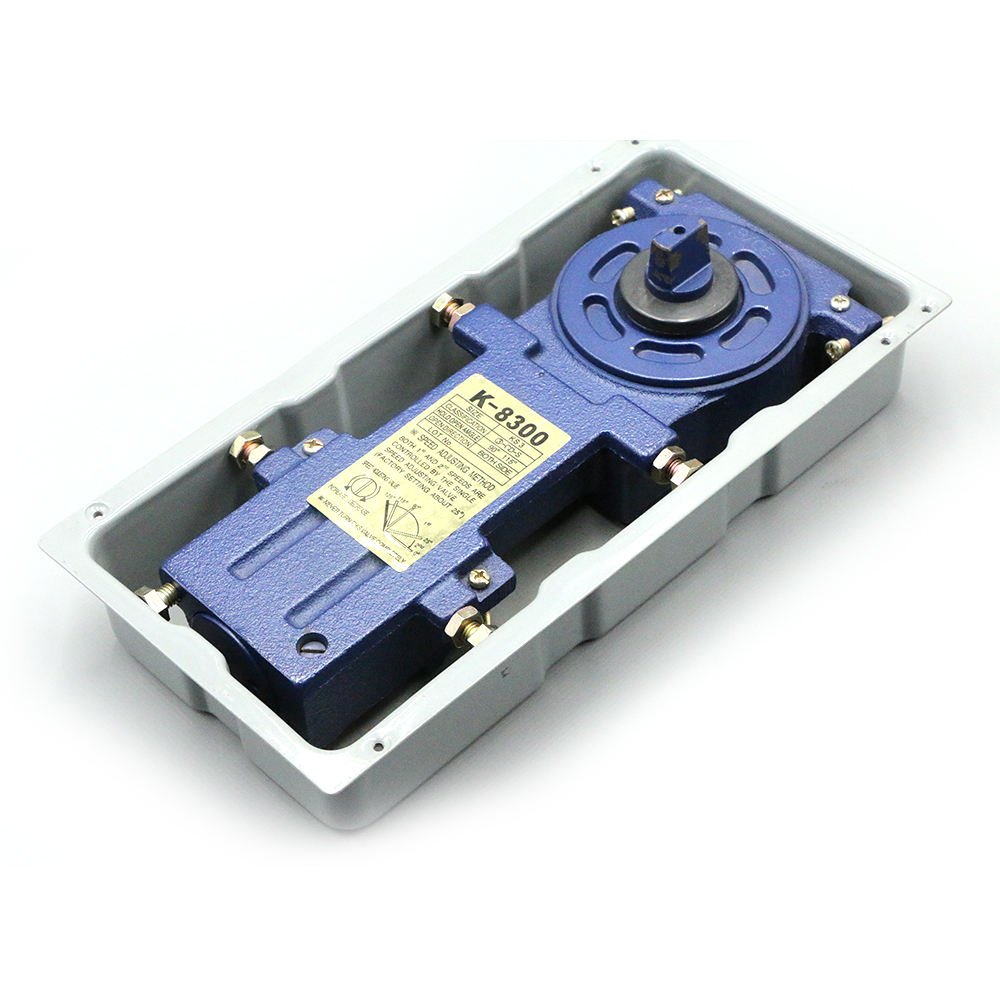
The floor spring is the center of the whole door control system.
For office building entrances, we normally check the following points before selection:
| Floor Spring Factor | Recommended Check |
|---|---|
| Opening cycle test | Prefer models tested to 500,000 cycles or above for high-traffic entrances |
| Door weight capacity | Leave safety margin instead of selecting at the maximum limit |
| Door width range | Wider doors need stronger control and better pivot stability |
| Closing speed adjustment | Required for smooth daily operation |
| Final latching adjustment | Helps the door close firmly without slamming |
| Hold-open or non-hold-open | Depends on project requirement and local safety rules |
| Body structure | Affects durability, stability, and long-term use |
| Sealing quality | Important for preventing oil leakage |
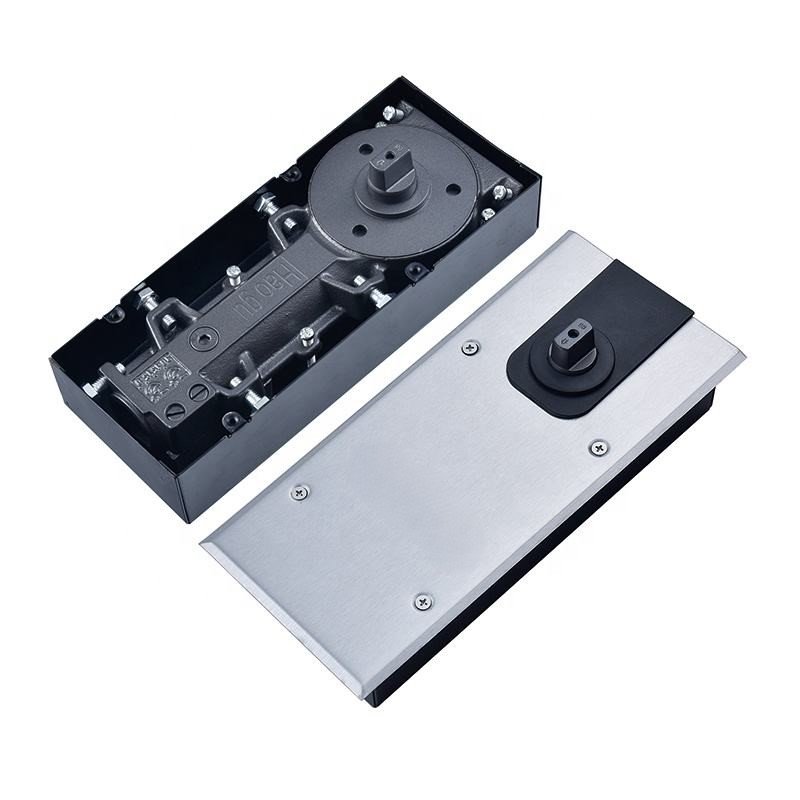
For office entrance doors, we do not recommend selecting the cheapest floor spring that can “carry the door.” The real value of a heavy-duty floor spring for commercial glass doors is not just load capacity. It is stable hydraulic control after repeated use.
Aluminum Alloy Body vs Cast Iron Body Floor Spring
Many buyers compare floor springs only by size and door weight. In real projects, the body structure also matters.
Aluminum Alloy Body
An aluminum alloy body is usually lighter and has good corrosion resistance. It is suitable for many standard interior glass door applications. For projects where the door is not too heavy and the traffic level is moderate, a well-made aluminum alloy body floor spring can be a practical choice.
However, for heavy entrance doors or high-impact commercial use, the buyer should check carefully whether the body structure, spindle support, hydraulic chamber, and sealing design are strong enough for long-term use.
Cast Iron Body
A cast iron body is usually heavier and has stronger structural rigidity. For heavy-duty commercial entrances, this can provide better stability under repeated pressure and door movement.
The trade-off is that cast iron requires proper surface treatment to improve corrosion resistance, especially in humid or exterior environments. The quality of machining, oil sealing, and anti-rust treatment is still very important.
In simple terms, aluminum alloy body floor springs are often used for standard or medium-duty applications, while cast iron body floor springs are more suitable for heavy-duty office entrance doors where long-term stability is required.
Material alone does not decide quality. But for high-traffic office entrances, body strength, hydraulic control, cycle testing, and sealing performance should all be checked together.
Patch Fittings and Stainless Steel Material Selection
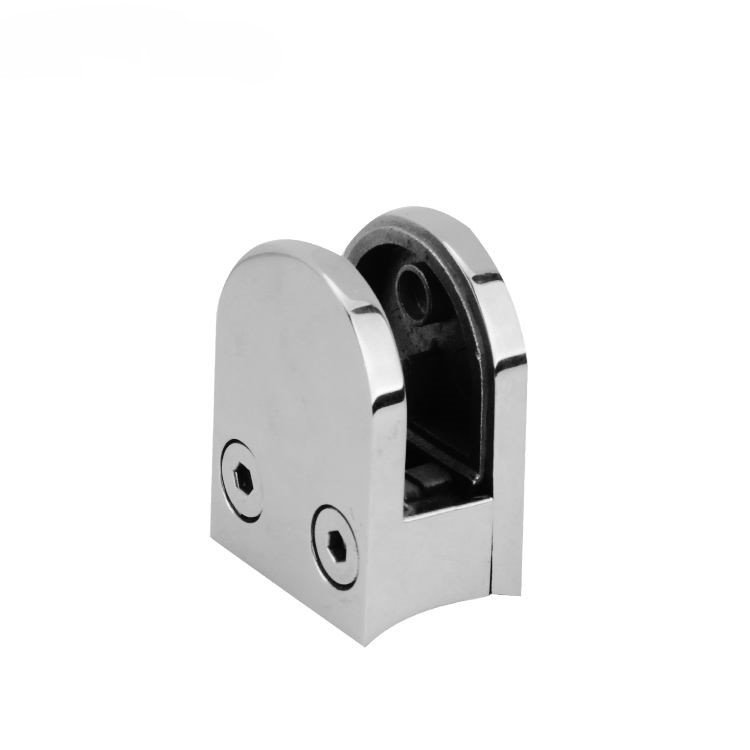
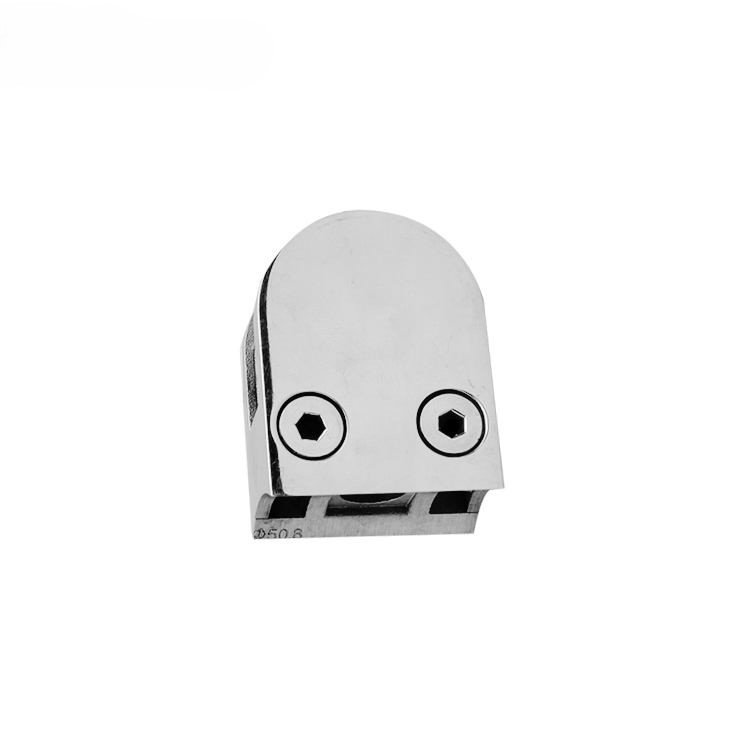
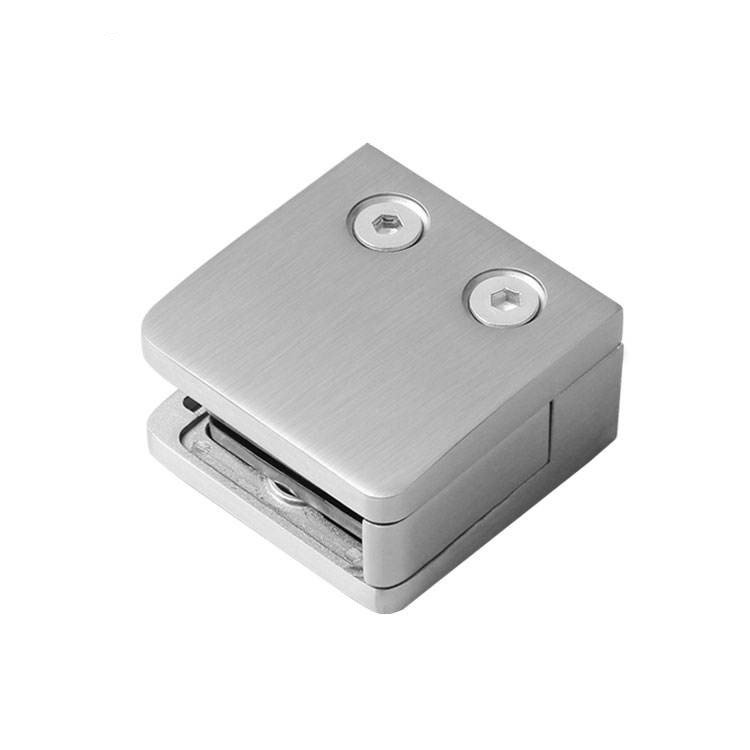
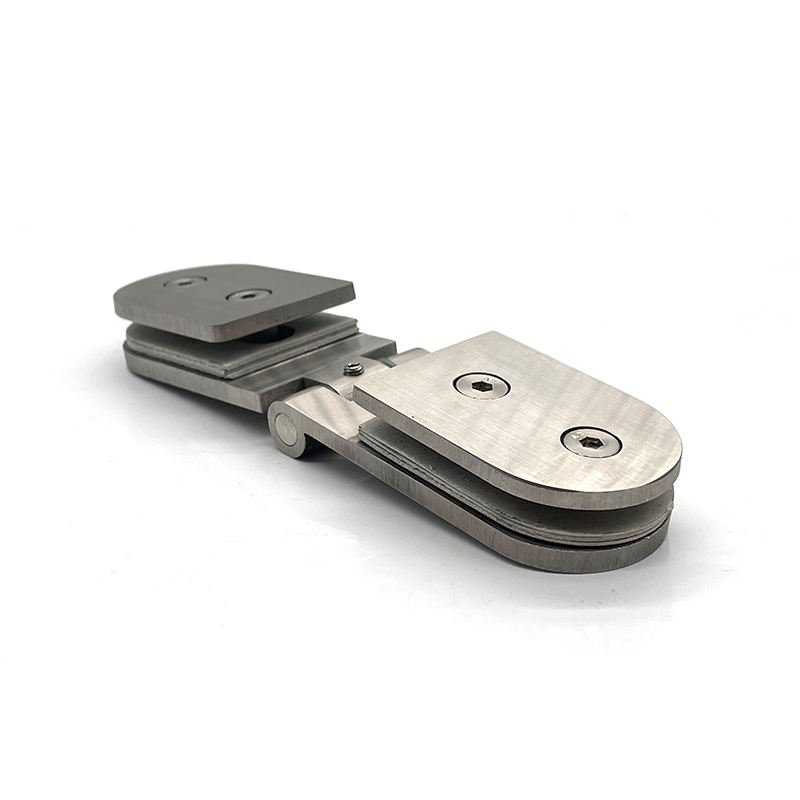
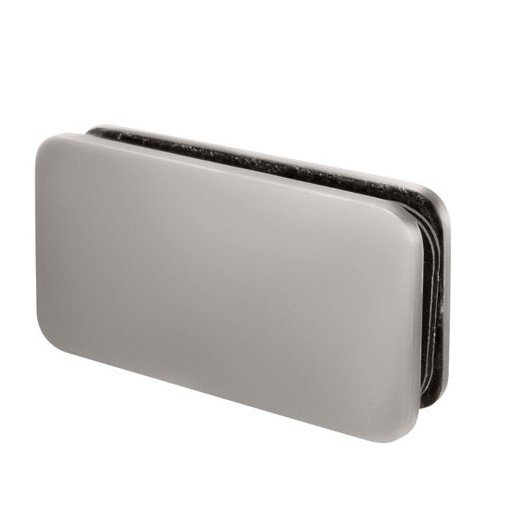
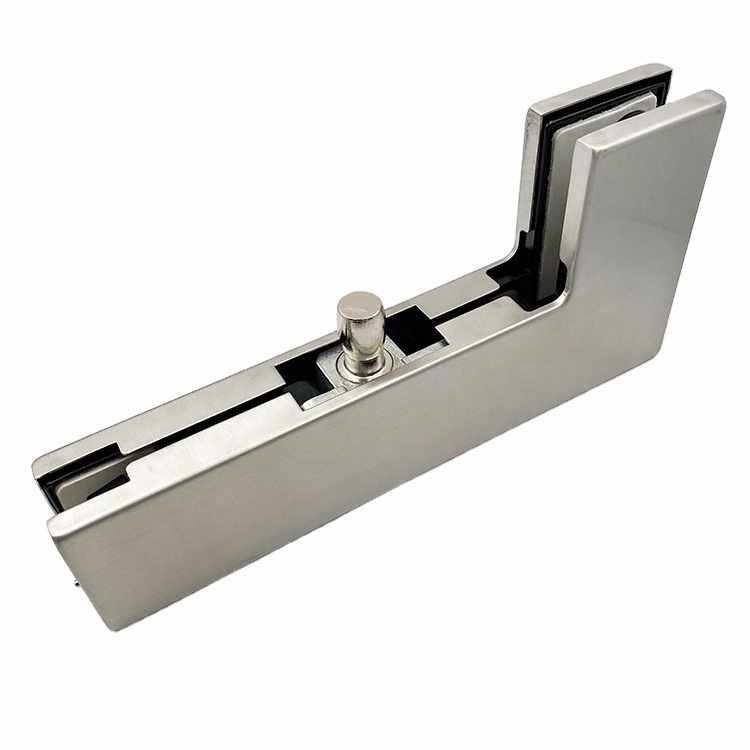
Patch fittings are often underestimated. In a frameless glass door system, they are not only decorative covers. They hold the glass panel, connect the pivot system, and help keep the door aligned.
For office building entrances, we usually recommend commercial grade stainless steel patch fittings, especially for visible entrance areas.
Common material choices include:
| Material | Suitable Application |
|---|---|
| SS304 stainless steel | Most indoor office buildings, lobbies, and commercial interiors |
| SS316 stainless steel | Coastal, humid, outdoor, or more corrosive environments |
| Zinc alloy or low-grade material | Not recommended for high-traffic office entrances |
For most office building interiors, SS304 is a balanced choice for strength, appearance, and corrosion resistance. For coastal cities, humid areas, or exterior entrances, SS316 can be considered.
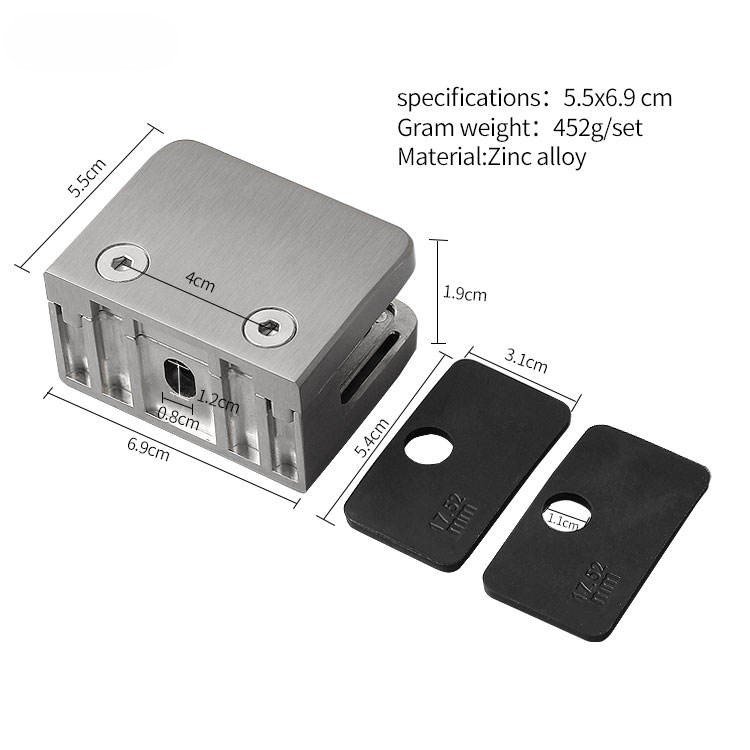
The patch fitting should also match the glass thickness, usually 10mm or 12mm for many commercial frameless glass doors. The gasket, clamping structure, spindle hole, and cover plate should all fit correctly. If the installer needs to force the fitting or add extra material to make it work, the hardware was probably not selected correctly.
Pull Handles, Locks, and Finish Consistency
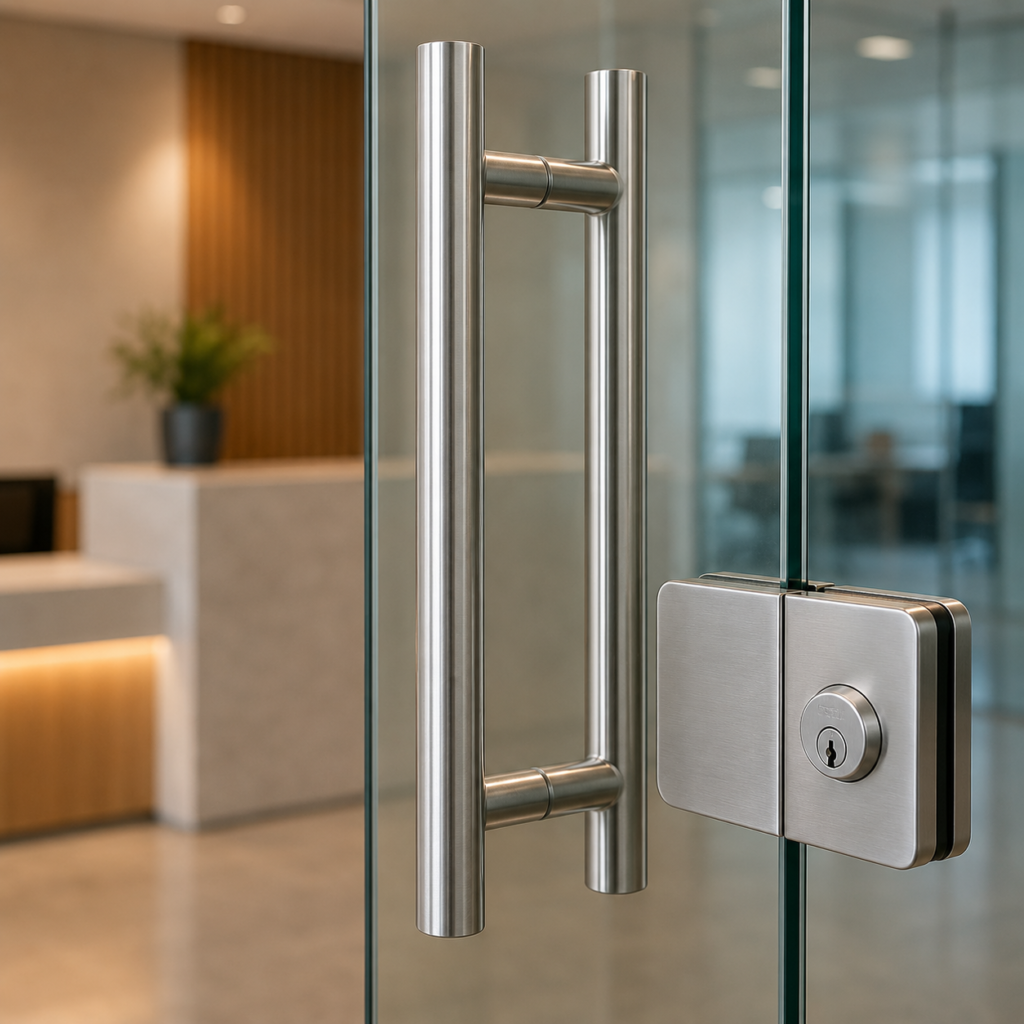
In office entrances, the pull handle and lock are touched every day. They affect both function and appearance.
For high-traffic office doors, we suggest avoiding thin-wall or weak fixing structures. A pull handle may look acceptable at installation, but if the tube wall, fixing screws, or mounting base are weak, it may become loose after repeated use.
Locks also need to match the glass thickness and door alignment. If the door drops slightly because of poor hardware selection, the lock may no longer enter the strike plate smoothly.
Finish consistency is another important point in high-end office buildings. Satin stainless steel, polished stainless steel, matte black, gold, and custom finishes can all be used, but the patch fitting, handle, lock, and floor spring cover plate should look like one system.
A beautiful glass entrance can look poorly planned if every visible hardware part has a different surface tone.
Common Problems Caused by Wrong Hardware Selection
Many office glass door problems can be traced back to the first selection stage.
Typical problems include:
- the door does not close fully
- the floor spring loses speed control
- the glass panel becomes misaligned
- the lock cannot enter the strike plate smoothly
- the patch fitting becomes loose
- the pull handle starts shaking
- the door closes too fast or too slowly
- the finish of different parts does not match
- the entrance door performs poorly under wind pressure
These issues are not always installation problems. In many cases, the selected hardware was not suitable for the real working conditions of the door.
For office building projects, the best time to avoid these problems is before ordering, not after installation.
Why Work with an Architectural Glass Fittings Manufacturer
For contractors, distributors, and project buyers, working with an architectural glass fittings manufacturer makes the project easier to control.
A manufacturer can support more than product supply. The right supplier should help check door size, door weight, glass thickness, floor spring capacity, patch fitting compatibility, finish requirement, packaging, and repeat order consistency.
Metech Hardware provides one-stop commercial glass door hardware solutions for office building projects, including floor springs, patch fittings, glass door locks, pull handles, pivots, and related fittings.
For OEM and project-based customers, Metech can support private label requirements, custom finishes, export packaging, and hardware recommendations based on project specifications.
The goal is simple: help customers select a glass door hardware system that can be installed smoothly, used reliably, and reordered consistently.
Suitable Applications
This office building glass door hardware solution is suitable for:
- office building main entrances
- corporate lobby glass doors
- commercial tower entrances
- reception area glass doors
- tenant office glass doors
- meeting room frameless glass doors
- interior office partition doors
- shared commercial access areas
Different areas require different hardware levels. A main entrance usually needs a heavier-duty floor spring and stronger patch fitting system. An interior meeting room may focus more on quiet closing, appearance, and lock function.
The best solution should be selected according to the actual door position, not only the building type.
FAQ
What hardware is needed for an office building glass entrance door?
A typical frameless glass entrance usually needs a floor spring, bottom patch fitting, top patch fitting, top pivot, glass door lock, pull handle, and matching cover plates. For main entrances, heavy-duty hardware is recommended.
How do I choose a floor spring for a high-traffic office glass door?
Check the door weight, door width, door height, glass thickness, traffic level, and installation environment. For high-traffic entrances, we recommend choosing a floor spring tested to at least 500,000 opening and closing cycles, with enough load capacity margin.
Is aluminum alloy body or cast iron body better for floor springs?
Aluminum alloy body floor springs are lighter and suitable for many standard applications. Cast iron body floor springs usually offer stronger structural rigidity and are more suitable for heavy-duty commercial entrance doors. The final choice should also consider machining quality, sealing performance, corrosion protection, and cycle testing.
What glass thickness is commonly used for office glass doors?
Many commercial frameless glass doors use 10mm or 12mm tempered glass, but the final choice depends on the project design and local building requirements. Patch fittings, locks, and gaskets must match the confirmed glass thickness.
What material is recommended for commercial patch fittings?
SS304 stainless steel is commonly used for office building interiors and lobby glass doors. For coastal, humid, or exterior environments, SS316 stainless steel may be considered.
Can Metech provide OEM glass door hardware for office projects?
Yes. Metech can support OEM and project-based supply for floor springs, patch fittings, locks, handles, finish options, logo requirements, and export packaging.
Need a Hardware Recommendation for Your Office Project?
Send us your door width, door height, glass thickness, estimated door weight, installation position, traffic level, and required finish.
Metech Hardware will help recommend a suitable commercial glass door hardware solution for your office building project.