When a professional glass installer looks at a frameless shower enclosure, they do not just see a glass box.
They see a bathroom floor plan, a door swing path, a fixed glass panel, a magnetic seal line, and a stress transfer system.
One of the most common mistakes in bathroom renovation projects is ordering shower hinges based on appearance instead of layout. If the hinge angle is wrong, problems can appear quickly: the door may hit a toilet or vanity, the magnetic seal may not close properly, and water leakage may appear at the door edge.
Shower hinge angles — 90°, 135° and 180° — are not interchangeable options. They are engineered for three different bathroom layouts.
The correct question is not:
“Which hinge looks better?”
The correct question is:
“Which hinge angle does the bathroom layout require?”
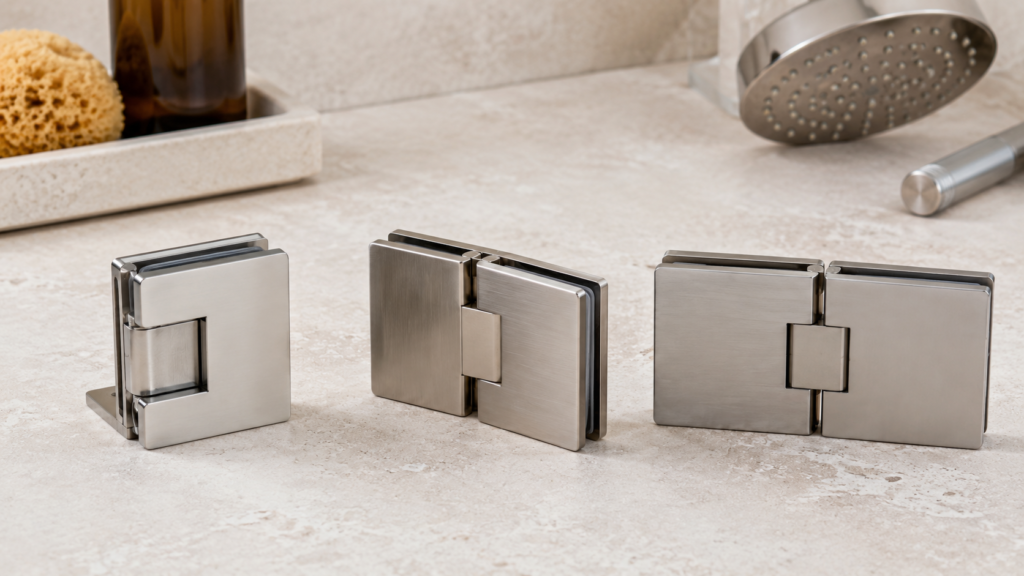
1. The 90° Shower Hinge: The Corner and Alcove Standard
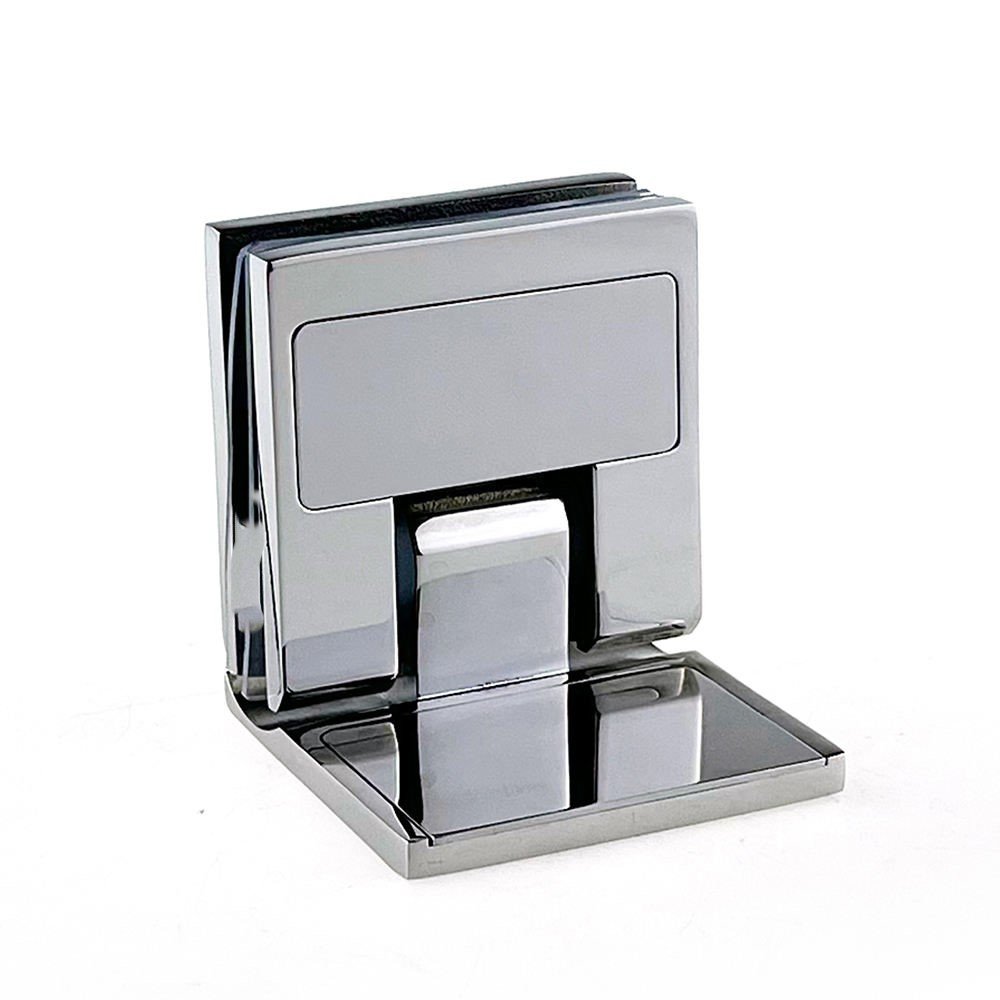
The 90° shower hinge is the standard choice for right-angle shower layouts.
It is commonly used in alcove showers, wall-to-glass shower doors, and L-shape corner shower enclosures. In these layouts, the moving glass door closes against a wall or a fixed glass panel at a clean right angle.
For a wall-to-glass 90° hinge, the structural load is transferred into the wall. This means the installer must check more than the tile surface. The real holding strength comes from the wall substrate, anchor position, fixing screws, and installation accuracy.
For a 90° glass-to-glass hinge, the situation is different. The fixed glass panel receives part of the pulling force every time the door opens and closes. In this layout, the fixed panel should be secured with a strong U-channel, glass clamp, stabilizing bar, or properly designed fixing system.
A 90° hinge is simple only when the supporting structure is simple.
If the fixed glass panel is weak, the hinge may still work at first, but long-term use can lead to alignment movement, seal gaps, or door sagging.
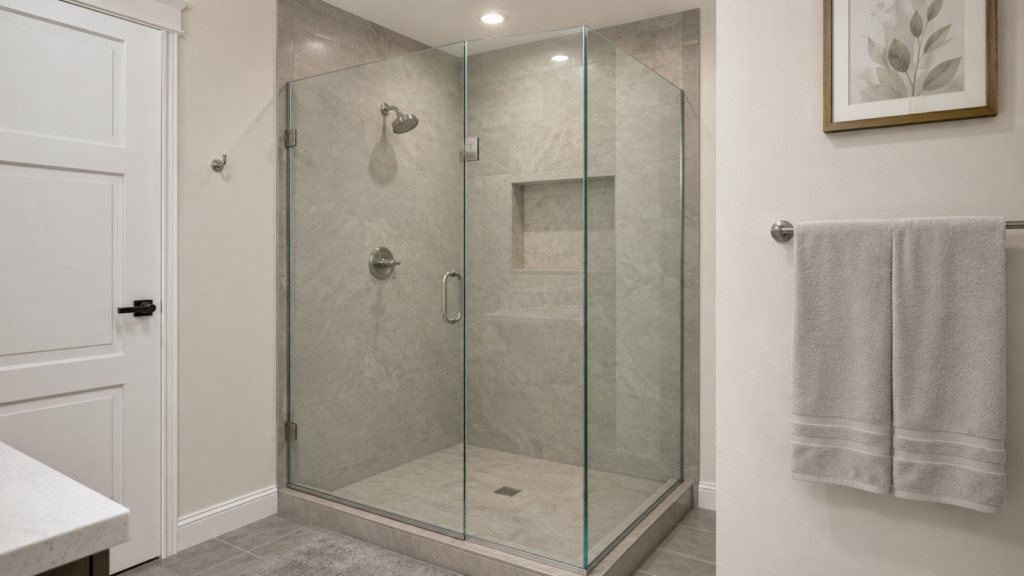
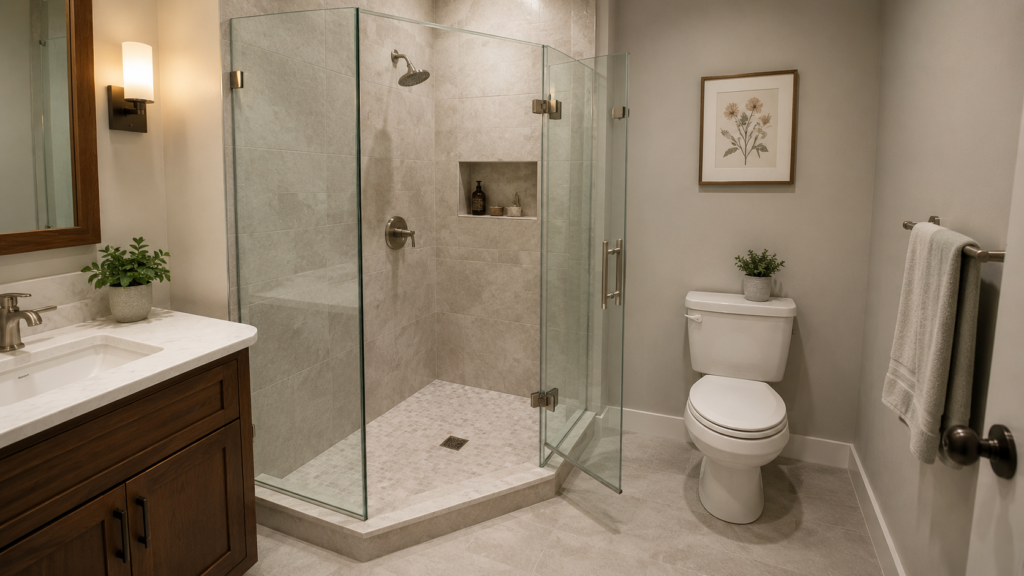
2. The 135° Shower Hinge: The Neo-Angle Space Saver
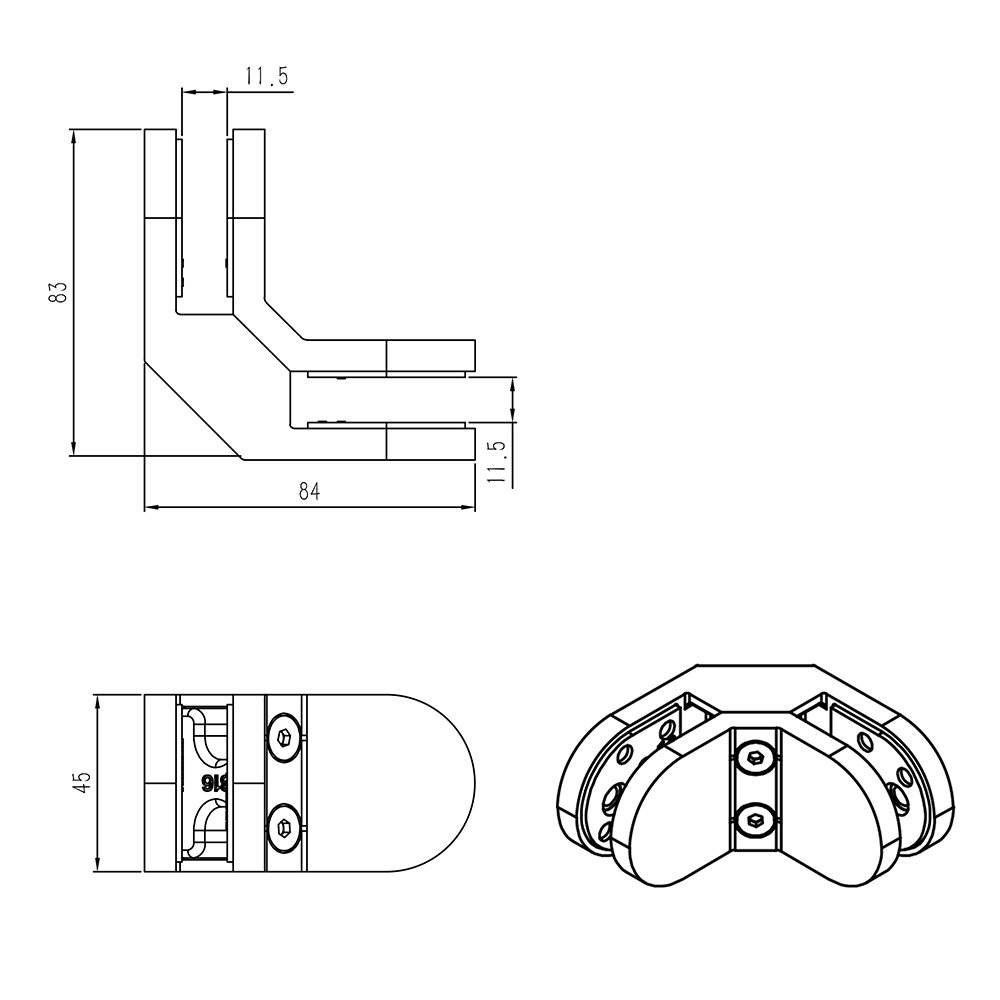
The 135° shower hinge is designed for neo-angle or diamond shower enclosures.
This layout is common in compact bathrooms. A standard 90° corner shower may create a wide door swing radius. In small spaces, the opening door may interfere with a toilet, vanity, towel rail, cabinet, or opposite wall.
The neo-angle layout solves this by cutting the corner and creating an angled glass enclosure. The 135° hinge connects the door to the angled fixed glass panel and allows the door to operate within a tighter floor plan.
This is why the 135° hinge exists.
It is not a decorative choice. It is a space-planning solution.
The engineering challenge is seal alignment. A 135° layout is one of the most sensitive configurations for waterproofing because the magnetic seal, glass cutting angle, and hinge closing position must all match. Even a small angle error can create a visible gap at the magnetic strip.
For neo-angle shower projects, the hinge angle, glass cutting, and seal profile should be confirmed together before production.
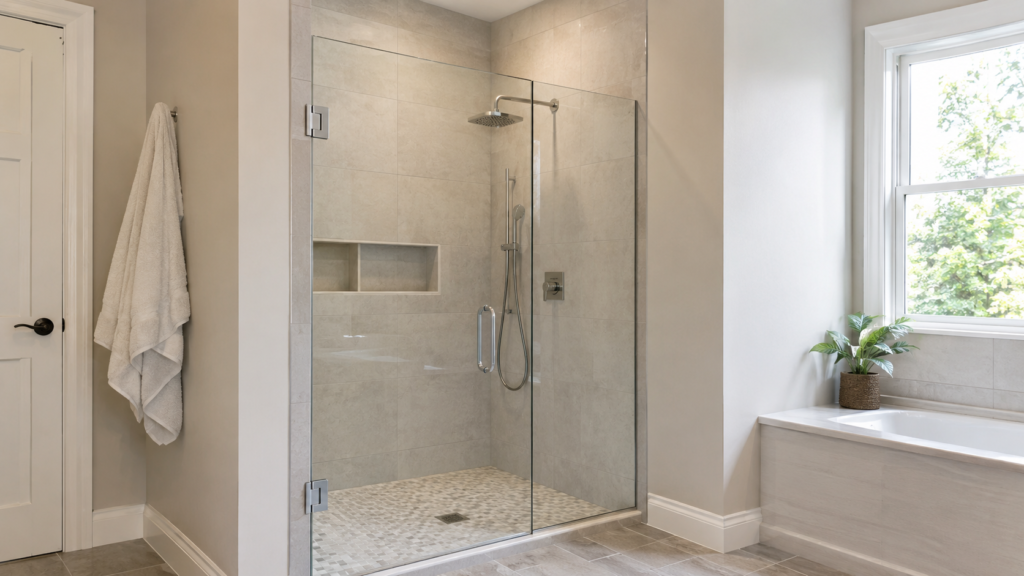
3. The 180° Shower Hinge: The Inline Luxury
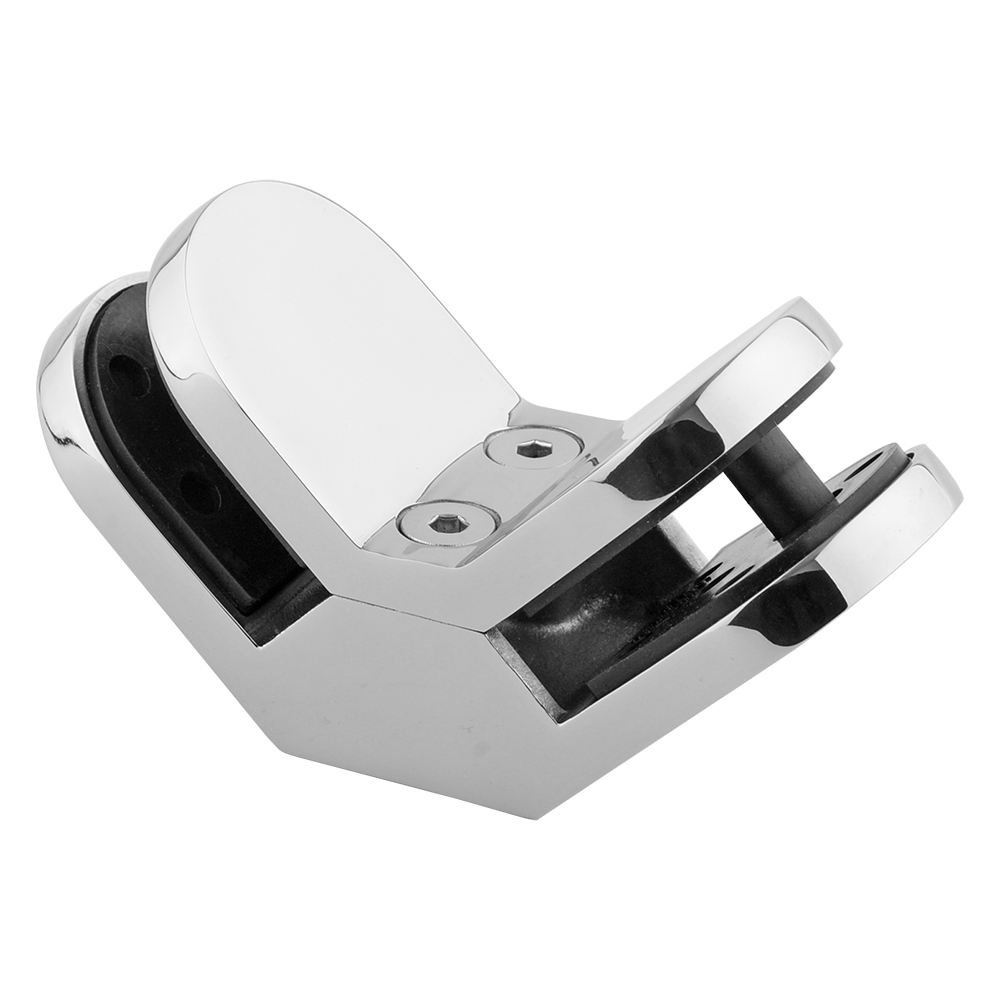
The 180° shower hinge is used when the moving door and fixed glass panel are installed on the same straight line.
This layout is common in inline shower enclosures, high-end hotel bathrooms, villa bathrooms, and large master bathrooms. It creates a long, clean wall of glass and gives the bathroom a more open visual effect.
But the clean appearance comes with an engineering requirement.
A 180° glass-to-glass hinge transfers the swing load of the door into the fixed panel. For smaller doors, this can work well with correct hardware and glass support. For wider or heavier doors, the fixed panel must be stabilized properly.
A support bar, header bar, return panel, reinforced wall clamp, or strong U-channel can help reduce long-term vibration, alignment movement, and stress on the fixed glass.
For 10mm or 12mm frameless shower doors, this is especially important. The fixed panel is not just a side panel. It becomes part of the door support system.
A 180° hinge gives the cleanest inline look, but it also requires the most careful support design.
4. The 25° Auto-Closing Mechanism
Regardless of angle, a premium shower hinge must do more than swing.
It must help the door return to the correct sealing position.
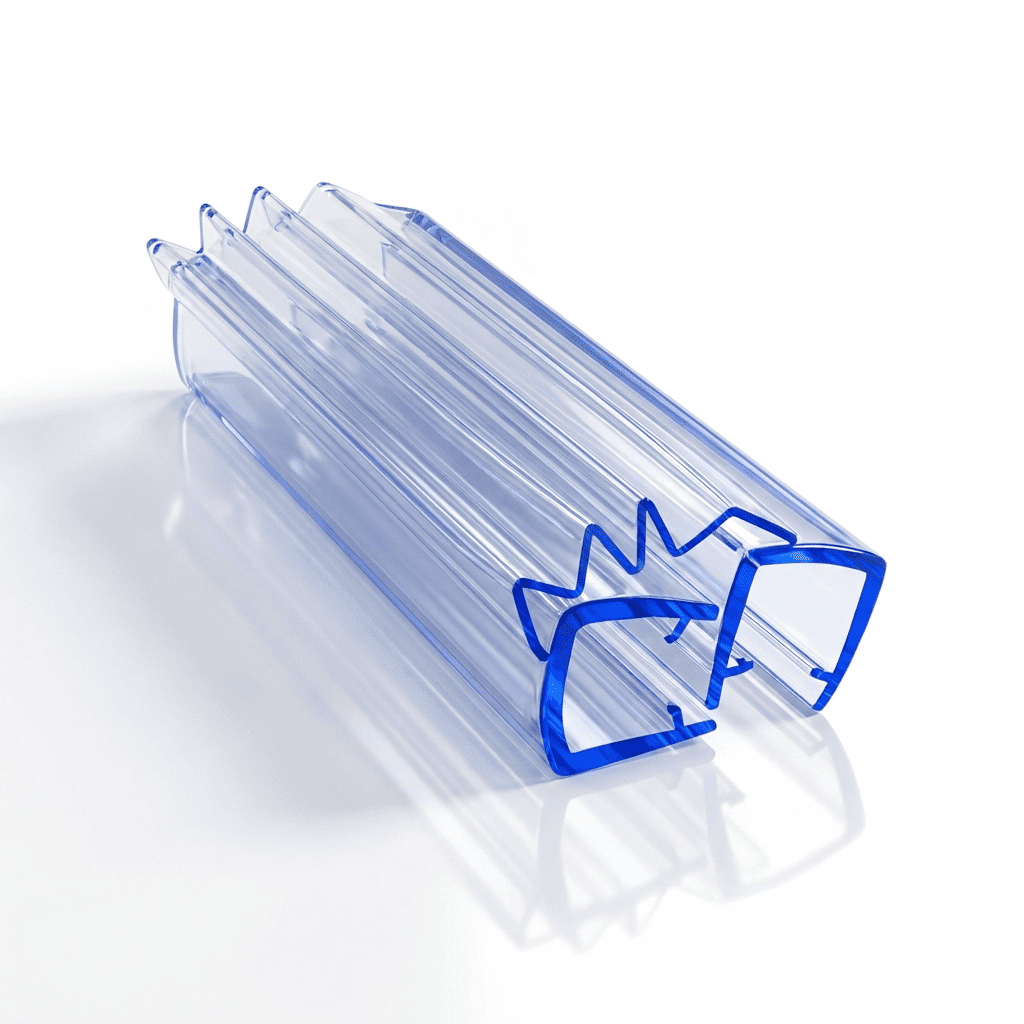
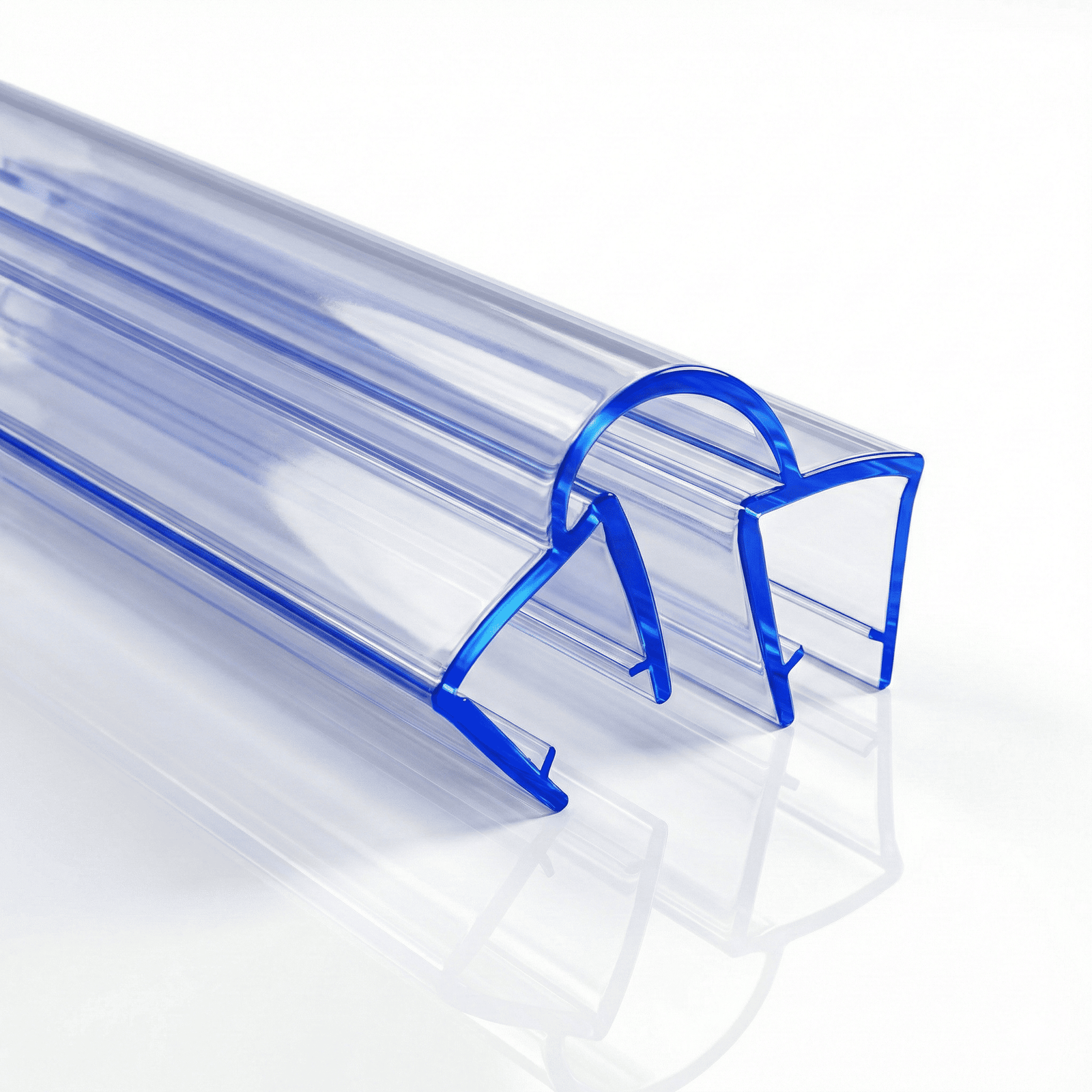
A common failure in low-grade shower hardware is door drift. The door closes, but it does not return accurately enough for the magnetic seal or PVC strip to make consistent contact.
A well-designed self-closing shower hinge should begin guiding the door back when it reaches the final 25° before closing. From that point, the internal spring structure helps pull the glass door toward its closed position.
The goal is not only to close the door.
The goal is to return the door to the same sealing position every time.
This improves contact with magnetic seals, bottom seals, side seals, and water deflectors, reducing the risk of repeated water leakage at the door edge.
5. Load Capacity and Material Grade Still Matter
The hinge angle decides the geometry. The hinge structure decides whether the door remains stable over time.
Most frameless shower doors use 8mm, 10mm, or 12mm tempered glass. As a practical reference, 10mm glass weighs about 25kg per square meter. A typical frameless shower door can easily reach 35kg to 40kg, depending on height and width.
For a 10mm glass door, a pair of heavy-duty hinges should usually support around 40kg to 45kg, depending on the hinge model and installation condition.
Wider doors also create more leverage on hinge screws and fixed panels. This means a geometrically correct hinge angle may still fail if the hinge body, pivot structure, screws, or gaskets are under-specified.
Material is also critical.
For premium frameless shower doors, low-grade zinc alloy should generally be avoided. Solid forged brass, SS304, or SS316 are more suitable for long-term use, depending on the project grade and corrosion requirement.
Finish durability matters even more for popular colors such as matte black, brushed gold, brushed nickel, chrome, and PVD finishes. For premium shower hardware, a 96–120 hour acid salt spray test is a practical benchmark for surface durability.
A correct hinge angle solves the layout.
A correct structure and material protect the result.
Shower Hinge Layout Decision Matrix
| Bathroom Layout | Spatial Condition | Recommended Hinge Angle | Critical Installation Focus |
|---|---|---|---|
| Standard alcove shower | Door mounted to wall | 90° wall-to-glass hinge | Wall strength and door swing clearance |
| L-shape corner enclosure | Door closes at right angle | 90° glass-to-glass hinge | Fixed panel support and seal contact |
| Compact bathroom corner | Toilet or vanity near door swing | 135° hinge | Clearance and angled magnetic seal alignment |
| Neo-angle / diamond shower | Angled fixed glass panels | 135° glass-to-glass hinge | Accurate glass cutting and 135° seal fit |
| Inline shower enclosure | Door and fixed panel in one straight line | 180° hinge | Fixed panel stability and support bar |
| Hotel bathroom | Large frameless glass door | Heavy-duty brass or stainless hinge | Self-closing and finish durability |
| 10mm glass door | Medium to large shower door | Heavy-duty hinge pair | 40kg–45kg load capacity |
| Matte black / brushed gold project | Premium decorative finish | Same angle as layout requires | 96–120h acid salt spray test |
Common Mistakes Before Ordering
The first mistake is choosing hinges from product photos instead of the bathroom layout. Many shower hinges look similar, but the angle determines the glass relationship.
The second mistake is using a 90° hinge where a 135° hinge is required. In a neo-angle enclosure, this usually causes poor magnetic seal alignment and difficult door adjustment.
The third mistake is using a 180° hinge without stabilizing the fixed glass. Inline shower doors look simple, but the fixed panel must be strong enough to receive the door movement load.
The fourth mistake is checking the angle but ignoring the glass weight. A hinge can be geometrically correct and still be under-specified for a large 10mm or 12mm glass door.
The fifth mistake is saving cost with zinc alloy hinges. In humid bathrooms, low-grade material can lead to corrosion, loose movement, and finish failure, especially on matte black or brushed gold hardware.
Specify by the Floor Plan
Choosing between 90°, 135° and 180° shower hinges is not a design preference.
It is a structural decision dictated by bathroom geometry.
Use 90° hinges for standard alcove, wall-to-glass, and right-angle corner enclosures.
Use 135° hinges for neo-angle or diamond layouts where the door swing must avoid toilets, vanities, or tight circulation areas.
Use 180° hinges for inline shower enclosures where the door and fixed panel close in one straight line.
After confirming the angle, check the glass thickness, door size, hinge load capacity, self-closing performance, seal alignment, material grade, and finish durability.
The right shower hinge is not simply the one that fits the glass.
It is the one that matches the bathroom layout, supports the door weight, returns to the sealing position, and stays stable after daily use.
Need Hardware for Your Shower Floor Plan?
Send us your bathroom layout, glass thickness, door width, door height, wall-to-glass or glass-to-glass structure, door swing direction, finish requirement, and quantity.
Metech can help recommend the correct 90°, 135° or 180° shower hinge for your frameless shower door project.