An automatic sliding door often looks more modern in a rendering. That is one of the first reasons many projects ask for one.
But “more modern” is not a specification. It is not the question that actually decides whether an automatic sliding door is the right choice.
Automatic sliding doors solve one type of problem: high traffic flow, hands-free access, public entrance convenience, accessibility requirements and better entrance control. Manual sliding glass doors solve another type of problem: simpler installation, no power dependency, lower maintenance, quieter interior division and better cost control.
The real question is not which system looks more premium. The real question is which problem your entrance or partition actually has — and which system you are prepared to power, install, maintain and budget for over the life of the project.
Choosing between an automatic sliding door and a manual sliding door is not only a budget decision. It is a project-use decision.
Quick Comparison: Automatic Sliding Door vs Manual Sliding Door
| Comparison point | Automatic sliding door | Manual sliding door |
|---|---|---|
| Best use | Storefronts, malls, clinics, hotels, office entrances and high-traffic commercial access | Offices, showrooms, residential interiors, private rooms and interior partitions |
| Operation | Motorized and sensor-activated | Hand-pulled or soft-close assisted |
| Power supply | Required | Not required |
| Main hardware | Operator, motor, controller, sensor, track, roller, belt, glass panels and locking accessories | Track, roller, hanger or clamp, floor guide, handle, stopper, soft-close damper and lock |
| User experience | Hands-free, convenient and commercial | Simple, quiet and direct |
| Initial cost | Usually higher | Usually lower |
| Maintenance | Higher, includes operator, sensor and power system | Lower, mainly track, roller, guide and lock |
| Safety logic | Sensors, controller setting and anti-pinch protection | Soft-close, stopper, anti-jump device and floor guide |
| Suitable traffic | Medium to high traffic | Low to medium traffic |
This table gives a quick direction, but the real selection should go deeper. A busy storefront entrance and a quiet office meeting room partition do not need the same sliding door system.
What Is an Automatic Sliding Door?
An automatic sliding door uses a motorized operator to open and close the door panels. A typical automatic sliding glass door system may include an operator, motor, controller, track, roller, belt or drive system, activation sensor, safety sensor, glass panels, fixed glass panels and locking accessories.
Automatic sliding doors are commonly used in:
- Retail storefronts
- Shopping malls
- Supermarkets
- Clinics and hospitals
- Office building entrances
- Hotel entrances
- Airports and public buildings
- High-traffic commercial spaces
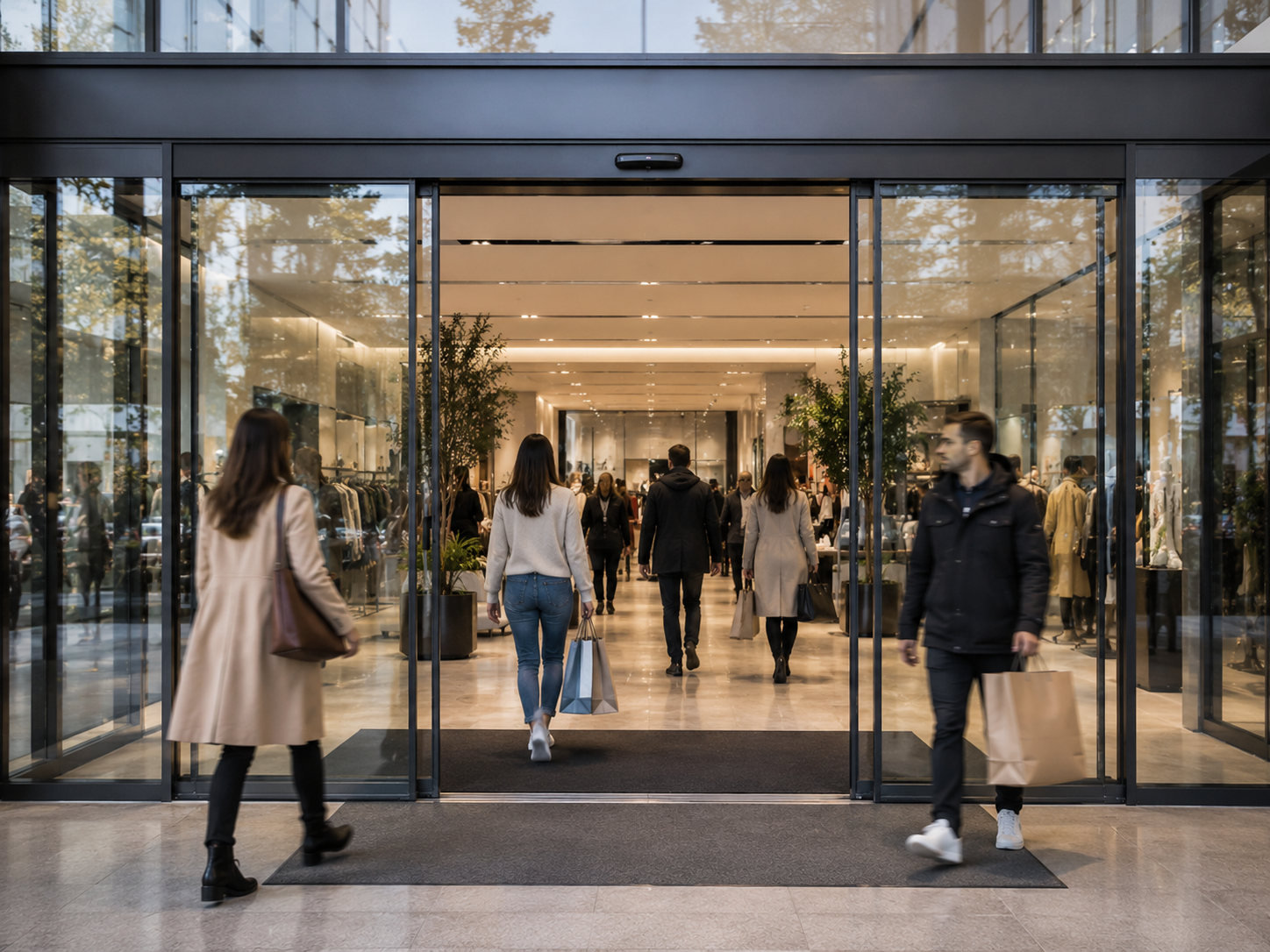
The biggest advantage is convenience. Customers do not need to push or pull the door. This is useful when people are carrying shopping bags, luggage, trolleys or medical equipment. It also helps create a cleaner and more controlled commercial entrance experience.
For air-conditioned shops, clinics and hotel entrances, automatic operation can also reduce unnecessary open-door time. The door opens when people approach and closes after they pass, which helps keep indoor and outdoor areas better controlled.
Before selecting a storefront automatic sliding door or commercial sliding door system, the project should check opening width, glass panel weight, operator load rating, sensor position, power supply, safety function, maintenance access and locking method after business hours.
An automatic sliding door is not just a glass panel with a track. It is an entrance system.
What Is a Manual Sliding Glass Door?
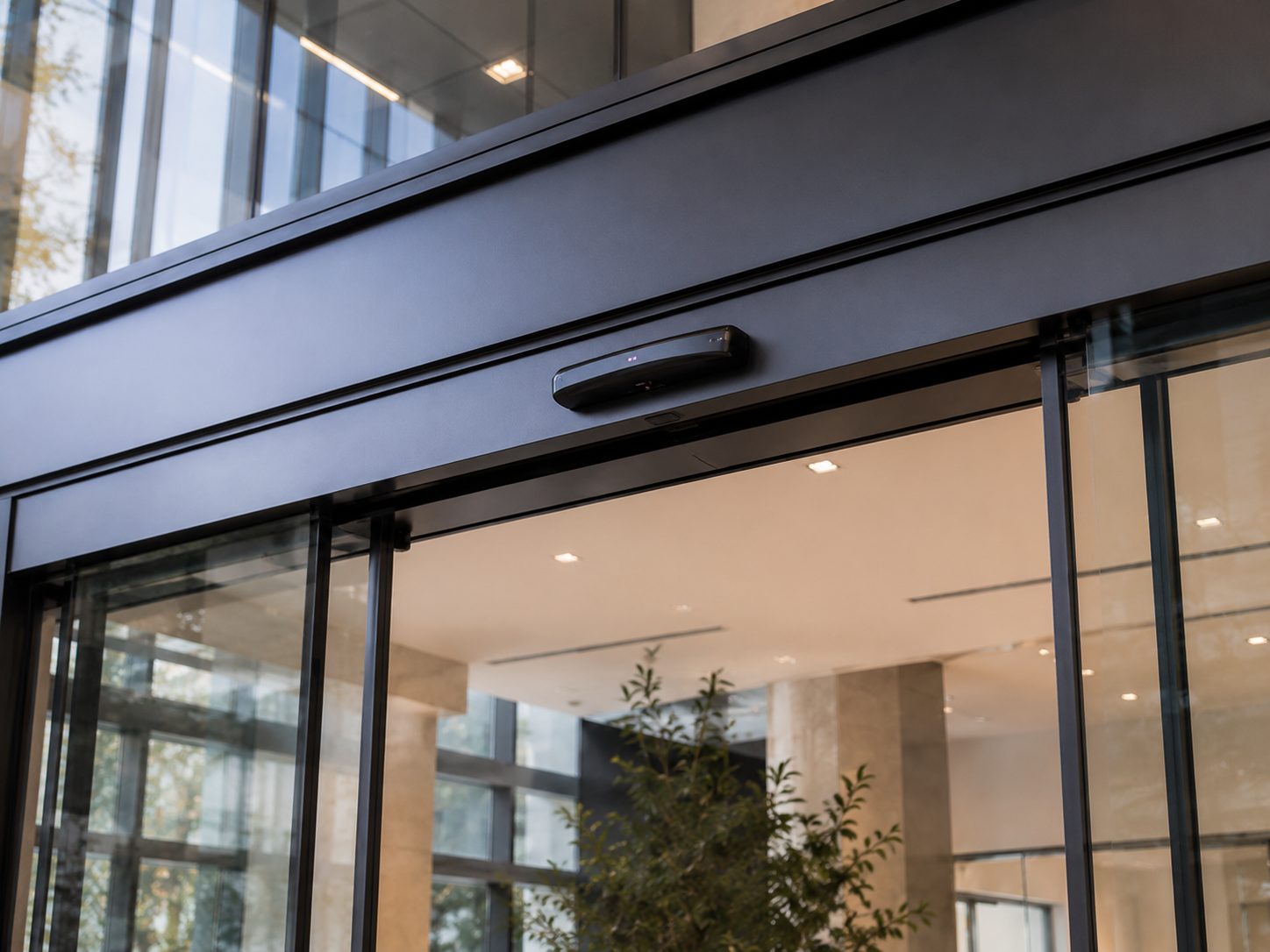
A manual sliding glass door uses mechanical sliding hardware instead of a motorized operator. The system usually includes a track, rollers, hangers or glass clamps, floor guide, handle, stopper, anti-jump device and sometimes soft-close dampers.
Manual sliding glass doors are commonly used in:
- Office partitions
- Meeting rooms
- Showrooms
- Residential interiors
- Apartment room dividers
- Private dining rooms
- Wardrobes and interior dividers
- Café or restaurant interior partitions
- Light commercial interiors
The biggest advantage is simplicity. A manual sliding door does not need electricity, sensors or a controller. It is easier to install in many interior projects and usually has lower maintenance requirements.
Manual does not mean cheap or low-end. A well-designed manual sliding glass door can feel premium if the track is rigid, the rollers are quiet, the floor guide is stable and the soft-close hardware is properly matched with the door weight.
Before selecting a manual sliding door kit, the project should check glass thickness, estimated door weight, track fixing condition, wall or ceiling support, roller quality, floor guide position, handle type, soft-close requirement and locking method.
Traffic Flow and Hands-Free Use
Traffic flow is one of the most important differences between automatic and manual sliding doors.
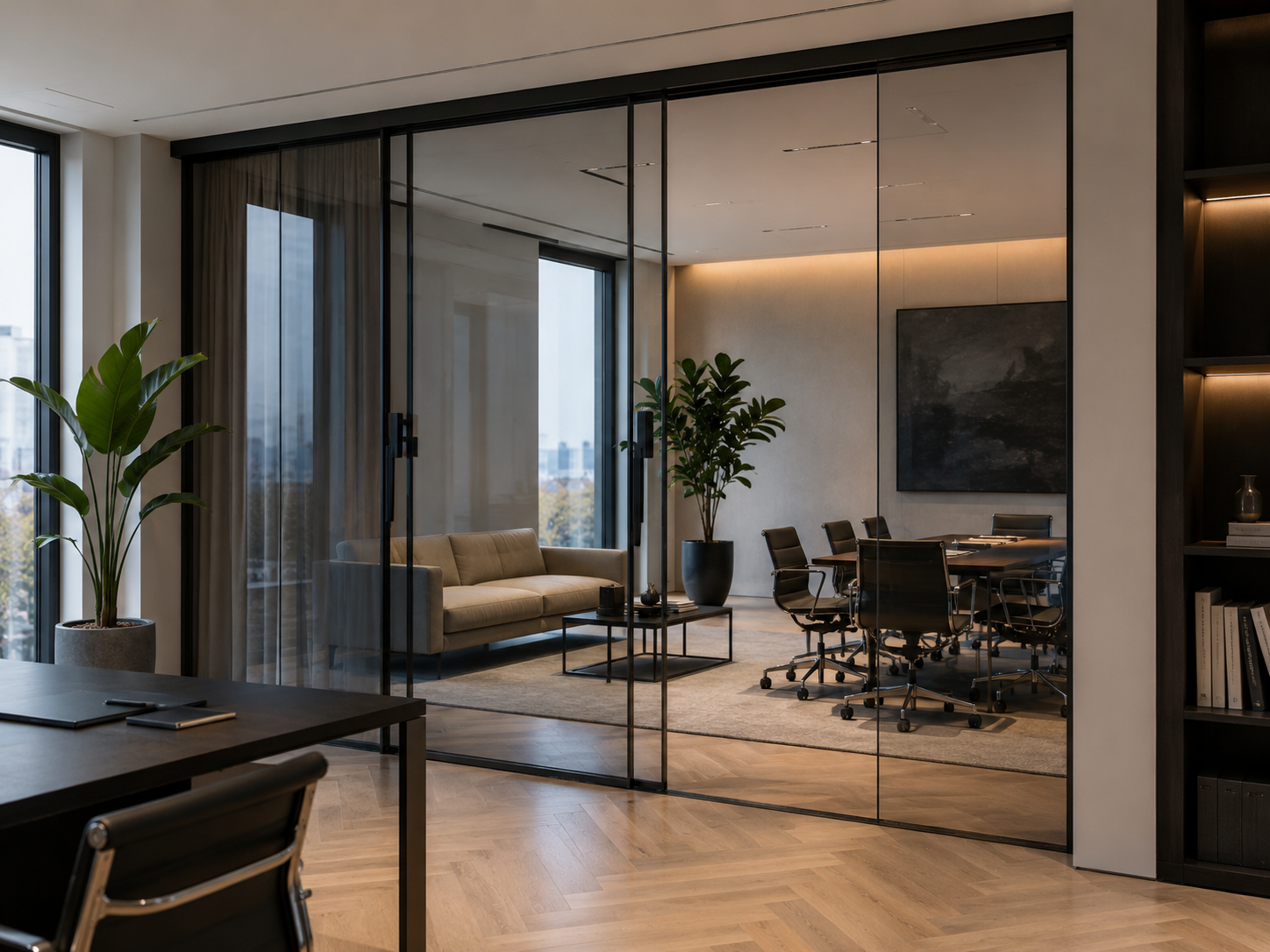
Automatic doors earn their cost where users frequently have full hands or where many people pass through the entrance every day. In a shopping mall, supermarket, clinic, hospital or hotel lobby, a manual sliding door can create friction because someone has to physically open it. This may slow traffic and can be inconvenient for users carrying luggage, shopping bags, trolleys or medical equipment.
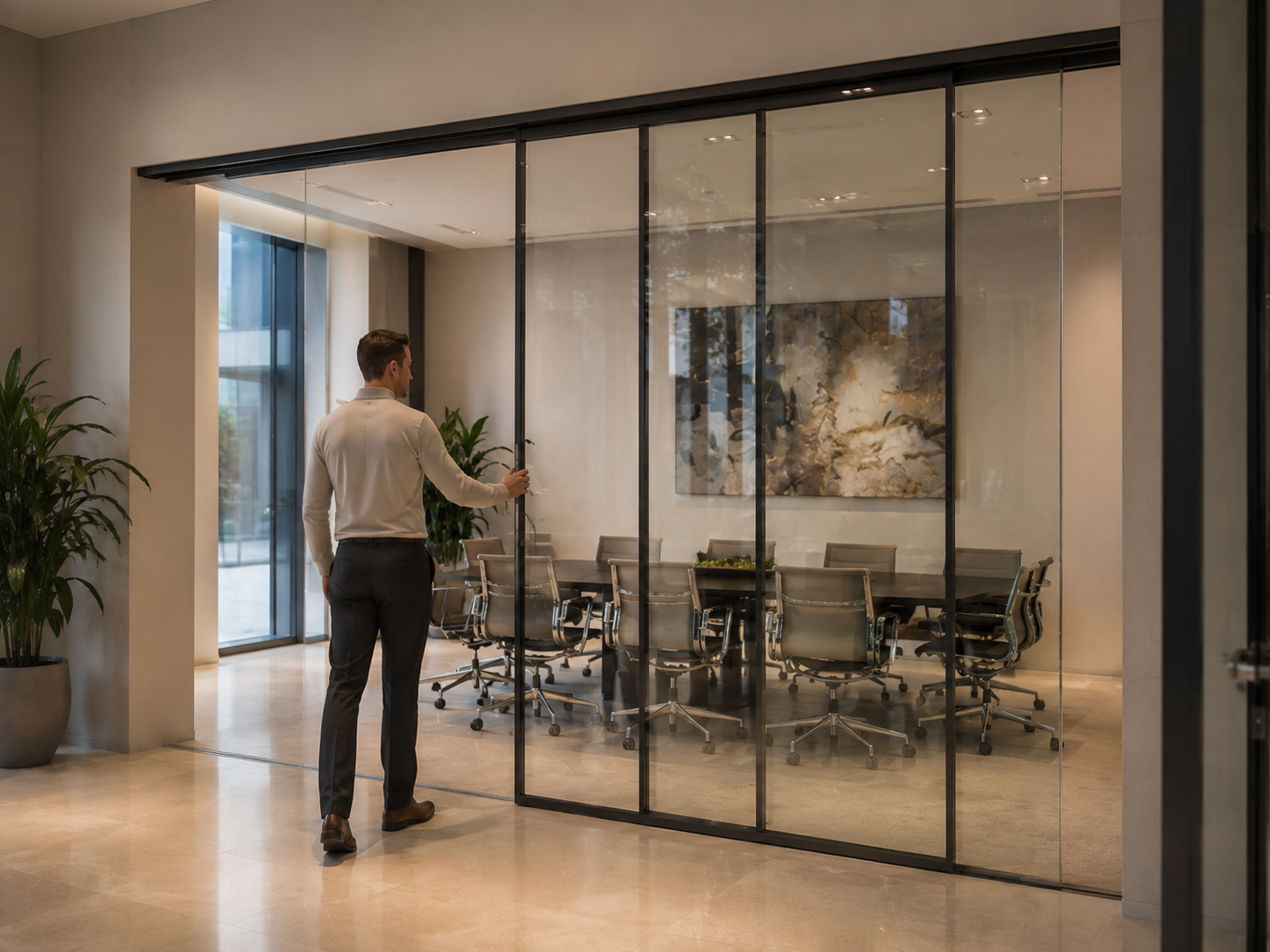
Manual sliding doors are more suitable when the door is used occasionally or mainly for space division. For example, a meeting room sliding door may be opened before a meeting and closed during the meeting. A showroom partition may move only several times per day. A residential divider may be opened and closed by the same user.
If the door is used by hundreds of people every day, automatic operation may be more practical. If the door is opened only occasionally, a manual sliding system may be more reasonable.
Power Dependency and Site Conditions
Automatic sliding doors need power supply, wiring and a control system. This must be planned before installation.
The project should check:
- Is power available near the opening?
- Can wiring be hidden neatly?
- Is there enough header space for the operator?
- Can the operator be accessed for maintenance?
- What happens during power failure?
- Does the project need battery backup or manual release?
- Is the site suitable for sensor installation?
A well-specified automatic door system should have a clear power-failure and manual-release plan. Depending on the building type and local requirements, battery backup or fail-safe behavior may also need to be confirmed with the project consultant.
Manual sliding doors do not need electricity. This makes them suitable for interior partitions, showrooms, residential projects and renovation sites where power supply is not convenient.
A manual sliding door works the same way during a power outage as it does on a normal day. For projects where simple reliability is more important than hands-free convenience, this is a real advantage.
Budget: Product Price Is Not the Full Cost
Automatic sliding doors usually have higher initial cost because they include more components.
The cost may include:
- Automatic operator
- Motor and controller
- Activation sensor
- Safety sensor
- Track and roller system
- Belt or drive system
- Glass panels and fixed panels
- Locking accessories
- Wiring
- Installation
- Commissioning
- Future maintenance
Manual sliding doors are simpler. The cost usually includes:
- Track
- Roller
- Hanger or glass clamp
- Floor guide
- End stopper
- Handle
- Soft-close damper, if needed
- Lock, if required
For many interior projects, a manual sliding glass door can provide good performance at a lower total cost. For high-traffic commercial entrances, the higher cost of an automatic sliding door may be justified by convenience, accessibility and entrance control.
The real question is not “which door is cheaper?” The better question is: which system matches the function of the opening?
Accessibility and Public Entrance Requirements
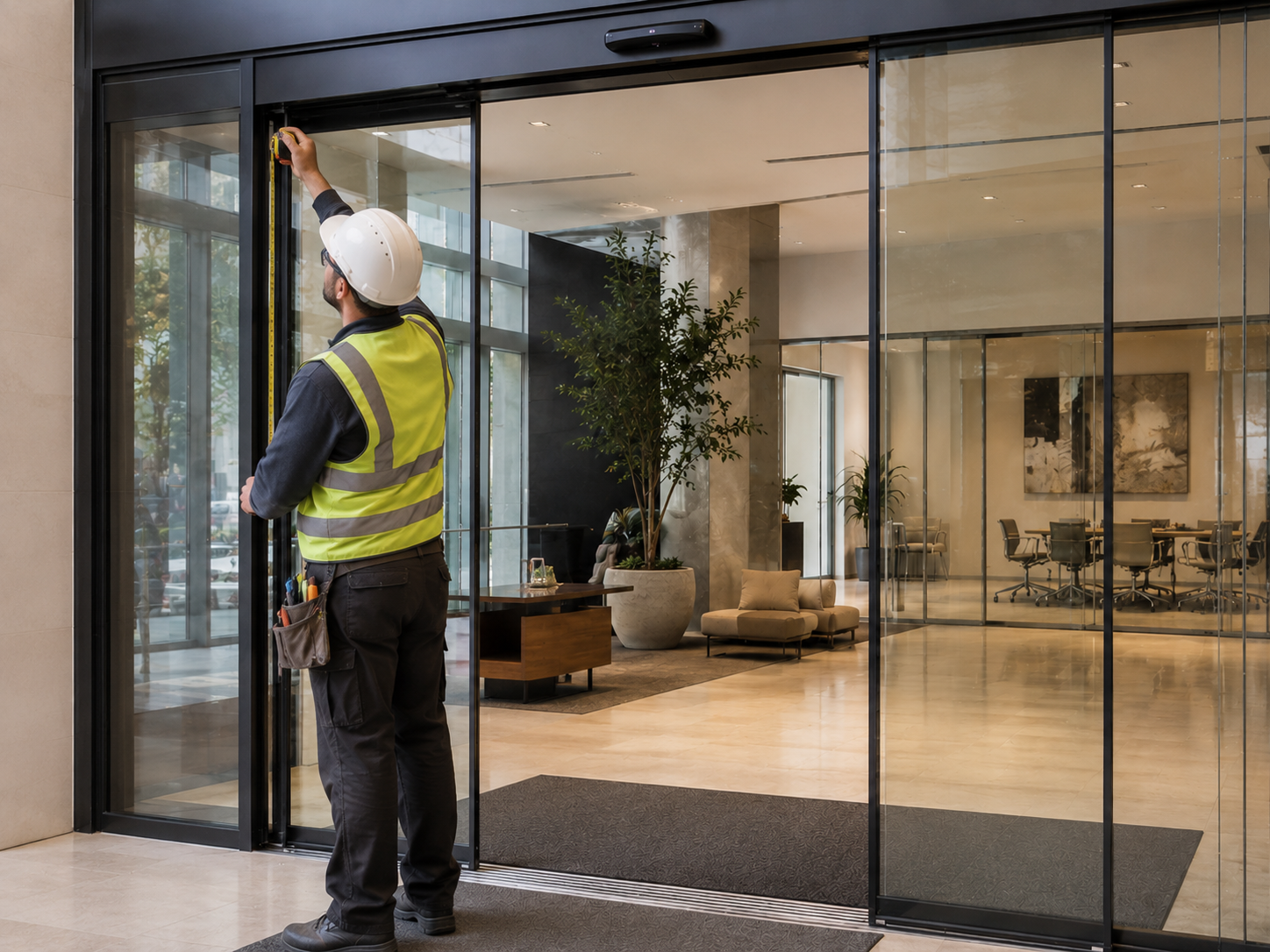
For many public commercial entrances, accessibility requirements may strongly influence the door choice.
Automatic sliding doors can reduce the physical effort required to enter a building. This is helpful for users carrying luggage, pushing carts, using wheelchairs or moving through a public entrance with limited hand movement.
This is one reason automatic sliding doors are commonly used in:
- Hospitals and clinics
- Shopping centers
- Hotels
- Airports
- Public buildings
- High-traffic office entrances
For interior doors that are not part of a regulated public access route, such as meeting rooms, showrooms, residential partitions or private office dividers, accessibility may not be the main deciding factor. In those cases, cost, traffic level, installation condition and maintenance may matter more.
If the automatic door is part of an emergency route or regulated public entrance, fail-safe behavior, manual release and local code requirements should be confirmed before ordering.
Safety: Different Systems Need Different Protection
Both automatic and manual sliding doors need safety design, but the safety logic is different.
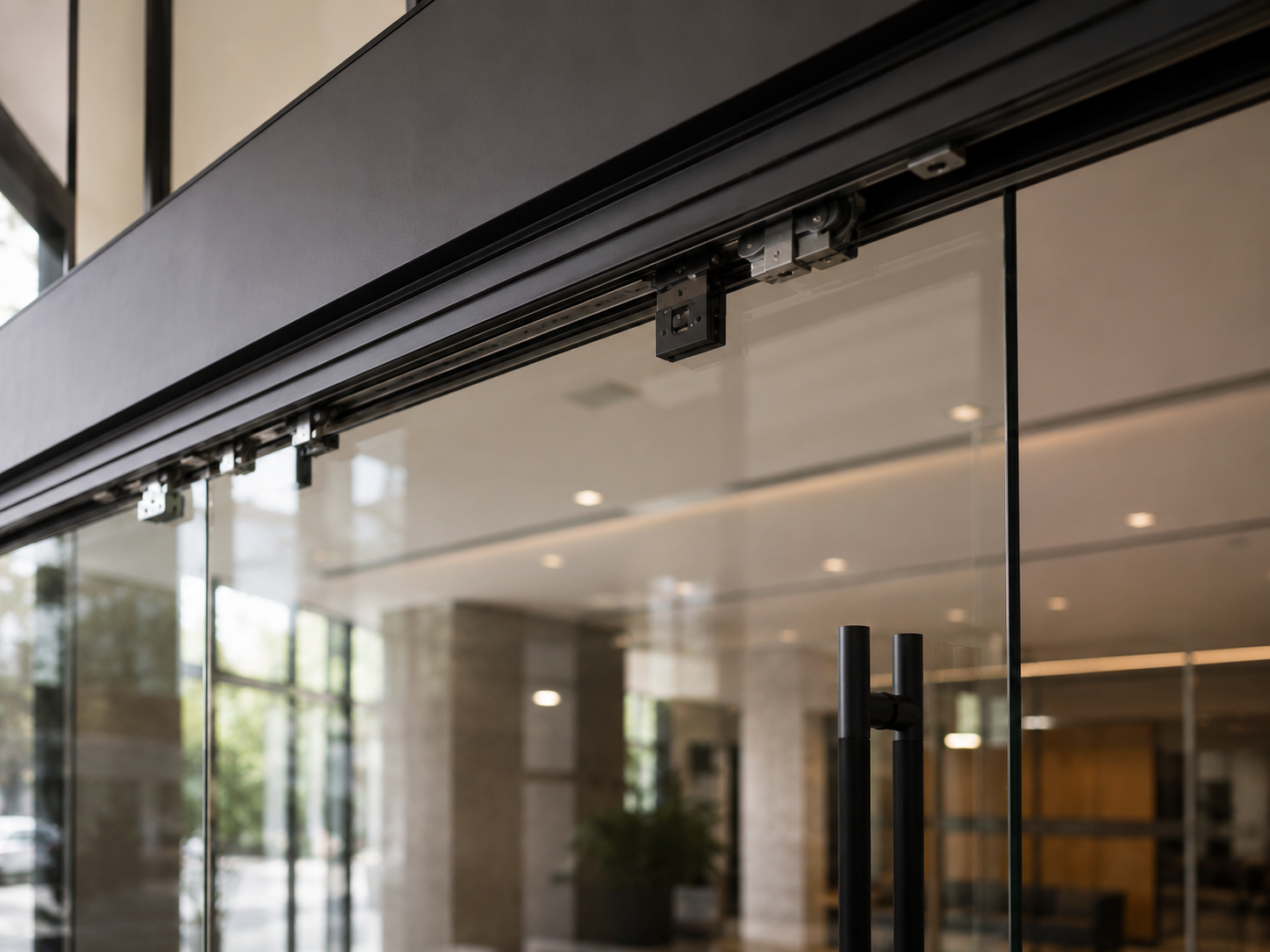
Automatic sliding doors depend on sensors and control settings. The system should detect people near the door and reduce the risk of closing on users. Depending on the system, this may involve motion sensors, presence sensors, safety beams, anti-pinch settings and opening or closing speed adjustment.
Manual sliding doors depend more on mechanical safety details. A heavy glass panel should not slam into the end stopper. Good manual systems may use soft-close dampers, end stops, floor guides and anti-jump devices. Handle position should also be considered, especially where children, customers or staff use the door frequently.
For example, a manual sliding glass door near a private dining room may need soft-close hardware to reduce noise and sudden impact. A showroom sliding door may need a stable floor guide to prevent shaking. A residential divider may need a comfortable handle and smooth roller system.
Automatic doors depend more on sensors and control. Manual doors depend more on mechanical hardware quality and installation accuracy.
Noise and User Experience
A good manual sliding door can be very quiet when fitted with quality rollers, stable track, proper floor guide and soft-close hardware. However, the experience still depends partly on the user. If someone closes the door carelessly, noise and impact can still occur.
An automatic sliding door provides more consistent opening and closing behavior. The movement is controlled by the operator, so the door does not depend on each user’s habit. This can be useful in high-traffic commercial spaces.
However, an automatic system also introduces its own mechanical sound from the operator, belt and motor. In many entrance projects this is acceptable, but in very quiet interiors, the project should consider whether a premium manual sliding system may be a better experience.
The best user experience is not always the most automatic one. It is the one that matches the space and daily use.
Air-Conditioning and Entrance Control
For commercial entrances, air-conditioning control can be an important reason to choose automatic sliding doors.
In a shop, clinic or hotel lobby, a manual door may be left open by customers or staff. This can affect indoor comfort and make the entrance less controlled. An automatic sliding door opens only when needed and closes after users pass through.
This makes automatic sliding doors suitable for:
- Air-conditioned retail stores
- Clinics
- Hotel entrances
- Supermarkets
- Office building entrances
- Shopping mall stores
Manual sliding doors can still be used for interior areas, but they do not provide the same entrance control. They depend on users opening and closing the door correctly.
For climate-controlled commercial entrances, automatic sliding doors are often more practical than manual doors.
Locking and Access Control
Both automatic and manual sliding doors may need locking, but the locking method is different.
Automatic sliding doors may use electric locks, floor locks, hook locks or access-control-compatible locking options depending on the system. Automatic systems can be easier to coordinate with electric locks, access control schedules or credential-based entry, depending on the operator and control system used.
Manual sliding glass doors usually rely on separate mechanical locking hardware. Possible options may include glass sliding locks, floor locks, hook locks or handle-lock combinations. Lock position, glass cut-outs and panel overlap should be confirmed before glass production.
For offices, hotels and commercial buildings, access control may affect the door choice. If the project needs card access, keypad access or automatic opening linked with a control system, an automatic sliding door may be more suitable. If the door only needs simple daily locking, a manual sliding glass door can often be enough.
Locking should not be decided at the end of the project. It should be part of the sliding door hardware selection from the beginning.
Maintenance Requirements
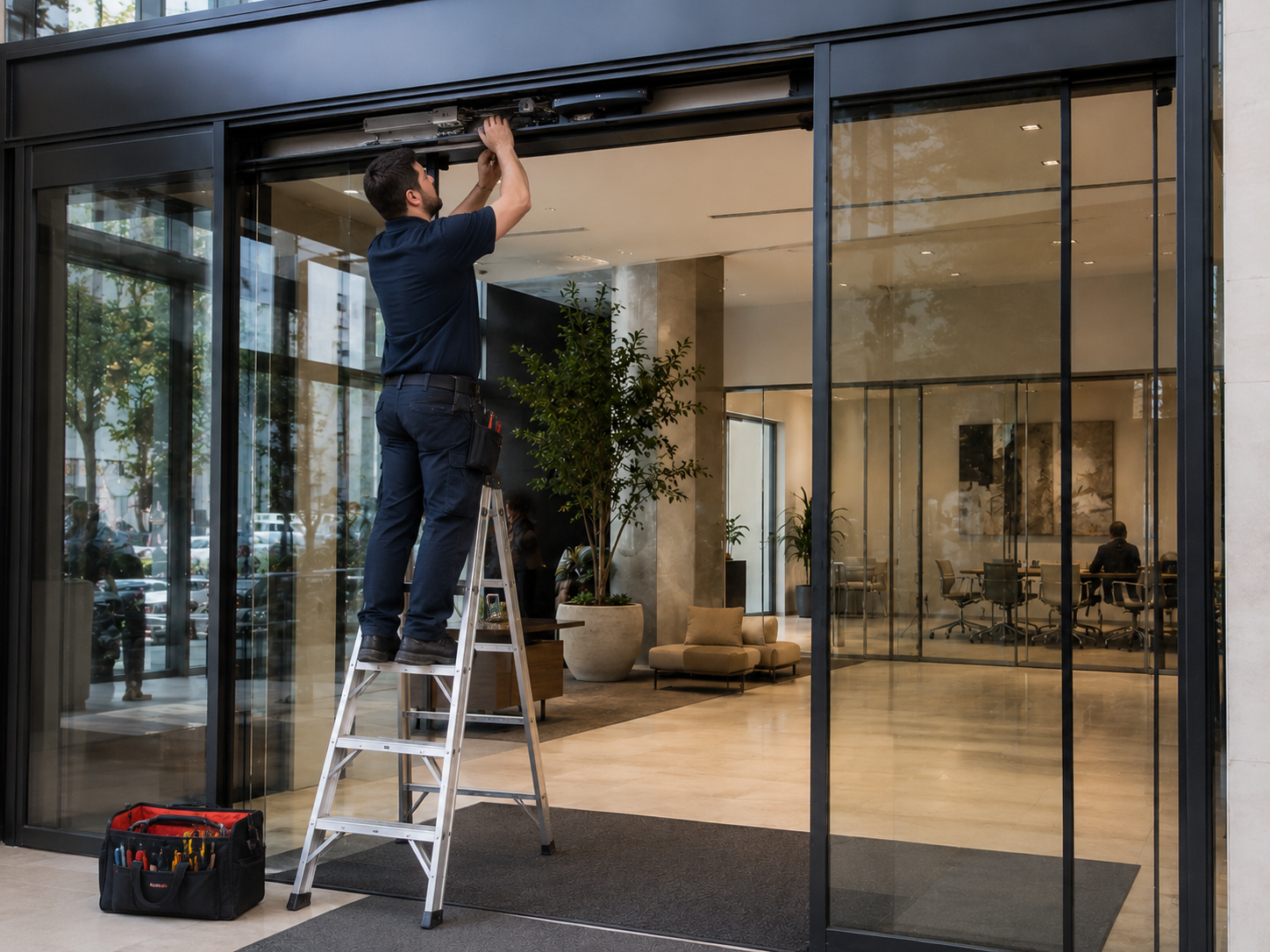
Automatic sliding doors offer convenience, but they also require more technical maintenance.
Parts that may need inspection include:
- Operator
- Motor
- Controller
- Belt or drive system
- Sensors
- Track
- Rollers
- Power supply
- Locking system
- Safety setting
If the sensor is not aligned, the door may open incorrectly. If the belt or roller wears, the door may become noisy or unstable. If the controller has issues, the whole system may stop working.
Manual sliding glass doors are easier to maintain, but they still need care.
Maintenance points include:
- Track cleaning
- Roller wear
- Floor guide alignment
- Stopper position
- Soft-close function
- Handle tightening
- Lock alignment
For restaurants, cafés and coastal projects, track cleaning is especially important because dust, water, food particles or salt deposits may affect movement.
A manual sliding door is not maintenance-free, but it usually has a lower and more predictable maintenance scope than an automatic system.
When Automatic Sliding Doors Are the Better Choice
An automatic sliding door is usually the better choice when:
- The opening is a main commercial entrance
- Daily traffic is high
- Hands-free access is important
- Customers may carry goods, luggage or equipment
- Accessibility requirements influence the project
- Air-conditioning control matters
- Power supply and wiring are available
- Maintenance support is available
- The project can accept higher initial cost
Typical projects include retail storefronts, supermarkets, clinics, hotel entrances, office building entrances and shopping mall stores.
In these spaces, automatic operation helps improve customer flow and entrance convenience.
When Manual Sliding Doors Are the Better Choice
A manual sliding glass door is usually the better choice when:
- The door is mainly for interior space division
- Traffic is moderate or low
- Power supply is not available
- The project needs simple installation
- Maintenance should be easy
- Budget control is important
- Quiet movement is more important than hands-free access
- The door is used by familiar users rather than public traffic
Typical projects include office meeting rooms, showrooms, residential interiors, private dining rooms, apartment dividers and interior glass partitions.
A good manual sliding door kit can still look premium and operate smoothly when the track, rollers, floor guide and soft-close hardware are correctly matched.
Common Misjudgments Before Ordering
Choosing automatic doors mainly for image
An automatic sliding door can look modern, but appearance alone does not justify the system. A low-traffic office or boutique interior may not need an operator, sensors and technical maintenance.
Using manual sliding doors for high-traffic public entrances
If many people enter and leave throughout the day, manual operation may become inconvenient. Users may even leave the door open, which affects security and climate control.
Forgetting power and wiring before ordering automatic doors
Automatic sliding doors need power supply, wiring space and maintenance access. These details should be checked before ordering.
Underestimating fail-safe and manual-release requirements
If the automatic door is used on a regulated public entrance or emergency route, fail-safe behavior, manual release and local code requirements should be confirmed early.
Ignoring door panel weight
Both automatic and manual sliding systems need correct load rating. A heavy glass panel should not be matched with light-duty hardware.
Choosing cheap rollers for premium manual sliding doors
Poor rollers can create noise, shaking and short service life. Roller quality is one of the most important parts of a manual sliding system.
Not planning the locking method
Automatic and manual sliding doors may both need locks after business hours. Lock position, glass cut-outs and access-control needs should be confirmed early.
Not budgeting for maintenance
Automatic systems need scheduled technical maintenance. Manual systems need track cleaning and roller inspection. The project should choose a system that can be maintained properly.
Practical Selection Guide
Choose an automatic sliding door if the project needs:
- Main entrance function
- High traffic capacity
- Hands-free access
- Sensor operation
- Better air-conditioning control
- Public accessibility support
- Power supply and maintenance access
- Commercial entrance experience
Choose a manual sliding glass door if the project needs:
- Interior space division
- Lower initial cost
- Simple installation
- No power supply
- Lower maintenance
- Quiet movement
- Clean glass partition appearance
The best system is the one that matches real use, not the one that simply sounds more advanced.
How Metech Supports Sliding Door Projects
Metech Hardware supports sliding glass door projects with hardware selection based on opening width, glass thickness, estimated door weight, installation site, traffic level and locking requirement.
For manual sliding glass doors, we can help buyers match tracks, rollers, hangers or clamps, floor guides, handles, stoppers, soft-close options and glass locks according to project requirements.
For automatic sliding door projects, Metech can help discuss hardware-related requirements such as glass panel size, fixed glass layout, locking method, handle or frame requirement and related architectural glass fittings. Automatic operator availability and system details depend on project requirement and supplier availability.
For offices, showrooms, storefronts, hotels, clinics and residential interiors, Metech can help prepare coordinated hardware options and export packing for overseas buyers, contractors and distributors.
FAQ
Is an automatic sliding door better than a manual sliding door?
Not always. An automatic sliding door is better for high-traffic commercial entrances and hands-free access. A manual sliding door is often better for interior partitions, showrooms, residential spaces and lower-maintenance projects.
When should I choose an automatic sliding door?
Choose an automatic sliding door when the entrance has high daily traffic, needs hands-free access, requires sensor operation or must help control air-conditioned space.
When is a manual sliding glass door enough?
A manual sliding glass door is usually enough for meeting rooms, showrooms, residential dividers, private rooms and interior glass partitions where traffic is moderate or low.
Does an automatic sliding door need more maintenance?
Yes. Automatic sliding doors include operators, motors, controllers, sensors and power systems, so they usually need more technical maintenance than manual sliding doors.
Can a manual sliding door use soft-close hardware?
Yes. Many manual sliding glass door systems can use soft-close dampers to reduce impact, noise and sudden closing at the end of travel.
What details should be confirmed before ordering sliding door hardware?
Important details include opening width, glass thickness, estimated panel weight, installation site, traffic level, power condition, track fixing method, soft-close requirement and locking method.
Can Metech help recommend suitable sliding door hardware?
Yes. Send us your opening width, glass thickness, estimated door weight, installation site, traffic level, power condition and locking requirement. Metech Hardware can help recommend suitable sliding door hardware for commercial entrances, storefronts, offices, showrooms and interior glass partitions.
Need Sliding Door Hardware for Your Project?
Send us your project type, opening width, glass thickness, estimated door weight, installation site, traffic level, power condition and locking requirement. Metech Hardware can help match suitable sliding door hardware for automatic entrance projects, manual sliding glass doors and interior glass partition systems.