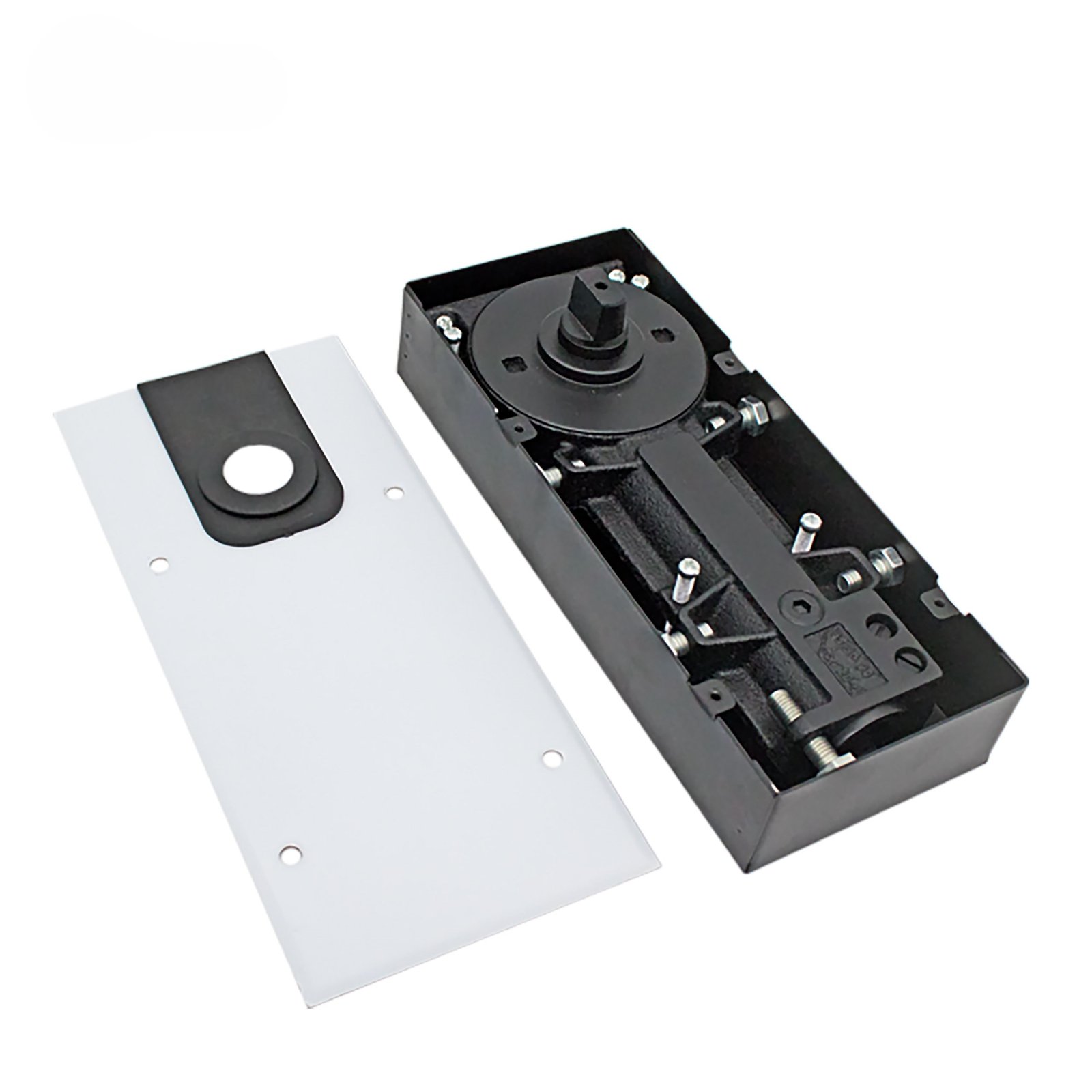
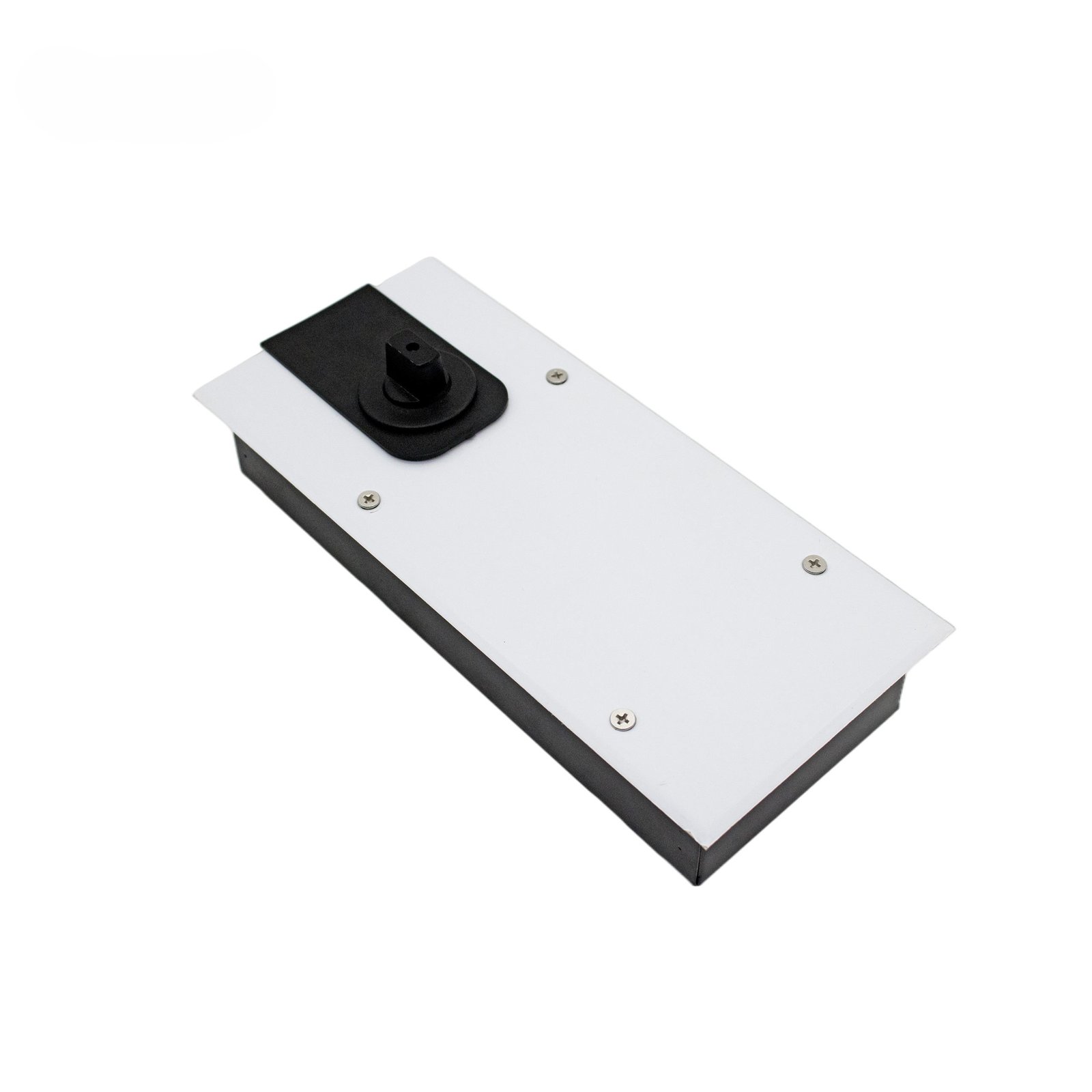
For standard commercial glass doors, floor spring selection is usually straightforward.
A frameless glass door measuring 1.0m wide by 2.2m high in 12mm tempered glass weighs approximately 66kg. For this type of door, many reputable commercial floor springs can provide stable daily operation when the door width, traffic level and installation conditions are normal.
Oversized glass doors are different.
In flagship stores, car showrooms, luxury hotels, commercial lobbies and high-end villa entrances, glass doors may reach 1.5m in width and more than 3.0m in height. Some door leaves can weigh 150kg, 250kg or even more depending on glass thickness, handle size and hardware configuration.
At this point, selecting a floor spring is no longer just a matter of matching the catalog weight rating.
A heavy-duty floor spring must control static glass weight, door width leverage, user impact, wind load, closing speed, return accuracy, lock alignment and long-term wear.
The real question is not only:
“Can this floor spring carry the door weight?”
The better question is:
“Can this floor spring control this door size, weight, usage frequency and installation environment over time?”

Quick Comparison: 150kg vs 300kg vs 450kg Floor Springs
| Floor spring level | Typical project direction | Main selection concern |
|---|---|---|
| 150kg floor spring | Commercial glass doors, office entrances, retail doors and medium-heavy frameless doors | Door weight, door width, traffic level and exterior exposure |
| 300kg floor spring | Oversized commercial entrances, hotel lobbies, showrooms and wide glass doors | Working margin, door width, high traffic, wind exposure and heavy-duty patch fittings |
| 450kg floor spring | Extra-heavy or special oversized architectural glass doors | Full system compatibility, floor box size, spindle, bottom patch, top pivot and installer experience |
This table is only a starting reference. The final selection must be based on the real door dimensions, glass thickness, estimated weight, door width, wind exposure, traffic level and matching hardware system.
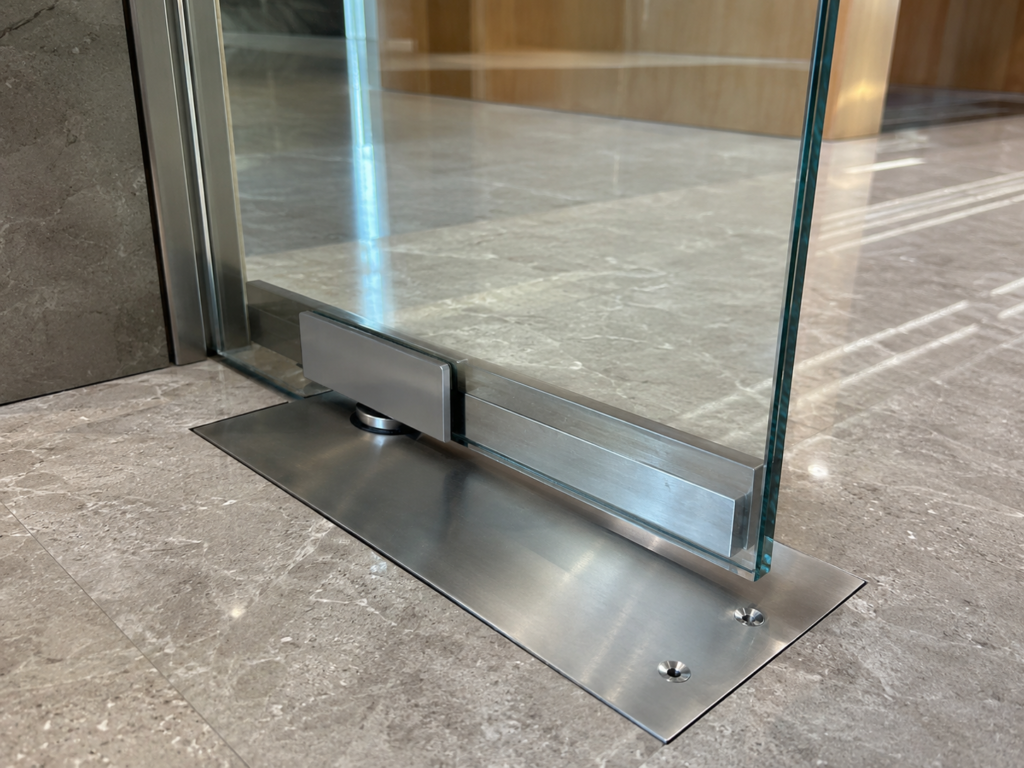
Calculating the True Dead Weight
Before selecting a heavy-duty floor spring, the first step is to calculate the approximate dead weight of the glass door.
Tempered glass weighs approximately 2.5kg/m² for every 1mm of thickness.
| Glass thickness | Approximate weight |
|---|---|
| 12mm glass | 30kg/m² |
| 15mm glass | 37.5kg/m² |
| 19mm glass | 47.5kg/m² |
For example, a flagship storefront door measuring 1.5m wide by 3.2m high in 15mm tempered glass has an approximate glass weight of:
1.5 × 3.2 × 37.5 = 180kg
If heavy-duty patch fittings and a full-length stainless steel pull handle add another 10–15kg, the total door weight may be close to 190–195kg.
This is an estimate for specification discussion. It does not replace project engineering calculation, but it helps buyers avoid selecting floor springs only by guesswork.
At first glance, a 200kg floor spring may look enough for a 195kg door. In real commercial use, that may leave too little working margin.
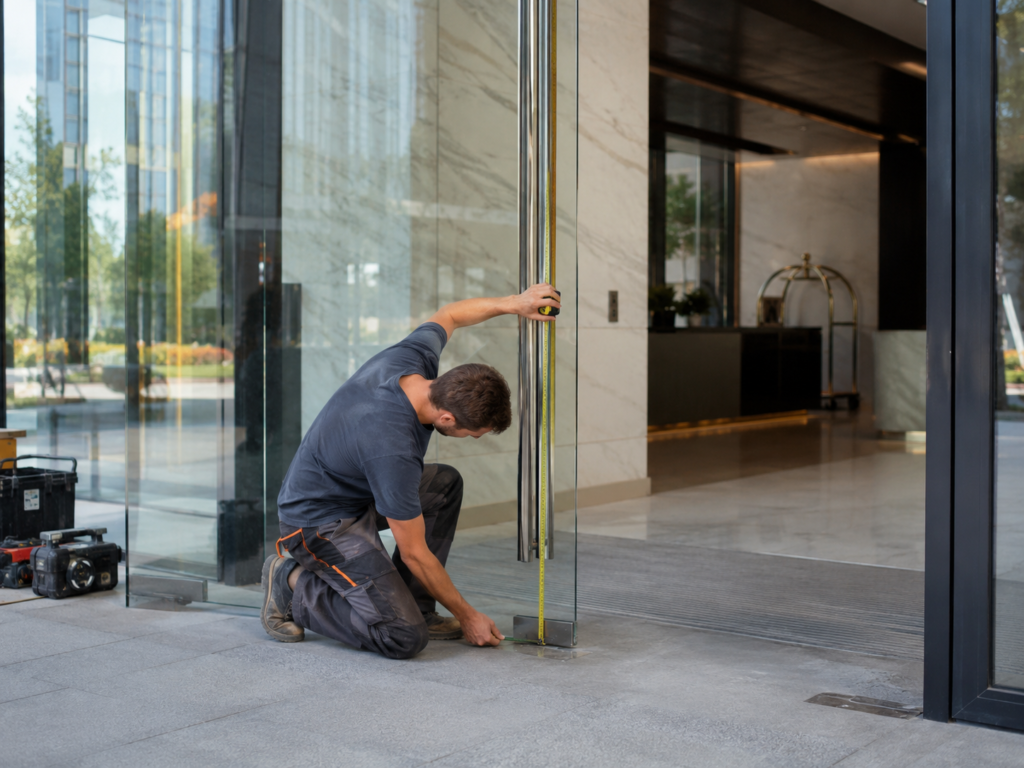
Why Maximum Capacity Is Not Enough
A floor spring should not operate close to its maximum rated capacity for demanding oversized doors.
A glass door is not a static object. It is opened, pushed, pulled, held, released and sometimes affected by wind. When a heavy door moves quickly and then stops suddenly, the force transferred into the spindle, cam, spring and hydraulic control system can be much higher than the static glass weight.
This is why project buyers often consider a working margin.
As a practical project guideline, many contractors prefer not to select a floor spring at the exact calculated door weight. For oversized commercial doors, a 30%–50% working margin may be considered depending on door width, traffic frequency, wind exposure and installation conditions.
For example, if a glass door weighs about 195kg, a floor spring rated very close to that number may not be the best choice for a busy hotel or storefront entrance. A 300kg heavy-duty floor spring may provide a more suitable working margin, provided the rest of the hardware system is also compatible.
The goal is not to oversize every door. The goal is to avoid using a floor spring too close to its limit.
Door Width Creates Leverage
Door width is often underestimated.
A floor spring controls a rotating door. In simple terms:
Torque = Force × Distance
The wider the door, the longer the lever arm. This means a wide glass door can create more stress on the spindle, cam mechanism and hydraulic control system than a narrower door with the same weight.
| Door example | Door weight | Door width | Selection concern |
|---|---|---|---|
| Door A | 120kg | 900mm | Lower torque |
| Door B | 120kg | 1300mm | Higher torque |
| Door C | 120kg | 1500mm | Much higher torque |
This is why a 150kg glass door that is 900mm wide and installed indoors may perform differently from a 150kg glass door that is 1500mm wide and installed at a street-facing entrance.
A floor spring model may be rated for a certain door weight, but it may also have a recommended maximum door width. Both values should be checked.
For oversized glass doors, door width often decides whether a 150kg model is enough or whether a 300kg level should be considered.
When Is a 150kg Floor Spring Suitable?
A 150kg floor spring is commonly used for medium-heavy commercial glass doors.
It may be suitable for:
- Office building glass entrances
- Retail storefront doors
- Hotel interior glass doors
- Commercial frameless swing doors
- 10mm or 12mm tempered glass doors
- Moderate commercial traffic, depending on width and site condition
However, 150kg does not mean every 150kg door is suitable.
A wide door, exterior-facing door or high-traffic entrance may need more working margin even if the calculated glass weight is below 150kg.
Before selecting a 150kg floor spring, confirm:
- Actual door weight
- Door width
- Indoor or outdoor location
- Traffic level
- Wind or air-pressure condition
- Hold-open requirement
- Bottom patch and spindle compatibility
- Locking requirement
A 150kg floor spring is often a practical commercial solution, but it should be used within a suitable door width, frequency and installation environment.

When Should You Consider a 300kg Floor Spring?
A 300kg floor spring is not only for a 300kg glass door.
In many projects, buyers consider a 300kg floor spring because the door is wide, frequently used, semi-outdoor or exposed to stronger operating conditions.
It may be considered for:
- Oversized commercial glass entrances
- Hotel lobby doors
- Car showroom entrances
- Wide retail storefront doors
- Large office building entrances
- Heavy 12mm or 15mm glass doors
- Semi-outdoor glass doors
- High-traffic public entrances
The main benefit is not only higher vertical load capacity. A 300kg floor spring level may provide stronger mechanical control and more working margin for demanding doors.
But the floor spring alone cannot solve every problem.
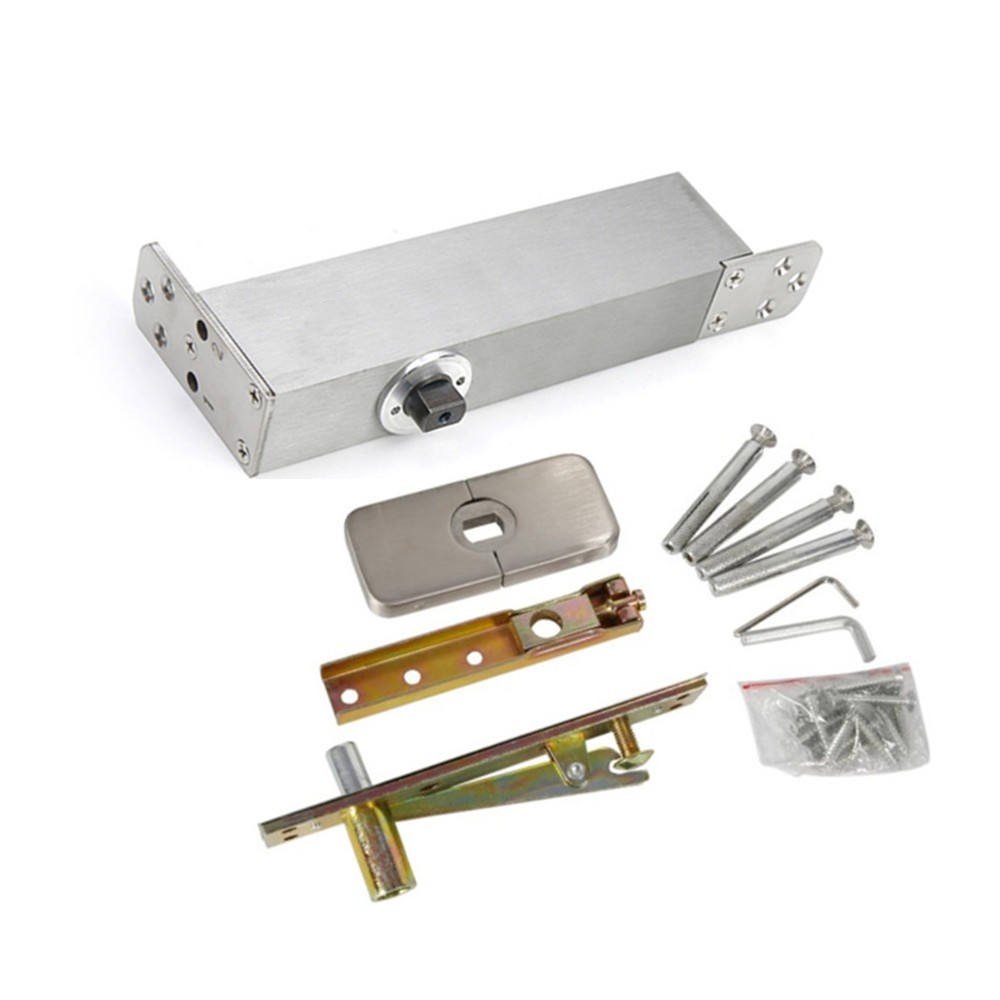
It must still match the bottom patch fitting, top patch, top pivot, spindle type, floor box dimensions, glass cut-out, door clearance and lock position.
If the bottom patch is weak, the top pivot is misaligned or the glass cut-out is incorrect, a stronger floor spring will not make the whole door system reliable.
When Is a 450kg Floor Spring Necessary?
A 450kg floor spring is usually considered for extra-heavy or special oversized glass door projects.
It may be used for:
- Very heavy frameless glass doors
- Extra-wide entrance doors
- Extra-tall luxury villa doors
- Large commercial display spaces
- Heavy-duty architectural entrances
- Special projects requiring a high-capacity floor spring system
However, a 450kg floor spring should not be treated as the default upgrade for every heavy door.
A higher-capacity floor spring usually has a larger body, stronger internal structure and higher installation requirements. It may require more floor space, a compatible bottom patch, a suitable top pivot and an experienced installer.
Before using a 450kg floor spring, confirm:
- Whether the door weight truly requires this level
- Whether the door width matches the model range
- Whether the floor box can be installed correctly
- Whether the bottom patch is heavy-duty enough
- Whether the top pivot can control the upper rotation point
- Whether the glass cut-out matches the hardware
- Whether the door will remain comfortable to open
- Whether the project really needs this specification level
Using an oversized floor spring without checking the full system may create installation problems instead of solving them.
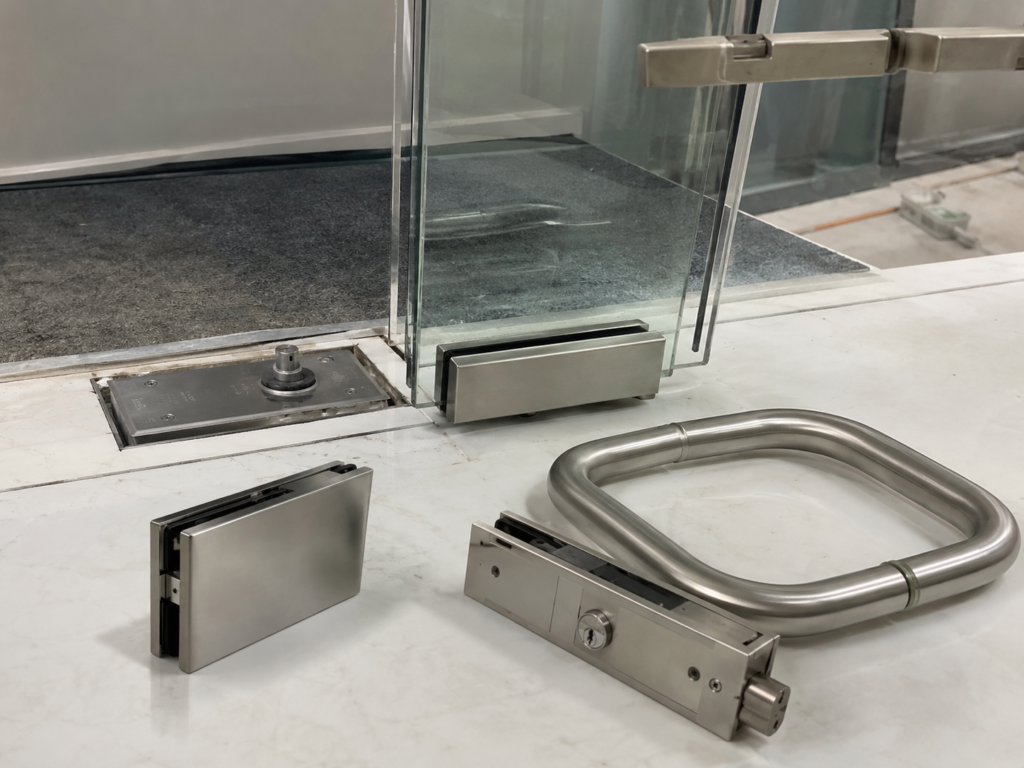
General Specification Reference
The following matrix can be used as a general reference during early specification. Final selection should always be confirmed according to the actual model data, door drawing and site condition.
| Door condition | Floor spring level often considered | Key checks |
|---|---|---|
| 100kg–120kg door, moderate width | 150kg floor spring | Door width, traffic level, indoor/outdoor use, bottom patch compatibility |
| 130kg–220kg door, wider commercial entrance | 300kg floor spring | Working margin, spindle strength, heavy-duty patch fitting, wind exposure |
| 230kg–350kg door, extra-heavy or special oversized entrance | 450kg floor spring | Floor box size, top pivot, bottom patch, installer experience, full system compatibility |
The floor spring should not be selected from this table alone. Door width, usage frequency, wind load, EN force level and matching hardware are equally important.
EN Force, Wind Load and Backcheck
Exterior oversized doors are affected by more than weight.
A tall glass door facing the street may behave like a sail when exposed to wind. Strong air movement can make the door difficult to close or cause it to open too quickly.
For wider, heavier or exterior-facing doors, higher EN force levels such as EN 5 or EN 6 may be considered depending on the door size, wind exposure and required closing performance.
However, EN level is not the only selection factor.
If the closing force is too weak, the door may fail to return or latch properly. If the force is too strong, the door may feel uncomfortable for daily users. This is why adjustable closing force can be useful in heavy-duty floor spring projects.
Adjustable closing force helps installers fine-tune door movement after installation, especially when the project includes different door widths, uncertain air pressure or locking requirements.
For exterior oversized doors, backcheck may also be useful. Backcheck can help slow the door during the final part of opening and reduce impact when the door is pushed or blown open quickly.
The actual backcheck angle and performance depend on the floor spring model, so this feature should be checked in the product specification.

Hardware Compatibility Is as Important as Capacity
A heavy-duty floor spring is only one part of the door system.
For oversized frameless glass doors, all related hardware must work together.
| Hardware part | Why it matters |
|---|---|
| Bottom patch fitting | Transfers the glass door load to the floor spring spindle |
| Top patch or top pivot | Keeps the upper rotation point aligned |
| Floor box | Supports correct installation depth and stability |
| Pull handle | Adds operating force during daily use |
| Lock or floor bolt | Requires accurate return-to-center alignment |
| Glass thickness and cut-out | Decides whether patch fittings can be installed correctly |
| Door stopper or backcheck | Helps control over-opening and impact where applicable |
A heavy-duty floor spring cannot compensate for a weak bottom patch, misaligned top pivot or incorrect glass cut-out.
For very heavy doors, the bottom patch, top pivot, lock and pull handle should be selected together with the floor spring.
Common Mistakes When Specifying Heavy-Duty Floor Springs
Selecting by Dead Weight Only
A door may be under the rated weight but still create excessive stress because of width, wind exposure or high traffic.
Not Leaving Working Margin
Choosing a floor spring too close to the calculated door weight may increase the risk of poor control, accelerated wear or early failure.
Assuming 450kg Is Always Better Than 300kg
A larger floor spring is not automatically better. If the door does not require that level, installation and user experience may become more difficult.
Ignoring Door Width and Leverage
Wide doors place more torque on the spindle and internal mechanism. Door width must be checked together with door weight.
Forgetting Wind Load and Backcheck
Exterior oversized doors may need higher closing force, more working margin and backcheck depending on site conditions.
Using Light-Duty Patch Fittings with Heavy-Duty Floor Springs
The system is only as strong as its weakest connection point. Heavy-duty floor springs should be paired with suitable patch fittings and pivots.
Project Information Required Before Quotation
Before recommending a heavy-duty floor spring, please provide:
- Door width and height
- Glass thickness
- Estimated glass door weight
- Single or double-door layout
- Indoor or outdoor installation
- Wind or air-pressure condition
- Expected traffic level
- Required opening angle
- Hold-open or non-hold-open requirement
- Existing or planned glass cut-out
- Bottom patch fitting requirement
- Top patch or top pivot requirement
- Lock, floor bolt or access-control requirement
- Pull handle type
- Floor condition
- Finish requirement
- Project quantity
- Logo or packaging requirement
Photos, drawings and door schedules can help confirm the correct floor spring and matching hardware combination.

How Metech Supports Heavy-Duty Floor Spring Projects
Metech Hardware supplies heavy-duty floor springs for commercial glass door projects, including 150kg, 300kg and 450kg specification levels depending on project requirements.
We help buyers review door width, door height, glass thickness, estimated weight, traffic level, wind exposure and installation conditions before recommending a suitable floor spring solution.
Related hardware such as bottom patch fittings, top patches, pivots, locks, floor bolts and pull handles can also be coordinated as a complete glass door hardware package.
For distributors, contractors and project buyers, logo marking, surface finish options, mixed-product purchasing and export packaging can be discussed according to order requirements.
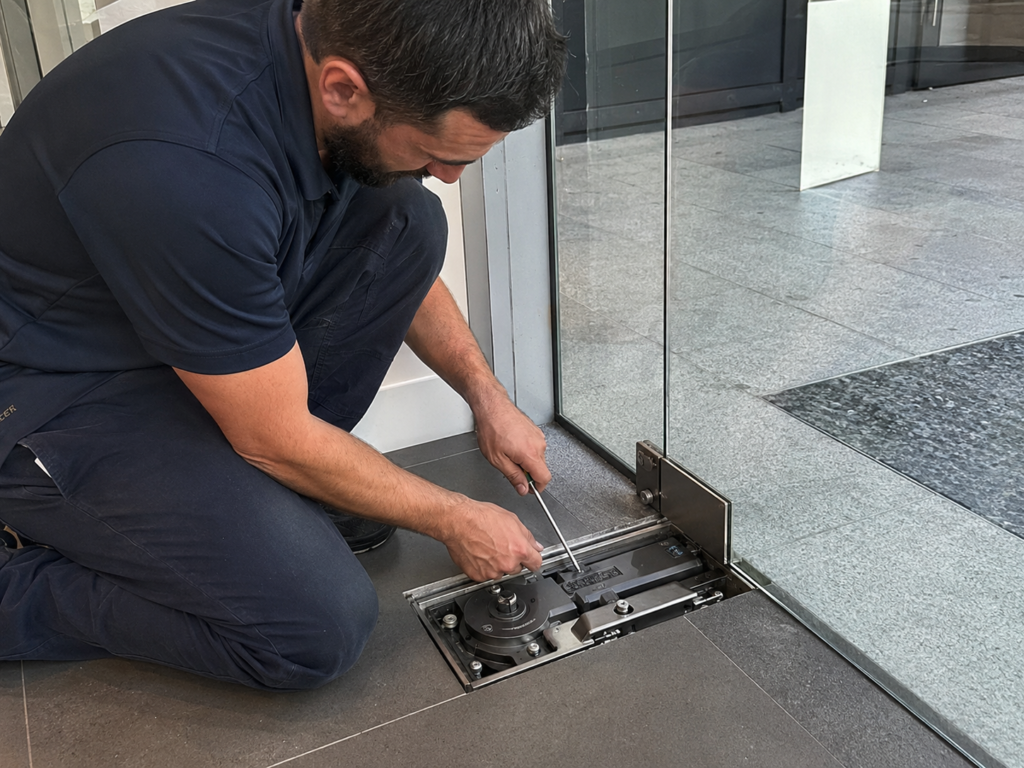
FAQ
Is a 300kg floor spring only for a 300kg glass door?
No. A 300kg floor spring may also be considered when the door is wide, frequently used, exterior-facing or requires more working margin.
Is a 450kg floor spring always better than a 300kg floor spring?
No. A 450kg floor spring should only be used when the door size, weight, floor box, patch fittings and installation conditions require that specification level.
Can I use a 150kg floor spring for an outdoor glass door?
Yes, in some cases. But the door width, wind pressure, traffic level, opening angle and locking requirement must be checked before selection.
Why does a heavy glass door still fail to close properly?
Possible reasons include undersized floor spring, poor speed adjustment, incorrect bottom patch, top pivot misalignment, wind pressure, lock resistance or installation error.
What does adjustable closing force mean?
It means the installer can fine-tune the closing force after installation, helping balance reliable closing and user comfort depending on door size and site condition.
What hardware should be checked with a heavy-duty floor spring?
The bottom patch, top patch, top pivot, floor box, spindle, lock, pull handle and glass cut-out should all be checked together.
Need Help Choosing a Heavy-Duty Floor Spring?
Send us your door width, door height, glass thickness, estimated door weight, installation environment and hardware requirement.
Metech Hardware can help review whether a 150kg, 300kg or 450kg floor spring is suitable for your oversized glass door project.