commercial door closer troubleshooting, door closer not closing properly, door closer replacement, hydraulic door closer leaking oil, door closer slamming shut, door closer not latching, commercial door closer adjustment, door closer sweep speed, door closer latch speed, door closer backcheck, door closer EN size, EN2 EN6 adjustable door closer, door closer cycle rating, heavy duty door closer, door closer for commercial doors
In commercial buildings, schools, hospitals, shopping malls and offices, overhead door closers are some of the hardest-working mechanical components on the door system. They are expected to control heavy doors, resist daily abuse, handle air pressure, and complete thousands of opening and closing cycles every week.
When a door starts slamming, fails to latch, leaks oil, rebounds when opened, or becomes difficult to push, the first reaction is often simple: replace the closer.
But a door closer problem is not always a closer failure.
A door that fails to close may have the wrong EN spring size. A door that slams may have lost hydraulic control. A door that does not latch may be affected by latch speed, strike plate alignment, hinge sagging, arm preload, air pressure or wind load. For maintenance contractors and procurement managers, the right decision starts with diagnosis.
The key question is:
Should the door closer be adjusted, reinstalled or replaced?
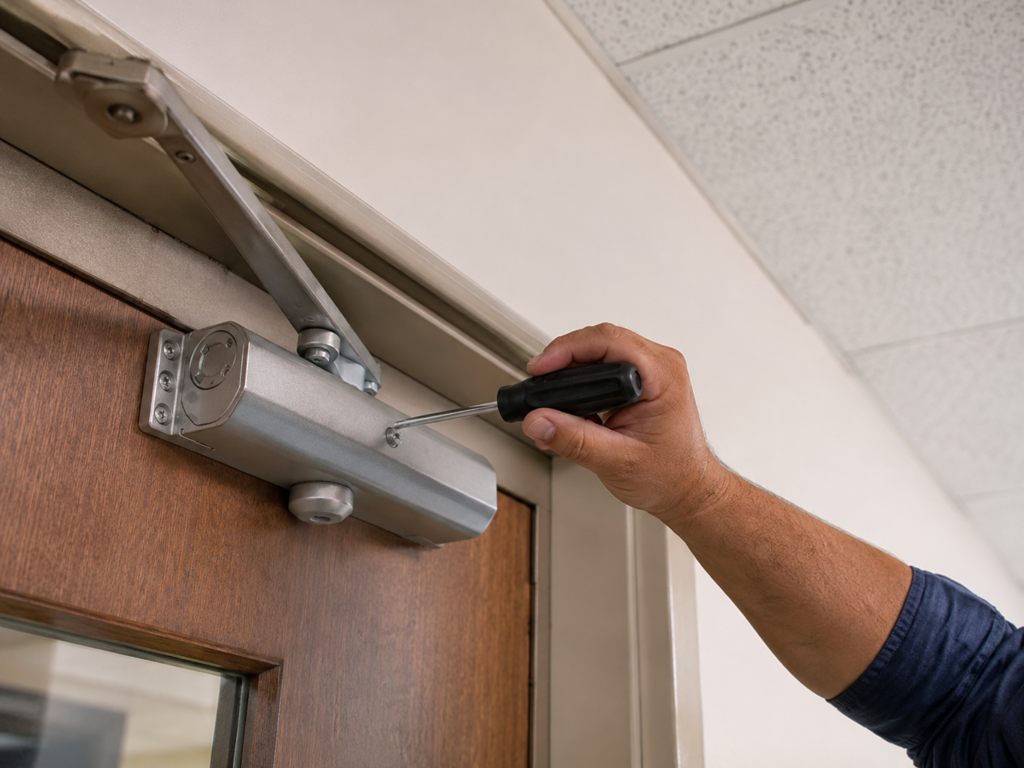
1. Why Door Closer Problems Are Not Always Product Failure
A commercial door closer works as part of a complete door system. It does not operate alone.
The closer body, arm geometry, hinges, door frame, lock, strike plate, seals, floor condition, wind exposure and air pressure all affect closing performance. If one part of the system is wrong, the closer may be blamed even when the real issue is poor alignment or incorrect specification.
For example, a door may fail to latch because the latch speed is too slow, but it may also fail because the strike plate is misaligned. A door may feel too weak because the closer spring force is undersized, but it may also be fighting positive air pressure from an HVAC system. A door may slam because the speed valve is open too far, but it may also indicate oil leakage or hydraulic seal failure.
Before replacing a closer, buyers should check whether the problem comes from adjustment, installation, door alignment, site pressure or real hydraulic failure.
A good replacement decision does not start with the product photo. It starts with the symptom.
2. Spring vs Hydraulics: How a Door Closer Actually Controls the Door
To troubleshoot a door closer, it helps to understand what happens inside the closer body.
A hydraulic door closer mainly relies on two systems.
The first is the mechanical spring. When the user opens the door, the spring stores energy. When the user releases the door, the spring provides the force to push the door closed.
The second is the hydraulic oil and valve system. The spring wants to close the door quickly, but the hydraulic oil resists that movement. As the door closes, oil is forced through small internal valve passages. By tightening or loosening the valves, the installer controls how fast the oil moves, which controls the speed of the door.
This is why a good closer does not simply “pull the door shut.” It controls different movement zones.
Sweep speed controls the main closing movement from a wide open position toward the frame. Latch speed controls the final closing zone, usually the last 10° to 15°, where the door must engage the latch or lock tongue with the strike plate. Backcheck helps slow the door when it is opened forcefully, often beginning around 70° to 85°, depending on closer design and installation.
When a closer fails, the problem may come from spring fatigue, hydraulic seal failure, valve damage, oil viscosity change, wrong arm geometry or incorrect power size.
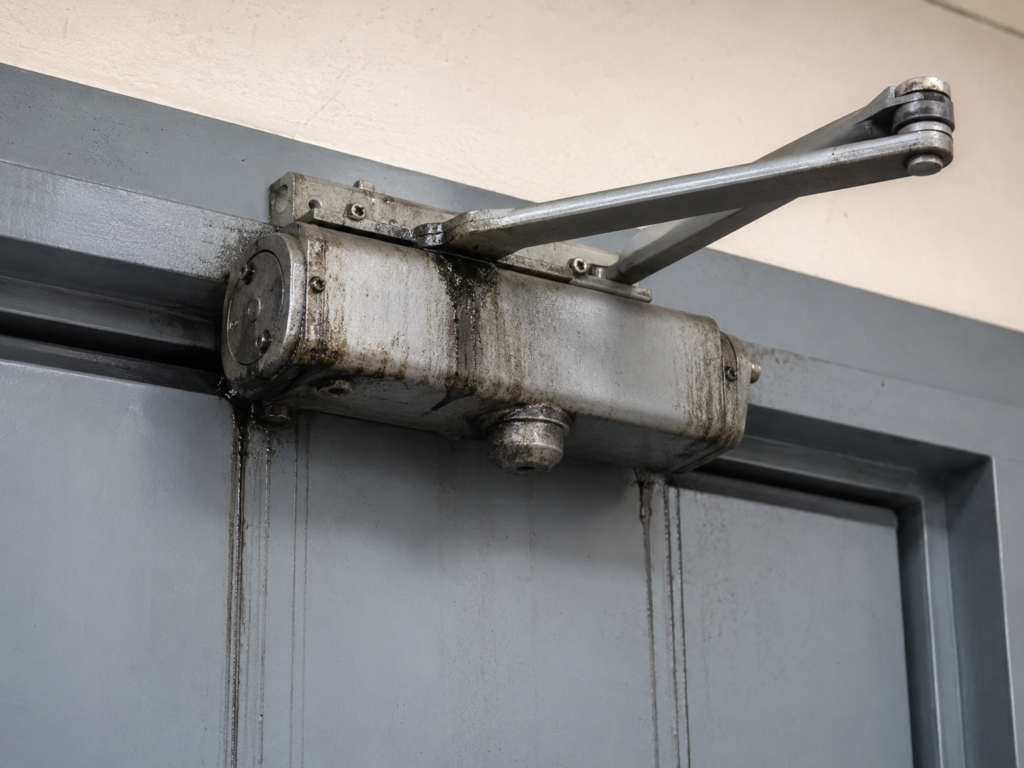
3. Problem 1: Oil Leakage and Loss of Hydraulic Control
Oil leakage is one of the clearest signs that a hydraulic door closer may need replacement.
If there is dark oily residue on the closer body, door frame or arm area, the internal sealing system may have failed. Once oil escapes from a sealed hydraulic closer, the door closer can no longer control the closing movement properly.
A leaking closer may show several symptoms:
- the door slams shut;
- speed adjustment no longer works;
- closing speed becomes inconsistent;
- the door closes normally sometimes and too fast at other times;
- oil stains appear around the body or valve area.
Oil leakage may be caused by seal wear, low-quality O-rings, dynamic shock, overloading, temperature changes, high-frequency use or long service life. In commercial entrances, repeated forced closing can create pressure spikes inside the hydraulic chamber and accelerate seal failure.
For most standard commercial door closers, oil leakage is not a practical repair issue. The closer body is usually factory-sealed. Once the hydraulic control is lost, repeated valve adjustment cannot restore stable long-term performance.
In commercial projects, visible oil leakage is usually a strong replacement signal.
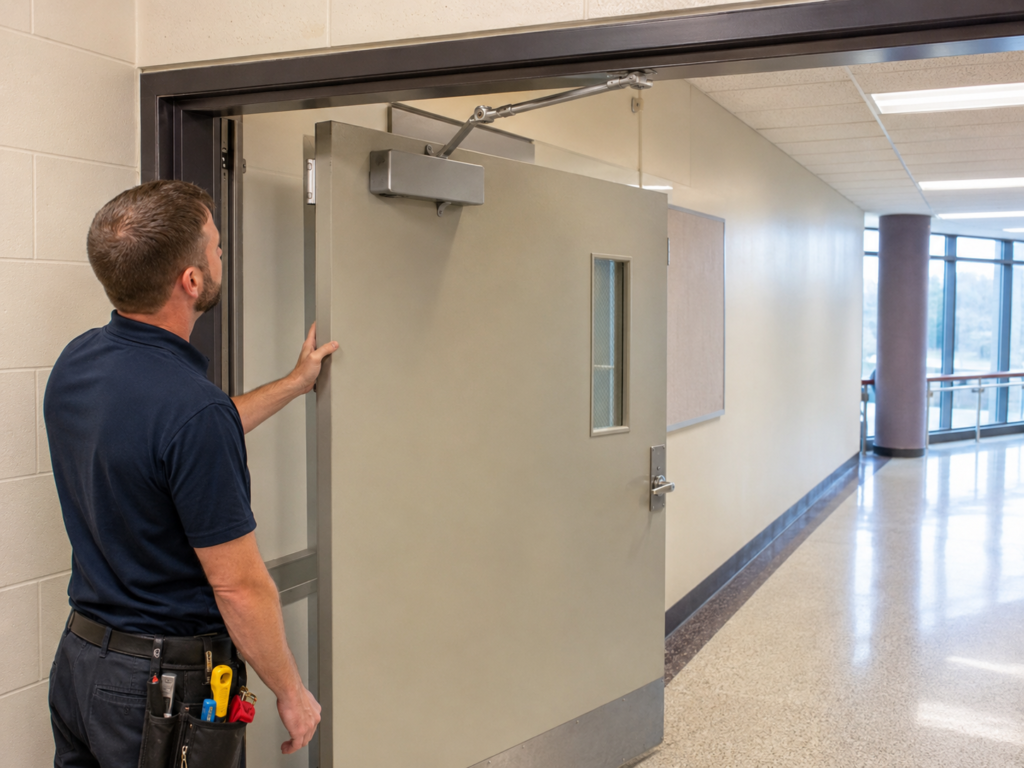
4. Problem 2: The Door Slams Shut or Speed Cannot Be Controlled
A slamming door may be caused by adjustment, but it can also indicate a deeper hydraulic problem.
If the door closes too fast through most of the movement, the sweep speed valve may be opened too much. If the door moves normally at first but hits the frame hard at the end, the latch speed may be too fast.
The first step is usually to adjust the speed valves carefully. Many closers mark the sweep valve as S or 1, and the latch valve as L or 2. Small adjustments are usually enough. Turning the valve too far can cause oil leakage or valve damage.
If the valve turns but the speed does not change, the valve thread may be damaged or the internal hydraulic system may have lost control. In that case, replacement is more realistic.
Temperature can also affect lower-quality closers. In hot climates, hydraulic oil may become thinner, allowing the door to close faster. In cold conditions, oil may become thicker, making the door close too slowly or stop before latching. For export markets with high temperature differences, buyers may consider closers using more temperature-stable hydraulic oil. Some project-grade closers are designed to maintain more consistent control across temperature ranges such as -15°C to 40°C, depending on model specification.
A slamming door should not be ignored. Over time, it can damage locks, hinges, frames, glass panels, wall stops and user safety.
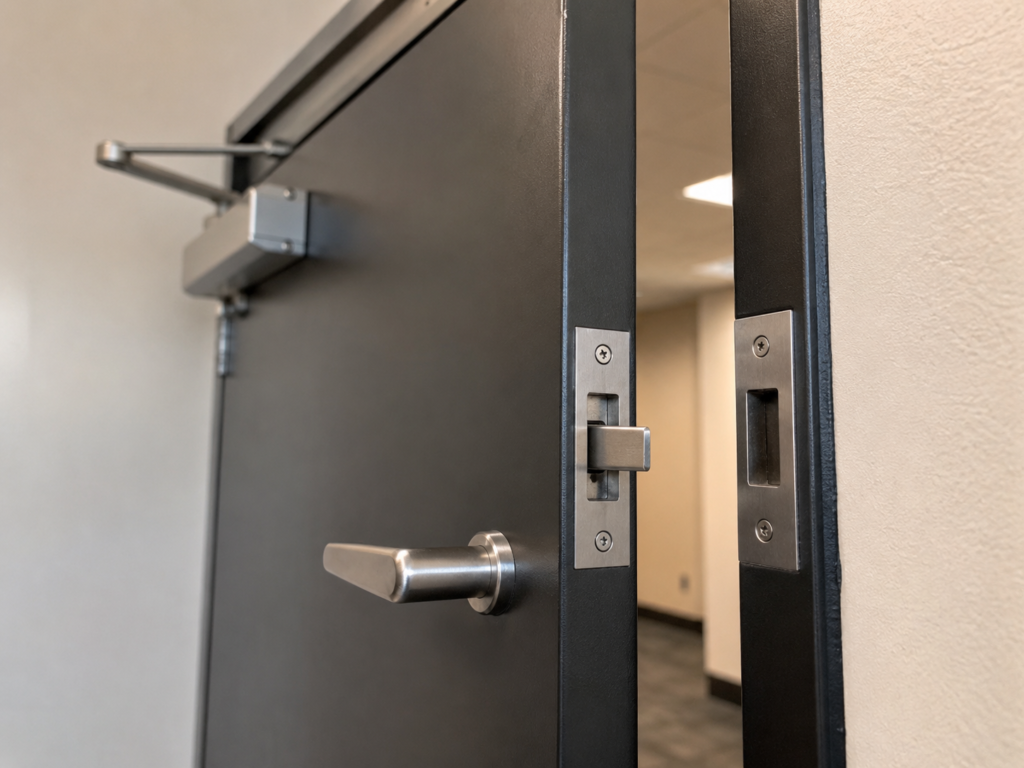
5. Problem 3: The Door Closes but Does Not Latch
A door that reaches the frame but does not latch is one of the most common commercial door problems.
This does not always mean the closer is too weak.
The final 10° to 15° of closing movement is the latch zone. In this stage, the closer must push the lock tongue past the strike plate resistance and overcome seals, air pressure and friction. If the latch speed is too slow, the lock may not click into place. If the latch speed is too fast, the door may bounce slightly and still fail to latch.
Arm preload is another important installation detail. When the closer arm is installed, it often needs slight pre-tension so the arm has enough mechanical leverage in the final closing position. If the arm is installed loosely or at the wrong angle, the closer may lose final pushing force even if the closer body is correctly sized.
Site pressure can also cause poor latching. In air-conditioned buildings, HVAC systems may create positive or negative pressure between rooms. Exterior doors may also be affected by wind. A standard closer may close the door most of the way but fail in the final few centimeters.
Poor latching may also come from the door itself. Hinges may sag. The strike plate may be too high or too low. The lock tongue may be worn. The door may rub against the floor. The frame may have shifted.
A door that closes but does not latch should be checked as a system: latch speed, arm preload, power size, hinges, lock, strike plate and site pressure.
6. Problem 4: Door Rebounds or Feels Too Hard to Open
If a door rebounds when pushed open, the backcheck setting may be too strong.
Backcheck is designed to slow the door before it opens too far and damages the wall, frame, hinges or closer arm. It is especially useful for exterior doors, school doors, hospital corridors and high-traffic entrances where users may push the door forcefully.
However, backcheck is not a door stop. If the backcheck valve is tightened too much, the door may hit a hard hydraulic resistance and bounce back aggressively. A correct backcheck should provide firm but controlled deceleration.
In many closers, backcheck begins around 70° to 85°, depending on model and installation. If resistance begins too early, the door may feel uncomfortable to open. If backcheck is too weak, the door may swing too far and damage the door system.
A door may also feel too hard to open if the EN spring force is too high for the door width or user group. This is common when a closer is oversized for a light interior door, or when adjustable power is set too strong.
The goal is not maximum force. The goal is controlled closing with comfortable opening.
7. EN Power Size and Cycle Rating for Replacement
When a closer must be replaced, power size should be checked carefully. A visual match is not enough.
As a common reference, EN power size may be understood like this:
| EN Size | Common Door Width Reference | Common Door Weight Reference |
|---|---|---|
| EN2 | up to 850mm | up to 40kg |
| EN3 | up to 950mm | up to 60kg |
| EN4 | up to 1100mm | up to 80kg |
| EN5 | up to 1250mm | up to 100kg |
| EN6 | up to 1400mm | up to 120kg |
These values are practical references, not the only selection rule. Exterior doors, fire doors, wide aluminum doors, windy entrances and high-frequency commercial doors may require stronger models or adjustable power.
For example, an EN3 closer may be suitable for many internal doors around 950mm wide. But a heavy exterior door around 1.2m wide may require EN5 or EN6, especially if it is exposed to wind or frequent use.
Cycle rating is also important. In schools, hospitals, shopping malls and transport facilities, a door closer may complete thousands of cycles per week. A 500,000-cycle closer may be acceptable for moderate use, but heavy-traffic projects may consider 1,000,000-cycle or 2,000,000-cycle rated models, depending on project requirement.
For distributors and facility maintenance teams, adjustable EN2–EN6 closers can reduce inventory pressure because one model can cover more door conditions. However, the final specification should still match the door width, weight, installation method and expected traffic.
8. Arm Configuration: Standard, Parallel or Slide Track
The same closer body can perform differently depending on the arm configuration.
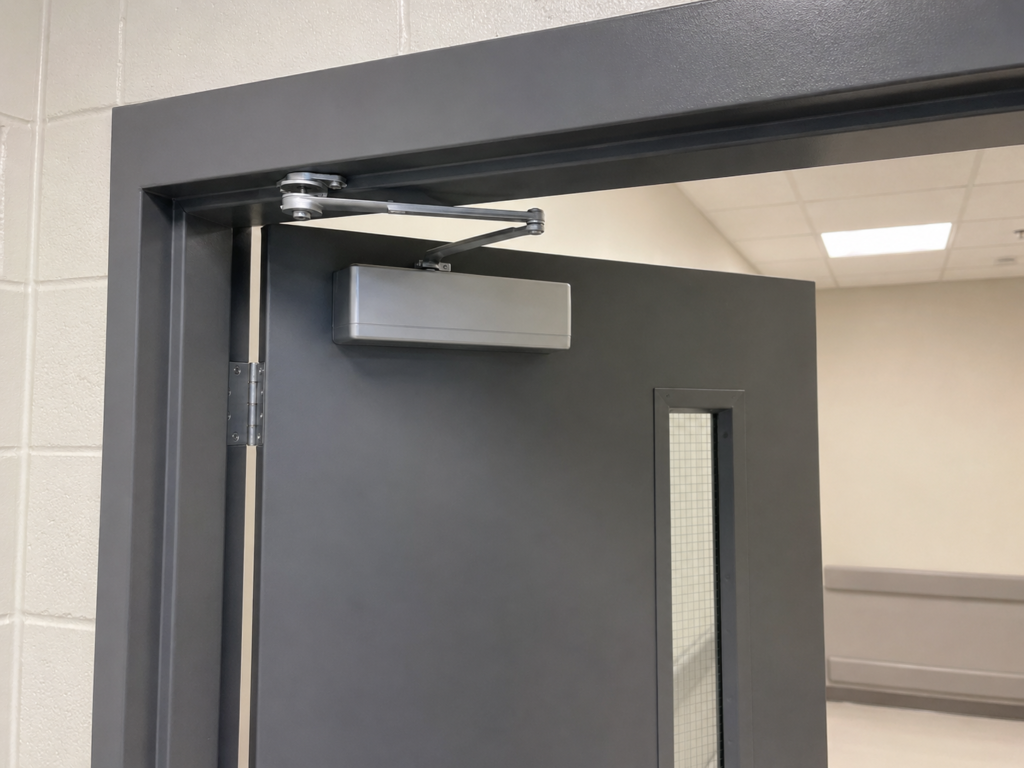
A standard arm is common and mechanically efficient. It is often used where appearance is less sensitive and strong closing leverage is needed.
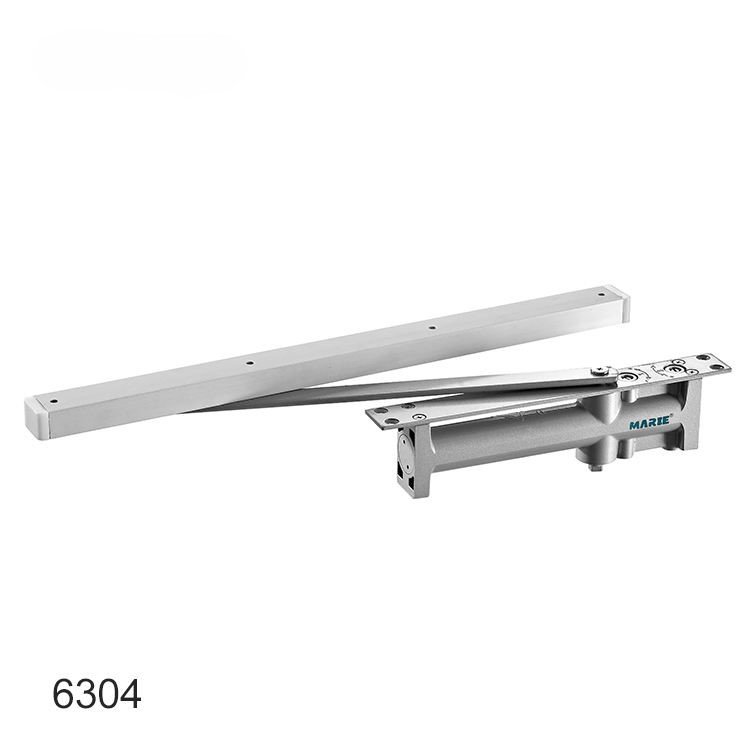
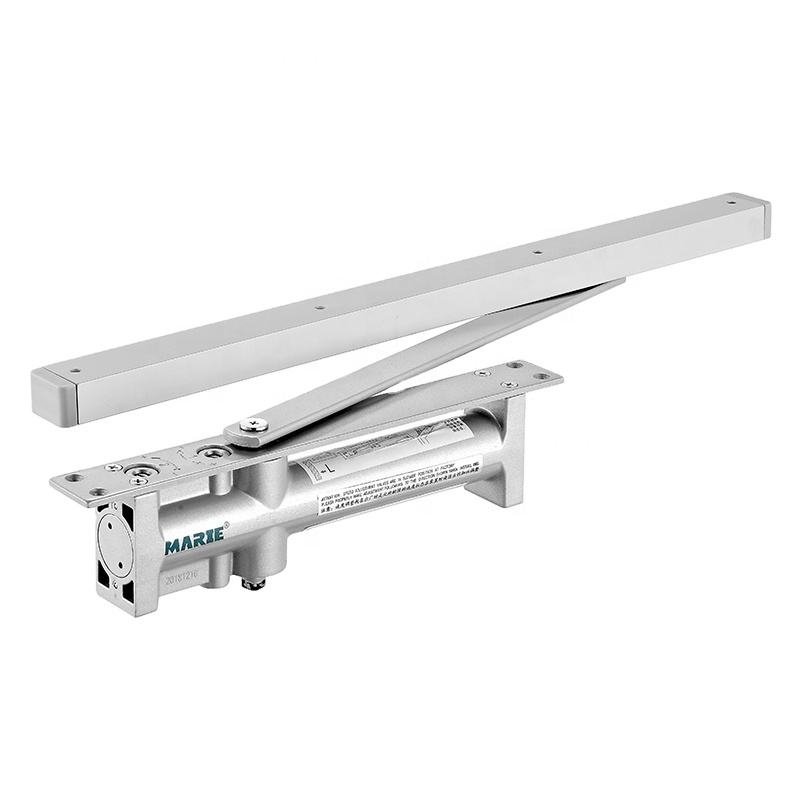
A parallel arm is often used on commercial doors, especially outward-swinging doors or doors in busy corridors. The arm sits more parallel to the door surface and is less exposed to impact, but installation geometry must be correct.
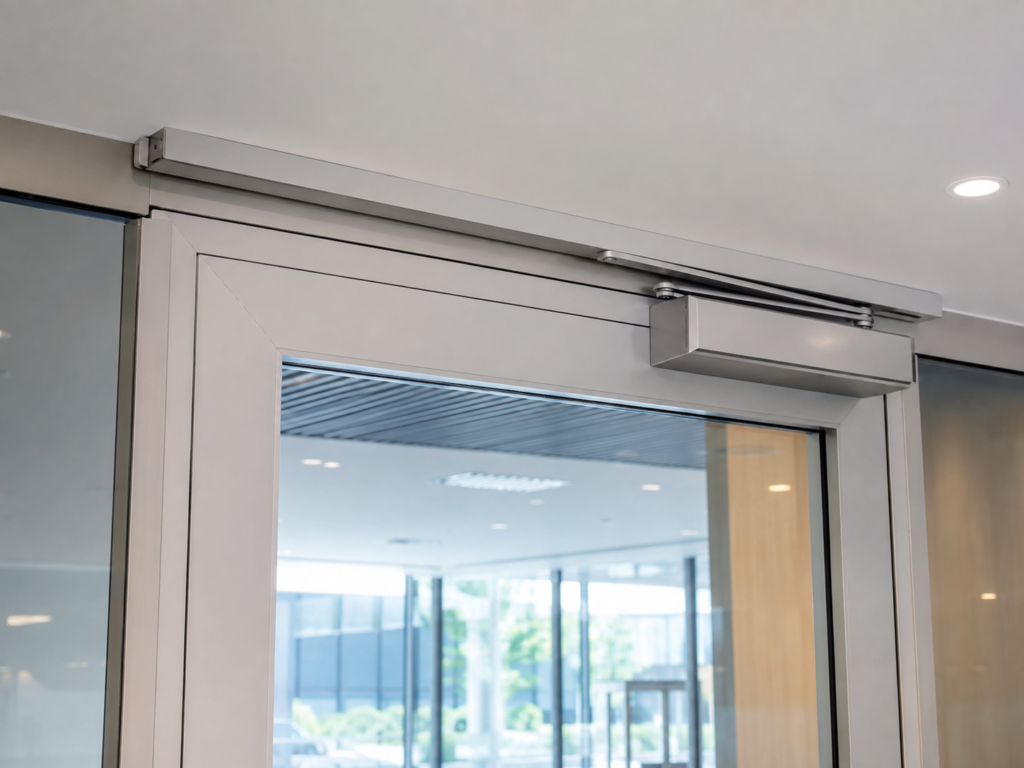
A slide track arm gives a cleaner architectural appearance. It is often used in offices, hotels and modern commercial interiors. However, a slide track can reduce effective mechanical closing leverage compared with a standard scissor arm. In some applications, the reduction may be around 20%, depending on closer design, door size and installation angle.
This matters for heavy exterior doors. A slide track may look cleaner, but a standard or parallel arm may provide stronger mechanical advantage in windy or high-use conditions.
A hold-open arm can be convenient for daily use, but it should not be used casually on fire-rated doors unless it meets local fire safety requirements and release control rules.
Before ordering a replacement closer, buyers should confirm not only the closer body, but also arm type, mounting side, opening angle and screw hole position.
9. Adjust or Replace: How to Decide
Not every door closer problem requires replacement. Some problems can be solved by adjustment, tightening screws, correcting arm position or realigning the strike plate. Other symptoms indicate that replacement is more practical.
| Symptom | Try Adjustment First? | Replacement More Likely When |
| Door closes too fast | Yes | Oil leakage or speed valves no longer respond |
| Door does not latch | Yes | Closer is undersized or door alignment is poor |
| Door rebounds when opened | Yes | Backcheck valve or closer body is damaged |
| Door closer leaks oil | Limited | Visible oil stains and loss of hydraulic control |
| Door is too hard to open | Check EN size and arm type | Closer is too strong for door or user group |
| Door makes noise | Check screws, hinges and arm joints | Arm, bearing or closer body is worn |
A good troubleshooting process starts with simple checks: speed valves, screws, arm position, hinge condition, latch alignment and site pressure. If the closer body is leaking oil or no longer responds to adjustment, replacement is usually the better option.
10. Common Mistakes When Buying Replacement Door Closers
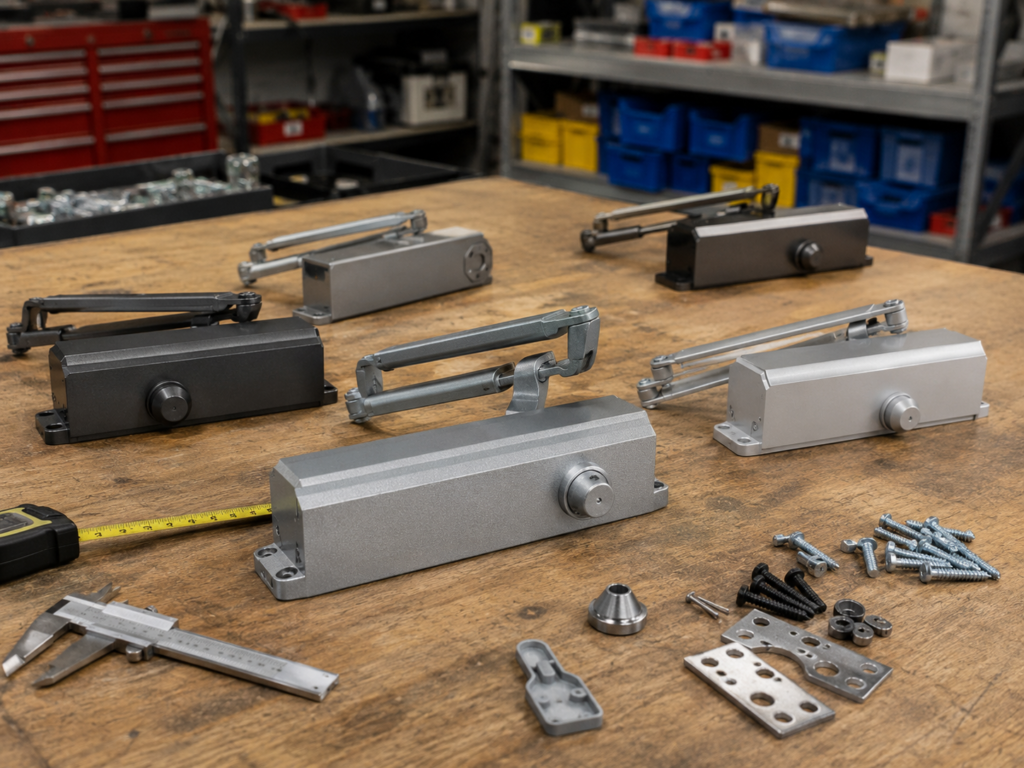
The first mistake is buying by appearance only. Two door closers may look similar, but the EN size, arm type, valve functions, cycle rating and mounting hole positions may be different.
The second mistake is ignoring door width. Door width creates leverage. A wider door often needs more control even if the door weight does not look extreme.
The third mistake is replacing the closer without checking hinges and strike plate alignment. If the door itself is sagging or rubbing, a new closer may still fail to latch.
The fourth mistake is using indoor light-duty closers on exterior doors. Outdoor doors face wind, rain, dust, temperature change and higher opening impact. Backcheck and stronger specifications may be needed.
The fifth mistake is using hold-open closers on fire-rated doors without checking local rules. Fire doors normally need to close automatically during fire conditions.
The sixth mistake is ignoring cycle rating in high-traffic projects. For schools, hospitals, malls and public buildings, fatigue life can be more important than initial price.
The seventh mistake is not confirming mounting side and arm type before ordering. Push side, pull side, standard arm, parallel arm and slide track arm arrangements can affect model selection.
11. What to Confirm Before Ordering a Commercial Door Closer
Before ordering a replacement commercial door closer, buyers should prepare the basic door information.
The key details include door material, door width, door height, estimated door weight, indoor or outdoor use, opening direction, mounting side, arm type, daily use frequency and whether backcheck, delayed action or hold-open is required.
If the door is fire-rated, this must be clearly stated. If the project is a replacement, photos of the existing closer, arm, mounting holes and door frame are very helpful. Measuring the old hole spacing can reduce installation changes.
Buyers should also describe the current problem. A door that slams shut, leaks oil, fails to latch, rebounds when opened or feels too hard to push may require different solutions.
For project orders, quantity, finish, packaging and mixed hardware requirements should also be confirmed before shipment.
12. How Metech Supports Door Closer Projects
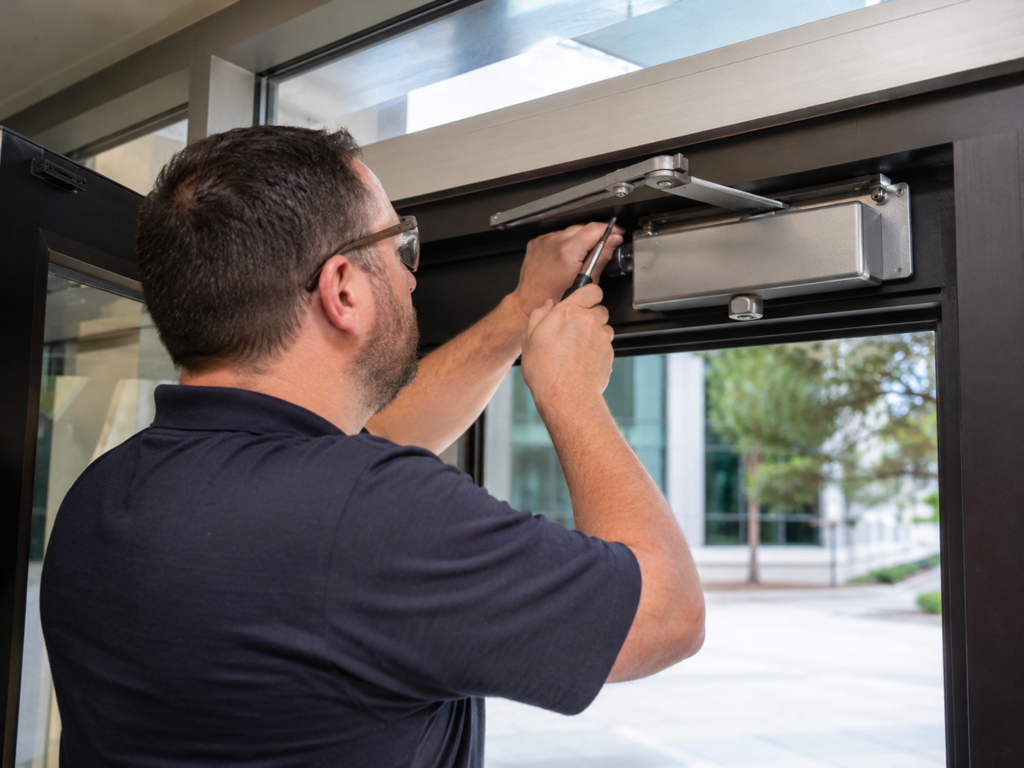
Metech Hardware supplies door closer hardware for commercial and residential projects, including standard hydraulic door closers, heavy-duty closers, adjustable power closers and related door control hardware.
We can help buyers select models according to door width, door weight, door material, indoor or outdoor use, opening frequency and required functions such as sweep speed control, latch speed control, backcheck, delayed action or hold-open.
For replacement projects, photos of the existing closer and door condition can help us recommend a more suitable option. For distributors and project buyers, Metech can support mixed orders that combine door closers with floor springs, patch fittings, pull handles, glass door locks, shower hinges, glass clamps and other architectural glass hardware items.
To request a quotation, send the door size, material, estimated weight, installation side, arm type, required function, finish, quantity and available site photos. This helps us recommend a closer based on the actual door condition instead of selecting only by appearance.
FAQ
Can I fix a door closer that is leaking oil?
In most standard commercial door closers, oil leakage usually means the internal hydraulic sealing system has failed. Adjustment normally cannot restore stable long-term control. Replacement is usually the practical solution.
Why does my door closer slam shut?
A door closer may slam because the sweep speed or latch speed is set too fast, the closer is leaking oil, the speed valves no longer respond, the closer is the wrong EN size, or the door is affected by wind or air pressure.
What is the difference between sweep speed and latch speed?
Sweep speed controls the main closing movement. Latch speed controls the final closing zone, usually the last 10° to 15°, where the door must engage the latch or lock.
Why does my door close but not latch?
This may be caused by slow latch speed, weak spring force, poor arm preload, strike plate misalignment, hinge sagging, floor rubbing, air pressure difference or an undersized closer.
Why is my door hard to push open?
The EN spring force may be too high, the arm geometry may be inefficient, or the backcheck valve may be tightened too much. If resistance appears around 70° to 85°, backcheck adjustment should be checked.
What door closer size do I need?
Door closer size depends on door width, weight, indoor or outdoor use, wind exposure and daily use frequency. EN size is a useful reference, but cycle rating, arm type and site condition should also be considered.
Is a slide track closer better than a standard arm closer?
A slide track closer looks cleaner and is popular in modern interiors. However, it may reduce mechanical closing leverage compared with a standard arm, sometimes by around 20% depending on the system. Heavy exterior doors may need a standard or parallel arm for stronger closing control.
Can I use hold-open door closers on fire doors?
Hold-open closers should not be used casually on fire-rated doors unless they meet local fire safety requirements and release control rules. Fire doors normally need to close automatically during fire conditions.
What information should I send before ordering a replacement door closer?
Send the door width, height, material, estimated weight, indoor or outdoor use, mounting side, old closer photos, arm type, hole spacing, cycle requirement and whether backcheck, delayed action or hold-open is required.