In modern offices, retail storefronts, hotels, and commercial interiors, glass doors are often selected for one reason: transparency.
But the moment a glass door needs to be locked, the design becomes more complicated.
A lock needs space. It needs a latch, a deadbolt, a cylinder, springs, screws, and sometimes batteries, circuit boards, fingerprint modules, or card readers. Tempered glass cannot hide these parts inside the door leaf the way a wooden or aluminum door can.
This is why glass door lock selection should not start from appearance or unlocking method.
It should start from the door structure.
A frameless swing glass door, a double-leaf storefront door, a sliding glass door, and a slim-frame smart glass door all require different locking logic. Choosing the wrong lock does not only affect security. It can cause misalignment, difficult locking, exposed hardware, poor user experience, or installation conflict on site.
The first question is not:
“Which lock looks better?”
The first question is:
“What type of glass door are we locking?”
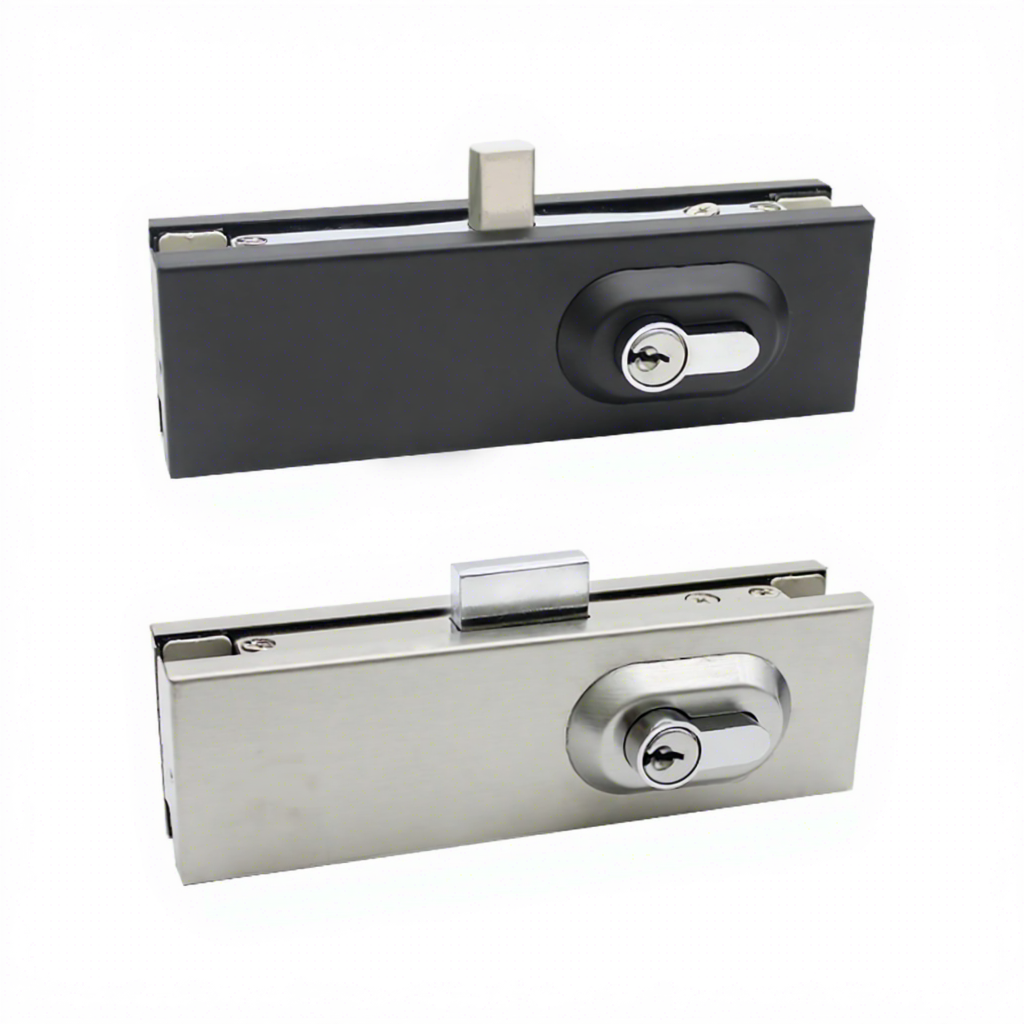
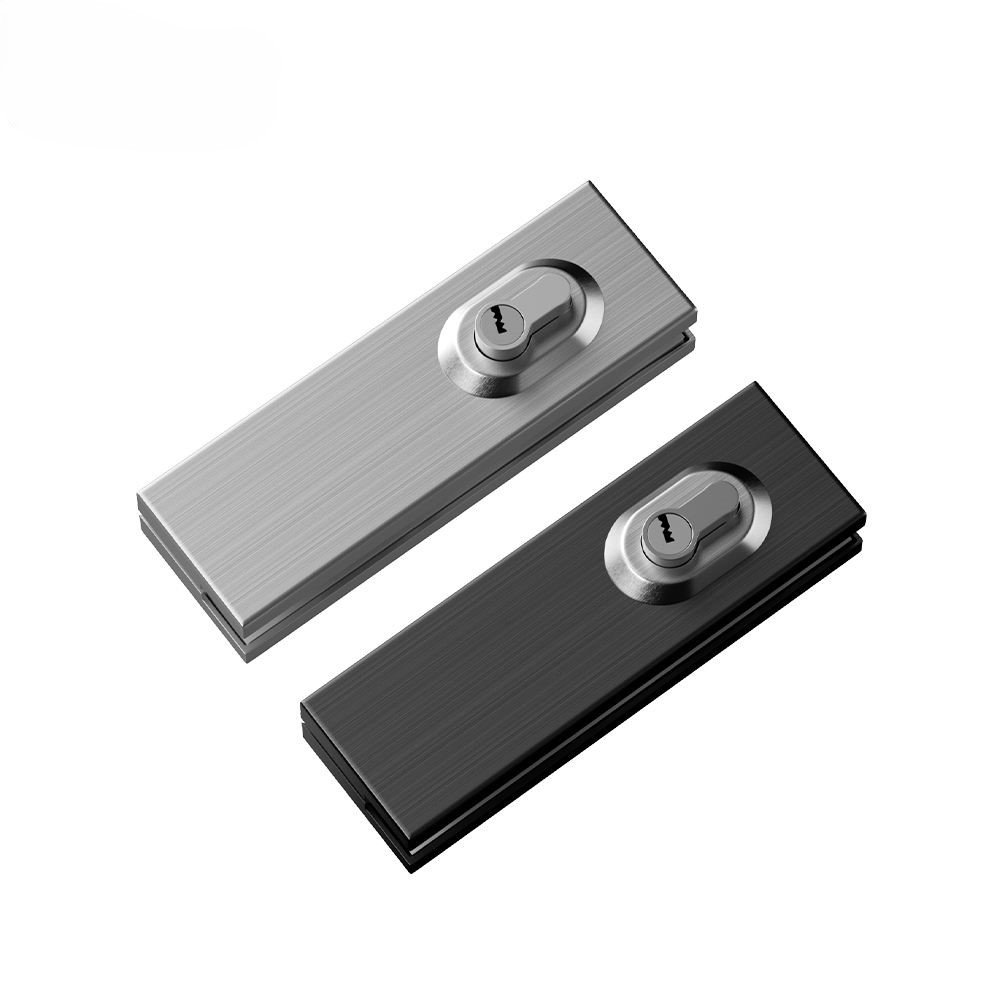
1. Frameless Patch Lock: Clean Mechanical Security for Interior Glass Doors
For pure frameless glass doors, patch locks remain one of the most practical and reliable locking choices.
They are commonly used on:
| Application | Typical Use |
|---|---|
| Office glass partitions | Meeting rooms, private offices |
| Frameless swing doors | Interior commercial doors |
| Double glass doors | Main leaf locking or paired locking |
| Light commercial entrances | Basic mechanical security |
| Glass rooms | Privacy and controlled access |
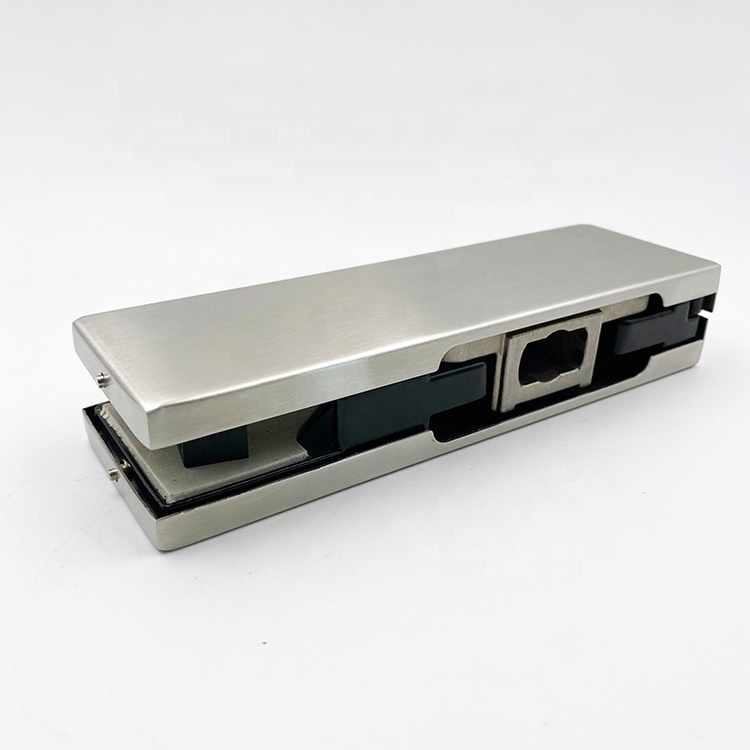
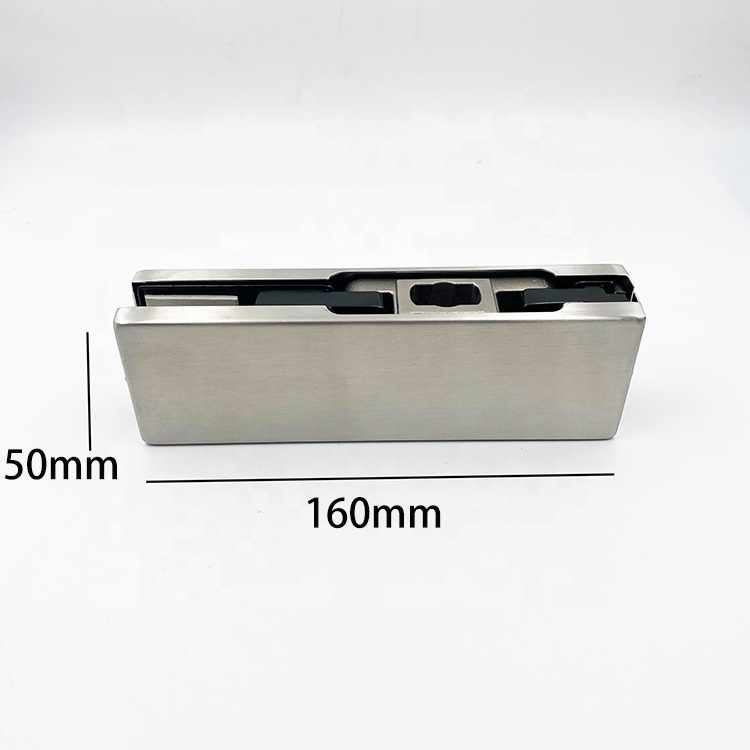
A patch lock clamps onto the glass instead of hiding inside it. This makes it suitable for 10mm or 12mm tempered glass, where internal lock mortising is not possible.
Its advantage is simplicity. No wiring is required. No battery module needs to be hidden. The lock body, cylinder, and bolt are all contained within the surface-mounted patch body.
But patch locks depend heavily on door alignment.
If the floor spring does not return the door accurately, or if the top pivot and patch fitting are not aligned, the lock bolt may not meet the strike position smoothly. This is why centering accuracy matters.
For frameless glass doors using patch locks, ±0.5° centering accuracy is not only about visual alignment. It can directly affect whether the lock engages without jamming.
A patch lock is a good choice when the project needs clean mechanical locking without access-control wiring.
2. Bottom Patch Lock and Floor Lock: Stronger Locking for Storefront Doors
Retail storefronts need a different locking logic.
During business hours, the door must open and close smoothly. After closing time, the same door becomes part of the physical security boundary.
This is where bottom patch locks and floor locks become important.
Unlike a central patch lock, a bottom lock places the locking point near the floor. The bolt engages into a floor socket or strike box, helping stabilize the lower part of the glass door and improving resistance against forced movement.
This is especially useful for:
| Application | Why Bottom Locking Helps |
|---|---|
| Retail storefronts | Better night security |
| Showroom entrances | Physical locking at floor level |
| Mall shopfronts | Stable lock point for glass doors |
| Double glass doors | Helps secure inactive or active leaves |
| Street-facing entrances | Better anti-pry support |
For higher-security storefront projects, several details matter:
| Engineering Point | Recommended Focus |
|---|---|
| Deadbolt throw | Minimum 20mm for stronger engagement |
| Cylinder protection | Anti-drill cylinder for storefront security |
| Floor strike | Accurately drilled and firmly seated |
| Glass thickness | Usually 10mm / 12mm |
| Door centering | Required to prevent bolt jamming |
However, floor locks also create installation constraints.
If the floor includes underfloor heating, raised access flooring, waterproofing layers, embedded cables, or finished marble, drilling a floor socket may not be simple. The lock may be correct, but the floor condition may make installation risky.
Before choosing a floor lock, always check the floor structure first.
3. Spring Floor Bolt: The Hidden Stabilizer for Double Glass Doors
In double glass doors, the lock on the active leaf is only half of the story.
The inactive leaf also needs to be stabilized.
A spring floor bolt is often used to secure the secondary glass leaf into the floor or head position. Once the inactive leaf is fixed, the active leaf can lock against a stable reference point.
Without this stability, the main lock may feel loose, even if the lock itself is good.
Spring floor bolts are useful for:
- double frameless glass doors
- office double-leaf glass partitions
- retail storefront entrances
- mall entrances
- wide commercial glass door openings
The engineering requirement is simple but important: the bolt must drop smoothly, the spring return must remain reliable, and the floor socket must be positioned accurately.
In double glass doors, the inactive leaf is often the hidden reason why the main lock does not feel secure.
4. Sliding Glass Door Lock: Different Door Movement, Different Locking Logic
A sliding glass door should not use the same locking logic as a swing glass door.
A swing door depends on return-to-center alignment. A sliding door depends on track alignment, stopper position, and horizontal latch engagement.
This is why sliding glass door locks should be selected separately.
They are commonly used for:
| Application | Locking Requirement |
|---|---|
| Sliding office doors | Clean interior locking |
| Meeting rooms | Privacy and simple operation |
| Restrooms | Occupancy indication |
| Clinics or consultation rooms | Privacy status display |
| Interior glass partitions | Smooth horizontal locking |
For sliding glass doors, the lock must match:
- glass thickness
- sliding track position
- final door stopper position
- hook bolt or latch engagement
- handle clearance
- occupancy indicator requirement
A lock with an occupancy indicator is not mainly a high-security product. Its real value is privacy communication. It tells users whether the room is occupied and helps avoid accidental interruption.
This makes it practical for meeting rooms, clinics, restrooms, and shared commercial interiors.
5. Smart Glass Door Lock: Access Convenience with Structural Limits
Smart glass door locks solve a different problem.
They improve access management.
Fingerprint access, password entry, RFID cards, app control, and double-sided access are useful for offices, serviced apartments, coworking spaces, and commercial interiors where traditional keys are inconvenient.
Smart locks are suitable for:
| Application | Smart Lock Value |
|---|---|
| Smart office entrance | User permission management |
| Coworking space | Keyless access |
| Apartment glass door | Fingerprint and password access |
| Service apartment | Easier user turnover |
| Semi-outdoor entrance | Waterproof fingerprint lock if specified correctly |
But smart locks need more physical volume than simple mechanical patch locks. They require space for batteries, circuit boards, readers, handles, and locking components.
There are two common approaches.
Surface-mounted smart lock for frameless glass
For pure frameless glass doors, a smart glass lock can be surface-mounted onto the glass. This can work well when the project accepts a visible lock body and battery housing on the glass surface.
The advantage is that it can add fingerprint, card, password, or app access without changing the glass door into a framed door.
The limitation is appearance and space. The electronics must sit on the surface because the glass cannot hide them internally.
Slim-frame smart lock for aluminum narrow-stile glass doors
If the project requires a cleaner integrated look, an aluminum slim-frame glass door is often a better structure.
The aluminum stile provides space for a narrow lock body, battery components, fixing screws, and internal mechanisms. This allows the smart lock to look more intentional and better integrated with the door system.
In other words:
The solution is not only a different lock. Sometimes it is a different door structure.
Smart access improves convenience, but physical security still depends on lock body strength, bolt engagement, glass door alignment, and installation quality.
6. Mechanical Locks vs Smart Locks: The Real Difference
Mechanical locks and smart locks solve different problems.
Mechanical locks are simple, stable, and independent from power. They are often better for basic physical security, storefront night locking, and interior privacy.
Smart locks are better for access management, user convenience, and keyless entry. They are useful when the project needs fingerprint, password, card, or app control.
| Lock Type | Best Use | Main Advantage | Main Limitation |
|---|---|---|---|
| Patch lock | Interior frameless swing glass doors | Simple, clean, no wiring | Depends on door alignment |
| Bottom patch lock / floor lock | Storefronts and commercial glass doors | Stronger floor-level locking | Requires floor drilling |
| Spring floor bolt | Double glass doors | Stabilizes inactive leaf | Needs accurate socket alignment |
| Sliding glass door lock | Sliding partitions and privacy rooms | Matches sliding movement | Depends on track position |
| Smart glass door lock | Offices and keyless access doors | Fingerprint, card, password, app access | Requires battery and surface space |
| Slim-frame smart lock | Aluminum narrow-stile glass doors | Cleaner integrated appearance | Requires framed glass door structure |
The right choice depends on what the door is expected to do every day.
Common Specification Mistakes
Choosing by unlocking method before checking door type
Fingerprint, key, card, or thumb-turn should not be the first decision. A swing door, sliding door, double-leaf door, and slim-frame glass door all require different lock structures.
Treating smart locks as replacements for all mechanical locks
Smart access improves convenience, but it does not automatically replace deep mechanical locking, anti-drill cylinders, floor bolts, or proper door alignment in higher-security storefront projects.
Forgetting the inactive leaf in double glass doors
In double glass doors, the secondary leaf must be fixed before the main leaf can lock properly. A spring floor bolt or similar stabilizing lock is often necessary.
Ignoring floor conditions before choosing a floor lock
Floor locks require accurate drilling. Underfloor heating, raised floors, waterproofing, cables, and finished stone flooring must be checked before installation.
Blaming the lock when the real problem is alignment
Many glass door locks fail to engage because the door does not return to the correct position. Patch locks, floor locks, and bolts all depend on stable alignment.
Practical Recommendation
There is no universal best glass door lock.
The right lock depends on the door structure, glass thickness, locking position, security level, and daily operating method.
Use patch locks for frameless interior swing glass doors.
Use bottom patch locks or floor locks for storefronts and stronger physical locking.
Use spring floor bolts to stabilize inactive leaves in double glass doors.
Use sliding glass door locks for horizontal sliding doors and privacy rooms.
Use smart glass door locks when the project needs fingerprint, password, card, or app access.
Use slim-frame smart locks when the project needs a cleaner integrated smart access solution.
A good lock specification does not start with the lock photo.
It starts with the door type.
Need Help Choosing the Right Glass Door Lock?
Send us your door type, glass thickness, door width and height, single or double leaf structure, swing or sliding movement, frame profile, security requirement, smart access requirement, floor condition, finish requirement, and quantity.
Metech can help match your project with the right glass door lock, from mechanical patch locks and floor bolts to smart glass door locks and slim-frame access solutions.