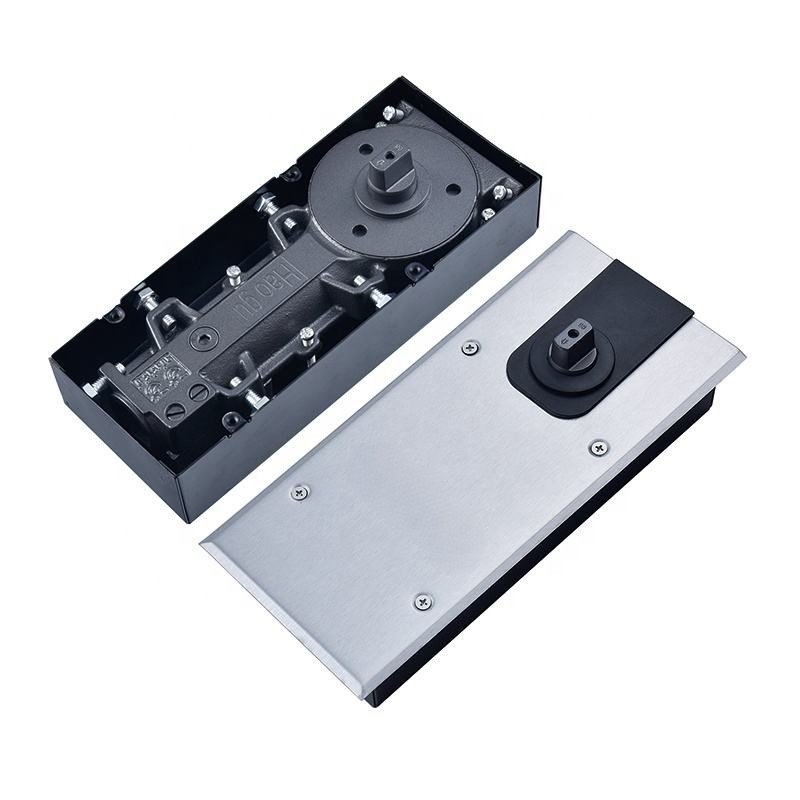
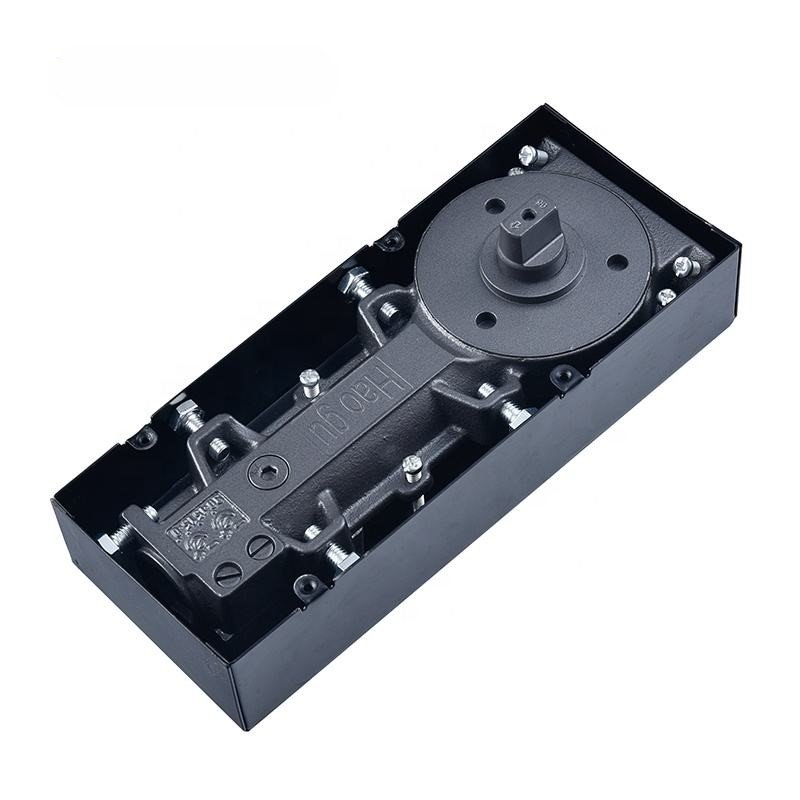
In modern architectural glass projects, one of the most important hardware decisions happens before the glass is even ordered.
It happens at the floor.
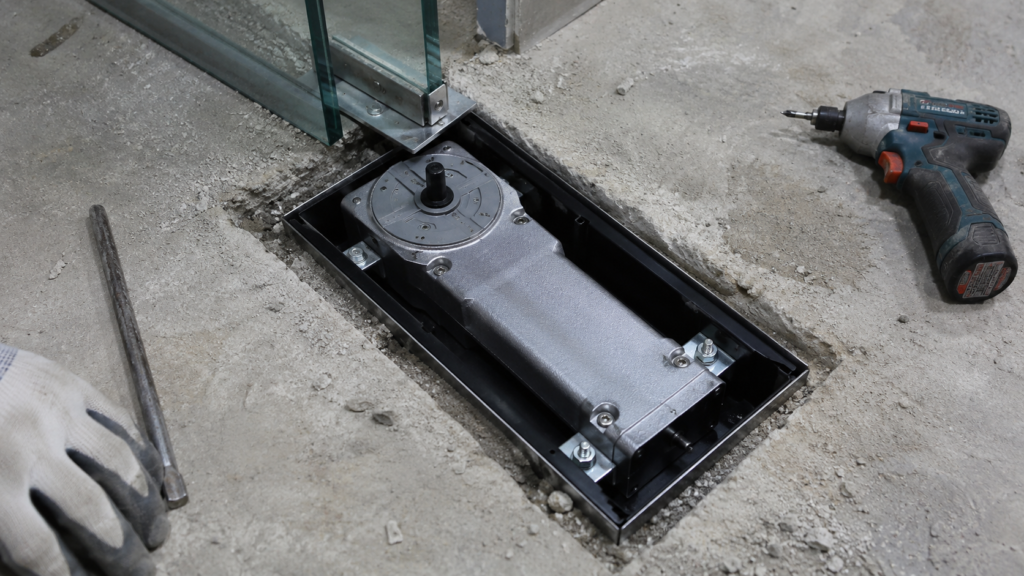
For decades, installing a frameless glass door often meant excavating the floor to bury a traditional floor spring. This method is proven, strong, and still widely used for commercial entrances. But modern interiors have changed.
High-end apartments may have underfloor heating. Office buildings often use raised access floors filled with power and data cables. Renovation projects may already have finished marble, stone, or timber flooring that should not be damaged.
This creates a direct conflict:
glass door control needs mechanical space, but modern floors often do not allow deep excavation.
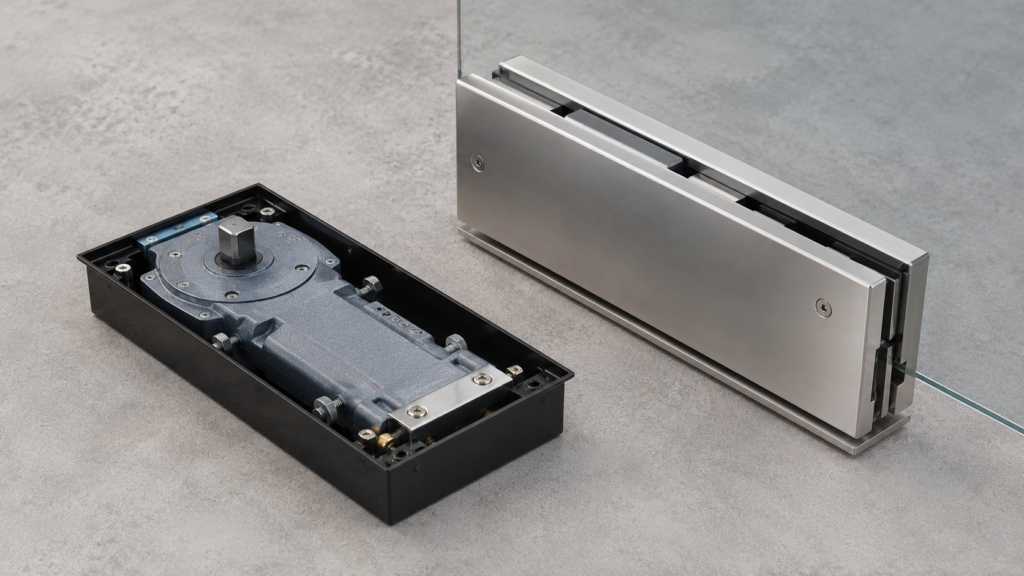
This is where the difference between a traditional floor spring and a no-dig hydraulic patch fitting becomes important.
1. The Slab Conflict: Glass Doors vs Modern Floor Structures
The core conflict in modern frameless door installation is not only load capacity. It is floor condition.
Traditional floor springs were designed for projects where the floor could be prepared in advance. In new construction, the contractor can reserve a floor pocket, install the cement box, align the spindle, and finish the flooring around the cover plate.
But many modern projects do not have that freedom.
In office fit-outs, a raised access floor may hide electrical wiring, network cables, and building service routes. In luxury apartments, floor structures may include underfloor heating pipes, waterproof layers, or post-tensioned slabs. In renovation projects, cutting into finished stone or concrete creates dust, delay, and repair risk.
The question changes from:
“Can the hardware carry the glass door?”
to:
“Can this door control system be installed without damaging the floor?”
2. Traditional Floor Springs: Why Excavation Is Needed
A traditional floor spring needs floor space because of its internal mechanics.
Inside the floor spring body, there is usually a cam structure, spring system, oil cylinder, spindle, speed adjustment valves, and sealing components. This mechanical volume allows the floor spring to carry heavy glass doors, control closing speed, resist repeated opening cycles, and handle higher external forces.
That is why a floor spring cannot simply be made extremely thin.
Most traditional floor springs require a recessed floor box, usually with an installation depth of around 50mm to 70mm, depending on the model. Heavy-duty models may require more space.
This is not a design weakness. It is one reason traditional floor springs remain reliable for demanding doors.
For commercial entrances, hotel lobbies, retail storefronts, and oversized glass doors, a heavy-duty floor spring can still be the right choice. Some commercial floor spring models are designed for much higher door weights than interior hydraulic patch fittings, with heavy-duty specifications reaching 200kg or more, depending on the model.
The problem starts when this system is forced into an interior project where the floor should not be cut.
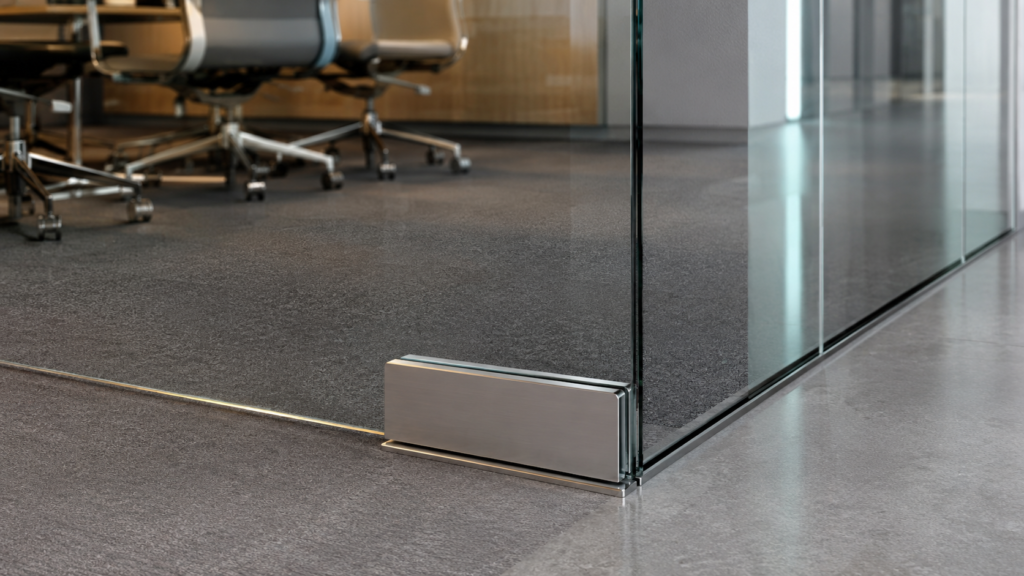
3. No-Dig Hydraulic Patch Fittings: Moving the Hydraulic System Above the Floor
A no-dig hydraulic patch fitting changes the location of the door control system.
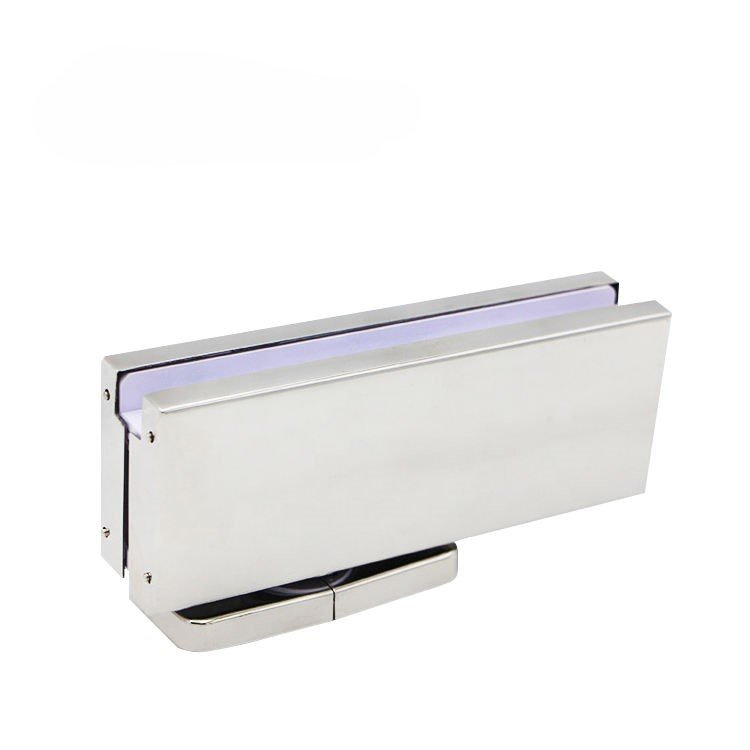
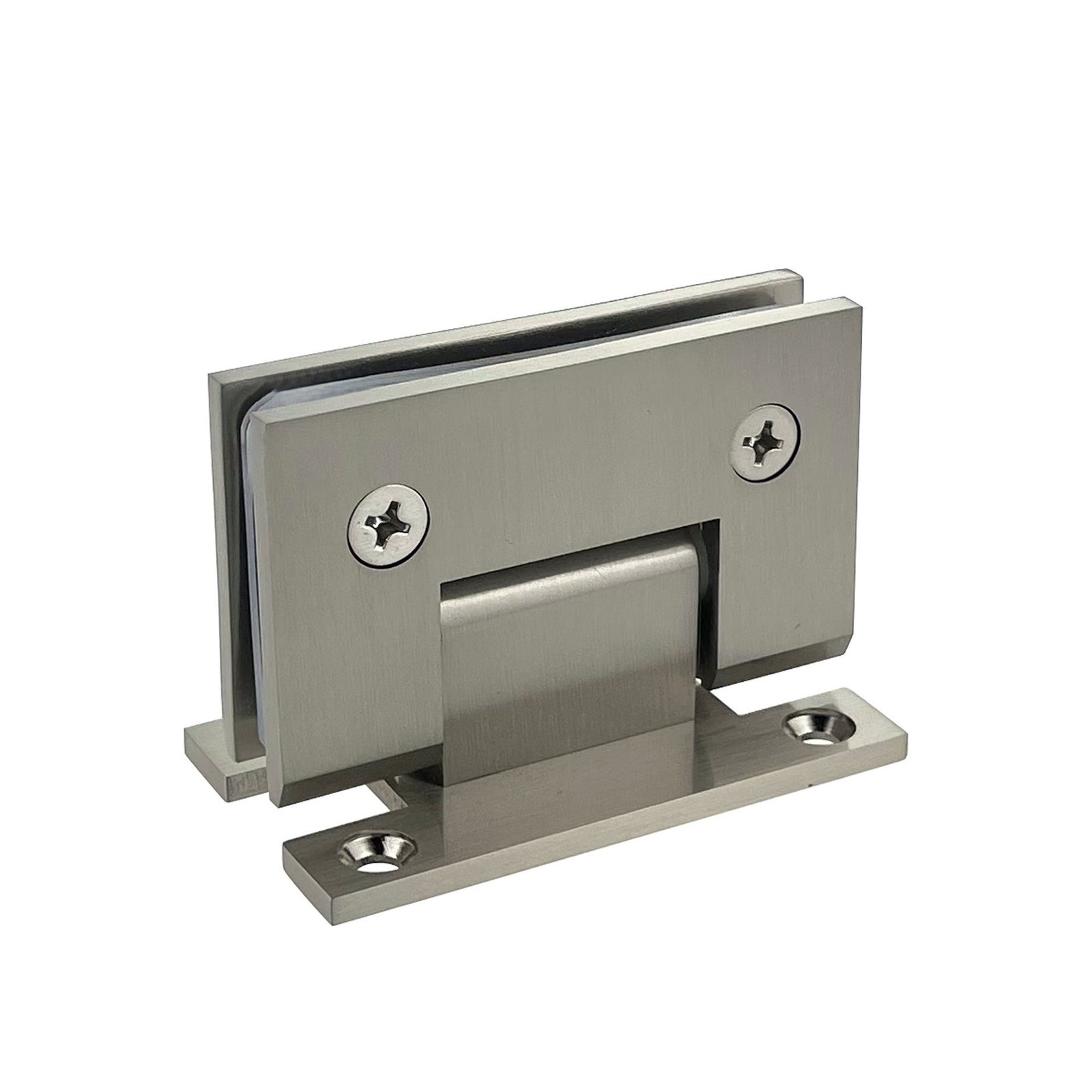
Instead of placing the hydraulic mechanism inside a floor box, the hydraulic control is integrated into the patch fitting or pivot structure that clamps the glass door.
In simple terms, the door closer moves from below the floor into the glass door hardware itself.
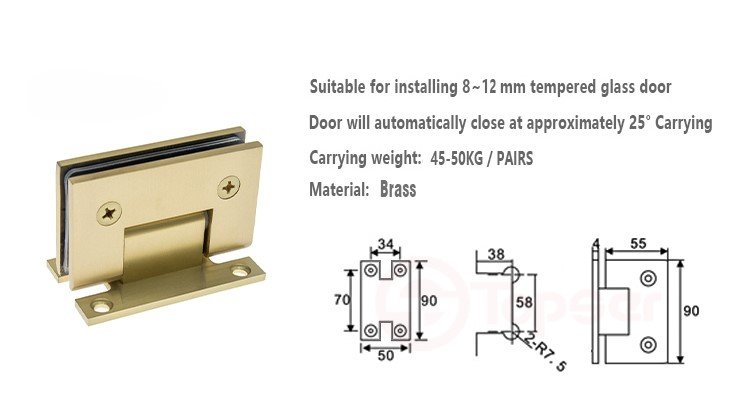
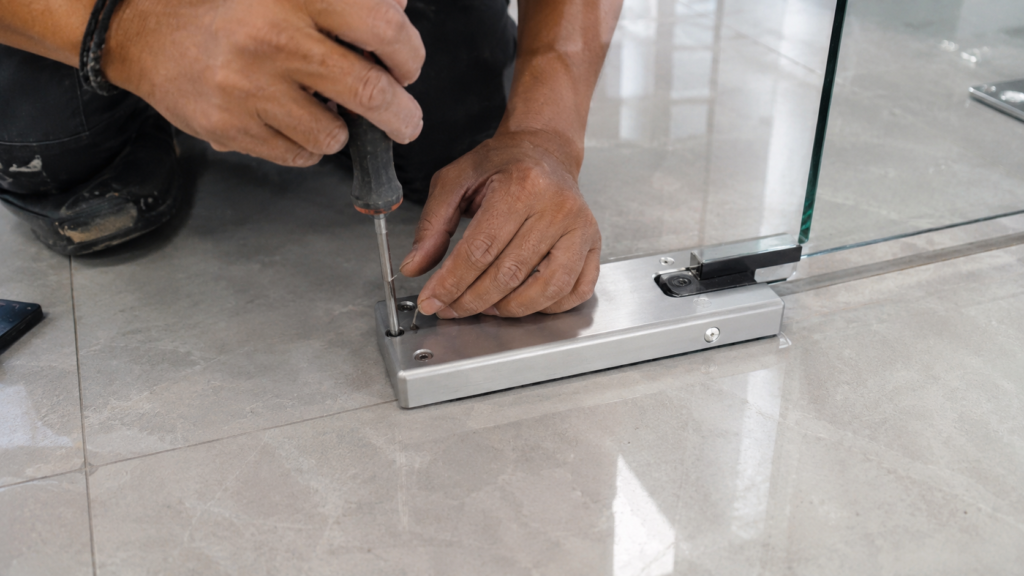
For selected models, installation can be completed with surface-mounted fixing, often using a four-screw structure. This avoids the need for a deep floor spring pocket and greatly reduces the risk of cutting into hidden heating pipes, cables, or finished floor structures.
Typical engineering advantages include:
| Feature | Project Value |
|---|---|
| Surface-mounted installation | Reduces or avoids deep floor excavation |
| Built-in hydraulic control | Provides controlled closing without a floor spring box |
| Four-screw fixing structure | Simplifies installation on finished floors |
| Shallow surface drilling | Helps reduce risk to hidden floor systems |
| 80kg–100kg capacity range | Suitable for many interior glass doors, depending on model |
| Precise centering accuracy | Helps improve seal alignment and closing position |
| Slim patch profile | Better suited for office partitions and high-end interiors |
This does not mean a no-dig hydraulic patch fitting should replace every floor spring.
It means it is often the better solution when the floor condition is the main risk.
4. Total Cost of Installation: Unit Price Is Not the Real Cost
Many buyers compare only the unit price of the hardware.
At first glance, a no-dig hydraulic patch fitting may cost more than a standard floor spring. But in finished interior projects, the product price is only one part of the real cost.
A traditional floor spring may also involve floor cutting, recessed box positioning, masonry work, cement fixing, curing time, tile or stone repair, dust control, waterproofing risk, and coordination with other contractors.
If the site has underfloor heating, cable routes, or finished marble flooring, the risk becomes even higher. One wrong cut can damage heating pipes, electrical conduits, network cables, or expensive floor finishes.
A no-dig hydraulic patch fitting usually has a higher unit price, but it can reduce hidden installation costs.
| Cost Factor | Traditional Floor Spring | No-Dig Hydraulic Patch Fitting |
|---|---|---|
| Hardware cost | Usually lower | Usually higher |
| Floor cutting | Required | No deep excavation for suitable models |
| Masonry work | Often required | Much less site work |
| Curing or repair time | May be needed | Usually faster under prepared conditions |
| Risk to hidden systems | Higher on finished floors | Lower floor damage risk |
| Best cost advantage | New concrete floor projects | Finished interiors and renovation projects |
For a new commercial entrance, a traditional floor spring may still be cost-effective.
For raised floors, underfloor heating, finished marble floors, and renovation projects, a no-dig hydraulic patch fitting often performs better when total installation cost is considered.
5. The Specification Matrix: Which System Fits Your Project?
The correct choice depends on the project environment.
| Project Condition | Better Choice | Reason |
|---|---|---|
| Street-facing commercial entrance | Traditional floor spring | Better for wind pressure and public traffic |
| Hotel lobby glass entrance | Traditional floor spring | Strong control for large glass doors |
| Oversized or very heavy door | Traditional floor spring | More suitable for heavy-duty door control |
| Exterior door with wind exposure | Traditional floor spring | Stronger mechanical resistance |
| Raised access floor office | No-dig hydraulic patch fitting | Avoids cutting into cable floor systems |
| Apartment with underfloor heating | No-dig hydraulic patch fitting | Reduces risk of damaging heating pipes |
| Finished marble or stone floor | No-dig hydraulic patch fitting | Avoids destructive floor cutting |
| Office meeting room glass door | No-dig hydraulic patch fitting | Easier installation and controlled closing |
| Renovation project | No-dig hydraulic patch fitting | Lower site risk and faster installation |
A simple rule is useful:
If the door is heavy, exterior-facing, and the floor can be prepared properly, a traditional floor spring is usually the safer choice.
If the door is interior, the floor is finished, and cutting is risky, a no-dig hydraulic patch fitting is often the better option.
6. Common Misjudgments Before Ordering
One common mistake is selecting glass door hardware only by load capacity. A floor spring may be strong enough to carry the door, but if the floor cannot be cut safely, it may still be wrong for the project.
Another mistake is using entrance door hardware for interior office partitions. A heavy-duty floor spring may work mechanically, but it can make a meeting room door feel stiff, require unnecessary floor work, and interrupt the clean interior design.
The opposite mistake is also possible. A no-dig hydraulic patch fitting is not designed to replace every heavy-duty floor spring. For oversized exterior doors, strong wind pressure, or extremely high-traffic entrances, a traditional floor spring should still be evaluated first.
Good hardware selection starts with three questions:
Can the floor be cut safely?
How heavy and wide is the glass door?
Is the door used as an interior partition or a main entrance?
Only after answering these questions should the product model be selected.
Practical Recommendation
Traditional floor springs and no-dig hydraulic patch fittings are not competing answers to the same problem. They solve different project risks.
A traditional floor spring remains a reliable solution for heavy commercial entrances, hotel lobbies, exterior storefronts, and high-traffic glass doors where the floor pocket can be prepared correctly.
A no-dig hydraulic patch fitting is usually a better option for modern interior glass doors where the floor condition is the main limitation. This includes office partitions with raised access floors, high-end apartments with underfloor heating, finished stone floors, and renovation projects where floor cutting should be avoided.
For contractors and project buyers, the better solution is not always the cheaper product.
It is the solution that reduces installation risk, protects the finished floor, controls the glass door properly, and avoids rework after the site is already finished.
FAQ
Can a no-dig hydraulic patch fitting replace a traditional floor spring?
It can replace a traditional floor spring in many interior glass door projects, especially where floor cutting is risky or not allowed. For heavy exterior doors, high wind pressure, or main commercial entrances, a traditional floor spring may still be the better choice.
When should I still use a traditional floor spring?
Use a traditional floor spring when the project involves heavy glass entrance doors, exterior wind exposure, high traffic, or large commercial openings where the floor can be prepared properly.
Is a no-dig hydraulic patch fitting suitable for raised access floors?
Yes, it is often suitable for office projects with raised access floors because it reduces or avoids deep floor cutting. This helps protect electrical wiring, data cables, and floor service systems.
Need Help Choosing the Right Glass Door Control System?
Send us your door width, door height, glass thickness, estimated door weight, floor condition, interior or exterior use, traffic level, finish requirement, and quantity.
Metech can help review your project and recommend whether a traditional floor spring or a no-dig hydraulic patch fitting is more suitable for your glass door system.