Oversized glass entrance doors are increasingly used in flagship stores, hotel lobbies, automobile showrooms, corporate headquarters and luxury residences. Their large transparent panels create an open, premium entrance while allowing more natural light into the building.
Mechanically, however, an oversized glass door is not simply a standard commercial door made larger.
As the panel becomes taller, wider and heavier, the forces acting on the floor spring, patch fittings, pivots, glass cut-outs and fixing points increase. Exterior wind, frequent operation and the leverage created by long pull handles place additional stress on the complete system.
If the hardware is selected according to door weight alone, the entrance may later develop problems such as:
- Unstable closing speed
- Poor return-to-center performance
- Door-leaf sagging
- Uneven gaps between double doors
- Locks that no longer align
- Loose patch fittings or pull handles
- Premature wear or hydraulic leakage
Reliable operation therefore depends on selecting the floor spring, patch fittings, pivots, locks and handles as one compatible load-bearing and movement-control system.
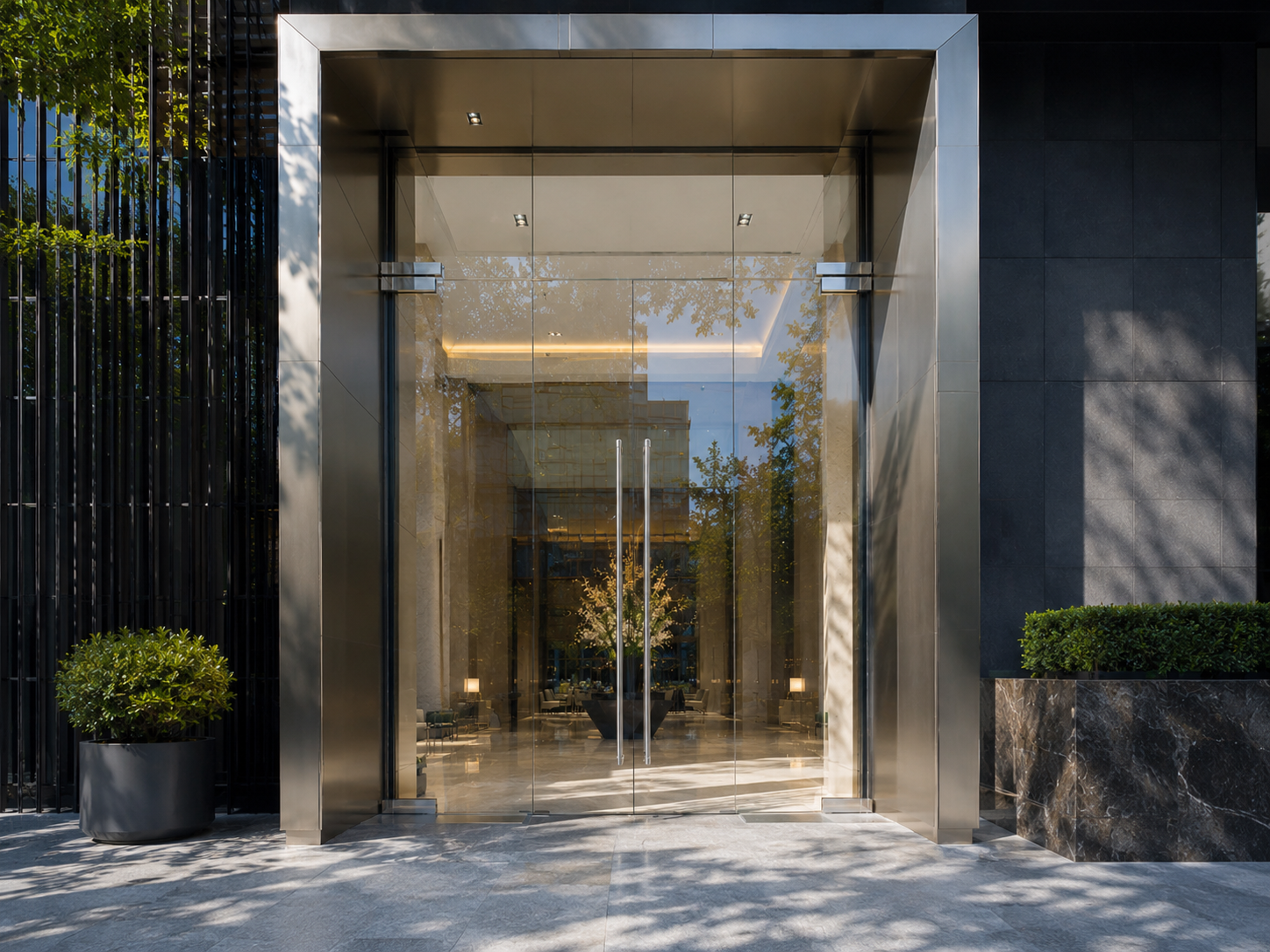
Why Oversized Glass Doors Require Special Attention
There is no single dimension that defines every oversized glass door. The complete panel size, estimated weight, operating frequency and installation environment must be evaluated together.
Glass Weight and Door Dimensions
A useful starting point is the approximate weight of the glass.
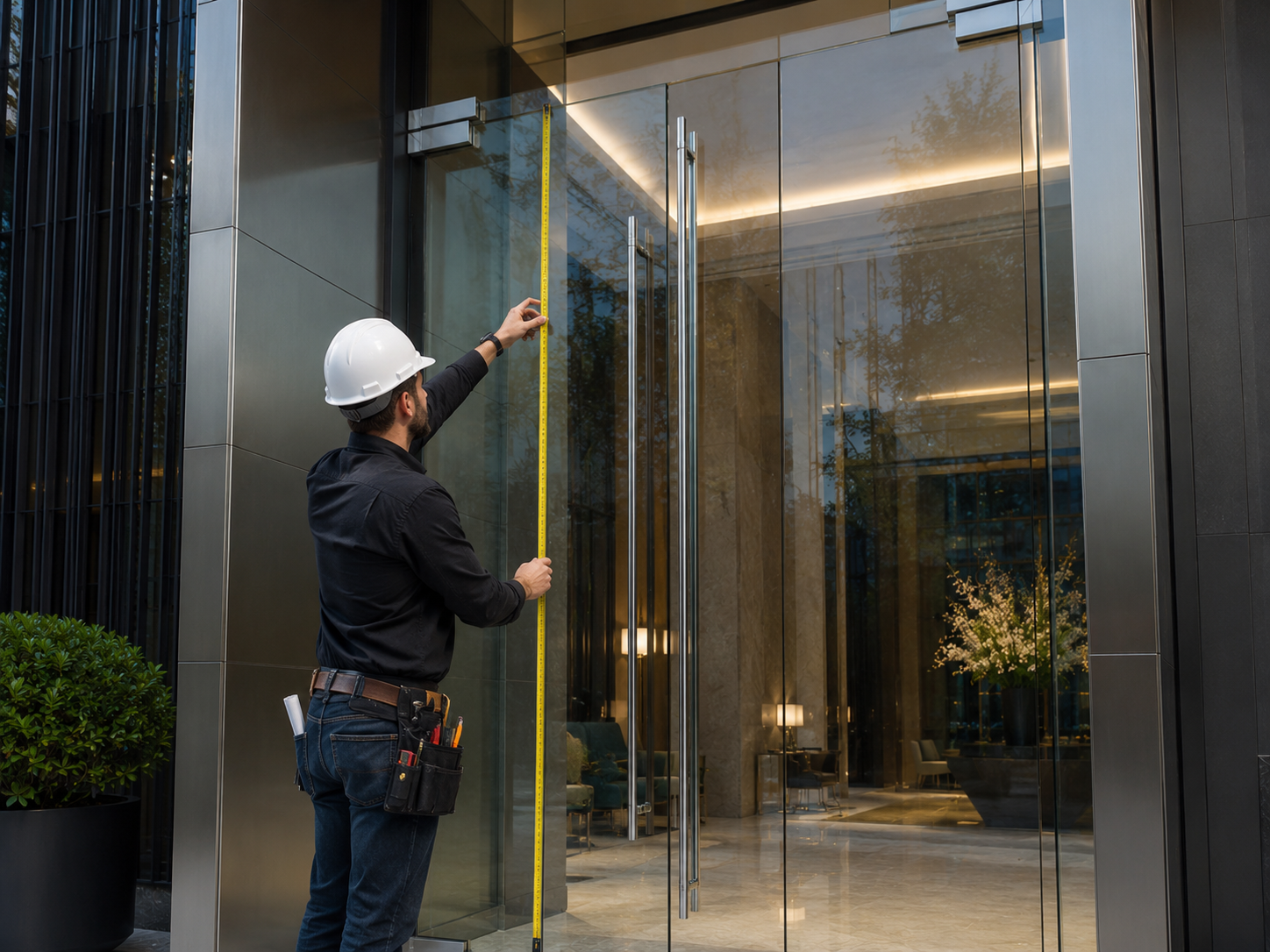
Standard 12mm glass weighs approximately 30kg per square metre. A glass door measuring 1.5m wide by 3.2m high therefore has an estimated bare-glass weight of:
1.5 × 3.2 × 30 = 144kg
If the same panel uses 15mm glass, its estimated bare-glass weight increases to approximately 180kg before adding patch fittings, locks and pull handles.
These figures are preliminary estimates rather than final structural calculations. Laminated glass, interlayers, decorative components and actual production dimensions can all change the total operating weight.
Door width is equally important. Two doors may have a similar total weight, but the wider panel creates a longer lever arm and greater turning force at the pivot and floor-spring spindle.
A wide door also gives users more leverage when pushing or pulling the handle. For this reason, a floor spring should never be selected according to glass weight alone.
The Sail Effect: Wind and Building Pressure
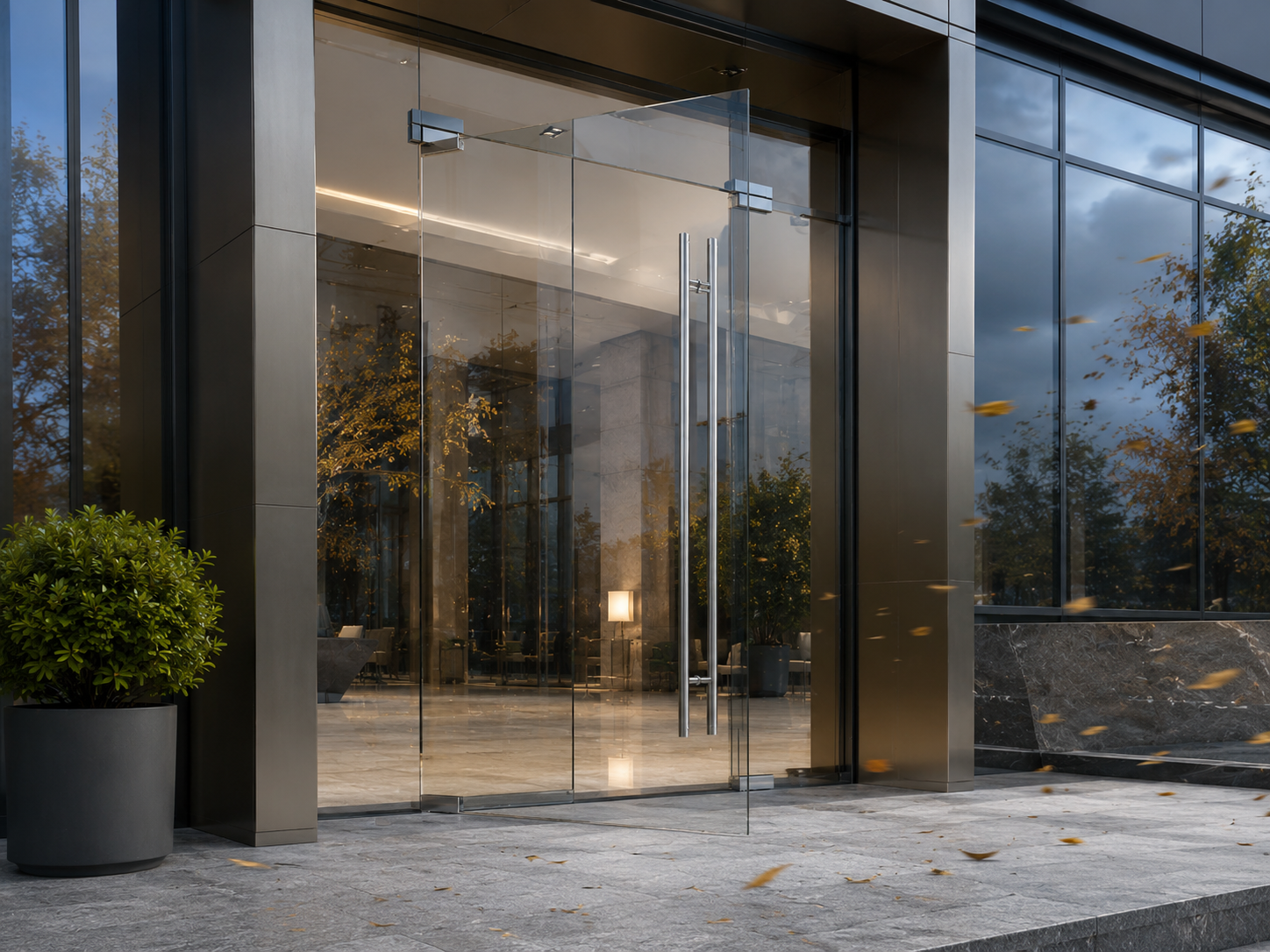
A large exterior glass panel can act like a sail.
Crosswinds, sudden gusts, air-conditioning pressure and wind tunnels between buildings may all affect the way the door opens and closes. A door that operates normally during calm weather may become difficult to control when exposed to stronger pressure differences.
Depending on the door dimensions and entrance conditions, an oversized exterior door may require a floor spring with EN 5 or EN 6 closing power. The complete entrance design should also consider:
- Adjustable closing force
- Backcheck performance
- Maximum opening angle
- Mechanical door stops
- Entrance orientation
- Vestibule design
- Indoor and outdoor pressure differences
A heavy-duty floor spring is an important part of the system, but it should not be treated as a complete wind-control solution by itself.
Traffic and Operating Frequency
A large villa door and a hotel entrance may have similar dimensions but very different operating requirements.
A commercial entrance may operate continuously during business hours and may also be exposed to luggage carts, delivery trolleys and forceful user operation.
High-frequency projects should therefore consider:
- Hydraulic stability
- Bearing and seal durability
- Return-to-center accuracy
- Closing-speed consistency
- Adjustment accessibility
- Maintenance and replacement procedures
Hardware that is suitable for a low-frequency residential entrance may not provide the same long-term performance in a busy commercial project.
A Complete Heavy-Duty Hardware System
The floor spring controls the door movement, but it does not work independently.
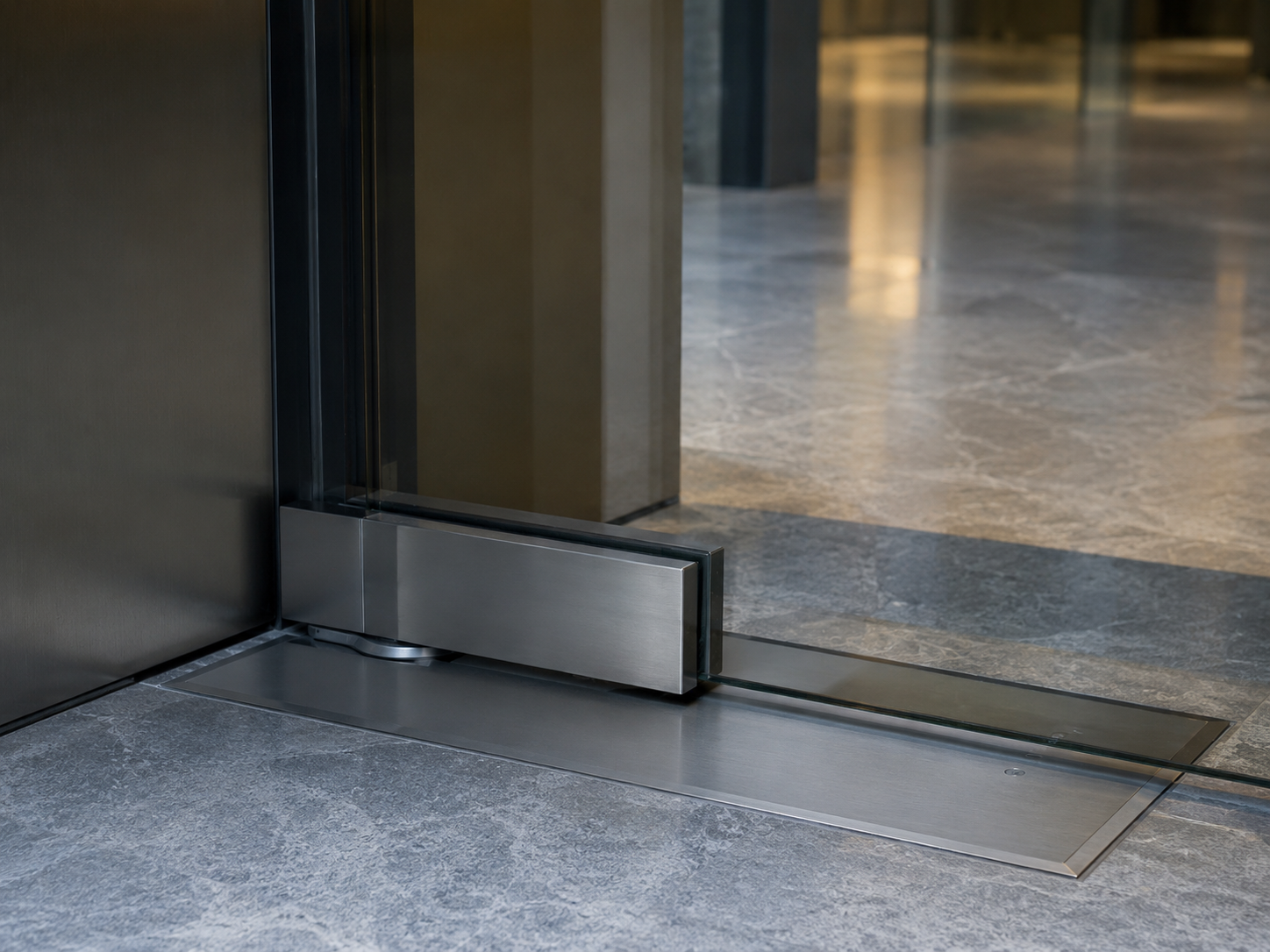
Most of the vertical door load is transferred through the bottom patch and spindle into the floor spring and structural substrate. The upper pivot stabilizes the rotation axis, while the patch fittings, glass cut-outs, locks and handles must remain correctly aligned.
| System component | Main purpose |
|---|---|
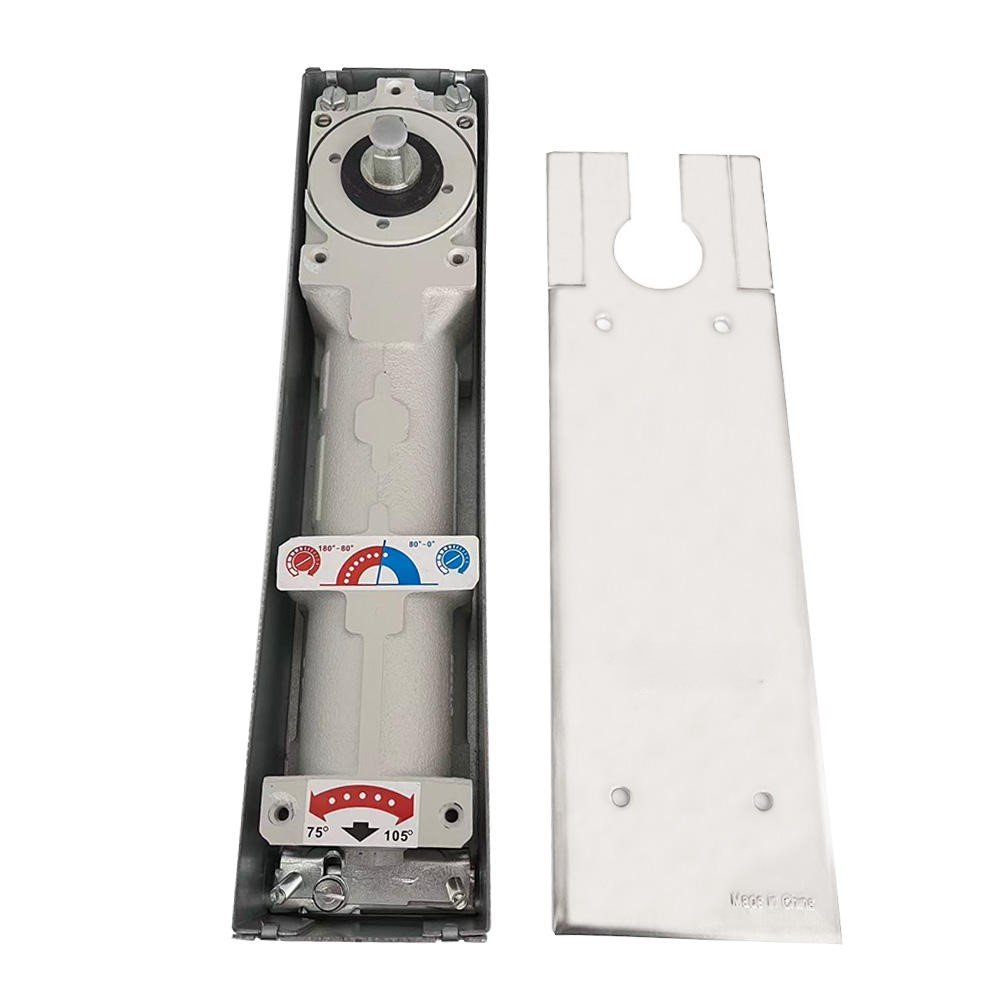
| Heavy-duty floor spring | Controls opening, closing and return movement |
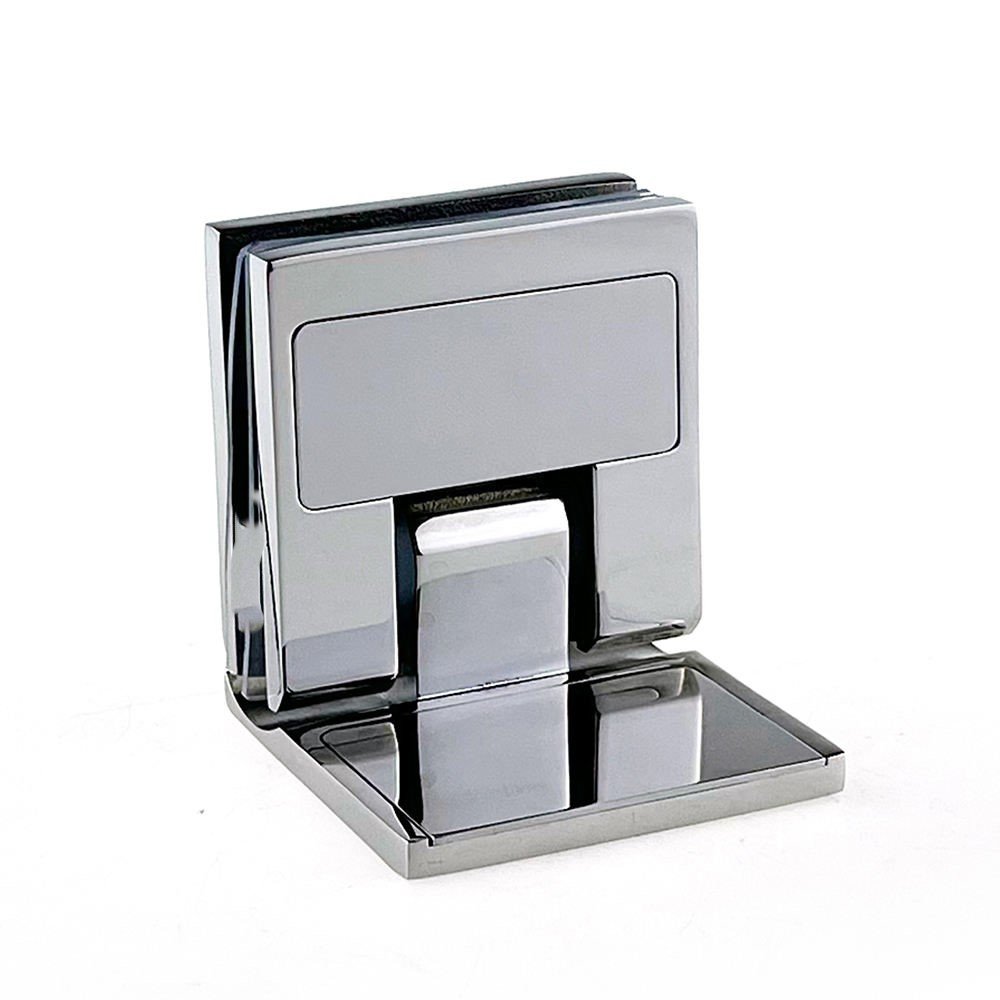
| Bottom patch fitting | Connects the glass panel to the floor-spring spindle |
| Top patch fitting | Connects the door to the upper pivot |
| Top pivot or overpanel fitting | Maintains the upper rotation point |
| Glass cut-outs and gaskets | Secure the fittings to the glass |
| Pull handle | Provides the main operating position |
| Floor lock or patch lock | Secures the door in the closed position |
| Floor box and substrate | Transfer the door load into the building structure |
A strong floor spring cannot compensate for an incompatible bottom patch, an unstable upper pivot or an incorrectly processed glass cut-out.
The complete hardware package should therefore be reviewed before the glass is manufactured.
Recommended Hardware Schedule
A typical oversized frameless glass entrance may include the following hardware:
| Installation position | Recommended hardware | Main selection factors |
|---|---|---|
| Floor | Heavy-duty floor spring | Door weight, width, frequency and wind exposure |
| Bottom of door | Reinforced bottom patch fitting | Spindle type and glass thickness |
| Top of door | Top patch fitting | Pivot design and glass cut-out |
| Above the door | Top pivot or overpanel fitting | Frame, transom and fixed-glass layout |
| Door centre | Long or extra-long pull handle | Door height, leverage and fixing method |
| Door bottom or side | Floor lock or patch lock | Security and door configuration |
| Inactive double-door leaf | Bottom lock or floor bolt | Alignment and secondary-leaf locking |
For double-door entrances, both leaves should be specified together. Differences in pivot position, door weight or floor-spring adjustment can cause the two panels to close unevenly.
Heavy-Duty Floor Spring Selection
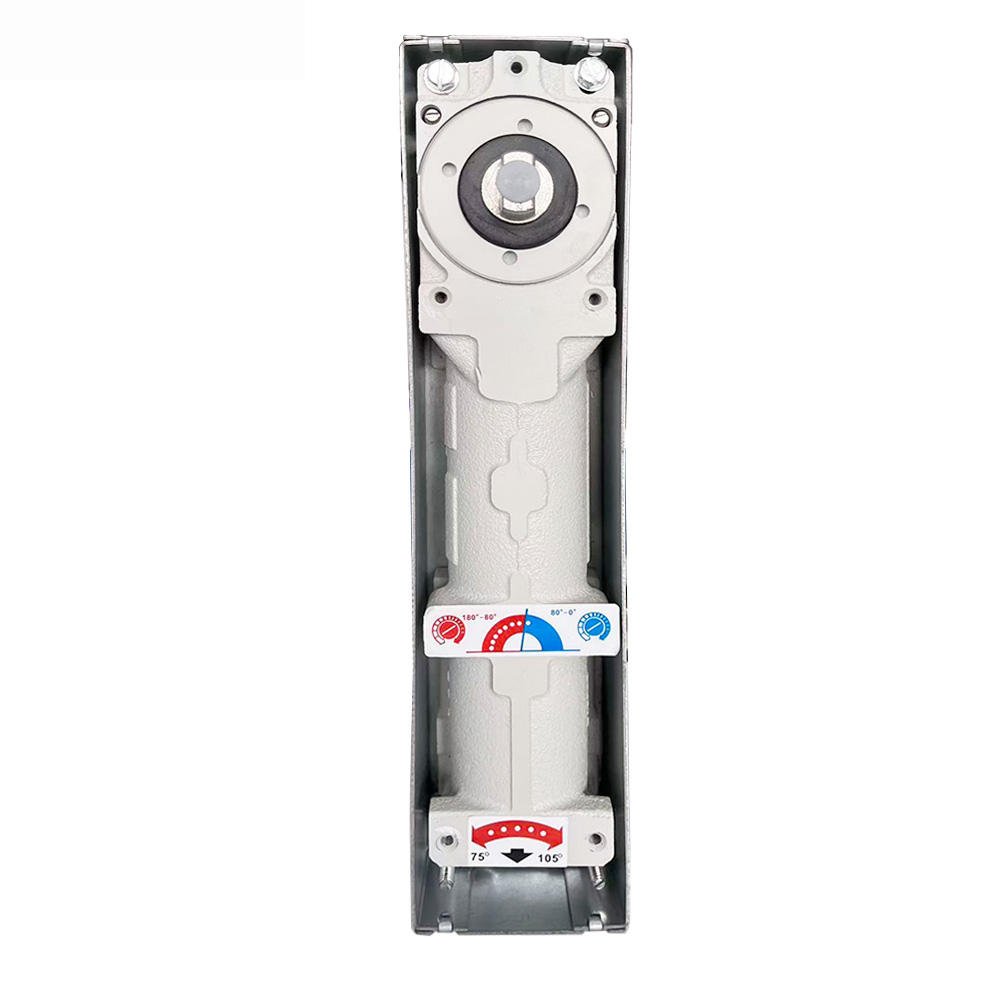
Metech heavy-duty floor springs are available in 150kg, 300kg and 450kg load categories for different large-format entrance requirements.
Selected models use cast-iron cylinder bodies, adjustable closing forces and EN 5 or EN 6 closing power.
However, the highest load rating is not automatically the correct choice.
The supplier should review:
- Door width and height
- Estimated total operating weight
- Indoor or exterior installation
- Daily operating frequency
- Required opening angle
- Hold-open requirement
- Wind exposure
- Single or double-door layout
A floor spring should not routinely operate at the limit of its stated capacity. A reasonable load margin can help accommodate user impact, wind pressure and repeated commercial operation, but the final model must also match the door width and complete pivot system.
A separate technical guide will compare 150kg, 300kg and 450kg floor-spring categories in greater detail.
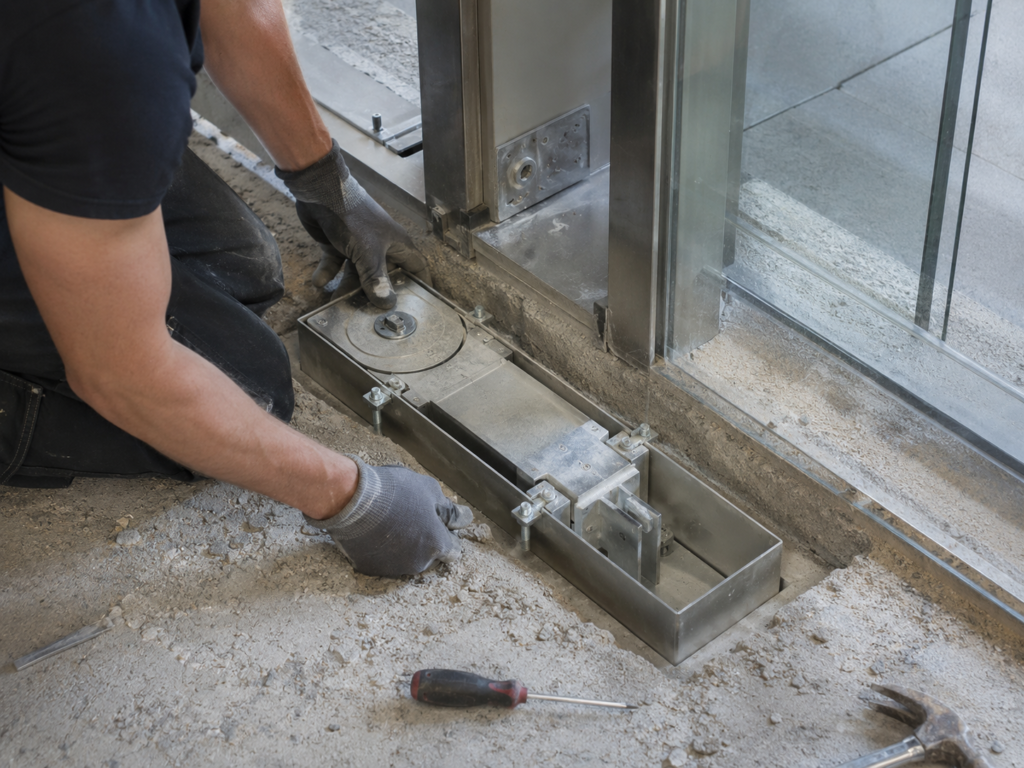
Floor Box and Structural Anchoring
The decorative tile or stone surface is not necessarily the structural support for the floor spring.
The outer floor box must be securely installed into a structurally sound substrate according to the product instructions and project conditions.
The installer should confirm:
- Floor-box dimensions
- Required installation depth
- Concrete or structural substrate
- Waterproofing
- Underfloor heating
- Finished-floor level
- Access for future maintenance
If the floor box moves under repeated load, the spindle position and zero-point alignment may change. This can affect return accuracy, door gaps and lock engagement.
Where deep floor excavation is not practical, a verified surface-mounted hydraulic patch fitting or another no-dig system may be considered, subject to the actual door weight and product capacity.
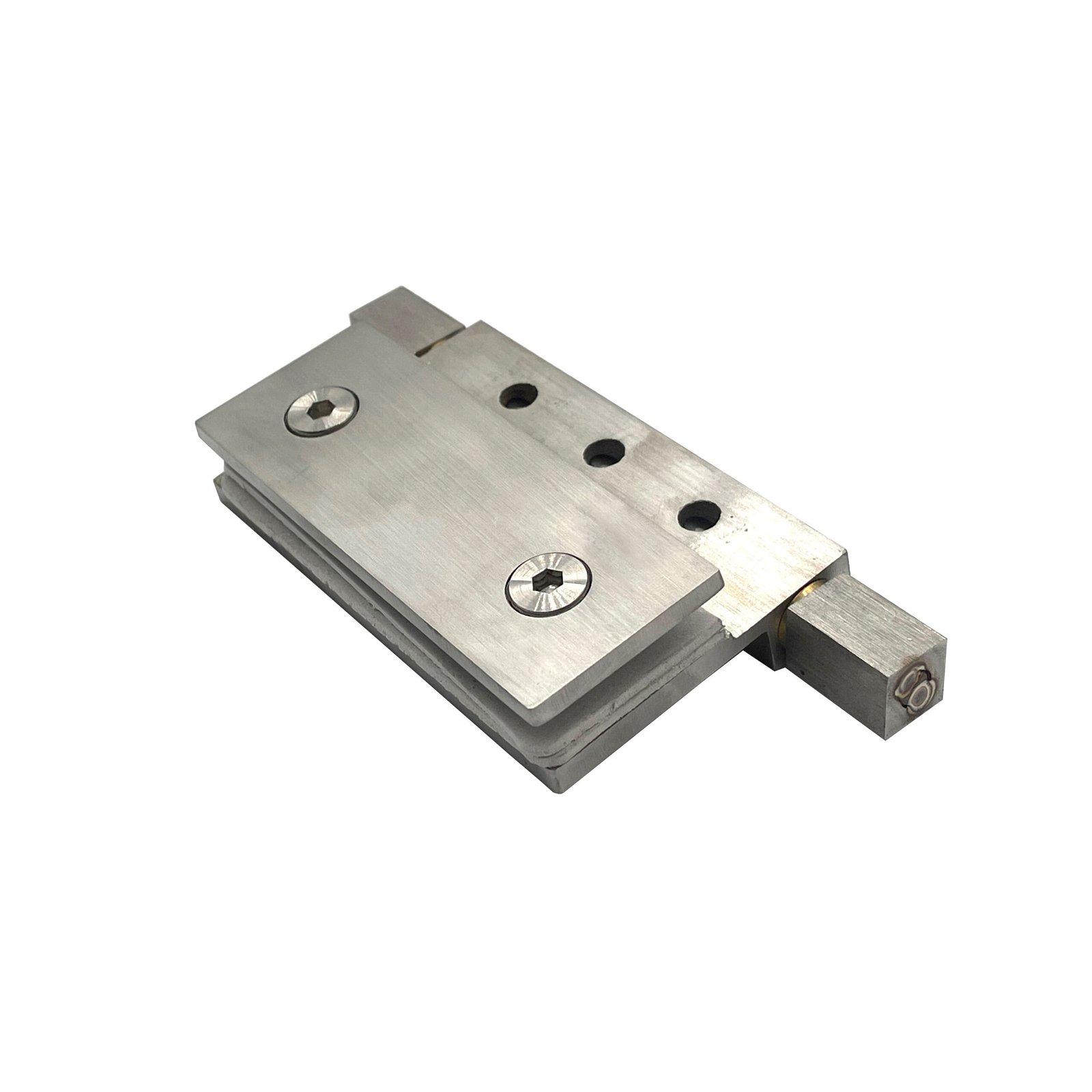
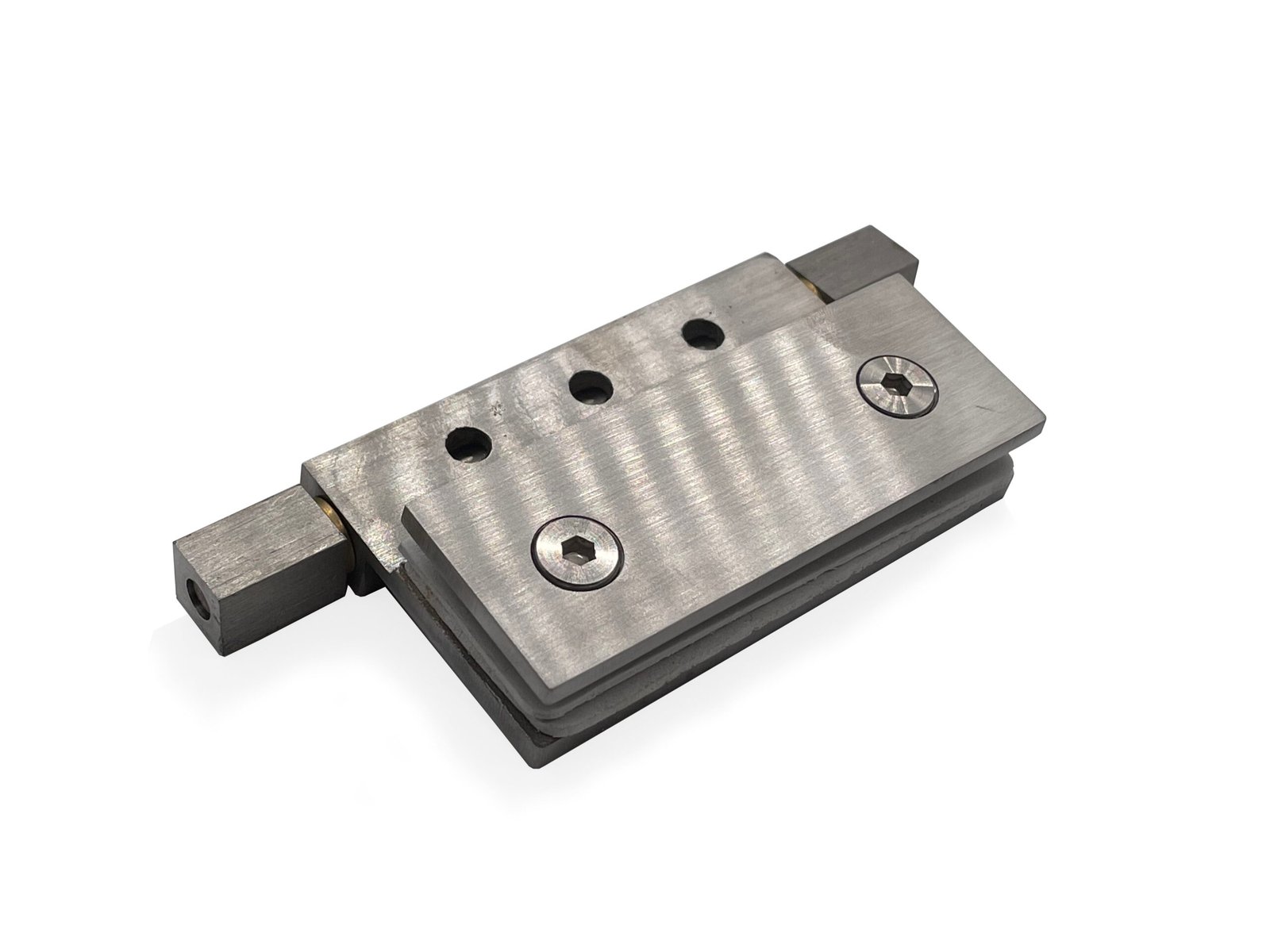
Patch Fittings and Pivot Alignment
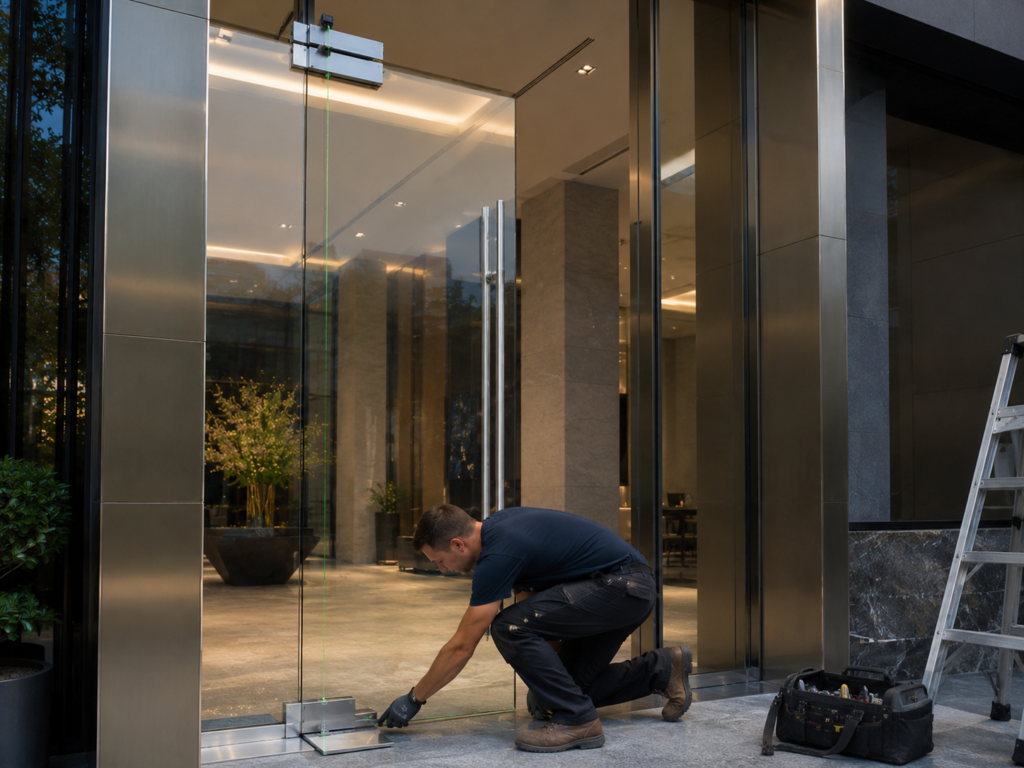
In a frameless glass system, the bottom patch fitting transfers the door load to the floor-spring spindle, while the top patch and pivot keep the panel upright.
The internal load-bearing structure, clamping plates, spindle connection and gasket package must be suitable for the intended glass thickness and door load.
Before production, confirm:
- Floor-spring model
- Spindle profile and dimensions
- Bottom-patch compatibility
- Top-pivot arrangement
- Glass thickness
- Approved glass cut-out drawing
- Hold-open or non-hold-open function
The top pivot and bottom spindle must be positioned on the same vertical axis.
Even a small alignment error can become noticeable on a tall door and may cause:
- Increased opening resistance
- Uneven clearances
- Additional stress on the patch fittings
- Poor return-to-center performance
- Glass contact with the floor or adjacent panel
- Progressive door sagging
- Lock-alignment problems
The final hardware model and glass-processing drawing should therefore be confirmed before the glass is cut.
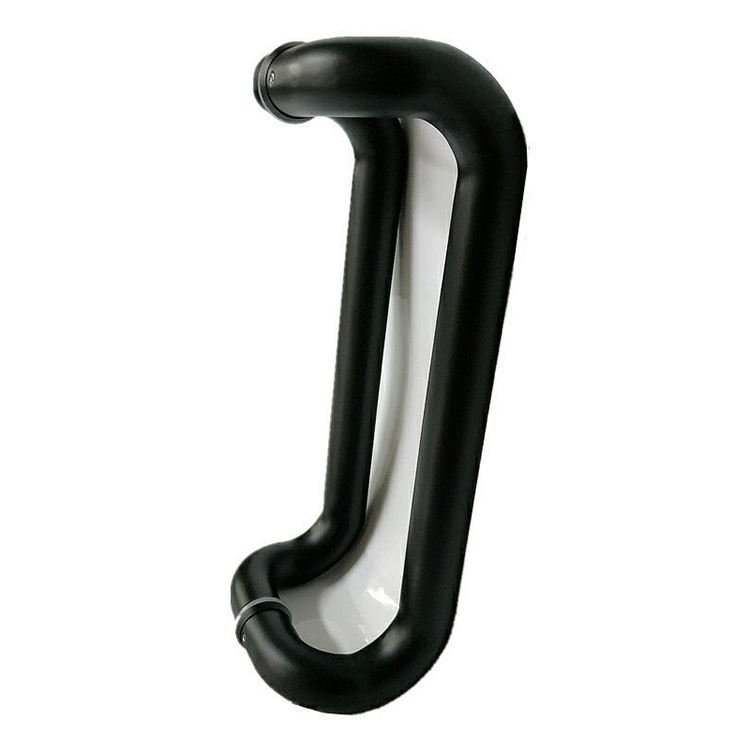
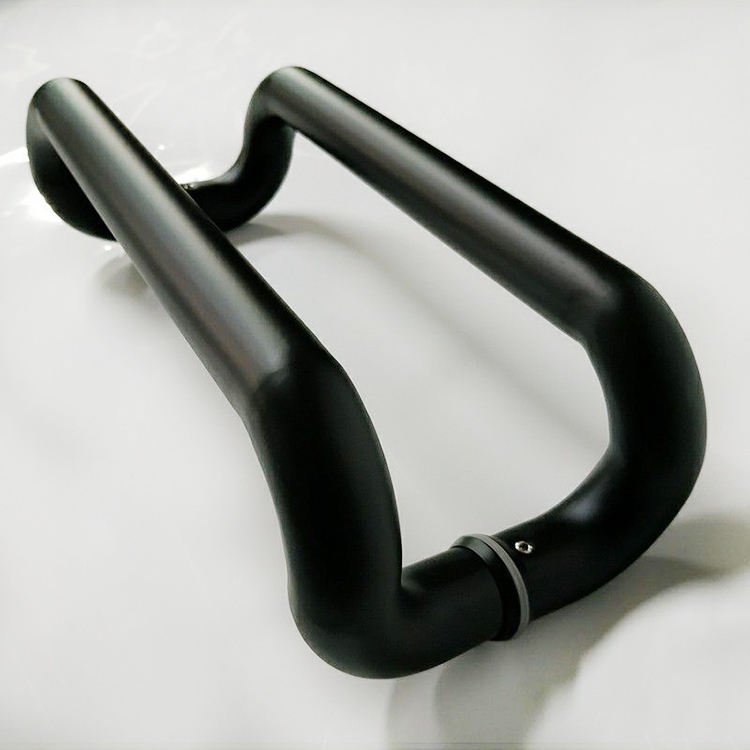
Oversized Pull Handles and Locking Hardware
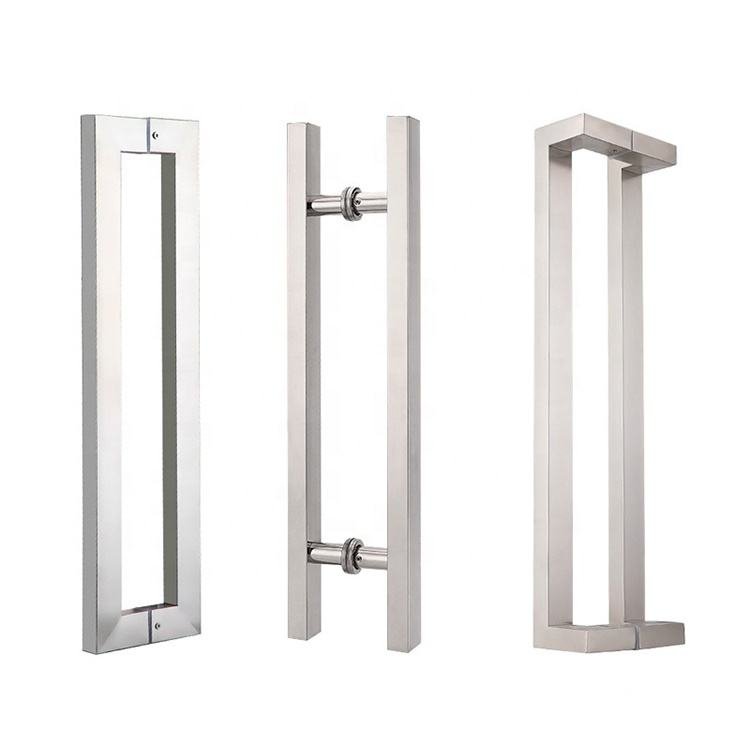
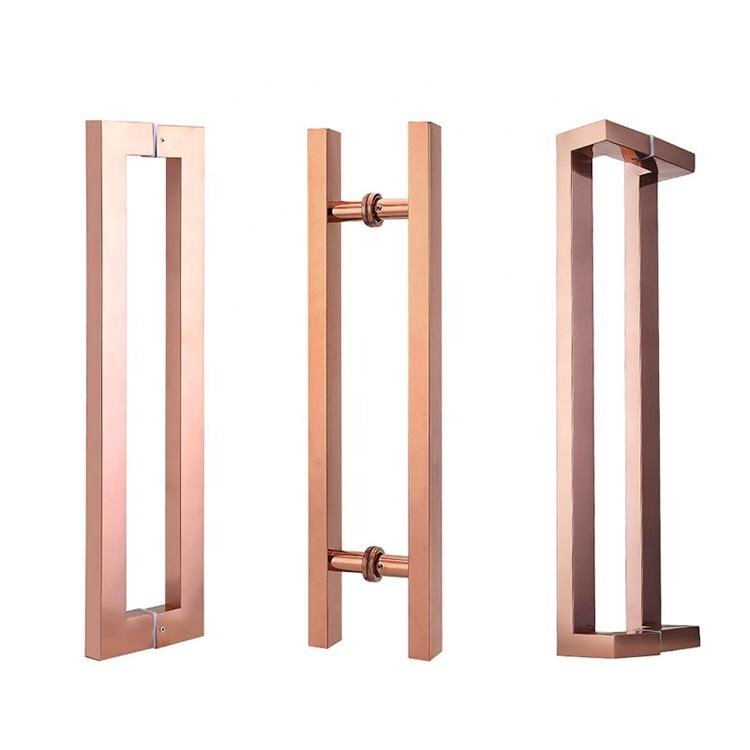
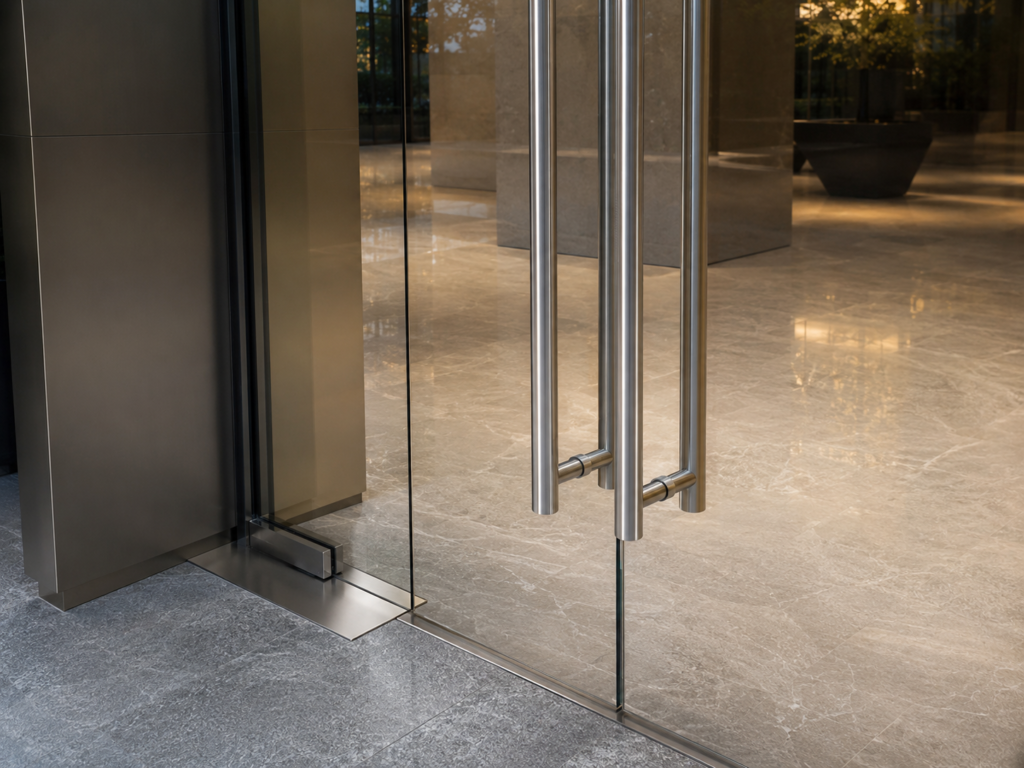
Tall glass doors often use pull handles measuring 1.2m, 1.5m or even longer to maintain the visual proportion of the entrance.
A longer handle creates greater leverage at the fixing points. The handle specification should therefore consider:
- Overall length
- Tube diameter and wall thickness
- Fixing-point spacing
- Through-bolt construction
- Protective sleeves between metal and glass
- Expected traffic
- Packaging and transportation
Very long handles may require additional fixing points or reinforced connections, depending on the handle design and project conditions.
Direct metal-to-glass contact should be avoided by using suitable protective sleeves or gaskets.
The locking system must also allow for practical adjustment. Small changes in door position over time can affect the engagement of a floor lock, patch lock or double-door locking system.
Common Specification Mistakes
Selecting the Floor Spring by Weight Only
A door may remain within the stated load range but still be too wide, too exposed to wind or too frequently operated for the selected system.
Door geometry and site conditions must be reviewed together.
Using Patch Fittings That Do Not Match the Glass Thickness
A fitting designed for 10mm or 12mm glass should not be forced onto a 15mm panel.
The correct clamping space, gaskets, fixing bolts and glass cut-outs must be provided. Removing gaskets or overtightening the fitting to accommodate thicker glass can create concentrated stress around the cut-out.
Ignoring the Upper Structure
Where the top pivot is connected through an overpanel or transom fitting, the fixed glass and supporting structure above the door must remain stable.
Movement or deflection in the upper structure may cause the pivot to bind and affect the operation of the complete door.
Processing the Glass Before Confirming the Hardware
Changes in the patch-fitting model, pivot position or lock type may require different holes and cut-outs.
Final hardware drawings should be approved before glass production begins.
Project Information Required
Before requesting a quotation, provide:
- Door width and height
- Glass thickness and glass type
- Estimated panel weight
- Single or double-door configuration
- Indoor or exterior installation
- Expected operating frequency
- Required opening angle
- Hold-open or non-hold-open requirement
- Wind exposure
- Fixed-glass or overpanel layout
- Floor structure
- Lock type
- Pull-handle length
- Required finish
- Project quantity
Door elevations, project drawings and site photographs can help reduce compatibility errors.
How Metech Supports Oversized Glass-Door Projects
Metech Hardware supplies heavy-duty floor springs, patch fittings, pivots, locks and pull handles for oversized commercial and residential glass entrances.
Our heavy-duty floor-spring range includes 150kg, 300kg and 450kg models with cast-iron cylinder bodies, adjustable closing forces and selected EN 5 or EN 6 configurations.
We review the door dimensions, estimated weight, operating frequency and installation environment before recommending a coordinated hardware package. Spindle type, fitting compatibility, glass thickness and surface finish can be checked before production and shipment.
Mixed-product purchasing, logo marking and customized packaging are also available according to project requirements.

Frequently Asked Questions
What is considered an oversized glass entrance door?
There is no universal definition. A door with unusually large height, width, weight or wind exposure should be treated as an oversized project and reviewed as a complete hardware system.
Can I choose a floor spring according to door weight only?
No. Door width, height, usage frequency, wind exposure and the pivot arrangement also affect the selection.
Is a 300kg floor spring suitable for every 180kg glass door?
Not automatically. A higher load category may provide additional capacity, but the door width, wind exposure, closing-force requirement, spindle system and operating frequency must also be checked.
Can a no-dig hydraulic patch fitting support a 150kg door?
It depends on the verified capacity of the specific model. Many surface-mounted hydraulic patch fittings are intended for light- or medium-duty doors. Heavy doors may require a recessed heavy-duty floor spring and a compatible pivot system.
Does 15mm glass require different patch fittings?
The fitting must be verified for 15mm glass. Suitable clamping space, gaskets, fixing bolts and glass cut-outs are required.
Why does an oversized door move or fail to close correctly in strong wind?
Possible causes include insufficient closing power, building pressure, excessive panel area, unsuitable backcheck, missing mechanical stops, pivot misalignment or incorrect adjustment.
Planning an Oversized Glass Entrance?
Send us your:
- Door dimensions
- Glass thickness
- Estimated panel weight
- Indoor or exterior conditions
- Single or double-door layout
- Required finish
- Project quantity
Metech Hardware can review the load requirements and recommend a coordinated heavy-duty floor spring, patch fitting, pivot, lock and pull-handle package for your project.