A frameless glass shower enclosure creates a clean, modern and high-end bathroom appearance.
But by removing bulky aluminum frames, the design also exposes physical gaps between the glass panels, door edges, floor threshold and fixed glass.
This is why shower door seal strips are important.
A frameless shower enclosure is not a sealed aquarium. Seal strips help control normal water spray and reduce water escaping through gaps, but the final result also depends on door alignment, floor slope, showerhead direction, glass gaps and installation accuracy.
Many leakage problems are not solved by simply buying a strip of the same length.
The real question is not only:
“How long should the seal be?”
The better question is:
“Which seal profile matches the glass thickness, door layout, gap size and direction of water spray?”
For hotels, apartments, gyms, spas and shower enclosure manufacturers, seal strips should also be treated as replaceable wear parts. They are exposed to hot water, cleaning chemicals, mineral deposits and repeated door movement.
Correct selection helps reduce leakage complaints and makes future replacement easier.
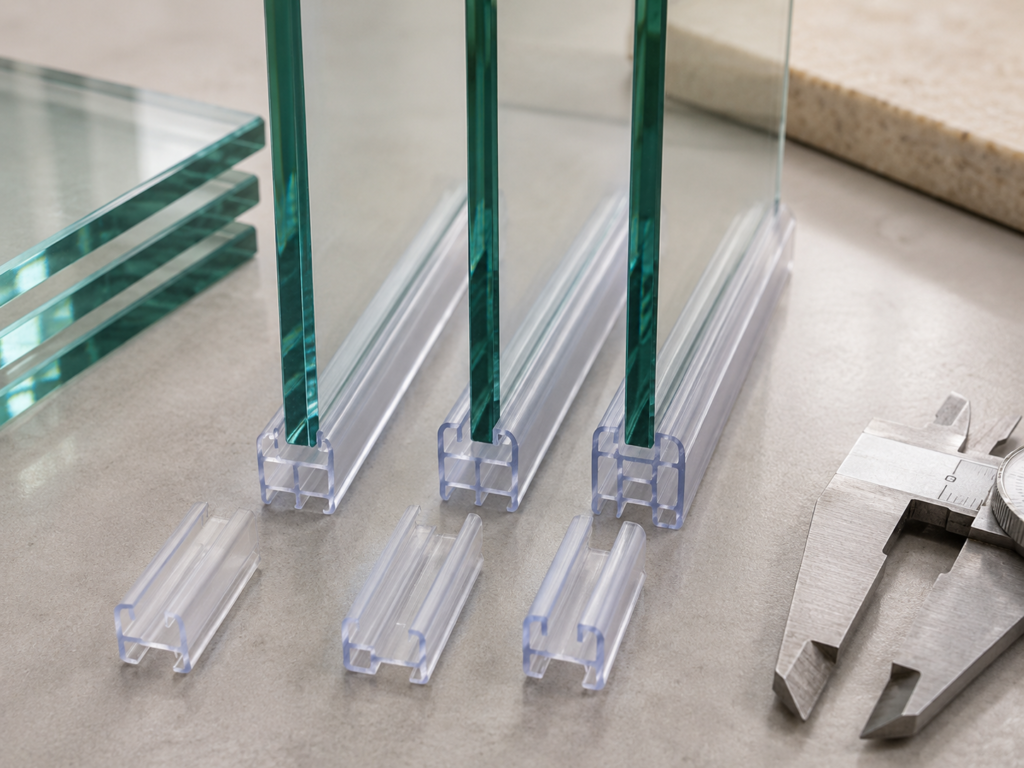
Quick Comparison of Shower Door Seal Types
| Seal type | Main purpose | Common position | Key selection point |
|---|---|---|---|
| Magnetic seal | Helps pull two closing edges together | Center of double doors or door-to-fixed-panel edge | Magnet angle, polarity and glass thickness |
| Bottom sweep seal | Reduces water escaping below the door | Bottom edge of swing or sliding doors | Floor gap, fin length and drip-rail direction |
| Side seal | Blocks water through a vertical gap | Door-to-wall or door-to-fixed-glass edge | Gap size, fin direction and door movement |
| Bypass or overlap seal | Covers the gap between sliding panels | Fixed and moving panels in sliding showers | Must block spray without restricting sliding |
| Bulb or compression seal | Fills a larger closing gap | Selected door-to-wall or framed edges | Compression level and closing direction |
No single seal profile fits every shower enclosure.
Before ordering, buyers should confirm the glass thickness, door movement, installation position and existing seal cross-section.
Glass Thickness Comes First: 8mm, 10mm and 12mm
Most frameless shower seals are friction-fit products.
The rigid or semi-rigid U-shaped channel grips the bare edge of the tempered glass. In most cases, no screws or adhesives are used.
This means the channel size must match the glass thickness range specified for that seal profile.
Common frameless shower glass thicknesses include:
- 8mm
- 10mm
- 12mm
If a seal designed for 8mm glass is forced onto 10mm glass, the channel may deform, open up or crack.
If a 12mm seal is installed on 10mm glass, the grip may be too loose. The seal may slide, rotate or fall off when the door moves or when water hits it.
| Glass thickness | What buyers should confirm |
|---|---|
| 8mm | Exact channel size and whether the profile suits lighter residential or hotel systems |
| 10mm | Common size for frameless hotel and premium residential showers |
| 12mm | Requires a wider channel and suitable profile rigidity |
| Unknown thickness | Measure the glass with a caliper before ordering |
Silicone should not be used as a shortcut to compensate for the wrong channel size. If the seal needs adhesive to stay on the glass, the profile is probably not correctly matched.
When looking for a replacement, a photo of the seal’s end cross-section is usually more useful than a photo of the full strip.
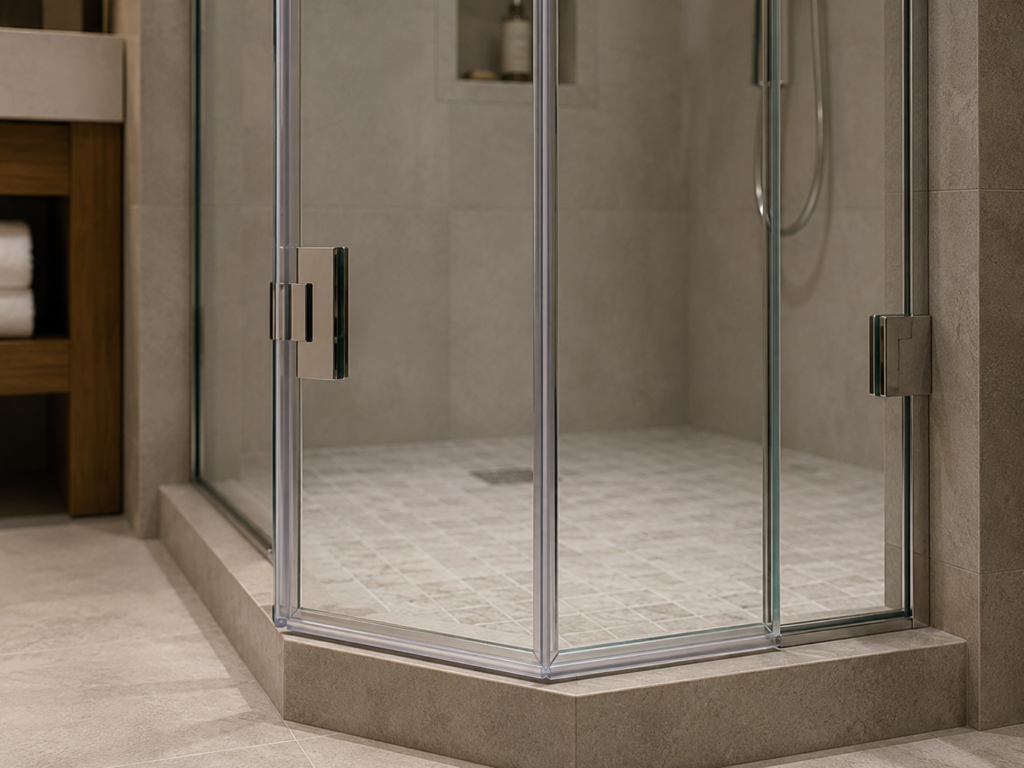
Bottom Sweeps and Drip-Rail Seals
Bottom seals are installed along the lower edge of the glass shower door.
They help reduce water passing through the gap between the glass and the floor, tray or threshold.
A bottom sweep may include:
- A rigid glass-gripping channel
- A soft vertical wiping fin
- An angled drip rail or deflector lip
- Flexible sections that contact the floor or threshold
The vertical fin helps close the bottom gap.
The drip rail redirects water running down the glass back toward the shower area.
Before selecting a bottom sweep, buyers should confirm:
- Glass thickness
- Gap between glass and floor
- Door opening direction
- Whether the door swings inward, outward or both ways
- Whether the floor or threshold is level
- Required seal length
- Direction of the drip rail
A bottom fin that is too long may drag across the floor, create noise and make the door difficult to open. A fin that is too short may not reach the threshold and may allow more water to escape.
The drip rail should face the wet side of the shower. If installed in the wrong direction, it may guide water toward the bathroom floor.
A bottom seal helps manage normal shower water, but it cannot compensate for a floor that slopes away from the drain.
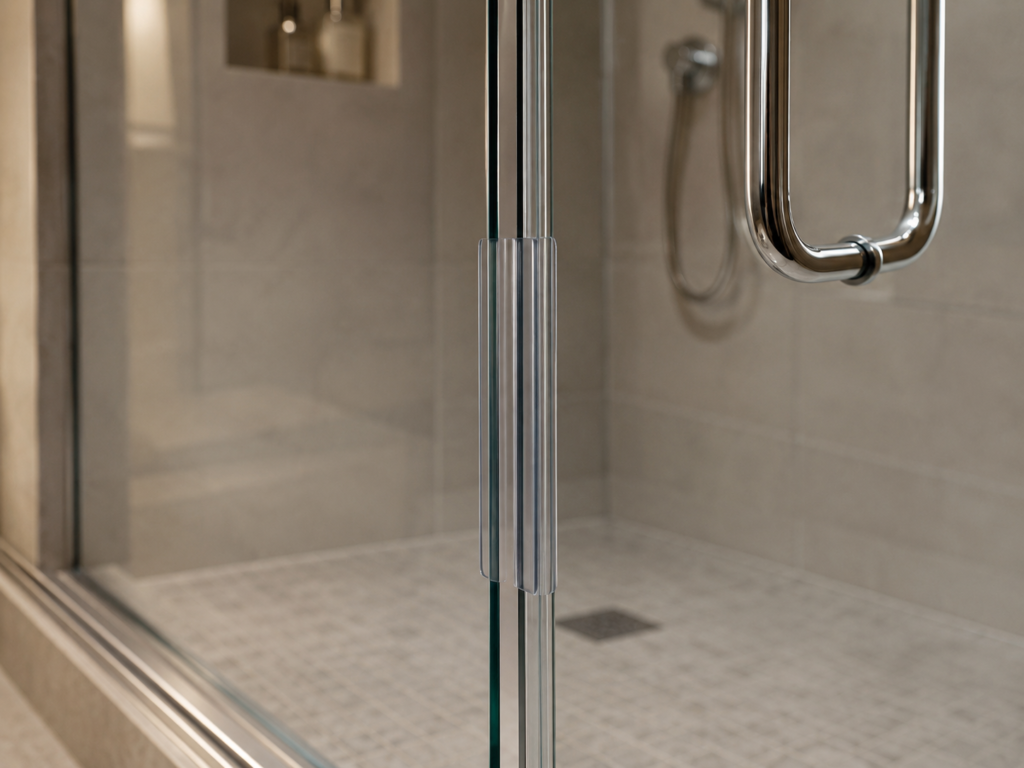
Magnetic Shower Door Seals
Magnetic seals are commonly used where two closing edges need to meet and stay aligned.
Typical applications include:
- Double swing shower doors
- A swing door closing against a fixed glass panel
- 90° corner shower enclosures
- 135° neo-angle shower enclosures
- 180° inline shower doors
Magnetic seals usually work in pairs. The magnetic strips inside the two profiles attract each other and help pull the closing edges together.
Before selecting magnetic seals, buyers should confirm:
- Glass thickness
- Closing angle
- Gap between glass panels
- Magnet polarity
- Whether seals are sold individually or as a pair
- Left-hand or right-hand door layout
- Door opening direction
- Whether the hinge returns the door correctly
Angle is important.
A 180° magnetic seal is used for inline glass edges. A 90° enclosure or 135° neo-angle enclosure requires a different magnetic profile so the magnetic faces meet properly.
Polarity is also important. If the magnetic strips face the wrong way, they may repel instead of attract.
Magnetic seals can improve closing alignment, but they cannot correct a sagging door, a poor hinge position or an excessive door gap.
If the top of the magnetic seal closes but the bottom does not, the hinge alignment and door sag condition should be checked.
Side Seals for Swing Shower Doors
Side seals are used along vertical glass edges.
They may be installed:
- Between a moving door and a fixed panel
- Between a glass door and a wall
- Near a wall-to-glass hinge
- Along a gap exposed to direct water spray
Common side-seal profiles include:
- Single flexible fins
- Double fins
- Soft lips
- Bulb-shaped compression sections
- 90° glass-to-glass profiles
The fin direction should match the water-spray direction without blocking the door movement.
If the seal is too rigid or the gap is too small, the door may not close naturally. The hinge may need to work against constant friction.
If the gap is too large, the fin may not touch the opposite surface and may provide little water control.
For double-action swing doors, the seal profile must allow movement in both directions. A one-way profile may fold, jam or tear if the door swings the opposite way.
Side seals should also be cut around shower hinges. A continuous seal forced through the hinge area may be crushed by the hinge plate and create poor fitment.
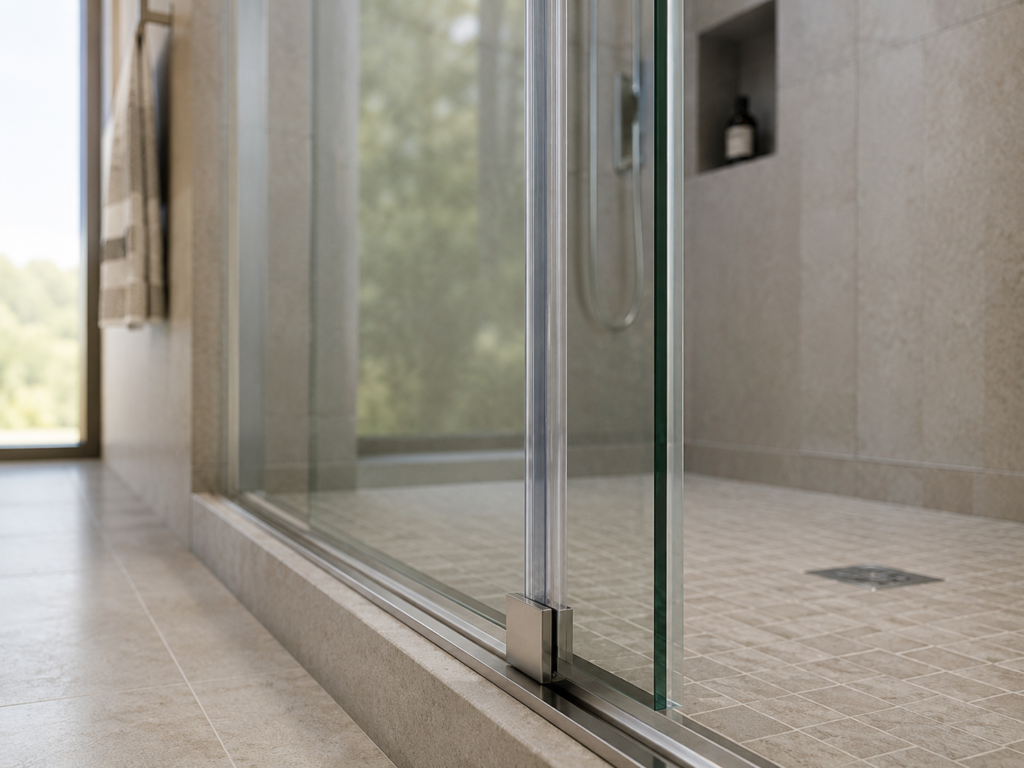
Bypass and Overlap Seals for Sliding Shower Doors
Sliding shower doors require a different sealing approach.
The moving panel must slide horizontally past the fixed panel. A physical overlap gap is necessary so the two glass panels do not scrape each other.
This means a sliding shower door should not automatically use the same stiff magnetic or side seal used on a swing door.
Bypass or overlap seals commonly use soft fins that extend into the gap between the moving and fixed panels.
They should:
- Cover the overlap gap
- Reduce lateral water spray
- Allow smooth horizontal movement
- Avoid interference with rollers or bottom guides
- Resist repeated sliding friction
If the fin is too long or too hard, the sliding door may become difficult to move. It may also affect soft-close operation or add load to the roller system.
If the fin is too short, it may not cover the overlap gap.
The seal direction should be selected according to the showerhead position and the moving panel path.
A seal profile designed for a swing door should not automatically be used on a sliding shower door.
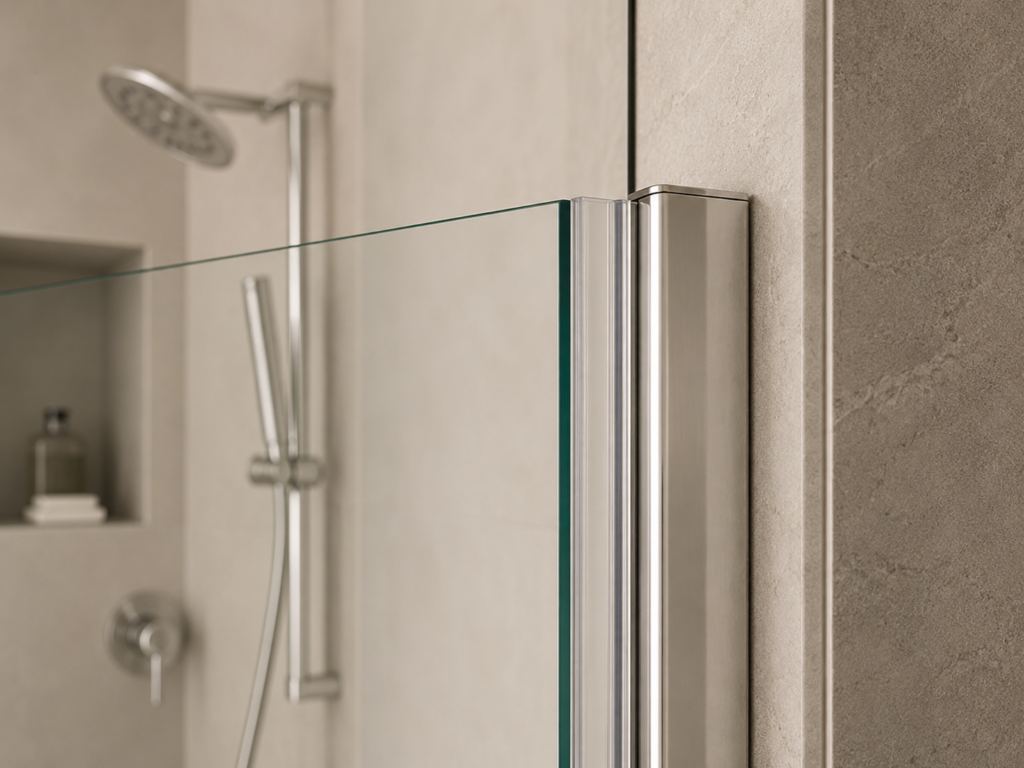
PVC, Polycarbonate and Co-Extruded Shower Seals
Many shower seals are simply called “PVC strips,” but the actual structure may combine different materials.
Flexible PVC Sections
Flexible PVC is commonly used for:
- Bottom sweeping fins
- Side sealing lips
- Flexible overlap wings
- Areas that contact the floor or another surface
Its flexibility helps it adapt to small gap variations.
However, hot water, cleaning chemicals, mineral deposits, body oils and UV exposure may affect transparency and softness over time.
Rigid or Semi-Rigid Polycarbonate Channels
A rigid or semi-rigid channel provides a stronger grip on the glass edge.
It helps the seal remain straight and reduces unwanted rotation on the glass.
Co-Extruded Structures
Many higher-quality shower seals use a co-extruded structure.
This means the profile may combine:
- A rigid PC or semi-rigid gripping channel
- A softer flexible sealing fin
- An inserted magnetic strip, where required
This structure can improve grip stability and sealing performance, but material ageing still depends on water quality, cleaning chemicals, ventilation and maintenance.
Material quality is important, but the correct cross-section is equally important. A premium material with the wrong profile will still perform poorly.
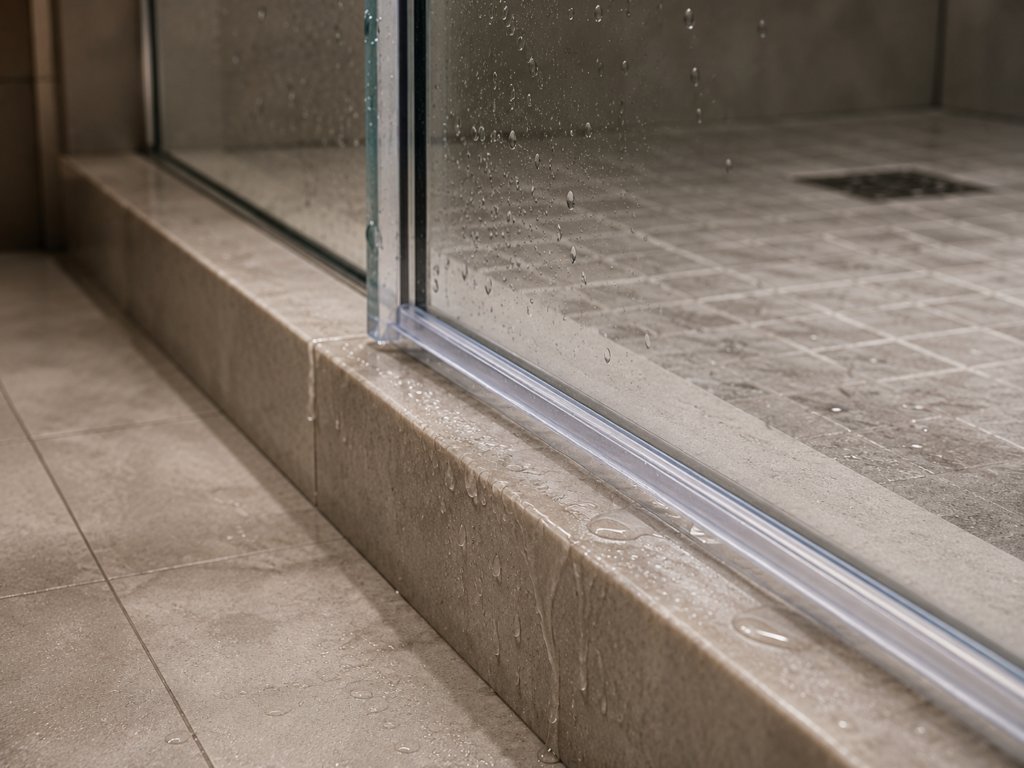
Why Shower Doors Still Leak After Replacing the Seal
Replacing the seal does not always solve leakage because the seal may not be the original cause.
Common reasons include:
- Wrong seal profile
- Incorrect glass channel size
- Door sag
- Poor magnetic alignment
- Excessive bottom gap
- Floor slope facing toward the bathroom
- Showerhead directed at the door gap
- Failed silicone around fixed glass
- Insufficient overlap in a sliding door
- Seal installed in the wrong direction
- Seal cut too short
- Door not returning fully to center
Water leakage is often a system problem involving the seal, hinge alignment, glass gap, floor slope and water-spray direction.
Before replacing seal strips repeatedly, the entire shower enclosure should be inspected.
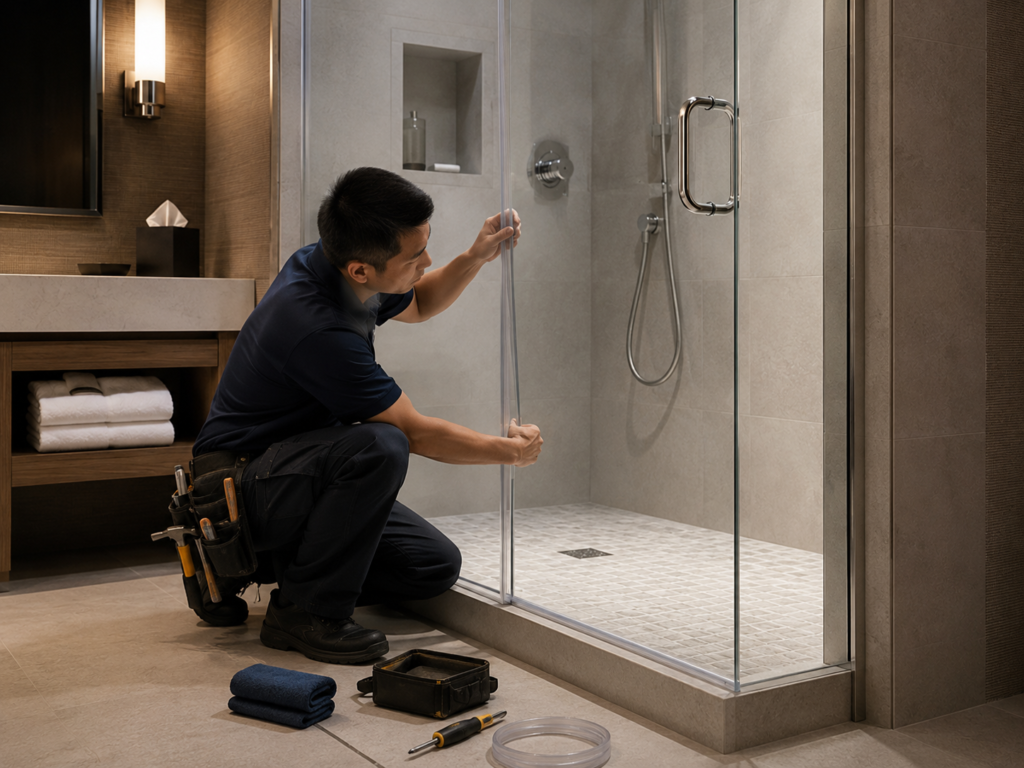
Common Selection and Installation Mistakes
Buying by Length Only
Length is easy to cut. The cross-section, channel width, magnet angle and fin shape are more important.
Mixing 8mm, 10mm and 12mm Seals
A loose channel may fall off. An undersized channel may deform or crack during installation.
Ignoring Magnetic Polarity and Angle
Incorrect polarity or angle can prevent the magnetic edges from closing properly.
Using Swing-Door Seals on Sliding Doors
Excessive friction may affect rollers, bottom guides and soft-close movement.
Choosing an Overlong Bottom Fin
The seal may drag across the floor, create noise and increase door resistance.
Cutting Seals with Poor Tools
Crushed or rough cuts can deform the channel and affect fitment. Fine-tooth cutting tools or suitable shears should be used depending on the profile.
Running Seals Through Hinge Plates
Side seals should be cut into sections around hinges. The hinge plate should not crush the seal profile.
Promising Complete Waterproofing
Frameless shower enclosures contain designed gaps. Correct seals help reduce normal water escape, but overall performance also depends on layout, slope and showerhead position.
Replacement and Maintenance for Hotels and Apartments
Shower door seals are replaceable components.
In hotels, serviced apartments, gyms, spas and large residential projects, they may face frequent use, strong cleaning routines and mineral buildup.
Project buyers should consider:
- Standardizing glass thickness across rooms
- Using consistent seal profiles
- Recording product codes and cross-sections
- Keeping spare replacement lengths
- Avoiding excessive bending during storage
- Protecting long strips during transport
- Cleaning the glass edge before replacement
- Inspecting hinges and door alignment at the same time
Replacement frequency depends on water quality, cleaning chemicals, usage level and ventilation. Hotels and gyms usually need more frequent inspection than private residential bathrooms.
For export shipments, straight or well-supported packaging helps reduce bending and profile deformation.
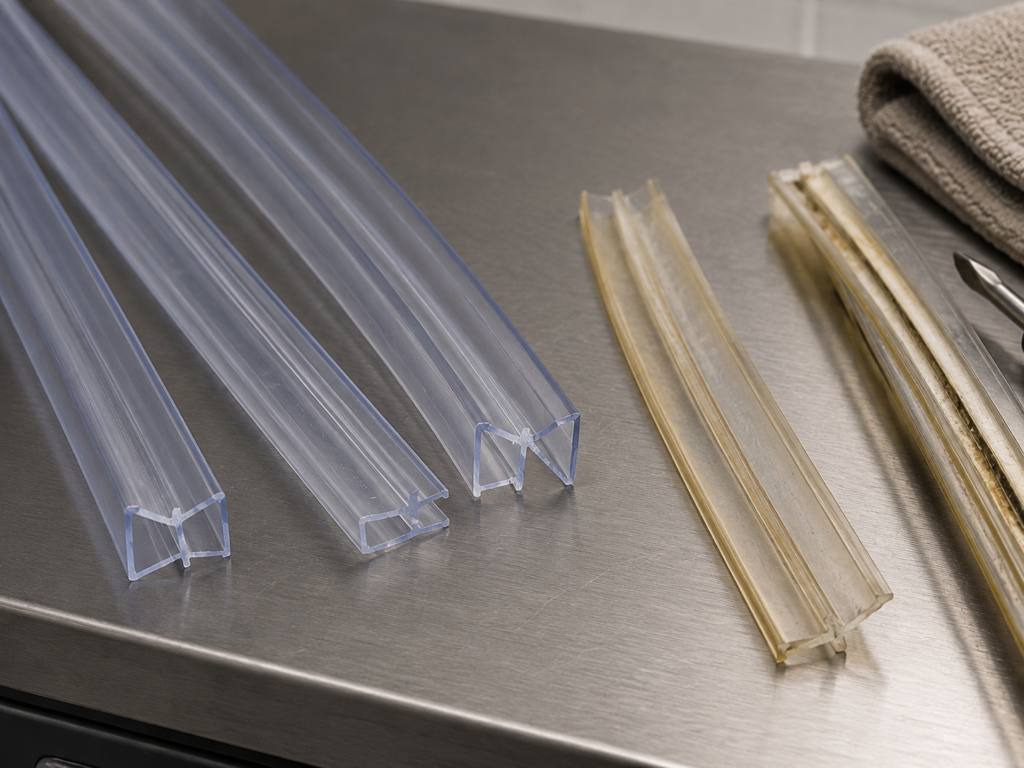
Project Information Required Before Quotation
Before recommending shower seal strips, please provide:
- Swing door or sliding door
- Single door, double door or fixed-panel layout
- Glass thickness: 8mm, 10mm or 12mm
- Photo of the complete shower enclosure
- Close-up photo of the old seal cross-section
- Seal position: bottom, side, center or overlap
- Gap size
- Magnetic or non-magnetic requirement
- Closing angle: 90°, 135° or 180°
- Required length
- Quantity
- Project type: hotel, residential, apartment, gym or spa
- Need for a complete seal set or only one profile
- Need for matching hinges, handles or sliding hardware
- Packaging, label or OEM requirement
A clear photo of the seal end profile is one of the most useful details for replacement matching.
How Metech Supports Shower Seal Projects
Metech Hardware supplies different shower door seal strips for frameless glass shower enclosure projects, including magnetic seals, bottom sweep seals, side seals and sliding-door overlap seals.
Available options may include profiles for 8mm, 10mm and 12mm glass depending on model.
We help buyers review glass thickness, door type, gap size, closing angle, seal position and existing cross-section before recommending suitable options.
Matching shower hinges, glass clamps, pull handles and sliding shower door hardware can also be supplied as part of a coordinated package.
For hotels, apartments, shower enclosure manufacturers and distributors, packaging, labeling, replacement quantities and mixed-product purchasing can also be discussed.
FAQ
Can one shower seal fit 8mm, 10mm and 12mm glass?
Usually not. The gripping channel should match the glass thickness. Some models may cover a limited range, but this should be confirmed from the product specification.
Why does my magnetic shower seal not close properly?
Possible causes include wrong magnet polarity, incorrect angle, excessive gap, door sag or poor hinge return-to-center alignment.
Can shower door seals be cut to length?
Most extruded shower seals can be cut to length using suitable tools. The cut should remain straight, and magnetic inserts or flexible fins should not be damaged.
Why is my bottom seal difficult to move across the floor?
The flexible fin may be too long, the floor may be uneven, the door gap may be too small, or the seal profile may not suit the door movement.
Are sliding shower doors completely waterproof?
Frameless sliding doors contain overlap gaps. Correct bypass seals, suitable overlap and proper floor slope help reduce normal water escape, but complete waterproofing should not be assumed.
Why does a transparent seal become yellow or hard?
Hot water, UV exposure, cleaning chemicals, mineral deposits and material ageing may affect its appearance and flexibility over time.
How often should shower seals be replaced?
There is no fixed replacement period. It depends on usage, water quality, cleaning chemicals, ventilation and material quality. Hotels and gyms usually need more frequent inspection than residential bathrooms.
What photo should I send when looking for a replacement seal?
Send the glass thickness, installation position, full shower-door photo and a clear close-up photo of the old seal’s end cross-section.
Need Help Matching a Shower Door Seal Strip?
Send us your glass thickness, door type, seal position, gap size and a clear photo of the existing seal cross-section.
Metech Hardware can help review magnetic, bottom, side or sliding-door seal options for your shower enclosure project.