When engineering a frameless glass pool fence or outdoor glass railing, contractors often focus on glass thickness, spigot design, or installation layout.
But in poolside and coastal projects, one of the most important decisions happens at the material level.
A glass pool fence is not only an architectural feature. It is a life-safety barrier designed to control pool access and protect users around a hazardous area. A balcony glass railing or rooftop glass barrier also carries safety responsibility under wind, human contact, and long-term outdoor exposure.
That is why stainless steel hardware cannot be selected only by appearance or price.
In standard outdoor projects, SS316 stainless steel is often a reliable baseline. But in coastal pools, saltwater pools, beachfront balconies, resort areas, and high-chloride environments, Duplex 2205 stainless steel may provide a much safer material margin.
The question is not simply:
“Is SS316 good?”
The better question is:
“Is SS316 enough for this environment?”
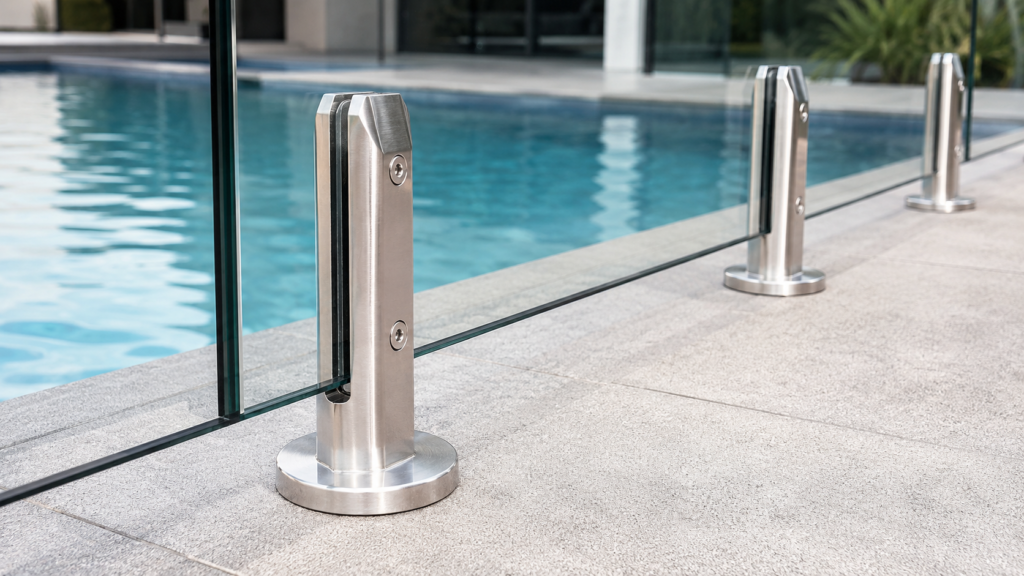
1. The Invisible Threat to Pool Fence Hardware
Poolside environments are more aggressive than they look.
Pool water contains chlorides from chlorine treatment or saltwater systems. Coastal air carries salt spray. Cleaning chemicals, humidity, splash water, and poor drainage can all leave chloride deposits on stainless steel surfaces.
When pool water dries on a spigot, hinge, latch, or screw head, the water evaporates but the chloride residue remains. Over time, that concentrated residue can attack the passive protective layer on stainless steel.
This is why some pool fence hardware develops brown staining within months after installation.
This staining is often called tea staining. At an early stage, tea staining is usually an appearance problem. But it is also a warning sign that the environment is aggressive. If corrosion develops into pitting corrosion or crevice corrosion, especially around screws, anchors, hinges, latches, or hidden fixing points, it can become a maintenance and safety concern.
For high-end residences, hotels, resorts, and beachfront projects, visible staining is already a serious issue. It damages the appearance of the entire outdoor area and can lead to costly callbacks.
2. Why SS316 Can Still Stain Near Pools
SS316 is not a poor material.
It is widely used because it contains molybdenum, which improves resistance to localized corrosion compared with SS304. For many standard outdoor pool fences, protected balconies, and non-coastal projects, SS316 can perform well when properly installed and maintained.
But SS316 is not immune to chlorides.
In high-chloride environments, the protective chromium oxide layer on stainless steel may be locally damaged. Once this happens, corrosion can begin at small points or inside narrow crevices.
Common problem areas include:
- spigot bases where water collects
- screw heads and anchor points
- pool gate hinge pins
- latch screws
- hidden washers
- contact points under rubber gaskets
- stainless steel surfaces contaminated by iron dust or cleaning chemicals
SS316 is a reliable baseline for many pool fence projects, but it may reach its practical limit in coastal, saltwater, low-maintenance, or heavy splash-zone applications.
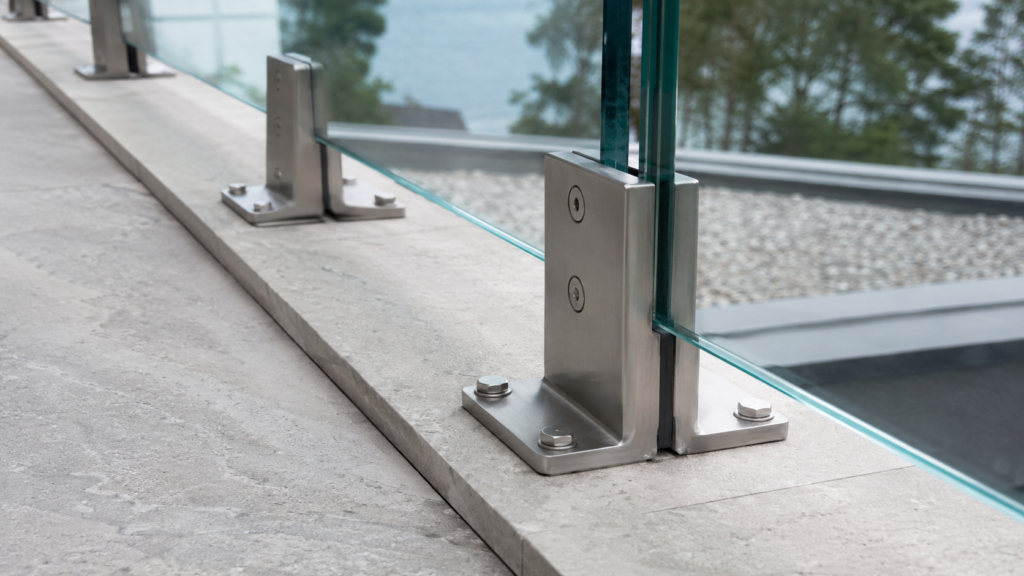
3. The Science of Duplex 2205
Duplex 2205 is different from SS316 in both structure and performance.
SS316 is an austenitic stainless steel. Duplex 2205 has a dual-phase microstructure, combining austenitic and ferritic stainless steel characteristics. This gives Duplex 2205 two major advantages for pool fence and glass railing hardware.
The first advantage is better resistance to chloride-related corrosion.
The second advantage is higher yield strength.
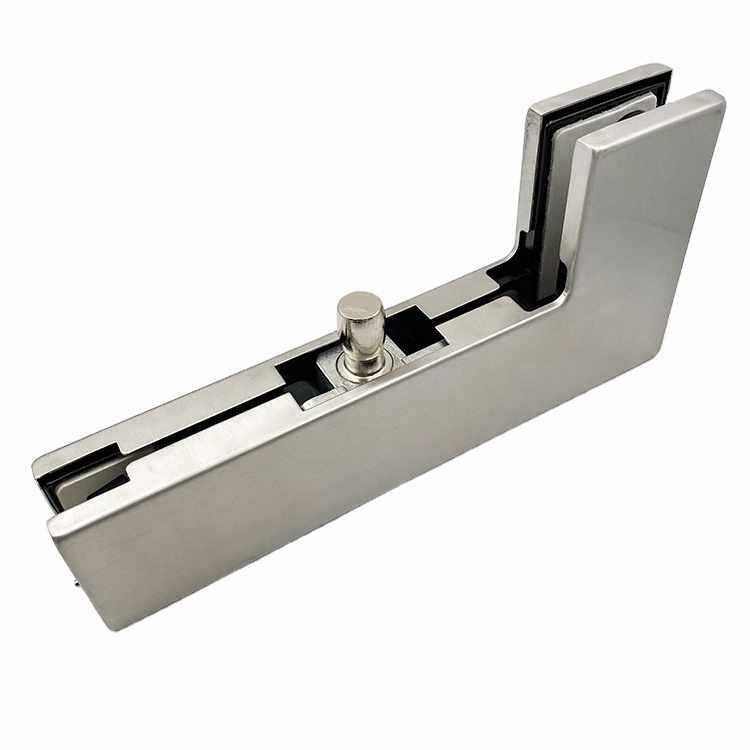
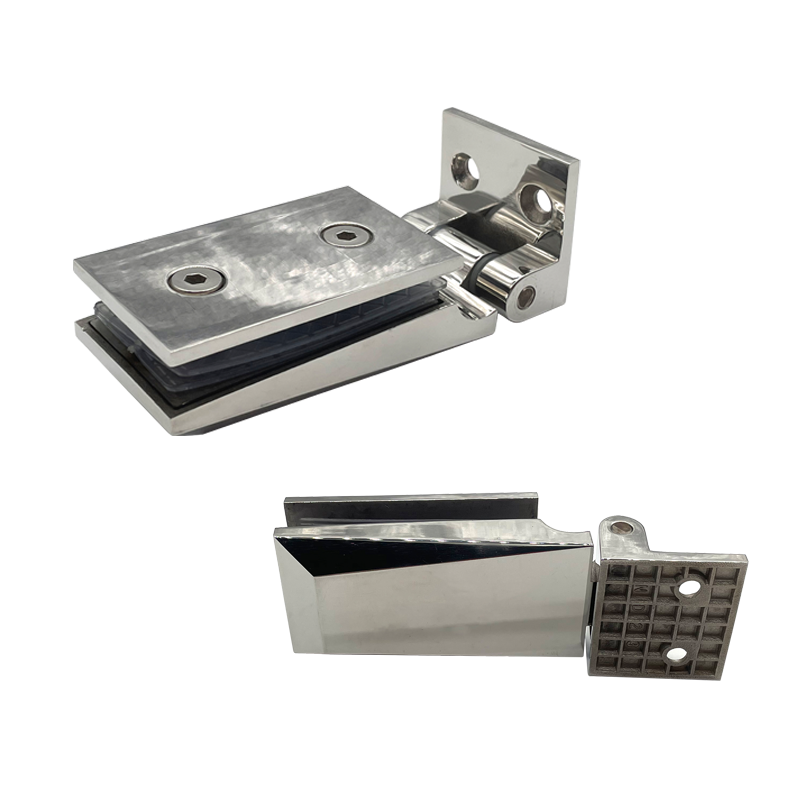
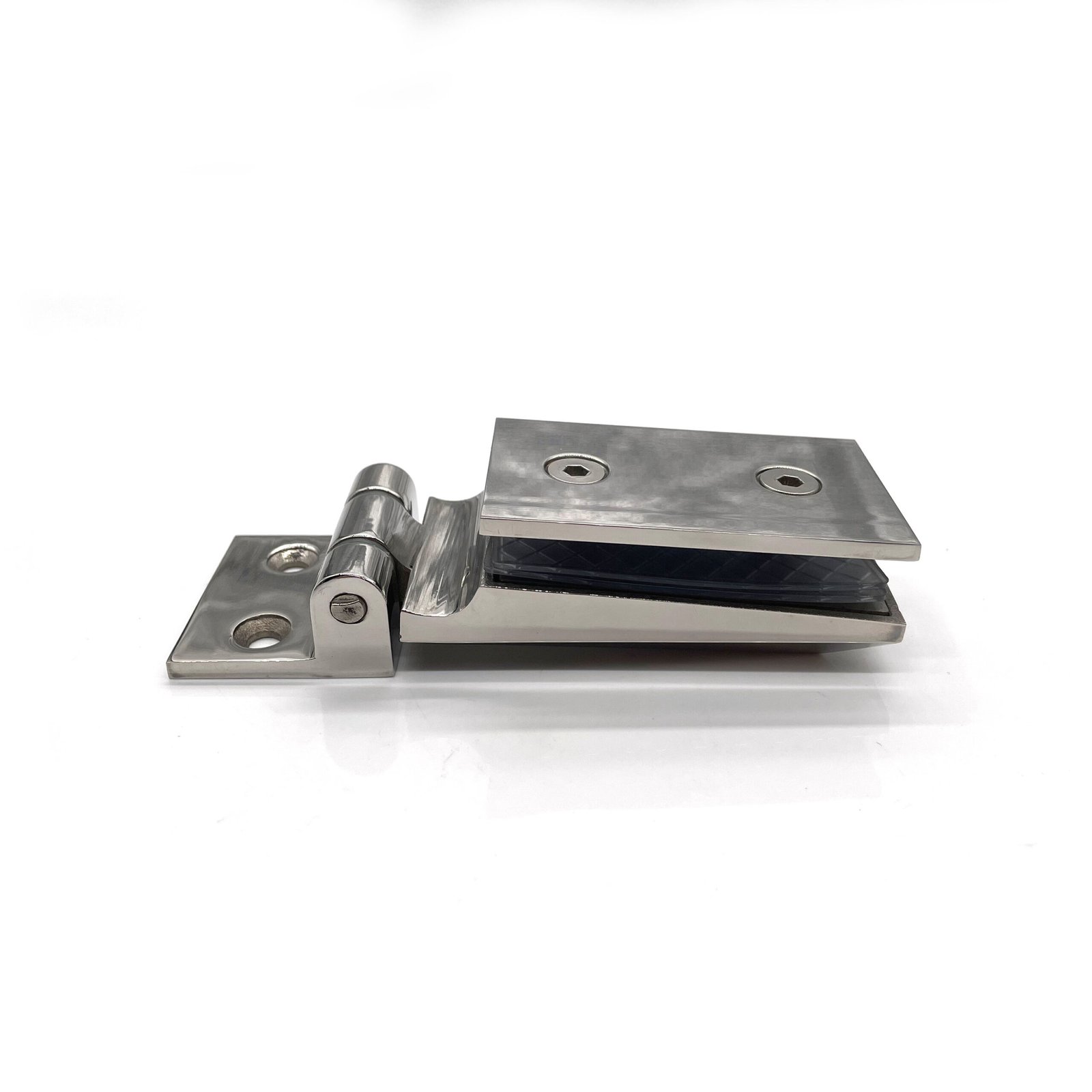
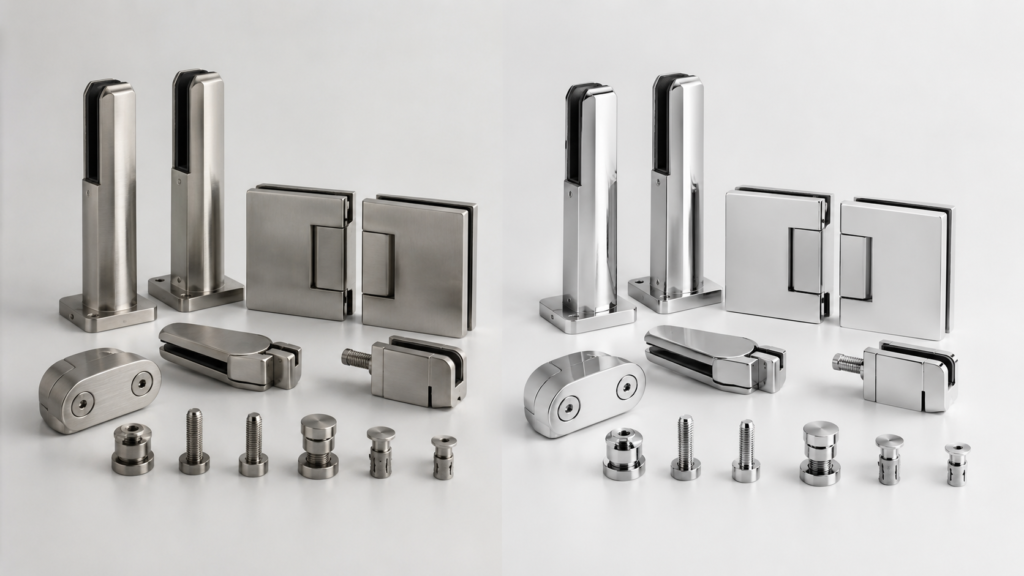
For hardware such as spigots, standoffs, pool gate hinges, latches, and fasteners, these two advantages matter. These parts are not only decorative. They hold glass panels, resist movement, and remain exposed to moisture, wind, cleaning chemicals, and chlorides.
Duplex 2205 does not make hardware maintenance-free. It does not mean corrosion is impossible. But it provides a stronger material margin in aggressive environments.
4. PREN: Corrosion Resistance Is Not Guesswork
Corrosion resistance should not be judged only by the words “stainless steel.”
One useful reference value is PREN, or Pitting Resistance Equivalent Number. PREN is used to compare relative resistance to pitting corrosion in chloride-containing environments.
A higher PREN generally means better resistance to chloride-induced pitting.
Typical reference values are:
| Material | Typical PREN Value |
|---|---|
| SS316 / SS316L | Around 24–25 |
| Duplex 2205 | Around 34 or higher |
This difference is important.
Pool fences, balcony railings, and outdoor glass hardware often fail first at small localized areas: screw holes, gasket contact points, hidden washers, base plates, and hinge components. A higher PREN value gives Duplex 2205 a stronger defense against these localized corrosion risks.
For coastal and poolside hardware, this is often more important than general surface appearance alone.
5. Yield Strength: Why Duplex 2205 Feels More Structural
Corrosion resistance is not the only reason to choose Duplex 2205.
Duplex 2205 also has much higher yield strength than standard SS316. In practical terms, Duplex 2205 is typically around twice as strong in yield strength compared with common austenitic stainless steels.
This matters for structural glass hardware.
A frameless glass pool fence or balcony railing transfers force into a small number of metal fixing points. Spigots, standoffs, hinges, and latches must resist glass weight, wind pressure, vibration, human contact, and long-term outdoor stress.
Higher yield strength can help reduce the risk of deformation in demanding applications, especially for:
- 12mm glass pool fences
- large glass railing panels
- beachfront balcony railings
- hotel and resort pool areas
- rooftop glass barriers
- pool gates with repeated movement
- exposed hardware in wind-prone locations
This does not mean SS316 is structurally unsuitable. It means Duplex 2205 provides a wider safety and durability margin in more aggressive projects.
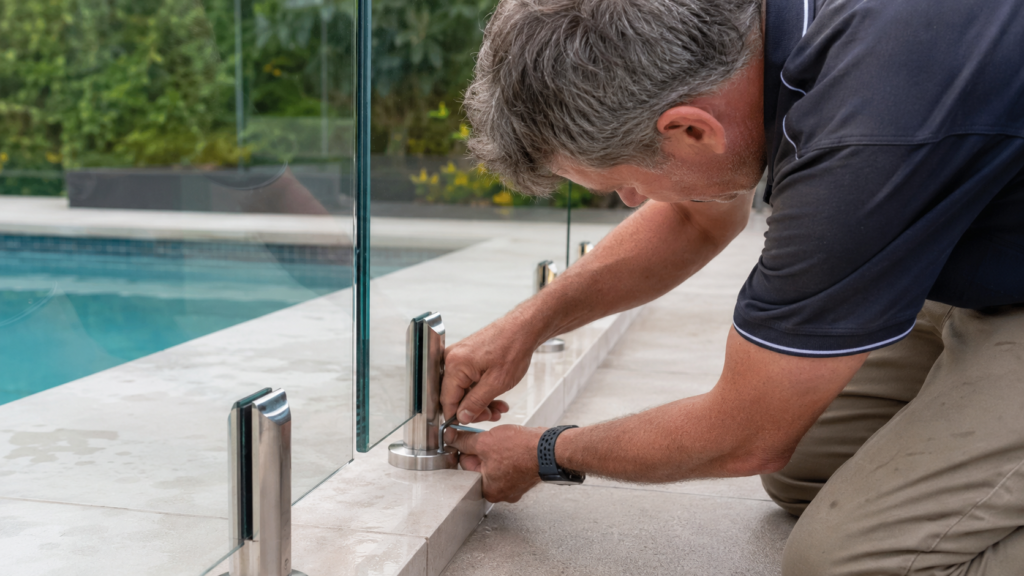
6. The Metallurgical Match-Up
| Specification Criteria | SS316 Stainless Steel | Duplex 2205 Stainless Steel |
|---|---|---|
| Microstructure | Austenitic | Austenitic + ferritic duplex structure |
| Typical PREN value | Around 24–25 | Around 34 or higher |
| Yield strength | Standard stainless level | Much higher, often around double SS316 |
| Chloride resistance | Good | Stronger |
| Tea staining risk | Possible in aggressive pool or coastal areas | Much lower with proper maintenance |
| Pitting resistance | Moderate to good | Stronger in chloride-rich environments |
| Upfront cost | Lower | Higher |
| Best use | Standard outdoor pool fences, protected areas | Coastal pools, saltwater pools, beachfront projects, resorts |
The conclusion is not that SS316 is bad.
The correct conclusion is:
SS316 is a reliable baseline. Duplex 2205 is the safer upgrade when chloride exposure, coastal air, and long-term appearance are critical.
7. The Hidden Weak Point: Screws, Anchors and Moving Parts
Many pool fence projects do not fail at the most visible component.
They fail at the weakest hidden part.
A pool fence system is only as corrosion-resistant as its weakest hidden fastener.
Project buyers often specify SS316 or Duplex 2205 for visible spigots, but ignore the grade of screws, anchors, washers, hinge pins, latch screws, internal springs, or concealed fixing parts.
This is a serious mistake.
If the visible spigot is upgraded but the screws are lower-grade stainless steel, corrosion may still appear around the fixing holes. If the pool gate hinge body is strong but the internal pin or spring corrodes, the gate may lose alignment or self-closing performance.
For pool gate hinges and magnetic latches, moving parts are especially important because they must remain functional, not just visually clean.
In coastal and poolside projects, the material schedule should include both visible hardware and hidden components.
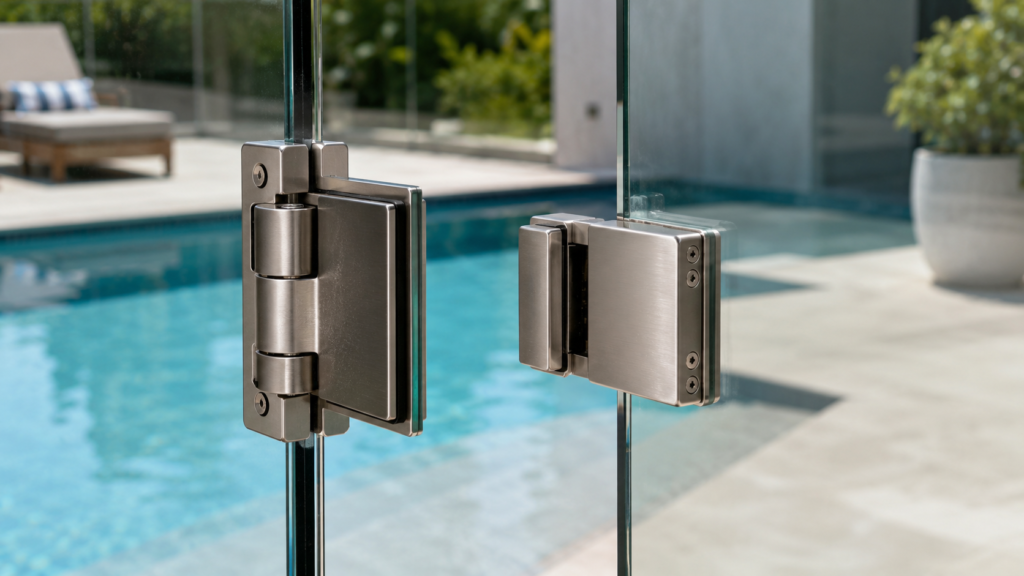
8. The True Cost of Hardware Failure
Duplex 2205 usually costs more than SS316.
In some projects, the upfront material cost difference may be noticeable. But the initial hardware price is not the full project cost.
If pool fence hardware stains or corrodes after handover, the repair cost may include:
- sending a crew back to site
- removing heavy glass panels
- protecting finished pool decks or tiles
- replacing spigots, hinges, latches, or fasteners
- polishing or cleaning stained surfaces
- closing part of a hotel or resort pool area
- dealing with client complaints
- damaging the contractor’s reputation
For frameless glass systems, replacement is rarely simple. Glass panels are heavy, fragile, and often installed in finished environments. Removing them to replace corroded hardware can be much more expensive than the original material upgrade.
In harsh environments, the cost difference between SS316 and Duplex 2205 is often smaller than the cost of one serious replacement job.
This is why Duplex 2205 should be viewed not only as a more expensive material, but as a risk-control investment for high-exposure projects.
9. When to Specify SS316 and When to Specify Duplex 2205
| Project Environment | Suggested Material | Reason |
|---|---|---|
| Indoor glass railing | SS304 / SS316 | Low chloride exposure |
| Protected outdoor railing | SS316 | Better moisture resistance than SS304 |
| Standard residential pool fence | SS316 | Reliable baseline for normal poolside use |
| Non-coastal hotel pool | SS316 or Duplex 2205 | Depends on chlorine level and maintenance |
| Saltwater pool | Duplex 2205 | Higher chloride resistance |
| Coastal pool fence | Duplex 2205 | Salt spray and humidity exposure |
| Beachfront balcony railing | Duplex 2205 | Long-term appearance and corrosion control |
| Pool gate hinges and latches | SS316 / Duplex 2205 | Moving parts and fasteners need stronger protection |
| Hidden fasteners near pool | Match visible hardware grade | Avoid early corrosion from weak components |
For many inland residential pool fences, SS316 is a practical and reliable choice.
For coastal hotels, beachfront villas, saltwater pools, rooftop pool decks, and low-maintenance resort projects, Duplex 2205 should be strongly considered for exposed fittings, gate hardware, and critical fasteners.
10. Common Mistakes Before Ordering
The first mistake is assuming all stainless steel is the same. SS201, SS304, SS316, and Duplex 2205 behave very differently in poolside and coastal environments.
The second mistake is upgrading only the spigot body. Screws, anchors, washers, hinge pins, latch screws, and internal fixing parts should match the corrosion level of the project.
The third mistake is assuming SS316 is enough for every pool project. SS316 is a strong baseline, but saltwater pools, coastal air, and low-maintenance environments may justify Duplex 2205.
The fourth mistake is ignoring maintenance and installation details. Even better stainless steel grades still need proper drainage, reduced crevices, clean surfaces, correct passivation, and regular washing to control staining risk.
Material grade matters, but it is not the only factor.
Practical Recommendation
For standard outdoor pool fences and protected railing projects, SS316 is usually a reliable baseline.
For coastal pools, beachfront balconies, saltwater pools, resort projects, and chloride-heavy environments, Duplex 2205 should be considered for exposed fittings, pool gate hardware, and critical fasteners.
The goal is not to specify the most expensive material everywhere.
The goal is to match the stainless steel grade to the real exposure level, maintenance conditions, safety requirement, and cost of failure.
Need a Metallurgical Review for Your Pool Fence Project?
Send us your project location, distance from the coast, pool type, glass thickness, railing height, hardware type, finish requirement, and quantity.
Metech can help recommend whether SS316 or Duplex 2205 is more suitable for your glass railing spigots, pool fence hinges, latches, fasteners, and related stainless steel hardware.